• Skip to primary navigation
  • Skip to main content

International Salsa Magazine

  • HOME
  • Previous editions
    • 2026
      • ISM / April 2026
      • ISM / March 2026
      • ISM / February 2026
      • ISM / January 2026
    • 2025
      • ISM / December 2025
      • ISM / November 2025
      • ISM / October 2025
      • ISM / September 2025
      • ISM / August 2025
      • ISM / July 2025
      • ISM / June 2025
      • ISM / May2025
      • ISM / April 2025
      • ISM / March 2025
      • ISM / February 2025
      • ISM / January 2025
    • 2024
      • ISM / December 2024
      • ISM / November 2024
      • ISM / October 2024
      • ISM / September 2024
      • ISM / August 2024
      • ISM / July 2024
      • ISM / June 2024
      • ISM / May 2024
      • ISM / April 2024
      • ISM / March 2024
      • ISM / February 2024
      • ISM / January 2024
    • 2023
      • ISM / December 2023
      • ISM / November 2023
      • ISM / October 2023
      • ISM – September 2023
      • ISM – August 2023
      • ISM July 2023
      • ISM Edition June 2023
      • ISM – May 2023
      • ISM April 2023
      • ISM March 2023
      • ISM February 2023
      • ISM January 2023
    • 2022
      • ISM December 2022
      • ISM November 2022
      • ISM October 2022
      • ISM September 2022
      • ISM August 2022
      • ISM July 2022
      • ISM June 2022
      • ISM May 2022
      • ISM February 2022
      • ISM January 2022
    • 2021
      • ISM December 2021
      • ISM November 2021
      • ISM October – 2021
      • ISM September 2021
      • ISM August 2021
      • ISM July 2021
      • ISM May 2021
      • ISM April 2021
      • ISM June 2021
      • ISM March 2021
      • ISM February 2021
      • ISM January 2021
    • 2020
      • ISM December 2020
      • ISM November 2020
      • ISM October 2020
      • ISM September 2020
      • ISM August 2020
      • ISM July 2020
      • ISM June 2020
      • ISM May 2020
      • ISM April 2020
      • ISM March 2020
      • ISM February 2020
      • ISM January 2020
    • 2019
      • ISM December 2019
      • ISM November 2019
      • ISM October 2019
      • ISM Septembre 2019
      • ISM August 2019
      • ISM July 2019
      • ISM June 2019
  • Spanish
  • Download Salsa App
    • Android
    • Apple

Search Results for: Timbales

Elizabeth and her Timbales

Latinoamerica / Colombia / Cali

Elizabeth

Latin percussionist born in Cali, Colombia. Since she was little she felt passion for music, singing, dancing and playing percussion. At the age of 17, she was invited by her cousin to a rehearsal and since she saw the Timbal she knew she had to undertake ‘the conquest for him’.

Elizabeth and her Timbale

The first orchestra with which he worked was called Tumbadora, made up of women. Three years later she joined the Canela Orchestra, made up of 13 women and internationally recognized. Thanks to the tutelage and trust of percussionists from the most important groups in Colombia, such as Grupo Niche, Orquesta Guayacán, la Identidad and others, she was able to move forward and thus demonstrate that women, with effort, passion and dedication can conquer any instrument of percussion.

Photo by Elizabeth
Photo by Elizabeth

Elizabeth has had the opportunity to travel the world and share the stage with renowned artists such as Gilberto Santarosa, Andy Montañez, la Sonora Ponceña and the Gran Combo de Puerto Rico. With the latter two, he had the opportunity to share Timbal solos at the Bacardi Salsa Congress in Puerto Rico.

Elizabeth
Elizabeth

She recorded on the first album of Grupo Kemade Colombia directed by one of the most important musical producers in Colombia, José Aguirre, former director of Grupo Niche, Son de Cali and Yuri Buenaventura. In the educational field, Elizabeth founded the Percussion Academy in Cali which she directed for four years. In it children and adults received instruction.

Elizabeth at the concert

Elizabeth has been based in Tampa, Florida for four years, where she develops as an independent musician. There he has shared the Timbal with renowned musicians such as Chago Martínez (timbalero and musical director of Víctor Manuelle), La India, Isidro Infante, Ramón Sánchez, Jerry Rivera and Michael Stuart. He is currently part of the Sol Caribe Orchestra.

Photo 2 of Elizabeth
Photo 2 of Elizabeth with her timpani

Elizabeth has always proudly played the Timbale LP ‘Stainless Steel’, model Tito Puente. In her own words “I’m happy with my Timbale! I feel safe, calm and I love its sound”.

Elizabeth practicing with her Timbale
Elizabeth on stage
Elizabeth on stage

Facebook: https://www.facebook.com/pg/elisabethtimbal/posts/?ref=page_internal
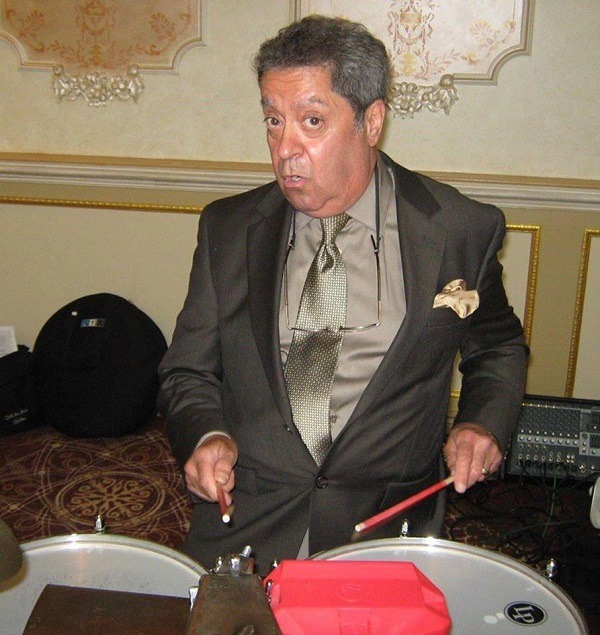
 

The magic timbales of Nicky Marrero

Today’s character

After a long wait, we have managed to make the talented New York musician Nicholas Marrero, better known as Nicky Marrero, to come to the Spanish Harlem Salsa Museum to share with Johnny Cruz and his friendly staff on February 26th of this year. Therefore, we would like to take this opportunity to talk a little about his brilliant career and the great contributions he has made to Latin music in the United States.

Nicky Marrero playing the timbales

Beginnings

Nicholas Marrero was born in the Bronx, New York, on June 17, 1950 and both his parents are Puerto Rican. This made the boy grow up among maracas, guitars, güiros and other instruments at home. In addition to the roots of his parents and the whole family, young Nicholas showed a talent that made him stand out very quickly and led him to study drums until his interests began to change and he started feeling drawn to the music made by Willie Bobo and ”The King of Timbales” Tito Puente. Both figures were arguably two of his greatest influences and inspirations in the world of music.

According to rumors in certain circles, his first recording was with Willie Colón’s band when he was only 15 years old, but the material was never released because of some alleged problems with the record label involved. The first albums with his participation as timbalero that were made public were ”El Malo” and ”The Hustler” by Willie Colón, both made in 1968. The usic productions were released in LP format in both cases.

Johnny Cruz and Nicky Marrero playing the timbales in 2017

Collaborations with Eddie Palmieri and others  (título 3)

That same year, the growing artist began collaborating with Eddie Palmieri’s orchestra and had an important participation in the album ”Champagne”, which was released through the Tico Records label and whose repertoire includes songs such as ”Cinturita”, ”Palo De Mango” and ”Ay Que Rico”. Marrero contribute his talent to Palmieri’s on 15 more productions over the next 50 years that followed. Many of them were extremely successful and earned him the Latin Grammy Award on several occasions.

Another important step in his career was the replacement of Orestes Vilato as timbalero in the Fania All Stars, with whom he performed all kinds of activities in many countries such as tours, concerts, press releases, among other things. He played in 25 music productions for this important salsa and Caribbean music orchestra during the time that he was a member of the group.

Johnny Cruz and Nicky Marrero again in 2023

Although the artist’s most outstanding collaborations have been with Eddie Palmieri and Fania All Stars, the timbalero has also collaborated with other great names in the world of salsa and Latin music such as Hector Lavoe, Louie Ramirez, Larry Harlow, Alfredo De La Fé, Ismael Miranda, Cheo Feliciano, Joe Quijano, Daniel Santos and many more.

Among the latest works in which Nicky participated is the album ”Full Circle” by Eddie Palmieri for the Ropeadope Records / Uprising Music label. The unmistakable sound of the musician is more than present with his characteristic bongos and timbalitos along with the unforgettable notes from the piano of maestro Palmieri, who has been more than a mentor since the artist started his prolific career.

Read also: Life and career of Ernie Acevedo

        By Johnny Cruz, ISM Correspondents, New York, New York City

The salsa artisan who made the best cowbells and or timbales and bongo bells

The percussion artisan passed away in New York on June 31, 2017, he was the creator of the “JCR” Calixto “Cali” Rivera bells,

Cali was born in Puerto Rico and came to the United States in 1958. He was first an auto mechanic and years later started in instrument making. He was also a percussionist (he excelled for many years performing with Yomo Toro) and his father made guitars.

One of JCR’s peculiarities was that his instruments were not mass-produced but “handmade”, which is why Rivera was recognized as a reputable percussion artisan, standing out especially for the manufacture of bells, which were “the specialty of the house”.

The cowbell is a percussion musical instrument, it has the shape of a bell and is struck with wooden drumsticks. These can be made of copper, steel or other alloys.

Its use in music is very widespread and we can hear it in the folk music of the North Alpine as well as in the academic music and even in the pop and Latin music of our times.

One of the best manufacturers of cowbells is Calixto “Cali” Rivera who for more than 40 years has forged the metal to manufacture in his small workshop in the Bronx (JCR Percussion), about 10 to 12 pieces per week.

Since its creation, his instruments became a vital part of the recordings of both Salsa Dura and Salsa Suave, from the 70’s until the day of his death.

In the Bronx, there is a man who builds instruments for the great Latin percussionists of the world: Tito Puente, Eddie Montalvo, Giovanni Hidalgo, Bobby Sanabria.

He had no signs, no storefronts, no advertising of any kind, but people from all over the world call him for work.

After all, nothing sounds like one of his handmade cowbells.

Calixto “Cali” Rivera’s father was a guitar maker, and his son picked up the tradition of the craft.

But Cali gravitated to drums – he’s a timbale – and made congas, bongos and other percussion instruments.

These days, he specializes in high-quality cowbells of all kinds.

He is in his late 70s, with only his wife for administrative support, yet he cranks out dozens a week.

Jazz Night In America recently visited Rivera in his JCR percussion workshop to discover how, for nearly 40 years, he transformed strong metal into strong bells.

The Cencerro. What It Is, Origin, Types, Characteristics And How To Play It.

The cowbell is a small instrument which belongs to the family of hand percussion instruments, it is used in various styles of music including salsa and rarely in other genres of popular music. The cowbell is similar to the bell historically used by shepherds to keep track of the whereabouts of cows, hence its name.

Origin

Although the cowbell is currently found in musical contexts, its origin comes from the tracking of animals that roamed freely in the countryside. Likewise, to help identify the herd to which these animals belonged, the shepherds placed these campaigns around the animal’s neck.

As the animals moved in different parts, the ringing of the bell could be heard, which made it easier to know their whereabouts. Although the bells were used on various types of animals, they are typically referred to as “cowbells” due to their extensive use on livestock.

Tony Vega Celebrates Half a Century of Romantic Salsa in Puerto Rico

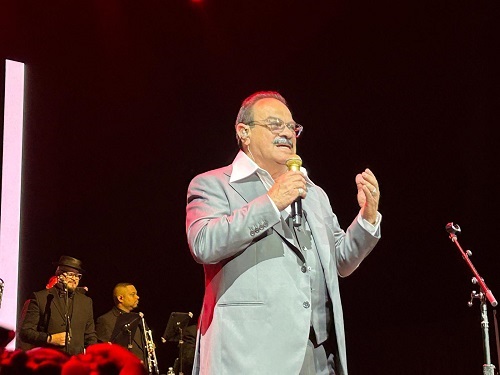
On Saturday, April 25, 2026, the Coca-Cola Music Hall was swept up in the sounds of salsa as Tony Vega took the stage for his concert “49+1: Half a Century of Romantic Salsa.” Thanks to the production of Alexandra Fuentes and a promotional partnership with the radio station Salsoul, the legendary vocalist returned to Puerto Rico for a night filled with music, nostalgia, and profound emotion.

Tony Vega con su director musical, Jota Ruiz Imagenes Jorge Mas

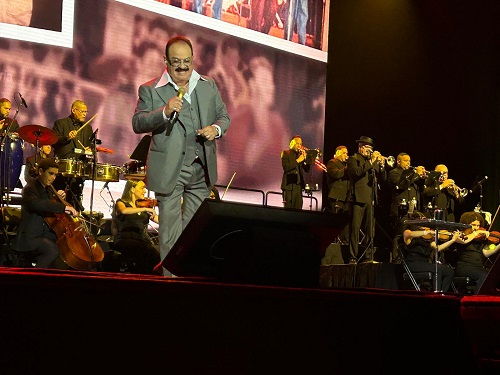
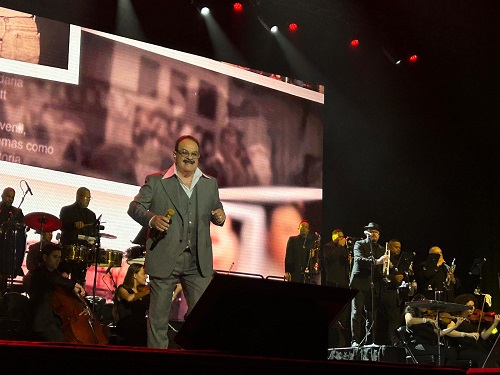
Throughout the celebration, Vega was backed by the musical direction of the virtuous instrumentalist, composer, singer, and independent producer known in the salsa world as Jota Ruiz, of the prestigious Ruiz de Ponce musical dynasty. Jota led an elite ensemble featuring:

  • Savier Díaz (congas), Edwin Clemente (timbales), Jorge Mercado (bongo), Juan Rivera (piano), and Alexis Pérez (bass).
  • José “Pucho” Ruiz (the Ruiz family patriarch) and Víctor Ambert on trumpets.
  • César Ayala and Julio Hernández on trombones.
  • Fernando Muscolo on keyboards.
  • Hugo Maysonet and Alejandro Villegas on backing vocals.
  • A string section composed of Jonelys Ruiz, Sairilis Meléndez, Sinaí González, Sofía Acosta, Orlando Rivera, and César Jacomino, with Luis Rodríguez providing general assistance.
  • Tony Vega recordando su etapa con Eddie Palmieri Tony Vega con su director musical, Jota Ruiz Imagenes Jorge Mas
    Tony Vega recordando su etapa con Eddie Palmieri Tony Vega con su director musical, Jota Ruiz Imagenes Jorge Mas

Tony Vega’s performance made it clear that his storied career has been a cornerstone of salsa history, particularly within the salsa romántica movement. The audience made the Coca-Cola Music Hall in San Juan vibrate, singing at the top of their lungs to the many hits Vega has placed at the top of the charts over the decades.

Tony Vega y la orquesta acompañante Tony Vega con su director musical, Jota Ruiz Imagenes Jorge Mas

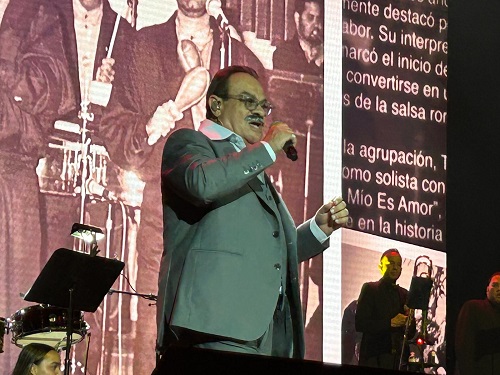
The artist of Puerto Rican descent structured his set to detail the various stages of his brilliant career. He opened the night with “Cosquillita,” representing his professional debut alongside Raphy Leavitt. He then playfully performed “Feo pero sabroso,” a nod to his time in the recording studio with Louie Ramírez, followed by “El cuarto” and “Vámonos pa’l monte” as a tribute to his artistic growth under the mentorship of Eddie Palmieri.

Tony Vega y su sección de percusión Tony Vega con su director musical, Jota Ruiz Imagenes Jorge Mas

A deeply significant and nostalgic moment arrived with a medley chronicling his years with Willie Rosario, prompting the crowd to sing even louder to “Busca el ritmo” and “Mi amigo el payaso.”

From there, the vocalist reminisced about the transition to his ongoing solo career. He shared the story of his historic contract with Ralphie Mercado of RMM, which, as Tony recalls, was famously signed on a napkin “without any formalities.” From this era, he highlighted staples such as “Yo me quedo,” “Tu prenda tendida,” “Lo mío es amor,” “Dile,” “Tengo curiosidad,” “Uno mismo,” and “Mi iglesia,” which he performed as a duet with the stellar guest Alex D’ Castro. He continued the marathon of hits with “¿Dónde estás?,” “Deja,” “Esposa,” “Si me miras a los ojos,” “Si yo vuelvo a encontrarla,” “Fui la carnada,” “Ella es,” “Olvídalo ya,” “Carita de sol,” “Haremos el amor,” “Esa mujer,” and “Aparentemente.”

Tony Vega, concierto CCMH Tony Vega con su director musical, Jota Ruiz Imagenes Jorge Mas

The closing theme, “Déjame soñar,” stirred the singer’s patriotic pride and featured a powerful timbal solo by Edwin Clemente, followed by guest appearances from Gerardo Rivas and his son, Gerardo Gabriel Rivas.

Tony Vega, Trombonista César Ayala al fondo Tony Vega con su director musical, Jota Ruiz Imagenes Jorge Mas

Throughout the evening, Tony Vega expressed his gratitude to those instrumental in his success. He showed profound respect for Humberto Ramírez, who is widely credited with laying the foundation for Tony Vega’s signature sound and establishing the musical concept for his orchestra at its inception. Another noteworthy moment occurred during an improvisation in “Déjame soñar,” where he affectionately declared José Alberto “El Canario” an honorary “Boricua.”

As he had anticipated, Tony Vega experienced the concert as a true celebration of all he has achieved in his 50-year career. He emphasized how much it meant to be surrounded by his people, “sharing music with those who have been with me from the start, right where it all began.”

Bella Martinez Puerto Rico

Photography: Jorge Más

Read Also: Bella Martinez, the irreverent Salsa writer

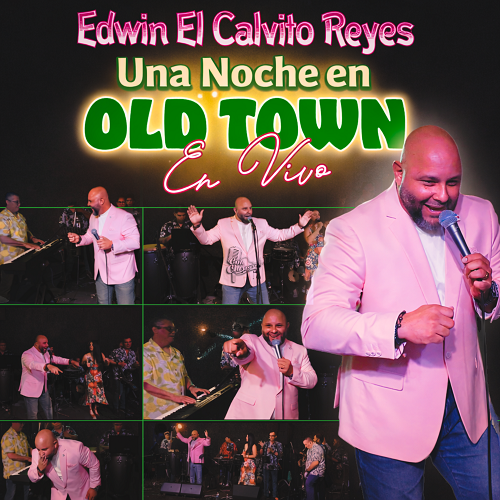
Let’s talk about Una noche en Old Town “en vivo,” while staying true to the musical journey of “El Calvito” Reyes

“Yes, Una noche en Old Town was an event held for about 100 people at a restaurant in the area known as Old Town in Kissimmee, Florida. Old Town is a park that feels like a year-round festival, 365 days a year,” the artist explains. This marks the third musical production from the Puerto Rican singer-songwriter known in the salsa world as “El Calvito,” one of the most fervent champions of the Salsa Nueva movement.

With this release, Edwin puts his salsa and his talent at the service of his followers. His repertoire spans classic salsa, romantic salsa, and what he calls “conscious salsa.”

Edwin “El Calvito” Reyes acknowledges that while everything has already been invented, the key is to stay focused and execute the ideas swirling in his mind. The press release for the new live album, titled Una noche en Old Town, notes: “Remember in the ’90s when many artists (…) recorded live productions? That was a trend that (…) went down in salsa history.”

The Production

The final product is a “live” recording of his orchestra. The production turned what was originally planned as a birthday party at Old Town Park in Kissimmee into a full album. Sound engineer Joseph Díaz captured the session, which was later mixed and mastered by pianist and engineer Víctor Romero. The content was further polished at Harmony Recording Studios in Orlando, Florida.

The album features the collective performance of the musicians who have accompanied the singer for years, including their appearance at the 2025 Día Nacional de la Zalsa in Orlando. The lineup includes:

  • John López: Congas
  • Daniel Ortiz: Timbales
  • Manny Urbina: Bongo
  • Víctor Romero: Piano and Musical Direction
  • Yasmani Roque & Marcos Rivera: Trumpets
  • Bert Laboy: Trombone
  • José Castro Marchán: Baritone Sax
  • Una Noche en Old Town Edwin El Calvito Reyes
    Una Noche en Old Town Edwin El Calvito Reyes
  • The night at Old Town also featured guest appearances by heavyweights such as Kriptony Texeira, Harold Montañez, and José Novoa. Additionally, Richie Nieves, the well-known voice of KQ FM Radio in Orlando, handled the album’s intro.

The Origin

The stage was set specifically at El Cilantrillo restaurant within Old Town. The event celebrated the birthday of Javier Colón, owner of La Feria Salsera and Edwin’s partner for the veteran-focused dance events that Edwin has successfully led in recent years. Javier hired “El Calvito’s” orchestra, the performance was recorded, and from that session, this authentic album was born.

By chance, the date of the party coincided with one of the most important days on the Puerto Rican salsa calendar: the traditional Holy Saturday Dance (Sábado de Gloria). “Many Latinos don’t understand and ask, ‘Are you guys seriously holding a dance on Holy Saturday?’ So, unintentionally, we tapped into that tradition—and it is a tradition in every sense of the word. By trying to keep it alive, we (Puerto Ricans) have shared it with the rest of the Hispanic public.”

According to Edwin, the performance was originally recorded for promotional purposes. However, the artist felt it was such a great capture of the evening’s energy that he consulted his musical director, Víctor Romero, to see what he thought of the idea.

The Release

Coincidence dictated that the album be published and available on digital platforms exactly one year after the recording. The producer admits it was a high-risk project because it was recorded live during an organic event outside of a controlled studio environment. The classic covers Edwin included as tributes to “those who have passed” (arranged as medleys) were his biggest concern, yet they ultimately earned widespread approval.

“El Calvito” Reyes says he doesn’t fear the critics. Driven by passion, he decided to release this 10-track production—eight of which he wrote himself, plus two salsa hit medleys—aiming to win over dancers, listeners, and collectors alike.

Tracklist:

  1. ‘Medley salsa nueva’
  2. ‘Así llamaban al Conde’
  3. ‘Homenaje a los que se nos fueron I y II’
  4. ‘Dime mi Buen Señor’
  5. ‘Tú del sur, yo del norte’
  6. ‘El karma’
  7. ‘Tócame la moña’
  8. ‘Baila cha cha chá’
  9. ‘Solo tiempo pa’ rumba’
  10. ‘Orgulloso de ser latino’

Stream & Connect: The album is available digitally on YouTube Music, Spotify, and Apple Music. Each track has a corresponding video at: https://www.youtube.com/@ElCalvitoReyesOficial/. The orchestra is available for bookings. You can reach the office via phone or WhatsApp at +1-912-980-8476 or by email at [email protected].

For more on the music of Edwin “El Calvito” Reyes, visit: https://solo.to/elcalvitoreyes

Bella Martinez Puerto Rico

Read Also: Edwin “El Calvito” Reyes el Sonero de la Sangre Nueva “Amor de Actualidad”

  • Page 1
  • Page 2
  • Page 3
  • Interim pages omitted …
  • Page 28
  • Go to Next Page »

International Salsa Magazine (ISM) is a monthly publication about Salsa activities around the world, that has been publishing since 2007. It is a world network of volunteers coordinated by ISM Magazine. We are working to strengthen all the events by working together.