• Skip to primary navigation
  • Skip to main content

International Salsa Magazine

  • HOME
  • Previous editions
    • 2026
      • ISM / April 2026
      • ISM / March 2026
      • ISM / February 2026
      • ISM / January 2026
    • 2025
      • ISM / December 2025
      • ISM / November 2025
      • ISM / October 2025
      • ISM / September 2025
      • ISM / August 2025
      • ISM / July 2025
      • ISM / June 2025
      • ISM / May2025
      • ISM / April 2025
      • ISM / March 2025
      • ISM / February 2025
      • ISM / January 2025
    • 2024
      • ISM / December 2024
      • ISM / November 2024
      • ISM / October 2024
      • ISM / September 2024
      • ISM / August 2024
      • ISM / July 2024
      • ISM / June 2024
      • ISM / May 2024
      • ISM / April 2024
      • ISM / March 2024
      • ISM / February 2024
      • ISM / January 2024
    • 2023
      • ISM / December 2023
      • ISM / November 2023
      • ISM / October 2023
      • ISM – September 2023
      • ISM – August 2023
      • ISM July 2023
      • ISM Edition June 2023
      • ISM – May 2023
      • ISM April 2023
      • ISM March 2023
      • ISM February 2023
      • ISM January 2023
    • 2022
      • ISM December 2022
      • ISM November 2022
      • ISM October 2022
      • ISM September 2022
      • ISM August 2022
      • ISM July 2022
      • ISM June 2022
      • ISM May 2022
      • ISM February 2022
      • ISM January 2022
    • 2021
      • ISM December 2021
      • ISM November 2021
      • ISM October – 2021
      • ISM September 2021
      • ISM August 2021
      • ISM July 2021
      • ISM May 2021
      • ISM April 2021
      • ISM June 2021
      • ISM March 2021
      • ISM February 2021
      • ISM January 2021
    • 2020
      • ISM December 2020
      • ISM November 2020
      • ISM October 2020
      • ISM September 2020
      • ISM August 2020
      • ISM July 2020
      • ISM June 2020
      • ISM May 2020
      • ISM April 2020
      • ISM March 2020
      • ISM February 2020
      • ISM January 2020
    • 2019
      • ISM December 2019
      • ISM November 2019
      • ISM October 2019
      • ISM Septembre 2019
      • ISM August 2019
      • ISM July 2019
      • ISM June 2019
  • Spanish
  • Download Salsa App
    • Android
    • Apple

Search Results for: Timbales

José Mangual Sr. “Buyú”: The Architect of Bongo Sound Defining the Rules of How it Should Sound

In the history of Afro-Latin music, there are names that didn’t just play an instrument they defined the rules of how it should sound. José Mangual Sr., known universally as “Buyú,” is one of those pillars.
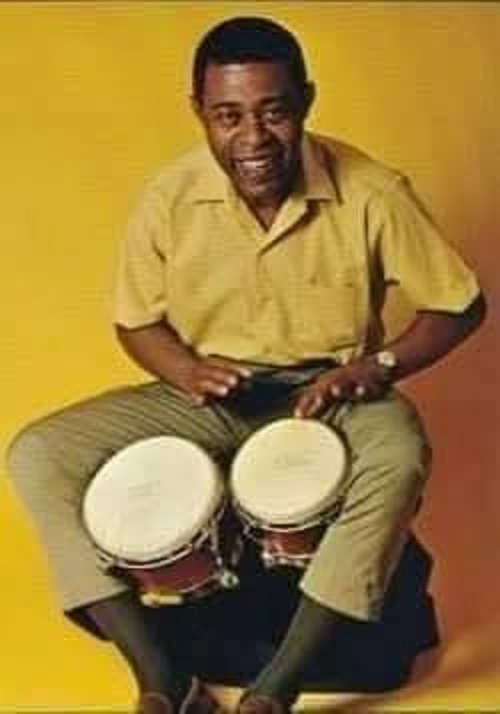
José Mangual Sr., known universally as Buyú, is one of those pillars

An extraordinary and legendary percussionist, José Mangual Sr. was the founder of the prestigious percussive lineage that carries his surname.

Since his childhood in Juana Díaz, he professed a deep love for music; by age ten, he was already playing professionally, and during his youth, he even enjoyed crafting his own bongos.

Over time, he became the musician who endowed the instrument with an extraordinary sonority. He was the father of the equally prominent percussionists José Mangual Jr. and Luis Mangual.
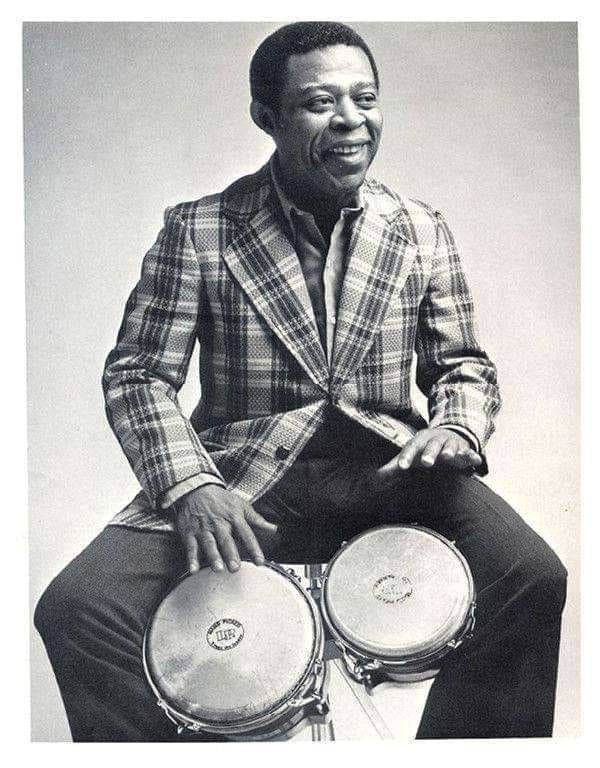
The Architect of Sound on the Bongos defining the rules of how it should sound

The Architect of Sound on the Bongos defining the rules of how it should sound

Considered by experts as one of the greatest bongo players of all time, his legacy remains the gold standard for meter and tuning in Latin Jazz and Salsa.

From Juana Díaz to the Heart of Spanish Harlem

Born on March 18, 1924, in Juana Díaz, Puerto Rico, Mangual discovered his vocation at age 10. However, his musical destiny was sealed in 1938 when he migrated to New York at the age of 14.

Settling in Spanish Harlem (“El Barrio”), he found himself at the epicenter of a cultural explosion that was about to change world music forever.

The Consecration: Machito and his Afro-Cubans

Although he began by filling the timbales position, it was with the Machito and his Afro-Cubans orchestra where “Buyú” made history. Under the direction of Mario Bauzá (who is said to have given him his nickname), Mangual remained with the group for nearly 17 years.
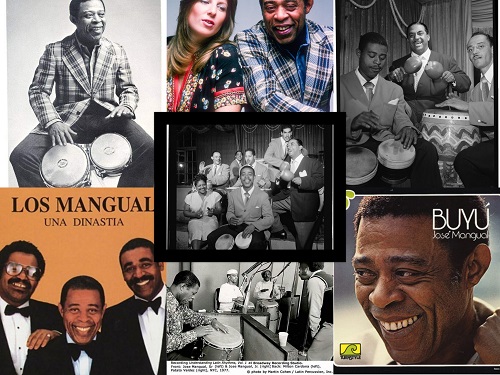
The Legacy and the Patriarch of a Dynasty
  • Rhythmic Innovation: He was part of the “perfect percussion trio” alongside Carlos Vidal (congas) and Machito (maracas).
  • Historic Fusion: His performance was key to blending the complexity of Afro-Cuban rhythms with the harmonies of New York Jazz in the 1940s and 50s.

An Unrivaled Session Musician

His technique was so clean and his sound so bright that he became the preferred collaborator for the biggest stars. Throughout his career, he contributed his mastery to projects led by:

  • Tito Puente: The “King of the Timbales.”
  • Israel López “Cachao”: Participating in historic Afro-Cuban Jazz “descargas” (jam sessions).
  • Jazz Greats: His versatility allowed him to navigate fluidly between the world of Big Bands and traditional Salsa ensembles.

Pedagogical Legacy and Solo Career

In the 70s and 80s, Mangual recorded music not only for enjoyment but also for instruction:
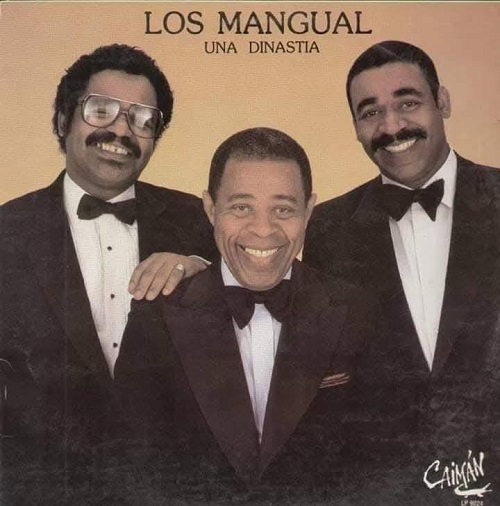
The Patriarch of a Dynasty
  • Album “Buyú” (1977): A Latin Jazz gem on the Turnstyle label, featuring tracks like “Black & Brown Boogie.”
  • Musical Education: Alongside conguero Carlos “Patato” Valdés, he recorded the volumes of Understanding Latin Rhythms. These LPs became the auditory manual for thousands of percussionists around the globe.
  • The Mangual Dynasty: In 1986, he consolidated his family heritage with the album Los Mangual: Una Dinastía, recording alongside his talented sons.

“The sound of his cowbell and his bongo didn’t just mark time; they cemented the foundations of the music we dance to today.”

The Patriarch of a Dynasty

The impact of José Mangual Sr. extends through his sons, who inherited his musical excellence:

  • José Mangual Jr. (“El Milamores”): Famous bongo player and singer, a key figure in the orchestras of Willie Colón and Héctor Lavoe.
  • Luis Mangual: Renowned percussionist and musical director.

Passing and Recognition: Buyú passed away in 1998, leaving an irreplaceable void. In 2001, he was posthumously inducted into the International Latin Music Hall of Fame  a fitting tribute to the man who gave the bongo unprecedented brilliance and elegance.

Also Read: Israel “Cachao” López, a Cuban musician and composer, has been hailed as “the Inventor of Mambo”
“El Caballero de la Salsa” Kicks Off “Íntimo” in Puerto Rico

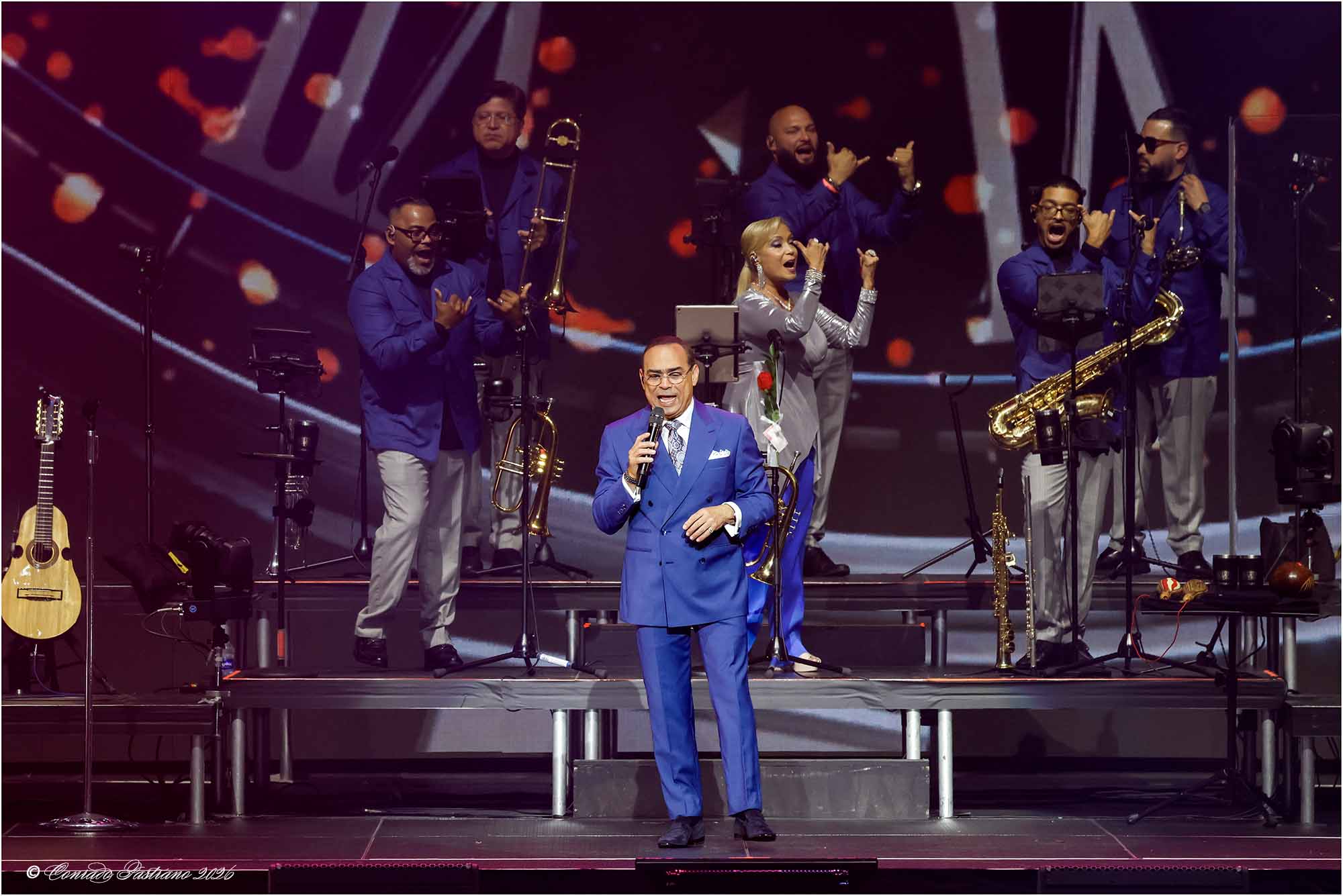
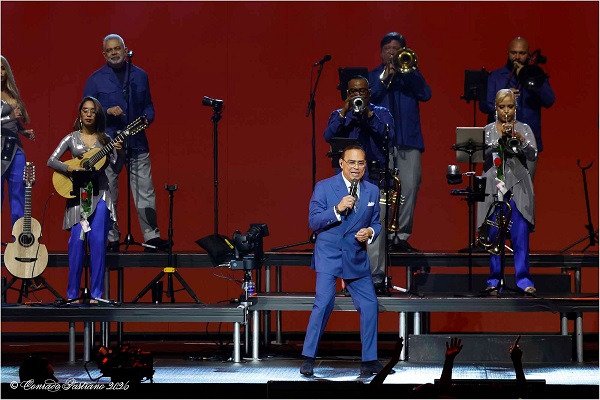
With performances on February 14 and 15, 2026, at the Coliseo de Puerto Rico, Gilberto Santa Rosa started the year “at home” with two sold-out shows and the successful launch of his “Íntimo” tour. That is always the goal. On the island, the audience is as demanding as they are generous and the singer knows it. Following the concerts, “El Caballero” posted on social media: “Puerto Rico, thank you for giving us two nights full of love, dancing, and so much music at home! What a thrill it is to sing at home!”

“El Caballero de la Salsa” Kicks Off "Íntimo" in Puerto Rico
“El Caballero de la Salsa” Kicks Off “Íntimo” in Puerto Rico

On January 30 of this year, the album that shares the tour’s title was released. In Puerto Rico, two shows were scheduled for Valentine’s Day weekend. The first coincided with Valentine’s Saturday; the second was added for the following day due to how quickly the first round of tickets sold out.

At exactly 6:46 PM on Sunday, February 15, 2026, the stage of the Coliseo de Puerto Rico welcomed Gilberto Santa Rosa’s orchestra to begin the second concert, marking the salsa singer’s long-awaited reunion with the Puerto Rican public. According to a press release from Edumil Ruiz’s agency: “These performances are part of a series of special concerts celebrating the month of love (…) and represent the long-awaited reunion of ‘El Caballero de la Salsa’ with his Puerto Rican audience after two years since his last performance on the island.”

A Night of Rhythms and Ovations

The performance began with high energy and impact from the very first track. The opening bars were seasoned with the sounds of the Puerto Rican cuatro, played by Fabiola Muñoz. “Déjate querer” featured a timbal solo by Pete Perignon, while “Cartas sobre la mesa” highlighted Saviel Cartagena’s saxophone. These were followed by “Ahora o nunca,” “Tú,” “Amor para la historia,” “Quiéreme,” and “Almas gemelas,” which featured Juan Carlos Vega on an aerophone solo; followed by “Yo no te pido” and “Conciencia,” for which the audience gave the artist a thunderous standing ovation.

Between songs, Santa Rosa took a moment to address the crowd: “I was born, raised, and live here. And it moves me to know that here in Puerto Rico, I am still dearly loved.” He added that he is a fan of singing to the brokenhearted with “scorned” lyrics set to savory, danceable arrangements. Addressing the contradiction of that combination, he stated, “We Puerto Ricans are capable of crying and dancing at the same time,” capping the explanation with: “That’s just how passionate we are.”

152 With the performances on February 14 and 15, 2026 at the Coliseo de Puerto Rico, Gilberto Santa Rosa began the year in "his home" with two sold-out shows.

152
With the performances on February 14 and 15, 2026 at the Coliseo de Puerto Rico, Gilberto Santa Rosa began the year in “his home” with two sold-out shows.

After his remarks, “Gilbertito” explained he would welcome a beloved artist to sing “Misterio,” an urban salsa track with lyrics “about a relationship where you don’t know if it’s coming or going, starting or ending.” Gerardo Rivas took the lead in his solo role, which required Pete Perignon to fill in on the congas while Pedro Marcano took over the timbales.

Tributes and Special Guests

Later, Gilberto Santa Rosa dedicated a segment of the concert to a legend Puerto Rico bid farewell to last December. He stated that Rafael Ithier was a musical genius whom he considered a mentor and a father in music, dedicating the iconic “Las hojas blancas” to him. Notably, the production featured a team of sign language interpreters who translated the entire concert in real time.

The repertoire also included “Vino tinto,” “Cosas nuevas” highlighting Pedro Marcano on the flugelhorn and “No me dejes solo,” which kicked off with a mozambique rhythm and rumba clave on the drums, courtesy of Gerardo Rivas and Tito Echevarría. The most anticipated moment arrived when Santa Rosa asked the crowd to join him in a chorus that allowed “El Caballero” to pay his respects to special guests. The “Choliseo” vibrated as the crowd chanted: “Mira quien llegó / Quién está ahí / Qué bueno que te vino a ver” (Look who arrived / Who is there / How good they came to see you). The tenacious sonero greeted the following guests in perfect rhyme and with his trademark elegance: Don Perignon, Luisito Ayala, Luis Vázquez, Juan José Hernández, Elwood Cruz, Marilin Pupo, Cucco Peña, Lissette Álvarez, Willie Chirino, his wife Alexandra Malagón (whom he called “The owner of my heart”), and Ismael Miranda, among others.

The evening continued with “No pensé enamorarme otra vez” and “Para vivir,” for which he was joined by Yeika Álvarez and “a representation of the Arturo Somohano Philharmonic Orchestra of Puerto Rico.”

Gerardo Rivas (Hijo de Jerry Rivas el reemplaso de Jimmie Morales), Gilberto Santa Rosa y Pete Pergnon

A Monument to Nostalgia

“Tengo una muñeca,” followed by a fusion that progressed from boogaloo to cha-cha-cha and finally to salsa with Gilberto showcasing his skill on the maracas led us into a monument of nostalgia. The memory of the conga player Santa Rosa had worked with since their days in Willie Rosario’s orchestra until his passing in 2021 was honored with “Impaciencia.” The song showcased the Jimmie Morales Signature Series drums by Remo Percussion©, which sponsored “El Rey del Seco” (The King of the Dry Hit) from 2005 to 2016.

During this segment, “El Caballero” displayed his own skills as a talented conguero while singing, accompanied by Gerardo Rivas (the orchestra’s conga player) and Pete Perignon (the timbalero) on either side. While the audience was spellbound by the sight of the three musicians at their drums, this writer wondered if Gilberto was reminiscing about the days when he used to imagine he was a singer, using an upside-down trash can as a drum in the group led by Don Perignon.

The “Army of One”

This intervention was followed by “La agarro bajando,” which preceded the introduction of the band members, “musically directed by the master of the trombone,” Georgie Torres. The lineup included:

  • Backing vocals: Yeika Alvarez and Gino Ramírez.
  • Puerto Rican Cuatro: Fabiola “The one who holds her own” Muñoz.
  • Trumpet: Rebecca Zambrana (with the orchestra for 29 years) and Pedro Marcano.
  • Trombone: Anthony Rosado (also a ballroom dance champion).
  • Saxophone/Flute: Francisco “Paquito” Cruz and Saviel Cartagena.
  • Piano: Luis Marín.
  • Congas: Gerardo Rivas.
  • Timbales: Pete Perignon Morales.
  • Bongos: Rafael “Tito” Echevarría.
  • Bass: The legend Johnny Torres.
  • Keyboard/Aerophone: Dr. Juan Carlos Vega.
  • Vocals: Michael Pérez.

Santa Rosa also praised the technical and audiovisual teams, producer Rafo Muñiz, and Edumil Ruiz, noting that “all these people make this work.”

After identifying his team who gave a masterclass in what the military calls an “Army of One” the hits “Conteo regresivo,” “Perdóname,” “Que alguien me diga,” and “Que manera de quererte” rang out. Gilberto Santa Rosa celebrated Valentine’s weekend by once again proving why he holds the loyalty and preference of his Puerto Rican fanbase.

From the start, the energy never wavered. The crowd sang and danced along with the artist, the musicians, and the dancers on stage. The vast repertoire serves as a reminder of the countless hits “El Caballero de la Salsa” has collected throughout his prolific career.

Bella Martinez Puerto Rico


Also Read: Bandleader and conga player Tony Rosa tells us how he built his career

Bandleader and bongosero Ray Degaldo is here to talk about his life and career

The talented percussionist Ray Delgado has made room in his schedule to share some time with us and talk about some of the most curious details of his artistic career, which fills us with pride and gratitude in equal measure. The founder of the Ray Delgado Project has many interesting things to say, and we are more than willing to listen.

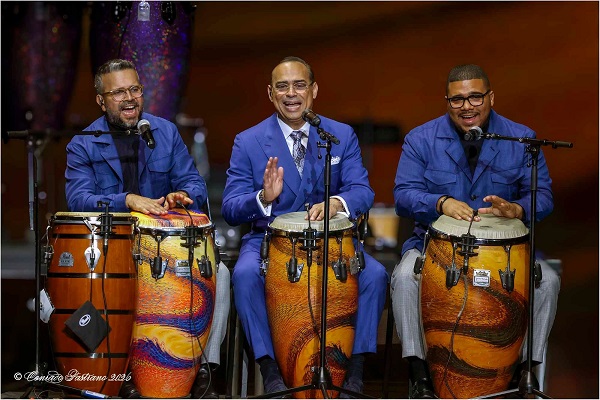
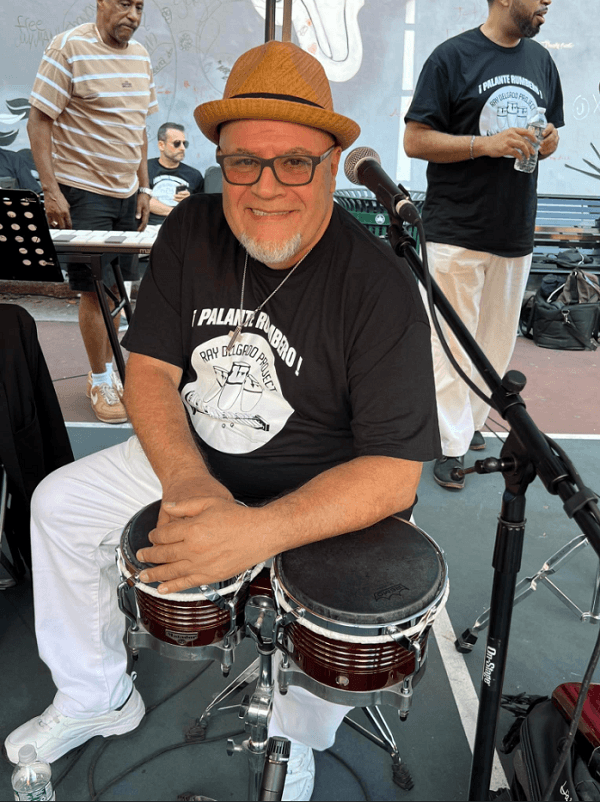
Ray playing the bongo
Ray Delgado playing the bongo live

Ray’s inspirations to become an artist

Ray grew up in a family with deep Puerto Rican roots and was raised between Puerto Rico and New York because his parents constantly moved from one place to another, which made him feel very fortunate because he was being formed between two cultures that allowed him to listen to all kinds of music. In his time, radio remained extremely popular, so this was his vehicle to travel just by listening to certain songs.

Music in English came from the United States and Europe, while music in Spanish came from Cuba, Venezuela, Puerto Rico, the Dominican Republic, Jamaica, and many other countries. Delgado was exposed to all genres, but as a New Yorker, the one that resonated the most with him was salsa and the atmosphere that it brings with it. In fact, he remembers having the joy of seeing the Machito Orchestra, Johnny Pacheco, Héctor Lavoe, Willie Colón, Pete Conde, and many others live.   

These great exponents were the ones who sparked off the young man’s desire to pursue music at some point, but his father did not like the idea at all, as he saw the men in this business as womanizers, drunks, and irresponsible. Obviously, no father wants his son to end up like that, so Ray had to wait to become a responsible adult with a steady job to finally realize his aspirations as a kid.

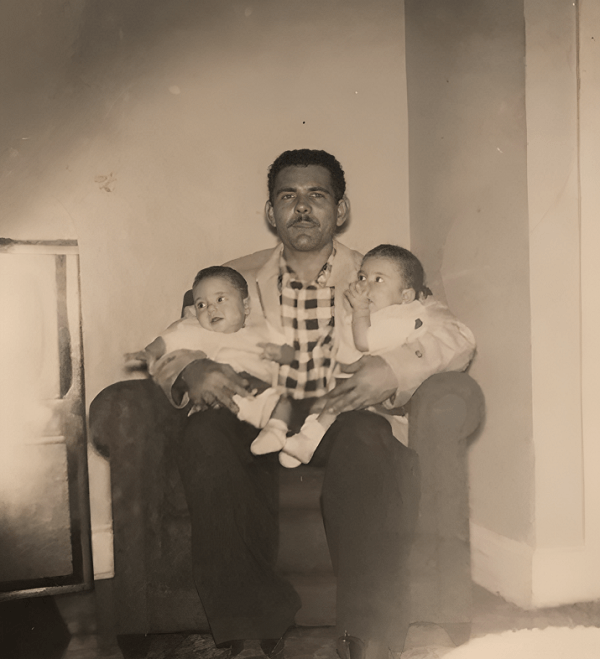
Ray and his father
Ramón Delgado Castro holding his son Ray Delgado and his brother when they were babies

It all started when some older men invited him to play with them, so he found an old bongo drum he kept in his closet and accepted the offer without a second thought.

That was the point of departure for him to play with many other bands in New York, and his consistent work led him to want to be better, to study hard and prepare himself much more.

Ray’s music education

Ray studied at the East Harlem Music School founded by legendary musician Johnny Colón in Manhattan, and focused on timbales with teacher Ray Cruz, but he left the instrument aside for a while when he moved back to Puerto Rico. When returning from the Island of Enchantment, he enrolled at the Harbor Conservatory for the Performing Arts. He also studied with Professor George Delgado, who is the current conguero for the Spanish Harlem Orchestra. He describes him as an excellent teacher and musician from whom he learned so much.

Additionally, he had the support of many musician friends who also helped him and taught him many things that are not learned in an educational institution, including Luis Rivera, Radamés Rojas, Eric Rivera, and many others. Close contact with other artists and groups made him see that many sounded exactly the same and there was little variety, so he decided to form his own orchestra.

In this way, he also learned percussion, which is the area by which he is best known today.

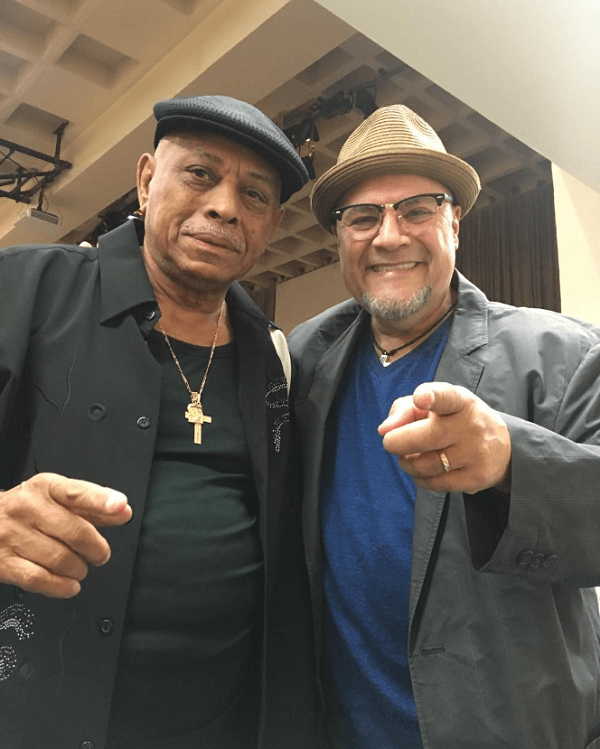
Joe and Ray
Joe Bataan and Ray Delgado

Ray Delgado Project’s birth

Driven by the lack of musical variety in his environment, he wanted to create his own musical project that included vibraphone, percussion, piano, bass, and vocalist. It all started with a workshop for musicians offered by Ray himself in a community room in the building where he lived and he was allowed to use it. After having played and experimented with different styles, the group was getting smaller until all the musicians who signed up ended up leaving.

From there, at every show and opportunity he had to meet new musicians, he would ask for their numbers to recruit them and achieve a chemistry and combination, resulting in the sound he wanted. Ray was in that process from 2009 until now. About three years ago, in 2023, he finally got what he was looking for. 

This group was called Ray Delgado Project, which takes up a huge amount of time and effort. However, the musician says that the New York where his youth was spent, which offered lots of places to go dancing, no longer exists, so there is not much work as back then.

Today, they play many covers of great hits from the 1970s, but they add their own touch to stand out with completely new arrangements. Not so long ago, they released their new version of “Lo Que Traigo es Sabroso,” a hit by Eddie Palmieri, and adapted it to their own style and arrangements. It can be found on Spotify and the main digital platforms. 

Ray and his orchestra
Ray Fuentes (piano), Abraham Saenz (bass), Danny Sieber (vibraphone), Ray Delgado (director and bongo), Rhadames ”Randy” Rojas (lead vocals) Izzy Diaz (congas), and José ”Cheo” Colón (timbales)

Ray is so happy with what he has achieved so far with their orchestra that ensures that when God calls him, he will be calm and happy to have been able to play and make audiences dance during his lifetime. God willing, we wish him many more years playing with the Ray Delgado Project, enjoying life and bringing joy to those who have the pleasure of listening to him. 

Read also: Leader of K’ndela Salsa Band Eric Cabanilla and all his entertainment company has to offer

Don Perignon and La Puertorriqueña Release Classique et Savoureux

Timbalero, director, and music producer Pedro Luis Morales Cortijo, better known as “Don Perignon,” presents the 14th musical production from the “dancer’s orchestra” titled Classique et Savoureux. The leader of La Puertorriqueña features three guest vocalists on the album: Venezuelan musician and sonero Marcial Istúriz; Josué Rosado, one of the most iconic voices from La Puertorriqueña’s history; and “El Niño de Trastalleres,” Andy Montañez. With this record, Don Perignon reinforces his commitment to producing “flavorful” salsa with the dancer in mind.

In September 2025, Don Perignon and Andy Montañez reunited in the recording studio to reinvent “La Bikina.” The digital single fused the signature sound of Don Perignon’s La Puertorriqueña with the seasoned expertise of Andy Montañez. This alliance revives a nostalgic duo—the “dancing timbal” and the “singing compressor” that dates back to 1981. At that time, “Perín” took the reins as Andy’s musical director at the invitation of the legendary vocalist following his departure from Dimensión Latina. From that eight-year partnership, Andy Montañez still treasures Don Perignon’s participation in the 1988 recording of El Eterno Enamorado (TH-Rodven), where the latter not only played the timbales but also served as the album’s musical director. Regarding this, Andy says: “I remember him with great affection and appreciate his discipline in directing that recording, especially because every track became a hit.”

Don Perignon and La Puertorriqueña Release Classique et Savoureux

As promised in earlier press releases, that single was the prelude to Classique et Savoureux, where “La Bikina” is featured as the third track. Don Perignon released the song arranged by pianist and composer Domingo García 60 years after its original composition. The song, originally titled “The Beginning,” was penned by Mexican songwriter Rubén Fuentes Gasson.

Tracklist and Credits

The tracklist for Classique et Savoureux is as follows:

  • “Ella Sigue Bailando”: Composed and performed by Joe González; arranged by Andy Guzmán.
  • “Hay Que Quererlas”: Composed and performed by José Karlo Ribot; arranged by Roberto Pérez.
  • “Pura Imagen”: A classic piece by Adalberto Álvarez, vocalized by Joe González; arranged by Juan C. Cardona.
  • “Ayer Te Vi”: Written by Rubén Rada, featuring the vocals of Henry Santiago; arranged by Ramón Sánchez.
  • “No Se Equivocan”: Written and performed by José Karlo Ribot; arranged by Carlos “Cuto” Soto.
  • “Yo Soy Guaracha”: Written by Ángel Santos, performed by Marcial Istúriz; arranged by Carlos García.
  • A Medley of Boleros: Featuring “Necesito Llamar Su Atención” (Roberto and Erasmo Carlo) and “Mírame Más” (Julio Gutiérrez), performed by Henry Santiago and Joe González; arranged by Juan C. Cardona with a flute solo by Roberto Calderón.
  • “Será Mejor”: The closing track, written by Héctor Olmo and arranged by Juan C. Cardona, featuring vocalist Josué Rosado.

The Musicians

Leading his musical generation on the timbales and as director, Don Perignon was backed by the musicians of La Puertorriqueña and several guest artists. On the congas, Antonio “Coqui” Marrero, Jean Carlos Camuñas, and the late William “Kachiro” Thompson ensured the time and clave remained rhythmically precise. On the bongos, you can hear the distinctive touch of one of the original members of La Puertorriqueña, Miguel Aponte. On bass, the unmistakable Efraín Hernández interacts with Juan Rivera on piano. Other pianists on the recording include Luis Marín, Leni Prieto, and Ricky Rodríguez. The production is rounded out by the backing vocals of the incomparable Henry Santiago, Juan Bautista, and Joe González. The trumpet section featured Ángel and Richie Segarra along with Jesús Alonso; Sammy Vélez on baritone sax; and the trombones were handled by Juan C. Cardona, Gamalier González, César Javier Ayala, and Carlos “Cuto” Soto.

Pedro Luis Morales Cortijo “Don Perignon”

The album was recorded at the studios of Rolando Alejandro and Angelito Segarra, with mastering by Wiso Rivera.

This release “reaffirms Don Perignon’s commitment to the evolution of salsa in the digital age” without neglecting physical formats, as the album is available on CD and LP to ensure the music is accessible to everyone.

With the title Classique et Savoureux, Don Perignon honors more than four decades of using his stage name inspired by the French champagne Dom Pérignon. He expresses gratitude for the longevity of a concept that began without a clear goal but was built on heavy discipline and the firm purpose of making music for the dancer. In an interview, the bandleader stated that his musical project “is already a classic, thanks to the dancers who have appreciated and supported its sabrosura (flavor).”

Also Read: Long live the music! Repeat after me: “Long live the musicians so they can keep making it.” And I’ll add: “Long live SALSA!”

Bella Martinez Puerto Rico

The 2026 NAMM Show Took Center Stage as Historic Gathering Celebrating the Future of Global Music Industry

2026 Show Marked 125-Year Anniversary of NAMM and Demonstrated Why the Global Music Community Gathers Every Year at The NAMM Show.

 January 28, 2026 – NAMM (The National Association of Music Merchants), the largest global not-for-profit music trade organization, celebrated 125 years of NAMM at The 2026 NAMM Show — a powerful week that concluded on Jan. 24 and set the music industry’s narrative for years ahead. Featuring five days of incredible education, live concerts and special events, alongside three days of extraordinary exhibits and brand activations, this year’s show featured 1,650-plus exhibitors representing over 5,400 brands and more than 200-plus educational sessions for NAMM member communities.
The 2026 NAMM Show highlighted innovative music technologies, product introductions and trends that will shape the future of the music industry during a five-day-long platform for networking, connections and meetings that are critical for uniting and growing music makers globally.
“The 2026 NAMM Show once again delivered an incredible week of unity and energy for our global NAMM members, showcasing products, partnerships and networking for the entire music industry,” said John Mlynczak, NAMM president and CEO. “NAMM continues to be the global stage for our industry to announce groundbreaking products, establish transformative partnerships and gain valuable education that drives success for our industry for the rest of the year.”
NAMM SHOW 2026 BY THE NUMBERS
  • 60,000+ show attendees, including 8,760+ international attendees from 122 countries, regions and territories
  • 1,650+ exhibitors representing 5,400+ brands, which is 25% more than 2025
  • Nearly 15,000 artists demonstrating and endorsing products and brands
  • 200+ education sessions with 550+ speakers
  • 1,600+ media, influencers and content creators reaching over 200+ million followers, which is 50% more than 2025.
NAMM SHOW 2026 SET LIST HIGHLIGHTS
Product Launches
The NAMM Electronic Press Kit, an online book of product and show announcements, tripled in size from 2025, with nearly 400 brands and companies using the platform to launch new products at The NAMM Show.
NAMM Global Media Day
Now in its third year, NAMM’s Global Media Day featured iconic brands spanning music, sound and entertainment technology categories to announce more than 500 ground-breaking products and business news to an exclusive media/creator/podcast-only audience of 750-plus guests.
NAMM Events and Awards Shows
Providing the platform for some of the industry’s best awards shows and live events, The 2026 NAMM Show saw sold-out crowds all week long, starting with the TEC Awards, followed by The Bass Awards Show, She Rocks Awards and The Parnelli Awards. Each show catered to a thriving professional community that gathered to honor the best of the best in each category.
Looking Back on NAMM, 125 Years Later
NAMM has been consistently guided by the best minds in the music business, who share a common desire to grow the industry and music making. Ever since 1901, NAMM leaders have come together, even as competitors, to ensure their association is helping the entire industry expand. The 125-year timeline is fully digitized and available to everyone on NAMM.org
NAMM’s Music for Life Honor Awarded to Industry Icon Rick Beato
NAMM presented globally acclaimed producer, educator, musician and YouTube creator Rick Beato with its highest honor, the Music for Life Award, in recognition of his lifelong contributions to music and commitment to inspiring music makers. In an exclusive Thursday morning Q&A with NAMM President and CEO John Mlynczak, Beato discussed his early musical influences, the music products that have helped define his career and the future of the music business in the age of AI.
NAMM’s Grand Rally for Music Education 
NAMM rallied the industry around its mission Saturday morning, highlighted by magical moments with Grammy Award-winning artists Victor Wooten and Chad Smith. The session, hosted by John Mlynczak and Julia Rubio, brought the audience to its feet with inspirational performances, conversations and messages, as well as live performances from Roots of Rhythm.
The NAMM Foundation 
In honor of our 125th “NAMMiversary,” and the upcoming 250th anniversary of the United States, the NAMM Foundation — with a generous $125,000 matching donation from Chris Martin, past chair of NAMM — announced at the 2026 show a total of $250,000 in funds to give back.
The Return of NAMM NeXT Europe and New NAMM NeXT Latin America
Coming off the success of last year’s inaugural event, NAMM NeXT Europe will return and NAMM NeXT Latin America will debut in 2026. These NAMM NeXT events are one- to two-day leadership conferences that will gather our industry to focus on how we can grow the industry and address common challenges.
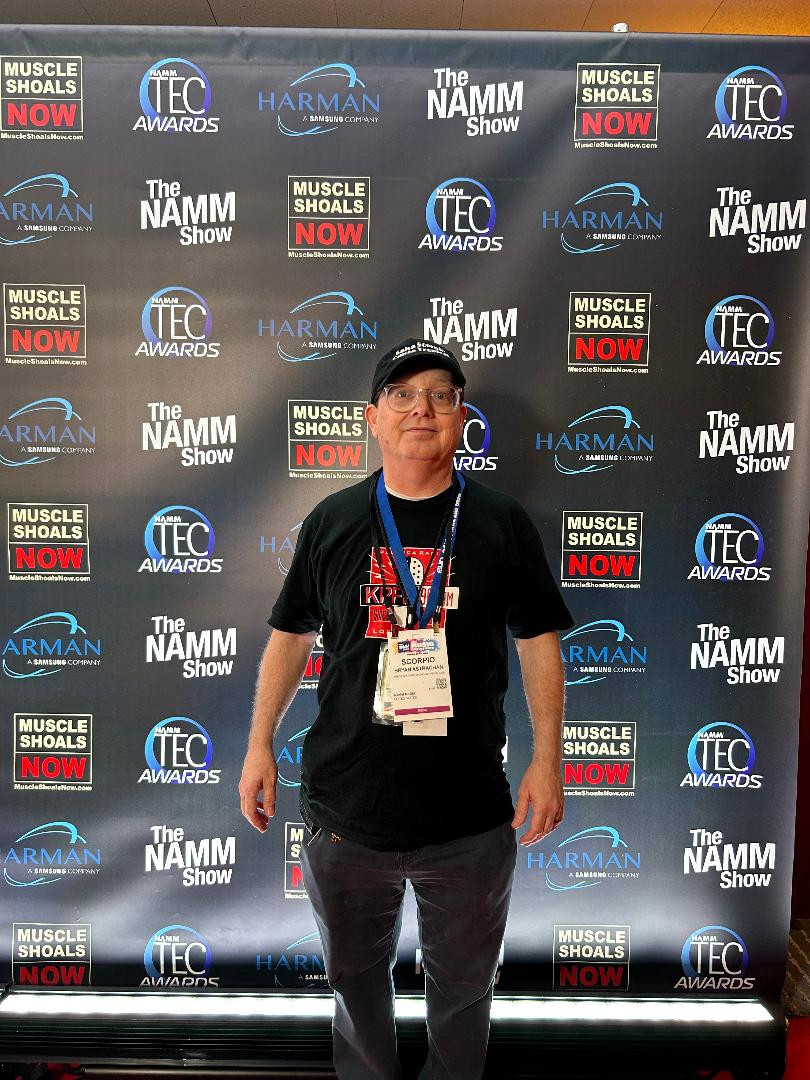
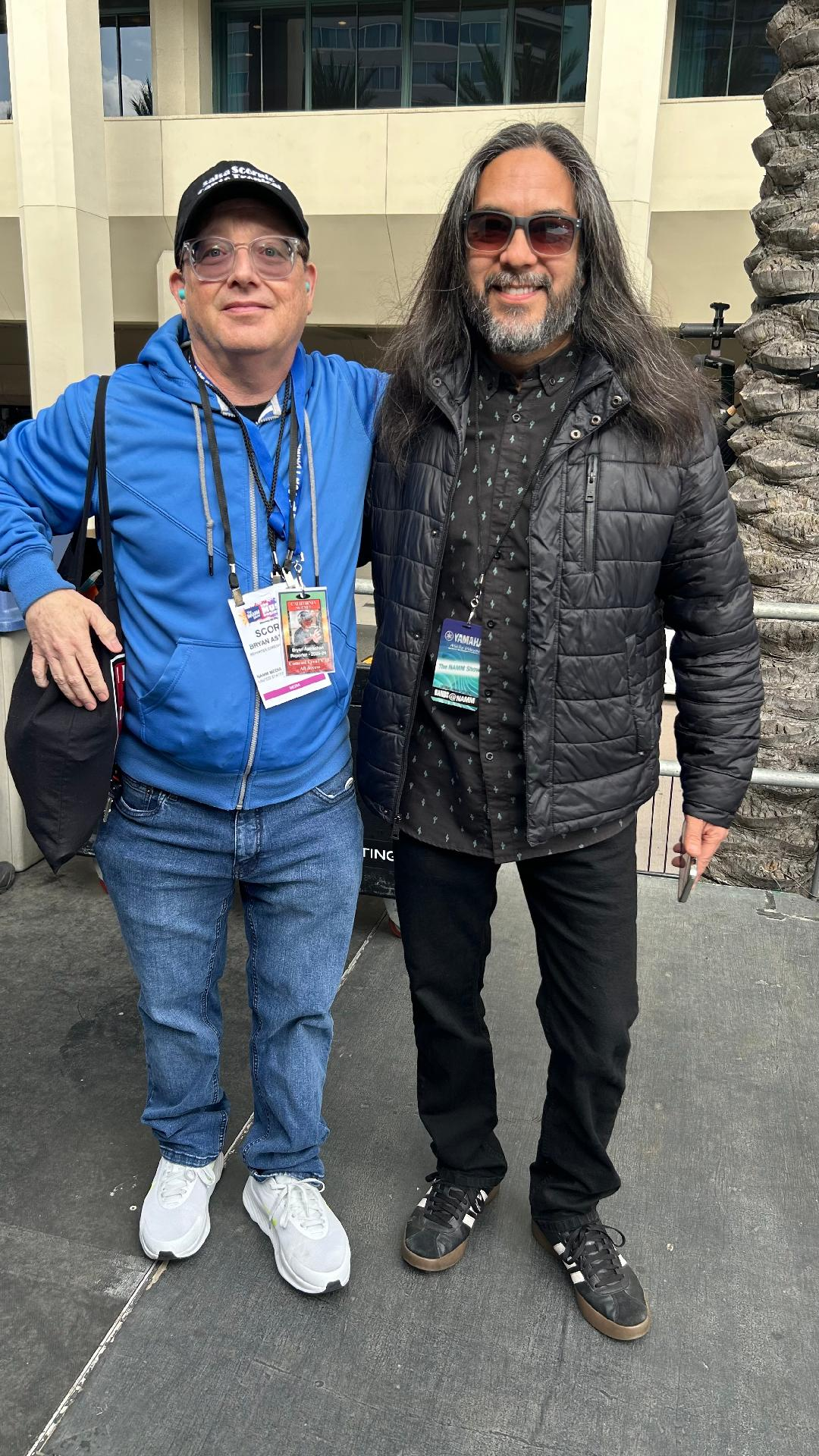
  SCORPIO, Reported and correspondent on the job at NAMM!
Bryan Astrachan, aka Scorpio, at the NAMM Show
Radio host and International Salsa Magazine correspondent Bryan Astrachan, aka Scorpio, at the NAMM Show

The 2027 NAMM Show is already in the works for January 26-30, 2027, at the Anaheim Convention Center. Booths with early bird rates and discounts are available now at NS27 Exhibit | NAMM.org

“I have worked with Gary since 2018 and I have been able to actively learn from his expertise as an engineer, host, programmer and now as the interim program director”

“Gary has always welcomed me with open arms and kindness”
He always supports Canto Tropical and our paths continue to cross as we support live music in all genres!  Scorpio
Gary baca and Scorpio at the NAMM
Gary Baca, KPFK, Interim Program Director & Scorpio, Reporter, Correspondent, and Anchor

Gary Baca, aka G-Spot was born and raised in East Oakland. Baca began his radio career at KALX Berkeley before initiating his radio programming at KPFA Berkeley which then lead him to KPFK Los Angeles.

Gary is an American radio veteran and cultural tastemaker who currently.
In previous radio programs, Baca’s featured presentations have included interviews with Lisa Lisa, Rick James, Morris Day & The Time, George Clinton, Boy George, Tito Puente, Macy Gray, Roger Troutman & Zapp, Bootsy Collins, WAR, James Brown and Cameo, Rakim, The Commodores, Buddy Miles, The Doors, Earth, Wind & Fire, Johnny Mathis and Carlos Santana.
Now celebrating over 30 years of radio programming, he is also a concert emcee introducing such acts as Ice Cube, Cameo, Cypress Hill, DJ Quik, Too Short, E40, Tierra, Malo, The Dramatics, Rappin 4Tay, Sheila E. & Rhythm Tribe.
KPFK 90.7 FM’s Pocho Hour of Power provides a smartly satirical look at political issues facing Latinos in America. Co-hosted by cartoonist Lalo Alcaraz, filmmaker Esteban Zul, comedian’s Jeff Keller, Paul Vato, and producer Gary Baca the show brings its raucous brand of satire.
*Gary has a history of discovering artists, hosting community TV, and teaching radio skills.
KPFK, Interim Program Director: Manages Programing for KPFK.DJ & Host:
Global Village (Tuesday’s 11am-
1pm) The Pocho Hour of Power
(Friday’s 3-4pm) Welcome 2 the
Dawn (Saturday 4:00 AM – 6:00 AM) Co-Host and produce La Raza radio Thursdays 3-4pm
Gary Began his career in radio in the late 80’s at KALX in Berkely
KPFK 90.7 FM Los Angeles, 98.7 FM
Santa Barbara,
93.7 FM San Diego, 99.5 FM
Ridgecrest & China Lake *ONLINE @ KPFK.ORG
Studios located in Glendale, CA
Transmitter high atop Mt. Wilson
With 110,000 watts of power
 
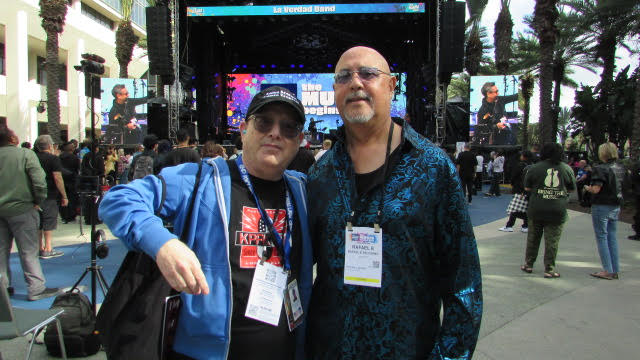
Scorpio and Rafael Feliciano
Scorpio with Rafael Feliciano, “Soul Sauce”
Born out love and respect for the unique musical sounds created by latin jazz legend/vibist Cal Tjader, this collective of pro players recreate the exact musical arrangements Tjader wrote and recorded for today’s audience. From original hits such as “Soul Sauce(wachi-wara)” to versions of jazz standards like “Speak Low”, this band will entrance an audience with its exotic, soothing sound which fuses afro-cuban and brazilian rhythms with modern jazz classics.
The band features Peter Burke on vibes/percussion, Ramon Banda on timbales, Rafael Feliciano on congas, Joe Rotondi on piano, and Ross Schodek on bass. There is usually a surprise guest appearance added to each show as well, making each performance a special occasion.
“I have had the pleasure of attending several “Soul Sauce” presentations at a variety of venues including Roscoe’s in Long Beach  and I have always been impressed with their professionalism, talent , respect & love for the music they play live”
Scorpio, Reporter, Correspondent and Anchor
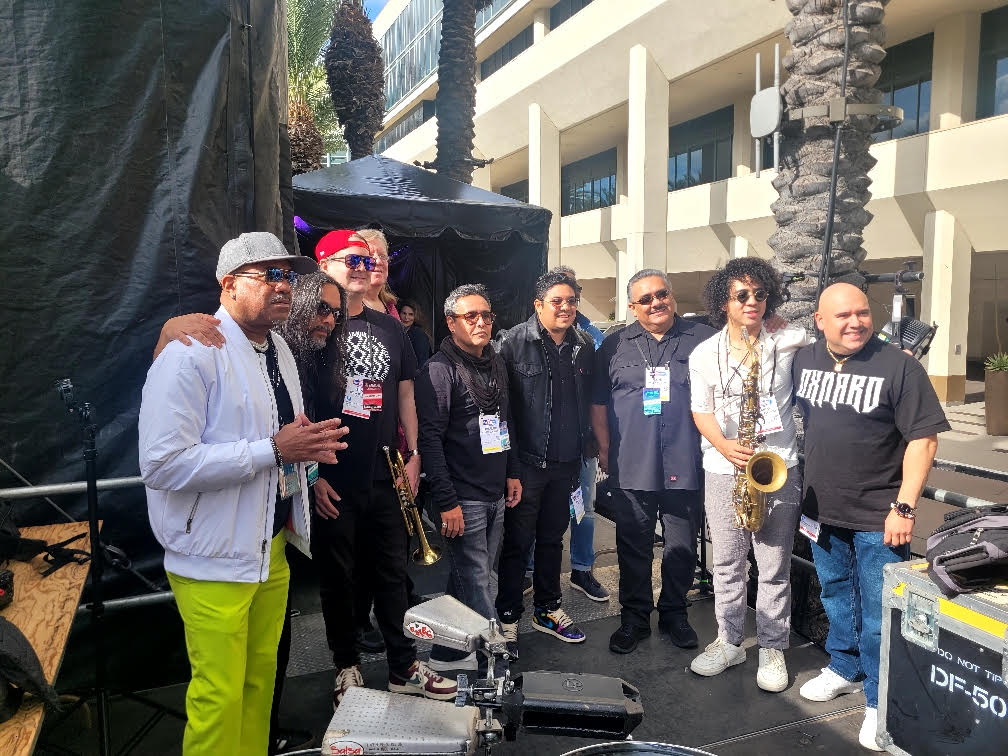
Musicians at The NAMM Show
Some musicians at The NAMM Show
Gabrielito at The NAMM Show
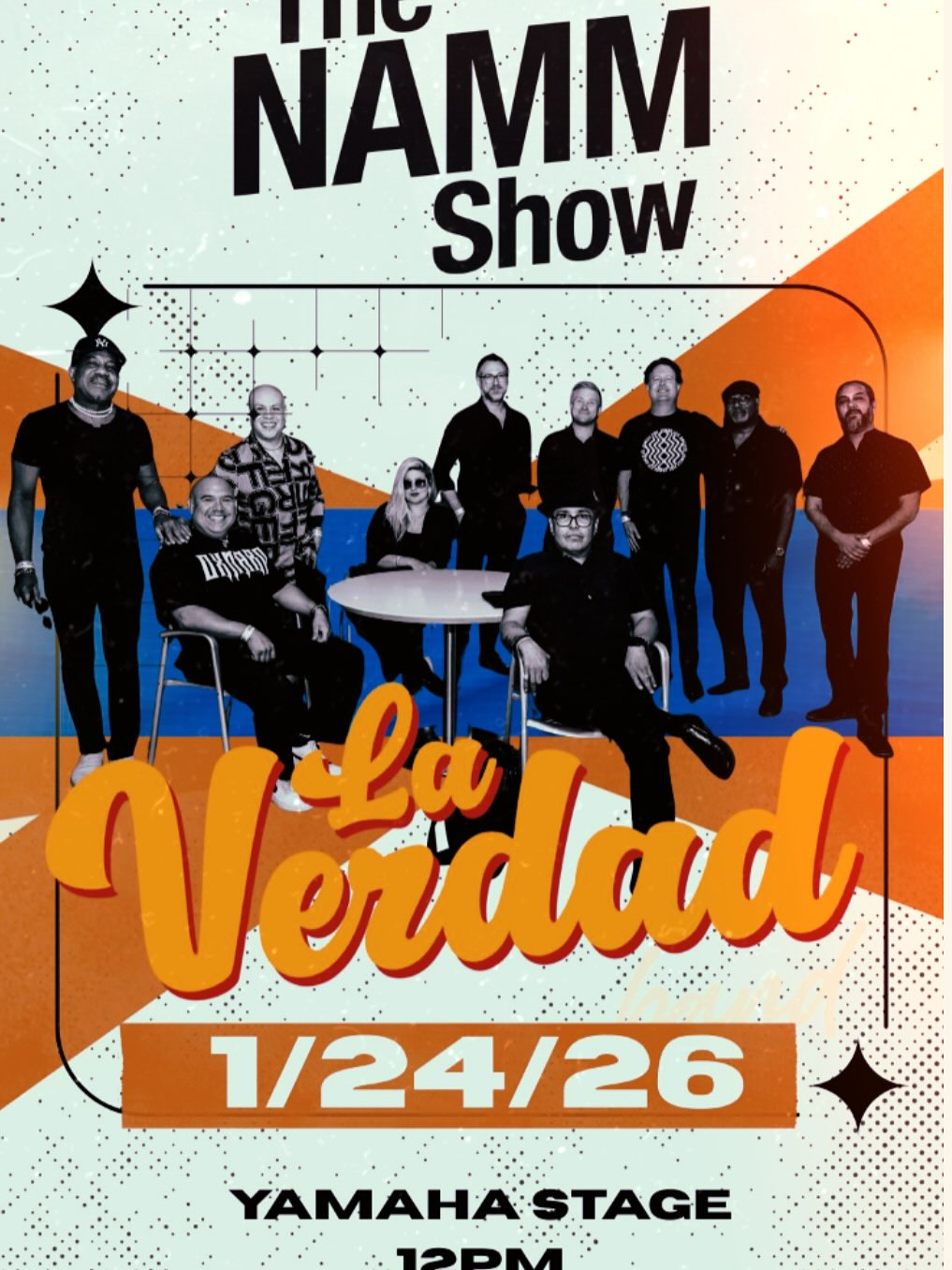
Gabrielito Y La Verdad at The NAMM Show

Gabriel Gonzalez, also known by his stage name Gabrielito, is a multi-talented artist whose career spans decades of film, music, videos, commercials, theatre and live-performance concerts. Internationally recognized for movie roles from his childhood work in Mexican cinema to cult classic films as well as countless mainstream commercials, tours and stage productions, Gonzalez captivates audiences with his dynamic stage presence and larger-than-life vocals that make each performance a memorable experience.

He began his career in show business at the age of seven appearing in numerous top grossing films in Latin America featuring the Latin Orchestra La Sonora Santanera and famed comic Resortes. At eight years old, he recorded his first album. Gonzlaez has toured and shared billing with some of today’s most iconic artists across Mexico, Cuba, and the U.S. including Camilo Sesto, Lalo Guerrero, Juan Gabriel, Los Van Van, QUETZAL, Cubanismo, Lila Downs, Los Lobos and many more.

Most notably, he toured with the Tony award-winning musical, In the Heights by acclaimed composer Lin-Manuel Miranda as a principal character of the 2011-2012 North American National Tour. Gonzalez’s latest projects include working in the Salsa community with bands such as Boogaloo Assassins and the Los Angeles-based La Verdad.

La Verdad is the premier West Coast Latin music ensemble. A collective of world-class musicians embodying the truth of the Los Angeles Latin experience, the group is led by Grammy award-winning singer-songwriter Gabriel Gonzalez. La Verdad’s traditional and original repertoire spans the scope of Latin American route music including Salsa, Cha-Cha, Boogaloo, Latin Soul and much more.

Scorpio with Gabrielito

“I have had the absolute pleasure of knowing Gabrielito for several years and I have grown to love & respect his music”

I have had numerous conversations with him regarding community uplift activities and his love for his family and children!
“Gabrielto has impressed me with his ongoing support of public radio especially Canto Tropical and Alma Del Barrio and live music”
Scorpio, Reporter, Correspondent and Anchor
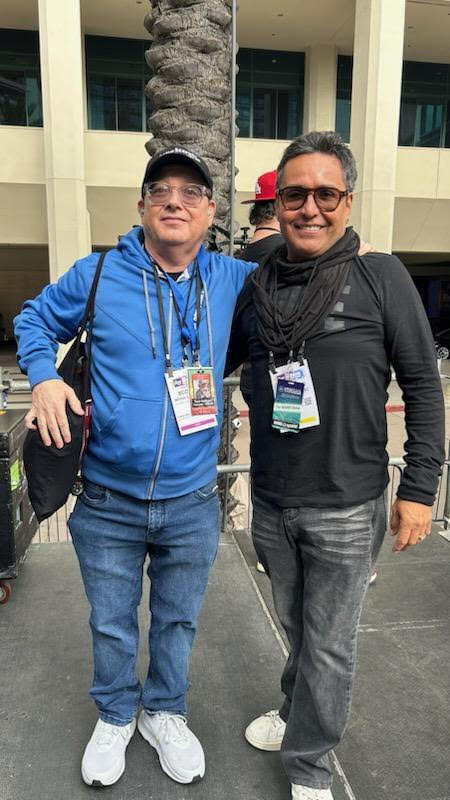
Scorpio and Max at the NAMM Show
Scorpio and Max from La Verdad
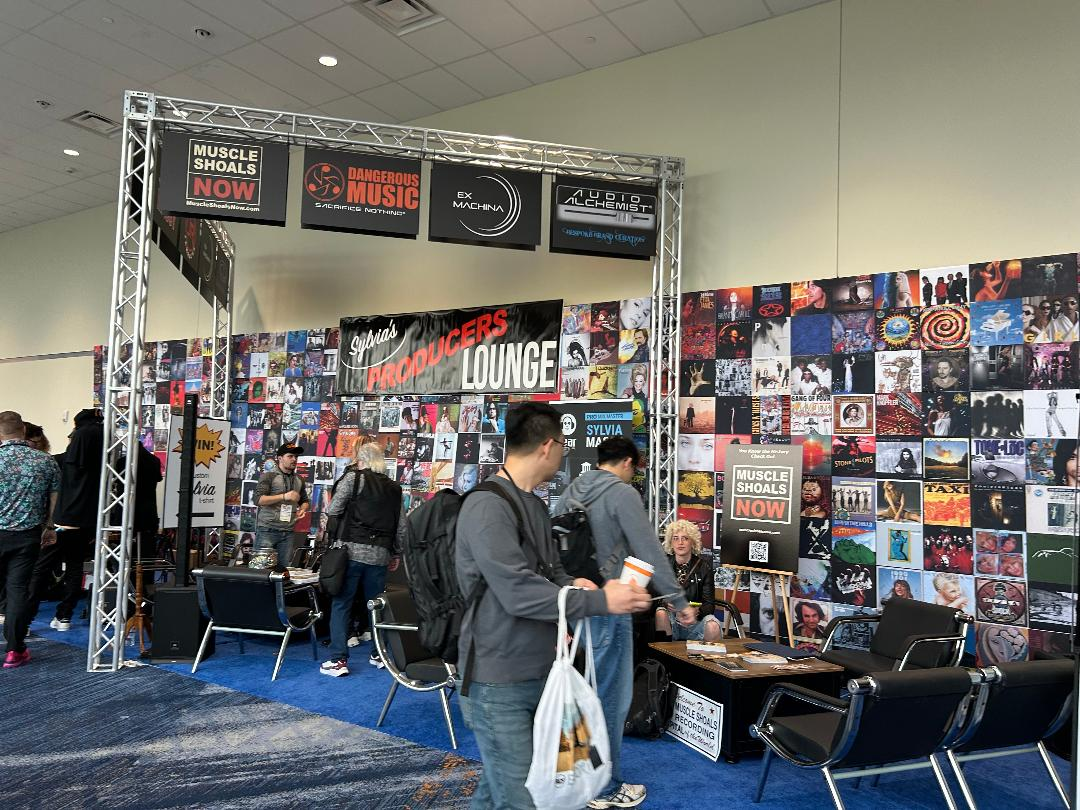
Pictures of NAMM
the stands of the NAMM Show
People shopping in the stands of the NAMM Show
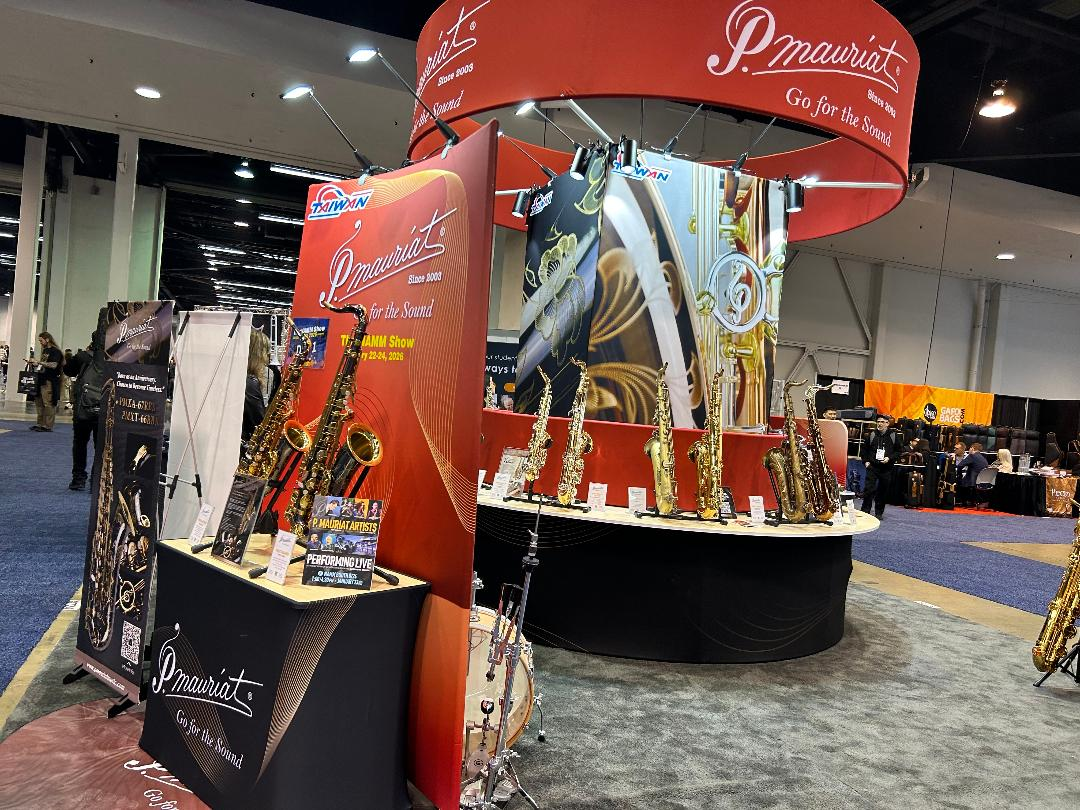
Instruments at The NAMM Show
Some instruments at The NAMM Show


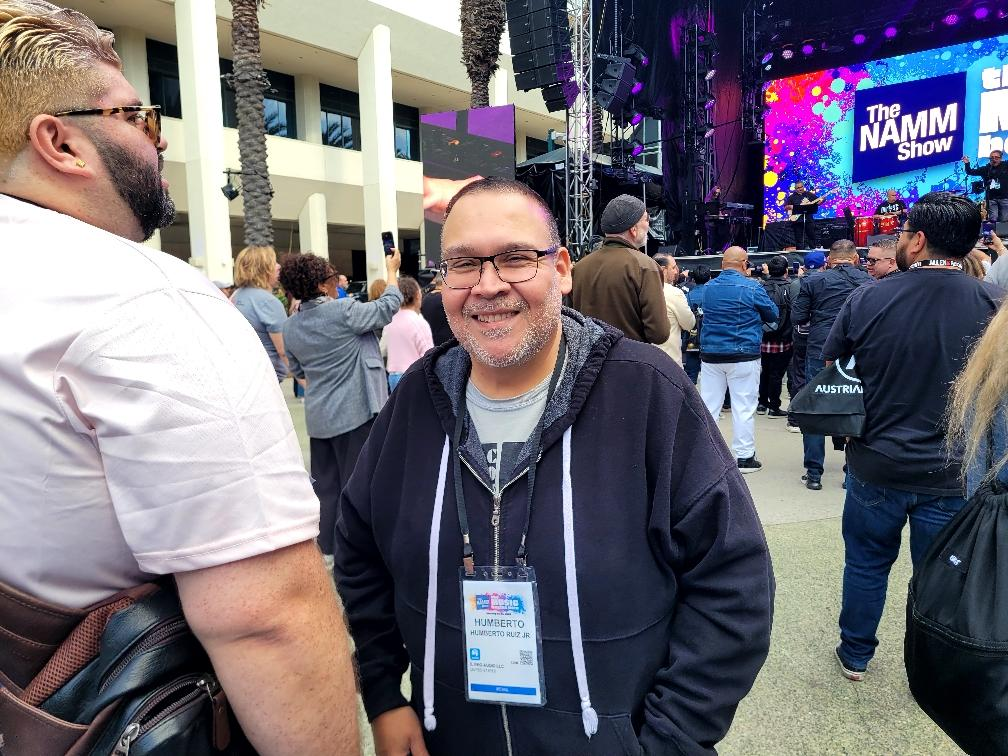
Humberto Ruiz Jr, Musician at The NAMM Show
Humberto Ruiz Jr, Musician
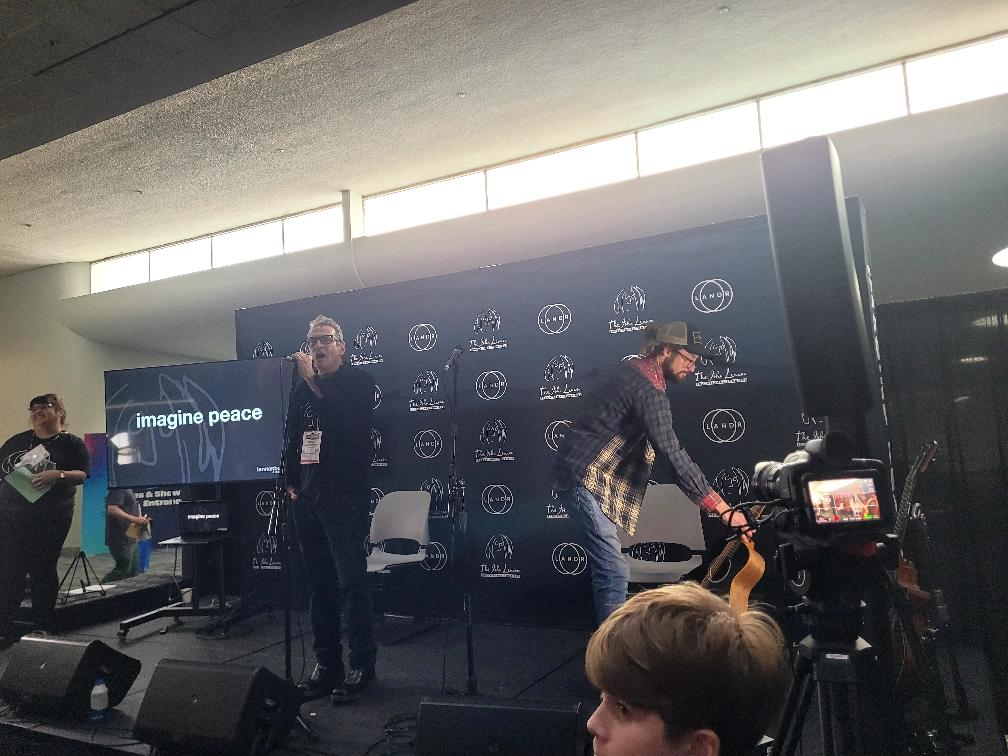
Musicians on stage at the NAMM Show
Some musicians on stage at the NAMM Show

MOLENNON BUSES IN THE UNITED STATES AND EUROPE ARE DEDICATED TO PROVIDING YOUNG PEOPLE, COMMUNITIES AND SCHOOLS WITH FREE EVENTS, WORKSHOPS, INTERACTIVE EXPERIENCES, AND HANDS-ON OPPORTUNITIES TO PRODUCE AUDIO, VIDEO, AND DIGITAL MEDIA PROJECTS.

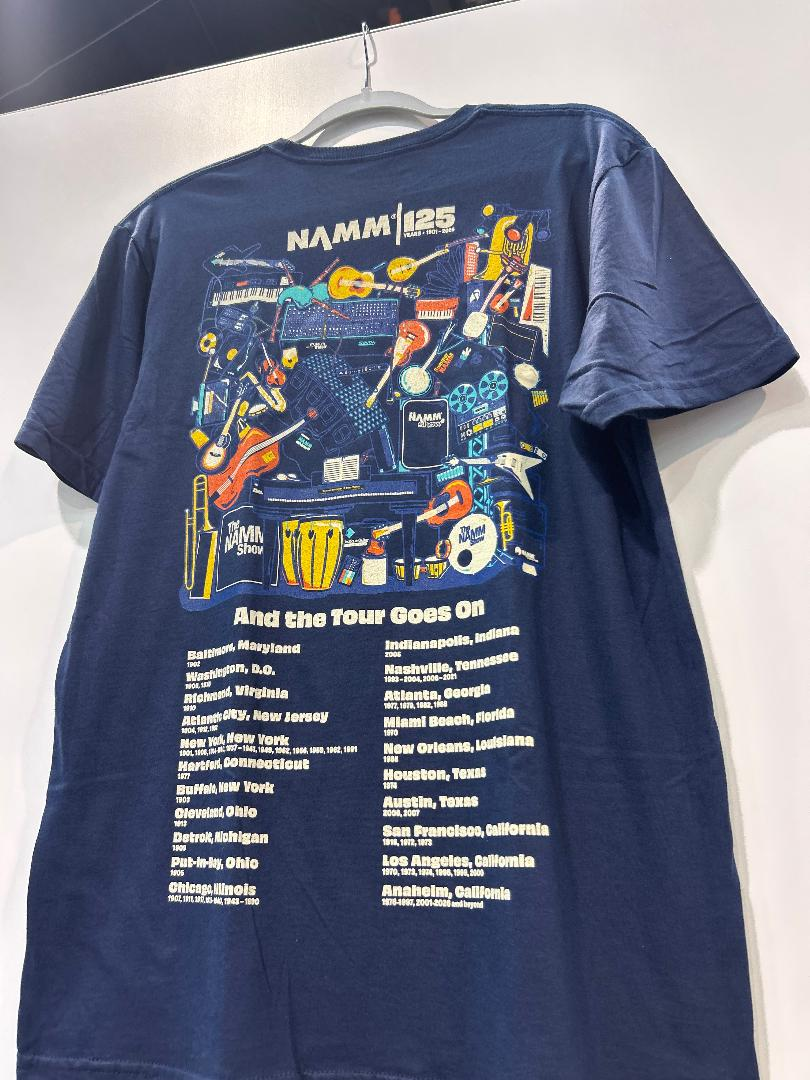
THE OFFICIAL NAMM SHIRT

THE JOHN LENNON EDUCATIONAL TOUR BUS IS A NON-PROFIT MOBILE PRODUCTION STUDIO.


MUSIC AND VIDEO CREATION

The John Lennon Educational Tour Bus is a non-profit mobile production studio.

MOBILE PRODUCTION STUDIOS

The John Lennon Educational Tour Bus is a non-profit mobile production studio.

MOBILE PRODUCTION STUDIOS

The John Lennon Educational Tour Bus is a non-profit mobile production studio.
Read also: Manhattan Latin Music by Jon Horn

Bryan 'Scorpio' Astrachan

  • « Go to Previous Page
  • Page 1
  • Page 2
  • Page 3
  • Page 4
  • Page 5
  • Interim pages omitted …
  • Page 28
  • Go to Next Page »

International Salsa Magazine (ISM) is a monthly publication about Salsa activities around the world, that has been publishing since 2007. It is a world network of volunteers coordinated by ISM Magazine. We are working to strengthen all the events by working together.