• Skip to primary navigation
  • Skip to main content

International Salsa Magazine

  • HOME
  • Previous editions
    • 2026
      • ISM / August 2026
      • ISM / July 2026
      • ISM / June 2026
      • ISM / May 2026
      • ISM / April 2026
      • ISM / March 2026
      • ISM / February 2026
      • ISM / January 2026
    • 2025
      • ISM / December 2025
      • ISM / November 2025
      • ISM / October 2025
      • ISM / September 2025
      • ISM / August 2025
      • ISM / July 2025
      • ISM / June 2025
      • ISM / May2025
      • ISM / April 2025
      • ISM / March 2025
      • ISM / February 2025
      • ISM / January 2025
    • 2024
      • ISM / December 2024
      • ISM / November 2024
      • ISM / October 2024
      • ISM / September 2024
      • ISM / August 2024
      • ISM / July 2024
      • ISM / June 2024
      • ISM / May 2024
      • ISM / April 2024
      • ISM / March 2024
      • ISM / February 2024
      • ISM / January 2024
    • 2023
      • ISM / December 2023
      • ISM / November 2023
      • ISM / October 2023
      • ISM – September 2023
      • ISM – August 2023
      • ISM July 2023
      • ISM Edition June 2023
      • ISM – May 2023
      • ISM April 2023
      • ISM March 2023
      • ISM February 2023
      • ISM January 2023
    • 2022
      • ISM December 2022
      • ISM November 2022
      • ISM October 2022
      • ISM September 2022
      • ISM August 2022
      • ISM July 2022
      • ISM June 2022
      • ISM May 2022
      • ISM February 2022
      • ISM January 2022
    • 2021
      • ISM December 2021
      • ISM November 2021
      • ISM October – 2021
      • ISM September 2021
      • ISM August 2021
      • ISM July 2021
      • ISM May 2021
      • ISM April 2021
      • ISM June 2021
      • ISM March 2021
      • ISM February 2021
      • ISM January 2021
    • 2020
      • ISM December 2020
      • ISM November 2020
      • ISM October 2020
      • ISM September 2020
      • ISM August 2020
      • ISM July 2020
      • ISM June 2020
      • ISM May 2020
      • ISM April 2020
      • ISM March 2020
      • ISM February 2020
      • ISM January 2020
    • 2019
      • ISM December 2019
      • ISM November 2019
      • ISM October 2019
      • ISM Septembre 2019
      • ISM August 2019
      • ISM July 2019
      • ISM June 2019
      • ISM May 2019
      • ISM April 2019
      • ISM March 2019
      • ISM February 2019
      • ISM January 2019
    • 2018
      • ISM December 2018
      • ISM November 2018
      • ISM October 2018
      • ISM September 2018
      • ISM August 2018
      • ISM July 2018
      • ISM June 2018
      • ISM May 2018
      • ISM April 2018
      • ISM March 2018
      • ISM February 2018
      • ISM January 2018
    • 2017
      • ISM December 2017
      • ISM November 2017
      • ISM October 2017
      • ISM September 2017
      • ISM August 2017
      • ISM July 2017
      • ISM June 2017
      • ISM May 2017
      • ISM April 2017
      • ISM March 2017
      • ISM February 2017
      • ISM January 2017
    • 2016
      • ISM December 2016
      • ISM November 2016
      • ISM October 2016
      • ISM September 2016
  • Spanish
  • Download Salsa App
    • Android
    • Apple

Search Results for: Tito Rodríguez

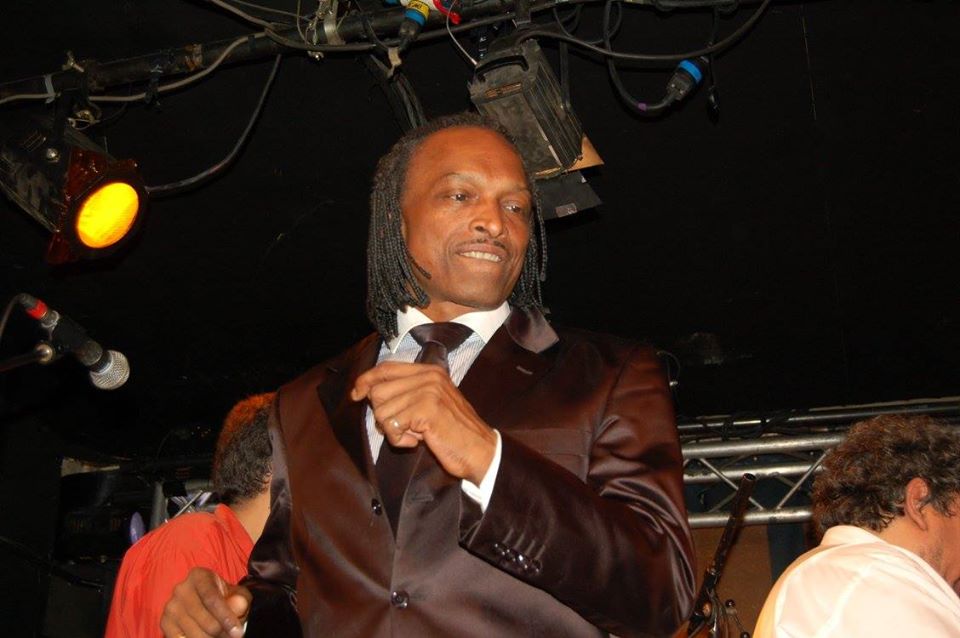
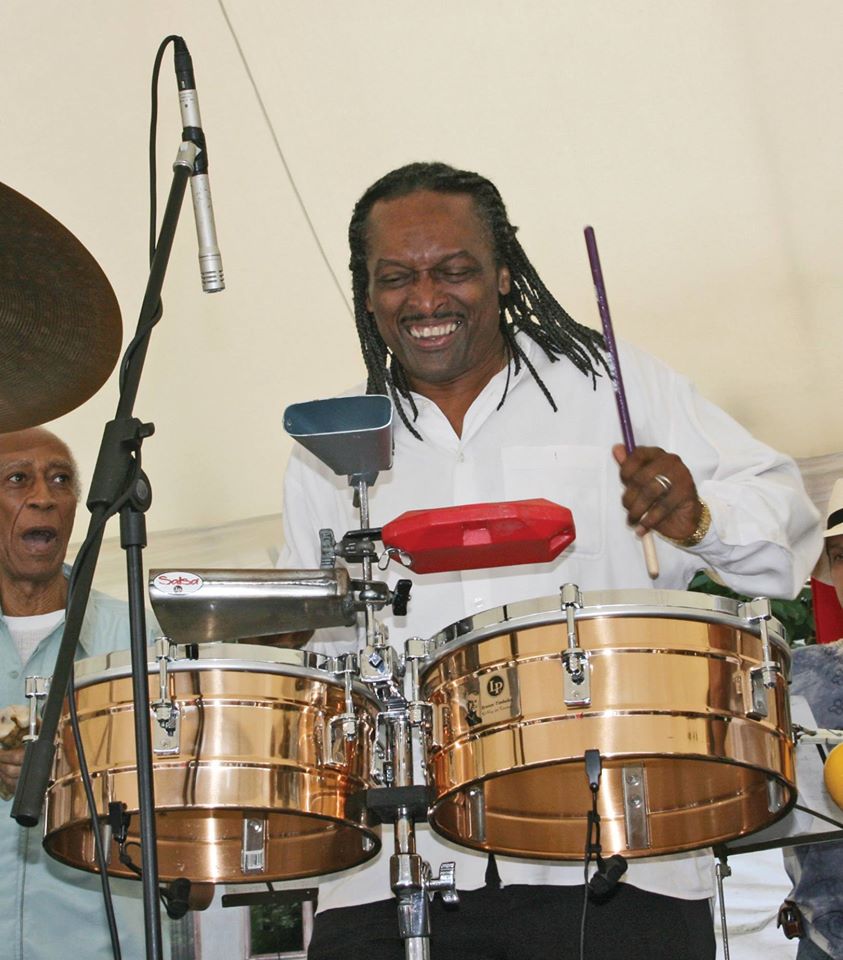
Jimmie Morales a conguero for the history of Afro-Caribbean music

Jimmie Morales was born in Bridgeport, Connecticut to Puerto Rican parents

Jimmie Morales was born in Bridgeport, Connecticut to Puerto Rican parents.

He spent his early childhood listening to American popular music on the radio, and it wasn’t until 1967, when his family moved to Puerto Rico, that he became fascinated with Caribbean music, especially the salsa genre.

Jimmie’s first foray into music was with the guitar, but his father gave him a bell and, later, a conga drum that would become his main artistic fascination.

He learned of his interest by listening to Cuban, Puerto Rican and New York salsa records; also to congueros such as Milton Cardona, Eddie Montalvo, Patato Valdés, Cándido Camero, Mongo Santamaría, Johnny Rodríguez and his favorite: the late Ray Barretto.

In a very short time, he found himself making inroads with local bands, and sharing his talent with the renowned singer Tito Allen.

Jimmie Morales' memoirs Mr. Slap
Jimmie Morales Mr. Slap

Jimmie Morales and his experience with Willie Rosario

In 1978, Jimmie joined the popular rhythmic band of maestro Willie Rosario, and for eight years obtained what he considers his best formal training in the music industry.

Concurrently, he began an impressive career as a top-level studio musician, achieving outstanding participation in performances by the most important artists of the salsa genre, including Marc Anthony, Gilberto Santa Rosa, Roberto Roena, Oscar D’León, Lalo Rodríguez, Eddie Santiago and Frankie Ruiz, with whom he collaborated on each and every one of his solo recordings.

The sound of this great percussionist, his impeccable rhythm and his solid accompaniment defined him and have placed him convincingly as one of the most influential congueros of the last 30 years.

As if that were not enough, this talented conguero enjoys the genuine respect and appreciation of the Puerto Rican people and salsa connoisseurs worldwide
Jimmie has also accompanied great artists such as Willie Colón, Ismael Miranda, Tito Nieves, Juan Luis Guerra, Grupo Niche and Jerry Rivera

Trajectory with Gilberto Santa Rosa

In 1986, he joined a young Gilberto Santa Rosa, who had left Mr. Willie Rosario’s band to become the most prolific salsa singer in the last 25 years.

Since then he has traveled throughout the Americas, Europe, Japan, Taiwan and South America offering percussion workshops and accompanying different artists in a consistent and successful career as a percussionist. Jimmie Morales has also accompanied great artists such as Willie Colón, Ismael Miranda, Tito Nieves, Juan Luis Guerra, Grupo Niche and Jerry Rivera, among others.

He is currently promoting his line of congas sponsored by the Remo Company. As if that were not enough, this talented conguero enjoys the genuine respect and appreciation of the Puerto Rican and Latin American people. His humility, his affable treatment and his charisma, together with his musical virtuosity, make him worthy of an indisputable place in the history of salsa.

In 1986, he joined a young Gilberto Santa Rosa, who had left Mr. Willie Rosario's band to become the most prolific salsa singer in the last 25 years.
Jimmie Morales is currently promoting his conga line sponsored by the Remo Company

Since then, he has traveled throughout the American continent, Europe, Japan, Taiwan and South America offering percussion workshops and accompanying different artists in a consistent and successful career as a percussionist.

Jimmie has also accompanied great artists such as Willie Colón, Ismael Miranda, Tito Nieves, Juan Luis Guerra, Grupo Niche and Jerry Rivera, among others. He is currently promoting his line of congas sponsored by the Remo Company.

As if that were not enough, this talented conguero enjoys the genuine respect and appreciation of the Puerto Rican people and of salsa connoisseurs worldwide. His humility, his affable treatment and his charisma, together with his musical virtuosity, make him worthy of an indisputable place in the history of salsa.

A conguero for history Jimmie Morales’ memoirs

“Mr. Slap”       

Bella Martínez (Author)

That originality of Willie Rosario must have influenced Jimmie's impeccable style.
Jimmie paid for the luck that accompanied him at that crucial moment with an immense dose of vocation.

When all the congueros were imitating the king of the hard hands, Ray Barreto, Jimmie manages without intending to be the one chosen by the master Willie Rosario to accompany with the conga the tuning that Rosario had already established.

That Willie Rosario originality must have influenced Jimmie’s impeccable style.

Let’s not forget that when all timbaleros were imitating maestro Tito Puente, that irreverent coameño – maestro of maestros Willie Rosario knew how to be original.

Jimmie repaid the fate that accompanied him at that crucial moment with an immense dose of vocation.

And that stroke of luck in the leather didn’t manage to erase the humility of his being.

I invite you to read what I have managed to compile about Jimmie Morales, whom, with your authorization, I show in this work that pretends to be a summary of the life and work of this incredible musician.

Here you will also see that in spite of his perennial shy smile, his hands of stone do not give a break nor allow tropical music to ignore his monumental influence.

Jimmie, the human being who communicates through the leather of his conga, presents us with the musical strength he continues to share with the world. I am deeply grateful for the introspection and candor of his testimony.

I recognize that I am fortunate that Jimmie has agreed to give me part of his voice and to perpetuate this story. I insist that it was a sin not to share this legacy before, but now it was Mister Slap who beat the drum.


Home

The Legends: Tribute to Billo’s

North America / United States

Tribute to Billo’s. How was made?

Legends was conceived between April and September and it is already a reality! The album that is making people of all ages dance.

The record label JN Music Group is recognized for enhancing the work of Latinos in the United States. The company has 37 years of experience in the market and is chaired by Juan Hidalgo and Nelson Estévez, producers of Latin music in its different genres. Both have set themselves the goal of promoting other genres because “not everything is reggaeton”.

Adrián Frometa, grandson of the remembered Luis María Frometa “Billo’s”, is the new Director of the orchestra and was in charge of the negotiations around the album.

Great tropical artists participated in the tribute to Billo’s
Artists like Milly Quezada, Karina and Oscar D’León participated in the Billo’s album

“Los Legendarios” was conceived as a nice reminder of the musical career of maestro Luis Frometa. The proposal was born in these months of quarantine and the invited artists did not hesitate to participate. Different exponents of tropical music came together to enhance the work of the Dominican artist.

“For us as a record label it is an honor to make this tribute album that maestro Billos deserved it for a long time, the artists we have contacted are excited to participate in what we are sure will be the end of the year album”, commented Nelson Estévez owner by JN Music Group.

The project aroused great interest from fans around the world; and from now on it is considered the “album of the year”. A few days after its premiere, the views on YouTube have exceeded ten thousand visits. “Sigan bailando”, performed by Milly Quezada, reached forty thousand views.

Established artists such as Tito Rojas, Oscar D ’León, Wilfrido Vargas, Carlos Vives, Milly Quezada, Eddy Herrera, Karina, Alex Bueno, Charile Aponte, Sergio Vargas and Don Fulano; they were in charge of giving life to the remembered songs.

A closing of the year that arrives in style, under the musical production of Remil Cobi Renna and Victor Pabon.

“Tres Perlas”, performed by Carlos Vives, “De qué me sirve el cielo” by Karina, “El Brujo” by Don Fulano, “Por encima de todo” by Óscar D ‘León, “Sigan bailando” by Milly Quezada and “ Caminito De Guarenas” by Alex Bueno, are some of the video clips that are already on the different digital platforms. The cover is accompanied by an illustration by Luis Frometa and the interpreters.

The initiative took place during the long days of the global pandemic, where many artists and producers took the opportunity to exploit their creativity, generating new materials; and pleasantly surprising the fans. The album was recorded between Miami, New York, Colombia, the Dominican Republic and Puerto Rico.

“Tres Perlas” was very famous in 1971. In this case, Carlos Vives was in charge of bringing it to life. It is the beginning of a job well thought out and done with the heart. It has an animated audiovisual work where Vives and the remembered Frometa are observed. There are also three ladies, symbolizing “Santa Marta, Barranquilla and Cartagena”, present in the song.

Remembering the golden age

The singer is remembered for his great successes, as well as his great love for Colombia and Venezuela.

Luis María Frometa was the founder of Billo’s Caracas Boys and, for years, he remained at the helm. Starting in the 1960s, they became more famous in Colombia. He took part in family gatherings and renowned events.

Even Pablo Escobar himself, a remembered drug trafficker from that country, wanted to have him in some of his celebrations. In fact, he came up to thank her himself after he sang for his mother’s birthday. However, his children claim that he was not aware of who the hiring was for and if he had known, he would not have wanted to make an appearance.

The Billo’s also had the opportunity to appear at the Bogotá Modelo Prison, after Carlos Orjuela, Frometa’s friend, was confined in one of his cells. The singer did not hesitate to visit his friend. However, he did not allow it. He looked for excuses to prevent me from visiting that place. This was not an impediment for Frometa who ended up showing up at the facilities. For him, they too had the right to enjoy his music. Those who accompanied him affirmed that the energy was incredible and everyone enjoyed the presentation.

The group had great talents such as: Memo Morales, Cheo García, Felipe Pirela, Manolo Monterrey, José Luis Rodríguez, Rafa Galindo, Víctor Pérez and Nelson Henríquez.

Luis María Frometa Pereira, was born in the capital of the Dominican Republic, on November 15, 1915. He got his nickname for a phrase he used very frequently, he called any route that came his way Billo. He started in music from a very young age. Represented the Santo Domingo Symphony and the Firefighters Orchestra Band. So he walked through some small bands, until he reached his first big break. Venezuela was one of the first countries to receive him with open arms and where he was presented for the first time under the name “Billo’s’ happy boys ”´; ignoring the demand of Rafael Leonidas Trujillo, dictator who led his country.

Even when the band disintegrated, Frometa remained in Venezuela. Going through difficulties, economic downturns and a disease that took him away from the stage. However, he returned in style and was consolidated in the memory of those who enjoyed his songs. The contracts did not stop arriving and thus were the beginnings of a band that celebrates 80 years of musical trajectory.

A tribute to history

This is why this 2020 will be a celebration for the issues that moved masses and passed from generation to generation. “Legends” consists of twelve songs and ten originals by the group.

The idea is that Billo’s remains in the hearts of his fans. After 80 years since its creation and some 100 productions are still valid. His repertoire has always been the most varied; It ranges from boleros, guarachas, porros and Dominican merengue. Also, of Caribbean music.

Milly Quezada, a Dominican merenguera with a Colombian heart, was one of the special guests. In charge of interpreting “Sigan Bailando” and was very enthusiastic.

“What I consider to be one of the most contagious and joyful tropical songs that best defines the happy and fun spirit of Latin Americans and especially of us, the Caribbean, who carry the rhythm in our blood. Definitely, the greatest and most important contribution of the Billo’s Caracas Boys was the presentation, diffusion and positioning of the Dominican merengue, which he transmitted with such musical and literary quality, as well as other Caribbean genres that belong to all of us, ” said Quezada.

Carlos Vives also premiered his album song: “Tres Perlas”. He confessed himself a fan of the teacher Fometa and, for this, he is very excited.

“If there is a legendary orchestra, it is Billo’s. I want them to enjoy it, to mourn it, because I know that many will do it, and that the youth discover a great figure in music that is not only from Dominicans, Venezuelans and Colombians, but from all of America ”, said the artist through from your Twitter account. “Participating in this album is as if I had won a prize, I don’t know what, but I feel like a prize,” said Vives.

Legendarios is now available on different digital platforms under The Orchard Music label (on behalf of J&N Records, LLC). Do not miss it!

Home

Orestes Vilató is one of the most influential figures in the world of Latin percussion

The Cuban multi-percussionist, Orestes Vilato, is undoubtedly one of the greatest figures in the history of Cuban drums known as timbales.

He is one of the most influential figures in the world of Latin percussion.

He was born on May 4, 1944 in Camagüey, Cuba, and currently resides in San Francisco, California in the United States.

He has worked with many of the best exponents of Cuban popular dance music and Latin jazz, from José Antonio Fajardo and Israel López (Cachao) to Rubén Blades and Carlos Santana.

He is one of the most influential figures in the world of Latin percussion. He was born on May 12, 1944 in Camagüey, Cuba, currently resides in San Francisco, California in the United States
Orestes Vilato is one of the most influential figures in the world of Latin percussion

During the 1950s, the Vilato family moved to New York, the world capital of salsa, where the young Orestes would rise to fame as an innovator of his beloved traditional instrument, “Los Timbales.

While living in New York City for 25 years, Orestes was intimately involved with many musical organizations that played key roles in shaping the course of Latin music around the world.

Among the many groups were: Fania All Starts (founding member), Ray Barretto, Tipica 73 (founding member), Los Kimbos (founder-director), Tito Puente, Johnny Pacheco, Cheo Feliciano, Ismael Rivera, Joe Cuba, Eddie Palmieri, Ruben Blades, La Lupe, Celia Cruz, Rolando La Serie, Chico O’Farril, Lionel Hampton, Los Chavales de España, Cal Tjader.

Other artists he has recorded or worked with include: Winton and Bradford Marsalis, Paco De Lucía, Whitney Houston, Linda Ronstadt, Aretha Franklin, Willie Nelson, Herbie Hancock, McCoy Tyner, Cachao, Andy García, Emilio Estefan, Gloria Estefan, Paquito de Rivera, Dave Valentín, Mongo Santamaría, Armando Peraza, John Santos, Rebeca Mauleon, Giovanni Hidalgo and Raúl Rekow.

In 1980 he moved from New York to San Francisco, California, where he worked with Armando Peraza, in the band of Chicano rocker Carlos Santana.

He later recorded with American jazzmen Bobby Hucherson and Buddy Montgomery, and with Cuban percussionist Luis Conte.

He also works with Jon Santos’ Batachanga Orchestra and Machete Ensemble.

He is one of the most influential figures in the world of Latin percussion. He was born on May 12, 1944 in Camagüey, Cuba, currently resides in San Francisco, California in the United States
Orestes Vilató Born May 12, 1944 in Camagüey, Cuba

In 1992 he recorded with Israel López (Cachao) as well as with Cuban percussionist José Luis Quintana (Changuito).

In 2009 he recorded his production entitled Orestes Vilató ?- Its About Time, with a repertoire in the style of Salsa, Latin Jazz, Descarga.

In 1981, Mr. Vilato moved to the San Francisco Bay Area, where he continues to reside with his family.   From 1980 to 1989 he recorded and toured with Carlos Santana’s renowned band.

Orestes was nominated for a Grammy in 1995 (Latin Jazz category) for his CD, Ritmo y Candela con Patato y Changuito. In 2009 his solo CD Its About Time was nominated for a Latin Grammy.

Orestes has recorded several film soundtracks including  Our Latin Thing, Mambo Kings, Carlito’s Way, Steal Big Steal Little, The Bird Cage, Dance With Me, Just A Ticket, Things To Do In Denver and The Lost City.

He has been a special guest artist at multiple jazz festivals around the country and in Puerto Rico, including the San Jose Jazz Festival.   He has performed and taught at numerous music conservatories including the Berkeley School of Music, UCLA, the University of Fresno, Stanford University, as well as many conservatories abroad.

Orestes was honored at the Yerba Buena Garden, Monterey and San Francisco Jazz Festivals.

Orestes’ style is one of the most imitated and emulated among recording artists.

Orestes Vilató It's about time
Orestes Vilató It’s about Time

Credits
Acoustic Bass – Carlitos Puerto Jr.
Backing Vocals, Handclaps – James Zavaleta
Bass – René Camacho
Bongos, Cowbell – Johnny “Dandy” Rodriguez
Co-producer, Timbales, Bongos, Lead Vocals, Cowbell, Cajón, Guiro, Maracas, Claves, Handclaps, Backing Vocals, Music Director – Orestes Vilató
Congas – Joey De León
Engineer [Assistance] – Joshua Blanchard
Engineer, Mixed By – Jimmy Branly
Executive Producer – Camerina Campillo, Ralph Campillo
Flute, Soprano Saxophone, Alto Saxophone, Tenor Saxophone – Justo Almario
Lead Vocals, Handclaps, Backing Vocals – Adonis Puentes
Mastered By – Peter Doell
Piano – Alberto Salas
Piano, Arranged By, Handclaps, Backing Vocals, Music Director – Rebeca Mauleón
Producer [Associate] – Manolo Santana
Tres, Acoustic Guitar – Ramón Stagnaro
Trumpet – Luis Eric González*, Sean Billings

Home

“Orquesta Bomplenea” with ISM

Meet the ” Orquesta Bomplenea “

Let’s start this month of November presenting a musical group that emerged in the year two thousand ( 2000 ), created with the sole purpose and intention of taking Puerto Rican culture to the top, it is nothing less than the “Orquesta Bomplenea”, who will be with us thanks to Mrs. Jimena Verano León from the company “Verano Producciones Latinoamérica” from Bogotá, Colombia; so that the public and fans of International Salsa Magazine can meet this great Latin music orchestra.

Mr. Gary Vera is the founder and member of the “ Orquesta Bomplenea ”, who has been an outstanding musician in the musical genre of Salsa, Merengue and Latin Jazz for about thirty-five (35) years, the past twenty (20) years in the genre of the Bomba (which is the first indigenous music of Puerto Rico, created in the sugar estates by slaves more than four hundred (400) years ago, where African slaves were brought to Puerto Rico by the Spanish and French in the year one thousand six hundred (1600)) and Plena (it is the native music of Puerto Rico, which has the history of miscegenation in the aforementioned country “the Puerto Rican culture”, its birth is located at the beginning of the twentieth century “XX ”). He has also traveled to Europe, the US (United States), and the Caribbean representing our music and culture.

Bomplenea Orquest
Bomplenea members

They knew that the “Plena” together with the “Bomba”, the “Trova Jíbara” and the “Danza” make up the four pillars of indigenous Puerto Rican music. The purpose of the “Orquesta Bomplenea” is always to maintain the culture of its island (Puerto Rico), of the greatest possible interest to Puerto Ricans inside and outside of Puerto Rico.

Trying to reach the hearts of everyone with flavor around the world all tastes. With this assignment in mind, they have adopted a different style of playing the “Plena” (Puerto Rican popular dance and song that is characterized by its musical simplicity and the repetition of its phrases, especially the choirs).

The lyrics and the aggressiveness of the piano together with the combination of the vocal tone (timbre) give a salsa touch to our Plena, but without forgetting the most essential purpose of the composition, which is to transmit to its audience the “Bomba” and the “Plenas ” .

At the beginning of January 2000, Gary Vera organized the musical group Bomplenéa and made his first recording entitled “Ritmo Caliente”. The CD includes eight (8) musical themes. La Mulata, which is a mix of (Bomba – Sicá – Plenas), Jazz A La Bomplenéa is the alloy of (Plena – Latin Jazz), and María Rumbón, La Carta, El Meneíto, Ritmo Caliente, Remembering Papá, and Bells De Christmas (Plenas).

They recently started a new proposal that includes Salsa, Bomba and full songs. Some themes are: El Pan (Bomba), Mi Parranda (Christmas Sauce) and Déjate Amar (Sauce).

Dejate Amar new music - Bomplenea
Bomplenea Orquest

Members: Gary Vera – composition, drummer, congas, Güícharo and direction; José Cheo Arce – arrangement; Luis Discípulo Cuevas, Jan Meléndez – vocals; Carlene Vera and Jan Meléndez – backing vocals; Omar Maldonado – piano; Carlene Vera – flute; Tito Degracia – timbal and bongo; Coamito Martínez – trumpet; Toñito Vásquez – Trombone; Efraín Hernández – bass; Juan Rivera – piano; Celso José Clemente – percussion and minor percussion, recording director, timpani, tambourine; Rafael “Bodo” Torres – piano; Papo Clemente – congas; Cándido Reyes – güícharo; Luis Jungo Ortiz – bass and arrangements; Orlando Ortiz – members; Danny Fuentes – Trombone; Carlos Torres – bass; José Rodríguez – Trumpet; Doel González – vocals

For more information contact you through:

Facebook @ Bomplenea

Home

Orlando José Castillo: The Venezuelan sonero graduated in New York

Orlando José Castillo “Siempre Pa’lante”

He (Orlando José Castillo) is catalogued as one of the most important soneros that Venezuela has given to the world and considered a living legend of Afro-Caribbean music for his extensive, successful and extraordinary career during many years; for “International Salsa Magazine”, it is a great honor to have as a special guest on this occasion Orlando José Castillo “Watussi”, born in Marín, Yaracuy state, on March 23, 1949, who, since he was a child, moved with his parents to live in the parish of La Pastora in the city of Caracas.

Welcome Master Watussi and we hope that all salsa lovers through International Salsa Magazine, www.salsamundi.com, will know part of his life.

Thanks to all the staff for giving me the opportunity to read your magazine, which is already observed in Latin America, USA and Europe.

Orlando José Castillo "Watussi" The Venezuelan Sonero graduated in New York
Orlando José Castillo “Watussi”

And well, I am currently living in the city of Milan, Italy and let me tell you that I have beautiful and unforgettable memories of Barquisimeto, so for me it is a pleasure and an honor at the same time, to be sharing with all those people and my country.

To begin with, Maestro Watussi, which were the first groups and orchestras you were part of? Let me tell you that I started with Los Satélites, Federico y su Combo Latino, Porfi Jiménez, Príncipe y su Sexteto and that was super important, since they were the Venezuelan orchestras with which I began to form my career, especially with Los Satélites, Porfi, Federico; I sincerely owe the present of my life to all of them and that is why I do not want to leave them out of the picture.

"Watussi" The Venezuelan Sonero graduated in New York
Orlando José Castillo “Watussi”

Very good teacher, we would like to talk about your career in Puerto Rico and in the United States, with the various groups with which you were part.

Well, I tell you that I left Venezuela in 1979 definitely because I traveled for the first time in 1971, musically speaking, and it was my first international tour to the island of Santo Domingo with Los Satélites and then we returned in 72 and in 1974 we were the first Venezuelan orchestra to set foot on American soil in New York City.

NY being on the most important stage in the world at that time as it was Madison Square Garden and the importance of imposing a hit of musical salsa in the Big Apple, with a song I recorded called “Traicionera”, by the master Carlos Guerra and recorded with “Los Satélites”, after that experience I was founder of the “Renovación”, from there I went to be part of “Federico y su Combo Latino”; Then I worked with Rafael Cortijo and his Combo in Puerto Rico in 1977.

Later, in 1979, I went to the island of Borinquén, Cortijo was already traveling to New York and because I could not accompany him, I was lucky enough to be asked by the maestro Bobby Valentín to be part of his band. I stayed with him for three months and at one point I went to New York, The strike of Puerto Rican musicians, as many Dominican musicians were entering the island, led to Bobby being criticized for having a Venezuelan singer instead of a Puerto Rican one.

Later, in New York, I joined Cortijo and Kako Bastar again, who was another teacher in my career and with him I learned to know that great city and at that time almost all the singers of the orquestas bravas, were beginning to do their own work as soloists and I began to work with Joe Cuba and his Sextet, Eddie Palmieri, Larry Harlow, La Típica 73, until I arrived at the “Conjunto Libre”, I was there for about a year and a half, I recorded with them “El changó de María”.

After I had signed with the Fania label, which was a mistake I made, because Cortijo and Kako were telling me not to do it, since I had Fania in my brain, I rushed and was with them for a year practically inactive in the discography and that cost me not to have recorded the last album with Rafael Cortijo and others.

I recorded with Fania “Mi rumba y yo” and told them to leave me alone, they let me go and I joined the orchestra of “Bobby Rodríguez y su Compañía” for three years, I recorded a very good album, including the songs “María Cristina”, “El Pintor”, “Homenaje a Cortijo”.

In fact Carlos, then I continued with Palmieri in 1987, when I had already recorded the album “Las Calaveras” with José Mangual Jr. and there I began my career as a soloist.

Later on I set up my orchestra in New York, but unfortunately work began to decline due to the closure of venues such as El Corso, Casablanca, Copacabana, El Palladium and that brought as a consequence much less work, but thank God, in 1988 I had the opportunity to go to Paris, invited by my compadre Alfredo Cutuflá, in the place of Cheo Feliciano, to do the dance of December 31st at the New Morning.

Excellent, master Watussi, and it must have been a great commitment to replace Cheo at that time, tell us about this experience. Yes, I was fortunate to take his place because he did not travel at that time without his orchestra and Alfredito Cutuflá told me to get Cheo, I had his telephone number, I gave it to him and he told me that if Cheo did not go, I would go, and well it was a tremendous success with Cutuflá and that opened the doors for me in Europe and specifically in Italy, where my friend Carlos Ugueto was based, who brought salsa to that country.

Orlando José Castillo "Watussi"
Orlando José Castillo “Watussi”

Ugueto played the first album of this genre on his radio program, in his club and after he found out that I was in France, he sent for me and facilitated a tour in Milan in 1990, since in 1989 I was in Panama, singing to my compadre’s daughter Roberto “Mano ‘e Piedra” Durán, his 15 year old party, together with Camilo Azuquita, exactly on December 16, 1989,

but on December 19 the invasion of Panama began and I had to stay there until January 5 and well Carlos, I go to Europe and start my tour in Holland, then London, where I did a show with the master Tito Puente, on December 30, 1990, there I was 2 months in the old continent; I returned to New York, where I was residing, and in 1991 I returned to Europe and that’s when I stayed here for good with my family in Milan.

Orlando José Castillo, when you come to Venezuela, we imagine you will feel very well because you are visiting your homeland?

Of course I do, professor, when I go to my country I recharge my batteries, because there is no place like Venezuela, no matter what happens and I tell you honestly, I hope one day to be able to be in Barquisimeto with you, especially to personally show my appreciation for this gesture of having given my name to that “Peña Salsera Orlando Watussi”, in the middle of 2019, being the first time in Venezuela, to give me an honor of that size; especially my thanks to Dany Castillo and my family there, precursors of that idea, and to all the musicians of the musical capital to whom I send a cordial greeting.

Master Watussi, I am remembering that you were integrating the “Clan of Salsa” here in our city, do you remember that too?

Obviously, my friend Carlos, I was there with one of the bravest singers that Venezuela has given, my little brother Willy Rodriguez, who unfortunately is no longer with us.

Willy “El Guaro”, took care of me in his house for a few days, until I got my house in Barquisimeto; I am going to take advantage of this interview professor, to thank the family of Aldemar Barrera, the family of Honorio, tremendous bass player, Coromoto, who was the engine of that movement; greetings equally to Egidio and to all those panas.

Carlos, I want to greet especially the people of the Orquesta Malecón, I hope that one day we can meet on a stage and make a little effort, or perhaps in the Peña itself.

Orlando José Castillo, what can you tell us about Maestro Baquedano? Santiago Baquedano is one of the best musicians Venezuela has ever given and with him I worked on Margarita Island for a few months and from there I went to “La Salsa Mayor” and then I went to Puerto Rico, but I feel proud to have shared with so many valuable people from my country in my 50 year artistic career.

And let me tell you Carlos, just to finish, I reiterate my congratulations and good wishes for you to continue always with the work you do with this salsa column and your radio program, which aims to support and encourage musical talent in salsa.

Thank you Carlos and God bless you, take care all of you in my country and don’t leave the house! Cool…!.


Home

  • « Go to Previous Page
  • Page 1
  • Interim pages omitted …
  • Page 34
  • Page 35
  • Page 36
  • Page 37
  • Go to Next Page »

International Salsa Magazine (ISM) is a monthly publication covering salsa activities around the world and has been publishing since 2007. It is a worldwide network of volunteers coordinated by ISM Magazine. Together, we work to strengthen salsa events around the world.