• Skip to primary navigation
  • Skip to main content

International Salsa Magazine

  • Home
  • Previous editions
    • 2026
      • ISM / January 2026
    • 2025
      • ISM / December 2025
      • ISM / November 2025
      • ISM / October 2025
      • ISM / September 2025
      • ISM / August 2025
      • ISM / July 2025
      • ISM / June 2025
      • ISM / May2025
      • ISM / April 2025
      • ISM / March 2025
      • ISM / February 2025
      • ISM / January 2025
    • 2024
      • ISM / December 2024
      • ISM / November 2024
      • ISM / October 2024
      • ISM / September 2024
      • ISM / August 2024
      • ISM / July 2024
      • ISM / June 2024
      • ISM / May 2024
      • ISM / April 2024
      • ISM / March 2024
      • ISM / February 2024
      • ISM / January 2024
    • 2023
      • ISM / December 2023
      • ISM / November 2023
      • ISM / October 2023
      • ISM – September 2023
      • ISM – August 2023
      • ISM July 2023
      • ISM Edition June 2023
      • ISM – May 2023
      • ISM April 2023
      • ISM March 2023
      • ISM February 2023
      • ISM January 2023
    • 2022
      • ISM December 2022
      • ISM November 2022
      • ISM October 2022
      • ISM September 2022
      • ISM August 2022
      • ISM July 2022
      • ISM June 2022
      • ISM May 2022
      • ISM February 2022
      • ISM January 2022
    • 2021
      • ISM December 2021
      • ISM November 2021
      • ISM October – 2021
      • ISM September 2021
      • ISM August 2021
      • ISM July 2021
      • ISM May 2021
      • ISM April 2021
      • ISM June 2021
      • ISM March 2021
      • ISM February 2021
      • ISM January 2021
    • 2020
      • ISM December 2020
      • ISM November 2020
      • ISM October 2020
      • ISM September 2020
      • ISM August 2020
      • ISM July 2020
      • ISM June 2020
      • ISM May 2020
      • ISM April 2020
      • ISM March 2020
      • ISM February 2020
      • ISM January 2020
    • 2019
      • ISM December 2019
      • ISM November 2019
      • ISM October 2019
      • ISM Septembre 2019
      • ISM August 2019
      • ISM July 2019
      • ISM June 2019
      • ISM May 2019
      • ISM April 2019
      • ISM March 2019
      • ISM February 2019
      • ISM January 2019
    • 2018
      • ISM December 2018
      • ISM November 2018
      • ISM October 2018
      • ISM September 2018
      • ISM August 2018
      • ISM July 2018
      • ISM June 2018
      • ISM May 2018
      • ISM April 2018
      • ISM March 2018
      • ISM February 2018
      • ISM January 2018
    • 2017
      • ISM December 2017
      • ISM November 2017
      • ISM October 2017
      • ISM September 2017
      • ISM August 2017
      • ISM July 2017
      • ISM June 2017
      • ISM May 2017
      • ISM April 2017
      • ISM March 2017
      • ISM February 2017
  • Download Salsa App
    • Android
    • Apple
  • Spanish

Search Results for: Tito Rodríguez

The legacy of El Palladium lives on, as demonstrated by ‘Mambo Fantasy’

The legacy On Saturday, January 18, 2025, the Tropicoro Club at the Fairmont El San Juan Hotel in Puerto Rico was decked out to celebrate the music of Tito Rodríguez; led by his heir, Tito Rodriguez Jr., and El Caballero de la Salsa: Gilbertito Santa Rosa on vocals and the characteristic marquee of “El Inolvidable”. The show was part of ‘Mambo Fantasy’, a duel between the legacy of Tito Puente and that of Tito Rodríguez, two of the Kings of mambo during the golden age of big bands.

Humberto Ramirez, Herman Olivera, Tito Rodriguez jr. y Gilberto SantaRosa en Mambo Fantasy

The dance concert featured the musical power of the big orchestras, responsible for placing Latin music among the favorites of the dancing public. It was a must remember that the history of what was the era of mambo was strengthened in the emblematic New York halls, among which “El Palladium” stood out. To do so, the dance corps of Tito Ortos and Tamara Livolsi was accompanied by the nonagenarian Mambo Mike, engaging in an energetic choreography that the trio executed to perfection.

The legacy of Tito Puente resonated under the musical direction of the trumpeter, arranger, composer and producer Humberto Ramírez, with Hermán Olivera and Michelle Brava as the singers in charge of interpreting Puente’s repertoire.

Michelle La Brava 'Mambo Fantasy' en Puerto Rico
Michelle La Brava ‘Mambo Fantasy’ en Puerto Rico

Rodríguez’s legacy was carried out by the union between the timbalero, arranger, composer, producer and orchestra director, heir to the musicality and the name of one of our greatest musical glories -Tito Rodríguez, Jr.- and one of the greatest stars of contemporary music -Gilberto Santa Rosa. The group was composed of: Gerardo Rivas on the tumbadoras, Pete Perignon on the bongos, Mako Pérez and Genaro “Ginno” Ramírez on the chorus, Luis Marín on the piano, Johnny Torres on the bass; Freddie Miranda, Josué Urbina, Saviel Cartagena and Francisco “Pacman” Cruz on the saxophones; Georgie Torres and Anthony “Nony” Rosado on the trombones; with Rolando Alejandro, Pedro Marcano, Kevin Ibáñez and Becky Zambrana on the trumpets. And since legacies are significant, it should not be overlooked that the three percussionists of this group are children of musicians.

Orquesta 'Mambo Fantasy' en Puerto Rico
Orquesta ‘Mambo Fantasy’ en Puerto Rico

The repertoire, which included “Mama Güela,” “A los Muchachos de Belén,” “Vuela la paloma,” the bolero “Me faltabas tú,” “Baranga,” “Bon sueno,” “Yambú,” “Avísale a mi contrario,” “El agua de Belén,” “Óyeme Antonia,” “Estoy como nunca,” and the surprising intervention of the tumbador singer Johnny Rivero, the bolero “Tómame ya,” “El que se fue,” and “Abarriba cumbiaremos,” made it clear that the musical complexity of the golden age of mambo remains alive. The Gentleman of Salsa gave a lecture on his expertise in the most Tito Rodríguez-like dance that has ever been seen and heard, imprinting his interpretive style on the songs of “El Inolvidable,” while demonstrating his mastery of the dance, sliding across the stage using Rodríguez’s best steps.

Herman Olivera 'Mambo Fantasy' en Puerto Rico
Herman Olivera ‘Mambo Fantasy’ en Puerto Rico

Evidently, the participation of El Caballero de la Salsa was inspired by the musical perfection of “El Inolvidable”, achieving an impeccable performance. Through the magic that Santa Rosa brought to the concert, Tito Rodríguez, Jr. managed to connect with the Puerto Rican public that follows his father’s music. For our part, we are grateful for the invitation of the work team responsible for the success of ‘Mambo Fantasy’, while we remain awaiting the next show that manages to bring together these greats of mambo.

Also Read: Bella Martinez, the irreverent Salsa writer

Bella Martinez Puerto Rico

Federico Betancourt “Pioneer of Salsa in Venezuela”

Latin America / Venezuela / Carabobo

Jesús Federico Betancourt was born in the city of Valencia, Carabobo state, on March 22, 1940. He was always attracted to music from a very young age.

Photo of Federico Betancourt on stage

In his adolescence, he liked Cuban rhythms, being influenced by Sonora Matancera, Mon Rivera, Eddie Palmieri and Joe Cotto. Before entering the entertainment world, he works at the Bank of Venezuela.

He affirms that he has not carried out formal studies at the musical level, learning the necessary theory to be able to perform as an orchestra conductor, but without interest in interpreting any instrument, but with a well-tuned ear, which has allowed him to remain in the music business for decades. , in fact on certain occasions he is named as the King of the Güiro.

Photo by Federico Betancourt

His career began when he entered the Los Selectos Orchestra, where they played songs by the Billos Caracas Boy’s and the Los Melodicos Orchestra, which were at their peak in the 1960s, all this in a particular way, said Orchestra did not go beyond that.

In 1965, Federico Betancourt decides to satisfy his artistic restlessness and founds a band called Federico y su Combo Latino. The members that made up this band were chosen from among the founder and together with Roberto Monserrat.

But it was not until the middle of 1966, when the twenty-six (26) year old undertook the recording of the LP that would make him famous forever. This record production entitled LLEGO LA SALSA, would mark an important stage in Venezuelan Salsa, because it was the first LP that made use of the word SALSA in the country.

Federico Betancourt
Federico Betancourt

Federico Betancourt himself recounts that the Venezuelan announcer Phidias Danilo Escalona had a Radio Program called LA HORA DE LA SALSA, EL SABOR Y EL BEMBÉ, where all the Cuban and Puerto Rican Caribbean rhythms that were fashionable at the time were placed, among those who highlighted La Sonora Matancera with Celia Cruz, Tito Puente, Joe Cuba, Tito Rodríguez among others, and who was the one who supported them the most in terms of recording the album.

The production was recorded under the Palacio label, and the LP was titled LLEGÓ LA SALSA, he affirms that the title was chosen without taking into account the importance that it would revert in the future, he also affirms that it was not the name that gave him success , the album was a “bump” in sales, since all the songs were the most requested at the time, using his words: “The album sold like hot cakes”.

The music lovers of the time requested it on specialized sites such as the LA SALSA album. Federico says: “The father of the word SALSA was Phidias Danilo Escalona, ​​he used it for the first time in his radio program, and I, humbly, with the success of my LP, gave him the push for its mass use.”

Federico Betancourt - Photo
Federico Betancourt – Photo

In Venezuela, the word SALSA was welcomed by the public willingly, since it suggested a mixture of flavors, which was exactly what happened in the Phidias program, but at the level of rhythms. After the appearance of Federico’s album, all the shows that were performed at the level of Caribbean and Cuban rhythms, carried the name of SALSA.

It is important to name the musicians who took part in this historic production: The musicians are: Ali Rojas Bongo and Cencerro, Roberto Monserrat Music Director and Timbal, Pedro Medina Congas, Alfredo Arcas Trombone, César Pinto Trumpet, Enrique Iriarte Piano, Rafael Prado Bass, Carlín Rodríguez Singer and maracas, Dimas Pedroza Singer, Federico Betancourt Güiro and Director of the Orchestra. The musical arrangements were by the famous trumpeter Eduvigis Carrillo (RIP). Production themes:

Llego la Salsa CD - Federico su Combo Latino
Llego la Salsa CD – Federico su Combo Latino
1.- Cocolía

2.- Conmigo
3.- El Pachanguero

4.- Sancocho Caliente
5.- Guaguancó Manía

6.- Celosa

7.- Despierta Rumbero

8.- No Critiquen
9.- Saoco

10.- Baila Yemaya
11.- Café Y Pan

12.- Que Me Querías

After the success obtained with the record work, the time came for the first international outing, which was to Colombia, in 1969. It happened because the singer of Los Melodicos, Víctor Piñero, informed Betancourt that he was stuck in Cartagena and Barranquilla with the themes El Cobrador and Federico Boogaloo. After the information, the young musician went to the neighboring country and got a contract for the famous Reina del Mar parties, in Cartagena, on November 11, 1969.

The experience of the band was so good, that in 1970 they returned to visit the country. From then until our days Federico y su Combo continues to be an emblematic and legendary band in Venezuela, for this reason the WEB of the classy salsero SALSA BRAVA, offers its respects to such an important salsa figure.

Discography
1966 Llegó La Salsa Palacio (LPS-6171)
1966 Salsa y Sabor Palacio (LPS-6185)
1967 Más Salsa Palacio (LPS-6205)
1967 Durísimo – Vol. 4 Palacio (LPS-6216)
1968 Federico Boogaloo Palacio (LPS-6228)
1968 Psicodélico Con Salsa Gilmar (LPG-110)
1969 Mejor Que Nunca Gilmar (LPG-111)
1969 Vibración y Ritmo Sonus (102-17080)
1970 Dos Sets Velvet (LPV-1539)
1970 La Machaca Velvet (LPV-1539)
1973 Federico Si Te Pone A Bailar Palacio (LPS-6332)
1975 Derrape De Salsa BASF (10.068)
1976 Siguelo Ahí…. a Lo Cortico BASF (10.070)
1977 Ayer y Hoy BASF (10.076)
1977 Esto Es Lo Mejor Palacio (LPS-6372)
1978 Mis Exitos y Más BASF (10.079)
1978 Sabor Foca (LPF-10.037)
1979 Federico y Su Combo Foca (LPF-10.120)
1979 Federico y Su Orq. – El Maestro Discomoda (DCM-1128)
1980 Federico y Su Orq. con Memo Morales Discomoda (DCM-1148)
1982 No Le Digan Integra (PF-14.075)
1983 Nuevamente Palacio (LPS-66.541)
1984 SaaaBroooSo! Palacio (LPS-66.552)
Compilation
1996 Mis Exitos y Más…Vol.1 Sonograma
1996 Mis Exitos y Más…Vol.2 Sonograma
1996 Mis Exitos y Más…Vol.3 Sonograma
2005 El Pionero De La Salsa Palacio
2008 Salsa De Oro Gilmar


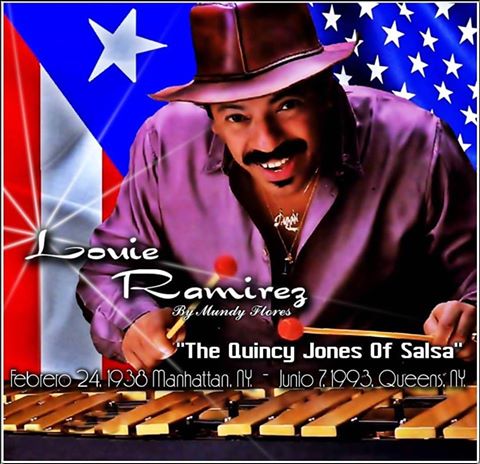
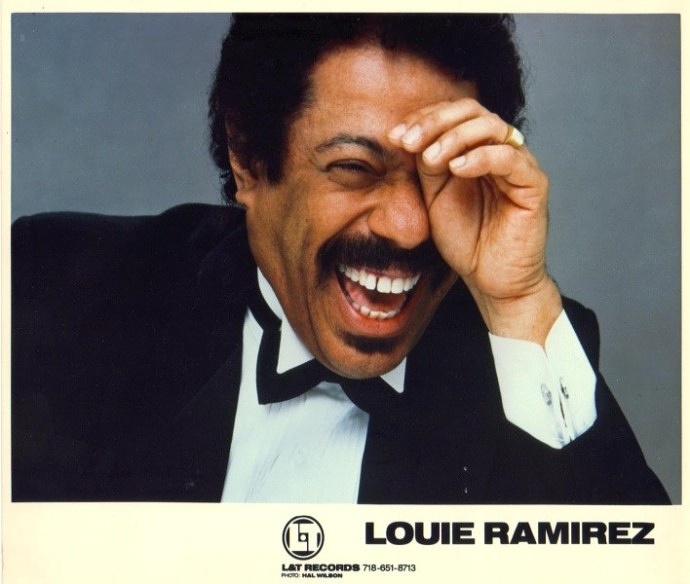
Louie Ramírez. The Hidden Talent of Salsa Ahead of its time

North America / USA / New York

Louie Ramírez.

Music often requires characters who are always behind the scenes and support the work of singers and performers with their talent, who are ultimately the ones who “put on their face” and become popular. Sometimes, however, these anonymous characters rise to fame in order to perform their own work and even become more popular than any popular singer.

In the case of Pop, this character is called Quincy Jones, of whom it is enough to say that he has been an arranger for Frank Sinatra and a producer for Michael Jackson. A nobody”. In the case of Salsa, these characters have been symbolized by Jones’ emulator, a guy named Louie Ramírez who has done everything with everyone.

Louie Ramírez
Louie Ramírez

One afternoon in 1994, Ramírez was driving his car down the highway that would take him to Variety Studios in New York. It was going to be a quick session since he only needed one song to complete his 20th album as conductor. Perhaps that was why he was nervous and that filled him with anxiety. Minutes later he couldn’t resist the feeling and had to pull over to the side of the car. He had not finished doing it when a cardiac arrest ended his life.

Louie Ramírez
Louie Ramírez

Louie Ramirez was a genius. The classic man to whom everyone turns for advice and solutions to their problems. It didn’t matter if they were young or old musicians. The fact was, Louie had the answer, and visiting him was like rubbing Aladdin’s lamp. That was a characteristic that always accompanied him, from that first recording “Conozca a Louie Ramírez” in 1963.

He was 20 years old at the time and had already stood out for composing some pachangas and arranging for Pete and Tito Rodríguez’s orchestras. The commentator Dick Sugar then presented it like this: Ramírez breaks the image of the director of a group that uses the talent of other composers and becomes a follower of a rhythm. No, Louie Ramírez is a creator in his genre.

Louie Ramírez Photo
Louie Ramírez Photo

That talent did not go unnoticed by the new Czar of Latin music in New York, Jerry Masucci, who hired him as a star for Fania Records and at the same time, as an arranger for the orchestras and ensembles that belonged to the record company. Ramírez was soon involved in work and was only able to record two albums during the sixties, “Good news” and “Alí Babá”.

On that last album appeared the hit that allowed him to be a famous artist, El Títere, a true Salsa classic. The theme was sung by Rudy Calzado, the third of the soneros that Louie had used without finding the ideal. That was a burden that accompanied him as a director during the seventies, when he used singers of the stature of Pete Bonet, Tito Allen, Jimmy Sabater, “Azuquita” Rodríguez, Adalberto Santiago, and even Rubén Blades.

Louie Ramírez
Louie Ramírez

It was with Blades, precisely, that he made an anthological album, “Louie Ramírez and his friends”, in which the song Paula C was included, with an arrangement of those that deserve -hats off-. By then, Ramírez was considered in New York as the most progressive arranger that Salsa had, thanks to the brilliant work done for the Fania All Stars. An excellent job had been the instrumental arrangement of Juan Pachanga, to be sung by Blades, of Canta Canta for a performance by Cheo Feliciano, and of the entire album “Algo nuevo” that Tito Rodríguez sang with Louie’s orchestra.

But the high point of Ramírez’s career came in 1980 when Joni Figueras, representative of the K-Tel International label, hired him to arrange the ballads Todo se derrumbó and Estar Enamorado de Manuel Alejandro. The album, which included these and other tracks, was released two years later under the title “Hot Night” and was recorded by Louie’s own orchestra.

Louie Ramírez - Salsa Progresiva
Louie Ramírez – Salsa Progresiva

This is how the Salsa-ballad or Salsa-romántica was born in a job that Ramírez continued until his death, making attempts at Latin Jazz from time to time, which he loved. That is why he recorded an album in tribute to Cal Tjader, where Louie was director, producer, composer and arranger, in addition to playing the timpani and his favorite instrument: the vibraphone.

Louie Ramírez was a genius in arranging, in a career where those of Guantanamera and Isadora stand out for Celia Cruz, El Guiro de Macorina for Johnny Pacheco and El Caminante for Roberto Torres. Apart from this, there are his works for the Alegre and the Cesta All Stars. Regarding this profile of Ramírez, the critic Eleazar López defined it very well:

Louie Ramírez - salsero
Louie Ramírez – salsero

It is not easy to arrange for a dance band, especially when it comes to a group that cultivates the hot tropical genre. Many musicians feel influenced by Jazz and the result of their orchestrations leaves a void in the dancer. Others arrange simple, but so simple that they repeat and copy themselves, and the result is tiresome music, without any degree of creativity: music that says nothing, that leaves nothing. Louie Ramírez has found the perfect balance… that’s why he always stays current.

Louie Ramírez flyers

Hernan Olivera the sonero of the 21st century

Latin America / Puerto Rico / Puerto Rico

Hernan Olivera, this excellent Salsa singer named Hermenegildo Olivera was born on January 30, 1959 in Newark, New Jersey.

Hernan Olivera is the son of Puerto Rican parents and from an early age he felt a great affinity for Latin music since his father listened to the groups of the moment such as Tito Puente, Celia Cruz, Machito, Ismael Rivera with Cortijo y su Combo, Alegre All Stars, Tito Rodríguez, Santitos Colon, etc.

Hernan Olivera
Hernan Olivera

Then, in the 70s, in the midst of the Salsa Boom, Herman began his love of singing listening to the performances of Chamaco Ramírez, Héctor Lavo’e, Cheo Feliciano and Marvin Santiago, among others. These vocalists were mainly his source of inspiration; That school of soneros served as an apprenticeship for him and that is when he made the decision to sing professionally.

Hernan Olivera - photo
Hernan Olivera – photo

When he was just 15 years old, Herman began his career as a Salsa performer with an orchestra called “La Justicia”, after this he was part of the band “La Sónica” where he met his friend and trombonist Jimmy Bosch, after this He spent time with the “Caramelo” orchestra and later made the most important leap in his career by joining the “Con Conjunto Libre” in 1978, where he left his voice for the first time on the LP “Increíble” from 1981 under the direction by percussionist Manolo Oquendo and Bassist Andy González where he stands out with the song “Decide”.

Then in 1983 he would record with the Conjunto Libre in the production “Rhythm, sound and style” the song “Que Humanity” that would become a success. In 1988 Herman left the group “Libre” and became part of a project by Mr. Fernando Pastrana and under the musical direction of trumpeter Miguel Santiago whose album was called “La Exclusiva” which shared the vocal part with Roberto Mier, in this album stands out interpreting the songs “Xiomara” and “Te vi pasa”.

Hernan Olivera with his piano

After this, in 1990 he was invited to record on the album “Salsa Sudada”, for the Valdesa Records label of Víctor Raúl Sánchez “Patillas” and with the musical direction of Isidro Infante, sharing vocals with Mario Muñoz “Papaíto”, Adalberto Santiago, Eladio Peguero “Yayo El Indio” and Pablo Villanueva Branda “Melcochita”; in this work he interprets the themes “La needle” and a tribute to the city of Cali called “Valle plata de salsa”.

He continued with his career as a performer and in 1993 he was once again invited to record the production “Now” with the Free Ensemble, where his great conditions and resources as a singer are undoubtedly reflected, there the song “You belong to me” became a hit in addition to other songs such as “Obsesión” and “El Son” stand out on this album.

Subsequently, he launched an independent project called Herman Olivera and La Exclusiva “Chequea La Mercancía” produced by Fernando Pestana, where the song “Me Extra Spider” is one of the most outstanding. In 1996 he reunited with the Conjunto Libre and made the live album entitled “On The Movie”.

Caratula Alta resolucin sin letras of Hernan Olivera

In 1997 he participated in the CD of the band Rikoson All Stars called “Evoluciones Del Son” where he stands out very well in the romantic theme “Aquella Noche”.

Photo - Hernan Olivera in concert
Photo – Hernan Olivera in concert

In 1998 he was requested by the piano teacher Eddie Palmieri and together with the vocalist Wichy Camacho they recorded the album “El Rumbero Del Piano” in which he stood out as a singer in the songs “Malagueña salerosa” and “Oiga mi guaguancó” that same year. he is invited to the recording studios by the trombonist Jimmy Bosch and they release the album titled “Soneando Trombón” which contains the hit “Otra opportunity” that he performs as a duet with Frankie Vázquez, on this CD the song “Descargarana” is also inserted. ”.

Photo 2- Hernan Olivera in concert

That same duo Olivera and Bosch meet the following year (1999) and make the production “Salsa Dura” where Herman shines interpreting the full “Impact we will have” this album also has the participation of the singers Frankie “Nene” Morales and Frankie Vázquez parallel to this album, the RMM label launches a live CD and DVD entitled “Eddie Palmieri & Friend’s” where Herman looks excellent in the number “Palo Pa’ Rumba”.

Hernan Olivera in concert

Some events of Robby Ruiz and Bobby Valentin’s in USA

North America / USA

Robby Ruiz Launches his Bachata Single “In my feelings” 

The moment´s revelation of Tropical Music brings a theme that will vibrate the deepest emotions

Para ser ubicado en: South – South Atlantic – Florida- Miami

Robby Ruíz is the newest EQS Music´s young artist, and “In My Feelings” is his first song and marks his debut as a Bachata revelation singer. This single is an original cover track by Canadian singer, Drake. The theme of this song is about relationships and how the the main character of the story finds himself in a power struggle with his feelings. “In My Feelings” from Robby Ruíz is an amazing Bachata Remix.

Robby Ruiz
Robby Ruiz

Release Date: July 20th, 2018

Video: https://www.youtube.com/watch?v=py6x_Pa7HCY


Bobby Valentin’s new album “Mind of a master” is already here!

An Authentic Work of Art to Collect

To be located in: NORTHEAST – MIDDLE ATLANTIC – NEW YORK

Bobby Valentin
Bobby Valentin

The new Latin Jazz Album “Mind of a Master” by Bobby Valentin & The LJ’s is the current sensation of the Latin musical Market containing important collaborations of international renowned figures in 11 tracks. Since its release this recording has marked a precedent with hundreds of unloads in four months by the world fans that support it and you will be able also to be part of that, by downloading “MIND OF A MASTER” in all digital platforms!!!

Release Date: April 14th, 2018

Credits:
Bobby Valentin Arrangements & Bass
Eliut Cintron Trombone
Angie Machado Trumpet
Ángel Luis Torres Alto – Sax
Eduardo Zayas Piano
David Marcano Battery
Javier Oquendo Congas
Special Guests:  
Iván renta Tenor – Saxo
José Nelson Ramírez Hammond Organ
Orlando Santiago String Sets
Tracks:
1. De Nuevo a la Carga 7.El Cumbanchero
2. Latin Gravy 8.Mellow Funk
3.Orocoa 9. Endless Love
4.Smooth Ride 10.Freedom
5.Blast Off 11. God Bless the Child
6. Coco Seco  


“Thanks to all the media and the public for the support they have given me in my new Latin Jazz CD, Mind of a Master”. Bobby Valentin


Roberto Valentin, better known as Bobby Valentin, was born on June 9th, 1941 in Orocovis – Puerto Rico. His father taught him to play the guitar at a young age. When he was 11 years old, he participated in a local talent contest with a trio that he had formed. He played the guitar and sang for the trio and they won the first place prize. In 1963, Valentin joined Tito Rodriguez and traveled twice with Tito’s orchestra to Venezuela. He also made musical arrangements for Tito and at times for Charlie Palmieri, Joe Quijano, Willie Rosario, and Ray Barretto.

Bobby was also the musical arranger for the Fania All Stars, and is featured in a live recording of the conglomerate’s song “Descarga Fania” (which he also wrote) playing a bass guitar solo. In 1975, He left Fania and founded his own record label “Bronco Records” and released the album “Va a la Carcel” Vol 1 and Vol 2, recorded “live” at “El Oso Blanco”, Puerto Rico’s oldest state penitentiary.

During the years Valentin has been featured in recordings (and occasional live performances) by Larry Harlow, Ismael Miranda, Roberto Roena, Cheo Feliciano and the always remembered, Celia Cruz.

For more information contact him through this social channel: https://www.facebook.com/Bobby-Valentin-660486604066057/ or visit him in his official webpage: http://broncorecordsinc.com/


Video: https://www.facebook.com/660486604066057/videos/1325583834222994/


  • « Go to Previous Page
  • Page 1
  • Interim pages omitted …
  • Page 4
  • Page 5
  • Page 6
  • Page 7
  • Page 8
  • Interim pages omitted …
  • Page 35
  • Go to Next Page »

International Salsa Magazine (ISM) is a monthly publication about Salsa activities around the world, that has been publishing since 2007. It is a world network of volunteers coordinated by ISM Magazine. We are working to strengthen all the events by working together.