• Skip to primary navigation
  • Skip to main content

International Salsa Magazine

  • HOME
  • Previous editions
    • 2026
      • ISM / April 2026
      • ISM / March 2026
      • ISM / February 2026
      • ISM / January 2026
    • 2025
      • ISM / December 2025
      • ISM / November 2025
      • ISM / October 2025
      • ISM / September 2025
      • ISM / August 2025
      • ISM / July 2025
      • ISM / June 2025
      • ISM / May2025
      • ISM / April 2025
      • ISM / March 2025
      • ISM / February 2025
      • ISM / January 2025
    • 2024
      • ISM / December 2024
      • ISM / November 2024
      • ISM / October 2024
      • ISM / September 2024
      • ISM / August 2024
      • ISM / July 2024
      • ISM / June 2024
      • ISM / May 2024
      • ISM / April 2024
      • ISM / March 2024
      • ISM / February 2024
      • ISM / January 2024
    • 2023
      • ISM / December 2023
      • ISM / November 2023
      • ISM / October 2023
      • ISM – September 2023
      • ISM – August 2023
      • ISM July 2023
      • ISM Edition June 2023
      • ISM – May 2023
      • ISM April 2023
      • ISM March 2023
      • ISM February 2023
      • ISM January 2023
    • 2022
      • ISM December 2022
      • ISM November 2022
      • ISM October 2022
      • ISM September 2022
      • ISM August 2022
      • ISM July 2022
      • ISM June 2022
      • ISM May 2022
      • ISM February 2022
      • ISM January 2022
    • 2021
      • ISM December 2021
      • ISM November 2021
      • ISM October – 2021
      • ISM September 2021
      • ISM August 2021
      • ISM July 2021
      • ISM May 2021
      • ISM April 2021
      • ISM June 2021
      • ISM March 2021
      • ISM February 2021
      • ISM January 2021
    • 2020
      • ISM December 2020
      • ISM November 2020
      • ISM October 2020
      • ISM September 2020
      • ISM August 2020
      • ISM July 2020
      • ISM June 2020
      • ISM May 2020
      • ISM April 2020
      • ISM March 2020
      • ISM February 2020
      • ISM January 2020
    • 2019
      • ISM December 2019
      • ISM November 2019
      • ISM October 2019
      • ISM Septembre 2019
      • ISM August 2019
      • ISM July 2019
      • ISM June 2019
    • 2016
      • ISM December 2016
  • Spanish
  • Download Salsa App
    • Android
    • Apple

Search Results for: Tito Rodríguez

Johnny “Dandy” Rodríguez Jr. Growing Up in Latin Dance Music and Jazz

Johnny “Dandy” Rodriguez Jr. is a salsa legend and world-renown, pioneering bongocero.

His “Dream Team” is currently regarded as the hottest salsa “conjunto” performing In New York City.

It is rare, and ever increasingly so, that a musician would spend a lifetime in a band. But percussionist Johnny “Dandy” Rodríguez Jr. who was a teenager when he was allowed to sit in with the Tito Puente Orchestra and be an apprentice for a few months before earning a place in its rhythm section, was also there at the end, playing alongside Puente until his death, after a concert on May 31st, 2000.

“I went from being a kid, coming into the band as a 16-year-old to being the man running the band at the end,” said Rodríguez, 70, in a conversation from his home in Las Vegas.

Johnny "Dandy" Rodriguez Jr. Growing up in Latin dance and jazz music
Johnny “Dandy” Rodríguez Jr.

Between that beginning and end, Rodríguez also contributed, in prolonged stints, to the sound of the Tito Rodríguez Orchestra, Ray Barretto, his own band, Típica ‘73, and more.

The son of Johnny “La Vaca” Rodríguez Sr., a respected percussionist who also played with the Puente and Rodríguez orchestras, “Dandy” Rodríguez is one of those essential musicians who have created and shaped the sound of contemporary Latin Jazz yet are little known by the public at large.

"When they called me to talk about the concert I thought it was a great idea," Rodriguez says.
Johnny “Dandy” Rodríguez Jr. y Pedro Bermúdez en New York

While some of the great players in Duke Ellington or Count Basie bands have long been recognized for their contributions, their counterparts in the Latin orchestras, for the most part, have not.  Rodriguez will be honored by Arturo O’Farrill & the Afro Latin Jazz Orchestra in their concert “Tribute to the Great Sidemen of Latin Jazz” alongside Sonny Bravo, Ray Santos, Papo Vázquez, Reynaldo Jorge, José Madera, Joe González, and Bobby Porcelli at Symphony Space, in New York City, January 29th and 30th.

“When they called me about the concert I thought it was such a great idea,” says Rodriguez.

Johnny Rodríguez
Johnny “Dandy” Rodriguez Jr. is a salsa legend and a world-renowned pioneer bongocero.

“Usually people just know the name of the bandleader and it’s fine,” he says. “But they must remember that there is a good team behind that leader which makes him look so much better.

There’s a way of playing that music that makes it sound the way they wrote it and the way they wanted it and these guys knew it and they knew how to do it.”

Rodríguez grew up in Spanish Harlem, Manhattan, in a house with “a great music collection, a good, what was then called, hi-fi system and always full of musicians,” he recalls.

“It was great but I was interested in baseball, in stickball. I didn’t get involved with music until later, but the music was always in the background, in my house.” By the time he was in junior high, Rodríguez played bongos, congas, timbales, and set drums and, as he puts it, “started to get into it.”

“Remember, I lived in El Barrio and back in those days, in that area, there was a lot of music in the air.

There would be speakers outside the furniture store or the bodega or the record shop, and music would be playing. This shop would be playing this radio station, the butcher would have another, so walking one block you’d be hearing three different pieces of music. It was an environment full of music.”

During the first two decades of the new century, the musical work of maestro Johnny Rodriguez continued; thus, his musical imprint has remained in other publications with The Latin-Jazz Coalition, Frankie Morales, Eddie Palmieri, Gilberto Santa Rosa, George Delgado, Victor Manuelle, Rick Arroyo, Orestes Vilató, Mitch Frohman, Cita Rodriguez, Doug Beaver, Adalberto Santiago and Jeremy Bosch.

In addition, special mention must be made of the participation of maestro Johnny Rodríguez with a group called The Latin Giants Of Jazz, in the best style of the classic Big Bands, made up of great teachers, among them, some of the former members of the band of maestro Tito Puente; with this group they have released four albums; this project gave rise to another band called The Mambo Legends, who recorded the album titled: Watch Out! ¡Ten Cuidao!

John Rodriguez is, without any doubt, one of the most prolific percussionists in the world of Latin music called Salsa; the nickname “Dandy” goes back to his childhood, when the car in which he was taken was bought in a warehouse or a store called “Dandy”, and people said: look how cute the “Dandy”, and from there he kept that nickname. In music he is better known as Johnny instead of John.

In the (year 2022) the experienced Johnny Rodriguez had three or four groups with which he is playing, among them Dandy Rodriguez and his Dream Team, and at the same time he teaches percussion classes over the Internet. He is part of the true legends of Latin music, not to mention that his talent has also been reflected in recordings for other musical genres such as: Electronic, Folk Rock, Folk, World & Country, Funk / Soul, Heavy Metal, Jazz, Stage & Screen, Jazz-Funk, Merengue and Pop.

In his very extensive artistic career, the master Johnny Rodriguez took part in historical and iconic recordings of our musical culture, some of these albums have been worthy of awards such as the Grammy Award, among which are:

Homenaje a Beny Moré – Year 1978.
On Broadway – 1983
El Rey: Tito Puente & His Latin Ensemble – Year 1984
Mambo Diablo – 1985
Goza Mi Timbal – Year 1990
Mambo Birdland – Year 1999
Masterpiece / Masterpiece Tito Puente & Eddie Palmieri – Year 2000.

“In 2008, Johhny entrusted LP’s Research and Development Department with the design of the John “Dandy” Rodriguez Jr. bongoes in the Legends series. John is proud that these drums, which bear his name, feature such outstanding sound and visual characteristics.”

He died on August 17, 2024 in New York City of a stroke.


Facebook: John Rodriguez(Dandy)

Article of Interest: José Madera Timbal de Machito and his Afro-Cubans, Tito Puente, Mambo Legends Orchestra and Fania Record Co.

Johnny "Dandy" Rodríguez Jr. y Frankie "El Sonero del Barrio" Vázquez
Johnny “Dandy” Rodríguez Jr. y Frankie “El Sonero del Barrio” Vázquez

Home

José Madera Timbal de Machito and his Afro-Cubans, Tito Puente, Mambo Legends Orchestra and Fania Record Co.

The musician, arranger and composer who has yet to find the time to record and write music for some of the most influential bands in existence.

José Madera, Timbal of Machito and his Afro-Cubans, Tito Puente & Fania All-Stars
osé Madera, born on September 30th

One might think that working for Tito Puente’s famous band can keep a percussionist busy enough.

But musician, arranger and composer Jose Madera had found time to record and write music for some of the most influential bands in the world.

Before joining Tito Puente over 35 years ago, Madera played for four years with the famous Machito Orchestra and recorded with many R&B artists (including James Brown, Diana Ross, David Sanborn and Aztec Two – Step).

Jose musical director of Mambo Legends Orchestra

As an arranger for Fania Records, he participated in several commercial hits, and over the years has composed music for Fania All-Stars, Larry Harlow, Johnny Pacheco, Willie Colón and Celia Cruz.

As an arranger for Fania Records, he participated in several commercial hits, and over the years has composed music for Fania All-Stars, Larry Harlow, Johnny Pacheco, Willie Colón and Celia Cruz.
Jose musical director of Mambo Legends Orchestra

Despite having recorded some 75 albums in 20 years, as well as numerous radio jingles and movie soundtracks, Madera still had time for his other career: for 15 years he worked as a teacher and director at a privately funded performing arts high school in New York City.

Jose has written many arrangements for countless commercial Latino artists and has also recorded or worked with many of them.

Some of them include: Larry Harlow, Johnny Pacheco, Chico O’Farill, the Lincoln Center Afro-Cuban Jazz Orchestra, Celia Cruz, Tito Rodriguez, Fania All-Stars, Willie Colon, Joe Farrell, Machito, Graciela, Mario Bauzá, Willie Rosario, Earl Klughand, Eddie Palmieri, to name a few. Jose also worked and recorded with many pop, R&B and jazz artists.

Some of them include Diana Ross, James Brown, Dizzy Gillespie, Paquito D’Rivera, George Benson and Lionel Hampton, among others.

Jose has participated in over 250 recordings. He has worked on several television show soundtracks, including The Simpsons, and several film soundtracks, including The Mambo Kings Play Songs of Love, where he was the musical arranger and conductor for the Tito Puente film segment.

Jose also taught the art of playing Latin percussion instruments at BOYS HARBOR in New York City for 28 years.

Jose has done and continues to do musical clinics around the country at various schools.

He was the musical director of the Latin Giants of Jazz from 2001 to 2009.

Jose continues his musical direction with Mambo Legends Orchestra, a band composed of former members of the Tito Puente Orchestra, which is dedicated to the execution of new and creative Latin and Latin Jazz concepts, as well as some of the music of Machito, Tito Rodriguez and Tito Puente.

He was the musical director of the Latin Giants of Jazz from 2001 to 2009.
José has participated in more than 250 recordings


Jose has personally recreated and re-arranged much of the music that the bands performed during the heyday of the mambo at the Palladium Ballroom in New York City, which many critics consider to be the “Greatest and Most Innovative Era” in the history of Latin music.

Madera’s father, Jose “Pin” Madera, a saxophonist, was one of the original members of the Machito Afrocubans.

The young Jose was influenced by Machito’s drummer (“the best Latin Big Band drummer I’ve ever heard”). He was later influenced by José Mangual and Tito Puente himself.

Madera's father, Jose "Pin" Madera, saxophonist, was one of the original members of the Machito Afrocubans
José Madera was influenced by José Mangual Padre and Tito Puente himself

Home

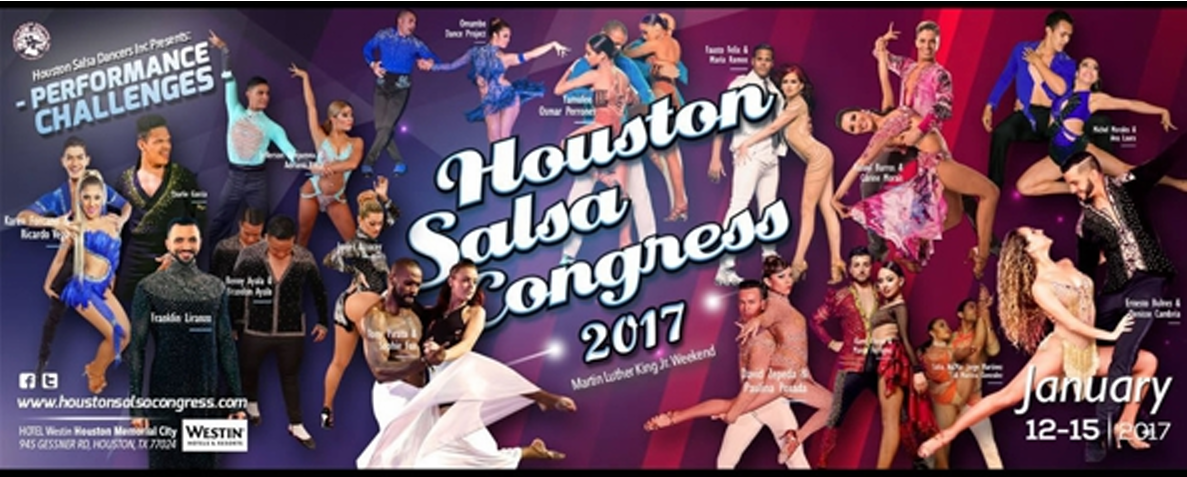
Houston Salsa Congress 2017

North America /  USA / Texas

In 2000, Houston Salsa Dancers, Inc. hosted the first Congress of its kind in the City of Houston. Today, the Houston Salsa Congress continues to highlight the beauty, creativity, and culture of Latin dance and music with our featured performing artists and musical artists.

Houston Salsa Congres 2017

HOUSTON SALSA CONGRESS 2017

Houston Salsa Dancers, Inc. is officially recognized as a nonprofit corporation who hosts the LARGEST Salsa Socials in Houston every month raising funds for the annual HSD, Inc. Scholarship Program. Through this program, HSD has helped dozens of students from the Houston area by awarding a cumulative total of over $25,000 in scholarships.

Scholarships are awarded annually at the LARGEST Salsa event in the South, the Houston Salsa Congress, every Martin Luther King, Jr weekend.

The Houston Salsa Congress has become a must-attend event for many dancers and performers. Being the first non-profit Congress, the HSD Board Members are always innovating and changing how Congresses are managed setting the bar high for other events to follow the remainder of the year. The Congress consist of performances by only the best in Salsa and other dances, weekend workshops to help dancers improve their skills, and some of the best social dancing in the world!

Houston Salsa Congress 2017

Another way HSD is stepping above the rest is through its event called “Bailando Hacia La Universidad (“Dancing Your Way to College”)” which was designed to educate High School students on attending college and college admission. (We bring in guests speakers and end it with a special performance… Example agenda: http://www.houstonsalsacongress.com/schedule_collegeday.php).

Houston Salsa Dancers, Inc. also hosts the “SalsaDURA Saturday” social every 1st Saturday every month. SalsaDURA is also called the mini-Congress of the South attracting dancers and performers from all around the world. This monthly event helps fund the Scholarship fund along with the Houston Salsa Congress event.

BANDS

JOSÉ ALBERTO “EL CANARIO”

José Alberto Justiniano (born December 22, 1958 in Villa Consuelo district, Santo Domingo, Dominican Republic), better known by his stage name José Alberto “El Canario” is a Dominican salsa singer. José Alberto moved to Puerto Rico with his family at the age of 7, and inspired by Latin music went on to polish his singing at Las Antillas Military Academy. He relocated to New York in the early 1970s and sang with several orchestras. He received international attention as the bandleader of Tipica 73 in October 1977.

José Alberto started his own band in 1983, and became a major Latin star after the release of his 1984 debut Noches Calientes. His 1991 album Dance With Me, which established a new style of salsa called salsa romántica. He has sung hit songs such as “Sueño Contigo” His voice was widely adored by his fans, and his exceptional whistling abilities (being able to improvise as if he was playing a traverse flute) led them to give him the nickname El Canario (The Canary).

JOSÉ ALBERTO "EL CANARIO"
JOSÉ ALBERTO “EL CANARIO”

El Canario has enjoyed success in the United States and Europe, but especially throughout Latin America, including in his native Dominican Republic, Puerto Rico, Peru, Venezuela, Panama, and Ecuador. El Canario in 1999 also was part of the biggest Latin American festival in Australian history at The Bacardi Darling Harbor Latin American Festival in Sydney, as supporting act for salsa performer Celia Cruz with over 22,000 people in attendance.

On 24 May 2008, José Alberto celebrated 30 years in the music industry at the United Palace Theater in New York City. Among the several special guests were Oscar D’León, Ismael Miranda, Raulín Rosendo, Joe Arroyo, and Latin music mogul Ralph Mercado.

JOSÉ ALBERTO "EL CANARIO"
JOSÉ ALBERTO “EL CANARIO”

Bobby Valentín & His Orchestra

Valentín (birth name: Roberto Valentin) was born in June 9, 194, in Orocovis, Puerto Rico. He was taught by his father to play the guitar at a young age. When his mother died in 1947, he went to live with his older sister and was raised in the town of Coamo where he received his primary education and studied music. When he was 11 years old, he participated in a local talent contest with a trio that he had formed.

He played the guitar and sang for the trio and they won the first place prize. One of his teachers suggested that he attend the Jose I. Quinton Academy of Music, which he did. It was there that he learned to play the trumpet.

Valentin en concierto

In 1956, Valentín moved with his family to New York City where he attended George Washington High School and continued to take music lessons. In 1958, he went to play for Joe Quijano but, shortly after, he played in the band of Willie Rosario, who was from the same neighborhood.

MUSICAL CAREER

In 1963, Valentín joined Tito Rodriguez (after not being hired by Tito in a recording session because of his age, he was given a chance and was added to his regular band) and traveled twice with Tito’s orchestra to Venezuela. He also made musical arrangements for Tito and at times for Charlie Palmieri, Joe Quijano, Willie Rosario, and Ray Barretto. In 1965, he formed his own band and was signed by the Fania Record Label. He recorded “El Mensajero” (The Messenger) and “Young Man With a Horn”. He held his first concert in Puerto Rico during that period of time.

In 1975, Valentín left Fania and founded his own record label “Bronco Records” and released the recordings of “Va a la Carcel” Vol 1 and Vol 2, recorded “live” at “El Oso Blanco”, Puerto Rico’s oldest state penitentiary. At the time, Marvin Santiago was the singer on Valentín’s band; his biggest hit with Valentín was “Soy Boricua”, an ode to Puerto Rican nationality that has since become a patriotic song for the pro-independence faction of the island.

In 1978, salsa singer Cano Estremera made his singing debut with Valentín’s orchestra and recorded various major hits for the band, particularly the Roberto Angleró song “La boda de ella” and “Manuel García”. During the years Valentín has been featured in recordings (and occasional live appearances) by Larry Harlow, Ismael Miranda, Roberto Roena, Cheo Feliciano and Celia Cruz. He also provided backdrop for the Billyván Santiago (Marvin’s youngest brother) song “Mata la cucaracha”, a sleeper hit in Puerto Rico during the 2002 Christmas season.

Houston Salsa Congress 2017. TICKETS
Full Event Pass: $280.00 (USD)
Full Event Pass + VIP Upgrade: $310.00 (USD)
Night Pass (ALL NIGHTS): $110.00 (USD)
Night Pass + VIP Upgrade (ALL NIGHTS): $165.00 (USD)
Night Pass (THURSDAY ONLY): $35.00 (USD)
Night Pass (FRIDAY ONLY): $35.00 (USD)
Night Pass (SATURDAY ONLY): $35.00 (USD)
Night Pass (SUNDAY ONLY): $35.00 (USD)
www.houstonsalsacongress.com
Houston Salsa Congres 2017 FLYER

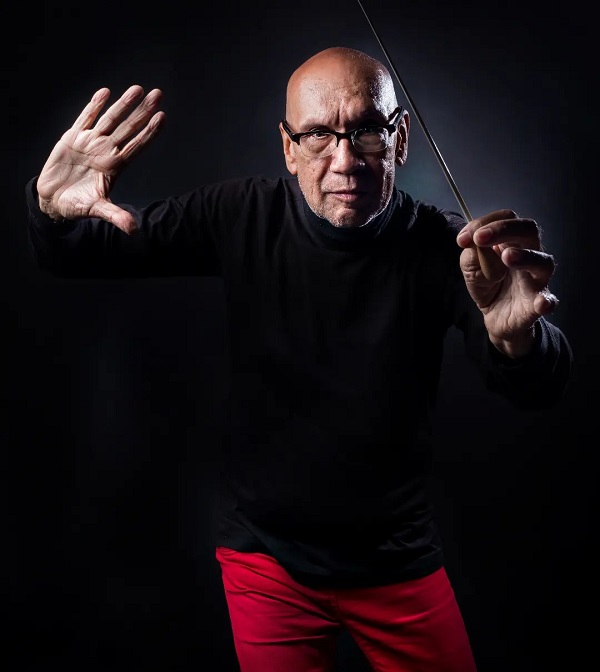
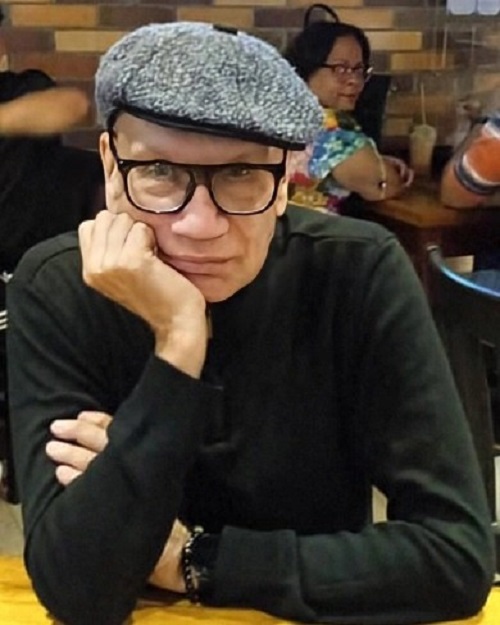
Andy Durán: The Architect of Mambo and Latin Jazz

If there is one name that embodies technical elegance and rhythmic passion in the contemporary Caribbean, it is Andy Durán.

A musician, arranger, composer, and conductor, Durán has spent over four decades serving as the guardian of the big band sound. He keeps the flame of legends like Tito Puente and Pérez Prado alive, but with a distinctive signature that fuses academic precision with popular soul.

Andy Durán El Arquitecto del Mambo y el Latín Jazz

Born in Caracas, Venezuela, on January 2, 1949, as Nelson Valor Ramos, this extraordinary artist is today an essential figure in music production and direction.

The Musician: Master of the Arrangement

Andy Durán is more than just a conductor; he is a scholar of musical structure. His academic background has allowed him to master the art of the arrangement the ability to transform a simple melody into a complex masterpiece where twenty musicians move as a single, unstoppable force.

  • The Big Band Sound: He is one of the few directors who has kept the large orchestra format relevant in Venezuela. His ensemble, Andy Durán’s Latin Jazz Big Band, is an institution renowned for its rhythmic precision and powerful brass section.
  • Stylistic Versatility: While Mambo is his backbone, his repertoire flows seamlessly through Jazz, Salsa, Mambo-Jazz, and traditional Venezuelan music.
  • Cult Discography: Albums such as Tropicalia, Mambo 2000, and his acclaimed tribute to Tito Puente, Fidelidad, are essential pieces for any collector of the genre.

The Person: The Educator and Music Lover

Behind the baton, Durán is known for his humility and profound work ethic; he is frequently described as a “gentleman of music.”

Nacido en Caracas, Venezuela, el 2 de enero de 1949, bajo el nombre de Nelson Valor Ramos
  1. Relentless Researcher: Beyond performance, he is a historian of rhythm. His concerts often turn into masterclasses where he explains the origins of the pieces, always honoring the original composers.
  2. Generational Bridge: He has served as a mentor for young Venezuelan musicians, integrating new talent into his ranks and proving that classic Caribbean genres have no expiration date.
  3. Cultural Resilience: In an era dominated by commercial trends, Durán remains faithful to acoustic quality and the complexity of Latin Jazz, earning the respect of international critics.
  4. Si existe un nombre que personifica la elegancia técnica y la pasión por el ritmo en el Caribe contemporáneo, ese es Andy Durán
    Si existe un nombre que personifica la elegancia técnica y la pasión por el ritmo en el Caribe contemporáneo, ese es Andy Durán

Career and Legacy

Andy Durán is one of the greatest exponents of Salsa and Latin Jazz in Venezuela. With 16 albums to his credit, he holds the most extensive discography of any Venezuelan jazz artist. Additionally, he is recognized as the country’s premier music copyist.

His beginnings date back to his youth with the group Nelson y su Sexteto. In 1978, he founded the Orquesta Palladium. Shortly after, he adopted the stage name “Andy Durán” to avoid confusion with other artists of the era and because it was easy to remember and write.

Since 1982, he has been fully dedicated to professional music, working alongside giants such as Aldemaro Romero, Eduardo Cabrera, the Billo’s Caracas Boys, Los Melódicos, and Soledad Bravo. In 1985, he released his first LP, Mambo Salsa. Among his most notable works are:

Nacido en Caracas, Venezuela, el 2 de enero de 1949, bajo el nombre de Nelson Valor Ramos
  • Tropicalia Caraqueña
  • Canelita y Andy Durán: Tribute to Celia Cruz
  • Tito & Tito (A tribute to Tito Puente and Tito Rodríguez)
  • Salsa Dura y Descarga: A Tribute to Fania
  • Fiesta con Billo

Reflections by Andy Durán: Is Singing Easy?

The Requirements: Flawless pitch, breath control, phrasing, and diction; in addition, a strong memory for melodies, lyrics, and orchestral arrangements.

It is highly recommended to know how to dance according to the genre being performed (e.g., Salsa). It is also beneficial to have basic acting skills to handle dramatic themes when necessary.

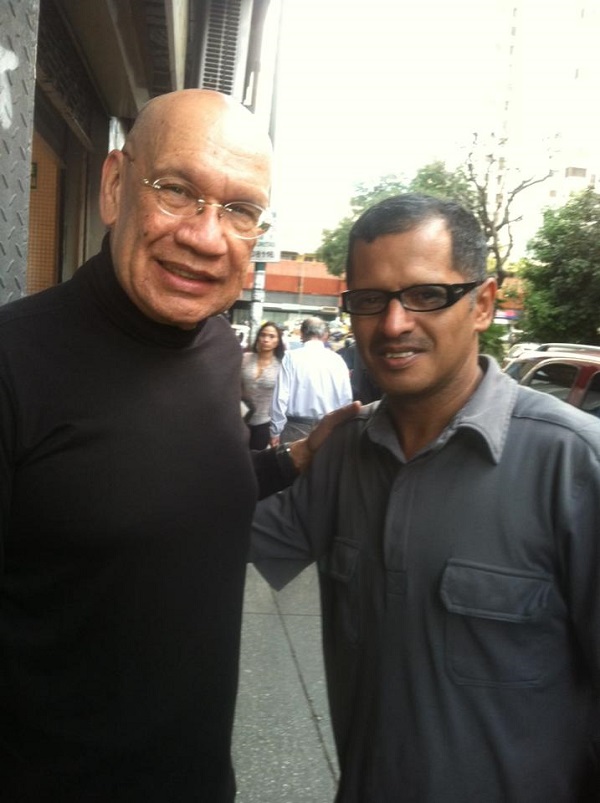
Andy Duran y Dj. Augusto Felibertt

Reading is mandatory to develop a rich vocabulary for improvisation or public speaking; it also prevents embarrassing spelling errors in written lyrics. Keeping the vocal cords healthy and trained is a vital matter. Music theory and sight-singing are the ideal, essential, and unavoidable tools.

Finally, a singer must define their style and repertoire with great care. One must invest in professional orchestral arrangements and have an arranger-director or advisor—this is an investment, just like stage attire.

Remember, my fellow singers: a director’s worst nightmare is a singer who is out of tune, off-beat, and forgetful.

Best regards to all vocalists and singers.

Maestro Andy Durán: Director, Arranger, and Composer

P.S. Vocalists must meet two more requirements: keep your nerves in check and sing from the heart.

Also Read: Víctor Cuica “The Eternal Breath of Latin Jazz and Venezuelan Identity“

Latin America / February 2026

Callao Carnival 02 2026Víctor Cuica 02 2026Salsa Festival in CubaTito Rodríguez 02 2026Don Perignon 02 2026

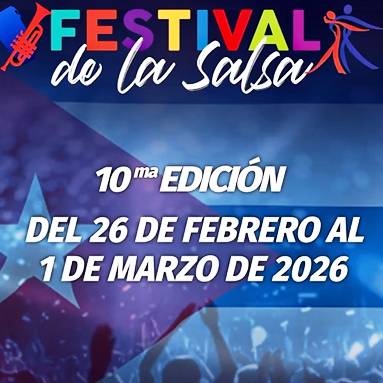
February 2026  – FESTIVALS

Cuba circular flag
CUBA
Festival de la Salsa 2026

Festival de la Salsa 2026

Feb 26 / Mar 01, 2026

Club 500 – Palmares
Calle 12 entre Calzada 7/ 3ra Vedado
La Habana 10400, Cuba

€ 110

Bella MartinezCalibrated maracas

DIRECTORY OF NIGHTCLUBS

Argentina flag
ARGENTINA

Aruba circular flag
ARUBA

Belize circular flag
BELIZE

Bolivia circular flag
BOLIVIA

Brazil flag
BRAZIL

Chile circular flag
CHILE

Colombia
COLOMBIA

Costa Rica circular flag
COSTA RICA

Cuba circular flag
CUBA

Dominican Republic
DOMINICAN REPUBLIC

Ecuador circular flag
ECUADOR

Guatenala circular flag
GUATEMALA

Mexico Circular flag
MEXICO

Panama circular flag
PANAMA

Peru circular flag
PERU

Puerto Rico circular flag
PUERTO RICO

Venezuela circular flag
VENEZUELA


  • « Go to Previous Page
  • Page 1
  • Page 2
  • Page 3
  • Page 4
  • Page 5
  • Page 6
  • Interim pages omitted …
  • Page 36
  • Go to Next Page »

International Salsa Magazine (ISM) is a monthly publication about Salsa activities around the world, that has been publishing since 2007. It is a world network of volunteers coordinated by ISM Magazine. We are working to strengthen all the events by working together.