• Skip to primary navigation
  • Skip to main content

International Salsa Magazine

  • HOME
  • Previous editions
    • 2026
      • ISM / April 2026
      • ISM / March 2026
      • ISM / February 2026
      • ISM / January 2026
    • 2025
      • ISM / December 2025
      • ISM / November 2025
      • ISM / October 2025
      • ISM / September 2025
      • ISM / August 2025
      • ISM / July 2025
      • ISM / June 2025
      • ISM / May2025
      • ISM / April 2025
      • ISM / March 2025
      • ISM / February 2025
      • ISM / January 2025
    • 2024
      • ISM / December 2024
      • ISM / November 2024
      • ISM / October 2024
      • ISM / September 2024
      • ISM / August 2024
      • ISM / July 2024
      • ISM / June 2024
      • ISM / May 2024
      • ISM / April 2024
      • ISM / March 2024
      • ISM / February 2024
      • ISM / January 2024
    • 2023
      • ISM / December 2023
      • ISM / November 2023
      • ISM / October 2023
      • ISM – September 2023
      • ISM – August 2023
      • ISM July 2023
      • ISM Edition June 2023
      • ISM – May 2023
      • ISM April 2023
      • ISM March 2023
      • ISM February 2023
      • ISM January 2023
    • 2022
      • ISM December 2022
      • ISM November 2022
      • ISM October 2022
      • ISM September 2022
      • ISM August 2022
      • ISM July 2022
      • ISM June 2022
      • ISM May 2022
      • ISM February 2022
      • ISM January 2022
    • 2021
      • ISM December 2021
      • ISM November 2021
      • ISM October – 2021
      • ISM September 2021
      • ISM August 2021
      • ISM July 2021
      • ISM May 2021
      • ISM April 2021
      • ISM June 2021
      • ISM March 2021
      • ISM February 2021
      • ISM January 2021
    • 2020
      • ISM December 2020
      • ISM November 2020
      • ISM October 2020
      • ISM September 2020
      • ISM August 2020
      • ISM July 2020
      • ISM June 2020
      • ISM May 2020
      • ISM April 2020
      • ISM March 2020
      • ISM February 2020
      • ISM January 2020
    • 2019
      • ISM December 2019
      • ISM November 2019
      • ISM October 2019
      • ISM Septembre 2019
      • ISM August 2019
      • ISM July 2019
      • ISM June 2019
    • 2016
      • ISM December 2016
  • Spanish
  • Download Salsa App
    • Android
    • Apple

Search Results for: Tito Rodríguez

Jimmy Rodríguez ”El Salsero Mexicano” talked to ISM about his career

El Salsero Mexicano 

Jimmy Rodríguez ”El Salsero Mexicano” is a talented singer born in Mexico City, but spent a lot of his childhood in the city of San Luis Potosí, where he took his first steps as an artist. 

Thanks to his brother and manager, Daniel Rodriguez, we had the opportunity to talk to him and learn more about the interesting career he has had in the world of entertainment. Meet Jimmy Rodriguez and the kind answers he gave to our questions.   

 

Jimmy on stage
Jimmy Rodríguez singing on stage

Beginnings of Jimmy Rodriguez in music   

By the time he got to high school, his talent for singing and charismatic personality made him the ideal candidate to participate in a talent contest, in which he would come in second place the first year in which he participated.    

Jimmy told us that he entered the contest to live a new experience, but he did not expect to achieve such a high place, so he felt very excited and motivated because of what he could achieve thereafter.    

The following year, he managed to get the first place in the same contest because he had spent a whole year studying and getting ready for that important moment. The previous time, he had only rehearsed the days prior, so he decided to take much more time on this occasion and the effort invested paid off.   

As a result of this achievement, the Group Alfa Omega saw the potential in this young man, so they contacted him and offered him to join them. This would be his first paid job in music, which began to teach him how this business worked. 

He began to play with Alfa Omega in events like weddings, and baptisms, which taught him how to entertain and charm an audience, and he is very grateful for this opportunity he had. Unfortunately, it didn’t last long.   

In the end, Jimmy had to leave the group due to his move to Mexico City to continue his studies.   

During his learning process, he developed their skills in playing the guitar and dancing in order to perform better on stage, keeping inmind that singing was his thing and that was not going to change.   

When Jimmy arrived in the United States, he began taking singing lessons for more than nine years to improve his voice. Today, he continues with his vocal learning, as there is always something new to learn in this field.   

Jimmy and Tito
Jimmy Rodríguez and Tito Nieves

Musical genres   

It is not common to find a Mexican who sings salsa professionally, and more if we take into account that many of the most famous Mexicans sing ranchera, norteño music and corridos tumbados. So, we wanted to know why he chose salsa as the genre he wanted to pursue.   

Jimmy explained to us that the first time he sang with a salsa orchestra on stage, half the musicians were Colombian and the other half were Mexican. At that moment, I felt like I had found my soulmate and I knew that’s what I wanted to do. Besides, dancing is very important in salsa and I have always loved to dance,” Jimmy said.   

He finished by saying ”salsa combines my three most important talents, which are singing, dancing and charisma”.   

When asked whether he would enter more typical genres of his country, he pointed out that he loves ballads and would have no problem in performing fusions and collaborations, but his north is still salsa for the moment.   

The Voice and proceeds from the show 

Being in The Voice has always been one of Jimmy’s biggest dreams, which he finally achieved a few years ago and whose judges were Luis Fonsi, Carlos Vives, Alejandra Guzman and Wisin. The best of all is that he made it to the final and he says that his secret to achieving this feat is to always be focused, to give the best of himself, to have a good relationship with show’s production and his colleagues and, above all, to choose a genre that was not typical for a Mexican.    

This particularity made people call him ”El Salsero Mexicano”, a nickname he has continued using to this day with pride in what has been achieved so far.    

Jimmy and Carlos
Jimmy Rodríguez and Carlos Vives

While he was still participating in the contest, Adolescent’S Orquesta contacted him to have him in the group, which Jimmy accepted and became the first Mexican to be part of this Venezuelan orchestra. In addition to that, Jimmy kept releasing new music in order to stay alive in the public spotlight, as the singer understood that the fame that came La Voz was momentary and he had to take advantage of it.    

Today, he continues touring with Adolescent’s Orquesta, working on an album with Marc Anthony‘s producer and taking singing lessons to further improve his vocal technique.   

And speaking of Marc Anthony, this Puerto Rican artist has been one of the greatest inspirations for the Mexican, who wishes to one day reach that level of talent and fame, although he knows it will not be an easy way. 

In addition to the already mentioned salsero, Jimmy has also been inspired and influenced by the styles of Rubén Blades and El Grupo Niche.   

He has also had the opportunity to share the stage with Tito Nieves, Willie Colón, Jerry Rivera and many others.    

Salsa and comparisons with other genres   

When we wanted to know what Jimmy feels with the current situation of salsa, he says that he is well aware that this musical genre is not going through a good moment due to the popularity of trap, reggaeton and, more recently, corridos tumbados.   

However, he ensures that he does not see this fact as something negative, but as a challenge of bringing salsa back to the place it occupied for years in past decades, so he gives his best every day to offer a fresh sound that appeals to new generations, and not only to fans aged 30 and older. 

Jimmy and Gilberto
Jimmy Rodríguez and Gilberto Santa Rosa


It is what has led the artist to make modifications in regard to the technical aspects, arrangements, lyrics and other details. In the specific case of lyrics, he has opted for simpler words and phrases that can be understood by anyone who listens to them. He continues to maintain the quality and heart that salsa should have, while taking into consideration what new generations are looking for. 

Jimmy understands that everything happens very quickly nowadays due to social media, so he has had to adapt his style to what young people are looking for on digital platforms. That is why when he shows his music on his social networks, he always tries to communicate what he wants from the first second so as not to lose the public’s attention.   

End 

The conversation concludes with a thank-you to all the people who still support the salsa genre and a recommendation to new talents to never give up on their dreams and to work continuously to achieve all what they want. 

Jimmy used his case as an example, remembering that he started singing on buses to help his family and now he assists international awards and reach the level that he has today, so he ensures that dreams come true and we must not lose heart until we achieved them. 
Read also: Life, Career, and death of Juan Carlos Formell 

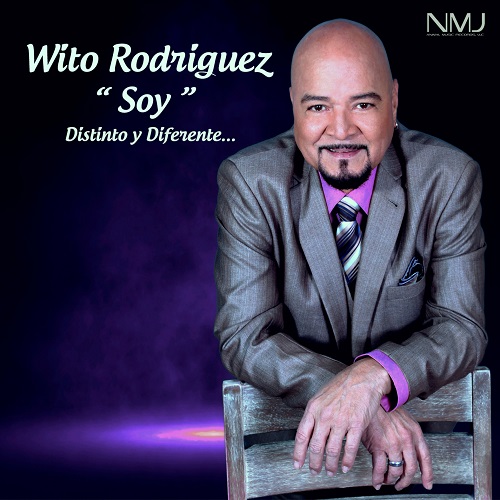
1 New artist Wito Rodriguez “I am distinct and different”

Norte America / Estados Unidos / Florida

Wito Rodriguez. “I am distinct and different”

Irwin “Wito” Rodríguez was born in Chicago to Puerto Rican parents and got his start in the musical field as a singer and musician. During his teenage years, he performed with a Rock and Roll band as a guitarist.

In 1968 Wito Rodriguez decided to move to “La Isla Del Encanto”, Puerto Rico, in order to search for his musical roots and experience the spicy sounds of his beloved Latin Ritmo.

His first encounter in the Salsa genre was with a Puerto Rican percussionist from the 60’s called “Chacón y su Orquesta”, where Wito learned all the Latin rhythms such as Guaguancó, Boogaloo, Mozambique, etc.

Chacón was his coach in Latin percussion instruments and Wito also fell in love with maracas.

Wito Rodriguez returned to Chicago in 1971 to join “Orquesta La Justicia” a local band that opened shows for artists such as: Ismael Rivera, Ray Barreto, Willie Colón, El Gran Combo and the legendary “Fania All Stars”.

Like many young men of that time, in 1973 Wito Rodriguez decided to join the United States Army and was sent to Europe.

During his stay in Germany, Wito Rodriguez took singing lessons with the Opera singer Barbra Sutton, and at the same time he created two bands with the names of “El Conjunto Sabor” and “La Sonora Antillana”.

These orchestras accompanied artists of the Salsa genre such as: Adalberto Santiago, Ismael Miranda, Tito Allen, Santitos Colón, Pete “El Conde” Rodríguez and the queen of Salsa, Celia Cruz.

After his retirement from the army, Wito joined forces with German band leader Rudi Fuesers and created the European Salsa Orchestra “Conexion Latina”.

With Conexion Latina, Wito Rodriguez recorded two albums; “Calorcito” and “Un Poco Loco”.

He also had the great experience of recording two songs with the band of Director and Arranger Peter Herbolzheimer.

During the 80’s, Wito wanted to broaden his horizons by forming his own groups called “Wito Rodriguez y Orchestra” and “Wito Con Cache”.

Missing his family and friends, Wito “crossed the pond” to return to the United States to finish his Army career.

He never gave up his passion for music, a new big band sound was on his mind, and he returns to the spotlight with the Wito Rodriguez Salsa Jazz Orchestra under the musical direction of trumpeter and arranger, Gino Picart.

“What a wonderful world” or “What a Wonderful World” is his third album released in January 2015.

Although busy in 2016 with live performances, a new album had also been produced and recorded between South America Venezuela and Orlando, Florida.

The most recent production called “Como el Viento” will be released in 2017. This album contains a compilation of songs recorded over the years in Europe than ever for the Western Hemisphere. I hope you enjoy your first solo release… What a wonderful world!

In 2018 Wito released another CD called “The Best of Wito” which has a mix of all the songs that fans thought were the best and respected their preferences.

Wito also has four new singles that he has released from his new album, which will be available from February 2019.

Through the internet platforms you can find these releases.

Always and Forever, Soy Caribe, Yo No Te Echo La Culpa and Now and Forever are the ones that have been released so far.

“As a bilingual singer, I am blessed to contribute to the music industry in my songs, singing them in English and Spanish, unity through my music in a mix of salsa and R&B, etc.” Wito Rodriguez

In the year of 2018. Wito Rodriguez was blessed to be nominated at the Hollywood Music Media Awards (HMMA) in Los Angeles, CA in November 2018.

You can also see his certificate as an honoree at the Fox Music Awards USA, Miami in November 2018, who was nominated and honored for being the Army Veteran Salsero Singer.

The Chicago Salsa Congress was one of its great events in 2018.

In March 2019 his new bilingual production Soy Distinto Y Diferente came out with the song Soy Caribe already nominated at the Hollywood Media Music Awards on November 20, 2019 in Hollywood California.

NMJ Animal Music Records LLC. [email protected]

PQ Promotions/Management Jenny Morales [email protected]

(682-554-4851 or (813-785-3086))

Puerto Rican singer Wito Rodríguez talks about his success and career

How his career starts

We are here with the very talented Irwin Wito Rodriguez (https://www.facebook.com/nmjrecords). Pleased to meet you, Mr. Rodriguez, such a pleasure to have you here. How are you?

Thank you very much, Karina. Thank you for the invitation. Quite well, thanks to God. I am in Florida at the moment, where the temperature is very pleasant.

Talented Puerto Rican singer Wito Rodríguez

Your beginnings in the musical world occured in a rock band, which is very common in many of your colleagues. Many of them start as boleristas and rockers. How did you go from a rock band to singing salsa and other genres like this?

I was born in Chicago and my parents are Puerto Rican, so I was raised American and tended to speak more English than Spanish. I listened only to music in English, but I also listened to Daniel Santos, Los Panchos and Tito Rodriguez at hore since I was a little boy. However, they were my parents’ favorite artists, not mine. As the years went by, my dad bought me my first guitar, so I joined a rock band of four or five kids and we started playing very cool songs. This lasted until I was 14 years old, when my father decided to send us to Puerto Rico and it was a very drastic change for me because now I was going to be in a school where Spanish is spoken and my Spanish was very bad. When I arrived in Puerto Rico, it was very nice to see the island in person because I only knew it from what my dad told me.

Five or six months after I arrived in Puerto Rico, I started singing with another rock band until I turned 16, which was when a very famous percussionist named Chacón (he had a band called Chacón Y Sus Batirítmicos) heard me sing and told me that he would like me to sing with them. He lived near me, so I could go to his place. I started going about twice a week to learn to play the conga and the clave. Around that time, I started learning everything related to salsa and typical Puerto Rican rhythms.

So I started playing in a nightclub, but I wasn’t supposed to do that because I was still 16 years old. So, they got me a jacket, hid me and I started singing there. When I turned 17, I moved to Chicago to finish school and speak English again. Three months later, I started singing salsa with the first orchestra in Chicago whose name was La Orquesta La Justicia from 1971.

So, you didn’t like salsa, but you developed a taste for it.

That’s correct. I didn’t have the joy of attending music school, so I just tried to learn as much as I could from what I saw. If I saw someone playing on a stage, I would approach the musicians, ask questions and clear my doubts. I learned a lot of things on my own.

Image taken from his video clip You’ll Never Find Another Love Like Mine

Military service and his first orchestra

You were part of the German orchestra Conexión Latina while serving in the army. How did the idea of starting a Latin music group in such a country arise?

When I was in the Orquesta La Justicia, I met many salsa stars like La Lupe, Ismael Rivera, Larry Harlow, Ray Barreto, El Gran Combo de Puerto Rico, La Sonora Ponceña and many others. All these artists helped me and taught me many things.

When I joined the U.S. Army, I had the opportunity to sing with an orchestra in Puerto Rico, but I was in Chicago. I accepted and prepared everything to return to the island, but the orchestra had already gone on tour when I arrived and they didn’t take me. It was very sad for me because I left everything in Chicago, since I wasn’t thinking of returning.

From there, I decided to join the U.S. Army and wanted to be sent as far away as possible. A week later, I reveived word that I passed the test and that I would be sent to Germany. That’s when I started a band called Wito Y Su Conjunto Sabor in 1977 along with other Puerto Ricans who also sang or played instruments. We were the only salsa band in Germany at that time. In 1981, I already had an orchestra called La Sonora Antillana and we played for the German audience, which was very tough.

In 1983, I left the army. Then, Luis García, an excellent tres player, and Cano Robles from Conjunto Canayon, Puerto Rico, made my first album called Calorcito. The following year, I released my first album and it was awesome because it led me to release another record production that took me to tour all around Europe.

In 1992, I went back to Tampa, where my dad lived. I came back to be in need because nobody knew who I am there. It was very difficult, so I had to start working until I returned to the Army and was sent to Pennsylvania. In 2007, I finally retired with 30 years of service.

In 2013, I started making my first solo album whose name was Qué Mundo Maravilloso. In 2016, I moved to Orlando, where I finished my other three albums I released later.

Art for the song Qué Mundo Maravilloso

You took opera classes. How did this help you in salsa?

Those classes taught me how to stabilize my voice, know how to modulate, know how to breathe, know how to feel the tone in one part of the body (under your nose), know what tone comes after the previous one and all kinds of things. I also learned some very good exercises to warm up my voice.

Another thing these classes taught me was resistance. Spending an hour singing on stage is not easy.

A lot of singers have a good voice, but they don’t have the necessary training to get to the right tone for them and avoid singing off-key.

I read that you have been nominated for the Hollywood Media Music Awards and the Miami Fox Music Awards for both English and Spanish songs. Which songs are the most successful? English or Spanish?

I try to include even a salsa song in English in all my albums. My last song focuses more on the American audience than the Latin audience. It was a good choice because the video has about 42,000 views on YouTube, which means it attracks more attention than my other work.

One of the things that has done musicians in general most harm has been Covid-19. Many are recovering, but others had to get a job because they could no longer make a living from music.

Many of his songs are related to his Puerto Rican roots

Jimmy Delgado’s ongoing projects and legacy of Johnny Rodríguez

Salsa news in New York

Hello everybody! As always, we have the latest in the salsa scene for our audience. Today, we will talk about Jimmy Delgado’s ongoing projects and the life and work of Johnny Rodriguez during his career.

Jimmy Delgado and his new album

This is Jimmy Delgado

Jimmy Delgado  is an artist born in New York City, United States, on July 29th who has had a very prolific career in the Latin music world. There is not a lot of information about the years in which he became interested in music, but it is known that he started in this world in 1974, that’s when he began working with various orchestras and artists of renown such as Ismael Quintana, La Tipica Novel, the Big Band of Ray Barreto, among others. With this last group, he would perform again in the 1980s and work about five and a half years.

In parallel, he continued to work as a musician for other singers and orchestras, such as Willie Colón on timbales and bongo. At the same time, it is he who replaced one of the most important members of La Típica 73. But his career does not end there, as he also worked with Eddie Palmieri, Tito Puente, Luis Perico Ortiz and many others.

With such a track record, it is not common for him to be so sucessful and for each of his projects to enchant the audience, no matter what time. Today, he has returned to back into the limelight with his most recent phonogram entitled A Mis Mentores…To My Mentors. Timbalero, conguero and bongocero has made these unreleased tracks available to his fans on all music-related digital platforms and are the following:

Si Hecho Palante / La Libertad

Algún Lugar Bajo El Sol

De Qué

Adoración

Alma Con alma

Sin Timbal

Recordando A Barreto

Qué Bonita Es Mi Tierra

Ahora Si Voy A Gozar

(Bolero Medley) La Noche De Anoche / Cada Vez / Sé que volverás

Jimmy´s Descarga

Jimmy being interviewd by Johnny Cruz and El Rubio

Life and work of Johnny Rodriguez

A particularity of Johnny Rodriguez is that he was one of the first artists to create musical trios, which was completely new in the 1930s. That has not stopped him from achieving success with his partners, being the lead voice of the group Johnny Rodríguez Y Su Trío. One of the singles that made him better known was Fichas Negras, which is still remembered by many despite the years that have elapsed since its release.

Johnny traveled throughout Hispanic America and much of Europe to offer his talent to as many fans as possible. One of the countries where he was most successful was Puerto Rico, where he performed constantly on stage and even worked with TV shows on a recurring basis.

In his last years, he hosted a radio show in which he provided advice to young artists who were starting out in the artistic world and talked about his own musical tastes, showing that he believed that past ages were better in that respect. Even after his death many years ago, his legacy is still present in the old and new generations due to the great talent that always characterized him.

Johnny Rodríguez, Manuel Jiménez, Lalo Martínez, and Celso Vega in New York in 1943

History of the Orchestra “La Terrífica” of trumpeter José “Joe” Rodriguez

In the early 70’s, the trumpet player of La Sonora Ponceña, José “Joe” Rodríguez, decided to leave the orchestra led by Papo and Quique Lucca.

Joe had been part of “La Más Sureña” since almost the foundation of the orchestra and was even the lead trumpet player in the successful productions “Hacheros Pa’ Un Palo” (1968), “Fuego En El 23” (1969), “Algo de Locura” (1971), “Desde Puerto Rico a Nueva York” (1972) and “Sonora Ponceña” (1972) with which the orchestra achieved great international recognition; however, this time, the trumpet player had decided to execute an idea that had been in his head for some time.

He was also joined by percussionist Mickey Ortiz and, incredibly, the lead voice of La Sonora Ponceña, Tito Gómez.

In the early 70's, the trumpet player of La Sonora Ponceña, José "Joe" Rodríguez, decided to leave the orchestra led by Papo and Quique Lucca.
La Terrífica 1974

Soon, Joe Rodríguez, with the collaboration of the resigning members and his first cousin, bongos player Francisco “Chalina” Alvarado, who curiously had also been part of La Sonora Ponceña in the past, organized his own orchestra which he called “La Terrífica” and began to travel all over Puerto Rico performing at festivals and patron saint festivals.

La Terrífica ‎"Sabor A Pueblo" 1976
La Terrífica ‎”Sabor A Pueblo” 1976

Sometime later they signed a contract with the powerful Fania Records label to record with its subsidiary, Internacional Records, their first album under the production of Larry Harlow, titled “Terrífica” (1974), which featured Adalberto Santiago on backing vocals, Héctor Lavoe and Yayo ‘El Indio’, which included the song ‘Hachero Mayor’ written by Francisco Alvarado and vocalized by Tito Gómez as a protest to one of the most popular Sonora Ponceña songs on the island: ‘Hacheros Pa’ Un Palo’ authored by Arsenio Rodríguez.

Libre Y Prisonero
La Terrífica 1977

“Yo traigo el hacha mayor, De aquella 72 Arsenio me la dejó la, con doble filo la traigo yo.

I come to chop down a stick, which they call ‘palo mayor’ because I’m the brave one here, I’m the axeman, I bring the axe, from that 72 Arsenio left it to me, I bring it with a double edge.

I come from the mountains and I bring a lot of firewood,

Gentlemen, I come waving, I am the main axeman.

Seventy-two axes for one stick, with my two-edged axe,

Now I cut it.

I bring the biggest axe, with a double edge I bring it.

 Gentlemen, I went to the mountain and I come very tasty, to distribute to the whole world, I’m the biggest axe man.

Double-edged, double-edged gentleman.

With double edge I bring it.

Careful, jump out of the way, gentlemen, so that they will know, I’m coming with “La Terrífica”.

If you don’t get out of the way, I’ll run over you with my truck.

I’ll bring it with a double edge”.

The new orchestra was doing well, they enjoyed the public’s acceptance.

The contracts began to arrive by themselves and they had a good future, however, Tito Gómez would surprise everyone when he announced that he was resigning from “La Terrífica” because he had received an interesting proposal from New York to join the powerful band of conguero Ray Barretto who, after the sudden departure of his singer Tito Allen, was looking for a new vocalist to accompany the young Panamanian Rubén Blades at the front of his orchestra.

Orquesta La Terrífica 1979

The following year, La Sonora Ponceña records in “Tiene Pimienta” (1975), its next production, the song “Hachero Sin Hacha” in the voice of Miguelito Ortiz (who arrives to the orchestra replacing Tito Gómez to accompany Luigui Texidor), written by Papo Lucca himself, in which he responds harshly about the alleged awarding of the axe to “La Terrífica” and even makes fun of the resignation of Tito Gómez with the pregón “una gallina que no pone porque ya no tiene gallo” (a hen that doesn’t lay because she no longer has a rooster).

“Where is that great hatchet man who advertises himself out therethe one who remembered Arsenio for a triumph to get.

You are nothing more than a parrot a head without brains a hen that does not lay because it no longer has a rooster.

That axe that you have looked for cardboard teeth that was that the great Arsenio, a joke played on you.

Search well in your memory the year sixty-nine when in your presence Arsenio with Lucia sent me an axe as a reward the sign of the woodcutter.

Axemen without an axe, they are.

Your axe does not break skulls, your axe is made of cardboard.

Arsenio mistook you, Arsenio misled you, your time is long gone Ay, I’m telling you, where is that great axeman?

Maybe he died, maybe he died, you have to put your head in it, you have to put inspiration in it”.

Orquesta La Terrífica Casa Pobre, Casa Grande 1980

Incredibly, when a strong response was expected from “La Terrífica”, its director Joe Rodríguez decided to concentrate his energy on finding a replacement for Tito Gómez and to reinforce his orchestra. Thus, Yolandita Rivera from New York and a 16-year-old teenager named Héctor “Pichie” Pérez joined the group and recorded “Sabor A Pueblo” (1976), their next LP under the production of pianist Jorge Millet.

The differences between both orchestras seemed to vanish as if by magic after a supposed private meeting between the founders of both groups, a situation that allowed them to have a peaceful party.

This fact would be verified later with the recording of two songs by La Terrífica: “Humo En La Cabeza” and ‘”Vida Se Llama Mujer” both authored by Luigui Texidor, the vocalist of La Sonora Ponceña; and the linking to Quique Lucca’s orchestra of vocalist Yolanda Rivera (the main voice of La Terrífica), who, besides other hits, recorded the merengue “Si No Me Meto” composed by Francisco Alvarado, co-founder and bongos player of La Terrífica in the album “El Gigante Del Sur” (1977).

The result of this determination gave great and good results for all, to the extent that Tito Gómez returned to La Sonora Ponceña to record several songs written by Francisco Alvarado, among them “Moreno Soy” included in the album “Explorando” (1978) and eventually Joe Rodríguez participated with Quique Lucca’s orchestra as a guest trumpet player for some trips.

From this moment on, “La Terrífica” would act as a kind of quarry of vocalists and musicians that would provide La Sonora Ponceña with salsa talents, this is the case of Manuel ‘Mannix’ Martínez, Héctor ‘Pichie’ Pérez, Yolanda Rivera, Luisito Carrión, Wito Colón, Luis ‘Cuchy’ Castro (trumpet), Efraín ‘Frao’ Hernández (bass), Freddie Del Valle (trumpet), Japhet Rodríguez (timbal), Jorge Miranda (bongo), among many others.

La Terrífica ‎"Mas Terrífica" 1992
La Terrífica ‎”Mas Terrífica” 1992

La Terrífica, from its creation until 1992, recorded ten incredible productions, saying goodbye to the Salsa market with the hit “Corazón Fracturado”.

For his part, Joe Rodriguez, the founder of La Terrifica, has been retired from music for quite some time and devoted to his religion; while Francisco “Chalina” Alvarado founded El Conjunto La Perla and is still immersed in the world of salsa.

Facebook: Orquesta “La Terrífica”

Source: Frank Manuel Orellana 

Article of Interest: Where the idea of the name of the Fania Record label came from

  • « Go to Previous Page
  • Page 1
  • Page 2
  • Page 3
  • Page 4
  • Page 5
  • Interim pages omitted …
  • Page 36
  • Go to Next Page »

International Salsa Magazine (ISM) is a monthly publication about Salsa activities around the world, that has been publishing since 2007. It is a world network of volunteers coordinated by ISM Magazine. We are working to strengthen all the events by working together.