• Skip to primary navigation
  • Skip to main content

International Salsa Magazine

  • HOME
  • Previous editions
    • 2026
      • ISM / April 2026
      • ISM / March 2026
      • ISM / February 2026
      • ISM / January 2026
    • 2025
      • ISM / December 2025
      • ISM / November 2025
      • ISM / October 2025
      • ISM / September 2025
      • ISM / August 2025
      • ISM / July 2025
      • ISM / June 2025
      • ISM / May2025
      • ISM / April 2025
      • ISM / March 2025
      • ISM / February 2025
      • ISM / January 2025
    • 2024
      • ISM / December 2024
      • ISM / November 2024
      • ISM / October 2024
      • ISM / September 2024
      • ISM / August 2024
      • ISM / July 2024
      • ISM / June 2024
      • ISM / May 2024
      • ISM / April 2024
      • ISM / March 2024
      • ISM / February 2024
      • ISM / January 2024
    • 2023
      • ISM / December 2023
      • ISM / November 2023
      • ISM / October 2023
      • ISM – September 2023
      • ISM – August 2023
      • ISM July 2023
      • ISM Edition June 2023
      • ISM – May 2023
      • ISM April 2023
      • ISM March 2023
      • ISM February 2023
      • ISM January 2023
    • 2022
      • ISM December 2022
      • ISM November 2022
      • ISM October 2022
      • ISM September 2022
      • ISM August 2022
      • ISM July 2022
      • ISM June 2022
      • ISM May 2022
      • ISM February 2022
      • ISM January 2022
    • 2021
      • ISM December 2021
      • ISM November 2021
      • ISM October – 2021
      • ISM September 2021
      • ISM August 2021
      • ISM July 2021
      • ISM May 2021
      • ISM April 2021
      • ISM June 2021
      • ISM March 2021
      • ISM February 2021
      • ISM January 2021
    • 2020
      • ISM December 2020
      • ISM November 2020
      • ISM October 2020
      • ISM September 2020
      • ISM August 2020
      • ISM July 2020
      • ISM June 2020
      • ISM May 2020
      • ISM April 2020
      • ISM March 2020
      • ISM February 2020
      • ISM January 2020
    • 2019
      • ISM December 2019
      • ISM November 2019
      • ISM October 2019
      • ISM Septembre 2019
      • ISM August 2019
      • ISM July 2019
      • ISM June 2019
    • 2016
      • ISM December 2016
  • Spanish
  • Download Salsa App
    • Android
    • Apple

Search Results for: Tito Rodríguez

Ismael ‘Pat’ Quintana, born in Ponce Puerto Rico, began his musical career in 1961 alongside Eddie Palmieri and La Perfecta

Ismael ‘Pat’ Quintana, born in Ponce, Puerto Rico, began his musical career in 1961 alongside Eddie Palmieri and La Perfecta

smael 'Pat' Quintana, born in Ponce, Puerto Rico, began his musical career in 1961 alongside Eddie Palmieri and La Perfecta
smael ‘Pat’ Quintana, born in Ponce, Puerto Rico, began his musical career in 1961 alongside Eddie Palmieri and La Perfecta

Commemorating one more anniversary of the departure of the Maestro: Ismael Quintana (Ponce, June 3, 1937-Colorado, April 16, 2016) was a Puerto Rican singer and composer of salsa, bolero and other genres of Caribbean music.

He began his musical career in 1961 alongside Eddie Palmieri and La Perfecta, and later continued as a solo singer.

In 1970, he signed with Fania Records and joined the Fania All Stars, in addition to recording more solo albums.

By 2012, his health condition prevented him from continuing to perform and he stopped giving concerts.

In April 2016, he died of a heart attack at his residence in Colorado in the United States at 78 years of age and paid the first tributes.

Quintana was the singer who gave the name salsa to Afro-Caribbean music, after having heard it in Venezuela.

Ismael ‘Pat’ Quintana, born in Ponce, a town rich in culture on the beautiful island of Puerto Rico, moved to New York when he was very young. It was in the South Bronx that he fell in love with Latin music.

Ismael 'Pat' Quintana
Ismael ‘Pat’ Quintana

During these early years, he played percussion with a variety of bands throughout New York City.

He persevered and eventually joined Angel Natel’s orchestra as a teenage bongosero.

During one memorable night in 1959, the band was asked to play a particular number for one of the club’s dancers.

Natel’s singer was not familiar with the song, but Ismael was. He stepped up to the microphone, performed the song and in the process electrified the crowd with his talented voice. That night launched a magnificent career, a career that would eventually position Quintana as one of the most prominent vocalists in Latin music.

In 1961, visionary keyboardist Eddie Palmieri decided to leave the sanctuary of Tito Rodriguez’s eminent orchestra to pursue the dream of forming his own band.

Eddie was present when Quintana auditioned for Orlando Marin’s popular orchestra.

The pianist would eventually track him down and offer him the opportunity to become the lead singer of his new orchestra, La Perfecta.

This proved to be a vital move in Eddie’s quest to become one of the top Latin music bandleaders. Their alliance would last 12 years.

Together, Quintana and Palmieri pushed the boundaries of progressive salsa, creating dissonant improvisations that fused the raw tradition of Afro-Caribbean music (exemplified by the singer’s hardcore sonics) with a relentless desire to experiment (illustrated by Palmieri’s choice of electronic keyboards, use of structures borrowed from other musical formats, as well as meandering solos that had their own idiosyncratic logic).

Quintana inició su carrera musical en 1961 al lado de Eddie Palmieri y La Perfecta

The 1965 album Azúcar Pa’Tí is probably the aesthetic pinnacle of their collaboration. It featured classic salsa anthems such as “Oyelo Que Te Conviene”, included here for your listening pleasure.

Another unforgettable moment was Eddie’s decision to record a double LP set in the Sing Sing penitentiary.

Quintana’s voice sounds appropriately impassioned on that socially significant 1972 concert recording.

By 1973, Quintana had decided to embark on a solo career. He signed a contract with UA Latino Records and recorded two albums of excellent quality.

Quintana En 1970, firma con el sello Fania Records

The second of these two releases gave him the opportunity to sing tangos and ballads, backed by a spectacular orchestra led by South American arrangers Héctor Garrido and Jorge Calandrelli.

Surprisingly, the singer has stated in interviews that he prefers to dance ballads and boleros rather than sing more fast-paced material.

Quintana’s first work for Vaya Records was recorded in 1974, It included the hit “La Blusita Colorá”, which is featured in this collection.

The singer also collaborated with keyboardist and bandleader of La Sonora Ponceña Papo Lucca, as well as Ricardo Marrero.
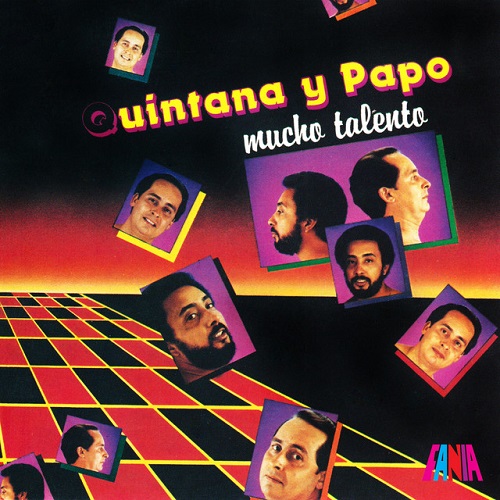
Quintana y Papo Mucho Talento

In 1975, Quintana was invited to join the legendary Fania All-Stars as one of their lead vocalists.

He appeared in the movie Salsa and participated in many of the combo’s historic performances, delivering a blistering version of the self-written “Mi Debilidad” at Yankee Stadium.

When not traveling the world with the All-Stars, Quintana could be found in the recording studio, working on material that appeared on his albums for Vaya Records.

Ismael Quintana’s name appears on many classic albums from the salsa explosion of the 1970s, both as a background singer and as a percussionist.

His phenomenal vocal abilities have obscured the fact that he is one of the most exciting maracas players in the genre.

He is also an innovative composer, having written many of the songs that make up Eddie Palmieri’s seminal albums of that era.

Quintana is also known as one of the nicest guys in the Latin music business.

A true professional who is never late for his concerts and a devoted family man who doesn’t smoke or drink.

Ponce in Puerto Rico has given birth to several legendary Latin singers, from Héctor Lavoé and Cheo Feliciano to Ednita Nazario and Pete ‘El Conde’ Rodríguez. Ismael Quintana is yet another luminary from that region.

This Latin Heritage compilation is a well-deserved tribute to one of salsa’s best. Fania All Stars.

By:

Marino Del Jesus

Historia Salsera

Dj. Augusto Felibertt

Also Read: The Royalty of our Latin Music Pete “El Conde” Rodríguez first singer signed by Fania Records label

Victor Perez

Latin America / Venezuela / Valencia

Victor Perez ( Dj/Musician ) 

From a very early age, I started listening to Salsa, tuning into radio airport (as many times as I could), the lake station in Valencia where you could listen to some Salsa.

Then I started collecting LP records, 45 records, cassettes to listen to the insane, Tito Rodríguez, Latin Dimension and in the year 74/75, of course Ismael Rivera, Estrellas de Fania

A lover of the rumba and for owning the records, in all the rumbas in the neighborhood that were organized they looked for me to place the music in the famous pick-ups.

Dj Victor Perez
Dj Victor Perez

As a result of that time I liked the environment more, I kept updating with the arrival of the CD, PC and until now the existing audio programs.

I have studied professional audio, radio operator, locution and oratory, and they always hire me to set music for public and private parties, generally in Maracay and Victoria.

Last year as an idea, dominating salsa website was created to organize, promote the Dj’s musicalizers of the region.

Jose Bello, The Salsa Tycoon

North America / USA / New York

Jose Manuel Bello Suazo, better known as José Bello “El Cantautor”, a Dominican artist of international stature with several awards and achievements worldwide.

Jose Bello, born on April 6 in the city of Santo Domingo, who from an early age showed a deep love for music, making his first performances in kindergarten and elementary school. As a teenager, he moved to New York where he met Carlos Castillo, a member of internationally known bands such as Machito y su Orquesta, Joe Cuba y su Sexteto, Tito Rodríguez y su Orquesta. From that moment on, Bello formalized his start in the world of music by forming “El Sexteto Latino” together with Carlos Castillo.

Jose Bello
Jose Bello

Baila que Baila is known as his first musical recording with maestro Julio Gutiérrez, after that he recorded four record productions with the owners of LA CHARANGA AMERICA. His first full-length album emerged in the 70’s, with the record company “Lo mejor records” with songs of his own inspiration. But, it was in his third record production, where he decides to add songs with a title in another language, entitled “Blue Bossa”

José Bello manages to start his own record label in partnership with Mr. Aldemar Barona, who titled it “B&B Records Presents José Bello”, containing compositions by both members. In the fifth record production, which was established as the owner Jose Bello, El Cantautor, where only the La Salsa Magnate’s own productions are found.

After that, it was decided to record the first DVD recorded live in the city of Medellin, Colombia, becoming known around the world.

In the last 10 years, José Bello has taken his music to all parts of the world, receiving great acceptance from the European, American and Latin American public. Sharing the stage with great personalities such as Celia Cruz, Rubén Blades, Gilberto Santa Rosa, Oscar D’Leon, Marc Anthony, Tito Nieves, among many more.

Jose Bello Cover
Jose Bello Cover

At International Salsa Magazine, we were able to chat with this incredibly talented artist.


Below is the interview:


How was your first presentation? Did you know after that that music would be your passion?

In the kindergarten of the La miraculous school they had parties and they had a stage where I sang constantly and even had choirs that accompanied me and also acted, since I can remember, my passion is music.


How did you and Carlos Castillo meet? Did you know about his career before?

I met Carlos Castillo, because my mom lived in the house next to him and she talked to Carlos’s mom about me and they both agreed to introduce me, I had no idea who he was, until I met him.


What inspired you to compose those songs?

The experience of life and the gift that I always knew I had to compose, at any time.

Jose Bello CDs1
Jose Bello CDs1

Jose Bello CDs2
Jose Bello CDs2

Jose Bello CDs3
Jose Bello CDs3


Tell us a little about Aldemar Barona, what year did you decide to start with the label?

My great friend Aldemar Barona always went to my presentations and when the contract ended with the best record, we decided to make our own record label in the late 80s, early 90s.

Jose Bello - Photo
Jose Bello – Photo

Was this performance during a tour? What album were you promoting? Where could that DVD be purchased?

Exclusive record. He hired me to make that DVD in the mid 90s and you could get it online, or at the Musical 90 record store in Jackson Hghts Queens New York


All these artists are well known worldwide and having been able to share stages with them speaks volumes about your incredible talent and career. Which of these artists would you say is your greatest inspiration or example?

As I said before, my inspiration is a divine gift, I love all my colleagues very much, I respect and admire them, some started before me, others are from my generation and others became famous after my love, and I respect music, They have moderated me as I am and have led me to feel fulfilled in what I do, blessed and immensely happy.

Jose Bello in concert


Where would you like to present yourself in the next opportunity?

I would like to personally take my art to some countries that I have not visited to this day, such as Mexico, Peru, Panama, Canada, Japan, Chile, and Argentina.


What comes next in the life of José Bello, El Cantautor?

Make my new recording, already as JOSE BELLO EL MAGNATE DE LA SALSA 40 ANIVERSARIO and finish negotiating my next tours, to Central Europe and South America.


Where does his nickname El Magnate de La Salsa come from?

On July 23, 2017, I married the designer Patricia González on the largest luxury yacht in New York called “Infinity”, around 2000 people and with two orchestras. Tito Nieve with his orchestra and my orchestra. The ceremony was on the high seas.

Jose Bello, Jose Bello, The Salsa Tycoon
Jose Bello, The Salsa Tycoon

When in Mexico they found out about my marriage, they wrote to congratulate me and told me “Now you are the salsa magnate” I was surprised and asked them why? and they told me “Only Arab Magnates get married on the high seas on a luxury yacht” I liked the idea.

I always hear that in music there are kings, princes, knights, but there are no tycoons and I think that because of the explanation of the Mexicans, I am the tycoon of salsa.

The legacy of El Palladium lives on, as demonstrated by ‘Mambo Fantasy’

The legacy On Saturday, January 18, 2025, the Tropicoro Club at the Fairmont El San Juan Hotel in Puerto Rico was decked out to celebrate the music of Tito Rodríguez; led by his heir, Tito Rodriguez Jr., and El Caballero de la Salsa: Gilbertito Santa Rosa on vocals and the characteristic marquee of “El Inolvidable”. The show was part of ‘Mambo Fantasy’, a duel between the legacy of Tito Puente and that of Tito Rodríguez, two of the Kings of mambo during the golden age of big bands.

Humberto Ramirez, Herman Olivera, Tito Rodriguez jr. y Gilberto SantaRosa en Mambo Fantasy

The dance concert featured the musical power of the big orchestras, responsible for placing Latin music among the favorites of the dancing public. It was a must remember that the history of what was the era of mambo was strengthened in the emblematic New York halls, among which “El Palladium” stood out. To do so, the dance corps of Tito Ortos and Tamara Livolsi was accompanied by the nonagenarian Mambo Mike, engaging in an energetic choreography that the trio executed to perfection.

The legacy of Tito Puente resonated under the musical direction of the trumpeter, arranger, composer and producer Humberto Ramírez, with Hermán Olivera and Michelle Brava as the singers in charge of interpreting Puente’s repertoire.

Michelle La Brava 'Mambo Fantasy' en Puerto Rico
Michelle La Brava ‘Mambo Fantasy’ en Puerto Rico

Rodríguez’s legacy was carried out by the union between the timbalero, arranger, composer, producer and orchestra director, heir to the musicality and the name of one of our greatest musical glories -Tito Rodríguez, Jr.- and one of the greatest stars of contemporary music -Gilberto Santa Rosa. The group was composed of: Gerardo Rivas on the tumbadoras, Pete Perignon on the bongos, Mako Pérez and Genaro “Ginno” Ramírez on the chorus, Luis Marín on the piano, Johnny Torres on the bass; Freddie Miranda, Josué Urbina, Saviel Cartagena and Francisco “Pacman” Cruz on the saxophones; Georgie Torres and Anthony “Nony” Rosado on the trombones; with Rolando Alejandro, Pedro Marcano, Kevin Ibáñez and Becky Zambrana on the trumpets. And since legacies are significant, it should not be overlooked that the three percussionists of this group are children of musicians.

Orquesta 'Mambo Fantasy' en Puerto Rico
Orquesta ‘Mambo Fantasy’ en Puerto Rico

The repertoire, which included “Mama Güela,” “A los Muchachos de Belén,” “Vuela la paloma,” the bolero “Me faltabas tú,” “Baranga,” “Bon sueno,” “Yambú,” “Avísale a mi contrario,” “El agua de Belén,” “Óyeme Antonia,” “Estoy como nunca,” and the surprising intervention of the tumbador singer Johnny Rivero, the bolero “Tómame ya,” “El que se fue,” and “Abarriba cumbiaremos,” made it clear that the musical complexity of the golden age of mambo remains alive. The Gentleman of Salsa gave a lecture on his expertise in the most Tito Rodríguez-like dance that has ever been seen and heard, imprinting his interpretive style on the songs of “El Inolvidable,” while demonstrating his mastery of the dance, sliding across the stage using Rodríguez’s best steps.

Herman Olivera 'Mambo Fantasy' en Puerto Rico
Herman Olivera ‘Mambo Fantasy’ en Puerto Rico

Evidently, the participation of El Caballero de la Salsa was inspired by the musical perfection of “El Inolvidable”, achieving an impeccable performance. Through the magic that Santa Rosa brought to the concert, Tito Rodríguez, Jr. managed to connect with the Puerto Rican public that follows his father’s music. For our part, we are grateful for the invitation of the work team responsible for the success of ‘Mambo Fantasy’, while we remain awaiting the next show that manages to bring together these greats of mambo.

Also Read: Bella Martinez, the irreverent Salsa writer

Bella Martinez Puerto Rico

Federico Betancourt “Pioneer of Salsa in Venezuela”

Latin America / Venezuela / Carabobo

Jesús Federico Betancourt was born in the city of Valencia, Carabobo state, on March 22, 1940. He was always attracted to music from a very young age.

Photo of Federico Betancourt on stage

In his adolescence, he liked Cuban rhythms, being influenced by Sonora Matancera, Mon Rivera, Eddie Palmieri and Joe Cotto. Before entering the entertainment world, he works at the Bank of Venezuela.

He affirms that he has not carried out formal studies at the musical level, learning the necessary theory to be able to perform as an orchestra conductor, but without interest in interpreting any instrument, but with a well-tuned ear, which has allowed him to remain in the music business for decades. , in fact on certain occasions he is named as the King of the Güiro.

Photo by Federico Betancourt

His career began when he entered the Los Selectos Orchestra, where they played songs by the Billos Caracas Boy’s and the Los Melodicos Orchestra, which were at their peak in the 1960s, all this in a particular way, said Orchestra did not go beyond that.

In 1965, Federico Betancourt decides to satisfy his artistic restlessness and founds a band called Federico y su Combo Latino. The members that made up this band were chosen from among the founder and together with Roberto Monserrat.

But it was not until the middle of 1966, when the twenty-six (26) year old undertook the recording of the LP that would make him famous forever. This record production entitled LLEGO LA SALSA, would mark an important stage in Venezuelan Salsa, because it was the first LP that made use of the word SALSA in the country.

Federico Betancourt
Federico Betancourt

Federico Betancourt himself recounts that the Venezuelan announcer Phidias Danilo Escalona had a Radio Program called LA HORA DE LA SALSA, EL SABOR Y EL BEMBÉ, where all the Cuban and Puerto Rican Caribbean rhythms that were fashionable at the time were placed, among those who highlighted La Sonora Matancera with Celia Cruz, Tito Puente, Joe Cuba, Tito Rodríguez among others, and who was the one who supported them the most in terms of recording the album.

The production was recorded under the Palacio label, and the LP was titled LLEGÓ LA SALSA, he affirms that the title was chosen without taking into account the importance that it would revert in the future, he also affirms that it was not the name that gave him success , the album was a “bump” in sales, since all the songs were the most requested at the time, using his words: “The album sold like hot cakes”.

The music lovers of the time requested it on specialized sites such as the LA SALSA album. Federico says: “The father of the word SALSA was Phidias Danilo Escalona, ​​he used it for the first time in his radio program, and I, humbly, with the success of my LP, gave him the push for its mass use.”

Federico Betancourt - Photo
Federico Betancourt – Photo

In Venezuela, the word SALSA was welcomed by the public willingly, since it suggested a mixture of flavors, which was exactly what happened in the Phidias program, but at the level of rhythms. After the appearance of Federico’s album, all the shows that were performed at the level of Caribbean and Cuban rhythms, carried the name of SALSA.

It is important to name the musicians who took part in this historic production: The musicians are: Ali Rojas Bongo and Cencerro, Roberto Monserrat Music Director and Timbal, Pedro Medina Congas, Alfredo Arcas Trombone, César Pinto Trumpet, Enrique Iriarte Piano, Rafael Prado Bass, Carlín Rodríguez Singer and maracas, Dimas Pedroza Singer, Federico Betancourt Güiro and Director of the Orchestra. The musical arrangements were by the famous trumpeter Eduvigis Carrillo (RIP). Production themes:

Llego la Salsa CD - Federico su Combo Latino
Llego la Salsa CD – Federico su Combo Latino
1.- Cocolía

2.- Conmigo
3.- El Pachanguero

4.- Sancocho Caliente
5.- Guaguancó Manía

6.- Celosa

7.- Despierta Rumbero

8.- No Critiquen
9.- Saoco

10.- Baila Yemaya
11.- Café Y Pan

12.- Que Me Querías

After the success obtained with the record work, the time came for the first international outing, which was to Colombia, in 1969. It happened because the singer of Los Melodicos, Víctor Piñero, informed Betancourt that he was stuck in Cartagena and Barranquilla with the themes El Cobrador and Federico Boogaloo. After the information, the young musician went to the neighboring country and got a contract for the famous Reina del Mar parties, in Cartagena, on November 11, 1969.

The experience of the band was so good, that in 1970 they returned to visit the country. From then until our days Federico y su Combo continues to be an emblematic and legendary band in Venezuela, for this reason the WEB of the classy salsero SALSA BRAVA, offers its respects to such an important salsa figure.

Discography
1966 Llegó La Salsa Palacio (LPS-6171)
1966 Salsa y Sabor Palacio (LPS-6185)
1967 Más Salsa Palacio (LPS-6205)
1967 Durísimo – Vol. 4 Palacio (LPS-6216)
1968 Federico Boogaloo Palacio (LPS-6228)
1968 Psicodélico Con Salsa Gilmar (LPG-110)
1969 Mejor Que Nunca Gilmar (LPG-111)
1969 Vibración y Ritmo Sonus (102-17080)
1970 Dos Sets Velvet (LPV-1539)
1970 La Machaca Velvet (LPV-1539)
1973 Federico Si Te Pone A Bailar Palacio (LPS-6332)
1975 Derrape De Salsa BASF (10.068)
1976 Siguelo Ahí…. a Lo Cortico BASF (10.070)
1977 Ayer y Hoy BASF (10.076)
1977 Esto Es Lo Mejor Palacio (LPS-6372)
1978 Mis Exitos y Más BASF (10.079)
1978 Sabor Foca (LPF-10.037)
1979 Federico y Su Combo Foca (LPF-10.120)
1979 Federico y Su Orq. – El Maestro Discomoda (DCM-1128)
1980 Federico y Su Orq. con Memo Morales Discomoda (DCM-1148)
1982 No Le Digan Integra (PF-14.075)
1983 Nuevamente Palacio (LPS-66.541)
1984 SaaaBroooSo! Palacio (LPS-66.552)
Compilation
1996 Mis Exitos y Más…Vol.1 Sonograma
1996 Mis Exitos y Más…Vol.2 Sonograma
1996 Mis Exitos y Más…Vol.3 Sonograma
2005 El Pionero De La Salsa Palacio
2008 Salsa De Oro Gilmar


  • « Go to Previous Page
  • Page 1
  • Interim pages omitted …
  • Page 4
  • Page 5
  • Page 6
  • Page 7
  • Page 8
  • Interim pages omitted …
  • Page 36
  • Go to Next Page »

International Salsa Magazine (ISM) is a monthly publication about Salsa activities around the world, that has been publishing since 2007. It is a world network of volunteers coordinated by ISM Magazine. We are working to strengthen all the events by working together.
