• Skip to primary navigation
  • Skip to main content

International Salsa Magazine

  • Home
  • Previous editions
    • 2025
      • ISM / November 2025
      • ISM / October 2025
      • ISM / September 2025
      • ISM / August 2025
      • ISM / July 2025
      • ISM / June 2025
      • ISM / May2025
      • ISM / April 2025
      • ISM / March 2025
      • ISM / February 2025
      • ISM / January 2025
    • 2024
      • ISM / December 2024
      • ISM / November 2024
      • ISM / October 2024
      • ISM / September 2024
      • ISM / August 2024
      • ISM / July 2024
      • ISM / June 2024
      • ISM / May 2024
      • ISM / April 2024
      • ISM / March 2024
      • ISM / February 2024
      • ISM / January 2024
    • 2023
      • ISM / December 2023
      • ISM / November 2023
      • ISM / October 2023
      • ISM – September 2023
      • ISM – August 2023
      • ISM July 2023
      • ISM Edition June 2023
      • ISM – May 2023
      • ISM April 2023
      • ISM March 2023
      • ISM February 2023
      • ISM January 2023
    • 2022
      • ISM December 2022
      • ISM November 2022
      • ISM October 2022
      • ISM September 2022
      • ISM August 2022
      • ISM July 2022
      • ISM June 2022
      • ISM May 2022
      • ISM February 2022
      • ISM January 2022
    • 2021
      • ISM December 2021
      • ISM November 2021
      • ISM October – 2021
      • ISM September 2021
      • ISM August 2021
      • ISM July 2021
      • ISM May 2021
      • ISM April 2021
      • ISM June 2021
      • ISM March 2021
      • ISM February 2021
      • ISM January 2021
    • 2020
      • ISM December 2020
      • ISM November 2020
      • ISM October 2020
      • ISM September 2020
      • ISM August 2020
      • ISM July 2020
      • ISM June 2020
      • ISM May 2020
      • ISM April 2020
      • ISM March 2020
      • ISM February 2020
      • ISM January 2020
    • 2019
      • ISM December 2019
      • ISM November 2019
      • ISM October 2019
      • ISM Septembre 2019
      • ISM August 2019
      • ISM July 2019
      • ISM June 2019
      • ISM May 2019
      • ISM April 2019
      • ISM March 2019
      • ISM February 2019
      • ISM January 2019
    • 2018
      • ISM December 2018
      • ISM November 2018
      • ISM October 2018
      • ISM September 2018
      • ISM August 2018
      • ISM July 2018
      • ISM June 2018
      • ISM May 2018
      • ISM April 2018
      • ISM March 2018
      • ISM February 2018
      • ISM January 2018
    • 2017
      • ISM December 2017
      • ISM November 2017
      • ISM October 2017
      • ISM September 2017
      • ISM August 2017
      • ISM July 2017
      • ISM June 2017
      • ISM May 2017
      • ISM April 2017
  • Download Salsa App
    • Android
    • Apple
  • Spanish

Search Results for: Trumpet

Juancito Torres: The National Trumpet of Puerto Rico

We present the musical life of one of the greatest trumpeters in Latin music, the master Juan “Juancito” Torres Vélez, known as “The National Trumpet of Puerto Rico.”
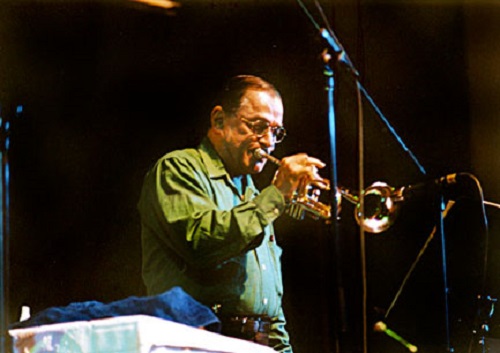
La Trompeta Nacional de Puerto Rico Juan Torres Vélez

Born on January 14, 1936, in Caguas, Puerto Rico, to Justina Vélez Vázquez and Félix Torres Varcárcel, he began his musical journey playing the violin in his hometown. He joined the Municipal Band, where he was taught by Adrián Benjamín and Carlos Julio Bosch, who also taught him the intricacies of the trumpet.

Juancito was a fan of Placido Acevedo, the trumpeter and director of the Mayarí quartet, and Acevedo was his biggest influence for his development as a professional trumpeter. At the age of fourteen, he studied at the Escuela Libre de Música. In 1952, he joined the orchestra of jazz musician Ramón “Moncho” Usera Vives and stayed with him for a year before joining his teacher Miguelito Miranda’s band.

In 1955, he traveled to New York, where he worked with Xavier Cugat, Noro Morales, and the Lecuona Cuban Boys. It is also said that he was part of the orchestras of Pupy Campo and Tito Rodríguez and that he recorded with René Touzet, Dámaso Pérez Prado, and Eddie Cano.
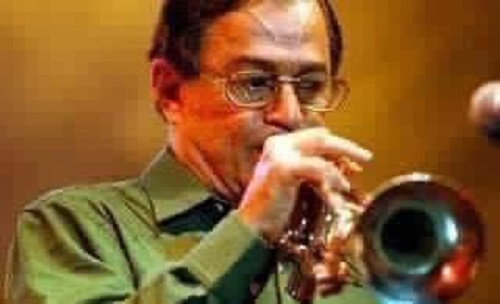
Juancito Torres Primera Trompeta de Fania All Stars

Juancito returned to Puerto Rico in 1960 and enrolled at the Puerto Rico Conservatory to further his musical knowledge. In 1965, he appeared on the list of musicians who recorded the album Bobby Capó and His Orchestra with the great Bobby Capó. In the late 1960s, Juancito joined master Bobby Valentín’s orchestra, recording five albums with them between 1969 and 1975. During the 1970s, he recorded with Frank Ferrer, Justo Betancourt, Puerto Rico All Stars, and Marvin Santiago.

In 1979, Juan began his participation in recordings, concerts, and international tours with the Fania All Stars. He appeared as a member of the Pacheco and Masucci collective on at least ten albums between 1979 and 1997. These include Habana Jam, Commitment, Latin Connection, Lo que Pide la Gente, “Live”, Viva Colombia, and Bravo 97.

Juancito’s extraordinary musical career and great talent also allowed him to participate in recordings for many singers, musicians, and groups such as Cheo Feliciano, Tommy Olivencia y su Orquesta, Adalberto Santiago, Roberto Roena, Sonora Ponceña, Eddie Palmieri, Tito Rojas, Pedro Arroyo, Descarga Boricua, Lalo Rodríguez, and Ray Barreto, among many others. “The National Trumpet of Puerto Rico” also participated in recordings by musicians and singers of other rhythms and musical genres such as Pop, Tropical, Jazz-Rock, Progressive Metal, Rock, Reggae, and Funk/Soul.

Juancito Torres
Juancito Torres

Regarding our music, we remember some of the tracks in which our great musician from Caguas recorded immortal trumpet solos: “Cuando Te Vea” with Bobby Valentín, “Dime,” “Menéame La Cuna,” “Quítate La Máscara,” and “Puerto Rico/Adoración” with Fania, “Amada Mía” and “Salí Porque Salí” with Cheo Feliciano. “Pedregal” with Justo Betancourt, “Canto A Borinquen” and “Alianza De Generales” with Puerto Rico All Stars, and “Palo Pa’ Rumba,” “Prohibición de Salida,” and “Solito” with Eddie Palmieri.

Through this work on Juancito Torres’ artistic life, we want to pay a small but well-deserved tribute to one of the ambassadors of Puerto Rican music. Juan Torres Vélez’s musical career spanned half a century, during which he participated in more than a hundred albums in our music alone, which was named Salsa from the beginning of the 1970s. The National Trumpet of Puerto Rico will live forever in the hearts of Salseros around the world.

The trumpeter and producer Charlie Sepúlveda presented his new musical work titled Feeling Good Again, a jazz album released in 2003 on the Metrix label, which included our Juancito Torres on flugelhorn. Los Licenciados is the name of an album published by the Duque Records label and Omar Duque y su Orquesta. The recording year for this album is not specified, but Juancito Torres also participated as a trumpeter.
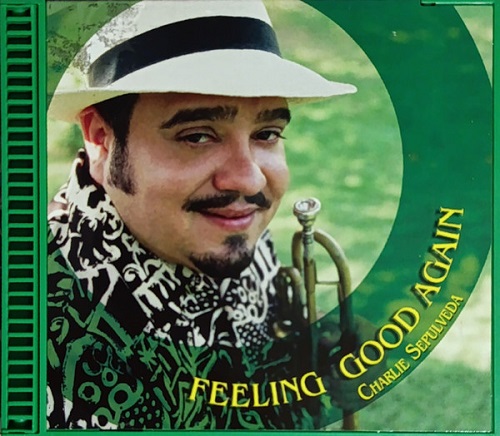
Charlie Sepulveda Feeling Good Again, Lanzado en 2003

Juancito Torres suffered from high blood pressure and bronchial asthma. Unfortunately, he passed away from a heart attack while sleeping at his home in Carolina on July 26, 2003. We will always remember him.

Long Live Music! Long Live Salsa! Long Live Juancito Torres!

By:

The Best Salseros in the World

Dj. Augusto Felibertt

Read Also: Luis “Perico” Ortiz: six decades of impeccable musical trajectory

Trumpeter Davián Raúl Launches Solo Career with “Despierta Salsero” Album

Davián Raúl has released his debut production, Despierta Salsero, available now in digital format and on CD. The young Puerto Rican salsa artist is currently on a promotional tour for the album.

Davián Raúl is no stranger to the salsa scene. He’s been playing the trumpet since he was ten years old, starting with the Banda Sinfónica de Toa Baja. He eventually became a trumpeter for Sonora Ponceña, thanks to the support of Papo Lucca, director of “Los Gigantes del Sur.” To reach his current position, Davián Raúl pursued an education in Music Education and Performance, with the trumpet as his primary instrument. He is a graduate of the Interamerican University of Puerto Rico and is currently a music teacher at a school in Comerío, Puerto Rico, where he mentors students from pre-kindergarten through sixth grade.

Trumpeter Davián Raúl launches his solo career with the album Despierta Salsero.

Before joining one of the most important and iconic salsa orchestras—one that heavily emphasizes the trumpet’s sound—Davián was a trumpeter for the orchestras of Nino Segarra, Primi Cruz, Osvaldo Román, and Anthony Cruz, to name a few. He was also part of Conjunto Chaney shortly before auditioning for La Ponceña. During his time as a backing musician, he traveled the world, playing his instrument in major venues and gaining the experience necessary to make his leap. Davián Raúl makes his debut as a solo singer with Despierta Salsero, bringing a solid hard salsa proposal aimed at satisfying the taste of true salsa aficionados.

Album Details

The album features 10 tracks encompassing hard salsa, romantic salsa, rumba, bolero, and son. The recording includes: ‘Al que nace pa’ salsero,’ ‘Tengo que marcharme,’ ‘La campana’ (a song dedicated to Cali, Colombia, known as “the salsa capital of the world”), ‘Ahora me extrañas,’ ‘Coño, despierta salsero,’ ‘Mientras me sigas necesitando,’ ‘Mi salsa no muere,’ ‘La pachanga,’ ‘Te traigo el son,’ and ‘Ten compasión.’ The orchestration was arranged by Raúl Berríos Raymundí, with arrangements by talented musicians such as Ramón Sánchez, Ernesto “Tito” Rivera, Ángel “Pajay” Torres, and Andy Guzmán. Nine of the ten compositions are original works by Raúl Berríos Raymundí and Irvin Raúl Berríos López. The tenth track, ‘Mientras me sigas necesitando,’ is a renowned song by the celebrated Camilo Sesto.

Musical Production and Guest Artists

The musical execution was handled by a carefully selected group of great Puerto Rican and international musicians. The congas feature “Pequeño” Johnny Rivero, Kachiro Thompson, Gadwin Vargas, Charlie Padilla, and Sammy García. Japhet Rodríguez, Pete Perignon, Edwin Clemente, Pablo Padín, and Diego Camacho play the timbal. Alexandra Albán, Luisier Rivera, Javier Oquendo, and Richard Carrasco perform on the bongos. Richard Bravo is on drums, while Raúl Berríos Raymundí, Sergio Múnera, Ricardo Lugo, Ramón Vázquez, and Pedro Pérez provide the rhythm on bass. Andy Guzmán, Ramón Sánchez, and Carlos García play the piano. The trumpet section showcases David “Piro” Rodríguez, Angie Machado, Jesús Alonso, Marito Ortiz, Dante Vargas, Pedro Marcano, Yoandy Vera, and Davián Raúl himself. José Berríos Raymundí and Irvin Raúl Berríos López contribute on trombones. For the choruses, the voices of Carlos García and Jorge Yadiel Santos alternate with those of Raúl, Irvin, and Davián himself. The sound engineering team responsible for mixing and mastering included Papo Sánchez, Andy Guzmán, and Rolando Alejandro. With this impressive lineup, Davián Raúl, one of the youngest members of the Berríos dynasty, makes his debut, confidently declaring that “salsa is still in control.”

Davián Raúl released his first production available in digital format and on compact disc, Despierta Salsero.

Endorsements

Recently, “El Caballero de la Salsa,” Gilberto Santa Rosa, endorsed Davián Raúl’s debut production via a video clip shared on social media. Santa Rosa stated, “Davián Raúl is a tremendous young talent whom you must listen to… so that true salseros know there’s plenty of salsa for a long time to come. Davián Raúl: Go for it!” In response, Davián Raúl commented on his Facebook page, “Infinite thanks (…) for making this dream possible. You didn’t just give me space, you gave me an opportunity worth gold! This is just the beginning… and may the salsero awaken throughout the world!”

Bella Martinez Puerto Rico


Also Read: Bella Martinez, the irreverent Salsa writer

This is Indiana composer, arranger, music teacher, and trumpet player David Hardiman

Our interviewee today is very special because of the talent and the enormous academic background he has, so we are very pleased to have been able to talk with him. We are talking about the arranger, composer, trumpeter, pianist and music teacher David Hardiman, whom we welcome to International Salsa Magazine.

This is David Hardiman
Music teacher and musician David Hardiman holding his trumpet

A little bit of David’s story

The artist from Indianapolis, Indiana, began his tale telling us a little bit about how he started getting interested in music, which was when he was in fourth grade. That is when he started learning to play the trumpet and piano, taking advantage of the fact that he had one at home.

Unlike other children and young people who find other interests and hobbies besides music, David never stopped and kept playing the trumpet until high school, during which time he played in the marching band, the orchestra, the jazz band and the concert band of the institution.

Years later, he attended Indiana University where he also played in the marching band and concert band. He received his bachelor of music education through which he obtained a lot of classical training that he would later apply to his artistic career, but he did not stop there, as he also began to participate in ensembles with which he played R&B and jazz.

When he returned to his hometown Indianapolis, he was hired by a band with which he started playing blues, tap and jazz at parties, weddings and other events of this type.

In addition to that, he also taught instrumental music for over 11 years at the elementary level. He also taught flute at the fourth grade level and prepared children of those ages to be introduced to instruments until their formation in high school, something very similar to his case when he got started in this world.

The young musician already wanted to expand his horizons and thought about leaving the nest and moving from his home state to try his luck elsewhere, but first he obtained his master’s degree in music education in 1970. This was the final step that would make him realize that he was ready to take flight farther away from home.

David playing the trumpet
David Hardiman playing the trumpet live

Berkeley

In 1971, David went to Berkeley, California, where he began to teach at King Junior High School, which he describes as an excellent experience that taught him a lot about music at the educational and practical level. His teaching specialized in the orchestral and symphonic part of classical-oriented music. At the same time, he spent much of his time playing for clubs and private parties with various orchestras and bands. 

One of his fellow teachers at King Junior High School named Grey Gomez taught at the elementary level and was a trombone player. Gomez told David that he needed a trumpet player for a group called ‘’The Aliens’’, so he proposed him to join the band and play with him at The New Yorker club. This would be the first time the musician played Latin music, more specifically salsa.

Introduction to Latin music in San Francisco

By then, David was looking for new challenges, so he decided that he could not teach at low levels at King Junior High School for life, so he began working part-time at the City College of San Francisco. Parallel to this, he played with another band for various basketball and soccer games during breaks.

Soon after, the musician began directing the big band in the aforementioned institution and teaching at the middle college level outside of San Francisco. When he became a full-time professor at the City College, he was much more exposed to Latin music and genres, which was contrasted with his hometown, as Indiana is not known for its large number of Latin orchestras and musicians. 

David at 12 years old
Young David Hardiman playing the trumpet at 12 years old

In the Bay Area, he began to have much more contact with people from other nationalities and cultures, especially Latinos, which made him listen to various Latin music groups and play with others. He even opened up for great artists such as Celia Cruz and the Fania All Stars.

He also played with the group Café Canela, whose genres are a very interesting combination of salsa, chá chá chá and many more.

San Francisco All Star Big Band 

About 50 years ago, parallel to what he did with other orchestras, he created his own big band named San Francisco All Star Big Band, with which he has played for all kinds of events such as festivals, university parties, religious services, weddings, birthdays, charity balls, nightclubs, among others. 

With this orchestra, he has a few albums which can be found on YouTube and other similar platforms and they are ‘’It’ll be alright’’, ‘’Portrait of David Hardiman’’, and ‘’Music Around The World’’.

Portrait of David Hardiman
Cover of the album ”Portrait of David Hardiman”

Read also: Puerto Rican singer Max Rosado and what he had achieved in Washington DC

Latin jazz and mambo trumpeter Jonathan Powell and his great collaborations

Trumpeter Jonathan Powell is one of the many examples that show how much so many American artists have looked at Latin music over the last few years, so this is a great opportunity to know one of the many stories about what our heritage has achieved in this country.

Jonathan playing
Musician Jonathan Powell playing the trumpet live

Instruments that caught Jonathan’s attention

An important fact to remember is that Jonathan’s parents were musicians. His father played the electric bass and his mother played the cello, so he obviously has a lot of talent to get from. However, his interest in music turned to a slightly different way.

The instrument through which the artist is best known today is the trumpet due to his great skill at handling it, but it is not the only instrument he has learned to play. He also plays the trombone, the tuba and other bass instruments, but does not have the same fascination with them as with the trumpet.

His interest in music began when he was in high school and became part of a few student bands, resulting in more than 30 years of musical career.

Jonathan’s academic training

Most of what Jonathan has got to learn comes from the experience he has gained through his work, although he does not devalue formal music education. In fact, he attended the North Carolina School of the Arts and studied with that institution’s best teachers in the area of classical music.

When he turned 19, he made the decision to move to New York, where he has lived ever since. While there, he did not care as much about further studying music, but gaining as much experience as he could through practice.

Jonathan recording
Jonathan Powell recording music for his album ”Mambo Jazz Party”

Interest in Latin music

Although Jonathan’s interest in music began with the classical genre, his move to Florida made him seek other horizons. In Florida, he and his brother Jeremy began to make contact with radio stations that played Latin genres and this led them to meet the Garcia-Herreros brothers, Juan and Victor, who are two very experienced musicians in Latin jazz, but also in Latin music in general. The boys returned to Florida after studying at Berklee College of Music and started a band with Jonathan and Jeremy until they had to move to New York.

When Jonathan graduated from high school and also moved to New York, he was reunited with Juan and Victor who offered him to join their orchestra La Creación, with which he played every weekend for several years. This would be what the young musician would describe as his first real experience in the world of music, leading him to participate in the orchestra La Excelencia and to play with Arturo O’Farrill and Eddie Palmieri. 

Learning from other great artists

Just as Jonathan has played with O’Farrill and Palmieri, he has also been able to share the stage with Miguel Zenón, Tito Puente Jr, Oscar Hernández from the Spanish Harlem Orchestra, Israel Tanenbaum and many others.

Despite not having received much academic training, the opportunity to have played with the aforementioned music stars and many more really taught him many things that he would not have learnt in any educational institution. He assures that from whom he learned the most was Maestro Palmieri, since the legendary pianist is very generous when it comes to sharing his knowledge with whoever needs it, thanks to his extensive experience in this rich world.

‘‘Palmieri has been around since the fifties and sixties and has played with the most important artists of his generation, so he has a lot to teach. People have no idea how much he knows and how deep his knowledge on music is,” said the trumpeter about one of his great living inspirations.

However, as a trumpet player, another of his great inspirations was Puerto Rican arranger, composer and producer Juancito Torres for the way he played, since he considers it very special and unique compared to many other musicians.

Jonathan and Palmieri
Maestro Eddie Palmieri and Jonathan Powell smiling for the camera

Nu Shanga

Eager to manage his own musical group, Jonathan gives the public a very interesting proposal which he baptized Nu Sangha, inspired by Tibetan language, since these two words together mean ”new community”. With this group, he had much more freedom when choosing how he wanted to address each rhythm and wanted to give a much more modern approach to the type of jazz he had been playing through electronic elements few times used before.

In the case of Nu Sangha, he enjoyed everything he did professionally and was able to experiment with everything he had learned so far in creative ways, leading him to release the albums ”Transcend” and ”Beacons of Light”.

Mambo Jazz Party

In Jonathan’s own words, Mambo Jazz Party, the artist’s most recent musical work, the entire process of recording it took more than 10 years, since that was the time taken to create all the music that appears in the record material. He started the creation in 2014 and it was not until 2022 that Jonathan added the final details such as some missing vocals, but he assures that all the time spent on the album was worth it.

On the album, we can find Jimmy Bosch, guitarist Nir Felder, flutist Itai Kriss, pianist Manuel Valera, vocalist Ariadne Trujillo, singer Anthony Almonte and many other great artists who embellish this creation.

In other interviews, Jonathan has described this album as a mix of traditional salsa and Latin jazz elements, electronic sounds and a lot of spiritualism, which can summarize very well what this musical work represents for Jonathan Powell. 

Mambo Jaszz Party by Jonathan
Cover of the album ”Mambo Jazz Party” by Jonathan Powell

Read also: Great Christmas salsa songs and their stories

Dominican trumpeter Wilson Portuondo talks about La Sonora Nuyorkina

As shown in the most traditional media and digital platforms, Dominican artists belonging to diverse musical genres have been working hard for many years to finally be recognized in the world. That is the case of talented bandleader and trumpeter Wilson Portuondo, with whom we managed to contact to know much more about his life and career.

Trumpeter Wilson Portuondo
This is Dominican trumpeter Wilson Portuondo from La Sonora Nuyorkina

How Wilson became interested in music

Wilson, our protagonist in this story, became interested in the musical world shortly after his 15th birthday in his native Dominican Republic, which was already well known for various types of merengue at the time. The young man frequently attended concerts performed in parks on weekends, which were free of charge, allowing him to enjoy the bands from his town without representing excessive expenditure for his family.

This was awakening in the boy a great desire to imitate the musicians he saw on stage and be as great as them someday, so he wanted to start studying music and see what he could achieve with that knowledge.

Professional beginnings

Wilson’s first experience as a professional musician came from the hand of the town’s municipal band in the city of Santiago. He also got to play in the municipal band of the firemen and the municipal band of the Dominican National Police, which had a headquarters in the aforementioned city. 

Thanks to these groups and others, he specialized in playing classical music and merengue, but things changed greatly when he decided to move to New York as a young adult who was about to celebrate his 20th birthday.

Wilson playing
Wilson Portuondo playing the trumpet live

Wilson as a trumpeter

The instrument for which Wilson is best is the trumpet, which he confesses he began playing almost by accident. His fascination with the trumpet started when he was studying at the Culture and Art Institute while still in Santiago, as it was the first instrument he came in contact with that caught his attention at the institution.

At that time, he would never have imagined that he would play it, but he ended up feeling an enormous love for it and now considers it his favorite instrument among all others. However, he does not limit himself to this, as he can play the piano and is learning to play percussion, which includes the conga, bongo, Dominican tambora, güira and many more. 

Once he arrived in New York, he continued committed to learn as much as he could about music and studied at various institutes such as the Harlen School of the Art and later at the State University of New York (SUNY), where he studied classical trumpet for four years until he graduated.

He has learned to play the rest of the instruments through practice and lessons with other musician friends.

Arrival in the United States

When he arrived in New York, Wilson had to take an extra year in high school and, thanks to his studies, he was able to make friends with music students who invited him to enroll in the Harlem School of Art, a place where he had contact with many other people linked to the environment who began to call him to play with them as a freelancer.

Wilson at an event
Wilson Portuondo at the social dance event ”Salsita Social Pa’l Pueblo”

In parallel to this, he was taking dance classes in New York style, which allowed him to attend many social dances and such live music events. Something that the artist noticed at that time was that the groups he saw always played the same songs like ”El Cuarto de Tula”, ”Soy Pilongo”, ”No le pegue a la Negra”, ”Rebelión”, among others. In addition to notice that they did not meet to rehearse, but played together the same as always.

To some extent, he feels that these mistakes on the part of so many orchestras inspired him to create his own project which he would baptize as La Sonora Neoyorkina, since he wanted to offer the public a fresh and new repertoire that did not include the same old thing. However, he always makes sure that he and his musicians rehearse as much as possible so as not to make the same mistakes as other groups.

Among the musicians who are currently in the group, we can mention Anthony Almonte, Osay Calvo, Nestor Villar, Carlos Mena, Carly Maldonado, among others. Venezuelan percussionist Robert Quintero, Luisito Quintero’s cousin, has also played in the band.

However, although they usually do covers of various classic songs, they have also strived to create their own original music, so they already have original songs such as ”Sonora Llegó” and ”Summertime”. Also, the group is making preparations to complete their first studio album next year.

Read also: Juan Karlos Jiménez talks about his orchestra Salsa Nueva Band and freelance career

  • Page 1
  • Page 2
  • Page 3
  • Interim pages omitted …
  • Page 55
  • Go to Next Page »

International Salsa Magazine (ISM) is a monthly publication about Salsa activities around the world, that has been publishing since 2007. It is a world network of volunteers coordinated by ISM Magazine. We are working to strengthen all the events by working together.
