• Skip to primary navigation
  • Skip to main content

International Salsa Magazine

  • Home
  • Previous editions
    • 2025
      • ISM / November 2025
      • ISM / October 2025
      • ISM / September 2025
      • ISM / August 2025
      • ISM / July 2025
      • ISM / June 2025
      • ISM / May2025
      • ISM / April 2025
      • ISM / March 2025
      • ISM / February 2025
      • ISM / January 2025
    • 2024
      • ISM / December 2024
      • ISM / November 2024
      • ISM / October 2024
      • ISM / September 2024
      • ISM / August 2024
      • ISM / July 2024
      • ISM / June 2024
      • ISM / May 2024
      • ISM / April 2024
      • ISM / March 2024
      • ISM / February 2024
      • ISM / January 2024
    • 2023
      • ISM / December 2023
      • ISM / November 2023
      • ISM / October 2023
      • ISM – September 2023
      • ISM – August 2023
      • ISM July 2023
      • ISM Edition June 2023
      • ISM – May 2023
      • ISM April 2023
      • ISM March 2023
      • ISM February 2023
      • ISM January 2023
    • 2022
      • ISM December 2022
      • ISM November 2022
      • ISM October 2022
      • ISM September 2022
      • ISM August 2022
      • ISM July 2022
      • ISM June 2022
      • ISM May 2022
      • ISM February 2022
      • ISM January 2022
    • 2021
      • ISM December 2021
      • ISM November 2021
      • ISM October – 2021
      • ISM September 2021
      • ISM August 2021
      • ISM July 2021
      • ISM May 2021
      • ISM April 2021
      • ISM June 2021
      • ISM March 2021
      • ISM February 2021
      • ISM January 2021
    • 2020
      • ISM December 2020
      • ISM November 2020
      • ISM October 2020
      • ISM September 2020
      • ISM August 2020
      • ISM July 2020
      • ISM June 2020
      • ISM May 2020
      • ISM April 2020
      • ISM March 2020
      • ISM February 2020
      • ISM January 2020
    • 2019
      • ISM December 2019
      • ISM November 2019
      • ISM October 2019
      • ISM Septembre 2019
      • ISM August 2019
      • ISM July 2019
      • ISM June 2019
      • ISM May 2019
      • ISM April 2019
      • ISM March 2019
      • ISM February 2019
      • ISM January 2019
    • 2018
      • ISM December 2018
      • ISM November 2018
      • ISM October 2018
      • ISM September 2018
      • ISM August 2018
      • ISM July 2018
      • ISM June 2018
      • ISM May 2018
      • ISM April 2018
      • ISM March 2018
      • ISM February 2018
      • ISM January 2018
    • 2017
      • ISM December 2017
      • ISM November 2017
      • ISM October 2017
      • ISM September 2017
      • ISM August 2017
      • ISM July 2017
      • ISM June 2017
      • ISM May 2017
      • ISM April 2017
  • Download Salsa App
    • Android
    • Apple
  • Spanish

Search Results for: Trumpet and Percussion

The son montuno was born in the area of Santiago de Cuba

It was constituted by a mixture, in perfect harmony, of the African sonorous roots with the metric and the style of versification of Spanish origin. Although it presents a rhythmic base similar to the son, they do not have a common origin.

This rhythm is a product of the same phenomenon of transculturation that other genres of the Cuban traditional music have undergone by the hybridization of cultures.

Uncertainties about the origin of son montuno

According to Fuentes Matons himself, he is only a compiler of the verses and the authors were the sisters Micaela and Teodora Ginés, who wrote the lyrics in Santiago de Cuba around 1560.

The son montuno was born in the area of Santiago de Cuba

But this story does not have sufficient evidence, and may be the result of the author’s modesty, the oldest son montuno that is collected is that of Ma’Teodora, from 1893.

Many authors assure that the real author is Fuentes Matons, in an attempt to validate the musical roots of the Island. What is certain is that the expansion of this rhythm from the 18th century in Cuba was very fast.

In addition, due to the migration of Caribbean people to Cuba, the mixture with sonorities coming from Haiti, Santo Domingo and Puerto Rico became more and more frequent Haiti, Santo Domingo and Puerto Rico.

Evolution and popularity of son montuno in the 20th century.

From the 19th century onwards, migration from East to West was significant.

This was due to the wars of independence that had taken place in the eastern part of the island.

This migration brought as a consequence that the rhythm also expanded and mixed with the rhythms that already existed in the West.

In the western provinces, mainly in Havana and Matanzas, there was the concept of a band composed of six or seven members, which favored the new genre.

Arsenio Rodríguez (1911-1970), known as “el ciego maravilloso” (the wonderful blind man), was one of the great musicians who brought this sonority to the forefront.

Among his most popular works are “Papa upa”, “Mami, me gustó”, “La vida es sueño”, “La yuca de Catalina”, among many others.

The lyrics are characterized by the picaresque jocularity, the simplicity of the message, the easy to memorize refrains and the exchange with the public in occasional interpretations.

The orchestra, on the other hand, does perform complex improvisations and virtuoso musical combinations. Arsenio Rodríguez popularized the rhythm worldwide, opening a space for traditional Cuban music in the 1950s.

Arsenio Rodríguez (1911-1970), known as “el ciego maravilloso”, was one of the great musicians who brought this sonority to the forefront.

Legacy of Son montuno

The legacy of this Cuban rhythm is present in genres such as Latin salsa, mambo, Latin jazz, timba and chachachá. Some outstanding musicians kept its rhythmic base and incorporated their own melodic creations.

Among these are: Benny Moré, Pío Leyva, Roberto Faz, among many others.

The primitive instruments of the Cuban son are the Cuban tres, the bongo, the maracas, the claves and the marimbula.

The Cuban tres is a kind of guitar with three pairs of strings. The bongo constantly improvises. The maracas and claves accompany the guitar and the bongo.

The marimbula was used as a bass in the traditional Cuban son.

Later, other instruments such as the guitar, double bass, trumpet and timbales were added.

What kind of instruments did the African slaves bring to Cuba?

Among the typical instruments we find the chekeré, the güiro and the batá drums. The chekeré in Cuba is also known as ágbe.

The basic instrumental ensemble is made up of a series of string instruments (jarana, requinto or son guitar, leona) and percussion instruments (pandero, quijada de burro, marimbol, tarima for zapateado), to which other instruments have been added in recent experiments (violin, double bass, cajón, etc.).

What is the national instrument of Cuba?

The Cuban BongóThis small double drum is considered by many to be the most characteristic instrument of Cuba
The Cuban Bongó
This small double drum is considered by many to be the most characteristic instrument of Cuba

The Cuban bongo

This small double drum is by many considered the most characteristic instrument of Cuba.

It is easy to identify the bongo at first glance as it has been used and popularized in countless celebrations until it has become an indispensable instrument.


Also Read: Israel “Cachao” López Sobrado en fama y respeto en los años setenta se dedicó a mantener la tradición a nivel supremo

Edwin “El Calvito” Reyes. From combat to Beats

North America / USA

After participating in the largest military coalition in the history of the United States, Edwin “El Calvito” Reyes has shown that the phrase “If you dream that you can achieve it” is totally true. Dreams are achievable with perseverance, dedication and talent, qualities that this dreamy Sonero has, who will launch his record label soon for all Salseros lovers who support the new blood of the Salsa.

Edwin was born in Trujillo Alto (Puerto Rico) in 1974 and when he was 19 years old, he began his artistic career, playing and doing concerts of Plena (Folkloric Puerto Rican Music) in his hometown. Five years later “El Calvito” Reyes enlisted in the US Army in order to give a better future to his family, after a terrible work accident in his previous job (He was an Electrician).

Edwin “El Calvito” Reyes - Photo
Edwin “El Calvito” Reyes – Photo

During this year of change (1997) Edwin had his first opportunity in front of the American public as vocalist leader in a consolidated orchestra in these lands, “Papo salsa and his Tumbao” in Fort Stewart Army Post, GA, thanks to the expert eyes of Víctor Paris and Mr. Godreau, “Papo Salsa”.

From March 2003 to 2007, Edwin “El Calvito” Reyes went to combat four times in Iraq and once fought in Afghanistan, but he always felt the need to help relieve the stress of all the soldiers who were in those circumstances like him. In this way he created Saturdays of Salsa in combat for which he received help in the first instance from an U.S. civilian specialist in communications, Mr. Pérez, who contributed a large part of the necessary sound equipment to carry out this incredible idea at the beginning.

Later, Edwin with his percussionist and DJ skills in 2005 returns to Iraq but this time better prepared to carry out the Saturdays of Salsa parties during the fight. During this year he had his first performance in front of a crowd of soldiers and civilians accompanied by an orchestra of 14 musicians live, among which were: the Puerto Rican and master pianist José Pomales, Willie Báez, Julio De La Rosa, and Javier Solivan, among others …

Edwin “El Calvito” Reyes in concert

Everyone playing outdoors in the main dining room at Camp Liberty where the stage was. From this success, the band continued its touches until 2007 in this warlike country with an orchestra of more than 15 pieces: Piano, Bass, Trumpets, Trombones, Tenor Sax, Conga, Timbale, Bongo / Bell, Drums, Vocalists and a sound master, with which this wonderful orchestra made a total of 25 presentations.  “We were flown like true artist, in helicopters from one base to another, to just perform and then return back to our original base… Playing at Saddam’s Palace (a true palace made of concrete and marble) was the highlight. Also, at Camp Slayer where the biggest dancing crew gathered was an adrenaline rush for us… All with the help of great people who really felt like I felt; boost our own moral in combat!” told us Edwin.

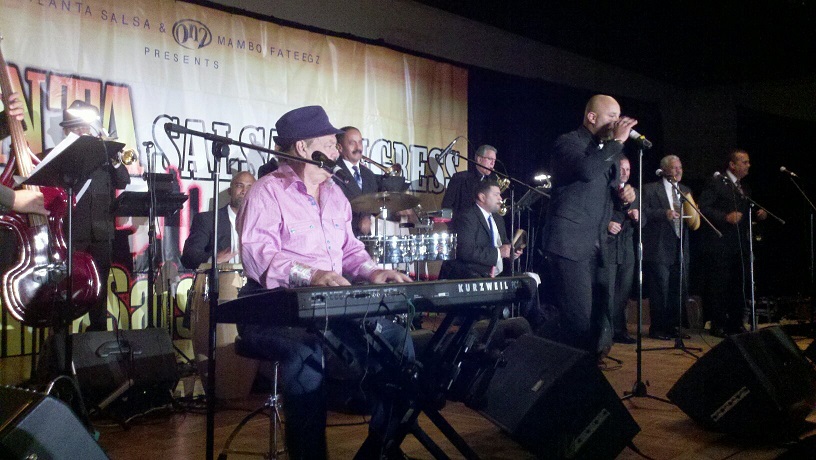
In parallel to his military career, “El Calvito” Reyes participated in the Latin Music Orchestra in the city of Savannah, GA, “Ron con Anís” by the dead musician David Mercado and of which in 2006 he would be its owner under the new name “Orquesta con Clase” reaching objectives such as: leading the Latin American Services Organization (LASO) Festival in Savannah with more than 6,000 attendees; They were the “Guests of Honor” for the Fiesta Atlanta Festival at the Olympic Centennial Park in Atlanta, Georgia, performing in front of 10,000 people. Also, they served as the backup band for: Salsa Legend, Larry Harlow, the 2011 Hotalanta Salsa Congress, and many more.

Edwin “El Calvito” Reyes on the radio

In 2011 he is part of a selection of elite musicians of the U.S. Army to form a Latin music band called “One & Only” idea of creation by The Army Marketing & Research Group (AMRG) and carried out by the musicians Carlos Negrón and Albert Sánchez. This band, similar to U.S. Army Jazz Ambassadors sang Salsa, Merengue, Bachata and other Latin rhythms for the entertainment of their audience. During his tenure in this band he performed at the annual conventions of the League of United Latin American Citizens (LULAC), which is the largest nonprofit organization in America. He helped many Latinos obtain millionaire scholarships, he was master of ceremonies on three occasions contributing with his knowledge on “The importance to stay positive and reach that goal” and “How the army life will impact your life”.

From 2012 to 2016, he was the Official in charge of the Ensemble. He achieved the inclusion of more musicians to the group including female talent. He had the privilege of meeting political figures such as Michelle Obama, Hillary Clinton and Ricky Rosello (current Puerto Rico’s Governor), as well as acting in front of world-renowned stars such as: his idol Gilberto Santa Rosa, Olga Tañón, Tito Nieves, Jennifer Lopez, and many luminaries of the country’s Hispanic television.

Edwin “El Calvito” Reyes, leader, visionary and humble was also the host of a radio show called “My Salsa Show” in WHCJ 90.3fm at Savannah State University. From there derives his nickname “El Calvito”, thanks to one of his fellow broadcasters of the station and since then he is known as Edwin “El Calvito” Reyes by all his fans.

Edwin “El Calvito” Reyes

“ … I play Timbales, Conga, Bongo, Bata, Campana and all minor percussion… I ask not to be considered a master percussionist, as I’m learning the craft of all, but so far I have mastered the playing and singing simultaneously.”

This Sonero, percussionist has composed several songs and has made numerous covers. “You are My Wife” (2016) with arrangements by Castor Ugarte was his first composition with lyrics inspired by his wife.

His most recent single “Mi Tierra Querida”, al Son de Bolero, (2018) showed that doing what he loves has been one of his best keys to his resounding ascent in this career. This composition of the “Virtuoso de la Salsa” Rey Torcat with arrangements of the same Edwin with Eric Maldonado (Owner and Master Engineer at Paris Recording Studios, Tampa, FL) and on the piano, Adam Perez, has been a symbol of hope for all Puerto Rican emigrants based in the U.S. “Mi Tierra Querida” was awarded by the Akademia Music Award for Best Song back in April 2018.

“Mi Ritmo se llama Zalsa” is a theme that he launched this year and invites the dancers to perform their best steps on the track with its fast paced. Lyric by Rey Torcat, produced by Eric Maldonado, and with the participation of: Archie Pereira (piano), Kevin Pagan (Bass), Luis Chafalote (trumpets), José León (trombones) and Ricardo Rodríguez (saxophone Bari). This song currently ranks # 1 in Salsa Tune in Barcelona, Spain, based on the Record Pool of “Gussi DJ” on Tune in Radio.

Photo of Edwin “El Calvito” Reyes

“Soneros de Sangre Nueva” is another song of his authorship and the third that works in conjunction with Rey Torcat. In this single they share together the interpreters: Josean Rivera “El Nuevo Amolador”, Edwin Lebron “Xtraordinario”, Nandy “El Sinsonte” (Conquistador Del Elemento) and Gumbay Navedo (Carmen Sol). Also, the musicians of great trajectory, such as: Banny Maldonado, Grammy Winner, (Timbales), Edwin “Pirulo” Reyes (Congas) and Kokoand Take (Bongo / Bell) and in the choirs the Lead vocalist of the legendary CORPORACION LATINA, Edgardo “Bambino” Otero participated in this hit. Similar to his two previous unreleased tracks “Mi Tierra Querida” and “Mi Ritmo se llama Zalsa”, “Soneros de Sangre Nueva” has had a great acceptance and support from the public knowledgeable appreciative about the new Salsa representation worldwide.

The covers “Ya te Olvide” (2017) original song by the successful Mexican singer Marco Antonio Solis, recorded in the state of Kansas with arrangements by Carlos Ugarte and “RAN KAN KAN. Just for the King”(2009), tribute to Tito Puente under the production of one of the best percussionists, David Lugo with different choirs, Xilofono or Marimba, Trombones, and solos by Conga and Timbal, have screened” El Calvito “Reyes at the top of the most outstanding relief Soneros Salseros today.

Edwin “El Calvito” Reyes performing at the concert

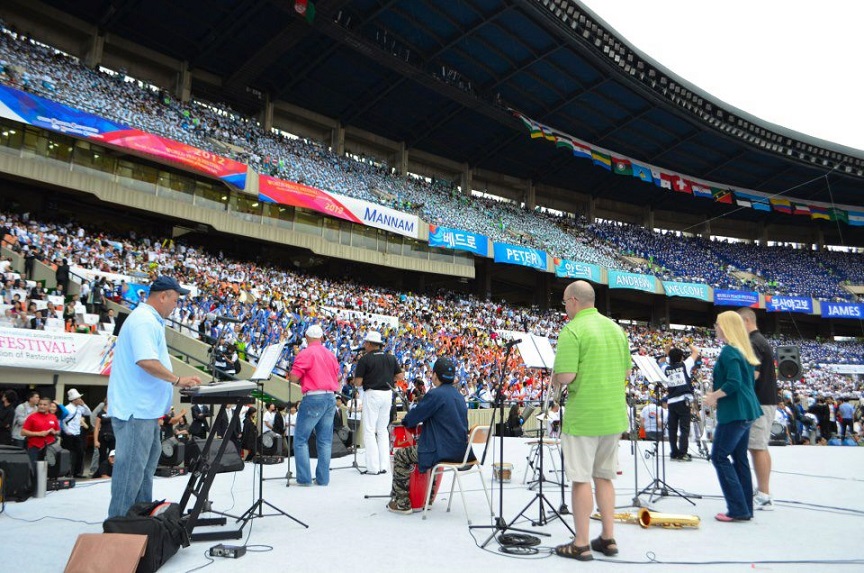
With 25 years of musical experience and more than 10,000 presentations around the world, Edwin has stepped on the best stages including the World Peace Festival at the Olympic Stadium in Seoul (South Korea) in front of 82,000 people. He also had appearances in more than 20 Salsa Social events in many clubs throughout the peninsula, participated in the Salsa Beach Festival in Pusan and in two Asia Salsa Congreses with the master trombonist’s band, Greg Peña.

“Salsa is my therapy,

Edwin, who currently resides in Palm Coast, Florida, and after 22 years of service in the U.S. Navy and retired as Chief Warrant Officer, is preparing his debut album to be released in 2019 and doesn’t discard in the future to continue working on behalf of Hispanic communities around the world as a motivational coach, always bringing optimism and hope for a better future for the Latins.

Edwin “El Calvito” Reyes - A New Design - Made with PosterMyWall
Edwin “El Calvito” Reyes – A New Design – Made with PosterMyWall

All his music can be downloaded NOW on all digital platforms.

For more information, please visit www.ElCalvitoReyes.com or follow him in all his social networks as Edwin El Calvito Reyes.

Video: https://youtu.be/XMRTsFvpT0A

Toñito Laya

Latinoamerica / Venezuela / Caracas

On this occasion we have the privilege of meeting the new Venezuelan talent Toñito Laya (singer), son of Maestro Antonio “20 DEDOS” Laya, who was one of the most significant conga players in the Venezuelan salsa movement in the 1980s, director of the “ Banbankere Orchestra” of Petare with two musical productions; giving him more than enough reason to grow in Latin music, such as “el Son”, “la Rumba“, “la Guaracha”, “el Danzón”, “Boogaloo”, “la Timba” and “la Salsa” being This is the beginning of his artistic and musical career.

Starting in the 90s, he (Toñito Laya) entered the Bigott Foundation where he had the opportunity not only to learn the various rhythms in Afro-Venezuelan percussion, but also developed as a dancer in one of the most important groups in Venezuela when it comes to popular traditions. “Vasallos del Sol”, eventually becoming “Vasallos de Venezuela” in 2016, where he had 16 concerts, productions, albums and national and international tours; Colombia, Mexico, United States, South Korea and Japan, among others.

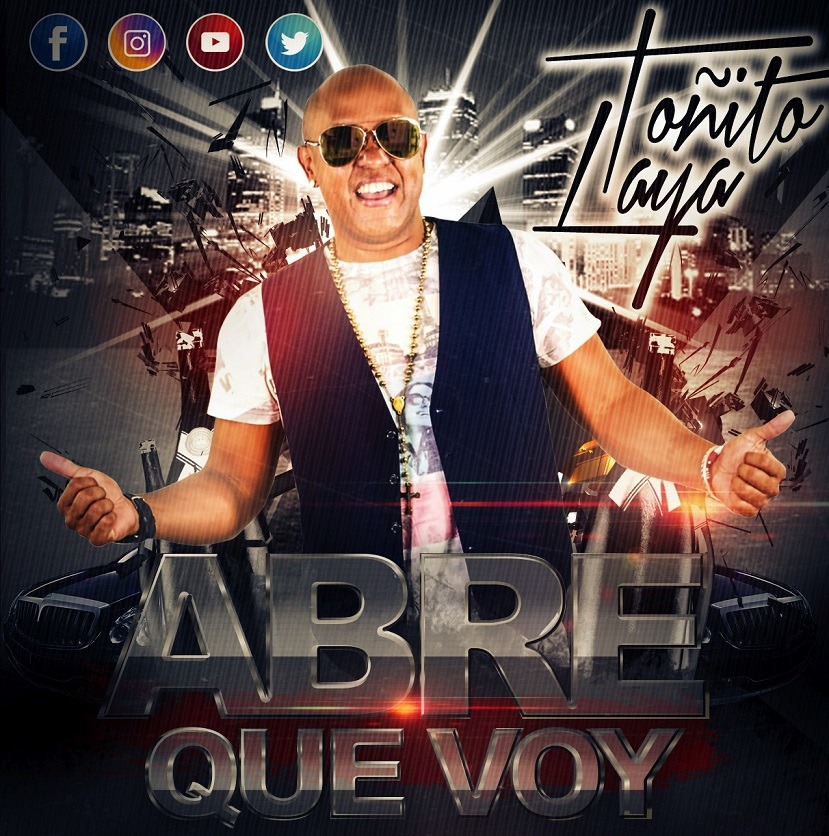
Toñito Laya flyer
Toñito Laya flyer

In 2006, a project called “Comprehensive School of Latin Tradition Dance 100% Tumbao” began, where many dancers were trained in the Cuban Salsa Casino genre, combining this training with Venezuelan traditions, making them understand that traditions come first. Venezuelans. Then they participated in the most important events and competitions in Venezuela, they even became Latin American Champions of “CUBAMEMUCHO 2009” in the city of Caracas-Venezuela, thus managing to represent the country in the grand final to be held in the city of Munich-Germany, 2010.

He also tells us that in 2009, they were invited to participate in a new project but this time not to dance, but to “sing” in a group that by then had no name but a particular genre such as “Son Cubano” . From that moment Toñito began his musical career to develop in a somewhat unexpected way, he was a founder and assumed the commitment of being in charge of this group as one of its leading singers for more than 7 years, where the themes arose: To me that, La Ruñidera, Bilongo, El Jamaiquino, I hear a drum, among others; They were part of his first musical repertoire.

With two record productions together with the already structured band “La Séptima Bohemia” he consolidated his musical career as a singer, going through a training process with different teachers and vocal coaches such as: Ronald González, Fanny Olano, Gustavo Gerardo and Marcial Istúriz, among others. others, who would help him develop in the middle of music.

National tours, award nominations and concerts allowed him to share the stage alongside large-scale national and international groups such as: Francisco Pacheco, Canelita Medina, Alexander Abre y su Habana de Primera, Manolito y su Trabuco, El Septeto Santiaguero, José Alberto “El Canario” to mention a few. Toñito records for the year 2012, the song “She takes me”, a song that in turn would be the title of the second album becoming an icon of parties, dances and social events not only in Venezuela but in many salsa and salsa dancing countries. casino in the world.

In the year 2016 Toñito Laya arrives in Aztec land to embark on a new path, he begins by residing in the city of Cancun-Mexico to sing in some local groups and participate in various projects such as: Los Panas.com, La Formula Perfecta, Grupo Swing Latin among others.

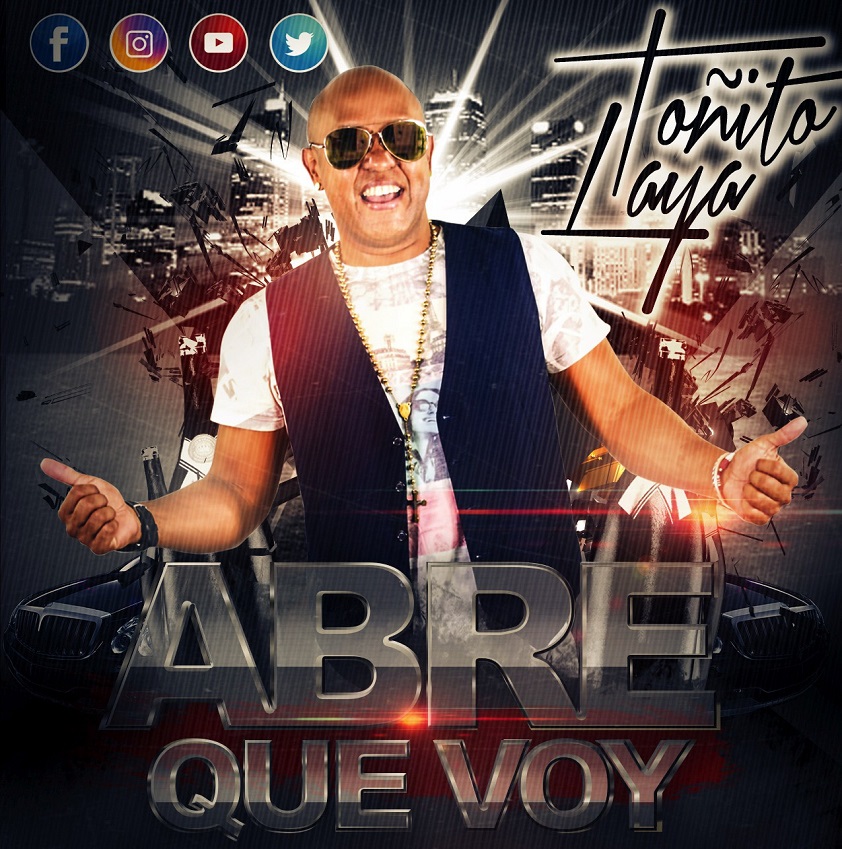
This new stage as an artist prompts him to consider a new musical challenge but this time as a solo singer with a well-defined and focused vision, his pleasant experience as a dancer motivates him to dedicate his first promotional single “ABRE QUE VOY”, this being the complement of an orchestra, for the musicians and their singers “EL BAILADOR”.

“ABRE QUE VOY” is the result of the work of talented and renowned Venezuelan musicians who give an important plus to this Musical production of “Maurice Melo”, this first single is created, performed by Toñito Laya, in the company of the Venezuelan talent of the following musicians:

  • Piano and arrangement: Joel Uriola.
  • Bass: Jesús Torres “Mandinga”
  • Percussion: Yomar Méndez “Caballo”
  • Trombone: Jhonal Rivero.
  • Trumpet: Edward Platter.
  • Baritone sax: Michel Peña.
  • Choirs: William “Wywy” Buznego, Carlos Guzmán and Ramfis Fajardo.
  • Recorded in the studio: A Tempo Records by Heyzer Cabrera.
  • Mixing and Mastering: Heyzer Cabrera. Caracas – Venezuela 2018

If you want to meet or contact Toñito, you can follow him through:

  • Correo: [email protected]
  • Facebook: https://www.facebook.com/tonito.laya
  • YouTube: https://www.youtube.com/channel/UCUkjU7SFnPc_W-XJDlMMzRg
  • Instagram: https://www.instagram.com/tonitolaya/
  • Twitter: https://twitter.com/negrolaya


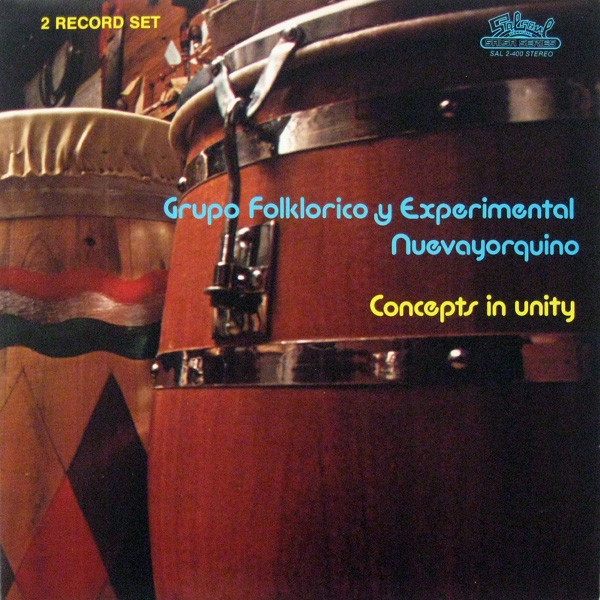
Virgilio Martí participated as aVirgilio Martí participated as a vocalist in the Grupo Folklórico Experimental Newyorkino in which he composed the song “Cuba Linda”

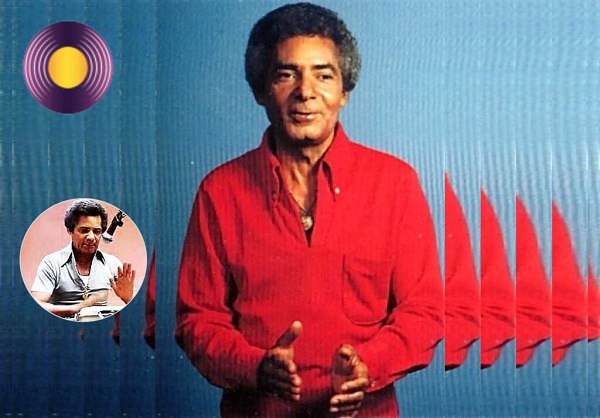
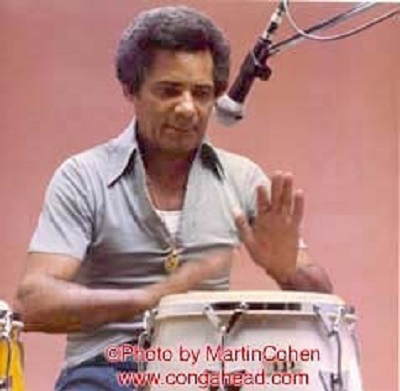
Virgilio Martí, born in the year 1919 Havana, Cuba, Rino Rumbero, Singer, Composer, Arranger, Percussionist, Actor and Orchestra Director, well known since the late 40’s, especially as a guaguancó singer.

He began touring the world in 1949 and met his later wife in 1960 in Peru.

Virgilio Martí participated as a vocalist in the Grupo Folklórico Experimental Newyorkino in which he composed the song "Cuba Linda".
Virgilio Martí participated as a vocalist in the Grupo Folklórico Experimental Newyorkino in which he composed the song “Cuba Linda”.

That same year, he settled in New York, participating in the local scene.

He participated in the LP “Patato y Totico” in 1967, he also participated with his brother Eloy Martí, in a Quintet accompanied by Gene Golden, for the year 1979.

Israel López (Cachao), Arsenio Rodríguez, Héctor Cadavieco, Francisco Valdés, Papaíto, Tony Mayari and Mario Cadavieco also worked on that album.

He participated in the “Grupo Folklórico Experimental Newyorkino”, where he was their vocalist and percussionist, in 1975. During his stay with them, he composed the song “Cuba Linda”.

"Grupo Folklórico Experimental Newyorkino, donde fue vocalista y percusionista del mismo, en 1975
“Grupo Folklórico Experimental Newyorkino, donde fue vocalista y percusionista del mismo, en 1975

Another work of Martí of great remembrance is the album entitled: “Saludando A Los Rumberos”, published by the Caimán label in the early 80’s and in which the Cuban acts as vocalist and main star. In it, Martí is involved with talents such as: Tony Cofresí, Andy and Jerry González, Yomo Toro, Paquito Pastor, Ray Romero, Claudio Roditti and Ignacio Berroa, among others.

Virgilio Martí, born 1919 Havana, Cuba.

“Iya Modapue”, constitutes in itself, a guaguancó with open rumba being at the same time the favorite number of the “Grupo Folklórico”, and even the first groove that was recorded.

The levels of experimentation and the freedom to unload several rhythms in a single musical performance are the factors producing the attraction of the musicians for “Iya Modupue” (which means Thank You Mother).

The vocal part is in the hands of Virgilio Martí. The trumpet of “Chocolate” Armenteros, the trombones of José Rodríguez and Reinaldo Jorge, the flute of Gonzalo Fernández and the percussion of Frankie Rodríguez stand out.

“Se Me Olvidó” – a bolero by Lolita de la Colina – but adapted in guaguancó to the style of the Grupo Folklórico, which, by the way, turned out to be the piece with the greatest radio airplay in the tropical environment and, therefore, the one that would open the doors to the group. The song was performed by Virgilio Martí, who also plays the congas. In “Se Me Olvidó”, the violin of Cuban Alfredo de la Fe, the quinto of Julito Collazo, the street redoblante of Jerry González and a Mexican marimba played by Andy González in counterpoint to the notes of the double bass, also played by Andy, stand out.

Here it is worth mentioning that Alfredo de la Fe is a virtuoso violinist and among his many performances, I remember his work with Eddie Palmieri, Larry Harlow (the wonderful Jew), the Fania All-Stars and the avant-garde Típica 73.

In the early 80’s he formed a band with brothers Andy and Jerry González, and percussionist Ignacio Berroa.

It is worth mentioning Virgilio Martí’s 1985 performance in the film by Cuban filmmaker León Ichaso entitled: “Crossover Dreams” (Sueños truncados). In it, the Havana native plays the role of “Cheo Babalú” and sings the song “Llora Timbero”.

In this film production made in New York City, the actor Rubén Blades, who plays the role of “Rudy Veloz”, also participates. There they sing the song “Todos Vuelven”.

In 1990, he contributed to the “Soundtrack” of the movie Azúcar Amarga.

He maintained a great skill in converting songs from other genres into rumba arrangements. We can mention the adaptation of the song by Brazilian composer Jorge Ben, “Más Que Nada”, which appears on the LP with Patato y Totico. Martí died on October 17, 1995. (Tom Data “Facebook”)

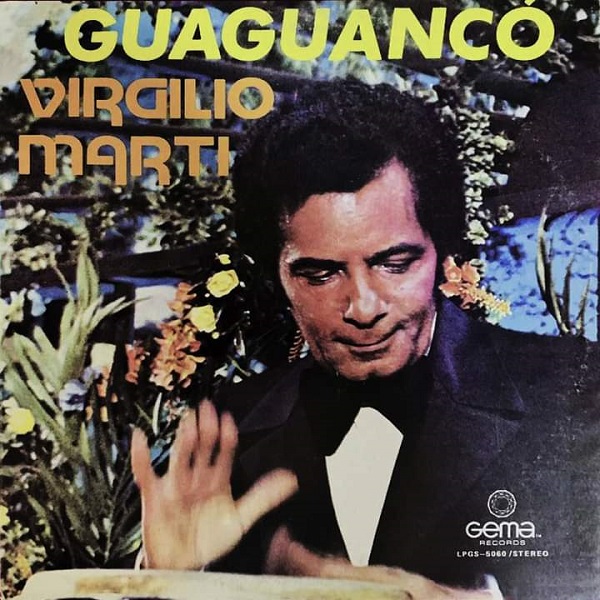
Virgilio Marti - Guaguanco (1979)
Virgilio Marti – Guaguanco (1979)

Virgilio Marti – Guaguanco (1979)

Tracks:

  1. Amanecer (Armando Manzanero)
  2. Todos vuelven (Rafael Otero)
  3. A tus pies (D.R.) (Agustin Lara)
  4. My childhood (Laureano Martinez)
  5. Saluting the rumberos (Manolo Albo)
  6. I’m going to divide it (R. Livi)
  7. Acanapon (D.R.)
  8. The little handkerchief (D.R.)
  9. Que susto (Virgilio Marti)
  10. Odiame (Rafael Otero)

Information realized (June 1, 2024)

Sources:

DiscoGS

Spotify Virgilio Marti

Virgilio Marti Youtube

Also Read: Justo Betancourt Querol Cuban sonero and singer famous for his interpretation of the song “Pa’ bravo yo”

Toñito Laya

Latin America / Venezuela / Caracas

On this occasion we have the privilege of meeting the new Venezuelan talent Toñito Laya (singer), son of Maestro Antonio “20 DEDOS” Laya, who was one of the most significant conga players in the Venezuelan salsa movement in the 1980s, director of the “ Banbankere Orchestra” of Petare with two musical productions; giving him more than enough reason to grow in Latin music, such as “el Son”, “la Rumba”, “la Guaracha”, “el Danzón“, “Boogaloo”, “la Timba” and “la Salsa” being This is the beginning of his artistic and musical career.

Starting in the 90s, he entered the Bigott Foundation where he had the opportunity not only to learn the various rhythms in Afro-Venezuelan percussion, but also developed as a dancer in one of the most important groups in Venezuela when it comes to popular traditions. “Vasallos del Sol”, eventually becoming “Vasallos de Venezuela” in 2016, where he had 16 concerts, productions, albums and national and international tours; Colombia, Mexico, United States, South Korea and Japan, among others.

In 2006, a project called “Comprehensive School of Latin Tradition Dance 100% Tumbao” began, where many dancers were trained in the Cuban Salsa Casino genre, combining this training with Venezuelan traditions, making them understand that traditions come first. Venezuelans. Then they participated in the most important events and competitions in Venezuela, they even became Latin American Champions of “CUBAMEMUCHO 2009” in the city of Caracas-Venezuela, thus managing to represent the country in the grand final to be held in the city of Munich-Germany, 2010 .

Toñito Laya
Toñito Laya

He also tells us that in 2009, they were invited to participate in a new project but this time not to dance, but to “sing” in a group that by then had no name but a particular genre such as “Son Cubano” . From that moment Toñito began his musical career to develop in a somewhat unexpected way, he was a founder and assumed the commitment of being in charge of this group as one of its leading singers for more than 7 years, where the themes arose:

To me that, La Ruñidera, Bilongo, El Jamaiquino, I hear a drum, among others; They were part of his first musical repertoire. With two record productions together with the already structured band “La Séptima Bohemia” he consolidated his musical career as a singer, going through a training process with different teachers and vocal coaches such as:

Ronald González, Fanny Olano, Gustavo Gerardo and Marcial Istúriz, among others. others, who would help him develop in the middle of music. National tours, award nominations and concerts allowed him to share the stage alongside large-scale national and international groups such as:

Francisco Pacheco, Canelita Medina, Alexander Abre y su Habana de Primera, Manolito y su Trabuco, El Septeto Santiaguero, José Alberto “El Canario” to mention a few. Toñito records for the year 2012, the song “She takes me”, a song that in turn would be the title of the second album becoming an icon of parties, dances and social events not only in Venezuela but in many salsa and salsa dancing countries. casino in the world.

In the year 2016 Toñito Laya arrives in Aztec land to embark on a new path, he begins by residing in the city of Cancun-Mexico to sing in some local groups and participate in various projects such as: Los Panas.com, La Formula Perfecta, Grupo Swing Latin among others.

This new stage as an artist prompts him to consider a new musical challenge but this time as a solo singer with a well-defined and focused vision, his pleasant experience as a dancer motivates him to dedicate his first promotional single “ABRE QUE VOY”, this being the complement of an orchestra, for the musicians and their singers “EL BAILADOR”.

“ABRE QUE VOY” is the result of the work of talented and renowned Venezuelan musicians who give an important plus to this Musical production of “Maurice Melo”, this first single is created, performed by Toñito Laya, in the company of the Venezuelan talent of the following musicians:

  • Piano and arrangement: Joel Uriola.
  • Bass: Jesús Torres “Mandinga”
  • Percussion: Yomar Méndez “Caballo”
  • Trombone: Jhonal Rivero.
  • Trumpet: Edward Platter.
  • Baritone sax: Michel Peña.
  • Choirs: William “Wywy” Buznego, Carlos Guzmán and Ramfis Fajardo.
  • Recorded in the studio: A Tempo Records by Heyzer Cabrera.
  • Mixing and Mastering: Heyzer Cabrera.

Caracas – Venezuela 2018

If you want to meet or contact Toñito, you can follow him through:

●      E-mail: [email protected]

  • Facebook: https://www.facebook.com/tonito.laya
  • YouTube: https://www.youtube.com/channel/UCUkjU7SFnPc_W-XJDlMMzRg
  • Twitter: https://twitter.com/negrolaya


  • « Go to Previous Page
  • Page 1
  • Interim pages omitted …
  • Page 18
  • Page 19
  • Page 20
  • Page 21
  • Page 22
  • Interim pages omitted …
  • Page 31
  • Go to Next Page »

International Salsa Magazine (ISM) is a monthly publication about Salsa activities around the world, that has been publishing since 2007. It is a world network of volunteers coordinated by ISM Magazine. We are working to strengthen all the events by working together.