• Skip to primary navigation
  • Skip to main content

International Salsa Magazine

  • HOME
  • Previous editions
    • 2026
      • ISM / April 2026
      • ISM / March 2026
      • ISM / February 2026
      • ISM / January 2026
    • 2025
      • ISM / December 2025
      • ISM / November 2025
      • ISM / October 2025
      • ISM / September 2025
      • ISM / August 2025
      • ISM / July 2025
      • ISM / June 2025
      • ISM / May2025
      • ISM / April 2025
      • ISM / March 2025
      • ISM / February 2025
      • ISM / January 2025
    • 2024
      • ISM / December 2024
      • ISM / November 2024
      • ISM / October 2024
      • ISM / September 2024
      • ISM / August 2024
      • ISM / July 2024
      • ISM / June 2024
      • ISM / May 2024
      • ISM / April 2024
      • ISM / March 2024
      • ISM / February 2024
      • ISM / January 2024
    • 2023
      • ISM / December 2023
      • ISM / November 2023
      • ISM / October 2023
      • ISM – September 2023
      • ISM – August 2023
      • ISM July 2023
      • ISM Edition June 2023
      • ISM – May 2023
      • ISM April 2023
      • ISM March 2023
      • ISM February 2023
      • ISM January 2023
    • 2022
      • ISM December 2022
      • ISM November 2022
      • ISM October 2022
      • ISM September 2022
      • ISM August 2022
      • ISM July 2022
      • ISM June 2022
      • ISM May 2022
      • ISM February 2022
      • ISM January 2022
    • 2021
      • ISM December 2021
      • ISM November 2021
      • ISM October – 2021
      • ISM September 2021
      • ISM August 2021
      • ISM July 2021
      • ISM May 2021
      • ISM April 2021
      • ISM June 2021
      • ISM March 2021
      • ISM February 2021
      • ISM January 2021
    • 2020
      • ISM December 2020
      • ISM November 2020
      • ISM October 2020
      • ISM September 2020
      • ISM August 2020
      • ISM July 2020
      • ISM June 2020
      • ISM May 2020
      • ISM April 2020
      • ISM March 2020
      • ISM February 2020
      • ISM January 2020
    • 2019
      • ISM December 2019
      • ISM November 2019
      • ISM October 2019
      • ISM Septembre 2019
      • ISM August 2019
      • ISM July 2019
      • ISM June 2019
    • 2016
      • ISM December 2016
  • Spanish
  • Download Salsa App
    • Android
    • Apple

Search Results for: Trumpet and Percussion

Salsa at its best, led by the leader of La Puertorriqueña: Don Perignon

The most recent production of the Bailable Víspera de Reyes, which was instituted in 1987 by the timbalero and band leader known in the salsa scene as Don Perignon, was quite an event. Thirty-eight years ago, ‘La Puertorriqueña’ was still known as ‘Compañeros y amigos’.

El líder de La Puertorriqueña, Don Perignon

However, the dance that fulfills a promise made by Perignon to kings has continued to be celebrated beyond the names with which Perignon has identified his band over time.

Each year, the show brings with it a box of surprises. In addition to what is promised during the promotion, the salsa public that comes to the traditional gala knows that anything can happen there. This year, the stage showcased great artists in addition to the luxurious closing that gave us the night by way of El Caballero de la Salsa, Gilberto Santa Rosa performing the emblematic song by Johnny Ortiz, ‘Tu música popular’.

Ángel Martínez, Efraín Hernández, Don Perignon y Miguel Aponte

In this edition, held on January 5, 2025, the concert was started by the successor of the Perignon dynasty, also a percussionist, Pete Perignon; flanked by vocalists Ricardo Rodríguez in the more melodic songs and Julio López in the heavier numbers. López got the first turn at the microphone with ‘Azúcar pa’ un amarga’o’, followed by Rodríguez in the key of ‘Cuéntame tu historia’.

According to Pete himself, he invited Jorge Yadiel Santos to silence rumors regarding the singer’s departure from his orchestra. With the vocal power that characterizes him, the now soloist closed the presentation of the first orchestra of the night; performing ‘Baila’ and ‘Gotita caído en clave’.

Cuto Soto, Gamalier González, Rafy Torres, Pedro Marcano, Carlos __Coamito__ Martínez, Jr., Ángel Segarra y Humberto Ramírez

The group led by Pete Perignon and his timbal offered a great performance with master musicians of the present generation. These were: Jean Carlos Camuñas on the tumbadoras, Carlos Pagán on the bongó, Reynaldo Burgos on the piano, Jorge Rivera on the bass; Víctor Ambert and Jahaziel García on the trumpets; Darnell Febres and César Javier Ayala on the trombones, and Víctor “Yuca” Maldonado on the baritone saxophone.

La Mulenze kept the crowd on the dance floor, with the first song of their repertoire being ‘La sala pa’l baile’, performed by Rafy Andino. The vocal front was completed by Rafy Cruz and Alex Ojeda. The bassist, director of the orchestra of eternal youth, Edwin Morales led his boys, as he affectionately refers to his musicians; Among them were Emanuel Navarro on the tumbadoras, Robert Watts on the timbal, Alberto Muriel on the bongo, Manolo Navarro on the piano, Carlos “Coamito” Martínez, Jr. and Abdel Rivera on the trumpets; in addition to Willie Torres Ortiz and Heity Morales Nogueras on the trombones. The golden touch was offered to those present during the interpretation of the song “Mala paga”, written by our Moncho Rivera, when the Venezuelan master musician and sonero Marcial Istúriz took on the task of accompanying Rafy Andino on the soneos, shortly after Rafy confessed to being a great admirer of one of the greatest exponents of the salsa sound in Venezuela.

Henry Santiago, Joe González, Rico Walker, Marcial Istúriz, Hermán Olivera, Jerry Rivas, Pichie Pérez, Josué Rosado y Pedro Brull

Before starting his presentation, the star of the annual gala, Don Perignon marked and conducted the orchestra to play ‘Happy Birthday’ in honor of the evening’s host, also Z-93 announcer: Néstor Galán, “El Búho”. The timbalero conducted the orchestra, which was reinforced for the evening with guest musicians. The group in its Bailable Víspera de Reyes 2025 version was composed of: Charlie Padilla on the tumbadoras, Miguel Aponte on the bongó, Ángel Martínez on percussion (güiro), Luis Marín on the piano, Efraín Hernández on the bass; Cuto Soto, Gamalier González and Rafy Torres on the trombones; in addition to Pedro Marcano, Carlos “Coamito” Martínez, Jr., Ángel Segarra and Humberto Ramírez on the trumpets. For the vocal front, Perignon called on: Henry Santiago, Pedro Brull, Joe González, Pichie Pérez, Josué Rosado, Jerry Rivas, Rico Walker, Marcial Istúriz, Hermán Olivera and Gilberto Santa Rosa.

Cuto Soto, Gamalier González, Rafy Torres, Pedro Marcano, Carlos __Coamito__ Martínez, Jr., Ángel Segarra y Humberto Ramírez

The repertoire took the followers of La Puertorriqueña on a historic tour that demonstrated the variety of songs and voices that come together in a salsa key with the cadence and flavor that Perignon manages to give to each project he leads. Joe González performed ‘Ciudad, ciudad’, Pedro Brull excelled singing ‘Represento’, Pichie Pérez was in charge of vocalizing ‘Como mangó’, Josué Rosado visited to sing ‘Cantándole al amor’, Jerry Rivas was in charge of ‘El pin pin’, Rico Walker shined with ‘Que vengan rumberos’, followed by Marcial Istúriz and a masterful interpretation of ‘La familia’ and Hermán Olivera with his spectacular ‘Ritmo Bembé’.

Marcial Istúriz comparte micrófono con Hermán Olivera

La Puertorriqueña was born in 1988 near the promise of Kings, which happens every January 5. The dance of January 5, 2025, which was held at the Sheraton in San Juan, Puerto Rico and was dedicated to trombonist Toñito Vázquez (RIP) showed that the promise of Reyes by Don Perignon -who is the leader of a generation of musicians- established more than three decades ago, remains valid. The participation of El Caballero de la Salsa recreated the beginning of his career, together with his first musical director: Don Perignon. That brotherhood between Gilberto and Perín, like the promise of Reyes, also remains valid. For our part, we will continue in salsa thanks to the call of the leader of La Puertorriqueña.

Also Read: Don Perignon and La Puertorriqueña are prides of Puerto Rico

Bella Martinez Puerto Rico

Salsa, territory of joy.

Latin America / Venezuela / Caracas

Salsa, territory of joy, language of celebration, enjoyment of the towns and their people, was born from a confluence of facts, geniuses and rhythms. Confluence that happened in the faith of the same religion: Afro-Cuban music.

Salsa pal Bailador
Salsa pal Bailador

And that mixture, which Richie Ray and Bobby Cruz cleverly described as “similar to the tomato sauce that is put on hamburgers to give them flavor”, was summed up in the insightful sentence of the occasional witness, the journalist Phidias Escalona: “the music that you make is salsa. From now on we will call it sauce”.

The year was 1968 and although the new rhythm already existed, there had been no consensus on the name. And that consensus began to emerge -perhaps for the first time- on the album “Los Durisimos The Strong Ones, Salsa y Control”, by Richie Ray and Bobby Cruz. Later, Richie himself would add: “The word was born around us, (however,) if it weren’t for (Jerry) Masucci there would be no salsa, because he brought it to the world.”

In 1960s New York Harlem, black Americans had begun to like Latin music, despite not speaking Spanish.

Ama a tu musa como a ti mismo - Salsa
Ama a tu musa como a ti mismo – Salsa

The guajira dazzled them until they made them dance. Believing that the mixture of boogaloo, blues, mambo, guaguancó or son montuno, was a variant of the boogaloo invented by Chubby Checker, the new rhythm was founded, incorporating the concepts of the Latin spirit in their interpretations and that -technically- they would add to the baggage : percussion, piano, violins, trumpets, trombones and whatever instrument would serve to give it flavor and richness.

Cocola' Wears - Venezuela Salsa
Cocola’ Wears – Venezuela Salsa

Musically, for example, the so-called “blue notes” would be added (that is how the overtones of the acoustically weak E and B notes, last to be added to the scale, where they would be relocated between Lam and Lam) would be added to the new fusions. Then came the downloads and phrases that we know until now as characteristics of salsa.

Thus the sauce was born. And so it has been transformed, always within the circle that encloses joy, passion and enjoyment, history, experiences, fortune or misfortune, seen from different perspectives: urban, social, sensual or everyday.

Tocadisco - musica
Tocadisco – music

Pirisalsa Orchestra

Latin America / Venezuela / Falcon

The music is the result of the creation of a rhythm that tries to convey a message that the artists give to their audience and depending on the voice, the lyrics, the instruments and above all the desire to transmit that feeling, they make people want to listen to it and dance to it.

Pirisalsa Orchestra
Pirisalsa Orchestra

The Orchestras became known for being dynamic groups, creators of rhythms and party entertainers; something that cannot be replaced by a DJ or digital music, since recorded music and live music are two different things.

In the state of Falcón, Venezuela, there is the Grupo Piritu, who make up the Pirisalsa Orchestra, they are a group of talented young people who, despite their young ages, know how to transmit the flavor of Salsa to their audience.

Members of the Pirisalsa Orchestra

They emerged and were educated in schools and through the selection of the most outstanding children in music, they gradually gave rise to the orchestra, being a pleasant and rhythmic sound to the audience to date, not to mention that it is a group with many followers full of dreams and musical desires. They mention that “since our first presentation on October 19, 2011 to date we have not stopped working…”.

Pirisalsa Orchestra with Augusto Felibert - Asocosalsa
Pirisalsa Orchestra with Augusto Felibertt – Asocosalsa

Currently his manager is Frank Molina, he says:

“That as a manager whenever he discovers a rough diamond project what he wants is to make it shine to achieve and achieve the dreams of each member and turns it into a single dream, because the Pirisalsa orchestra is a family. …the goal is to ensure that our work is recognized both nationally and internationally, I have been working for some time now, spreading this project on radio, television and social networks, we also have the support of many artists who believe in this Project. These young people are admirable because at their young ages they decided on this genre that is SALSA”.

Franky Frorentino - Pirisalsa
Franky Frorentino – Pirisalsa

The Pirisalsa Orchestra plays SALSA, with a smooth style in its message and melody, despite the fact that the rhythm is very lively, thanks to the percussion instruments, showing us and maintaining its Latin, Afro-descendant, and Caribbean roots in its music.

Photo by Franky Frorentino

They have had the opportunity to participate in several important events in Venezuela, such as the PDVSA Salsa Festival held in La Estancia, Caracas in two editions, where they managed to share with great bastions of this genre throughout Venezuela, especially in Caracas, there were also a Festival in Maracay, Aragua and recently at the Whatuyusei Festival in Punto Fijo, Falcón, where they shared with artists such as Omar Enrique, la Melodía Perfecta, Gustavo Eli, los Bois Servando and Florentino, among others.

Franky Frorentino
Franky Frorentino

However, their goal and desire is to take their music throughout Venezuela and abroad so that the whole world can listen to them, appreciate their talent and be able to project themselves as an orchestra, since when they are on stage in a presentation they sing full of a feeling of love but that is with great elegance, with a fresh, tender language, full of emotion and kindness, but always transmitting his deep love for his homeland Venezuela.

The members of the orchestra are mostly young people and children from the town of Piritu, Falcón, dividing into:

Pirisalsa Orchestra
Pirisalsa Orchestra
●      Evannys Lorves – Vocalist ●      Daniel Peña – Hand Bell
●      José Amundarai – Vocalist ●      Bongo Wullian Álvarez – Piano
●      Yerli Lugo – Vocalist ●      Javier Gómez bajo eléctrico
●      José Daniel  Lugo – Timbal ●      David Gómez (director musical) – trombón
●      Reinaldo Pérez – Congas ●      Reinaldo Antonio Pérez – Trumpet
●      Navarro trompeta y Luis Navarro – Trombón

The Pirisalsa Orchestra and its Manager Frank Colina gave a message to all the new talents, which goes like this “if you have a musical dream, don’t let difficulties stop your path, believe in your virtues, try to be yourself, don’t copy nobody, be original, offer your own proposal and believe deeply in it, don’t stop no matter how hard the circumstances are, fight relentlessly until you break down the barriers and achieve your goals. He who perseveres achieves.”

Pirisalsa - CDs
Pirisalsa – CDs

For more information Pirisalsa Orchestra:

  • Facebook: @frank.colina
  • Instagram: @managerpirisalsa
  • Twitter: @pirisalsamanage
  • Phone: +(58) 4168076199 / +(58) 4168044073


Eduardo Herrera

Latin America / Puerto Rico / Puerto Rico

Puerto Rican singer Eduardo Herrera presents us with his new album “Libre” which will have 10 songs, one of them has the same title as the album, which aroused our curiosity. He mentions that his song “Libre” deals with a false love that destroys and manipulates at his convenience, his process of liberation from all that is bad or toxic in that love and, above all, the search for a force to have the courage to face everything and so on. being able to value yourself as a person and being able to look at yourself in the mirror.

Eduardo Herrera tells us that “it is not just a song, it is a way to get out of a prison, of the emotional and physical abuse that you can receive from a person who supposedly loves you… for me it has a lot of meaning, I sing it with great emotion because I lived it I got over it and now I’m free.”

The origin of the album was thanks not only to the singer but also to the good musicians who accompanied him, designed and finished him, among them the arrangers Richard Marcell (piano and bass) and Adán Pérez (piano), Tito de Gracia on percussion, Juan Carlos Cardona (Juako) with Trombones, Jesús Alonzo with Trumpet, Ángel Torres with Baritone.

Eduardo Herrera
Eduardo Herrera

Eduardo Herrera says that since he was a child he has sung in different choirs as he mentioned in the previous report, but from the age of 11 he fell in love with tropical music thanks to Jerry Rivera with the song “Casi un Hechizo” becoming addicted or passionate about the sound of the trumpets the congas and the romantic songs. After the separation of his partner, he began to write his own songs, and later he met a first-class musician named Adán Pérez, a great pianist and arranger; together they met to write and create the current themes of the discography.

He (Eduardo Herrera) also told us that he was in a choir called the Housing Authority Youth Choir, where he had many pleasant experiences and the opportunity to sing at Radio City Music Hall with the British Rock Symphony. In 2016 he produced an album of sacred music and had the honor of meeting Richard Marcell, winner of several Grammys as an arranger and musician, in that production he made 5 excellent songs.

The discography “Libre” has themes that speak of pain, love and the hope of a new beginning for the artist, that is, it is a production with a great variety of lyrics, he confesses that each song is its own story, it has its own identity and hopes that the salsa audience enjoys his work to the fullest since he left his whole being in that production.

In order for the professional life of an artist to be recognized, the greatest obstacle must be avoided, which is oneself, limiting oneself, being afraid; always says: to all my brothers or sisters who are starting something or have a goal in life, don’t give up, fight for your dreams

For more information:

  • Phone: +1 787 399 5064
  • Email: [email protected] / [email protected]
  • Facebook: https://www.facebook.com/eduardoherrerasalsa/
  • Instagram: https://www.instagram.com/eduardoherrerasalsa/
  • YouTube: https://www.youtube.com/user/eduardoherreramusic

Rumberos del Callejón

North America / USA

Rumberos del Callejón “Celebrando” The Salsera Culture

After 11 years of trajectory, Rumberos del Callejón return with their third record label “Celebrando” for Salseros lovers from all continents. An album that since its inception has gained great acceptance by the public knowledgeable of this Tropical genre.

Logo - Rumberos del Callejón
Logo – Rumberos del Callejón
Rumberos del Callejón with the saxohone artist

“Celebrando” will feature several unpublished tracks that highlight the evolution of this orchestra created in Caracas – Venezuela in 2007. These singles will be interpreted mostly by guest artists of the current movement, internationally recognized for their extensive and successful musical career.

Rumberos del Callejón

Celebrando will have a modern and emblematic sound effect, since it has the outstanding voices of: Tito Nieves, Maelo Ruiz, Gilberto Santa Rosa, Domingo Quiñonez, Sixto Yorente “El Indio”, Luis Fernando Borjas, Wilmer Lozano and with the already prestigious vocal harmonies, members of this musical group: Rodrigo Mendoza, Gonzalo Díaz, Angelito Vallenilla, Memo Arroyave and their new musical bet, the young singer, Veruzka Verdú.

Wilmer - Rumberos del Callejón
Wilmer – Rumberos del Callejón

This group that owes its name to the San Pedro alley located in the popular Catia area, west of the Venezuelan Capital managed to obtain the collaboration of these international guest artists on their album not only thanks to the current avant-garde technology, but also to the printed constancy and always present in the director Carlitos Padrón, who took up the challenge with his father Carlos Padrón (founder of the orchestra) to produce “Celebrando”, which also had the privileged pens in the composition of the songs by Rodrigo Mendoza and Angelito Vallenilla.

Veruzca Verdu - Rumberos del Callejón
Veruzca Verdu – Rumberos del Callejón

“ For me Salsa is a way of life. It’s passion and culture. Carlitos Padrón “

This album with almost 4 years of production was recorded in the main cities of the American continent: Caracas, Santo Domingo, Cuba, Miami, Orlando and mainly in the recording studio “Chongo Records” belonging to the director, founder, composer and percussionist of the band, Carlitos Padrón, in New York.

Gilberto Santa Rosa - Rumberos del Callejón
Gilberto Santa Rosa – Rumberos del Callejón

“Celebrando” has the participation of important Venezuelan arrangers of the tropical genre, such as: Alberto Crespo and Willie Melo, who along with Carlitos Padrón took care of all the sound material of the production to get to the music market with a lot of “modernism and melao”, commented Carlitos Padrón. Currently, Celebrando is in the final phase of remastering and mixing so that dancers from the 5 continents are able to enjoy this new record proposal that Rumberos del Callejón will offer them soon.

“… We have international guests of great trajectory, which are a bit difficult to get but with the Grace of God, today, I think we have an Artwork”. Carlitos Padrón

Check List - Rumberos del Callejón
Check List – Rumberos del Callejón

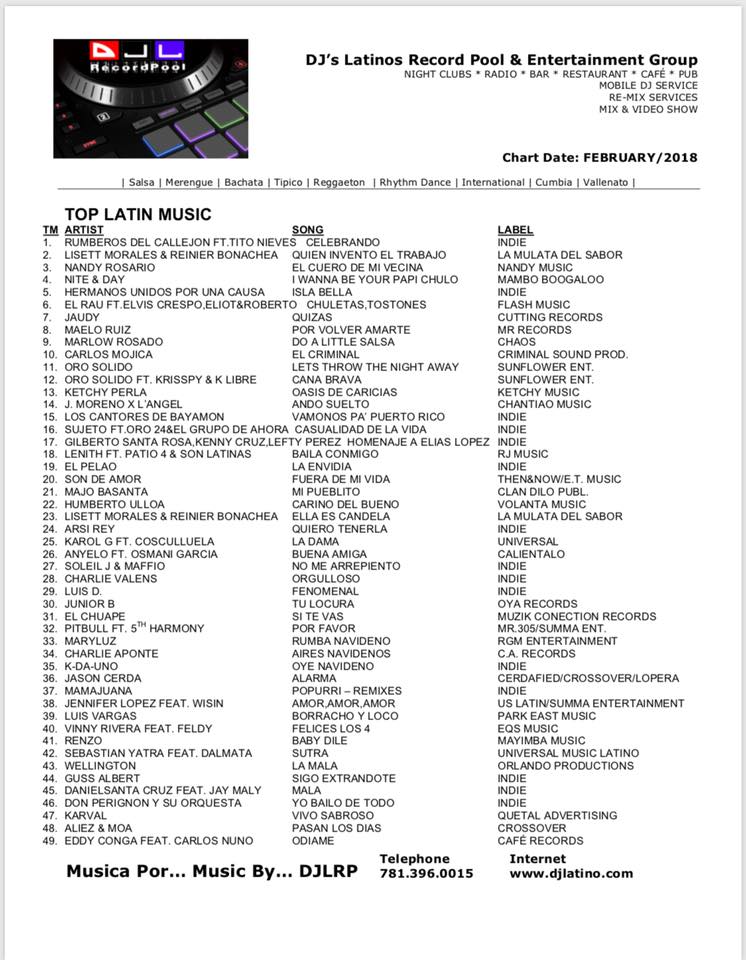
Recently, “Celebrando” whose name also titles the album, was the first single released by the group in November 2017 on all digital platforms and radio stations worldwide, and which last February managed to reach # 1 on the DJs chart.

The theme “Celebrando” has the participation of the Salsero Puerto Rican singer, Tito Nieves and the composition of the Venezuelan Angelito Vallenilla. The musical performance was in charge of the excellent Latin American musicians:

José Tabares (bass), Carlitos Padrón (Timbal), Alberto Crespo (piano), Marc Quiñones (conga), Bobby Allende (bongó), Manuel Maneco Ruiz (trumpets), Pablo Santaella (trombone), José Antonio Fariñas Gutiérrez (baritone), and in the choir: Rodrigo Mendoza, Leo Gruber, Wilmer Lozano and Angelito Vallenilla.

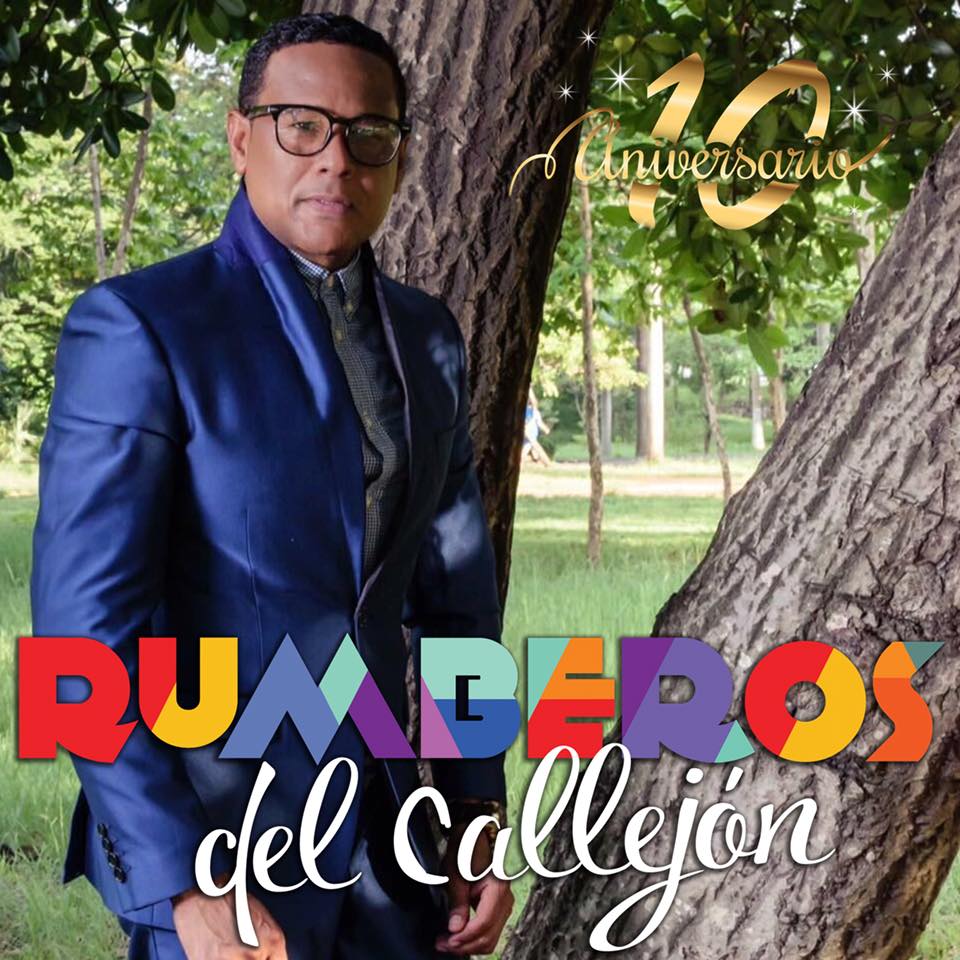
With this third record production product of the celebration of their 10th Anniversary, Rumberos del Callejón, hope to take their music to every corner on the planet and continue betting on the support and integration of new generations in salsa music.

Angelito Vallenilla - Rumberos del Callejón
Angelito Vallenilla – Rumberos del Callejón

“For me, the biggest success is to be able to say that I have in my production the biggest salsa singers of today, nationally and internationally.” Carlitos Padrón

Rumberos del Callejón’s Discography:

In order to rescue the golden age of Salsa in the 70s, 80s and 90s, the Orchestra Rumberos del Callejón was created with a total of 13 members at the beginning, currently, they are 12 members. Their great musical proposal was captured in their first record production titled “De la Nada” (2008) under the label Callejón Música. This album is composed of 11 songs, including: Aquí Se Puede, Pa ‘Lante Otra Vez, Chechere Guma by Justi Barreto, among many others.

Rumberos del Callejón - Se Acabo el Silencio
Rumberos del Callejón – Se Acabo el Silencio

After 4 years, they release their second album “Construyendo” (2012) with such emblematic songs as “Cuando te toque llorar” by Puerto Rican balladeer José Feliciano, likewise, the production of “Constuyendo” was in charge of the director, timbalero and composer, Carlitos Padrón with arrangements made by the renowned Puerto Rican producer, Ramón Sánchez.

Rumberos del Callejón - de la nada
Rumberos del Callejón – de la nada

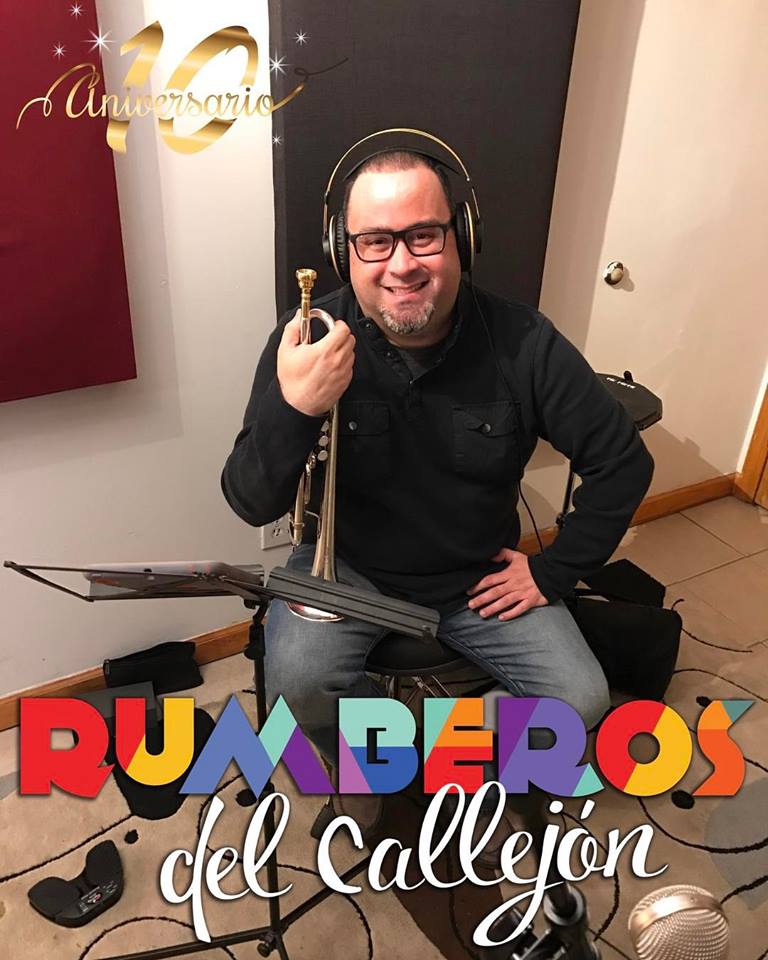
And Finally, for the musical performance Padrón decided to gather the best musicians from the NY area: Isidro Infante (Piano), José Tabares (Bass), Pablo Santaella (Trombone), Ray Colón (Bongó), Nelsón Jaime “Gazú” (Trumpet) , Manuel Ruiz (Trumpet), Iván Renta (Saxo Baritone) and Robert Quintero (Congas).

Trumpet Artist - Rumberos del Callejón
Trumpet Artist – Rumberos del Callejón

For more information, follow them at:

  • Facebook: https://www.facebook.com/pg/rumberosdelcallejon1
  • Instagram: @rumberos_del_callejon
  • The Official Accounts on YouTube and Soundcloud: Rumberos del Callejón.
Rumberos del Callejón
  • « Go to Previous Page
  • Page 1
  • Interim pages omitted …
  • Page 17
  • Page 18
  • Page 19
  • Page 20
  • Page 21
  • Interim pages omitted …
  • Page 33
  • Go to Next Page »

International Salsa Magazine (ISM) is a monthly publication about Salsa activities around the world, that has been publishing since 2007. It is a world network of volunteers coordinated by ISM Magazine. We are working to strengthen all the events by working together.