• Skip to primary navigation
  • Skip to main content

International Salsa Magazine

  • Home
  • Previous editions
    • 2025
      • ISM / November 2025
      • ISM / October 2025
      • ISM / September 2025
      • ISM / August 2025
      • ISM / July 2025
      • ISM / June 2025
      • ISM / May2025
      • ISM / April 2025
      • ISM / March 2025
      • ISM / February 2025
      • ISM / January 2025
    • 2024
      • ISM / December 2024
      • ISM / November 2024
      • ISM / October 2024
      • ISM / September 2024
      • ISM / August 2024
      • ISM / July 2024
      • ISM / June 2024
      • ISM / May 2024
      • ISM / April 2024
      • ISM / March 2024
      • ISM / February 2024
      • ISM / January 2024
    • 2023
      • ISM / December 2023
      • ISM / November 2023
      • ISM / October 2023
      • ISM – September 2023
      • ISM – August 2023
      • ISM July 2023
      • ISM Edition June 2023
      • ISM – May 2023
      • ISM April 2023
      • ISM March 2023
      • ISM February 2023
      • ISM January 2023
    • 2022
      • ISM December 2022
      • ISM November 2022
      • ISM October 2022
      • ISM September 2022
      • ISM August 2022
      • ISM July 2022
      • ISM June 2022
      • ISM May 2022
      • ISM February 2022
      • ISM January 2022
    • 2021
      • ISM December 2021
      • ISM November 2021
      • ISM October – 2021
      • ISM September 2021
      • ISM August 2021
      • ISM July 2021
      • ISM May 2021
      • ISM April 2021
      • ISM June 2021
      • ISM March 2021
      • ISM February 2021
      • ISM January 2021
    • 2020
      • ISM December 2020
      • ISM November 2020
      • ISM October 2020
      • ISM September 2020
      • ISM August 2020
      • ISM July 2020
      • ISM June 2020
      • ISM May 2020
      • ISM April 2020
      • ISM March 2020
      • ISM February 2020
      • ISM January 2020
    • 2019
      • ISM December 2019
      • ISM November 2019
      • ISM October 2019
      • ISM Septembre 2019
      • ISM August 2019
      • ISM July 2019
      • ISM June 2019
      • ISM May 2019
      • ISM April 2019
      • ISM March 2019
      • ISM February 2019
      • ISM January 2019
    • 2018
      • ISM December 2018
      • ISM November 2018
      • ISM October 2018
      • ISM September 2018
      • ISM August 2018
      • ISM July 2018
      • ISM June 2018
      • ISM May 2018
      • ISM April 2018
      • ISM March 2018
      • ISM February 2018
      • ISM January 2018
    • 2017
      • ISM December 2017
      • ISM November 2017
      • ISM October 2017
      • ISM September 2017
      • ISM August 2017
      • ISM July 2017
      • ISM June 2017
      • ISM May 2017
      • ISM April 2017
  • Download Salsa App
    • Android
    • Apple
  • Spanish

Search Results for: Trumpet and Percussion

Mayito Rivera “El Poeta de la Rumba” was the distinctive voice of Los Van Van de Cuba

Mario ‘Mayito’ Rivera is, without a doubt, one of Cuba’s most outstanding contemporary singers.

For more than 20 years he was the distinctive voice and recognizable face of Cuba’s most famous musical group, Los Van Van.

Regardless of the musical genre he performs -rumba, son, salsa, bolero or timba, modern or traditional style, with strength and dynamism or with delicacy and tenderness, Mayito Rivera’s performances, with passages adorned with tremors and coloraturas, are always stellar.

Mayito Rivera “El Poeta de la Rumba”

Mario Enrique Rivera Godínez was born on January 19, 1966 in Pinar del Río, a province located in the westernmost part of Cuba and famous for its handmade Havana cigars.

It was there that ‘Mayito’ began his musical training as a child. Later, he moved to Havana, where he studied percussion at the renowned National School of Art (ENA), which he later extended with advanced studies at the Higher Institute of Art (ISA).

After completing his training, which lasted a total of 15 years, Mayito Rivera joined the musical ensemble of the well-known Cuban singer Albita Rodríguez.

Later, he played bass in the Moncada Group, a formation belonging to the Nueva Trova Cubana movement, whose renovating spirit is firmly rooted in traditional Cuban rhythms.

At the age of 26, Mayito was discovered by Juan Formell, the director of Los Van Van, an orchestra that by then had already become a legend. Initially hired to play bass and sing backing vocals, he soon established himself as the group’s lead vocalist.

Over the next 20 years, Mayito Rivera, more than any other musician, put his stamp on Los Van Van.

He burst onto the scene as the representative of a new generation of musicians, and his fresh style contributed to the group’s endurin Singer of the group’s countless salsa hits that were played in the discotheques, he has been nominated twice for a Grammy and won it once.

Mario ‘Mayito’ Rivera es, sin duda, uno de los cantantes contemporáneos más destacados de Cuba

At the same time, he was also working on other projects: in 1999 he released his first solo album, Pa’ bachatear.

Chappotín, in which he transports the past to our days with a brilliant interpretation of traditional Conjunto Chappotín songs.

But Mayito Rivera is not only a singer and percussionist. In 2005, he released Negrito Bailador, his second solo album, produced by the Timba label of the German music publisher Termidor, in which he performs only songs of his own composition.

The music, with a rumbero tinge, is fresh, lively and of timeless quality. Subsequently, Negrito bailador was marketed in the United States under the title Llegó la hora and was immediately nominated for a Grammy in the Best Salsa Album of the Year category.

Mayito Rivera is probably the most requested special guest by other Cuban orchestras; so much so, that in recent years he has sung with almost all of Cuba’s star casts.

Nor has his career suffered any interruptions since he left Los Van Van in 2011: currently, Mayito Rivera tours the whole world relentlessly, giving concerts in countries as diverse as the United States, Canada, Venezuela, Colombia, Mexico, Peru, Argentina, France, Germany, Denmark, Spain and Italy.

The great popularity and multiple talents of this ‘poet of rumba’ are reflected in his performances as guest singer for salsa greats such as Oscar D’Leon, Gilberto Santa Rosa, Issac Delgado, Adalberto Alvarez, Mayimbe, Son Como Son, Timba Live, Pupy y Los que Son Son, Charanga Latina, Havana D’Primera, Tumbao Habana and Elio Reve Jr, to name just a few.

In 2012, Mayito Rivera established himself as a permanent member of Los Soneros de Verdad, the most successful orchestra of the moment dedicated to son and its related rhythms, led by singer Luis Frank Arias.

Two sold-out world tours of three months each in Europe, Asia, Russia and the United States attest to the high quality and great interest in this amalgam of traditional son and the vocal artistry of Cuba’s most dynamic rumbero.

Mayito Durante más de 20 años fue la voz distintiva y el rostro reconocible del más famoso grupo musical cubano, Los Van Van

In 2014, the superstar will be touring with his own orchestra. But before that, from June to September 2013, he will give a series of concerts with Los Soneros de Verdad performing songs from his as yet unreleased album Alma de Sonero.

During this project he will return to his musical roots: son and rumba, bolero and guaguancó, both in their traditional interpretation and in their more modern variants.

The album Alma de sonero includes 11 tracks and will be released in September 2013 worldwide success.

The musicians include Alexander Abreu (Havana D’Primera) on trumpet, San Miguel Pérez on tres and Luis A. Chacón ‘Aspirina’ Bruzón on bongos and cajón.

Website: Mayito Rivera

Read Also:   Carlos “Patato” Valdés one of the best percussionists in the history of Latin Jazz.

Good initiatives must be shared!

North America - United States - New York

We were taking the Salsa exhibition to Puerto Rico for the I Encuentro de Coleccionistas de Salsa, we made an exhibition of the clothing, records and instruments used by the Fania All Star orchestra, Tito Puente, Héctor Lavoe, Adalberto Santiago, the Gran Combo and others. For the first time, the last “tuxedo” that Tito Puente used in his participation with the Orquesta Sinfónica de Puerto Rico was exhibited.

Spanish Harlem Salsa Music Gallery, offered an exhibition and Master Class on the history of Salsa at the Escuela Especializada en Música Jesús T. Piñero in Cidra, Puerto Rico. We transported ourselves to Puerto Rico in search of an opportunity to publicize the Salsa Museum-Gallery in New York.

This is part of the efforts being made for the participation and dedication that is made to the people of Cidra in the Desfile Nacional Puertorriqueño 2020 and that is locally coordinated by the Patronato Cidreño along with other civic and professional organizations.

We were able to benefit hundreds of students at this school who are precisely focused on music. The knowledge offered in the three conferences and being able to closely observe the exhibition helped to foster the enthusiasm of the students who make up the campus, unique in the mountains of Puerto Rico, dedicated to the creation of good musicians and knowledgeable in musical art.

We are dedicated to enhancing Latin music and offering spaces focused on arts education, accessible and friendly to the community as a strategic partner.

I thank valuable people such as Laura Torres, Silkia Vázquez, Wilson Nazario and Wilfrido Torres “Puruco” for all the attention and teamwork that we were able to develop during our visit. I cannot stop also thanking my assistant in Puerto Rico, Carmen Cruz; and to Joseph Cruz for his magnificent and beautiful work with me during this pleasant experience.

I also take advantage of this space in International Salsa Magazine because I want to tell you about an artist and a great friend who is doing his best for music and Salsa. Without a doubt, Yova Rodríguez is a long-standing professional who has developed countless projects and initiatives to support those who need it most. With his music, his work and his human quality, he has reached many hearts from New York.


Geovanni “Yova” Rodríguez Ruiz, born in Puerto Rico, had a musical inspiration since he was a child, his uncle Antonio “Toño” Ruiz – his mother’s uncle who played the cuatro – was his first music teacher (melody) and his uncle José Antonio “Pipo” Ruiz Crespo -mama’s younger brother- taught him how to sing aguinaldos (lyrics); and with this they formed the solid foundations that encouraged little Yova to prepare himself accordingly for his foray into the musical world.

The celebration of the Promesa de Reyes, a celebration in which he participated with his mother at his short seven years, leads him to worry about creating and recreating aguinaldos to be interpreted each year, which in some way becomes the seed of composer that we know today.

At the age of 14, he attended the Escuela Libre de Música Ernesto Ramos Antonini in Mayagüez, hand in hand with piano teacher César Toro, rising as vocal leader of the Orchestra after a year.

Years later he gave himself the task of forming his own musical concept, and thus Sakao Aká was born. This orchestra was in charge of accompanying singers such as Camilo Azuquita, Ray de la Paz, Pupy Cantor and Herman Olivera in their presentations in Puerto Rico; and the cover letter for some of these singers to integrate Yova as a chorus girl in their presentations in various countries in Central and South America.


At the end of the 90s, on a trip to Cuba, he was impacted by the music of Fernando Borrego Linares, better known as Polo Montañez, to the point that, some years later upon learning of his death, he had the idea of ​​paying tribute to him, his musical reference, thus giving birth to the idea for her debut feature Homenaje a Polo Montañez (2005), a production of 10 songs by Montañez, and covered by Yova Rodríguez with the participation of renowned musicians from the patio such as Herman Olivera, Héctor “Pichie ”Pérez, Papo Lucca, Edwin“ Caneca ”Rosas, Edwin Colón Zayas, among others.

In 2008, like many of her compatriots, Yova prepares her luggage and heads to the southern United States, where she stays for two years and then moves to New York, a city that has become her center of operations and from where He has extended his working ties as a composer and where he records his next two productions.

The album Letras, canciones y sueños, musical work of 8 songs all written by Yova, comes to light after some years of having published his first production and of having worked silently composing and waiting for his opportunity. This possibility is materialized in 2013.

Already in 2015, the album Mi musa en las voces de mis amigos is released.

Salsa with Yova Rodriguez

Recently, Yova Rodríguez has created more than 420 songs, and many of them have been duly registered with the American Society of Composers, Authors and Editors (ASCAP) under the registry “El Negrito De Delia Music” . “Exceso de amor” is the first composition he has interpreted and recorded; like the song “No me odies”, it is the first recording of a song by him made by a third party.

Now they are going to hear more from Yova, as some productions that will include her compositions are in the process of recording / publishing. Attentive to the upcoming releases of the young Puerto Rican percussionist José Jomar Marcano, the master trumpeter Luis González, the young trombonist, arranger musician and also singer Leo Morales; the renowned DJ Andy Rodríguez, better known as DJ ANDY and the Venezuelan sonero Marcial Isturiz .

As always, remember that Spanish Harlem Salsa Gallery is in 1708 Lexington ave New York N.Y. 10029. Open free to the public all Thursdays & Fridays from 4 to 7 pm and Saturdays from 1 to 8 pm. Check the updates in our website: spahasalsagallery.com.

Also, The Johnny Cruz Show, the # 1 Salsa Show on television on all 5 Boroughs of New York on CH67. Saturdays from 3:30 to 4:30 pm.

Contact: Johnny Cruz. 917-747-8505. [email protected]

By Johnny Cruz, ISM Correspondent, New York, New York


Gon Bops

USA / Los Ángeles / California

Gon Bops, Remains one of the oldest and most respected manufacturers of Latin instruments in the world

Gon Bops
Gon-Bops Logo

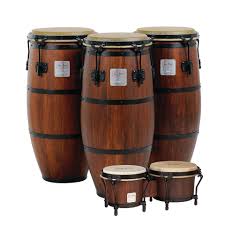
The Gon Bops legend began in 1954 California when Mexican-American Mariano Bobadilla (born in Guadalajara) – who would go on to become one of the most highly-regarded conga builders in the percussion industry – started designing and building Conga and Bongo drums.

A band instrument repairman and professional trumpet player, Bobadilla launched Gon Bops in his father’s old wooden garage in a downtown Los Angeles neighborhood.

He chose the name Gon Bops because “Gon” was one of the colloquial expressions of the time, as in, “everything is gone, man” – and “Bops” because his friends nicknamed him Bob, which sounded like “Bop” in the Latino dialect.

While Bobadilla’s drums remained true to the classic Cuban shape, he was a genuine innovator in the development of drum hardware. He designed the first teardrop crown with rounded counter hoops, developed to protect players’ hands – a concept that is now universally accepted.

He also gave birth to the first tunable hardware for congas and bongos in the United States. Having witnessed Cuban conga players heating up drums in their kitchens prior to performing, Bobadilla decided there had to be a simpler more reliable method to tension these instruments.

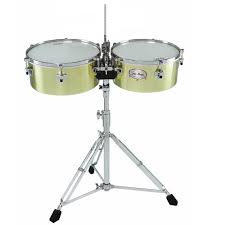
Other innovations from the young company were Taroles (wooden timbales), the first pre-mounted replacement heads for congas, chromatic tuned cowbells and numerous stands, adapters and other hardware.

Congas
Congas
Drums
Drums
Bongoes
Bongoes
Drums
Drums
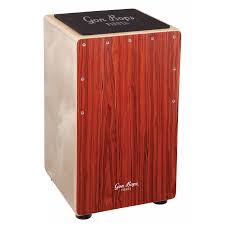
Gon Bops instruments

Gon Bops enjoyed great early success. The instruments were highly sought after by the top players of the era – giants like Alex Acuna, Mongo Santamaria, Francisco Aguabella, Armando Peraza, Poncho Sanchez, Jose Hernandez and Rich Barrientos – all of whom contributed invaluable R&D input. Gon Bops quickly became the undisputed leader in Latin percussion instruments and remained so throughout the 1950’s, 60’s and 70’s.

Mariano remained deeply committed to a hands-on role in production and retained complete control of the design and fabrication of all his products. As a result, Gon Bops instruments were mainstays on the biggest stages around the world, including the massive Woodstock festival in 1969.

But the winds of change were sweeping through the American percussion industry. By the time the 1980’s rolled around, all of the major US percussion manufacturers had moved offshore to manufacture their instruments.

Cheap Asian labor costs meant greater profits. But as manufacturing costs decreased, so did quality, and for that reason Bobadilla refused to mover his production outside of the US. As a result, Gon Bops began to struggle financially. Unable to compete against his larger competitors, Bobadilla had no choice but to close the doors of his highly regarded company.Thankfully, that was not to be the end of the Gon Bops brand.

Pandereta
Pandereta

In 2001 Don Lombardi of US drum manufacturer DW bought the company along with all of its patents and trademarks. Lombardi had met Bobadilla in 1978 when he used Gon Bops Timbale shells to build DW brass snare drums, and subsequently had continued to seek R&D advice from Bobadilla.

It was a great fit, and it was no coincidence that the quality of DW drums and hardware continued to grow after the Gon Bops acquisition.

To run his newly acquired Gon Bops brand Lombardi hired the best drum craftsmen in the US. He even bought San Francisco-based Sol Percussion in order to conscript its founder – drum builder Akbar Moghaddam – to the Gon Bops cause.

instrument
instrument

Moghaddam brought along fellow drum craftsman Octavio Ruiz, and Lombardi teamed them up with Alejandro Perez, a drum builder who had worked with Mariano Bobadilla in the original Gon Bops factory.

In 2010 cymbal-maker SABIAN Inc. announced that it had purchased the inventory, intellectual property, patents and manufacturing equipment of Gon Bops from DW.

The deep commitment to innovation that SABIAN applied to its own instruments had inspired founder Robert Zildjian and his son, SABIAN President Andy Zildjian, to a search for like-minded instrument companies available for acquisition. And it was a happy circumstance had Lombardi had begun to seek a buyer for Gon Bops.


“We’re excited to begin this new chapter in SABIAN and Gon Bops history”, notes Andy Zildjian. “Gon Bops instruments are a perfect blend of vintage craftsmanship and innovative thinking. Since its founding in 1954, the company has pioneered several features and improvements that have forever changed Latin instruments.

We are excited about not only expanding distribution, but also continuing to focus on groundbreaking designs that represent clear improvements in meeting the needs of musicians. The pursuit of the best sound is what our craftsmen work for every day. We know the fit is perfect, above all, because sound matters.”

Today, Gon Bops remains one of the oldest and most respected manufacturers of Latin instruments in the world.

Jay Ruiz, singer-songwriter, From the Sultana del Oeste, Mayagüez – Puerto Rico

North American / Puerto Rico / Puerto Rico 

Jay Ruiz is the stage name of Jonathan Camacho Ruiz, a singer-songwriter born in La Sultana del Oeste, Mayagüez, but raised in the Pueblo de Rincón neighborhood, the westernmost municipality of La Isla Del Encanto.

Jay Ruiz Photo
Jay Ruiz Photo

Among his ancestors, Jay Ruiz, highlights his paternal grandfather Antonio Camacho who was a musician and troubadour, in his native Rincón.

Jay Ruiz’s musical beginnings date back to his short 5 years, when he sang in the choir of the Presbyterian church he attended. However, he would later become involved in sports, which would keep him away from music until he was 11 years old, when at the middle school where he was studying, the teacher promoted him as a soloist in a 24-member choir group.

Jay Ruiz and his team

He also stands out as a percussionist, performing skillfully on the bongo, the congas and the drums; instruments that he would learn to play by ear when he was 8 years old.

When he turned 12, the guitar and the bass would be the instruments that would captivate him and to which he would dedicate his time.

When he turned 15, he decided to form his own Christian music group: this is how the New Creation group was born, in which he developed as a drummer and singer.

A year later, while he was a member of the baseball team that represented Puerto Rico, he was about to be signed by the University of Cleveland, but in the process he was diagnosed with neck and throat cancer.

Jay Ruiz photo
Jay Ruiz photo

He traveled to Maryland to undergo exhaustive examinations at the John Hopkins Hospital, the same ones that would determine that he would undergo six months of chemotherapy and subsequent radiotherapy, treatments that he would receive at the San Jorge Children’s Hospital (Santurce, Puerto Rico).

Before the radiation treatment he was warned that he would lose 85% of his vocal abilities, however, the story was different: August 12, 2001, he would finish the treatment for his illness and five days later, for his birthday, he meets in his town -Rincón- to the entire community in a musical activity in which he would play, sing and give testimony of his case.

Jay Ruiz
Jay Ruiz

Thinking about his future, he studies at the Interamerican University, San Germán Campus, where he obtains a bachelor’s degree as a Physical Education teacher for children with disabilities.

The illness of his father, who lived in New York, forces him to cross the pond to take care of him, until his death, five years later.

In 2011 he returned to Puerto Rico, and enrolled in the Ponce Paramedical College at the Mayagüez Medical Center, to continue studying Physiotherapy, however, he became involved again in music participating in the famous franchise IDOL PUERTO RICO, ranking among the 32 last finalists. He continues his academic life and at the same time, works as a chef in a restaurant, a situation that would lead him to serve a musical entrepreneur based in New Jersey (United States) who was visiting the island, and with whom he would start a friendly relationship first, that would turn into work a few months later, when the businessman invited him for an audition in the neighboring municipality of Cabo Rojo.

Jay Ruiz boards the flight

After that meeting, in 2014, Jay Ruiz would pack his bags again to settle in Newark (New Jersey, USA) from where he would launch his career as a performer of the bachata genre, and that he would have on the songs “Ven A Mí , Girl” and “Culpables” two singles of wide diffusion and consideration in the international radio circuits, to the point of having disputed with the last mentioned cut, the category of Favorite Tropical Song of the Latin American Music Awards between great personalities of the music like Víctor Manuelle, Prince Royce and Gente de Zona (feat. Marc Anthony).

Jay Ruiz
Jay Ruiz

In 2017 he becomes independent, returns to Puerto Rico and decides to promote his career, but this time as a salsero, recording the single “Lo Sé”, of his own, under the production of maestro Nino Segarra.

Two years later, he brings us this new single, of which he is also the author, both of the lyrics and the melody.

Jay Ruiz
Jay Ruiz

The following staff participate in this single:

Lyrics, Melody & Interpretation: Jay Ruiz

Arrangement: Ceferino Caban

Complete Percussion: Rafael “Tito” de Gracia

Bass: Alexis Perez

Trumpets: Luis Aquino

Trombones: Jorge Dobal

Choirs: Norberto Vélez Curbelo, David Carrero & Ceferino Caban

Piano & Keyboards: Ceferino Caban

Mastering: Esteban Piñero

Jay Ruiz
Jay Ruiz

Bebo Valdés is considered one of the central figures of the golden age of Cuban music

On March 22, 2013 in Stockholm, Sweden, Dionisio Ramón Emilio Valdés Amaro, better known as Bebo Valdés, died.

He was an excellent musician of Cuban music and Afro-Cuban jazz, considered one of the central figures of the golden age of Cuban music.

In addition to being a pianist, his best known facet, he has been a composer, arranger and orchestra conductor.

He was born in Quivicán, Cuba, on October 9, 1918. He was the father of the Afro-Cuban jazz pianist Chucho Valdés (b. 1941). From 1931 to 1935 he studied piano in his hometown with Moraima González; in 1936 he moved with his family to Havana, where he studied music theory, harmony and composition with Oscar Bofartigue.

In 1938 he made his professional debut with Happy D’Ulacia’s orchestra. He played in Havana, since the 1940s, in the orchestras Ulacia, García Curbelo, Julio Cueva and Orquesta Tropicana, and recorded albums with groups dedicated to performing Afro-Cuban jazz.2

Known among his family and friends by the affectionate nickname of Caballón because of his considerable stature, he composed mambos, such as La rareza del siglo, which covers the genre recently introduced by Pérez Prado and which would change the course of Cuban music. From 1948 until 1957, he worked at the Tropicana cabaret as pianist and arranger for Rita Montaner.

The Sabor de Cuba orchestra, of Bebo Valdés, and that of Armando Romeu, made the show of this night club, in which Valdés stopped performing in 1957, when he was hired by Ernesto Roca, of the Peer International Music Publishers, to make arrangements for Xiomara Alfaro and Pío Leyva; at the same time, he joined Guillermo Álvarez Guedez, of the Panart and Rolando Laserie in Radio Progreso. With his orchestra Sabor de Cuba, he accompanied singers Reinaldo Henríquez, Orlando Guerra (Cascarita), Pío Leyva and Ada Rex; Beny Moré also sang with this group, and Chucho Valdés made his debut.

About the descarga or jam session, there are multiple versions, this is the one by Bebo Valdés which, due to the concreteness of data, dates and record labels that made the recordings, is the most objective: “One night in October 1952, I was resting in a cabaret in Havana with members of the Tropicana orchestra.

Bebo Valdés Fue un excelente músico de música cubana y jazz afrocubano, considerado como una de las figuras centrales de la época dorada de la música

It is important to know that since 1948, Cuban, Mexican or even American musicians used to meet on Sunday afternoons at the Tropicana to play descarga, in the course of which we mixed jazz and Cuban rhythms.

Sometimes the descargas were held at four o’clock in the morning, at the end of the [Tropicana] show. The percussionist Guillermo Barreto was the one who animated them; we had received Roy Haynes, Kenny Drew, Sarah Vaughan, Richard Davis and many other musicians passing through; in fact, all the great names of jazz paraded through the Tropicana.

All of that could have been recorded, but no one was interested. So, that night Irving Price, the owner of a record store on Galiano Street, announces to me that producer Norman Granz is in town and that he can’t believe that Cuban musicians are capable of playing jazz.

Granz and Price ask me to go to the studio to record. It was September 16, 1952. So, I called some musicians, but I myself was late for the session, because in the morning I had another recording for RCA: I was going to accompany a singer! When I finally arrived at Panart’s studio, Granz had already left for the United States.

We called the orchestra The Andre’s All Star, after the name of Irving Price’s record store. We had decided to play classic jazz tunes, such as Distrust, Taboo, Sleep and Blues for Andre. At the end of the session, as there were still a few minutes available for the record, I started playing a riff, from which we improvised. We called that track “Con poco coco.”

The record was titled Cubano! and the participating musicians were all from the Tropicana cabaret: Gustavo Más, tenor saxophone; Alejandro Vivar (El Negro Vivar), trumpet; Kiki Hernández, double bass; Guillermo Barreto, timbal; Rolando Alfonso, tumbadora and Bebo Valdés, piano.

The works it contains are the same as those mentioned by Bebo Valdés, and the label, Mercury. In 1955, Bebo Valdés recorded, in the studios of Radio Progreso, Holiday Habana and She Adores the Latin Type, for the Decca label, which contained mambo, chachachá, bolero, jazz descarga, even jazz with bebop tendencies.

According to Luc Delannoy, in 1956 the Panart recorded Cuban Jam Session, with Julio Gutiérrez and Pedro Jústiz (Peruchín), as directors, and the musicians Alejandro Vivar (El Negro Vivar), Edilberto Escrich, Osvaldo Urrutia (Mosquifin), Emilio Peñalver, José Silva (CHombo), Juan Pablo Miranda, Salvador Vivar, Jesús Esquijarrosa (Chucho), Oscar Valdés, father, Marcelino Valdés, Walfredo de los Reyes and José Antonio Méndez. The participation of Israel López (Cachao) in a descarga did not occur until 1957, when the Panart recorded Descargas cubanas, with the participation of Cachao himself, Guillermo Barreto, Gustavo Tamayo, Rogelio Iglesias, Richard Egües, Andrés Hechavarría (El Niño Rivera), Rolito Pérez, Alfredo León, Arístides Soto (Tata Güines), Alejandro Vivar (El Negro Vivar), Generoso Jiménez, Orestes López (Macho), Emilio Peñalver and Virgilio Vixama. In other years, there were also recordings of downloads, and some unrecorded ones, such as those recalled by Leonardo Acosta at the Cuban Jazz Club, held between 1958 and 1960, with the participation of Pedro Jústiz (Peruchín), piano; Guillermo Barreto, drums and pailas, and Arístides Soto (Tata Güines), tumbadora (drums). This proves -or at least shows another side of the coin- that Bebo Valdés was one of the initiators of descarga in Cuba, a resource used by Cuban musicians in the most diverse instrumental formats, genres and styles of our popular music, as, for example, did the composers of the filin movement.

On June 8, 1952, with a band of twenty musicians, Bebo unveiled the batanga rhythm in the studios of RHC Cadena Azul; among the three singers in the orchestra was Beny Moré.

Bebo Valdés un virtuoso de la música cubana

That same year he travels to Mexico with the purpose of recording a disc with this new modality of Cuban music, which also included a new choreography; they were not successful, and, according to Bebo Valdés, “the batanga died a natural death”.

When he left Cuba in 1960 due to disagreements with the Cuban government, Bebo also abandoned his family, his wife Pilar Valdés and his five children (including Chucho). Bebo Valdés goes to Mexico, then moves to Los Angeles, California, where he works with singer Miguelito Valdés; from there he travels to Spain, where he records two albums as director of the orchestra that accompanies Chilean singer Lucho Gatica.

Later he toured England, France, Holland, Germany and Finland with the Lecuona Cuban Boys. In 1963 he settled in Sweden, and worked with the Hatuey Orchestra, a Swedish group playing Cuban music. In Sweden he formed a new family when he married in 1963.

International career

After thirty years of relative anonymity, on November 25, 1994, Valdés received a call from Paquito D’Rivera, who invited him to record a new album in Germany for the Messidor label. A new beginning in his career took place at the age of 76 with the recording of Bebo Rides Again.

He participated in Fernando Trueba’s film Calle 54, along with, among others, pianist and composer Chucho Valdés, Paquito D’Rivera, Elaine Elías, Chano Domínguez, Jerry González, Michel Camilo, Leandro J. Barbieri (Gato Barbieri), Ernesto Antonio Puente (Tito Puente), Arturo O’Farrill (Chico), Israel López (Cachao), Orlando Ríos (Puntilla) and Carlos Valdés (Patato).

In 2004 he traveled to Salvador de Bahia, Brazil, to participate in Trueba’s film El milagro de Candeal, along with Carlinhos Brown, Marisa Monte, Mateus Aleluia and César Mendez.

Bebo y Chucho Valdés una verdadera dinastía de la Música Cubana

An integral musician capable of tackling the most diverse genres and styles of music, not only as a pianist and composer, but also as an orchestrator and orchestra conductor of sublime values; of solid technical training, both theoretical and pianistic, Bebo Valdés is one of the all-time greats of Cuban music. He was, with Israel López (Cachao) and Patato Valdés, nominated for the Latin Grammy Award for El arte del sabor, best traditional tropical album 2002.

In 2002, Fernando Trueba produced Lágrimas negras, an album that unites flamenco singer Diego el Cigala with Bebo Valdés on piano.

After its release in 2003, it became an international success, recognized with a Grammy, three Music Awards, an Ondas Award, five Amigo Awards, three Platinum Discs in Spain and one each in Argentina, Mexico and Venezuela. The New York Times praised the album as Best Latin Music Album of the Year and opened the doors to a tour of Paris, New York, London, Havana, Buenos Aires, Tokyo, Mexico City, Madrid and Barcelona, among others. By the end of 2004 the album had sold more than 700,000 copies worldwide.

He retired to Benalmádena, a village in the province of Málaga (Spain), until his death in Stockholm (Sweden).

Chucho Valdés

Read also: Carlos “Patato” Valdés one of the best percussionists in the history of Latin Jazz

  • « Go to Previous Page
  • Page 1
  • Interim pages omitted …
  • Page 22
  • Page 23
  • Page 24
  • Page 25
  • Page 26
  • Interim pages omitted …
  • Page 31
  • Go to Next Page »

International Salsa Magazine (ISM) is a monthly publication about Salsa activities around the world, that has been publishing since 2007. It is a world network of volunteers coordinated by ISM Magazine. We are working to strengthen all the events by working together.