• Skip to primary navigation
  • Skip to main content

International Salsa Magazine

  • HOME
  • Previous editions
    • 2026
      • ISM / April 2026
      • ISM / March 2026
      • ISM / February 2026
      • ISM / January 2026
    • 2025
      • ISM / December 2025
      • ISM / November 2025
      • ISM / October 2025
      • ISM / September 2025
      • ISM / August 2025
      • ISM / July 2025
      • ISM / June 2025
      • ISM / May2025
      • ISM / April 2025
      • ISM / March 2025
      • ISM / February 2025
      • ISM / January 2025
    • 2024
      • ISM / December 2024
      • ISM / November 2024
      • ISM / October 2024
      • ISM / September 2024
      • ISM / August 2024
      • ISM / July 2024
      • ISM / June 2024
      • ISM / May 2024
      • ISM / April 2024
      • ISM / March 2024
      • ISM / February 2024
      • ISM / January 2024
    • 2023
      • ISM / December 2023
      • ISM / November 2023
      • ISM / October 2023
      • ISM – September 2023
      • ISM – August 2023
      • ISM July 2023
      • ISM Edition June 2023
      • ISM – May 2023
      • ISM April 2023
      • ISM March 2023
      • ISM February 2023
      • ISM January 2023
    • 2022
      • ISM December 2022
      • ISM November 2022
      • ISM October 2022
      • ISM September 2022
      • ISM August 2022
      • ISM July 2022
      • ISM June 2022
      • ISM May 2022
      • ISM February 2022
      • ISM January 2022
    • 2021
      • ISM December 2021
      • ISM November 2021
      • ISM October – 2021
      • ISM September 2021
      • ISM August 2021
      • ISM July 2021
      • ISM May 2021
      • ISM April 2021
      • ISM June 2021
      • ISM March 2021
      • ISM February 2021
      • ISM January 2021
    • 2020
      • ISM December 2020
      • ISM November 2020
      • ISM October 2020
      • ISM September 2020
      • ISM August 2020
      • ISM July 2020
      • ISM June 2020
      • ISM May 2020
      • ISM April 2020
      • ISM March 2020
      • ISM February 2020
      • ISM January 2020
    • 2019
      • ISM December 2019
      • ISM November 2019
      • ISM October 2019
      • ISM Septembre 2019
      • ISM August 2019
      • ISM July 2019
      • ISM June 2019
    • 2016
      • ISM December 2016
  • Spanish
  • Download Salsa App
    • Android
    • Apple

Search Results for: Trumpet and Percussion

“The Sun of Latin Music” the first Grammy Award for Salsa Eddie Palmieri’s historic album

It has been 49 years since “The Sun of Latin Music”, Eddie Palmieri’s historic album, which marked a fundamental milestone in the history of Latin music by becoming the first production to win a Grammy Award in the category of Best Latin Recording, awarded on February 28, 1976.
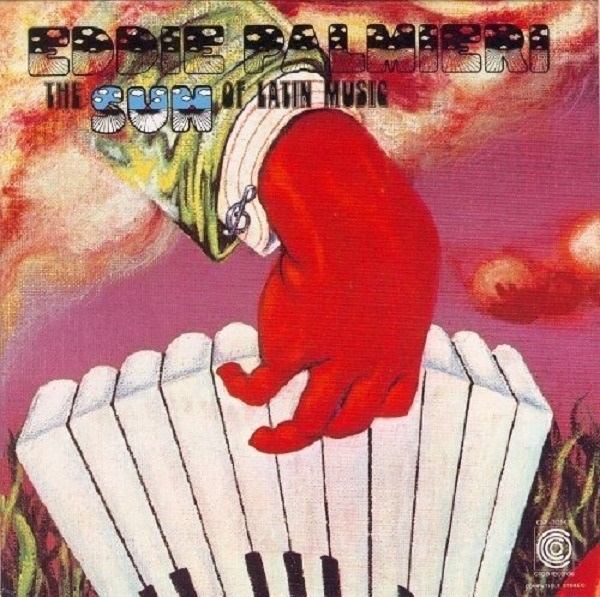
"The Sun of Latin Music" the first Grammy of Salsa Eddie Palmieri's historic album
“The Sun of Latin Music” the first Grammy of Salsa Eddie Palmieri’s historic album

Recorded in New York at Electric Lady Studios, the album was released by Coco Records on Wednesday, September 18, 1974.

The album featured vocals by Lalo Rodríguez, who was only 16 years old at the time.

It includes: ‘Nada De Ti’, ‘Deseo Salvaje’, ‘Una Rosa Española’, ‘Nunca Contigo’, ‘Un Día Bonito’, ‘Mi Cumbia’.

“The Sun of Latin Music” proved to the world that Latin music, especially Salsa, was an honorable art form and opened the doors for many other Latin artists to receive solid recognition for their talent and work.

Eddie Palmieri

The sun of Latin music

MP, 1990. MP-3109 CD

Recorded in 1975

The Sun of Latin Music was a controversial album. It was too far from the easy formula of the middle salsa boom – what César Miguel Rondón calls the “mtancerization of salsa”.

“Ahead of its time” was one of the comments; “a piece like Un día bonito, had to be mutilated” with a 6-minute piano intro just to be able to play it on the radio; a danzón (Una rosa española) with lyrics by the Beatles; a cumbia that is not very Colombian, despite the name (Mi cumbia) and the chorus that says “very Colombian…”.

Nevertheless, this album represents the strength of the spirit of salsa: the encounter between the harshness of the street and the majesty of the most sophisticated musical sound.

One of the best albums of Caribbean music ever released.

Palmieri was always in search of something new. The Sun Of Latin Music is the culmination of a phase that began with an earlier album, Sentido (1974).

This time he chose the Panamanian Vitín Paz for the trumpet solo, Barry Rogers for his trombone and an unusual tuba, which formed a kind of basso continuo, and besides Barry, José Rodrigues, who for a long time was, and despite his absence still is, his most emblematic trombonist.
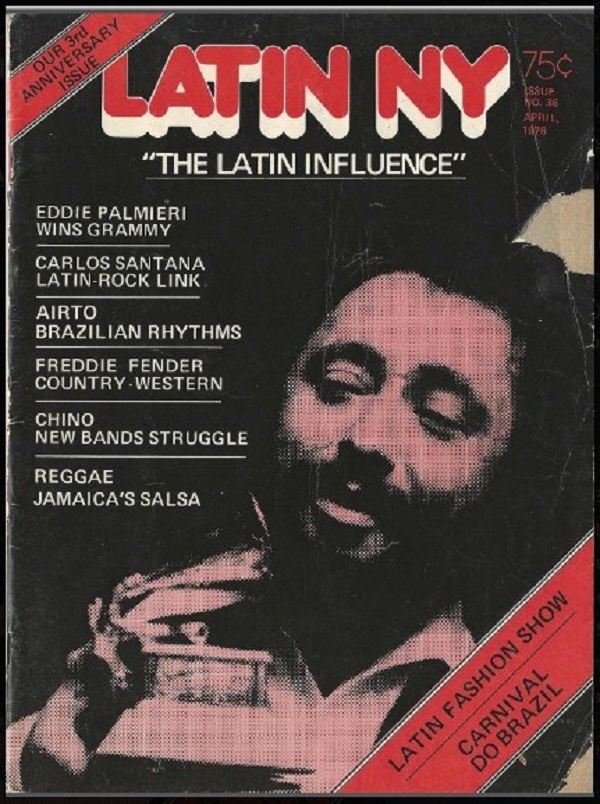
Cover of issue 36 of Latin New York magazine (April 1976) where Eddie Palmieri appears.

Ronnie Cuber and Mario Rivera were chosen as the first saxophonists in a Palmieri orchestra.

For many it is Palmieri’s best album, the most experimental and universal. One that borders on academic music, but without forgetting the dancer.

With spices like the violin of Alfredo de la Fe, who contributes his creativity everywhere, the tuba, the penetrating power of the brass, the overwhelming percussion.

Thus, Una rosa española is a modern danzón that later becomes a montuno that revives the joyful Palmerian game with the dignified uproar of trumpets, saxophones and trombones.

A young man of only 17 years, Lalo Rodríguez, who years later would become the standard-bearer of what was called salsa erotica, was chosen as the singer. Another novelty: the timbre of his voice, with a very high register, and the way he faced the montuno, which did not correspond to his age, caused different reactions.

But the most amazing thing about this 1974 album is the 14:20-minute track Un día bonito, arranged by Barry Rogers, which would keep even the most trained dancers busy. But Palmieri wasn’t just thinking about leg sets or dance floors.

The piece begins with a long piano interlude, the same structure he used in the track Adoración from the album Sentido, which would mark a new musical phase in his career.

It was more than experimental, it had some electro-acoustic music; no one had ever had the audacity to do that on a salsa album. Palmieri made the leap, he could do it, it sounded more like Stravinsky or Milhaud than Puente or Fania.

Suddenly, back in the piece, the orchestra bursts in, harder and heavier than ever, wishing the city of Los Angeles a beautiful day and San Francisco a “warm greeting,” and it is certain that Keruack and Borrough heard the call.

First Eddie Palmieri Grammy

Then Eddie Palmieri was consecrated by the intellectuals and the educated and also by the Grammy.

Eddie Palmieri

The sun of Latin music

Produced by Harvey Averne

Eddie Palmieri: piano

Lalo Rodríguez: vocals

Vitín Paz: trumpet

Virgil Jones: trumpet

Barry Rogers: trombone, tenor tuba

José Rodrigues: trombone

Ronnie Cuber: Baritone Saxophone, Flute

Mario Rivera: Baritone Saxophone, Flute

Alfredo de la Fe: Violin

Eddie Guagua Rivera: Bass

Tommy Chuckie Lopez, Jr.: Bongo

Eladio Pérez: conga

Nicky Marrero: timbales, percussion

Peter Gordon: French Horn

Tony Price: Tuba

Jimmy Sabater: Chorus

Willie Torres: Chorus

Tommy López Sr.: conga

Tracks: Nada de ti; Deseo salvaje; Una rosa española; Nunca contigo; Un día bonito; Mi cumbia

Arrangements by René Hernández and Barry Rogers

One of the most valuable pieces in the exhibition “Rhythm and Power: Salsa in New York”, which will be presented until next November at the Museum of the City of the Big Apple, is the first Grammy in the history of Latin music, awarded in 1976 to Eddie Palmieri for his album “Sun of Latin Music”.
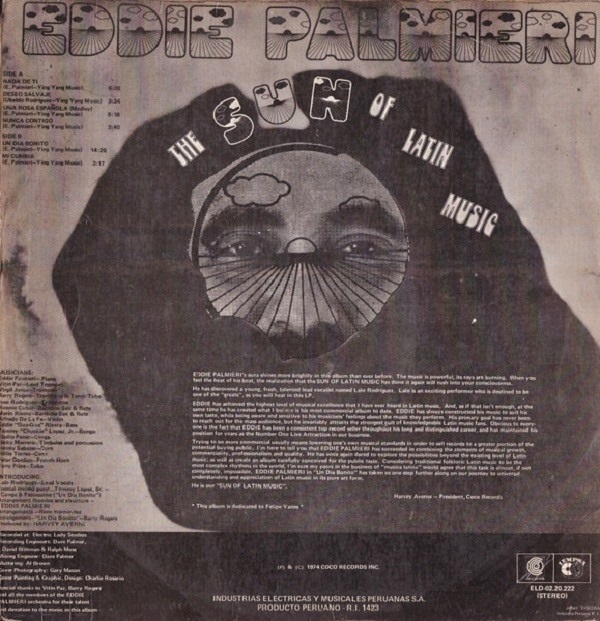
“The Sun of Latin Music”

Sources:

Anapapaya

Salsero Radio

D j. Augusto Felibertt

Also Read: Salsa and its detractors “Caiga quien Caiga”

Déjalo, the latest track by Pedro Conga y su Orquesta Internacional

The song -composed by Pablito Ruiz- is catchy and brings us the essential style of the orchestra with the renewed touch added by singer Pedro Blasini.

Pedro Conga y su Orquesta Internacional

Within the first 16 seconds, Rafael ‘Bodo’ Torres on piano and Pedro Perez on bass create a lively and energetic musical introduction, perfectly arranged by Roberto Perez.

Pedro Conga y su Orquesta Internacional photos by Adriana Vega

Twenty seconds after the melody starts, Pedro Blasini’s voice enters accompanied by the timbales in a hushed tone.

Through this recording, Pedro Blasini establishes himself as the lead vocalist of the International Orchestra of his uncle, the notable percussionist: Pedro Conga.

The arrangement combines musical intricacy with the required flexibility to captivate listeners searching for love dramas in the salsa de golpe scene.  And when it comes to beats and cuts, within the first ten seconds of the opening minute, Jan Duclerc’s unique trumpet cut fuses seamlessly with Pedro Conga’s tumbadora, creating the perfect harmony to complement the lead vocal.

At the 1:30 mark, José Joel Díaz introduces his timbal cymbal with subtlety, underlining the prominence of the conga.  Raúl Díaz’s bongó delivers consistent accompaniment, providing a masterclass in both rhythm section perfection and percussion timing.

Pedro Conga y su Orquesta Internacional

From the 1:40 mark onwards, the harmonies of Charlie Cruz, Nino Segarra, Alejandro Villegas, and Blasini himself shine.

At minute 2:34, “Bodo’s” piano collaborates with Pedro Perez’s bass to demonstrate their musical partnership, resulting in exceptional musical performances.

The vocalist harmonizes well with the tumbadora, as the drumbeat establishes its presence from the very first minute and gradually intensifies until, during the lead-up to the third minute of the song, the coordination between the lead’s tumbadora and Héctor Morales’s trombone unequivocally proves that (as they say in Puerto Rico) “there is no one for anyone.”

It is clear that there are no bounds to the experience and innovation behind the musical production led by Julio “Gunda” Merced, Rafael “Bodo” Torres, and Santo Santiago.

Pedro Conga, a Puerto Rican musician, displays his exceptional talent through his music.

Pedro Conga
Pedro Conga

He was born in Humacao, Puerto Rico. He explains that he received the pseudonym “Conga” during the years he spent accompanying Justo Betancour. Betancour bestowed the name upon him due to his prodigious talent on the congas. Pedro “Conga” subsequently established himself as a master, doing invaluable work in fostering the growth of SALSA. His orchestra was privileged to welcome vocalists of the highest caliber, including:

He carried out this mission with unmatched finesse and superior quality.

Anthony Cruz, Tito Rojas (“El Gallo de la Salsa”), Ismael Ruiz (“Maelo”), Rafy Cruz, and Edgardo Diaz.

Among his songs are “Pienso en ti,” “Tú me niegas tanto amor,” “No te quites la ropa,” “Quiero volver,” “Te quiero amor,” and “Si supiras,” among others that have become salsa classics.

The productions he created with his orchestra achieved great success not just in Puerto Rico, but also in the United States, Europe, Colombia, Venezuela, Panama, and Peru.

Furthermore, he has received international acclaim for his productions due to the versatility and freshness showcased in each album.

Pedro Conga is renowned in the music industry for his ability to blend rhythm, flavor, and emotion into a single composition.

Bella Martinez Puerto Rico

Also Read: Ray Barretto Giant Force y A Conguero’s Conguero

[Read more…] about Déjalo, the latest track by Pedro Conga y su Orquesta Internacional

Carlos “Nene” Quintero comes from a family of musical prodigies

Carlos Vicente Quintero De Jesús, better known as Nene Quintero, was born on October 21, 1946 in the Caracas neighborhood of Marín (a neighborhood of percussionists par excellence), in San Agustín del Sur.

In a family that has produced several musicians, among them his brothers the former “Madera”, Ricardo and Jesús “Chu” Quintero, who died in the Orinoco tragedy; Rafael who lives in Marseille or his nephews Luisito (the “chamo Candela” of Daiquirí), Robert and Chuíto, who live in New York.

During his adolescence he was in several groups and then he played with Los Dementes, the Venezuelan group Pan suerte de Santana with César Monge (Dimensión Latina) and Alfredo Padilla (La Salsa Mayor), Porfi Jiménez, Frank Quintero and Los Balzehaguaos, Yordano and many others.

Carlos "Nene" Quintero comes from a family of musical prodigies
Carlos “Nene” Quintero comes from a family of musical prodigies

-What would be the five main moments of his career?

Nené lists them:

1- Having worked with people I went to see at a radio station and then I got to play with them. That was in the 70’s, in a place called Playboy in Altamira, with their bunnies and everything.

I worked with Lewis Vargas and Rafael “Gallo” Velásquez on trumpets; Moscatt was the saxophonist; Willy Pérez, pianist; Jorge Romero, bassist of Aldemaro Romero’s Onda Nueva; and Marcelo Planchart on drums.

2- When I heard on the radio a song I recorded with Los Dementes: “Rómpelo”, which was very popular. I saw myself as a very famous person, I was heard on the radio for the first time.

3- When Eumir Deodato came and proposed me to go with him to the United States.

I was not in conditions to go because I was working very well, I was doing a lot of jingles, I had two children who were starting to study.

I was sacrificing something that was taking shape: my family. I told him I could go, work and come back. The surprise was when a letter arrived for a tour of Mexico and the United States.

Deodato is a very kind person, he gives you freedom to work, we communicated in “Spanglish” and “portuñol” and he loved beer.

Carlos Nene Quintero

4- Seeing Celia Cruz when I was a kid in Marin, going to visit friends like Johnny Perez, from Sonora Caracas, and some time later working with her, even in her last shows, in Montreal.

Celia’s birthday was the same day as mine, and she looked older, but as soon as she started the music and said “sugar!” she was different, she was transformed.

5- Working lately with my nephews Robert and Luisito gave me a lot of emotion: The three of us on the same stage in New York with Celia Cruz.

But there are more experiences. Eros Ramazzotti, for example. “I chose to go to New York and Miami when things got tough here. I worked with Gato Barbieri and with salsa people.

I would go back and forth, two months out and back. I was recording with a saxophonist who worked with Eros and, the following year while I was in Miami he called me for a six-month tour.

I said yes, they called me the following year again and I spent three years with Ramazzotti touring all over Europe, Brazil, Puerto Rico, Central America, Mexico and Miami.

-Any anecdotes with Ramazzotti? –

Once on his birthday he rented a track where they raced cars. We were drinking, driving, talking, talking, listening to music and they brought a cream cake for Eros.

At one point when he was very close to me with the cake in his hand, I put it in his face. It was a mess with everyone throwing things and pieces of cake at each other.

But I got the impression that he was upset and I went over to apologize and explain to him that it was something that could happen on any South American birthday, especially with a cream cake. He told me not to worry, that it was fine.

Other jobs came through Ramazzotti, such as with Jovanotti and Lucio Dalla.

-And how was it with Little Louie Vega, one of the producers and DJs of the moment?

-I met him through Luisito. We have been touring Europe, the United States and Japan for the last three years, and we recorded with Pushim, a Japanese woman, a song that was in the Japanese top ten.

Meanwhile, “Nené’s” routine continues to be more international than ever between the United States, Europe and especially France, where he has been working with a group that bears his name: Nequin Group, with whom he recorded an upcoming album.

“Working abroad is like working here, but in another language”, he reflects on the matter and says that he is preparing a method for percussionists to work with their feet as well as with their hands.

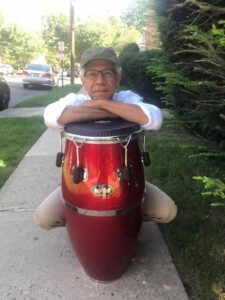
Carlos Nené Quintero con mi Signature congas (Roberto Quintero)

-What has seemed new to you lately in Europe or in these parts?

-Those jazz works in which there is no conventional group with drums or bass, like what I did with Gerry Weil and Pablo Gil at the Corp Group Cultural Center.

THE BATICONGA AND THE “MCGIVER SET”.

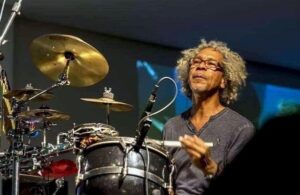
The baticonga is a hybrid: drums with conga. I use bass drum, hi-hat, cimbals, toms, snare and cymbals of various thicknesses.

It has a special redoblante with a rim that does not protrude from the leather so that it does not bother when hitting it like a tumbadora.

It is an idea that I have been maturing. It was born because of Yordano’s album that made him famous, Manantial de corazón, there I recorded all the percussion and when it was time to play it live we needed a drummer and two percussionists. We got the drummer, but things were missing and I started to add electronic pedals, electronic drums, octapads and to use feet and hands.

Then we did an unplugged set and it had to be acoustic with congas, bass drum, snare drum, hi-hat, cymbals.

The McGiver set is a djembe with brushes, cymbals with rivets, a conga that is just like a lid, like a tambourine, and I mount it on top of a snare drum stand and a cowbell. A set that does it all.

SIX INFLUENTIAL PERCUSSIONISTS

Alejandro Blanco Uribe and Airto Moreira: “I saw a lot of Gerry Weil with La Banda Municipal in the 70s and Alejandro as a multi-percussionist with effects and accessories.

That led me to look at Airto’s proposal and to fall in love with percussion at a time when I was playing guitar”.

Trilok Gurtu: “For his fusion of oriental music with rock and jazz. I’ve been hearing him since Oregon, and when I heard him with John McLaughlin on the live album in London my jaw dropped.”

Jack DeJohnette: “As a drummer he has a very floaty groove, he can do with the beats what he wants and the rhythm is always there.”

Tony Williams: “Another drummer. I saw a video that aroused my interest because his technique is like the one I use with the baticonga”.

Carlos Nené Quintero con mi Signature congas (Roberto Quintero).

Giovanni “Mañenguito” Hidalgo: “Since he came out the thing changed, he gave another level to the congas or tumbadoras, with him there has been a ‘before and after'”. – with Roberto Quintero and Luisito Quintero.

Also read: Argenis Carruyo is known in the music scene as “El Volcán de América” (The Volcano of America) due to the power of his voice

Orchestra “Real Expression”

Latin America / Venezuela / Caracas

Orchestra “Real Expression”. Relay youth in Afro-Caribbean music

The “Real Expression” Orchestra was born under the initiative of a group of friends who converged during the 90’s as part of their free time and to liven up their family parties.

Empirical musicians moved by the passion for the salsa genre and their musical preferences chose a series of songs to inspire their repertoire of “hard sauce” paying homage to orchestras such as: Los Satélites, Fruko y sus Tesos, Dimensión Latina, Roberto Blades, among others.

Real Expression" Orchestra
Real Expression” Orchestra

Relaunching

The “Real Expression” Orchestra in 2016 had an unexpected loss. Its founder Oswaldo García and pianist of the group, exercising his role as a GNB official, lost his life in a confrontation.

This moment marked a silence in the Royal Expression Orchestra, which after the physical disappearance of Oswaldo, could not find a path to musical growth and there was no longer reason to celebrate.

After a year, his son Wladimir A. García, who learned the magic of the piano from his father, decides again to summon these friends of his father to continue the legacy that was Oswaldo’s passion in life.

During the year 2018, the “homemade” rehearsals and the desire to consolidate the group continued and in December of that year Wladimir Alexander formally decided to start piano lessons with the teacher Alberto Crespo, a Venezuelan pianist recognized in the salsa scene for his participation. in Bands such as Bailatino, and professionalize their innate skills in order to take on the challenge of Musical Direction of the Orchestra, under a concept of varied salsa repertoire and coupling talents of different ages in order to capture audiences of all ages.

With this impetus and desire, “Orquesta Real Expression” was born with a group of musicians of all ages and periods, a fresh and original repertoire with a “street tumbao”, extolling what is born at night in the Caracas parish “23 de January” cradle of salsa par excellence and in homage to all “street and guataca” dancers.

Real Expression" Orchestra
Real Expression” Orchestra

Musicians

After the call, many musicians were encouraged to participate, including Gilberto Gil (tumbadoras) who has been supporting Wladimir Alexander since he took over the orchestra, we consider him “the brother of the house”.

There is also Gonzalo Ribas (singer) of the old school with an original soneo and a musician by vocation formally dedicated to the business of selling spare parts. In the voice is also part of this project Jeanmicet Canónico, singer with a career in traditional Venezuelan music.

Jeanmicet is currently part of the “Francisco Pacheco y su Pueblo” Project and his son, also renowned percussionist Roland Orozco, decided to join the percussion base for “Real Expression” with Luis Urbina.

On bass we are accompanied by “Yimmito León” from the family of the great Oscar D’ León, son of Yimmy Leon. The sax is represented by Javier José Torres Perez (saxophonist and flutist).

Following the line of brass Meyderson Rada (trumpet) who also belongs to the project of Francisco Pacheco y su Pueblo, and as arranger and bass Premmlim Villamizar of the new generation of, under the direction of Wladimir Alexander singer and piano.

Repertoire

The repertoire includes songs covered by orchestras such as Los Satélites, Grupo Canela de Colombia, Spanish Harlem, Hildemaro, Eddy Santiago, Eddie Palmieri, Oscar D’ León, among others.

Real Expression Orchestra. Musical Direction: Wladimir Alexander Garcia. Phone (0414)3175583. email: [email protected] Instagram: orchestrarealexpression / twitter: @ExpressionReal / Facebook: Real Expression Orchestra.

Under the production of: La Negrix Salsera

Email: [email protected]. Instagram: Yohelia Acosta / Facebook: Yohelia Acosta.

The decade in which Eddie Palmieri faced the Erotic or Romantic Salsa

There are leaders in all the activities that man develops in his daily life: Sports, Labor, Student, Political, Musical, even in comic strips you can see these leaders all the time, showing the way to follow and saving humanity from its natural dangers.

El Zorro with his friend Bernardo, his father Alejandro and even with Sergeant Garcia and Corporal Reyes, saved California from the clutches of El Aguila, marking the way forward for the peace and freedom of his people.

In salsa, the same thing happens; there are musicians who set themselves up as leaders who dictate the path, the routes, the itinerary and the route where salsa should go, establishing through their musical performances where others should be guided on their way to certain triumph.

For salseros in general, Eddie Palmieri represents El Zorro of the comics, the leader to follow, the paladin of salsa, only that instead of looking like Diego de la Vega in physique, he looks more like Sergeant Garcia; backed by Ismael Quintana who would be El Cabo Reyes and Barry Rogers who would be Alejandro de la Vega.

Eddie Palmieri y Dj. Augusto Felibertt

It is no secret that Eduardo Palmieri is one of the initiators of the salsa movement in New York; but more than that, this master of the piano has established the paths along which salsa has walked since the 1960s.

Eddie was one of the first musicians to use the trombone as a determining instrument in the conformation of an orchestra, giving it a preponderance never seen before and with a sharp and hurtful sound that forced a large number of musicians to follow this type of orchestration that ended up imposing itself in the so-called salsa boom.

La Perfecta determined the path to follow; they recorded anthological albums in the 60’s that were the delirium of the salsa movement lovers; many musicians began to see and hear how the tonality of this orchestra sounded different from those big bands of the 50’s; the people of the neighborhood immediately identified with this sound because, they thought, it sounded like a neighborhood, a slum, poverty, marginality, inequality, it sounded like spite, nonconformity, injustice; in short, with this sound they perceived the most expensive needs of a population marginalized from the great plans of the State that entailed advancement and progress.

The decade of the 70’s meant the explosion of a salsa boom that swept the entire Caribbean basin; orchestras came and went; they came and disappeared; they recorded and were immediately lost in anonymity, but most of these orchestras chose the musical patterns of a common denominator to carry out their musical proposals: A Crazy, Bearded and Barrigón Orate named Eddie Palmieri, as the Colombian writer José Arteaga called him.

Eddie, throughout this decade, was practically on the sidelines of the salsa boom and it could not be otherwise: Too much irreverence from a superior musician who, being clear where salsa should walk, refused to be part of all the outrages that were committed during that salsa explosion.

Too much rebelliousness from an artist who refused to be told what he should and had to record: “Nobody tells me what I have to record and how I have to record; I’m the one who knows how to make music, the label bosses can go to hell with their desks”, an angry Palmieri would say.

The record label Epic signed him in 1978, telling him that he had complete freedom to record the music he wanted: a lie. He recorded the Lp Lucumi, Macumba and Vodoo where he was practically forced to work on an album where rhythms and trends were mixed.

He took advantage of the only freedom he was given to record two legendary songs: Colombia Te Canto and Mi Congo Te Llama.

Bad management and ill-advised decisions put an end to the whole salsa movement that was born in the 70’s and the unthinkable happened for all the lovers of this tasty way of life: the whole musical scaffolding that represented the Fania label collapsed, leaving everyone with clear eyes and without sight.

Clouds of disbelief and uncertainty hung over the entire salsa movement, musicians, producers, artist managers, arrangers, record label owners and, those who were most hurt by all this, the lovers of this superb spectrum of hard and powerful salsa that was experienced in the 70s.

In the 80’s, faced with this dilemma and the perplexity of the moment, most of the orchestras took refuge in the so-called Salsa Erotica or Salsa Monga, which although it is true that it gave oxygen to salsa in general, it inflicted a death blow to salsa dura or gorda as it has been called since the 70’s.

As if that were not enough, the merengueros with: Fernandito Villalona, Jerry Legrand, Jossie Esteban y la Patrulla 15, Wilfrido Vargas, Rubby Perez, Las Chicas del Can and stop counting, colluded with salsa erotica (as El Aguila colluded with El Magistrado), to try to wipe salsa dura off the map and at any price.

At the beginning of the 80’s; under all this conglomerate of adverse circumstances; the merengueros and “salseros eroticos” making a killing and the hard salsa artists not knowing which direction to take, Líder Palmieri appeared with his stocky and ungainly figure, a huge cigar in his mouth, his madness (we are even madder) and his voice saying clearly, categorically and confidently: “Follow me, this is the road to follow”.

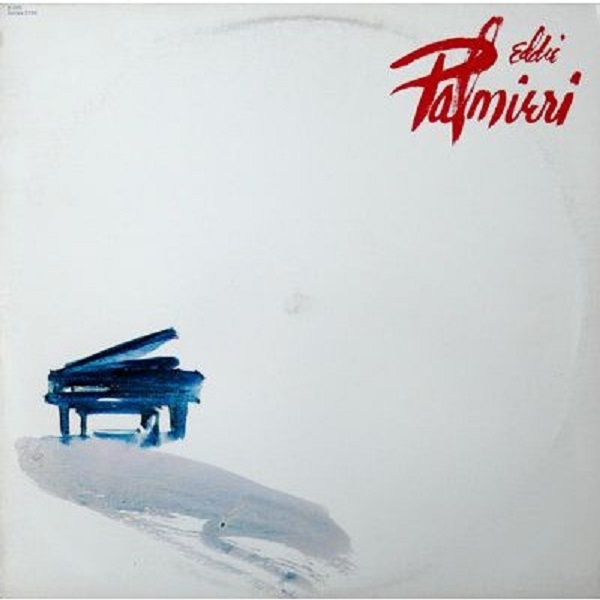
And so that there would be no doubt about this call against Salsa Erotica and Merengue, in 1981 he recorded the Lp “Eddie Palmieri” which, almost 30 years after its release, we are still studying and listening to it to digest what El Sapo did in these 5 memorable songs: El Día que me Quieras; Ritmo Alegre, Paginas de Mujer, No Me Hagas Sufrir and Ven Ven.

Poster salsa on all four sides, atrabiliary percussion, indescribable trombones and trumpets, legendary voices, in short, a priceless LP. By the way, a certain current of opinion maintains that salsa is nothing more than Cuban music.

Under this prism, then we would have to say that this Palmieri’s version of Carlos Gardel’s El Día que me Quieras, is a full-fledged Tango. 

Eddie Palieri 1981
Eddie Palieri 1981

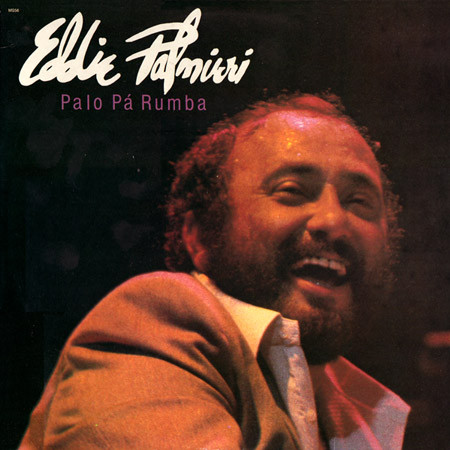
In 1984 and when the “erotic” ones were widening their tentacles, Palmieri came with more fuel and that added to the bad experience lived in Venezuela with some businessmen who were determined to finish with him, musically speaking, allowed him to release the Lp “Palo Pa Rumba”, containing the pieces: 1983, Bomba de Corazón, Bajo con Tumbao, Pensando en Ti, Palo Pa Rumba and two songs dedicated to Venezuela because of the bitter and vexatious experience he had in our beloved homeland of names: Venezuela and Prohibición de Salida.

Eddie Palmieri Palo Pa' Rumba Ganador del Grammy's 1985
Eddie Palmieri Palo Pa’ Rumba Ganador del Grammy’s 1985

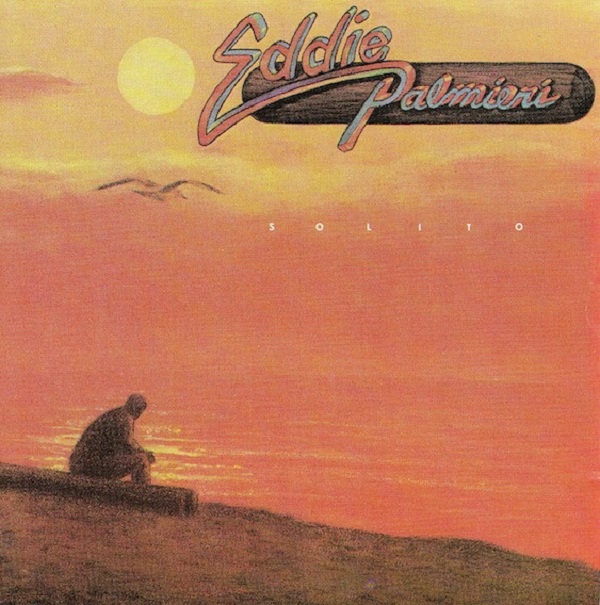
In 1985 the Lp “Solito” was released, a song that allowed Palmieri to tell the “eroticos” that there was a formula for arranging music that sounded strong and powerful, even if the content of the lyrics could suggest a certain shade of erotic salsa; that the trombones could sound energetic and strong without the sweetening and softness to which these hardened instruments were subjected in this decade; that it was not necessary to be bonitillo (as the Boricuas say) to succeed in this salsa environment and that, no matter what happened, he, Eddie Palmieri, was not going to be subjugated no matter how much salsa erotica the record companies demanded and played on the radio, emphasizing this statement with an abysmal piano solo.

To complete the LP: Justicia, Yo No Soy Guapo, Cada Vez que te Veo, Lindo Yambú and Pa Los Congos, round out his confrontation with “aquella” salsa.

Eddie Palmieri Solito Ganador del Grammy's 1986
Eddie Palmieri Solito Ganador del Grammy’s 1986

To top off the decade, in 1987 he recorded the Lp “La Verdad”, in which with the piece El Cuarto in the voice of Tony Vega ratified his point of view regarding “erotic” salsa; that it is not necessary to fall into pornography to say “nice things” and arrange the music with enough flavor and sandunga and that, finally, nothing would prevent him from continuing to crush his opinion based on hard and powerful salsa.

As if that were not enough, for this album he made use of a beastly orchestra made up of four trumpets, two trombones and a saxophone that left on the acetate: Conga Yambumba, La Verdad, Lisa, Noble Cruise and Buscándote.

The result of all this decade of salsa gorda music for Eddie Palmieri? Three Grammy awards and the recognition of a whole legion of hardcore salseros, who were not intimidated by the onslaught of the “erotic” and “merenguera” fashions of the moment and decided, in the face of so much sweet, effeminate and subtle trombone, to follow in the footsteps of the leader: El Zorro, sorry I made a mistake, by El Sapo Eduardo Palmieri.

Source: Larry Daniel Cabello Guzmán

Dj. Augusto Felibertt

Read Also: Bebo Valdés is considered one of the central figures of the golden age of Cuban music

Eddie Palmieri

  • « Go to Previous Page
  • Page 1
  • Interim pages omitted …
  • Page 22
  • Page 23
  • Page 24
  • Page 25
  • Page 26
  • Interim pages omitted …
  • Page 33
  • Go to Next Page »

International Salsa Magazine (ISM) is a monthly publication about Salsa activities around the world, that has been publishing since 2007. It is a world network of volunteers coordinated by ISM Magazine. We are working to strengthen all the events by working together.