• Skip to primary navigation
  • Skip to main content

International Salsa Magazine

  • Home
  • Previous editions
    • 2025
      • ISM / November 2025
      • ISM / October 2025
      • ISM / September 2025
      • ISM / August 2025
      • ISM / July 2025
      • ISM / June 2025
      • ISM / May2025
      • ISM / April 2025
      • ISM / March 2025
      • ISM / February 2025
      • ISM / January 2025
    • 2024
      • ISM / December 2024
      • ISM / November 2024
      • ISM / October 2024
      • ISM / September 2024
      • ISM / August 2024
      • ISM / July 2024
      • ISM / June 2024
      • ISM / May 2024
      • ISM / April 2024
      • ISM / March 2024
      • ISM / February 2024
      • ISM / January 2024
    • 2023
      • ISM / December 2023
      • ISM / November 2023
      • ISM / October 2023
      • ISM – September 2023
      • ISM – August 2023
      • ISM July 2023
      • ISM Edition June 2023
      • ISM – May 2023
      • ISM April 2023
      • ISM March 2023
      • ISM February 2023
      • ISM January 2023
    • 2022
      • ISM December 2022
      • ISM November 2022
      • ISM October 2022
      • ISM September 2022
      • ISM August 2022
      • ISM July 2022
      • ISM June 2022
      • ISM May 2022
      • ISM February 2022
      • ISM January 2022
    • 2021
      • ISM December 2021
      • ISM November 2021
      • ISM October – 2021
      • ISM September 2021
      • ISM August 2021
      • ISM July 2021
      • ISM May 2021
      • ISM April 2021
      • ISM June 2021
      • ISM March 2021
      • ISM February 2021
      • ISM January 2021
    • 2020
      • ISM December 2020
      • ISM November 2020
      • ISM October 2020
      • ISM September 2020
      • ISM August 2020
      • ISM July 2020
      • ISM June 2020
      • ISM May 2020
      • ISM April 2020
      • ISM March 2020
      • ISM February 2020
      • ISM January 2020
    • 2019
      • ISM December 2019
      • ISM November 2019
      • ISM October 2019
      • ISM Septembre 2019
      • ISM August 2019
      • ISM July 2019
      • ISM June 2019
      • ISM May 2019
      • ISM April 2019
      • ISM March 2019
      • ISM February 2019
      • ISM January 2019
    • 2018
      • ISM December 2018
      • ISM November 2018
      • ISM October 2018
      • ISM September 2018
      • ISM August 2018
      • ISM July 2018
      • ISM June 2018
      • ISM May 2018
      • ISM April 2018
      • ISM March 2018
      • ISM February 2018
      • ISM January 2018
    • 2017
      • ISM December 2017
      • ISM November 2017
      • ISM October 2017
      • ISM September 2017
      • ISM August 2017
      • ISM July 2017
      • ISM June 2017
      • ISM May 2017
      • ISM April 2017
  • Download Salsa App
    • Android
    • Apple
  • Spanish

Search Results for: Trumpet and Percussion

Yova Rodriguez The Jibarito of Mayagüez in the Bronx New York

Mayagüez, is one of the 78 municipalities into which the Island of Enchantment is politically divided: Puerto Rico.

It is the eighth in size and located at the western and central end of the island. Its name comes from a Taino voice that means according to the official historian of this town – Don Federico Cedó Alzamora, “Lugar Grande De Aguas”.

It was founded by the Spaniards and history records a September 18, 1760 with the name of “Nuestra Señora de la Candelaria”, in the territory already occupied by a rural population that was called “Sitio de Mayagüez”. The city has also been known as “Ciudad de Dios”, “La Atenas de Puerto Rico”, “La Sultana del Oeste”, “La Ciudad de las Aguas Puras”, “Capital de la Hospitalidad”, among other names.

Giovanni (Yova) Rodríguez Ruiz was born in Mayagüez, being the youngest of six siblings, raised alone by his mother Doña Delia Ruiz Crespo. At the age of 7 years old, he began singing Christmas aguinaldos and was influenced by his maternal uncle José Ruiz Crespo ¨Pipo El Indio¨ and his great uncle Antonio ¨Toño Ruiz¨ who played the Puerto Rican cuatro. At the age of fifteen he began his studies at the Ernesto Ramos Antonini Music School in Mayagüez, Puerto Rico.

It is here that he began his singing and percussion career and at the age of 16 he became the singer of the school’s band. In 2004 he began the project ¨Yova Rodríguez & his ensemble Sakao – Akà, Homenaje a Polo Montañez¨.

Since the release of his musical work Yova Rodríguez conjunto Sakao – Akà has become one of the most sought after ensembles in Puerto Rico, Colombia, Venezuela and New York, since 2010 resides in the Big Apple, La Babel de Hierro N.Y, working in musical composition for singers of the stature, Danny Rivera, Herman Olivera, Marcial Isturiz, Orquesta Boricua Legends, and the great Andy Montañez among others and to mention a few and traveling through several Latin American countries with most of the artists already mentioned.

In 2016 he starts with his promotional song ¨Me Quedaré¨ with arrangements by trumpeter Nelson Jaime Gazu, a song dedicated to the thousands of Boricuas who have left their beloved Puerto Rico. In 2017 he composed the song ¨Mi Barrio¨ dedicated to his native neighborhood and was presented in Mayagüez, at the same time the Mayor José Guillermo Rodríguez gave him the keys of the city and a recognition, in the same year he composed the song ¨Borinquén se Levanta¨ with the participation of great luminaries of Salsa in New York such as El Pulpo Colon, Jhon Benítez, Luis Mangual, José Dávila among others and by the hand of the Cuban trumpeter and arranger Agustín Someillan Garcia, in January 2018 is presented in Medellín-Colombia in the outstanding local Son-Habana, returns to New York and composes the theme Medellín, is presented last June 23 with a resounding total success in the event a day of Salsa for Medellín.

Yova Rodriguez himself informs me that he is already preparing his fourth album with pianist and arranger Arturo Ortiz. And at the same time he belongs to the board of directors of the Galería de La Salsa in Spanish Harlem in New York.

Other themes that social networks have been responsible for spreading recently will see the light in the next production of Yova Rodriguez, the same that will be titled YOVA RODRIGUEZ ENTRE LOS PUEBLOS and will be part of this production the recent theme composed to the First Peruvian Port: El Callao; highlighting here the fact that Yova has never set foot in our territory but that has not been an impediment for his pen to recreate scenarios: neighborhoods, corners and, mainly, its people. As he says in his lyric “…he who knows about salsa, knows that it is enchanting there in the Chimpún Callao…”

We come to the final part of this biographical sketch, thanking Yova Rodriguez for his kindness in sharing with this server the data and images that accompany this publication.

We wanted to honor the musician, singer and composer, but without leaving aside the tremendous human being that our guest embodies, both as a son and brother, as a fellow professional musician and, especially, as a family man.

A facet that is hidden behind the public man (singer-songwriter) but that impresses greatly in Yova’s pen: first, when sharing a message in each of his lyrics; second, his constant attempts to honor his children Ariana and Kerby on a daily basis, taking as a guideline that old adage that says: “You preach by example”; finally his constant struggle to shorten the physical distances between them, something that surely his Muse manages to do.

For the year 2022 from the pen of the composer Yova is still in force.


In Concert: Hacenoba Salsa & Jimmy Bosch In Saint-Étienne

They will be together in an exceptional concert at Le Fil this May 14th

Adiel Castillo (Musical Direction – Piano), Aymel Gómez (Voice), Wilbert Valera (Voice), Nadir Slimani (Bass), Miguel Río Puntilla (Bongo), Philippe Fougerouse (Timbales), Hamid Benabella (Art Direction – Congas), Guillaume Monier (Saxophone), Laurent Sedent (Trumpet), Romain Bourlhonne (Trombone)

The Hacenoba Salsa group and the world-renowned Trombonist Jimmy Bosch will present a unique salsa show in which lovers of this Latin rhythm will sing and dance from the first notes. This concert will be preceded by a Salsa lesson by the couple (Aurélie and Rémi) belonging to the Barrio Latino humanitarian association under the best salsa mixes of the DJ from the city of Callao (Peru), Oscar D Lyon.

This show will take place on the second Saturday of May at Le Fil, an artistic platform for contemporary independent music and cultural life developed in the city located in southeast France, Saint-Étienne. Its address is 20 bd Thiers 42000 Saint-Étienne, France, and the cost of pre-sale tickets is €20 and the Box Office €22.

The Cuban Salsa orchestra, Hacenoba, brings to this concert the essential rediscovery of the island’s music (Mambo, Salsa, Cha-Cha, and Timba) accompanied by brushstrokes inspired by internationally famous composers and artists of the genre such as Oscar D’ León, Héctor Lavoe, and others.

This ten-member band with its explosive music combines percussion with piano, saxophone, and bass for a frenetic and bewitching rhythm that has led them to participate in different festivals, cultural events, parties dedicated to Cuban music (or Latin music ), and private parties in the region.

Jimmy Bosch has collaborated with Rubén Blades, Ray Barretto, and Celia Cruz, among many others.

Likewise, the master Jimmy Bosch is acclaimed in more than 70 countries as an exceptional Latin music Trombonist, has 11 Grammy Awards, and more than 100 recordings in the Salsa and Latin Jazz genres. He also has a great career as an orchestra leader and is coveted by his audience due to his extraordinary performances on stage.

The creator of hits like Otra Oportunidad (1998), La Cacharra (1999) Qué Bonito es Soñar (2004), La Noticia (2004), El Avión de la Salsa (2004) y Ay Mamacita-Boogaloo (2018) among many others, also will be dictating a Masterclass for professional musicians where he will explain and demonstrate the variations in Salsa. The lessons will be oriented towards practice and active participation with the instrument during the clinic. This masterclass will be held on May 24th -25th at Kafésynk located at Øvingshotellet, Trondheimsveien 2, Bygg H, 0560 Oslo, Norway from 5 PM to 8 PM, and tickets cost NOK 1,600 approximately $174.26.

The trombone master has worked with FANIA All-stars, Eddie Palmieri, Ruben Blades, Ray Barretto, Machito, Cachao, and many more. He has participated in Salsa conventions, Latin and Jazz music festivals around the world, as well as performed in clubs in Asia, Europe, America, and Oceania.

Jimmy Bosch’s record productions include Soneando Trombón (1998), Salsa Dura (1999), El Avión de la Salsa (2004) ,and A Millón (2009).

Oscar D Lyon was born in Callao, known as the capital of Salsa in Peru.

The perfect DJ for this magnificent evening at Le Fil will be Oscar D Lyon, who has more than 30 years of career in the music scene. He started in Lyon in the ‘90s, continued at Latino 1, and pursues his rise at Casa Latina for ten years. His likes and musical inclination from South America have made him stand out in the Latin environment of the region. Currently, Oscar D Lyon mixes the rhythms of Salsa and Bachata in various clubs in Saint-Étienne, such as Cabana Café, the Fox, and recently, Barrio Club.


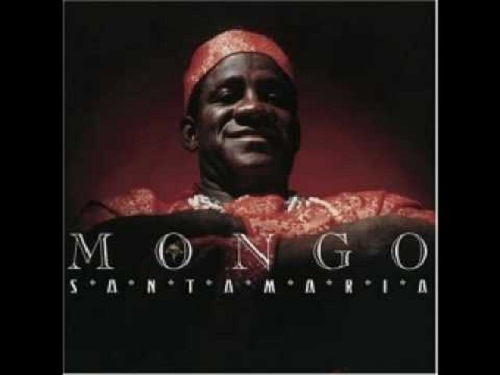
Ramón “Mongo” Santamaría “I wanted to do something that sounded like home”.

April 7, 1917, Mongo Santamaría was born in the Jesús María neighborhood of Havana, Cuba.

Exceptional percussionist of Latin Jazz and related rhythms, whose first name was Ramón Santamaría.

Mongo left to continue playing his Congas hard in the sky on February 1st, 2003.

“I wanted to do something that sounded like home”. With these simple words, Ramón Santamaría Rodríguez “Mongo Santamaría” spoke of his essence.

The purpose of his music pursued a sonority and a memory, possibly located in Cuba, in Jesús María, a marginal neighborhood where he grew up and enjoyed a tradition attached to the drum, to religion, to the street and from where this great Cuban percussionist drank infinitely.

But surely those drums also came to him from far away, from the Congo, where his grandfather came from to be a slave on the island and who also filled his head with sounds full of meanings and colors, which he later masterfully spread around the world.

The name of Mongo Santamaría (Havana, April 7/1917 – Miami, Feb. 1/2003) is, for the glory of all music, an inevitable reference of Cuban percussion.

Since he was a child he knew that his thing was to play the drum and he was lucky enough to belong to a family of empirical musicians, singers and drummers who supported him in the learning and mastery of these instruments.

During his time in Cuba, already a professional musician, he participated in numerous groups that little by little gave him a place among the most outstanding percussionists of the time. Some names of these groups are El Conjunto Boloña, Lecuona Cuban Boys, with whom he was able to participate in the recording of his first album, Conjunto Matamoros, Segundo Grupo de Arsenio Rodríguez, among others.

Each group had its own style and stamp, but in each of them Santamaría put his personal “touch”.

At the prestigious Tropicana cabaret he played with Chano Pozo as a member of Armando Romeu’s orchestra.

From that moment on, his career would not stop. Conjuntos, Septetos de Son were the perfect selection to complete the sap from which he would draw all his style and technique.

Later, from carnival to carnival, he would gather with other percussionists to play in the comparsas and experience the festive musical atmosphere par excellence of those years.

Alongside him played other friends who soon became a Cuban reference in the United States: Patato Valdés and Armando Peraza.

As part of the Tropicana orchestra and located in a show in Mexico, he decided to settle there as did many musicians of his time and came to play with Pérez Prado and Benny Moré.

It was precisely in the latter orchestra where he met Clemente Piquero “Chicho”, another Cuban percussionist whose style made him rethink the role of percussion in Cuban popular orchestras.

Mongo Santamaría belongs to the second wave of Cuban percussionists who arrived in New York in 1950.

His new idea of restructuring and designing his own style in the use of Cuban percussion was perfectly in tune with the reality that a few years earlier was being experienced in the music produced and sold in New York, after the arrival of the Cuban rumbero Chano Pozo.

“The rhythm produced by the conga organizes all the percussion of a band, from which melodies and counter-melodies can be experimented with.”

“I think percussion is the base from which things come out.”

Already in the United States, Mongo plays with Gilberto Valdés, again he is part of Pérez Prado’s orchestra and finally with Tito Puente’s, where he stayed for 7 years. Once in the line of Afro-Cuban jazz, so popular at the time, he joined George Shearing’s group and later the vibraphonist Cal Tjader.

With his own orchestra, he accompanied La Lupe, one of his favorite singers, and undertook projects of novel formats for the time, such as small formations of brass trio, piano, bass, percussion and drums, at a time when jazz bands predominated.

Mongo Santamaría, perhaps without the theatricality to which Chano had accustomed the New York public, focused all his strength on achieving his own sonority, with a fusion of Cuban styles and genres, perfected and deepened in the introduction of Afro-Cuban rhythms with a naturalness and using colorful timbre elements by using several tumbadoras in his set.

His creativity is highly demonstrated in the great amount of music that is part of his catalog of works and the quality becomes indisputable when seeing the amount of outstanding jazz interpreters that version and recreate his work.

In 1959 he recorded Tambores y cantos, which contains the song Afro blue, which over the years became “a jazz anthem of all times”, according to Nat Chediak, author of the Latin Jazz Dictionary.

His long recording career (50 albums), testifies to the musical activity that this great percussionist carried out throughout his professional career. He worked with American jazz legends such as Chick Corea, Herbie Hancock, flutist Hubert Maws, Dizzy Gillespie, trumpeter Marty Seller, among other musicians who today still pay tribute to this Cuban conguero who was the architect of the fusion of rhythm & blues rhythms and Afro-Cuban music, recognized the connection of Cuban music to African roots and placed the congas in an indispensable instrument for the determination of Latin jazz.

In 1977 Mongo Santamaría received the American Grammy Award for “Best Latin Recording” for the work Dawn.

In 1999, Rhyno Record Company, based in Los Angeles, California, recognizing his contribution to Latin Jazz, released the “box set” (CD) Skin On Skin: The Mongo Santamaría Anthology (1958-1995), which includes 34 of his most successful pieces (from his rumba albums, his LP with La Lupe and his projects in the fusion of Jazz and Latin) and an extraordinary literature about his career written by actor Andy García, musician Poncho Sánchez and other connoisseurs of the Latin Jazz genre such as José Rizo, Luis Tamargo, Joel Dorn and Miles Pelich.

The legendary musician was extremely honored and grateful for the distinction Rhyno gave him by introducing this historic anthology to the world. As stated in the conversation with Jaime Torres, Mongo said:

“This is the fruit of many years of work, music made with taste and love.”

May he rest in peace and eternal glory to him.

Sigo entre amigos de Luis “Perico” Ortiz

Ortiz features Tony Vega, Milly Quezada, Johnny Rivera, Gerardo Rivas, Henry Santiago, Yturvides Vílchez, Néstor Torres, Charlie Sepúlveda and Antonio Luis Orta.

The new production of the Puerto Rican trumpeter Luis “Perico” Ortiz, Sigo entre amigos comes to us with the same energy as always.  We trust this is a foretaste of what is to come because as the genius of musical production, Julio Gunda Merced, says: “We must continue to create”.

Ortiz features Tony Vega, Milly Quezada, Johnny Rivera, Gerardo Rivas, Henry Santiago, Yturvides Vílchez, Néstor Torres, Charlie Sepúlveda and Antonio Luis Orta.
Bella Martinez “The Irreverent Salsa Writer” presents to: Sigo entre amigos de Luis “Perico”

Sigo entre amigos begins by modernizing what would otherwise keep us in the nostalgia of the unforgettable production, Entre amigos.  The also masterful 1983 production featured Rafael Ithier, Rubén Blades, and Roberto Lugo, as well as the same Conjunto Quisqueya that for years dominated the danceable musical genre known as merengue.  In this new arrival, Sigo entre amigos, “Perico” continues with his trumpet and the rumba is back to form. In this renewed Sigo entre amigos, cut that gives title to this impeccable production, we find the voices of: Tony Vega, Milly Quezada, Johnny Rivera, and Gerardo Rivas. The legendary backing vocalist Henry Santiago also stands out, with the vocal power to which we are accustomed.

Beginning in the third minute of what has become the promotional cut, the unmistakable trumpet of the usual Luis “Perico” Ortiz stars in the notes of the arrangement until he joins in calm and saucy harmony the melodic wind collective formed by Yturvides Vilchez, Antonio Luis Orta, Jesus Rafael “Rafy” Torres, Eliut Cintrón, Randy Román, Miguel Rivera and Danny Fuentes in a masterful closing.

The second cut of this production, De mi para ti, features the crystalline voice of Johnny Rivera.  The song is a composition and arrangement by “Perico”.

Sigo entre amigos begins by modernizing what would otherwise keep us in the nostalgia of the unforgettable production, Entre amigos.
Sigo entre amigos de Luis “Perico”

The chorus that says: “Mi tributo es para ti, gracias al salón de baile” (My tribute is for you, thanks to the dance hall) enters in a tune that my ear associates to the style that stands out in the Orquesta Puertorriqueña del maestro Don Perignon.  I’m not saying that’s the way it is, I just think that’s what my ear appreciates.  I love it, by the way.

Johnny’s soneos bring nostalgia to the affair without abandoning the innovative touch of the arrangement.  This dichotomy of keeping the foundation constantly evolving has been very well achieved, highlighting New York as “the supreme soul of the art”.  Somewhat later in the song, the touting style that Johnny adds to “si tú quieres que yo cante, canto; y si tú quieres que yo baile, bailo” shows the malleability and mastery with which “Perico” manages to weave the classic with avant-garde expertise. Bravo!

After Johnny’s characteristic war cry in the fourth minute of the song, I recommend listening to what follows the “¡Vayaaa!” anticipating the forcefulness of Gadwin Vargas’ tumbadora. That, for the sake of highlighting my favorite special effect.

How can I say no, if it is a song inspired by the affection and respect that this avant-garde school obviously expresses for women.  It is about a gentleman who “sees lights” for a lady who approaches him cautiously and without haste.  Finally, the gentleman succeeds in making the lady fall in love and confesses to her that the wait was worth it, even though at first he did not even dare to ask her for a kiss.  In short, this composition by “Perico” himself is far from the lyrics that some fire-eating feminists condemned as misogynistic, in that past that this team of artists led by “Perico” were never part of.  In a way, this song repairs the damage caused by others.

In the vocal part, it distinguishes the duet between Gerardo Rivas, guest of this production, and “Perico” himself, who also interprets through the trumpet.

Luis "Perico" Ortiz
Luis “Perico” Ortiz

Musically, the arrangement of this song is easy to listen to, although I imagine that the arranger processed all the complication to make it simple for our inexperienced ears. The rhythmic changes within the salsa sound of this song have interesting transitions, the kind that make the dancer get active even if his dancing shoes are not well tied.

In the vocal part of Detente, the duet between Tony Vega, guest of this production, and “Perico” shines.  Detente lightens the speed compared to the rest of the songs in the production, so the dancer must be in good shape before trying to dance to it.  This fact shows us the versatility in the interpretative ability of Tony Vega whom we are used to hearing singing romantic and slower songs.  It is, without a doubt, refreshing to see how the performer’s horizons can be expanded by way of these artistic combinations of seemingly simple variations. Of course, a pioneer of these effects is “Perico” and this invention that I attribute to “Perico” is due to him having the necessary experience to achieve exceptional results with the usual performers.  At the 2 minutes and a half mark, the correspondence between the bass played by Jorge Rivera and the piano played by Carlos García; they reach a rhythmic transition, which makes this arrangement a remarkable one within the list of songs that compile this production.  Almost entering the fourth minute, we reach the social message that the song delivers to the listener as a chorus: “Persigue lo bueno…”.  The chorus and the pregones are framed within the tastiness of a trombone full of positivism.  The fifth minute gives way to the conversation between the trumpet of “Perico” and the voice of Tony Vega, affirming a message of love and truth.

Days after listening to the track, I can still hear Henry Santiago’s voice echoing, “chase the good…”

 Luis “Perico” Ortiz,  El Astro
Luis “Perico” Ortiz, El Astro

The intro of the track Solo tuya seré features “Perico’s” trumpet playing what appears to be a fragment of the Puerto Rican national anthem.  “Perico” demonstrates masterful mastery in the harmony of the aforementioned notes conjugating them with the vocal entrance of Milly Quezada.  The song’s lyrics are sweet and romantic with lots of melody and rhyme.  However, this does not limit the arrangement to a simple one.  On the contrary, it is one of those arrangements that conquers by its complexity and fluidity.

Before reaching the 2 minute mark, the leather beats come in, anticipating Milly’s proclamation, confirming in multiple ways the chorus that says: “solo tuyo siempre yo seré” (only yours I will always be).  The mambo goes on, while Milly continues to splash the feeling summarized in the confession she makes while singing in her characteristic color: “eres mi mejor canción, eres tú mi melodía” (you are my best song, you are my melody).  By 3:33, the arrangement returns to the undisputed sound of “Perico”.  This composition, also by “Perico” pays homage to patient love, good love that swears: “te amaré toda la vida” (I will love you all my life).  As you can see, it is possible to coordinate romance with a musical arrangement that is at once melodic, danceable and heavy.  Now, the question I have to ask myself is: Did “Perico”‘s return to his homeland after living in New York for about two decades inspire his pen? Is that the reason for the intro with the overlapping resemblance to the national anthem?  That is the question that leads me to: “Eres tú lo que soñé, eras tú mi fantasía” (You are what I dreamed of, you were my fantasy).

On Señores que se sepa, Henry Santiago’s unmistakable voice stands out again in the coros, backing up “Perico’s” vocal performance.  Shortly after 2:30 minutes, the trumpet leads the melodic development of the winds.  Well into the third minute, the association of bass and piano precede Jorge David Marcano’s timbal until the trombone and tumbadora begin to dominate by the fourth minute.  In the fifth minute, a trumpet-led mozambique takes over.  When the mozambique goes down, the piano seems to embrace the trumpet.  As can be seen, the development of the theme is one with modern overtones of undeniable Afro-descendence, without departing from the classic fundamental sound.

On Tres grandes amigos, Henry Santiago sings with his usual strength.  The melody benefits from a sound that I imagine was inspired by Puente, Rodríguez and Machito, since the saxophones stand out in that typical playfulness of the three Palladium greats.  It would seem that the composition and arrangement -both by “Perico”- are in tune with the upcoming reunion of those whom I affectionately call “Los herederos del Mambo” (The heirs of the Mambo).  I associate it, since on March 5, 2022 begins the reunion tour of Tito Rodriguez, Jr., Mario Grillo (Machito, Jr.) and Tito Puente, Jr. in the concert: The Big 3 Palladium Orchestra.  The reunion will be held at the Lehman Center for the Performing Arts in New York, under the concept called “The Big 3”; this time titled Palladium in the New Millennium.  On the other hand, on June 19, 2022, Tito Rodríguez, Jr. will be at the Centro de Bellas Artes de Puerto Rico performing as a tribute to “El Inolvidable”: his father, Tito Rodríguez.

Luis "Perico" Ortiz
Luis “Perico” Ortiz

Without wanting to compete with the theme performed live with the three timbaleros heirs of the Mambo: Tito Rodriguez, Jr., Mario Grillo (Machito, Jr.) and Tito Puente, Jr. backing the voices of Gilberto Santa Rosa, Cheo Feliciano, Henry Santiago and Osvaldo Román, I invite us to take a closer look at the presentation I am referring to, within the 6th Jazz Festival in Carolina, Puerto Rico.  The performance of this song closed the aforementioned festival and is on YouTube for the delight of those who could not make it there.  Click on the link, https://youtu.be/4jZLEnpaRCo you won’t regret it.  It gave me a more complete perspective of the song and its interpretation.  The arrangement of the song performed that night in Carolina is by Luis “Perico” Ortiz himself.  Highlights of the August 2010 performance included: Carolina Mayor José Carlos Aponte Dalmau, Mario Grillo, Tito Rodríguez, Jr., Tito Puente, Jr. and Luis “Perico” Ortiz.  On the vocal front, Gilberto Santa Rosa, Cheo Feliciano, Henry Santiago and Osvaldo Román stood out.  Of course, I can’t leave out Sammy Velez on baritone saxophone.

It is true that: “We are fortunate to have had three great teachers, three great friends…” and it is also true that Henry Santiago ate it. What a hurricane, that voice that sweeps!  Now what we have left is the appetite to enjoy this year’s concerts.  It’s coming, we are waiting for it.

In Yturvides & Perico, the characteristic speed of the other songs contained in the production is changed and the tempo of classic Jazz with the Latin touch that characterizes the master Luis “Perico” Ortiz stands out.  At minute 3:30, the arrangement is skipped for approximately thirty seconds to return to a soft minute of the undisputed Soñando con Puerto Rico.  The slow tempo is skipped again until the end of the song.  This arrangement is for connoisseurs only.  You know, those who know, know, and those who don’t, learn.  The last minute is pure trumpet accompanied by an orchestra that does not get in the way.  The percussion is complementary and sends the children to school.

As promised on the compact disc’s laminated cover, this song is a fusion of Osvaldo Farrés’ Tres palabras and Bobby Capó’s Soñando con Puerto Rico in a masterful arrangement by “Perico” that accommodates an exceptional performance by Yturvides Vílchez.  Simply exceptional.

In the song Warming Up, which closes this production, stand out:  Charlie Sepúlveda, Néstor Torres and Antonio Luis Orta.  The instrumental segment sounds like a big band, as it is.  The piano dominates and seems to direct the saxophones from the first minute, besides conversing in constant playfulness with the bongo played by Richard Carrasco.  The trumpets have a leading role entering and leaving in orderly shifts with the coros.  Distinguished among the coros is one of my favorite voices; not only for his vocal power but also because he can subtly balance that power with his unequaled melodic command.  That’s Henry Santiago, but that’s my preference.

Anyway, I love this production.  If you don’t have it, get it.  If you do, enjoy it.

Facebook: Luis Perico Ortiz

Article of Interest: Ray Barretto Giant Force y A Conguero’s Conguero

By: Bella Martinez “The Irreverent Salsa Writer”

Puerto Rico

What’s Happening in London?

Five Salsa & Latin Jazz Events To Be Held In The UK Capital That You Can’t-Miss

The United Kingdom has removed essential restrictions against Covid-19 and its Omicron variant after battling weeks with the new wave of infections in the country since the end of last year.

The British executive has provided the relaxation of the restrictive measures due to the low numbers of infected people and deaths. This relaxation seeks to initiate the return to complete normality.

The new measures that are no longer mandatory are the use of masks (it will be at personal discretion, however, they must wear them if the site is crowded with unknown people or it is a closed space), and Covid passports are no longer a legal requirement to enter to the establishment.

For these reasons, we bring you a range of options in the Salsa & Latin Jazz genres in the country this month that you will be excited to see, and that you will not want to miss any detail. Here, we go…

latin woman with orange dress dancing in gabeto restaurant / bar
Gabeto offers Cuban, Colombian, and Puerto Rican Salsa style, classes

We open this poster of options with the Gabeto Camden Restaurant/Bar. This Cuban gem north of the city has two floors, a Latin atmosphere, and an outdoor terrace. They serve genuine Latin dishes, modern British drinks with Afro-Caribbean twists, and have a wide variety of nightly events throughout the week.

On Tuesdays, Wednesdays, Fridays, and Sundays you will live the Salsa experience with the instructor Ramiro Zapata (from Bolivia) with more than 20 years of experience in Salsa. Ramiro teaches his Cross Body style with a mix of Cuban, Colombian, and Puerto Rican Salsa, as well as a strong focus on Cali (Colombia) style footwork, male body movement, and female style. The cost of the lessons varies depending on the length of instruction; one hour is £10 while two hours cost £12. Lessons start at 7:30 PM and end at 9:30 PM except on Sundays with Rumba Pa’ Ti classes which are from 6:30 PM to 8:30 PM. The Cuban spirit is found in Gabeto, located at Camden Market, The Stables Market, Chalk Farm Road, a few minutes from Camden Town and Chalk Farm stations. Only people over 18 can attend and for more details, visit their website.

pink flyer with the event of San valentine in Salsa Temple Bar
Sundays at the Salsa Temple Bar are 9 continuous hours of Salsa

We continue with the Salsa Temple Bar. Every Sunday they are explosively Salseros. DJs Jorge Andre & DJ Jlatino mix the most recognized songs of yesterday and today from Timba, Salsa, Cubaton, and Bachata. Beginner Salsa Classes start at 6 PM, Bachata lessons at 7 PM, and Cuban Salsa instruction is at 8 PM. The cost for admission is £5 and on February 14th, they will offer the Valentine’s Night Fuego event.

Starting this month Salsa Temple Bar with Rhythm & Vibes Dance Co and The Latin Collective will make Monday nights the biggest Afro-Latin party in the country appearing in the Latin Room (Second Room) Salsa, Bachata, and Reggaeton. In addition to this, there will be Salsa and Bachata classes for one session (1 hour) for £7 and two sessions (2 hours) for £10.

Bar Salsa Temple is located at Temple Station WC2R 2PH. Join and experience the Sabor in detail on its official website.

Roberto Plas playing the Timbal
Roberto Pla is the Colombian percussionist known as the “Father of Latin Music” in the UK

As a third option, we bring you the concert of Roberto Pla’s Latino ensemble on Friday, February 4th at Pizza Express – Holborn. This Latin Jazz concert led by Colombian percussionist Roberto Pla is made up of a 12-piece band of saxophones, trumpets, trombones plus a powerful layered percussion section with Roberto on timbales and the powerful voice of Graciela Rodríguez.

The most recent presentations of the Latin Ensemble orchestra have been the Brecon Jazz Festival, Expo Festival Lisbon, Canada Square Festival, Under the Stars Festival, among many others.

Admission to enjoy this live performance is £25 and starts at 8:00 PM. The venue is Pizza Express Jazz Club located at 99 High Holborn since 2017. This Jazz Club is considered one of the best clubs of its kind in Britain with an international reputation. Performances by Grammy winners such as Gregory Porter and Amy Winehouse have been seen here.

Trumpeter with beige suit on Ronnie Scott's Jazz Club
The Ronnie Scott’s Jazz Club presents every Friday of the month “Viva Cuba Live”

We continue with the most important and historic jazz club in the world founded in 1959, Ronnie Scott’s. In addition to the main club, there is the bar known as Upstairs @ Ronnie’s, it is highly regarded as an elegant and luxurious venue recreating the atmosphere of the ’50s, ideal for spending the night in style.

As part of the new Jazz club policy, they are expanding their program of Latin events at Upstairs @ Ronnie’s. Below I detail the events that will be held on Fridays from 6 PM during this month.

Jesús Cutiño Band + DJ Gavin (February 4th). Jesús Cutiño is a Cuban singer-songwriter recognized as one of the best Tres players in Europe (the Tres is the Cuban guitar that forms one of the pillars of the Cuban Son sound).

Sarabanda + DJ Rico (February 11th). With this band, you will listen to arrangements of classic and contemporary Cuban songs.

Son Yambu + DJ Jim (February 18th). This group plays the authentic Cuban Son that originated in the streets of eastern Cuba at the beginning of the last century and later gave rise to modern Salsa. Most of the members come from Cuba and have the experience of a lifetime playing the genre, as well as being passionate about maintaining the traditions of Cuban Son.

Havana Latin Fun + DJ Alex (February 25th). This five-piece band led by piano/vocals René Álvarez presents Cuban melodies with amazing rhythms.

Ronnie Scott’s Jazz Club is located at 47 Frith St, London W1D 4HT, and you can find out more by clicking here.

Bishopsgate institute with green flag
The Latin and Ballroom Dance course for beginners will be held in person

We close this list of Latin events in London with the Latin and ballroom dance lessons for beginners next Saturday, February 12th. With this one-day course, you will learn how to perform the basic steps, footwork and move around the floor with the correct dance line. The hours will be between 11 AM and 4 PM, and the price is £25. The maximum limit is 30 students. The venue is the Bishopsgate Institute located at 230 Bishopsgate EC2M 4QH. An institution was erected for the benefit of the public in 1894 with the motto “I never stop learning”.

  • You Can Also Read: 6 Clubs To Dance Salsa In London

  • « Go to Previous Page
  • Page 1
  • Interim pages omitted …
  • Page 25
  • Page 26
  • Page 27
  • Page 28
  • Page 29
  • Interim pages omitted …
  • Page 31
  • Go to Next Page »

International Salsa Magazine (ISM) is a monthly publication about Salsa activities around the world, that has been publishing since 2007. It is a world network of volunteers coordinated by ISM Magazine. We are working to strengthen all the events by working together.