• Skip to primary navigation
  • Skip to main content

International Salsa Magazine

  • HOME
  • Previous editions
    • 2026
      • ISM / April 2026
      • ISM / March 2026
      • ISM / February 2026
      • ISM / January 2026
    • 2025
      • ISM / December 2025
      • ISM / November 2025
      • ISM / October 2025
      • ISM / September 2025
      • ISM / August 2025
      • ISM / July 2025
      • ISM / June 2025
      • ISM / May2025
      • ISM / April 2025
      • ISM / March 2025
      • ISM / February 2025
      • ISM / January 2025
    • 2024
      • ISM / December 2024
      • ISM / November 2024
      • ISM / October 2024
      • ISM / September 2024
      • ISM / August 2024
      • ISM / July 2024
      • ISM / June 2024
      • ISM / May 2024
      • ISM / April 2024
      • ISM / March 2024
      • ISM / February 2024
      • ISM / January 2024
    • 2023
      • ISM / December 2023
      • ISM / November 2023
      • ISM / October 2023
      • ISM – September 2023
      • ISM – August 2023
      • ISM July 2023
      • ISM Edition June 2023
      • ISM – May 2023
      • ISM April 2023
      • ISM March 2023
      • ISM February 2023
      • ISM January 2023
    • 2022
      • ISM December 2022
      • ISM November 2022
      • ISM October 2022
      • ISM September 2022
      • ISM August 2022
      • ISM July 2022
      • ISM June 2022
      • ISM May 2022
      • ISM February 2022
      • ISM January 2022
    • 2021
      • ISM December 2021
      • ISM November 2021
      • ISM October – 2021
      • ISM September 2021
      • ISM August 2021
      • ISM July 2021
      • ISM May 2021
      • ISM April 2021
      • ISM June 2021
      • ISM March 2021
      • ISM February 2021
      • ISM January 2021
    • 2020
      • ISM December 2020
      • ISM November 2020
      • ISM October 2020
      • ISM September 2020
      • ISM August 2020
      • ISM July 2020
      • ISM June 2020
      • ISM May 2020
      • ISM April 2020
      • ISM March 2020
      • ISM February 2020
      • ISM January 2020
    • 2019
      • ISM December 2019
      • ISM November 2019
      • ISM October 2019
      • ISM Septembre 2019
      • ISM August 2019
      • ISM July 2019
      • ISM June 2019
    • 2016
      • ISM December 2016
  • Spanish
  • Download Salsa App
    • Android
    • Apple

Search Results for: Trumpet and Percussion

Ramón “Mongo” Santamaría “I wanted to do something that sounded like home”.

April 7, 1917, Mongo Santamaría was born in the Jesús María neighborhood of Havana, Cuba.

Exceptional percussionist of Latin Jazz and related rhythms, whose first name was Ramón Santamaría.

Mongo left to continue playing his Congas hard in the sky on February 1st, 2003.

“I wanted to do something that sounded like home”. With these simple words, Ramón Santamaría Rodríguez “Mongo Santamaría” spoke of his essence.

The purpose of his music pursued a sonority and a memory, possibly located in Cuba, in Jesús María, a marginal neighborhood where he grew up and enjoyed a tradition attached to the drum, to religion, to the street and from where this great Cuban percussionist drank infinitely.

But surely those drums also came to him from far away, from the Congo, where his grandfather came from to be a slave on the island and who also filled his head with sounds full of meanings and colors, which he later masterfully spread around the world.

The name of Mongo Santamaría (Havana, April 7/1917 – Miami, Feb. 1/2003) is, for the glory of all music, an inevitable reference of Cuban percussion.

Since he was a child he knew that his thing was to play the drum and he was lucky enough to belong to a family of empirical musicians, singers and drummers who supported him in the learning and mastery of these instruments.

During his time in Cuba, already a professional musician, he participated in numerous groups that little by little gave him a place among the most outstanding percussionists of the time. Some names of these groups are El Conjunto Boloña, Lecuona Cuban Boys, with whom he was able to participate in the recording of his first album, Conjunto Matamoros, Segundo Grupo de Arsenio Rodríguez, among others.

Each group had its own style and stamp, but in each of them Santamaría put his personal “touch”.

At the prestigious Tropicana cabaret he played with Chano Pozo as a member of Armando Romeu’s orchestra.

From that moment on, his career would not stop. Conjuntos, Septetos de Son were the perfect selection to complete the sap from which he would draw all his style and technique.

Later, from carnival to carnival, he would gather with other percussionists to play in the comparsas and experience the festive musical atmosphere par excellence of those years.

Alongside him played other friends who soon became a Cuban reference in the United States: Patato Valdés and Armando Peraza.

As part of the Tropicana orchestra and located in a show in Mexico, he decided to settle there as did many musicians of his time and came to play with Pérez Prado and Benny Moré.

It was precisely in the latter orchestra where he met Clemente Piquero “Chicho”, another Cuban percussionist whose style made him rethink the role of percussion in Cuban popular orchestras.

Mongo Santamaría belongs to the second wave of Cuban percussionists who arrived in New York in 1950.

His new idea of restructuring and designing his own style in the use of Cuban percussion was perfectly in tune with the reality that a few years earlier was being experienced in the music produced and sold in New York, after the arrival of the Cuban rumbero Chano Pozo.

“The rhythm produced by the conga organizes all the percussion of a band, from which melodies and counter-melodies can be experimented with.”

“I think percussion is the base from which things come out.”

Already in the United States, Mongo plays with Gilberto Valdés, again he is part of Pérez Prado’s orchestra and finally with Tito Puente’s, where he stayed for 7 years. Once in the line of Afro-Cuban jazz, so popular at the time, he joined George Shearing’s group and later the vibraphonist Cal Tjader.

With his own orchestra, he accompanied La Lupe, one of his favorite singers, and undertook projects of novel formats for the time, such as small formations of brass trio, piano, bass, percussion and drums, at a time when jazz bands predominated.

Mongo Santamaría, perhaps without the theatricality to which Chano had accustomed the New York public, focused all his strength on achieving his own sonority, with a fusion of Cuban styles and genres, perfected and deepened in the introduction of Afro-Cuban rhythms with a naturalness and using colorful timbre elements by using several tumbadoras in his set.

His creativity is highly demonstrated in the great amount of music that is part of his catalog of works and the quality becomes indisputable when seeing the amount of outstanding jazz interpreters that version and recreate his work.

In 1959 he recorded Tambores y cantos, which contains the song Afro blue, which over the years became “a jazz anthem of all times”, according to Nat Chediak, author of the Latin Jazz Dictionary.
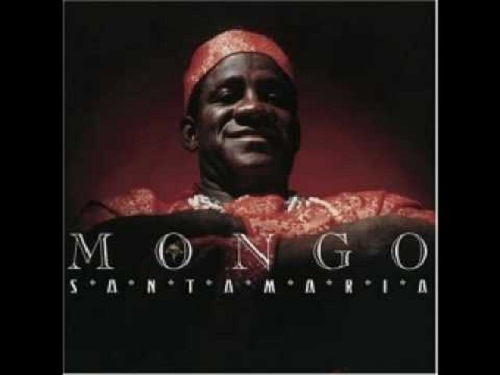
His long recording career (50 albums), testifies to the musical activity that this great percussionist carried out throughout his professional career. He worked with American jazz legends such as Chick Corea, Herbie Hancock, flutist Hubert Maws, Dizzy Gillespie, trumpeter Marty Seller, among other musicians who today still pay tribute to this Cuban conguero who was the architect of the fusion of rhythm & blues rhythms and Afro-Cuban music, recognized the connection of Cuban music to African roots and placed the congas in an indispensable instrument for the determination of Latin jazz.

In 1977 Mongo Santamaría received the American Grammy Award for “Best Latin Recording” for the work Dawn.

In 1999, Rhyno Record Company, based in Los Angeles, California, recognizing his contribution to Latin Jazz, released the “box set” (CD) Skin On Skin: The Mongo Santamaría Anthology (1958-1995), which includes 34 of his most successful pieces (from his rumba albums, his LP with La Lupe and his projects in the fusion of Jazz and Latin) and an extraordinary literature about his career written by actor Andy García, musician Poncho Sánchez and other connoisseurs of the Latin Jazz genre such as José Rizo, Luis Tamargo, Joel Dorn and Miles Pelich.

The legendary musician was extremely honored and grateful for the distinction Rhyno gave him by introducing this historic anthology to the world. As stated in the conversation with Jaime Torres, Mongo said:

“This is the fruit of many years of work, music made with taste and love.”

May he rest in peace and eternal glory to him.

Sigo entre amigos de Luis “Perico” Ortiz

Ortiz features Tony Vega, Milly Quezada, Johnny Rivera, Gerardo Rivas, Henry Santiago, Yturvides Vílchez, Néstor Torres, Charlie Sepúlveda and Antonio Luis Orta.

The new production of the Puerto Rican trumpeter Luis “Perico” Ortiz, Sigo entre amigos comes to us with the same energy as always.  We trust this is a foretaste of what is to come because as the genius of musical production, Julio Gunda Merced, says: “We must continue to create”.

Ortiz features Tony Vega, Milly Quezada, Johnny Rivera, Gerardo Rivas, Henry Santiago, Yturvides Vílchez, Néstor Torres, Charlie Sepúlveda and Antonio Luis Orta.
Bella Martinez “The Irreverent Salsa Writer” presents to: Sigo entre amigos de Luis “Perico”

Sigo entre amigos begins by modernizing what would otherwise keep us in the nostalgia of the unforgettable production, Entre amigos.  The also masterful 1983 production featured Rafael Ithier, Rubén Blades, and Roberto Lugo, as well as the same Conjunto Quisqueya that for years dominated the danceable musical genre known as merengue.  In this new arrival, Sigo entre amigos, “Perico” continues with his trumpet and the rumba is back to form. In this renewed Sigo entre amigos, cut that gives title to this impeccable production, we find the voices of: Tony Vega, Milly Quezada, Johnny Rivera, and Gerardo Rivas. The legendary backing vocalist Henry Santiago also stands out, with the vocal power to which we are accustomed.

Beginning in the third minute of what has become the promotional cut, the unmistakable trumpet of the usual Luis “Perico” Ortiz stars in the notes of the arrangement until he joins in calm and saucy harmony the melodic wind collective formed by Yturvides Vilchez, Antonio Luis Orta, Jesus Rafael “Rafy” Torres, Eliut Cintrón, Randy Román, Miguel Rivera and Danny Fuentes in a masterful closing.

The second cut of this production, De mi para ti, features the crystalline voice of Johnny Rivera.  The song is a composition and arrangement by “Perico”.

Sigo entre amigos begins by modernizing what would otherwise keep us in the nostalgia of the unforgettable production, Entre amigos.
Sigo entre amigos de Luis “Perico”

The chorus that says: “Mi tributo es para ti, gracias al salón de baile” (My tribute is for you, thanks to the dance hall) enters in a tune that my ear associates to the style that stands out in the Orquesta Puertorriqueña del maestro Don Perignon.  I’m not saying that’s the way it is, I just think that’s what my ear appreciates.  I love it, by the way.

Johnny’s soneos bring nostalgia to the affair without abandoning the innovative touch of the arrangement.  This dichotomy of keeping the foundation constantly evolving has been very well achieved, highlighting New York as “the supreme soul of the art”.  Somewhat later in the song, the touting style that Johnny adds to “si tú quieres que yo cante, canto; y si tú quieres que yo baile, bailo” shows the malleability and mastery with which “Perico” manages to weave the classic with avant-garde expertise. Bravo!

After Johnny’s characteristic war cry in the fourth minute of the song, I recommend listening to what follows the “¡Vayaaa!” anticipating the forcefulness of Gadwin Vargas’ tumbadora. That, for the sake of highlighting my favorite special effect.

How can I say no, if it is a song inspired by the affection and respect that this avant-garde school obviously expresses for women.  It is about a gentleman who “sees lights” for a lady who approaches him cautiously and without haste.  Finally, the gentleman succeeds in making the lady fall in love and confesses to her that the wait was worth it, even though at first he did not even dare to ask her for a kiss.  In short, this composition by “Perico” himself is far from the lyrics that some fire-eating feminists condemned as misogynistic, in that past that this team of artists led by “Perico” were never part of.  In a way, this song repairs the damage caused by others.

In the vocal part, it distinguishes the duet between Gerardo Rivas, guest of this production, and “Perico” himself, who also interprets through the trumpet.

Luis "Perico" Ortiz
Luis “Perico” Ortiz

Musically, the arrangement of this song is easy to listen to, although I imagine that the arranger processed all the complication to make it simple for our inexperienced ears. The rhythmic changes within the salsa sound of this song have interesting transitions, the kind that make the dancer get active even if his dancing shoes are not well tied.

In the vocal part of Detente, the duet between Tony Vega, guest of this production, and “Perico” shines.  Detente lightens the speed compared to the rest of the songs in the production, so the dancer must be in good shape before trying to dance to it.  This fact shows us the versatility in the interpretative ability of Tony Vega whom we are used to hearing singing romantic and slower songs.  It is, without a doubt, refreshing to see how the performer’s horizons can be expanded by way of these artistic combinations of seemingly simple variations. Of course, a pioneer of these effects is “Perico” and this invention that I attribute to “Perico” is due to him having the necessary experience to achieve exceptional results with the usual performers.  At the 2 minutes and a half mark, the correspondence between the bass played by Jorge Rivera and the piano played by Carlos García; they reach a rhythmic transition, which makes this arrangement a remarkable one within the list of songs that compile this production.  Almost entering the fourth minute, we reach the social message that the song delivers to the listener as a chorus: “Persigue lo bueno…”.  The chorus and the pregones are framed within the tastiness of a trombone full of positivism.  The fifth minute gives way to the conversation between the trumpet of “Perico” and the voice of Tony Vega, affirming a message of love and truth.

Days after listening to the track, I can still hear Henry Santiago’s voice echoing, “chase the good…”

 Luis “Perico” Ortiz,  El Astro
Luis “Perico” Ortiz, El Astro

The intro of the track Solo tuya seré features “Perico’s” trumpet playing what appears to be a fragment of the Puerto Rican national anthem.  “Perico” demonstrates masterful mastery in the harmony of the aforementioned notes conjugating them with the vocal entrance of Milly Quezada.  The song’s lyrics are sweet and romantic with lots of melody and rhyme.  However, this does not limit the arrangement to a simple one.  On the contrary, it is one of those arrangements that conquers by its complexity and fluidity.

Before reaching the 2 minute mark, the leather beats come in, anticipating Milly’s proclamation, confirming in multiple ways the chorus that says: “solo tuyo siempre yo seré” (only yours I will always be).  The mambo goes on, while Milly continues to splash the feeling summarized in the confession she makes while singing in her characteristic color: “eres mi mejor canción, eres tú mi melodía” (you are my best song, you are my melody).  By 3:33, the arrangement returns to the undisputed sound of “Perico”.  This composition, also by “Perico” pays homage to patient love, good love that swears: “te amaré toda la vida” (I will love you all my life).  As you can see, it is possible to coordinate romance with a musical arrangement that is at once melodic, danceable and heavy.  Now, the question I have to ask myself is: Did “Perico”‘s return to his homeland after living in New York for about two decades inspire his pen? Is that the reason for the intro with the overlapping resemblance to the national anthem?  That is the question that leads me to: “Eres tú lo que soñé, eras tú mi fantasía” (You are what I dreamed of, you were my fantasy).

On Señores que se sepa, Henry Santiago’s unmistakable voice stands out again in the coros, backing up “Perico’s” vocal performance.  Shortly after 2:30 minutes, the trumpet leads the melodic development of the winds.  Well into the third minute, the association of bass and piano precede Jorge David Marcano’s timbal until the trombone and tumbadora begin to dominate by the fourth minute.  In the fifth minute, a trumpet-led mozambique takes over.  When the mozambique goes down, the piano seems to embrace the trumpet.  As can be seen, the development of the theme is one with modern overtones of undeniable Afro-descendence, without departing from the classic fundamental sound.

On Tres grandes amigos, Henry Santiago sings with his usual strength.  The melody benefits from a sound that I imagine was inspired by Puente, Rodríguez and Machito, since the saxophones stand out in that typical playfulness of the three Palladium greats.  It would seem that the composition and arrangement -both by “Perico”- are in tune with the upcoming reunion of those whom I affectionately call “Los herederos del Mambo” (The heirs of the Mambo).  I associate it, since on March 5, 2022 begins the reunion tour of Tito Rodriguez, Jr., Mario Grillo (Machito, Jr.) and Tito Puente, Jr. in the concert: The Big 3 Palladium Orchestra.  The reunion will be held at the Lehman Center for the Performing Arts in New York, under the concept called “The Big 3”; this time titled Palladium in the New Millennium.  On the other hand, on June 19, 2022, Tito Rodríguez, Jr. will be at the Centro de Bellas Artes de Puerto Rico performing as a tribute to “El Inolvidable”: his father, Tito Rodríguez.

Luis "Perico" Ortiz
Luis “Perico” Ortiz

Without wanting to compete with the theme performed live with the three timbaleros heirs of the Mambo: Tito Rodriguez, Jr., Mario Grillo (Machito, Jr.) and Tito Puente, Jr. backing the voices of Gilberto Santa Rosa, Cheo Feliciano, Henry Santiago and Osvaldo Román, I invite us to take a closer look at the presentation I am referring to, within the 6th Jazz Festival in Carolina, Puerto Rico.  The performance of this song closed the aforementioned festival and is on YouTube for the delight of those who could not make it there.  Click on the link, https://youtu.be/4jZLEnpaRCo you won’t regret it.  It gave me a more complete perspective of the song and its interpretation.  The arrangement of the song performed that night in Carolina is by Luis “Perico” Ortiz himself.  Highlights of the August 2010 performance included: Carolina Mayor José Carlos Aponte Dalmau, Mario Grillo, Tito Rodríguez, Jr., Tito Puente, Jr. and Luis “Perico” Ortiz.  On the vocal front, Gilberto Santa Rosa, Cheo Feliciano, Henry Santiago and Osvaldo Román stood out.  Of course, I can’t leave out Sammy Velez on baritone saxophone.

It is true that: “We are fortunate to have had three great teachers, three great friends…” and it is also true that Henry Santiago ate it. What a hurricane, that voice that sweeps!  Now what we have left is the appetite to enjoy this year’s concerts.  It’s coming, we are waiting for it.

In Yturvides & Perico, the characteristic speed of the other songs contained in the production is changed and the tempo of classic Jazz with the Latin touch that characterizes the master Luis “Perico” Ortiz stands out.  At minute 3:30, the arrangement is skipped for approximately thirty seconds to return to a soft minute of the undisputed Soñando con Puerto Rico.  The slow tempo is skipped again until the end of the song.  This arrangement is for connoisseurs only.  You know, those who know, know, and those who don’t, learn.  The last minute is pure trumpet accompanied by an orchestra that does not get in the way.  The percussion is complementary and sends the children to school.

As promised on the compact disc’s laminated cover, this song is a fusion of Osvaldo Farrés’ Tres palabras and Bobby Capó’s Soñando con Puerto Rico in a masterful arrangement by “Perico” that accommodates an exceptional performance by Yturvides Vílchez.  Simply exceptional.

In the song Warming Up, which closes this production, stand out:  Charlie Sepúlveda, Néstor Torres and Antonio Luis Orta.  The instrumental segment sounds like a big band, as it is.  The piano dominates and seems to direct the saxophones from the first minute, besides conversing in constant playfulness with the bongo played by Richard Carrasco.  The trumpets have a leading role entering and leaving in orderly shifts with the coros.  Distinguished among the coros is one of my favorite voices; not only for his vocal power but also because he can subtly balance that power with his unequaled melodic command.  That’s Henry Santiago, but that’s my preference.

Anyway, I love this production.  If you don’t have it, get it.  If you do, enjoy it.

Facebook: Luis Perico Ortiz

Article of Interest: Ray Barretto Giant Force y A Conguero’s Conguero

By: Bella Martinez “The Irreverent Salsa Writer”

Puerto Rico

What’s Happening in London?

Five Salsa & Latin Jazz Events To Be Held In The UK Capital That You Can’t-Miss

The United Kingdom has removed essential restrictions against Covid-19 and its Omicron variant after battling weeks with the new wave of infections in the country since the end of last year.

The British executive has provided the relaxation of the restrictive measures due to the low numbers of infected people and deaths. This relaxation seeks to initiate the return to complete normality.

The new measures that are no longer mandatory are the use of masks (it will be at personal discretion, however, they must wear them if the site is crowded with unknown people or it is a closed space), and Covid passports are no longer a legal requirement to enter to the establishment.

For these reasons, we bring you a range of options in the Salsa & Latin Jazz genres in the country this month that you will be excited to see, and that you will not want to miss any detail. Here, we go…

latin woman with orange dress dancing in gabeto restaurant / bar
Gabeto offers Cuban, Colombian, and Puerto Rican Salsa style, classes

We open this poster of options with the Gabeto Camden Restaurant/Bar. This Cuban gem north of the city has two floors, a Latin atmosphere, and an outdoor terrace. They serve genuine Latin dishes, modern British drinks with Afro-Caribbean twists, and have a wide variety of nightly events throughout the week.

On Tuesdays, Wednesdays, Fridays, and Sundays you will live the Salsa experience with the instructor Ramiro Zapata (from Bolivia) with more than 20 years of experience in Salsa. Ramiro teaches his Cross Body style with a mix of Cuban, Colombian, and Puerto Rican Salsa, as well as a strong focus on Cali (Colombia) style footwork, male body movement, and female style. The cost of the lessons varies depending on the length of instruction; one hour is £10 while two hours cost £12. Lessons start at 7:30 PM and end at 9:30 PM except on Sundays with Rumba Pa’ Ti classes which are from 6:30 PM to 8:30 PM. The Cuban spirit is found in Gabeto, located at Camden Market, The Stables Market, Chalk Farm Road, a few minutes from Camden Town and Chalk Farm stations. Only people over 18 can attend and for more details, visit their website.

pink flyer with the event of San valentine in Salsa Temple Bar
Sundays at the Salsa Temple Bar are 9 continuous hours of Salsa

We continue with the Salsa Temple Bar. Every Sunday they are explosively Salseros. DJs Jorge Andre & DJ Jlatino mix the most recognized songs of yesterday and today from Timba, Salsa, Cubaton, and Bachata. Beginner Salsa Classes start at 6 PM, Bachata lessons at 7 PM, and Cuban Salsa instruction is at 8 PM. The cost for admission is £5 and on February 14th, they will offer the Valentine’s Night Fuego event.

Starting this month Salsa Temple Bar with Rhythm & Vibes Dance Co and The Latin Collective will make Monday nights the biggest Afro-Latin party in the country appearing in the Latin Room (Second Room) Salsa, Bachata, and Reggaeton. In addition to this, there will be Salsa and Bachata classes for one session (1 hour) for £7 and two sessions (2 hours) for £10.

Bar Salsa Temple is located at Temple Station WC2R 2PH. Join and experience the Sabor in detail on its official website.

Roberto Plas playing the Timbal
Roberto Pla is the Colombian percussionist known as the “Father of Latin Music” in the UK

As a third option, we bring you the concert of Roberto Pla’s Latino ensemble on Friday, February 4th at Pizza Express – Holborn. This Latin Jazz concert led by Colombian percussionist Roberto Pla is made up of a 12-piece band of saxophones, trumpets, trombones plus a powerful layered percussion section with Roberto on timbales and the powerful voice of Graciela Rodríguez.

The most recent presentations of the Latin Ensemble orchestra have been the Brecon Jazz Festival, Expo Festival Lisbon, Canada Square Festival, Under the Stars Festival, among many others.

Admission to enjoy this live performance is £25 and starts at 8:00 PM. The venue is Pizza Express Jazz Club located at 99 High Holborn since 2017. This Jazz Club is considered one of the best clubs of its kind in Britain with an international reputation. Performances by Grammy winners such as Gregory Porter and Amy Winehouse have been seen here.

Trumpeter with beige suit on Ronnie Scott's Jazz Club
The Ronnie Scott’s Jazz Club presents every Friday of the month “Viva Cuba Live”

We continue with the most important and historic jazz club in the world founded in 1959, Ronnie Scott’s. In addition to the main club, there is the bar known as Upstairs @ Ronnie’s, it is highly regarded as an elegant and luxurious venue recreating the atmosphere of the ’50s, ideal for spending the night in style.

As part of the new Jazz club policy, they are expanding their program of Latin events at Upstairs @ Ronnie’s. Below I detail the events that will be held on Fridays from 6 PM during this month.

Jesús Cutiño Band + DJ Gavin (February 4th). Jesús Cutiño is a Cuban singer-songwriter recognized as one of the best Tres players in Europe (the Tres is the Cuban guitar that forms one of the pillars of the Cuban Son sound).

Sarabanda + DJ Rico (February 11th). With this band, you will listen to arrangements of classic and contemporary Cuban songs.

Son Yambu + DJ Jim (February 18th). This group plays the authentic Cuban Son that originated in the streets of eastern Cuba at the beginning of the last century and later gave rise to modern Salsa. Most of the members come from Cuba and have the experience of a lifetime playing the genre, as well as being passionate about maintaining the traditions of Cuban Son.

Havana Latin Fun + DJ Alex (February 25th). This five-piece band led by piano/vocals René Álvarez presents Cuban melodies with amazing rhythms.

Ronnie Scott’s Jazz Club is located at 47 Frith St, London W1D 4HT, and you can find out more by clicking here.

Bishopsgate institute with green flag
The Latin and Ballroom Dance course for beginners will be held in person

We close this list of Latin events in London with the Latin and ballroom dance lessons for beginners next Saturday, February 12th. With this one-day course, you will learn how to perform the basic steps, footwork and move around the floor with the correct dance line. The hours will be between 11 AM and 4 PM, and the price is £25. The maximum limit is 30 students. The venue is the Bishopsgate Institute located at 230 Bishopsgate EC2M 4QH. An institution was erected for the benefit of the public in 1894 with the motto “I never stop learning”.

  • You Can Also Read: 6 Clubs To Dance Salsa In London

Freddy de Jesús Ortega Ruiz “Coco & su Sabor Matancero”

Born on December 7 he comes from a very humble family but full of lots of love and flavor.

Roots:

my dad played the guitar and serenaded all the women in the neighborhood, my mom loved to play and sing, she would take a pewter plate and improvise a güiro and start playing and singing hahahaha. I also had an uncle who was a singer of Mexican music (Rancheras) my first recording was in 1965 with the Sexteto Tropical.

That’s where I come from.

Freddy de Jesús Ortega Ruiz
Freddy de Jesús Ortega Ruiz “Coco & su Sabor Matancero” y Dj. Augusto Felibertt

How many productions do you currently have?

In total I have about 45 productions with different groups, but with my Conjunto COCO Y SU SABOR MATANCERO I have 8 productions.

In your musical trajectory, which musicians have left their mark on you?

The first one was my debut in the professional field with Maestro Porfi Jimenez and the stars of Venezuela.

This was in 1974 where I had the joy of being the first Venezuelan singer to perform with Las Estrellas De Fania at the Nuevo Circo de Caracas.

And also to have accompanied great stars of Latin music with my Conjunto COCO Y SU SABOR MATANCERO.

Among them the Queen Celia Cruz, the Inquieto Anacobero Daniel Santos, Celio Gonzalez, Leo Marini, Nelson Pinedo, Lino Borges, Mundito Gonzales, Canelita Medina, Trina Medina Cheo Garcia, Memo Morales, Oscar D Leon and others.

Of the productions you have, which is the most significant?

One of them is the album entitled Coco y Su Sabor Matancero “Sabor Ritmo y Calidad” where the great singer and (sonero) José Alberto el Canario participates as director, chorus and co-producer.

And the other significant one is COCO Y SU SABOR MATANCERO CON “TODO” because there I managed to bring together several artists of the stature of Wilmer Lozano,

Mariana la Sonera de Venezuela, the comedian and singer El Moreno Michael and Rodrigo Mendoza, also the floor singers Luis Muñoz and my son Coco Ortega Jr.

How many productions have you participated in as an independent producer of your own?

Born on December 7th, he comes from a very humble family but full of love and flavor.
“Coco & su Sabor Matancero”

The first was Yo Soy El Son Cubano, Coco y Su Sabor Matancero en Concierto, a Gozar con Mi Son Cubano, Coco y Su Sabor Matancero Original, Coco y Su Sabor Matancero Tremendo Comban and Coco y Su Sabor Matancero “Con todo”.

Where are you currently living and how do you see the music scene there?

At the moment I am in Caracas Venezuela

At present, as in all parts of the world, we musicians have been the most affected since the work has declined too much, but we hope that with God’s favor things will open up little by little and that we will become aware that this is not a game and that we have to take care of each other.

Have you been in the best time of your life and what do you miss the most?

What I miss most is the era of the 70s, 80s, 90s.

When we played in three and four places on the same night.

Tell us about your last production?

As I told you, I had the pleasure of bringing together first class singers and the result was Coco y Su Sabor Matancero “Con Todo” (With Everything).

Coco y Su Sabor Matancero (ft: Rodrigo Mendoza) – Margot, tell us about this song?

Let me tell you that this song Margot is a Venezuelan waltz pasaje of which three versions have been made, the first interpretation was made by a great representative of our Venezuelan Music as it was Don Mario Suarez, then it was made by a great Peruvian musician Don Lucho Macedo.

And the most resent by Coco and its Matancero flavor and the person selected to interpret it was one of the great singer (sonero) Rodrigo Mendoza for his great interpretative quality of our Latin Music.

Do you miss Venezuela, your homeland?

The time I was living in the United States I missed daily my dear and always loved Venezuela, now I am in my homeland Venezuela.

What are we currently expecting from Coco & su Sabor Matancero?

My most recent production titled “Un Guaguancó Páramo” which was released on December 16, 2021.

“Un Guaguancó Pá mi Barrio” by Angel Flores, a song that brings together eight great

manages to bring together eight great exponents of our Latin music.

Freddy de Jesús Ortega Ruiz “Coco & su Sabor Matancero”

Performers:

Coco Ortega Jr.

Coco Ortega

Mariana “La Sonera de Venezuela”.

Angel Flores

Yorjan Cardona

Jimmy El León

Marcial Isturiz

Rodrigo Mendoza

Arrangement and Musical Direction:

Félix Guzmán “Guachafa”

Members Coco y Su Sabor Matancero:

Coco Ortega general director – singer, minor percussion

Andrés Romero “Tapón” – Trumpet

Cesar Guares “El Guaro” – Trumpet

Félix Guzmán “Guachafa” – Bass guitar

Franklin Infante – Piano

Igor Cochyze- Timbalito

José Araujo – Tumbadora – Singer

Coco Ortega Jr. – Singer

Yorjan Cardona – Singer

Backing Vocals:

Carlitos Guzmán

Eloy Blanco

Special guest:

Leo Pérez – Flute

Article of Interest: Fabián Rosales Araos Chilean singer-songwriter, native of the city of Valparaiso

Noticias Con Sabor with Luis Medina

Noticias Con Sabor in the month of January

We leave this year with the loss of giants in the Latin Music who have joined the ancestors that include the recent loss of the legendary Mexican star Vicente Fernandez, Panamanian powerhouse sonero Meñique and Paquito Guzman who was known for both his boleros and Salsa tunes.  This year we have also lost legends and great musicians such as Johnny Pacheco, Roberto Roena, Chick Corea, Larry Harlow, Adalberto Alvarez, Johnny Ventura, Ralph Irrizary, Tommy Villariny and at the end of 2020, Tito Rojas.  We are lucky that these artists have left us with their legacies of music that will continue to entertain people for years to come.  Rest in Power!

Spanish Harlem Orchestra conquered Monterey with two explosive sets at a special show this past Saturday, Dec. 11th at the Monterey Conference Center. SHO played a few new tunes from their upcoming 2022 release, their repertoire of hits and Christmas salsa music much to the crowd’s delight. I had the pleasure of emceeing the show as well as playing music as the event’s DJ. SHO who were on fire all night and the dance floor was packed all night long. The crowd roared their approval with a standing ovation at the end of the night.  SHO responded with an infectious danceable Christmas song with a crowd sing-a-long which ended the festive evening. Thanks to producer Luis Mendoza and Montuno Productions for inviting me to be a part of this event. Thanks to the great crowd in Monterey who are salseros all the way!

Oscar Hernández playing the piano
Oscar Hernández from Spanish Harlem Orchestra performing at The Monterrey Conference Center

During the COVID19 pandemic, it seemed that all live music stopped being played in public.  However, there were a few places, mostly outdoor cafes, farmer’s markets and restaurants with outdoor dining that offered live Latin Jazz during these dark times.  One of the unsung heroes who continued to play when the pandemic was at its height is veteran pianist-bandleader Gary Flores who formed Salsa Caliente in SF in 1976.  The group has had a lot of prominent musicians including vocalists Paquito Acosta and Angelo Pagan who continued to see their careers thrive in Puerto Rico and Los Angeles.  He disbanded Salsa Caliente in the late 90’s to concentrate on a smaller Latin Jazz group.  Flores along with ex Franco Brothers bassist/vocalist Carlitos Franco and a revolving lineup of all-star percussionists including Santana timbalero Karl Perazo and former Avance bongocero Oscar Soltero kept the live music going during the pandemic at different venues.  Flores was able to continue to play Latin Jazz and Salsa in stripped down format as a trio due to rearranging Salsa tunes as all the members sang coros and vocalized horn lines behind Franco,   Now that live music has made a comeback of sorts and some venues are now booking bigger bands, Flores is revitalizing a bigger version of Salsa Caliente featuring Franco and Perazo.  Flores has been writing new music and plans to record new music with the group.  His last recording “Descarga Caliente: A New Beginning” came out in 2005.  Gary Flores is a veteran and a survivor of the San Francisco Salsa Scene who deserves a big shout out for keeping Latin music alive in the age of COVID!  Pa’lante Gary!!

Reopening will be later

Some scenes are not reopening for 2022 until February or later.  One of those venues affected is Space 550 at 550 Barneveld St. in San Francisco who will reopen in February due to concerns regarding the current surge in COVID cases and the situation with the new variant of the disease.  I also spoke with Adrian Goddard of Jaffe Events who told me that he will continue to book events but later in the first quarter of 2022,  For some event producers, January isn’t a good month to book Latin Music.

People at Space 550
Some people dancing at Space 550

However that’s not stopping Grammy Award winners Pacific Mambo Orchestra who will play their annual January dates at Yoshi’s, Jack London Square on Friday, January 7 and Saturday, January 8th.  Get ready to enjoy and dance to swinging Mambo, Salsa and Latin Jazz from this awesome all-star 20 piece band led by pianist Christian Tumalan and trumpeter Steffen Kuehn. This SF based band is scheduled to play at Europe’s prestigious Tempo Latino Festival in late July. Tickets are now available for these upcoming January dates at Yoshi’s. For more information,  visit www.yoshis.com.

The Cigar Bar, 850 Montgomery St. in SF is starting 2022 with a calendar of great acts coming to this fine venue where you can dine, dance and smoke a fine cigar if you choose to do so. The schedule includes Orquesta La Original w/Alexis Jan 7, Josh Jones Latin Jazz Ensemble Jan 8, The Latin Rhythm Boys Jan 14, Edgardo y Candela Jan 15, N’Rumba Jan 21, La Clave Del Blanco Jan 22, Julio Bravo Y Salsabor Jan 28 and Manteca Jan 29

The Seahorse in Sausalito continues to feature explosive music from the following acts in January on Saturday and Sunday including La Clave Del Blanco Jan 2, Gary Flores and Salsa Caliente featuring Karl Perazo of Santana Jan 8, Edgardo Cambon y Candela Jan 9, Carlos Xavier Salsa Band Jan. 15, Louie Romero and Mazacote Jan 16, Braulio Barrera and Somos El Son, Jan 22,  Orquesta Bembe featuring Christian Pepin on Jan. 23 and Rumbache on Jan. 29.  DJ Jose Ruiz from KPOO/KPFA Radio will also be behind the decks for your dancing pleasure. Check out their fine Italian cuisine and selection of beer and wine.

Seahorse at night
Beautiful decoration of Seahorse at night

The Ramp, 855 Terry Francois in SF continues to offer Salsa under their all-weather tent during the month of January.  Their line up includes N’Rumba Jan 8, Louie Romero & Mazacote Jan. 15, Manny Martinez y La Rebeldia, Jan 22 and Orquesta Borinquen on January 29th. DJ Mendy is providing the music in-between sets and from 9 to 11 pm.  The music starts at 5 pm on Saturdays.

Cascal, 400 Castro in Mountain View will be featuring the explosive sounds of Edgardo Cambon and LaTiDo on Fridays, January 7th and 21st starting at 7:30 pm. There is no cover. Cascal continues to offer their tasty menu of Spanish cuisine, Tapas and fine drinks.

The following recordings kept me going during the second year of COVID19: Ruben Blades “Salswing”, El Gran Combo “En Cuarentena” and their Xmas cd “De Trulla Con El Combo”, Gilberto Santa Rosa’s all-star studded “Colegas”, Sonora Ponceña “Hegemonia Musical”, Mel Martinez “Asi Escribe Un Sonero”, Los Generales De La Salsa featuring Van Lester, a 1996 all-star session finally seeing the light of day, Tromboranga “Salsa Terapia”, Los Van Van “Mi Songo”, Various Artists “El Son De Caballero-Homenaje A Adalberto Alvarez and “Son Para Un Sonero”, Sounds Of Cuba “Los Titanes De La Timba”, Alexander Abreu/Havana d’Primera, Various Artists “En Barranquilla Me Quedo-Homenaje a Joe Arroyo, Dorance Lorza’s Sexteto Cafe “20 Aniversario”,  Luis Perico Ortiz “Sigo Entre Amigos”, Charlie Donato’s Son Ideal “De Vuelta Al Barrio, Eduardo Zayas Y Su EZ La Banda “Huerto De Soneros” and his latest “Sabor Y Sandunga”, Alain Perez, Issac Delgado & Orquesta Aragon “Cha Cha Cha: Homenaje A Lo Tradicional”  and Orquesta Failde “Joyas Ineditas”.  There are a flood of singles that did the job as well from Julito Alvarado’s maxi single “Lo Que No Se Escucha (Descarga De Soneros), Don Pergiñon Y La Puertorriqueña, Marc Anthony, Wilito Otero, Josean Rivera, Monsi Y Su Salsa , Mariana Y Su Makynaria, Julito Albino y Secreto De Voces and VibraSON.  These recordings are some of my picks for the Best of 2021.

And…if that wasn’t enough, my program Con Sabor, Saturday nights 9 to 11 PM PST on KPFA 94.1 FM will be celebrating its 25th Anniversary year on January 1, 2022!  Time flies when you’re having fun!!  I’m also on “Sabiduria Con Tumbao” every Wednesday night 5 to 7 PM PST on WorldSalsaRadio.com.

That’s it for this time.  Ciao 4 now!!

The tent at The Ramp!
Inside the tent at The Ramp

This is the report last month: Noticias con Sabor by Luis Medina

BY LUIS MEDINA, PRODUCER AND HOST OF CON SABOR ON KPFA 94.1 FM AND SABIDURIA CON TUMBAO ON WORLD SALSA RADIO.COM

  • « Go to Previous Page
  • Page 1
  • Interim pages omitted …
  • Page 27
  • Page 28
  • Page 29
  • Page 30
  • Page 31
  • Interim pages omitted …
  • Page 33
  • Go to Next Page »

International Salsa Magazine (ISM) is a monthly publication about Salsa activities around the world, that has been publishing since 2007. It is a world network of volunteers coordinated by ISM Magazine. We are working to strengthen all the events by working together.