|
|

|
|
For more than 20 years he was the distinctive voice and recognizable face of Cuba’s most famous musical group, Los Van Van.
Regardless of the musical genre he performs -rumba, son, salsa, bolero or timba, modern or traditional style, with strength and dynamism or with delicacy and tenderness, Mayito Rivera’s performances, with passages adorned with tremors and coloraturas, are always stellar.

Mario Enrique Rivera Godínez was born on January 19, 1966 in Pinar del Río, a province located in the westernmost part of Cuba and famous for its handmade Havana cigars.
It was there that ‘Mayito’ began his musical training as a child. Later, he moved to Havana, where he studied percussion at the renowned National School of Art (ENA), which he later extended with advanced studies at the Higher Institute of Art (ISA).
Later, he played bass in the Moncada Group, a formation belonging to the Nueva Trova Cubana movement, whose renovating spirit is firmly rooted in traditional Cuban rhythms.
At the age of 26, Mayito was discovered by Juan Formell, the director of Los Van Van, an orchestra that by then had already become a legend. Initially hired to play bass and sing backing vocals, he soon established himself as the group’s lead vocalist.
Over the next 20 years, Mayito Rivera, more than any other musician, put his stamp on Los Van Van.
He burst onto the scene as the representative of a new generation of musicians, and his fresh style contributed to the group’s endurin Singer of the group’s countless salsa hits that were played in the discotheques, he has been nominated twice for a Grammy and won it once.

At the same time, he was also working on other projects: in 1999 he released his first solo album, Pa’ bachatear.
Chappotín, in which he transports the past to our days with a brilliant interpretation of traditional Conjunto Chappotín songs.
But Mayito Rivera is not only a singer and percussionist. In 2005, he released Negrito Bailador, his second solo album, produced by the Timba label of the German music publisher Termidor, in which he performs only songs of his own composition.
The music, with a rumbero tinge, is fresh, lively and of timeless quality. Subsequently, Negrito bailador was marketed in the United States under the title Llegó la hora and was immediately nominated for a Grammy in the Best Salsa Album of the Year category.
Mayito Rivera is probably the most requested special guest by other Cuban orchestras; so much so, that in recent years he has sung with almost all of Cuba’s star casts.
Nor has his career suffered any interruptions since he left Los Van Van in 2011: currently, Mayito Rivera tours the whole world relentlessly, giving concerts in countries as diverse as the United States, Canada, Venezuela, Colombia, Mexico, Peru, Argentina, France, Germany, Denmark, Spain and Italy.
The great popularity and multiple talents of this ‘poet of rumba’ are reflected in his performances as guest singer for salsa greats such as Oscar D’Leon, Gilberto Santa Rosa, Issac Delgado, Adalberto Alvarez, Mayimbe, Son Como Son, Timba Live, Pupy y Los que Son Son, Charanga Latina, Havana D’Primera, Tumbao Habana and Elio Reve Jr, to name just a few.
In 2012, Mayito Rivera established himself as a permanent member of Los Soneros de Verdad, the most successful orchestra of the moment dedicated to son and its related rhythms, led by singer Luis Frank Arias.
Two sold-out world tours of three months each in Europe, Asia, Russia and the United States attest to the high quality and great interest in this amalgam of traditional son and the vocal artistry of Cuba’s most dynamic rumbero.

In 2014, the superstar will be touring with his own orchestra. But before that, from June to September 2013, he will give a series of concerts with Los Soneros de Verdad performing songs from his as yet unreleased album Alma de Sonero.
During this project he will return to his musical roots: son and rumba, bolero and guaguancó, both in their traditional interpretation and in their more modern variants.
The album Alma de sonero includes 11 tracks and will be released in September 2013 worldwide success.
Website: Mayito Rivera
Read Also: Carlos “Patato” Valdés one of the best percussionists in the history of Latin Jazz.
Europa / Italy / Montefredane
Ivano Zanotti had a noticeably precocious drum groove, since the early age of 8. In his teens, he studied with Maestro Mauro Gherardi, learning drum secrets and modern techniques, all while studying at the Bologna Music Conservatory G.B.
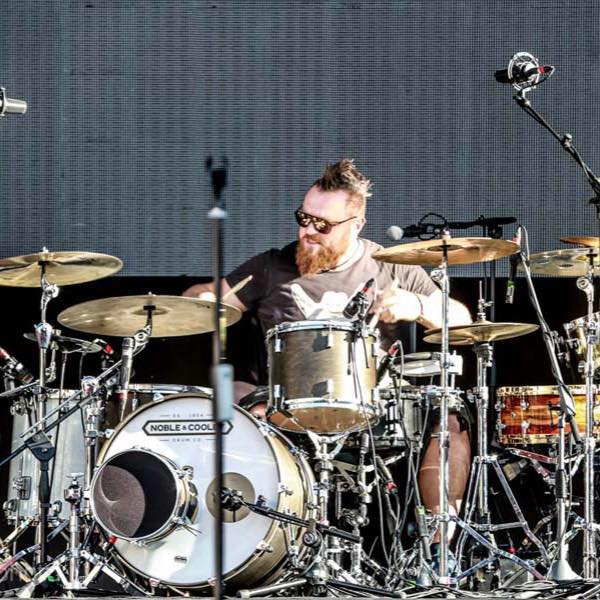
Martini, where he earned his degree in Classical Percussion.
After an intense and widespread background with some of Bologna’s finest underground bands including Gli Atroci, Splatterpink, S.I.P.
Tonic, Zois and ART, Ivano toured the United States in 2006 with Manolo Badrena of Weather Report, in 2008 and 2009 with Black Smokers and in 2010 with Hammond Organ legend Brian Auger.
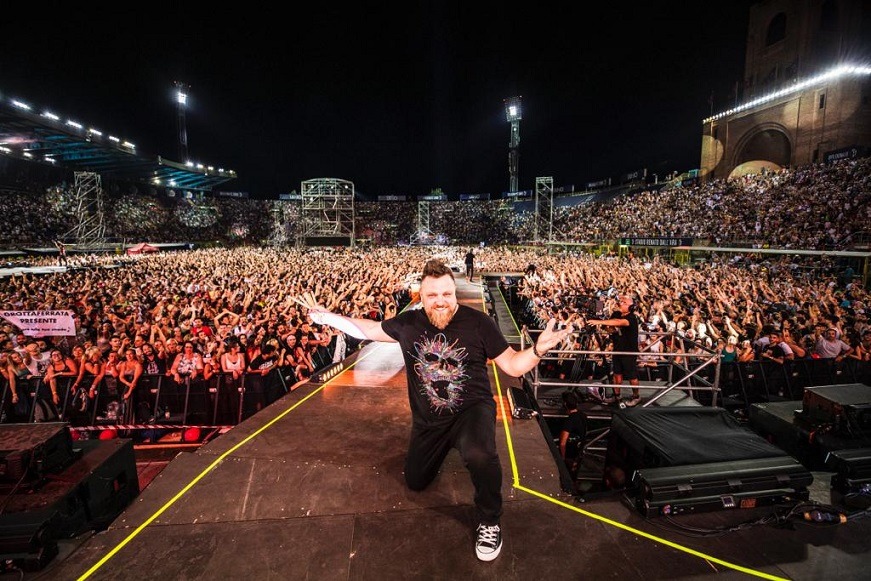
In the meantime, he started collaborating with Ligabue’s lead Guitar Federico Poggipollini, becoming his live and studio drummer and with former Vasco Rossi guitarist Maurizio Solieri, with whom he’s been playing since 2012.
In 2007, he played with Alan Sorrenti, composer of “Figli dell Stelle”.
Ivano Zanotti has established a solid reputation as one of Italy’s finest drummers, recording for Italian Rock legend Vasco Rossi on his Sono Innocente album, on his song “Cambiamenti” and on Maestro Francesco Guccini’s last album.
In 2016, Zanotti played drums and helped organize a one-of-a-kind concert in the Arena di Verona, supporting the fight against femicide. Gathering many famous Italian female singers, including Gianna Nannini, Fiorella Mannoia, Patty Pravo, Loredana Bertè, Elisa, Paola Turci, Irene Grandi, Alessandra Amoroso and Emma, the memorable event produced a live DVD entitled “Amiche In Arena”.
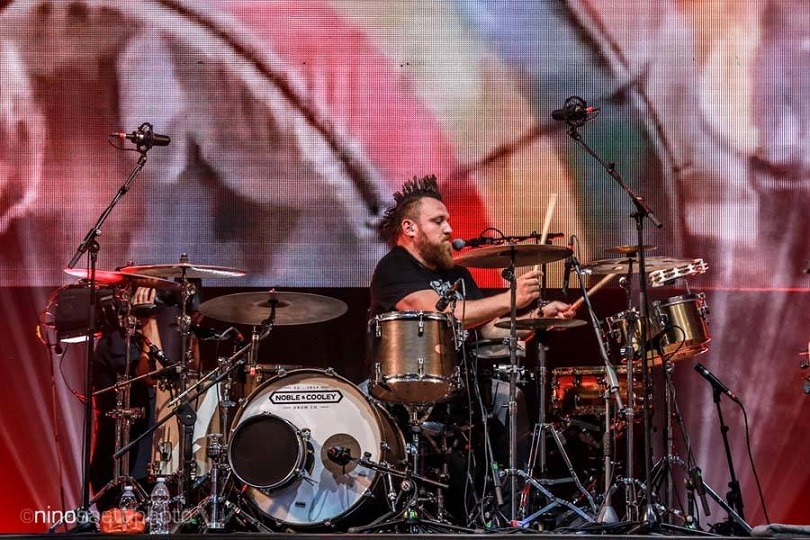
Ivano is currently touring with Loredana Bertè, I Musici di Francesco Guccini, Federico Poggipollini and LIGABUE.
Ivano uses Alex Acuna Bells , the Red mountable Tambourine, the Daniel de los Reyes Signature Cajon and Tumbao Pro Bongos.
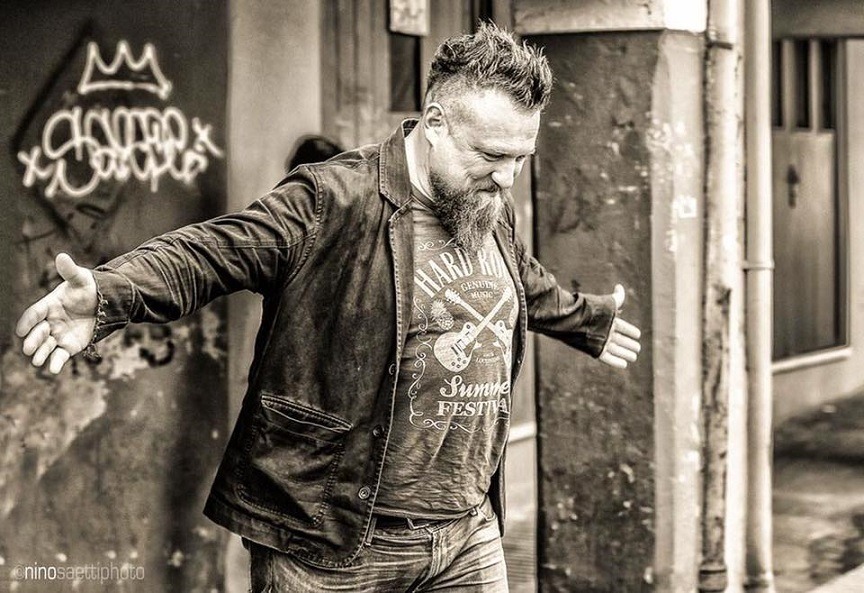
https://www.facebook.com/IvanoZanottiTheBigDrummer/
https://www.facebook.com/ivano.zanotti.5


Alexander Abreu & Havana D’ Primera will visit Europe in September with their 2022 tour to celebrate their 15-year career with love and music, starting on Saturday, September 3rd in Belgrade (Serbia), and two days later they will step on the Bulgarian salsa stage (Monday, September 5th).
Subsequently, they will sing their repertoire in Spain (Seville, Madrid, Bilbao, and Barcelona) on September 8th, 9th, 23rd, and 30th, and will continue in France with two concerts: on Sunday 11th, they will be on stage on the Cabaret Sauvage (Paris), while the Sunday, September 25th, they will do so in the Patio de Camargue (Árles). In the same way, their tour of Germany (Hamburg) continues on Thursday, September 15th, and the 16th of this month, they will be in Finland, specifically in the capital city Helsinki.
The 2022 Tour continues in Italy (Florence and Naples) on September 17th and 21st. The latter will be in the Sweet Life concert hall located in the Somma Vesuviana municipality of the Neapolitan city.
On Thursday the 22nd, they will do the same at the Cuban Latin Festival in the Netherlands (Amsterdam) and will end their 2022 Tour 400 miles from Europe in Tunisia in the Yasmine Hammamet neighborhood located in the north of the African continent on Saturday, October 1st.
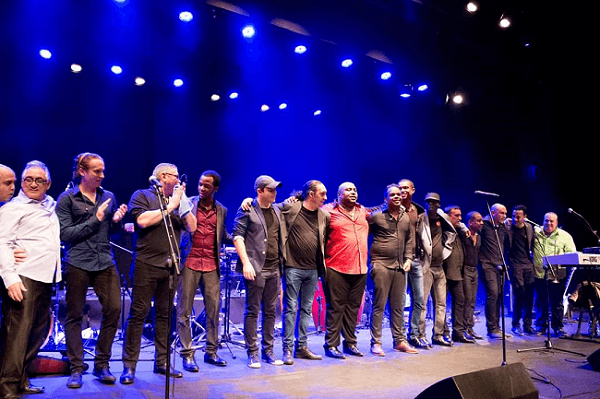
Alexander Abreu spent his childhood in the city of Cienfuegos (Cuba) where he began playing the trumpet at the age of ten and has currently become one of the most versatile and acclaimed Cuban musicians of Afro-Cuban music. “I have always seen Havana D’Primera with 15 people on stage and everyone said that it was impossible, that it would be too expensive, too difficult to move… This is how we started: 14 or 15 of us and a lot of positive energy, now we are stronger than ever.” Abreu commente.
Havana D’ Primera (HDP) is a Cuban timba band founded by Alexander Abreu in 2007 and made up of 17 of the best Cuban musicians. The orchestra is led by the main composer Abreu, who has stood out for his melodic voice and ability to fuse genres through Salsa such as Jazz, Funk, and other Afro-Cuban rhythms.
“Since its inception, the band has released five studio albums and one live album. The debut album release was Making History with EGREM in 2009 and their first release for the Páfata Productions record label. 2012’s Pasaporte received favorable reviews from the international press and was voted one of the best Latin alternative albums of that year.
Since then, they have followed the success of “Pasaporte” with four more albums, released through Páfata Productions and the last one in co-production with the Cuban Producciones Abdala.
HDP released “La Vuelta al Mundo” in 2015 and “Haciendo Historia LIVE” arrived in 2016. “Cantor del Pueblo” in early 2018, earning the band a Latin Grammy nomination for Best Salsa album. We cannot forget “A Romper el Coco” with the participation of Mayito Rivera released in 2019, and the single Quiero Verte Otra Vez (2020) which won the Special Prize at the 2020 Lucas Awards gala and was also cataloged by the French newspaper “Le Monde” as one of the favorite songs of Latin music.
Finally, in 2021 the album “Será Que Se Acabó” was released, as a tribute to Cuban popular music of the 80s and 90s. Discography extracted from the Biography of Havana D’ Primera.
You can read: Where to go dancing Salsa in Paris?
Peraza (May 30, 1924-April 14, 2014) was a Cuban Latin jazz percussionist.
Thanks to his collaborations with guitarist Carlos Santana, jazz pianist George Shearing and vibraphonist Cal Tjader between 1950 and 1990, he is internationally recognized as one of the most important figures in the field of Latin percussion.
Known primarily as a conguero and bongocero, Peraza is also a skilled dancer and composer. He has appeared on recordings by Pérez Prado, Machito, George Shearing, Charlie Parker, Tito Puente, Cal Tjader and Carlos Santana. Performances with Santana, Shearing and Tjader brought him international fame.
He was inducted into the Smithsonian Institute and had three “Armando Peraza Days” from the city of San Francisco.

One of the most important and respected figures in the world of percussion.
He is a legendary master on both congas and bongoes, whose unorthodox style and story are an inspiration to countless young musicians.
He began his artistic career in the early 1940s, played with singer Alberto Ruiz’s Kuvabana ensemble where he played the bongo and moved to San Francisco in 1949.
At the New York World’s Fair he played congas in an African pavilion with a Nigerian.
This African arrives and says to me: “Man, what part of Africa are you from? I told him, I am from Cuba. He said: “Don’t tell me” He later worked with the orchestras of Paulina Álvarez and Dámaso Pérez Prado, and the Bolero group.
In 1947 he moved to Mexico, where he joined with Mongo Santamaría the ensemble Clave de Oro, and in 1948 they both traveled to New York as percussionists accompanying the dance couple Pablito y Lilón.
At the end of that year, Peraza joined Slim Gaillard’s jazz combo with which he traveled throughout the United States. After arriving in New York in 1949, Armando became a sought-after musician, especially in the contemporary Bebop and Latin Jazz scenes.

Armando built a reputation for impressively fast and complex hand technique, experimental techniques and great talent for entertaining. He flourished in progressive atmospheres that combined jazz with Afro-Cuban styles and was at the center of a new expression called “Cubop”.
He has played on more than 100 albums and is the composer of more than 40 songs. Some of these works include collaborations with Mongo Santamaria, George Shearing, Cal Tjader and Carlos Santana.
Settled in San Francisco, California, in the early 1950s, Peraza began working with pianist George Shearing’s quintet, where he demonstrated his mastery as a player of the tumbadora and bongo; also in this period he recorded several albums of Cuban folk music with Mongo Santamaria.
In the 60’s he joined the quintet of vibraphonist Cal Tjader, with whom he remained for several years and with whom he popularized Chano Pozo’s Guachi guaro. In the 1970s, he joined Mongo Santamaría’s orchestra, with which he participated in the Montreaux Jazz Festival in Switzerland.
Later he worked with Carlos Santana’s rock band, in which he remained for 17 years, until his retirement from artistic life in the 90s.
He possessed a great capacity to obtain the most unusual sounds of the bongo and the tumbadora, and distinguished himself for his extraordinary solos on both instruments.

He died on April 14, 2014 in California, United States, as a result of pneumonia.