• Skip to primary navigation
  • Skip to main content

International Salsa Magazine

  • HOME
  • Previous editions
    • 2026
      • ISM / March 2026
      • ISM / February 2026
      • ISM / January 2026
    • 2025
      • ISM / December 2025
      • ISM / November 2025
      • ISM / October 2025
      • ISM / September 2025
      • ISM / August 2025
      • ISM / July 2025
      • ISM / June 2025
      • ISM / May2025
      • ISM / April 2025
      • ISM / March 2025
      • ISM / February 2025
      • ISM / January 2025
    • 2024
      • ISM / December 2024
      • ISM / November 2024
      • ISM / October 2024
      • ISM / September 2024
      • ISM / August 2024
      • ISM / July 2024
      • ISM / June 2024
      • ISM / May 2024
      • ISM / April 2024
      • ISM / March 2024
      • ISM / February 2024
      • ISM / January 2024
    • 2023
      • ISM / December 2023
      • ISM / November 2023
      • ISM / October 2023
      • ISM – September 2023
      • ISM – August 2023
      • ISM July 2023
      • ISM Edition June 2023
      • ISM – May 2023
      • ISM April 2023
      • ISM March 2023
      • ISM February 2023
      • ISM January 2023
    • 2022
      • ISM December 2022
      • ISM November 2022
      • ISM October 2022
      • ISM September 2022
      • ISM August 2022
      • ISM July 2022
      • ISM June 2022
      • ISM May 2022
      • ISM February 2022
      • ISM January 2022
    • 2021
      • ISM December 2021
      • ISM November 2021
      • ISM October – 2021
      • ISM September 2021
      • ISM August 2021
      • ISM July 2021
      • ISM May 2021
      • ISM April 2021
      • ISM June 2021
      • ISM March 2021
      • ISM February 2021
      • ISM January 2021
    • 2020
      • ISM December 2020
      • ISM November 2020
      • ISM October 2020
      • ISM September 2020
      • ISM August 2020
      • ISM July 2020
      • ISM June 2020
      • ISM May 2020
      • ISM April 2020
      • ISM March 2020
      • ISM February 2020
      • ISM January 2020
    • 2019
      • ISM December 2019
      • ISM November 2019
      • ISM October 2019
      • ISM Septembre 2019
      • ISM August 2019
      • ISM July 2019
      • ISM June 2019
  • Spanish
  • Download Salsa App
    • Android
    • Apple

Search Results for: Van+Van

Where Will The “German Salseros” Celebrate In December?

Marathon, Festival, and current Salsa clubs we bring you for this season

18th Stuttgart Latino Festival

Germany has become one of the most hospitable countries for Latin American immigrants. In recent years, the number of people from Latin America has been on the rise, and this is due to the fact that this country located in the center of Europe offers a large number of job and educational opportunities, as well as a high quality of life.

Therefore, it is not surprising that many immigrants from the Caribbean and South America decide to celebrate their festivals and traditions in this region. In particular, the German Salseros (Latin American immigrants residing in Germany) are usually very active during the month of December, and this is because the Salsa events take place during this time of the year. So join us and discover all the Latin parties that Germany has prepared for you this month.

One of the most important social dance events in this country that borders nine nations is the 18th Stuttgart Latino Festival. This festival begins on the second day of December and will offer 36 hours of Workshops (Salsa On1, Salsa On2, Mambo, Pachanga, Bachata, Fusion Styles, and Body Movements), a lineup of more than 20 world stars of Salsa, Mambo, and Bachata, numerous national and foreign participants, and incredible international DJs mixing the best songs (DJ Rumbero – Salsa and DJ Milad – BACHATA) on three dance floors. The Stuttgart Latino Festival https://www.facebook.com/groups/latinfestival culminates on Sunday, December 4th, and will take place at the Sängerhalle Untertürkheim (Lindenschulstraße 29, 70327 Stuttgart). Tickets can be purchased at €179.

Hamburg Salsa Marathon 2022

Another event I present to you this month is Hamburg Salsa Marathon 2022 – NYE Edition. Hamburg Salsa Marathon 2022 – NYE Edition. This gender-balanced, high-level dance family Salsa-marathon will take place from Wednesday, December 28th (9 PM) to Sunday, January 1st, 2023 (8 PM) at Beerenweg 1D, Hamburg, 22761, De.

“The Marathon Pass NYE ​​Edition https://hamburgsalsamarathon.com/nye-edition?fbclid=IwAR2QJVxpxsQdQR9IRNZT-l5OI1TNrB3uXJMHx9buozmK13cqevAi0RuS8IY costs €190 (€180 couples pass) and includes 4 days and 4 nights of social dance practice. It also includes unlimited free drinks like coffee, tea, and water, some afternoon snacks, brunch on Thursday, Friday, Saturday, and Sunday, plus NYE ​​dinner on Saturday.”

And if you are wondering why they carry it out during these dates. Here, I give you the answer. The principal mission of its organizers is to be the perfect host so that you feel in a cozy atmosphere while you continue with your unstoppable passion for learning a social dance. In this way, they make sure to collaborate with the opportunity to spend the last days of the old year, where there were adventures and challenges, with friends.

Finally, I remind you that you don’t forget to stop by the Havanna club https://www.havanna-berlin.de/ located at Hauptstr.30 10827 Berlin, where you can enjoy Salsa, Merengue, Bachata, and other rhythms on four tracks dance with resident DJs. You can also try the mojitos in one of the seven bars, and as a prelude, you can take Salsa classes with qualified instructors at both advanced and amateur levels.

Ah! Here, I leave you this list of clubs where you will also find the “German Salseros” during December: Mint Club https://www.facebook.com/mintclubmunchen/?ref=page_internal (Munich), Buena Vista http://www.buena-vista-bar.de/ (Munich), Tank Bar https://tankbar-leipzig.de/ (Leipzig), Latin Palace Changó http://www.latinpalace-chango.de/  (Frankfurt), and Clärchens Ballhaus https://claerchensball.haus/ (Berlin).

Know The Best Latin Music Events In Spain During December

This month of vacation, you will have the opportunity to experience incredible concerts and festivals

In December, great festivals are celebrated in Spain that last from the beginning of Advent until New Year’s Day. Moderate, non-intrusive décor is ever-present in public spaces and homes during this exciting time of year. A wide range of music that goes from the traditional Spanish melody to Latin music (Salsa, Bachata, and Reggaeton) popular among the youngest will disperse throughout the Iberian country, and here I have summarized everything for you.

Salsa singer Yiyo Sarante will offer a concert in Girona for the first time at the Euphoria nightclub

In Girona (a province located in the northeast of the autonomous community of Catalonia), the Dominican singer Yiyo Sarante will make his first appearance on December 2nd in the spaces of the Latin disco Euphoria https://www.facebook.com/EUPHORIALATINAGIRONA/?ref=page_internal (Sala Univers, Girona, Carrer del camp de les lloses, 8) at midnight to present his most recent singles Quiero Perderme Contigo, Llorarás, Eres Pasado, Demonio y Prohíbeme Verte as well as his greats classics Pirata, Maldita Primavera, Tierra Mala, Nos engañó a Los Dos y Tres Semanas. Tickets are already available and range from €30 (online) to €40 (box office). The minimum age to access this event is 18 years.

This same day (Friday, December 2nd) the Sevillian exponent of Bachata Dani J will give a concert in Madrid as part of his Abraxas Dancing Tour to celebrate the season. This concert will take place at the Cervantes Complex (Highway M206 Torrejón at Km 2.6, M-206, Km 2, 600, 28890 Loeches, Madrid) at 1 AM, and its doors will open at 10:30 PM with a workshop, followed by an hour of social dance to then continue with the concert, and close with the second social dance until dawn. Tickets can be purchased from €15 by clicking here. https://complejocervantes.com/

The workshops, parties, and socials will be held at the 8 Tiempos Dance School

The third event that I bring you will take place in Zaragoza, the largest city in the autonomous community of Aragon in the northeast of Spain. The Zaragoza Dance Festival is a three-day celebration of tropical dance immersion with more than 30 Salsa, Bachata, and Kizomba workshops with great artists from Europe and Latin America in two simultaneous rooms, two nights of partying from 11 PM to 6 AM with DJ Tevez (Spain), DJ Sergio (Spain), DJ Shark (Cuba), DJ Antony Tarraxa (Italy), and DJ Enzo (Spain), as well as the concert of the world star of the song DANI J on Saturday night. The festival will take place from December 16th to December 18th at the facilities of the 8 Tiempos dance school located at C. de Tomás A. Edison, 9, Zaragoza. The full pass for the I Zaragoza Dance Festival which  will welcome thousands of fans from different corners of the planet can be purchased through its official website. https://lasalsadelbaile.com/zaragozadancefestival

Following the same trend in festivals this season, the Winter Bachata Festival stands out. It is an annual event that is organized in Gandia city, province of Valencia. This seventh edition features local dance professionals who will help hone the skills of amateur dancers. All this by the hand of DJ Miguelón, DJ Salva, and DJ Yago who will animate with their mixes the daytime and nighttime workshops as well as the parties and social dances that will start at 11:30 PM until 3 AM. In this field dominated by Latin dance professionals, you will have the opportunity to attend and meet new friends. Winter Bachata Festival https://lasalsadelbaile.com/winterbachata will take place from December 8th to December 11th at the Hotel Gandia Palace (Carrer de la Rioja, 41), and the ticket costs €45.

Seats will be assigned in order of entry of reservations. If necessary, tables will be shared

Finally, in this list of the best Latin music events in Spain that will make you live an unforgettable experience during this beautiful time of year, I bring you the Terra show with an international cast made up of almost 50 artists who will be in charge of guiding a trip around the world very particular that will surprise and show the spectator all the artistic richness with the main performances by the New Bambú Orchestra, the Christmas carols by candlelight with the tribute to Il Divo, and the singer Ami Tapper, who will accompany the spectators during this journey with musical themes that have become universal classics. In addition, award-winning magician David Climent, comedian Titto Lester, aerial contortionist Sharyn Monni, Kimberly Lester with the number of “sand art” and circus artists Sandy, Samantha & Jastin Monteiro Vassallo will perform.

On Sunday, December 25th (New Bambú show and tribute to Il Divo + gala dinner: €70), Saturday, December 31st (show + gala dinner: €185) and Thursday, January 5th (show + gala dinner: €64) are the dates to enjoy this amazing show by Terra at the Benidorm Palace concert hall www.benidormpalace.es located at Avenue Severo Ochoa 13 in the city of Benidorm, one of the most popular tourist destinations in Europe and the Second city in the world with the highest number of skyscrapers per square meter.

Read also: You will hallucinate with these 4 salsa clubs in spain

Isaac and Esteban Hernández, two brothers making history

How they got their start in the world of the arts

There have been many artists of Latin origin who have become known in much of the world thanks to their talent and dedication to what they do. A perfect example of this are the Mexican siblings Isaac and Esteban Hernandez, who have given much to talk about in major media outlets both in Spanish and English.

Isaac and Esteban Hernández in an event together

These boys, originally from Guadalajara, Mexico, are two of 11 siblings in a very large family. They are children of two dancers and one of them is Héctor Hernández, who taught the youths to dance from an early age thanks to the wide experience he gained in this profession. Isaac and Esteban have commented in some interviews that their father built a barre and both used thin pieces of wood as a ballet floor, which they used to practice their moves.

In addition to that, they were home-schooled by their mother, Laura, which helped a lot to train them in dance and allow them to devote more time to these activities.

These brothers think that they have managed to change their lives in a relatively short time thanks to the effort and dedication to dance, a discipline that they love so much. However, they knew that the path might not be as easy as they would like it to be.

When questioned about machismo and the feedback they might get on being men who dance ballet, they said that their father has prepared them very well for that moment. When they asked him to teach them to dance, he warned them that it would not be easy for them to start a real career in this discipline, but they did not care and moved on.

Isaac and Esteban during an interview

Service to the Latino community

After achieving this level of fame, they have set out to help new generations of dancers in any way possible so that they can get ahead in the world of the arts, specifically in dancing. In the past, it was very difficult to bring dance schools and talent auditions to many Latin American countries, which has made it difficult for young people interested in learning all these disciplines to have access to the necessary training to succeed. However, established artists such as Isaac and Esteban have played a very important role in the turning of things.

In the specific case of Mexico, it has been possible many children throughout the country to have access to the opportunities they need to climb positions in the world of entertainment, as even as it was with these professional dancers.

While it is true that dancing on the most important stages of the world and being judges in competitions fill their souls and makes them feel very lucky, the use of all their potential to change the lives of so many people in their Latino community excites them in an indescribable way and makes them understand the great social responsibility they have.

Roselyn Sanchez, Isaac Hernández and Paulina Rubio in the competition ''Mira Quien Baila''
Roselyn Sanchez, Isaac Hernández and Paulina Rubio in the competition ”Mira Quien Baila”

Presence in the media

Given that Latino Heritage Month had just been held, many digital media outlets took advantage of the brothers’ popularity to make reports on their great work and all they have achieved in such a short time. There are many online newspapers or websites that have highlighted the talent of the Hernandezes and all the achievements obtained through the effort and hard work put forth by both of them.

In one of those many reports, it is highlighted that Esteban is considered as one of the most influential Mexicans and has become one of the main dancers of SF Ballet. For his part, Isaac has received a Medal of Merit in the Fine Arts from the President of Mexico at the time, Enrique Peña Nieto, is also part of the SF Ballet as a main dancer and is one of the judges in the dancing competition ”Mira Quien Baila”. 

Both Isaac and Esteban are clear proof that dreams come true and everything can be achieved with effort and dedication no matter where we came from.

Read also: A new salsa talent with Latin parents and born in Boston

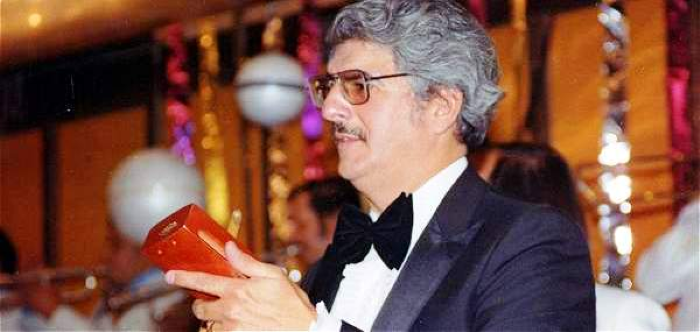
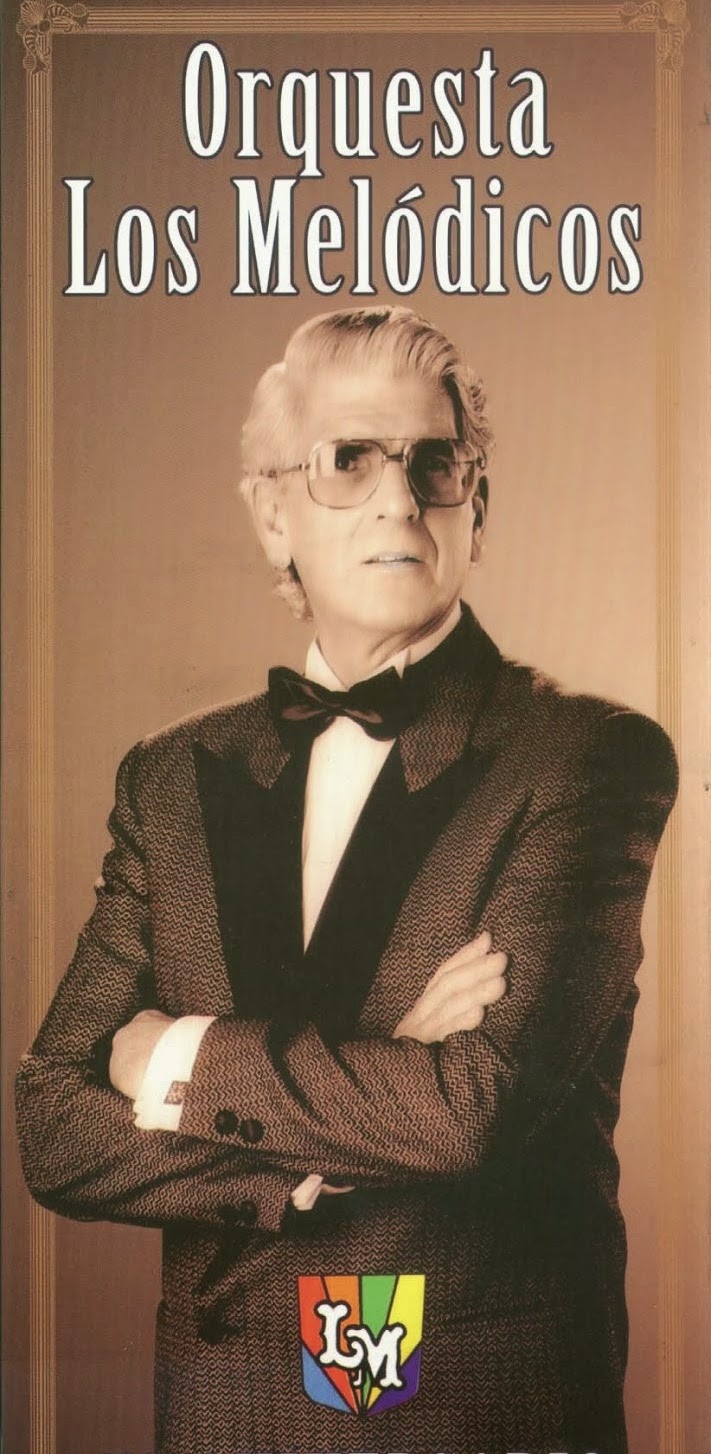
Renato Capriles, the man who imposed the rhythm with “Los Melodicos”

Dance bands have always added flavor and rhythm to parties in the Caribbean, but one of the greatest was born in Venezuela at the hands of Renato Capriles, “Los Melodicos”. An entrepreneur with an interesting vision of music, who knew how to adapt to what the public wanted, throughout the decades that accompanied his great project. In the following lines, we will tell you about his life and what he thought of his experiences.

Early years of Renato Capriles

Contrary to what many believe Renato was not born in Caracas, but in a small town called San Esteban located in Puerto Cabello, Carabobo state on December 28, 1931. In his own words:

“It was a town where only six or seven families lived. The rest of the inhabitants were people who served in those houses. San Esteban is about an hour from Puerto Cabello and it is still a very beautiful area.”

His arrival in Caracas is due to the death of his father, at that time his older brother, Miguel Ángel, decided to move the family to the capital and develop the businesses for which the Capriles family would later be well known in Venezuela. In addition, that is why it is known that he was born into a wealthy family, so business is something that he carried in his blood. They were also a large family, Renato being the 13th sibling of 14, which is why he always considered it his lucky number.

Arriving in Caracas, they settled in La Pastora, where the Capriles spent their childhood and adolescence. Renato himself even commented that he traveled those streets with a velocipede that was given to him for his birthday. During his adolescence he began to be closer to the dance bands of the time, although music always accompanied him, showing an innate ear since he was a child. But it was as a teenager that he went to parties in the main  square and listened to the radio:

“Already a little older – 16, 17 or 18 years old – the programs I listened to were “A Gozar Muchachos”, Billo’s program, of course, and the program that Luís Alfonso Larraín had. Those were the two great orchestras…”

At that time he also began his professional stage, first as an office boy at Inex S.A., owned by the German businessman Gustavo Zingg. Thanks to his friendliness and knowing how to treat people, he met Zingg and his children, who, seeing his hard work, promoted him to store salesman and then itinerant salesman aboard a Land Rover, with which he toured much of the Venezuelan territory selling everything, including power plants.

Then he decided to follow his family’s vein and set up his own business in Valencia, a clothing store that he bought from his brother-in-law who was a travel agent for two clothing factories. However, this only lasted 2 years, this being the only business that Renato failed. His mother asked his brother Miguel Ángel to take him to the company, known at that time as Cadena Capriles, which little by little became a publishing conglomerate.

Renato came to the organization and formed the company’s Public Relations department from scratch, something he was always very proud of and that he kept reminding in every interview. In fact, that vein of public relations is what led him to achieve that impressive success with “Los Melodicos”:

“I think I was born with that. I always make the comment that more than a musician I feel like a born relationist. All my life I have done it and I have applied it…”

The Birth of “Los Melodicos”

Although it may seem like a joke due to the supposed enmity between the two, it was Billo Frómeta’s orchestra that prompted Renato to form “Los Melodicos”. The young Capriles spent his adolescence listening to Billo’s Caracas Boys on his radio program “A Gozar Muchachos”, he also listened to other orchestras that competed with Billo’s for the popularity of Venezuelans and neighboring countries.

In addition to that, Renato Capriles was always linked in one way or another to music, not only did he have rhythm and an innate ear, but also his businessman’s mind led him to give his own orchestra a different organization. In fact, at the time that the Capriles family lived in La Castellana, he and his younger brother Juan Felipe had a small band of 5 musicians. Therefore, Renato already had experience in the formation of bands and orchestras.

In 1958 Renato finally decided to follow his most longed-for dream of having his own orchestra and taking advantage of the problem of the veto given to maestro Billo, Renato looked for him to help him with the composition and arrangements. As he commented in the interview he gave to Alfredo Churión D. and his space “Aquí están todavía”:

“There is a bit of fantasy about the creation of my orchestra. I was a big fan of Billo and always wanted to have an orchestra that sounded like his. I’ve always said it!… (Billo) he had opened a business in Sabana Grande which he baptized El Rincón de Billo in where he played the piano for the large number of friends who visited him there. And there I introduced myself to him one day with Tere, my first wife, to give an outlet for the concern I had had since I was a boy, which was to have an orchestra.

And my words were: ‘Billo, the reason for my visit is not to come and hear you play the piano or have drinks at the bar, but rather to propose that you make arrangements for an orchestra that I’m going to found and I’ll give you 50% of profits’… All in all, after seven months my orchestra appeared with its arrangements. He could not appear anywhere with them because no musician could get close to Billo at that time under penalty of being banned for life too.”

“Los Melodicos” made their debut in a television program that was sponsored by Cadena Capriles, it was called Su Revista Musical. Renato was the producer of the show and there the animator Henry Altuve made his debut, who had only worked on the radio until that moment. The orchestra’s first LP came with arrangements and a composition by Billo. So it had its sound but at the same time it didn’t:

“He arranged very lively with a very commercial sound, but it didn’t sound like him. On my orchestra’s first LP, although it’s his arrangement, it’s not his sound.”

Another important thing to highlight was the way of working and how Renato organized the orchestra, along with his innovative system of paying the musicians:

“I created a form of payment for musicians that did not exist at the time and that caught Billo’s attention when he reappeared with his orchestra in 1960. I invented the rates for musicians and I can prove it to you because I have the contracts saved. A first high earned eight hundred bolivars a month and a good second tenor earned six hundred. It was the first orchestra that earned salaries. It wasn’t like Billo’s where each musician earned a percentage. I created the orchestra as a company. They had, and still have, Social Security, Savings Bank, interest-free loans, etc.”

Renato’s golden age with “Los Melodicos”

The “Los Melodicos” orchestra has been faithful to the motto that has accompanied it throughout its extensive musical career: “The orchestra that imposes rhythm in Venezuela”. They began with the singers Víctor Piñero “Rey del Merecumbé” and Germán Vergara, but they were innovative by having a woman in the ranks of an orchestra for the first time: Emilita Dago.

Since then, singers and musicians like Rafa Pérez, Manolo Monterrey called the “Ciclón Antillano”, Niro Keller, Cherry Navarro, Cheo García, Roberto Antonio and Miguel Moly have passed through its ranks over the decades; while among the girls were Norma López, Diveana, Floriana and Liz.

What differentiated “Los Melodicos” from other orchestras in those decades was the innovation that Renato put into it. One of those great examples is presenting varied rhythms outside of the Latin dance rhythm. They came to play the twist with the singer Teresita Martí, which brought them great problems since it was considered “… a vulgar and ordinary rhythm.” They also came to play songs with touches of rock, but their most significant sound is techno with songs like “Papachongo” and “Que Rico”, where Diveana managed to capture more than one heart.

During all the years that Renato was in charge of the orchestra, there were many rumors of romantic love affairs with his singers, to which he himself replied:

“17 female figures have passed through my orchestra and I have had romantic relationships with 7 of them. Some are stormy and others very beautiful. People think that I’ve gotten involved with all of them, but that’s not the case. Raise fame and go to sleep.”

Renato’s rhythm went off before his time

Renato Capriles left us on the morning of July 8, 2014, he had already been hospitalized for days in a clinic in Caracas, all due to pneumonia. Currently, the direction of the orchestra is led by Iliana Capriles, daughter of Renato, who has been working hard for 11 years to continue contributing to the success of the orchestra as director. But all her life she has been in one way or another linked to the orchestra, and like a good Capriles she has gone through all the positions of the company that her father founded.

“For 30 years I have been part of the musical organization Renato Capriles, I have been the right hand of my father, his producer, promoter, sales, among others, until 2014 when I had to assume it, and it has been an enormous responsibility, and here we are paying tribute, honor to whom honor is due, and maintaining the legacy of great importance in Latin music”.

“Los Melodicos” are a key part of the musical history of Venezuela, with more than 100 productions under their authorship, and it cannot be forgotten that their professional enmity with Billo’s Caracas Boys is what kept the panorama of dance bands interesting. As they have always shown, they keep up to date with new trends and social networks are no exception, so you can find them everywhere like @orquesta_losmelodicos or La Orquesta Los Melodicos, because now they are “the orchestra that imposes the rhythm” in the digital world.

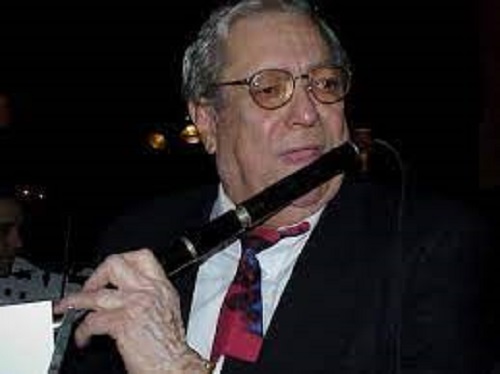
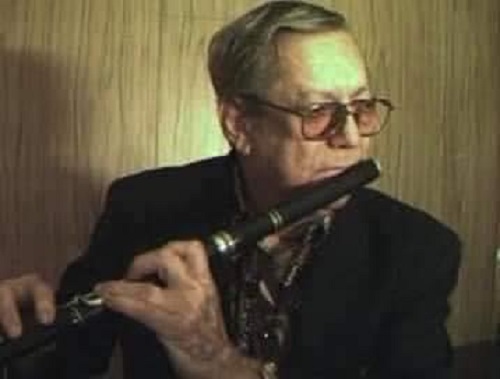
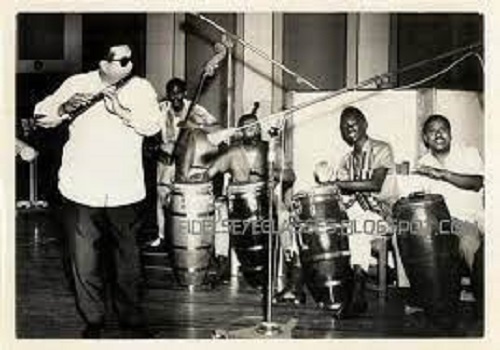
José Fajardo was a virtuoso flutist, composer, orchestra conductor and music producer

José Antonio Fajardo, in the month of November we refer to one of the greatest musicians that the island of Cuba has given in the last century; we are talking about maestro José Antonio Fajardo Ramos: flutist, composer, orchestra conductor and music producer; one of the great promoters of Cuban music represented in the rhythms of bolero, son, guaracha, mambo, chachachá and pachanga.

José Fajardo was born in Guane, province of Pinar del Río in 1919. He began his musical career as a maraquero in his father Alberto Fajardo’s orchestra, later he took up the flute.

From the age of 16 he was part of several groups such as: Joseíto Fernández, Paulina Álvarez, Melodías del 40, La Romance de René Álvarez, the orchestra of maestro Antonio María Romeu, the orchestra of pianist Luis González Valdés: “Neno” González and the orchestra of Antonio Arcaño, known as Arcaño y sus Maravillas.

José Fajardo fue un virtuoso flautista

After his time in these famous groups, in 1949, Fajardo created his own orchestra called Fajardo y sus Estrellas, with musicians such as: Orlando “Cachaito López”, René Fernández on piano, violinists Ignacio Berroa and Félix Reyna, who was also the composer; percussionist Jesús Esquijarrosa on timbales; Carlos Real on tumbadora and Rolando Valdés on güiro; in the vocal part he initially integrated Joseito Valdés.

In the early fifties, with the boom of chachachá in 1951, things improved a lot and the charangas orchestras began to perform in the best cabarets, aristocratic salons and private parties of high society, such as the Montmatre and Tropicana cabarets.

Fajardo became internationally known in the mid 50’s at the head of his orchestra, Fajardo y sus Estrellas, he was the first charanguero to introduce the cymbals to the timbal and the pioneer in the incorporation of the cowbell and the bongo to the charanga, his group was one of the sensations of the golden age of chachacha and pachanga.

After going into exile in the 1960s, he toured Asia, Africa, Europe and Latin America, popularizing an eminently Cuban repertoire.

Maestro José Fajardo has been one of the only musicians who have stood out in different periods of Latin music; initially in Cuba, in the 50’s with the arrival of Chachachá, later in the era of Pachanga and Boogaloo, in the sixties in the United States, and he also came to prominence in the golden era of salsa in the seventies and eighties of the last century.

In the seventies, eighties and later, the flute master recorded with Joe Quijano & His Conjunto Cachana, Tico-Alegre All Stars; Ray Barretto and Adalberto Santiago; Johnny Pacheco, Pupi, Javier Y Su Charanga; Jimmy Sabater, Orlando Contreras, Alfredo Valdés Jr, Fania All Stars, Louie Ramirez, Graciela and Mario Bauza, Israel “Cachao” Lopez, with our great Joe Arroyo in the nineties and with Hector Casanova, Mario Muñoz, Andy Gonzalez, Eddie Montalvo, Manny Oquendo, Alfredo “Chocolate” Armenteros, Carlos “Patato” Valdes, Alfredo Rodriguez and Francisco Aguabella.

After a brilliant musical career spanning more than six decades, Maestro José Antonio Fajardo passed away in New York City on December 11, 2001, leaving an enormous legacy to our culture.

José Fajardo fue un virtuoso flautista, compositor, director de orquesta y productor musical

The great musical contribution of this portentous son of Pinar del Rio, has highlighted him as the highest flute of Cuba and Latin America, a true ambassador of Cuban music and salsa in the world; from our beautiful page ‘Los Mejores Salseros del Mundo’ we want to highlight the enormous artistic career of maestro José Antonio Fajardo Ramos as a tribute to his wonderful musical work.

José Antonio Fajardo,  uno de los más grandes músicos que ha dado la isla de Cuba

José Fajardo Jr.

You can read: Ángel Bonne He was part of Juan Formell’s Los Van Van Orchestra, and collaborated with the impressive Irakere band of maestro Chucho Valdés

  • « Go to Previous Page
  • Page 1
  • Interim pages omitted …
  • Page 85
  • Page 86
  • Page 87
  • Page 88
  • Page 89
  • Interim pages omitted …
  • Page 135
  • Go to Next Page »

International Salsa Magazine (ISM) is a monthly publication about Salsa activities around the world, that has been publishing since 2007. It is a world network of volunteers coordinated by ISM Magazine. We are working to strengthen all the events by working together.