





Jess Thomas is a producer, film director and actor whose academic background is centered at San Francisco State University and work speaks for itself as to his talent. Once he made the decision to move to Los Angeles, he started making occasional appearances as an actor and stuntman in some television series. As a director, he has written about seven scripts and plunged into the world of broadcast engineering for various television networks such as FOX and ABC.

We had the opportunity to talk to Mr. Thomas to know many more details about his career and we were pleasantly surprised with the receptivity of the talented filmmaker and his wife and producing partner Anayancy Thomas. Below, we’ll talk a bit about his beginnings, recognitions and his most recent film ”God & Salsa”.
Jess Thomas tells us that she had a fascination for the world of entertainment since she was very young, as both his parents were always related to the arts one way or another. His father Jess Thomas Senior was an opera singer, while his mother Bettye Wright was a dancer and model. This family background led him to venture into all this at a very early age and the best example is the creation of super-eight films (film format in which eight-millimeter wide film is used) in high school.
He recalls that he had to produce a 60-page assignment for his history class, but his teacher allowed him to produce a short film instead. The grade was an A on that assignment and the teacher was so delighted that he showed the tape to the rest of his classmates and put him as a great example of creativity in cases like this. This is how a very young Jess already felt that his destiny would follow this same path for the rest of his life.

He took his first steps in this profession as an actor and thought that this was the branch to which he wanted to dedicate himself definitively, but over time he discovered that writing, directing and producing were much more appealing to him. Jess found that he enjoyed joining the pieces together to take a film from a script to a screen much more than simply acting on it.
However, the filmmaker acknowledges that having acted allows him to communicate much more effectively and empathetically with the actors in his productions, as he understands the language of acting perfectly.
His first work as a director was the documentary ”The Seeker”, which tells the story of a quadriplegic who embarks on a journey on a motorcycle adapted to his disability and won in the category of Best American Documentary at the Rome International Film Festival. On this subject, Jess told us that the plot of the film was not his idea, but that of his friend Evan Somers, who stated his intentions to create a material that would raise awareness about this type of disability.
The idea of following him around the country on a motorcycle (designed by Somers himself) so much that he put all his efforts into learning all about the struggles of his friend, which led Somers to hire him as producer and director for a film about his story. They spent a month shoting the scenes and always something special and unexpected happened as the days went on.

Although they cannot be sure that everything would go as they planned, the result of the recordings spoke for themselves. In reviewing the tapes, they realized that they were getting something truly beautiful and completely spontaneous, as there was absolutely unscripted or unprepared by the team in charge of making the material.
In the end, they simply had to honor it in the editing room and sew all the pieces come together in a single masterpiece.
Her most recent film work ”God & Salsa” has given much to talk about since its release in 2022. It all started when Jess met his now wife and producing partner Anayancy Thomas at an Entertainment Ministry event hosted by the church where they both attended. She told him she had plans to make a documentary about the negative impact that divorce can have on both children and parents in the long run, which Jess loved because his parents divorced when he was a child.
This event represented a before and after in his life during his adolescence, which made him develop certain behaviors and conducts that were destroying him, such as anger, lethargy, drug addiction, alcoholism, among others. In view of their shared the taste for this subject, they came together to make a feature film in which they would develop this point through characters who had these same experiences in the most natural way possible.

Although it is fiction, Thomas made it clear that there were several elements that had much to do with him and Anayancy herself, who began taking salsa classes to distract herself from various negative aspects of her life in those years through the use of the body and the mind required by the dance discipline. In fact, her teachers, Enio and Terryl, appear in the film and are part of the cast.
During all this time, there was a very special feeling between the two, so they ended up falling in love and got married shortly thereafter. 10 years later, they have a finished feature film, which premiered in October 11, 2022 in the United States and will soon be distributed in Latin America and the rest of the world. ”Our greatest inspiration for this project is the duty to use our pain to help others overcome theirs” said the director.
When we wanted to know how the cast of ”God & Salsa” was chosen, he revealed that they shot a short film with the purpose of knowing how the movie would look like. It was also intended to serve as a proof of concept and a means to raise funds so we could create the feature film the way they wanted to.

”We put out a casting call through the Backstage platform, since our search was not focused on well-known actors, but on emerging talents avid of opportunities to shine. That is how we managed to find Javier Luna and Jovanna Vital, who did such a wonderful job that we decided to use them for the feature film. The other roles were assigned to people we already knew or had worked with previously, even if they didn’t have a lot of acting experience,” he continued.
As for the film’s soundtrack, the director told us that they focused their attention on local salsa bands and composers. Enio, Anayancy’s aforementioned dance teacher, recommended Carlos Navarro and his orchestra Son Y Clave, which has played in many of the best local and foreign clubs. Once we listening to them, we loved the sound, so we involved him in the project from the beginning of the proof of concept. Both Carlos and his musicians appear in some scenes showing all their talent.
They also used some of the music composed by Stephen Giraldo and Voodoo Tracks Music Publishing.

facebook.com/Godandsalsathefilm/
Read also: GOD & SALSA

Latin America / Buenos Aires / Argentina

Percussionist and singer Carolina Cohen was born on November 8, 1982 in Buenos Aires, Argentina.
He began his studies in the year 2000 and traveled to Cuba, Peru and New York to perfect himself.
Throughout his career he has accompanied great artists such as Mayito Rivera, Eva Ayllón, Luis Salinas, Nahuel Peennisi, Bomba de Tiempo and prestigious artists at the Teatro Colón in the city of Buenos Aires.
Cohen has participated in highly relevant international festivals; Jazz Festival in Peru and Uruguay, International Cajon Festival in Peru, International Percussion Festivals in Argentina and the Great National Folklore Festival of Cosquín.

Carolina is frequently invited to give percussion master classes, workshops and clinics at universities, colleges and schools in countries such as Colombia, Peru, Chile, Uruguay and the United States.
In 2016, she was invited to appear in a video on CongaHead, a popular YouTube with over 100,000 subscribers.
He currently directs his group “Caro Cohen Cuarteto”, created in 2017.
In the short period of existence, this group was already the opening act for Grupo Pedrito Martínez at Trastienda Club and accompanied Maestro Tito Manrique from Peru.
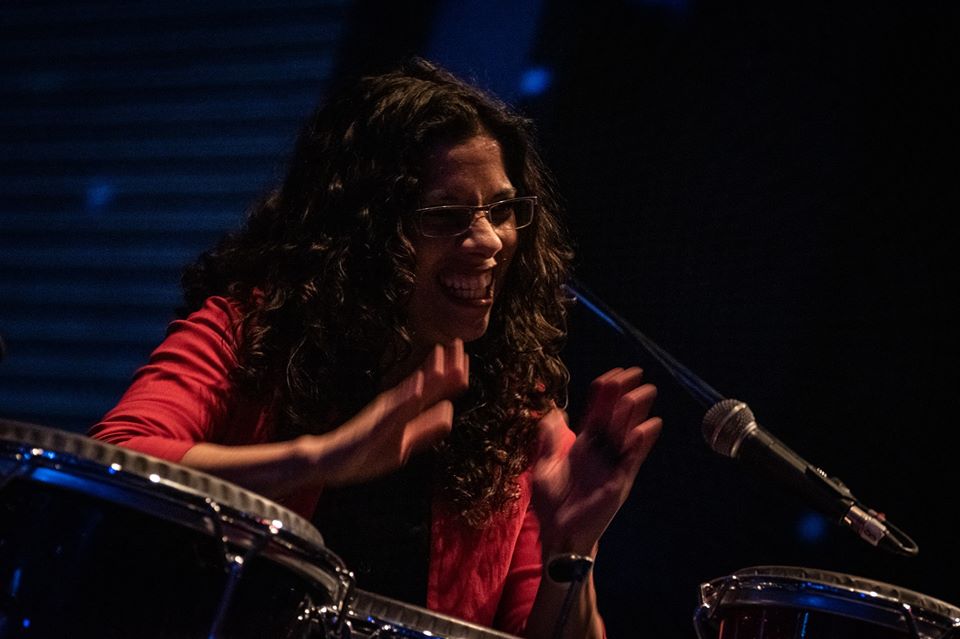
Carolina has been a member of the “Grupo De Tal Palo de Música Latinoamericana” for eleven years with two albums released, Música Latinoamericana and La Luna Está Roja.
She is currently an exclusive artist for Gon Bops Percussion in Los Angeles-California.
Latin America / Lima / Peru
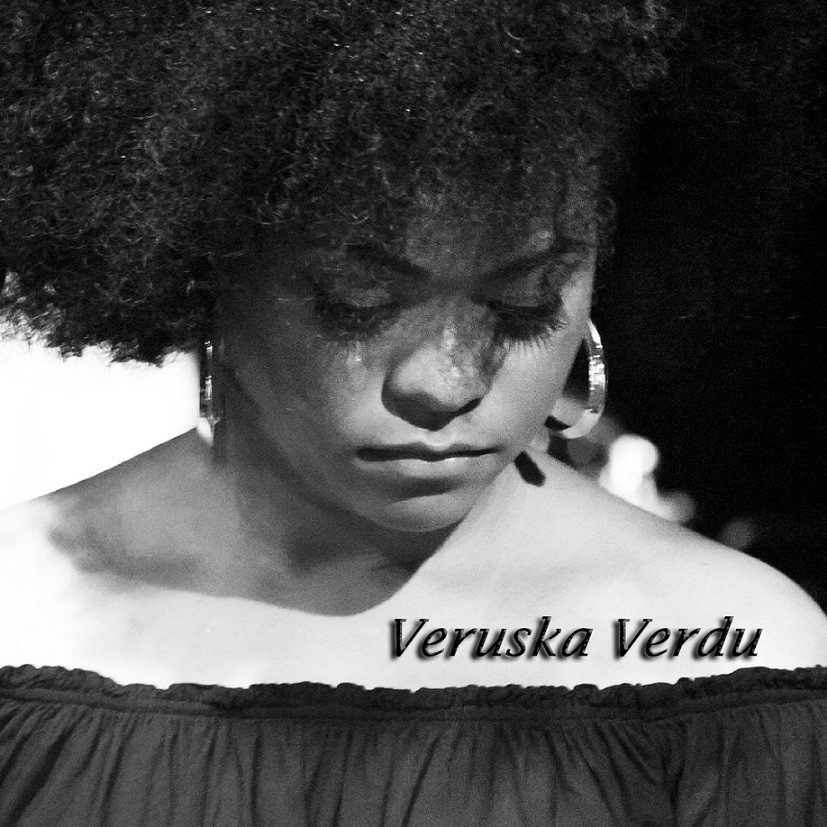
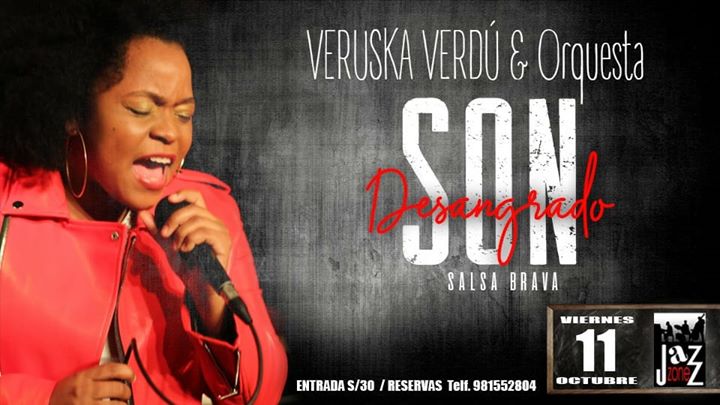
Despite her youth, Veruska Verdu knows where she is going, without forgetting the roots where she comes from, this young woman has an interpretative strength and intensity that made her be considered by Peruvian critics as “The new Voice of Venezuela”, we do not doubt it , sings salsa and bolero very well, in addition to strolling through Afro-Venezuelan rhythms. In Venezuela, we enjoyed many of his presentations with the different orchestras with which he worked, and we witnessed how he left his soul in each one of his presentations and performances.
His greatest musical influence has been Celia Cruz and Oscar de León in terms of the salsa genre, and in the Afro-Venezuelan genre he admires Betsayda Machado and the Experimental group “Vasallos de Venezuela”. She tells us that, “in her family there are no musicians”, her grandmother and grandfather were rumberos and she believes that the musical vein comes from there, thanks to her grandparents, and to have the unconditional support of her parents and relatives, who have helped him get to where he is.
From Afro-Venezuelan music to salsa, from Barlovento to Caracas, from Venezuela to internationalization, this is how her career goes, in constant growth and evolution, nothing stops her from demonstrating her artistic quality and continuing to establish herself in this tough market.
Barlovento has a rich folk manifestation, all this mix of rhythms is in Veruska’s blood, therefore, she likes rumba, partying, music.
“What a black rock, how does she get into the rumba”

“In my town of La Balsa, in the Panaquire parish, it was there that I began to sing music of the Afro-Venezuelan genre, thanks to Professor Adrián Méndez, I began to participate in the “Canta Claro” Festivals, in the cultural activities that were held, They invited me and I went, I had great support from my teacher, my school teachers, my family and the residents of the town”.
“I continued with my popular singing training at the high school, I participated in the high school voice representing my municipality Acevedo and the high school where I studied, I met my guide teacher Richard Rivero, who invited me to participate in the Afro-Venezuelan music group “Ritual Negro de Barlovento”, where I had the opportunity to travel and learn more about this beautiful genre that identifies us as Venezuelans”.
“I went to Caracas to work with other groups, among them are; Drum Show from Venezuela, Caña y Miel, Autochthonous from La Vega, Freddy Madera, Grupo Cosecha, Grupo la Calenda, among others”. “I received an invitation from some friends whom I love Miroslava Torres and Fernando Mozas very much, they encouraged me to join the Venezuelan Orchestra “Simón Bolívar”, I took them at their word, I auditioned and stayed, I participated for a time with the orchestra, I learned much more of our genre, stepped on stages that I had no idea I could step on”.
“Then my singing teacher Corina Peña motivated me to participate with the “Latino Caribeña Simón Bolívar” Orchestra, thank God I auditioned and I also stayed.”
“The teacher Alberto Vergara saw my interest in belonging to the orchestra, just that day the Venezuelan lyrical singer Iván García was arriving, who was going to sing in a musical project called “Negrísimo”, the teacher gave me the opportunity to be participated. of this great concert with García”.
“Later came more concerts with the orchestra, many learnings with maestro Vergara, for me he is number one, he is super important in my life, he helped me open my senses towards the music of the Latin Caribbean genre, love it, respect it, I give it thank you for giving me the opportunity to belong to the orchestra, for being part of the row of singers”.
“With the “Latino Caribeña” Orchestra, I stepped on incredible stages just like with the Afro-Venezuelan one, but here it was another level, another feeling, feeling the euphoria of the public that likes salsa, moving so many people, transmitting to so many people, thanks to the orchestra many people have known me and support me”.
“Of course, it has been the showcase to show the gift that God gave me, to all those who value this beautiful feeling and support me, I must thank all the teachers, all those who have been there for my musical growth, the orchestra It will never cease to be present in my career, in my present, in my future, I will always be grateful for it, thanks to it I met the teacher Alfredo Naranjo and his Guajeo, who took me into account to participate in his project”.
“With Maestro Naranjo I got the proposal to do my first concert, which was called “Caminando”, this was in the Experimental room of the “Bod Cultural Center”, he likes things to go well, he left me a great learning to work with his side”. “The concert was super nice, I had as a guest Alfredo, my godfather Rodrigo Mendoza and my great brother musician par excellence and multi percussionist “Patatín” Guacaran, I also had the opportunity to meet Edgar “Dolor” Quijada, Soledad Bravo and Rafael “The “Chicken” Brito”.
“I participated in a project called “Ellas son Boleros”, with Anais Torrealba, Gisela Guedez, with professor Corina Peña, I was with all those bolero ladies in Venezuela, this was under the production of David Peña “Zancudo”. “On the other hand, Carlos Padrón was there, he called me to participate in the 10th anniversary of Rumberos del Callejón, I feel very happy, because Domingo Quiñones, Maelo Ruiz, Gilberto Santa Rosa, Luis Fernando Borjas, Memo Arroyave, Gonzalo Díaz participated there. , wow!, a lot of people who have years of experience and I am like the puppy of the project, and look, however, Carlos believed in my talent and made me be part of his production”.
“I was with the Sopranos for a while, on the album that won the Pepsi Music Awards (Decade), my choirs are out there, with Sonero Clásico del Caribe, a Son institution in our country.”
“It has been tremendous, to have the support of some tremendous musicians who are legends, “Nene” Quintero, the pianist par excellence Pedro Pérez, very cool, in all those groups that I have been thanks to the projection I had with the Latin Caribbean Orchestra and my commitment day by day to all this”.

“I had a short time at the Bigott Foundation, they taught me certain things to learn to compose, I like to play the guitar, and now I am dabbling in the bass”.
“We are not very far away, remember that Afro music its main root is the drum, just like in the Caribbean genre, in salsa, the root is the percussive, the blows, the leather, the key, the swing, that taste, that sense of enjoying what you do, rather the Afro-Venezuelan genre helped me a lot because of the free way of singing.”
“I feel freedom when singing salsa, because I learned in Afro-Venezuelan music how to improvise, to have that ability, I have enjoyed it, in some shows I remember any verse from some party or ass e` puya and singing salsa I say it, it is “cheveroski” as they say around here”.
“I never imagined it, it is a blessing from heaven, I am just starting out on the path of music, I still have a long way to go, God has given me the blessing and joy of being able to share the stage with El “Pollo” Brito, Edgar “Pain” Quijada, Alfredo Naranjo, Francisco Pacheco, meeting Betzayda Machado, being with Sonero Clásico, Canelita Medina, I feel happy that in my short time I have met wonderful people and been able to share the stage with them, just like here in Peru”.
“It has been excellent, I feel that right now they are giving credibility to the successor generation, it is very important to give support, it is the only formula for the genre to remain alive, credibility must be given to the one who is being born and has the ability to make music”. “In Venezuela they have given the artist great support.”
“If everything was placed on a silver platter, there would be no achievements, the greatest satisfaction is hard work and discipline, I am living my experience that seems spectacular to me, I am enjoying my moment, I am learning things that I did not know in its entirety, I am maturing as an artist and as a person.
“All things go through a moment of difficulty, we must always highlight the good things.”
“I am grateful that in Peru they have that appreciation of me, it feels super good, on each platform that I mount I will give my best, my tricolor goes with me upstairs.”
“It is not easy to arrive in a country and start from scratch, however, it is a matter of continuing to work, to continue showing what we are made of and to make good music, to do a job like a ant, things have flowed in a very good way, I have participated in productions of the master Tito Manrique, Manongo Mujica, I met the people of a group that I greatly admire Peru Negro, they play Afro-Peruvian music, I did concerts with Carlos Mosquera, a super singer, incredible, a blessing from heaven.
“The support of the Peruvian public is always present, what should Veruska do, continue working constantly, I must thank you for having been very receptive to the work that I am doing.”
“In the whole world there is payola, this market is managed like this, salsa, merengue, joropo, tango, pop, jazz, reggaeton, you have a good product, but many times you have to “encourage” the person to show it.”
“It is a good time to continue highlighting our genre, we are in the here and now, ah! which is not the same as in the past, those times do not compare, for me this is a super excellent moment, many people are doing their work, Víctor Cardona, Carlitos Padrón, Pumaband, La Latino Caribeña, right here in Peru, how many new artists they have, all these people have been promoting salsa”.
“It has not been easy, but I continue to give my all, thanking the people who have supported me even without knowing me, I must thank Mr. Alberto Vale who has joined this Veruska project and tells me; -black let’s go forward, everything will be fine, -let’s do this, that-”.
“Sabrosito Así”, is the promotional theme, we wanted to make a very cool fusion, which was reflected there, thanks to Juan Carlos Linares who gave us all the support to materialize this single and that people knew it, I had excellent musicians; Mario Pasmiño as Musical Director, in addition to Patatín Guacaran, Gisel Brito, Gray Peña, Aarón Cabrera, Ángel Peña, Jeison Ascanio and Darwin Latan”. “This experience was great, beautiful, in the Velvet studio.”
“Feeling and rumba, I like the alegríadera”.
“Good people, hardworking, like my people none.”
Translated by: Thisby Ferrara

By Eiling Blanco, Correspondent for Latin American
USA / Los Angeles / California
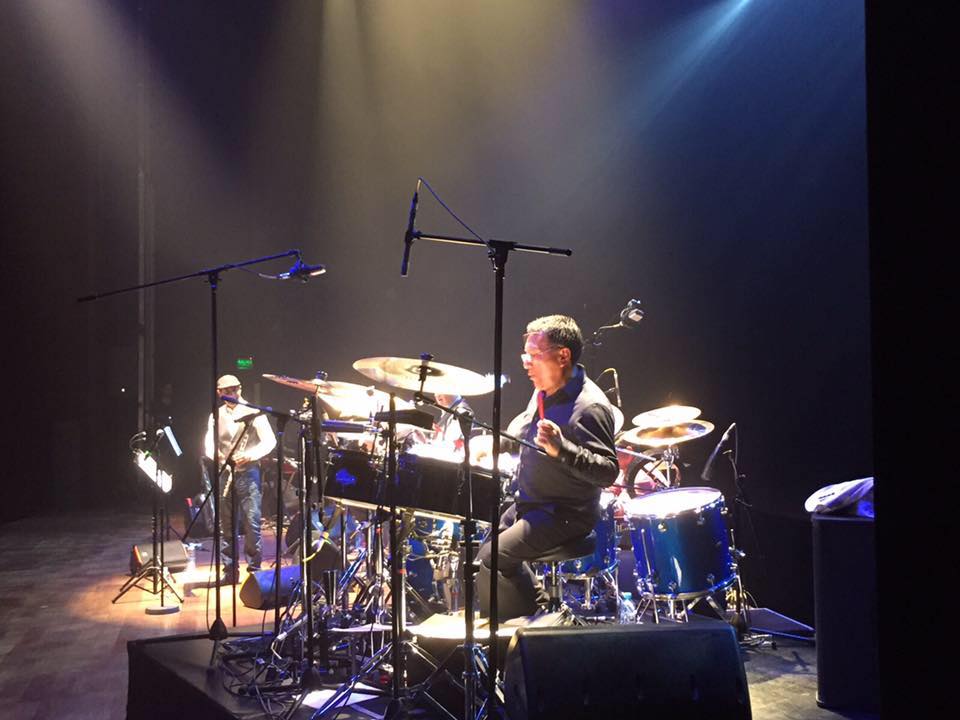
Born in Pativilca, Peru, 100 miles north of Lima, Alex Acuña was born into a musical family that inspired him and helped shape him as a musician. His father and five brothers were all musicians. Alex taught himself how to play
the drums from the age of four. By the time Alex turned ten, he was already playing in local bands. As a teenager, he moved to Lima and became one of Peru’s most accomplished session drummers, performing on many recording projects for artists, as well as film and television productions.
In Lima, Alex also earned a glowing reputation for his live performances. So much so, that at the age of eighteen, Alex was chosen in 1964 by the great Cuban band leader, Perez Prado, to join his big band. It was with the Prado band that Alex first traveled to the United States.
In 1965, Alex moved to Puerto Rico to work as a studio musician and play locally. During this period, he also studied for three years at the Puerto Rico Conservatory of Music, playing as a classical percussionist with the Symphony Orchestra under the direction of the famed Spanish cellist master Pablo Casals.
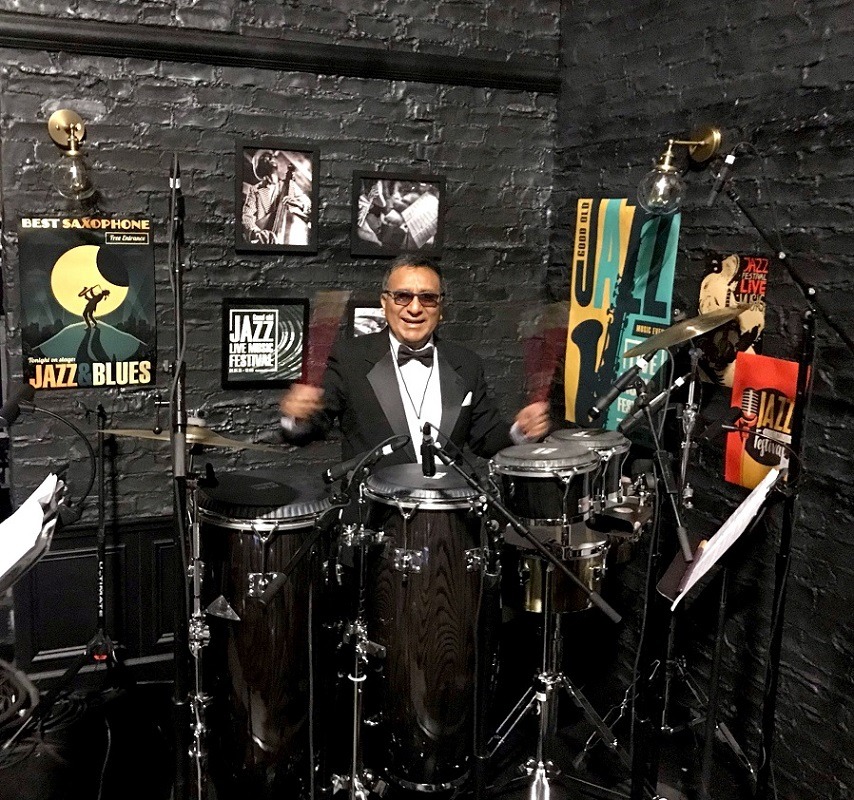
Alex moved to Las Vegas in 1974, where he played with such greats as Elvis Presley Diana Ross, Paul Anka, Frank Sinatra, Olivia Newton John. Between 1975 and 1977, he made part of jazz history when he became both drummer and percussionist for one of the most innovative and pioneering jazz groups of our time, Weather Report.
He first performed as percussionist (October 1975 to April 1976), and later as drummer (April 1976 to October 1977). He recorded two albums with the group: “Black Market” (1976) and the highly successful “Heavy Weather” (1977), which included the famous tracks “Birdland” and “Havona.” “Heavy Weather” became the first jazz-fusion album to sell a million copies.
Alex next moved to Los Angeles, California, in 1978 where he quickly earned the position of a valued session drummer and percussionist for recordings, television and motion pictures.
His countless album credits include such diverse artist as U2, Paul McCartney, Blondy, Joni Mitchell, Jay Z, Ella Fitzgerald, Whitney Houston, Annie Lennox, Sergio Mendes, Yellow , Joe Cocker, Jennifer Nettles, Jackets, Chic Corea, Herbie Hancock, Paco de Lucia, Ron Carter, Gonzalo Rubalcaba, Julio Iglesias, Koinonia, Chris Botti, Chano Dominguez, Tom Jones, Seals, Juan Gabriel, Luis Miguel, Placido Domingo, Ron Kenoly, Sam Phillips, The Winnans, Phil Keagy, Lee Ritenour, Larry Carlton,Wayne Shorter, Joe Zawinul and also has performed with the London Symphony Orchestra, Metropole Orchestra, WDR big band.
Alex has also performed live with the likes of Al Jarreau, Bobby McFerrin Roberta Flack, Antonio Carlos Jobim, The Gipsy Kings, Paco de Lucia, Celia Cruz, Carlos Santana, Herbie Hancock, Christina Aguilera, James Taylor, Michael Mc Donald, Tito Puente, Roy Orbison, Bruce Springsteen, Eddie Palmieri, to name a few. Additionally, Alex has recorded film scores under the direction of Great Composers:
Gustavo Dudamel, Dave Grusin, Alan Silvestri, Michele Legrand, Bill Conti, Michele Colombier, Marvin Hamlish, Maurice Jarre, Mark Isham, Michael, Giacchino, John Dabney, John Powell, James Newton Howard, Hans Zimmer, Randy Newman, John Williams, Harry Gerson Williams, Lalo Schiffrin, Steve Jablonski, Christophe Becker and many others. He became the recipient of many awards and honors including the Emeritus MVP award from NARAS
(National Academy of Recording for the Arts and Sciences) and winner of the “Best Latin/Brazilian Percussionist” of Modern Drummer’s Readers Poll for fifteen consecutive years.
Alex’s South American and Caribbean roots and understanding of contemporary and classical music make him a complete and skilled master musician. In 2000, Alex Acuña y Su Acuarela De Tambores received a Grammy nomination for “Best Traditional Tropical Latin Album” for “Rhythms for a New Millennium”. This solo album included varying styles of Latin, South American and African percussion. The nomination confirmed Alex’s vast knowledge and expertise of percussion rhythms. Zan Stewart of the Los Angeles Times wrote, “Alex Acuña is the epitome of the world music percussionist, to whom no style is a stranger”.
Alex also received two Latin Grammy nominations in 2003. Los Hijos del Sol “To My Country”, which was released by his independent record label – NIDO Entertainment. The second Latin Grammy nomination came for Tolu’s
“Bongo de Van Gogh” released by Tonga Productions. In 2004, Alex released his follow up album by Alex Acuña and the Unknowns titled “No Accent”. New Cd called Barxeta by Losen records 2013. In addition, Alex has composed music for various artists and produced “Thinking of You” by Alex Acuña and the Unknowns, “Rumberos Poetry” by Tolú and “Aliyah” by Kay Silberling. This year will see the release of some new DVD projects for Drum Channel.
Alex is widely known as an educator, gifted teacher and clinician of drums and percussion. He has recorded four solo instructional videos and provides seminars at universities such as UC Los Angeles, Berklee School of Music in
Boston. USC and other top international schools of music. HYPERLINK “http://www.DWDrums.com”
www.DWDrums.com;
HYPERLINK “http://www.sabian.com” www.sabian.com;
HYPERLINK “http://www.GonBopsPercussion.com”
www.GonBopsPercussion.com;
HYPERLINK “http://www.VicFirth.com” www.VicFirth.com;
HYPERLINK “http://www.Evans.com” www.Evans.com;
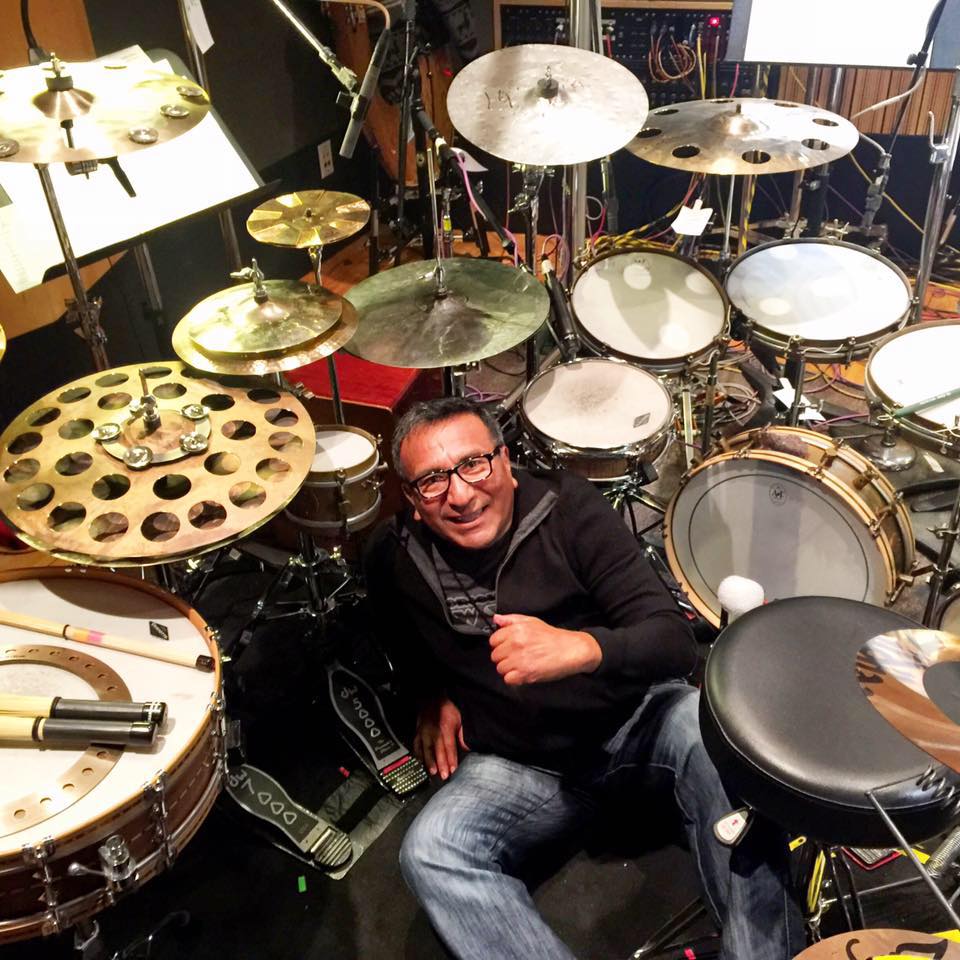
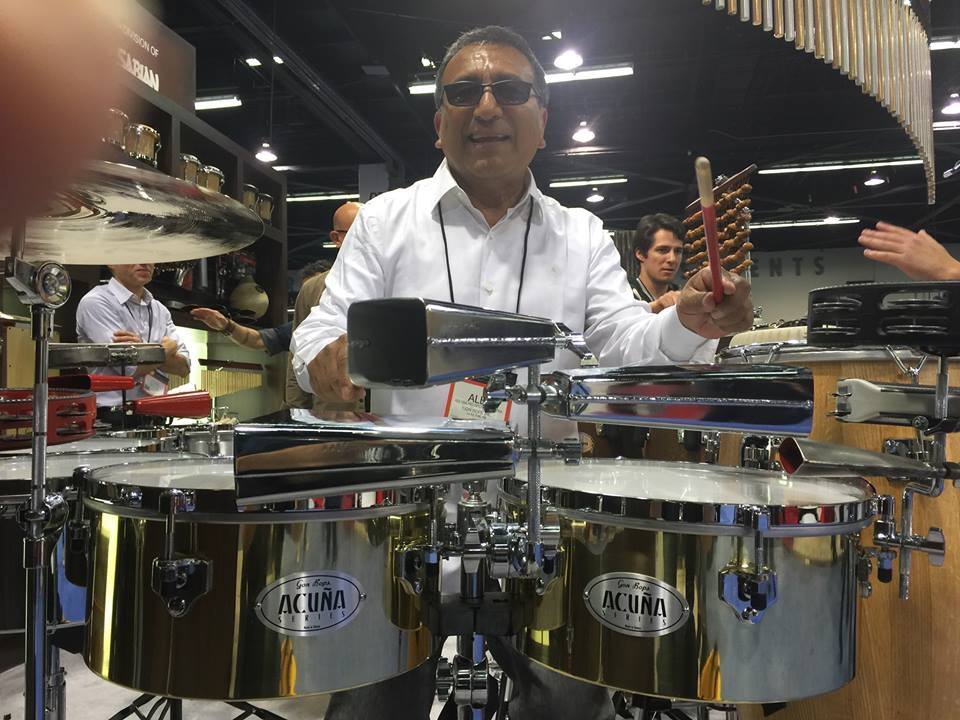
Zoom and Shure microphones all sponsor Alex. He is also credited with the design of Zildjian’s “Azuka” line of cymbals, signature Vic Firth sticks and the caddy stick bag, the Alex Acuña line of Signature percussion instruments with GonBops – 4 Special Edition Congas, 5 Cow Bells, Timbales, Bongos and his own Especial Edition Peruvian Cajon.
Innovation, energy and pure heart characterize Alex’s playing. It is easy to see why Alex Acuña is one of the most sought after musicians of our time. Alex recognizes his music as a gift from the Lord Jesus and gives all the glory to God!
HYPERLINK “http://www.myspace.com/acunahoffmathisen”http://www.myspace.com/acunahoffmathisen
HYPERLINK “http://www.youtube.com/watch?v=35KT2leNa30″http://www.youtube.com/watch?v=35KT2leNa30
HYPERLINK “http://www.facebook.com/event.php?eid=148441735197932″http://www.facebook.com/event.php?
eid=148441735197932
Drum Line
The Incredible
Hancock
Mr. and Mrs. Smith
Mission Impossible 3 & 4 Star Trek Into the Darkness Star Trek
Ratatouille
UP
Hop
Super 8
Italian Job
Beverly Hills Chihuahua Happy Feet
Transformers
Speed Racer
RED
The Kite Runner
X-Men Origin- Wolverine Burlesque
Entangled
Bourn Legacy
Bucket List
Toy Story 3
Cars 2
Monte Carlo
Happy Feet
Hansel & Gretel
Jupiter Ascending
Monsters University
John Carter
Cars
Smurf
Frozen
Tangle
Bourne Legacy
Monte Carlo
Down Of the Planets of the Apes Tomorrowland
Jupiter Ascending
Inside Out
Minions
Jurassic World
Sisters
The Big Short
Alvin and the Chipmunks: Road Chip Zootopia
1 – la la land
2 – Moana
3 – Star wars – Rogue one
4 – Moana
5 – Zootopia
6 – Jungle Book.
1 – COCO
2 – Star Wars – The Last JEDI
3 – Pitch Perfect – 3
4 – Despicable – 3
5 – Spider Man – Home Coming
6 – Birth Of A Nation
7 – Minions
8 – War For The Planets of The Apes