• Skip to primary navigation
  • Skip to main content

International Salsa Magazine

  • HOME
  • Previous editions
    • 2026
      • ISM / May 2026
      • ISM / April 2026
      • ISM / March 2026
      • ISM / February 2026
      • ISM / January 2026
    • 2025
      • ISM / December 2025
      • ISM / November 2025
      • ISM / October 2025
      • ISM / September 2025
      • ISM / August 2025
      • ISM / July 2025
      • ISM / June 2025
      • ISM / May2025
      • ISM / April 2025
      • ISM / March 2025
      • ISM / February 2025
      • ISM / January 2025
    • 2024
      • ISM / December 2024
      • ISM / November 2024
      • ISM / October 2024
      • ISM / September 2024
      • ISM / August 2024
      • ISM / July 2024
      • ISM / June 2024
      • ISM / May 2024
      • ISM / April 2024
      • ISM / March 2024
      • ISM / February 2024
      • ISM / January 2024
    • 2023
      • ISM / December 2023
      • ISM / November 2023
      • ISM / October 2023
      • ISM – September 2023
      • ISM – August 2023
      • ISM July 2023
      • ISM Edition June 2023
      • ISM – May 2023
      • ISM April 2023
      • ISM March 2023
      • ISM February 2023
      • ISM January 2023
    • 2022
      • ISM December 2022
      • ISM November 2022
      • ISM October 2022
      • ISM September 2022
      • ISM August 2022
      • ISM July 2022
      • ISM June 2022
      • ISM May 2022
      • ISM February 2022
      • ISM January 2022
    • 2021
      • ISM December 2021
      • ISM November 2021
      • ISM October – 2021
      • ISM September 2021
      • ISM August 2021
      • ISM July 2021
      • ISM May 2021
      • ISM April 2021
      • ISM June 2021
      • ISM March 2021
      • ISM February 2021
      • ISM January 2021
    • 2020
      • ISM December 2020
      • ISM November 2020
      • ISM October 2020
      • ISM September 2020
      • ISM August 2020
      • ISM July 2020
      • ISM June 2020
      • ISM May 2020
      • ISM April 2020
      • ISM March 2020
      • ISM February 2020
      • ISM January 2020
    • 2019
      • ISM December 2019
      • ISM November 2019
      • ISM October 2019
      • ISM Septembre 2019
      • ISM August 2019
      • ISM July 2019
      • ISM June 2019
    • 2016
      • ISM December 2016
  • Spanish
  • Download Salsa App
    • Android
    • Apple

Search Results for: Van Van

Greeicy premiere “Los Consejos”

Greeicy premieres her new single “Los Consejos” and is nominated for the 2020 youth awards

This time we have the Colombian actress, singer and dancer Greeicy Rendón who has moved into the world of current music; Since she was little, she was interested in acting and music, so with the help of her parents, she began to take acting classes, piano, flute, guitar and singing.

On August 3, 2017, she made her debut as a solo singer with the release of her first single, «Brindemos» and subsequently, in the company of other artists or alone, they developed various musical themes; currently the charismatic and talented Colombian singer and songwriter, Greecy premieres “Los Consejos” the second preview of her new album.
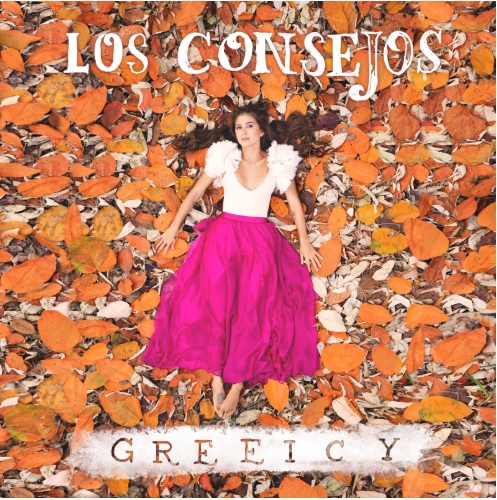
"LOS CONSEJOS" the second advance of his new record material
New single “Los Consejo”

“Los Consejos” is a ballad with a fresh proposal that incorporates urban pop tones with a sweet melody and powerful lyrics that fuse nostalgia and disappointment “Duele quererte y tú tan lejos, tenía la fé de que íbamos a llegar a viejos, me hago la fuerte, pero es complejo, si la tristeza se me nota en el espejo”

The song was written by Greeicy, Andres Torres, Mauricio Rengifo, Keityn, Rudeboyz, Lexuzbeatz, Bullnene, Flybot, and Juan Camilo Vargas Vasquez.

“Los Consejos” is accompanied by a music video, directed by Greeicy and Dario F. Burbano and produced by Mike Bahía, where Greeicy is seen longing for that love that could one day be, while he is seen alone on a swing, transmitting that pain we feel when love escapes from our hands, without really knowing why.

Greecy photo
Greecy photo on an estate

This new song follows in the footsteps of the premiere of “Los Besos” and its version on piano, a song that was initially released in April this year. “Los Besos” already has more than 60 million combined reproductions and its video more than 40 million views and is currently in Spotify’s Top 200 and Top 50 Viral lists in 9 countries, and also in the Top 100 of Apple Music Latino in 11 countries.

“Greeicy Rendón delights with his version of ‘Los besos’ on piano” – RCN Radio

“In this new romantic and fresh version, the charismatic and cheerful personality of Greeicy continues to be reflected, who today is positioned as one of the most important Latin pop artists of the moment.” – 40

Since entering the music scene, Greeicy has become one of the most prominent female figures within the genre, projecting sensuality, sparkle and style. For this reason, she has established herself as one of the most influential female artists, reaching 4.1 million subscribers and almost 2 billion views on her YouTube channel.

The nominees for Youth Awards 2020 were announced through social networks and in the voice of the most important artists of the moment, where the Colombian artist Greeicy achieves a nomination.

The awards given by the leading Hispanic network in the United States Univision, which year after year recognize the best of music, confirm Greeicy’s nomination in the Hottest Core category with their single “Aguardiente”.

The award ceremony will take place live at 8P / 7C on August 13 from Miami, Florida, in compliance with strict public health and safety measures.

Votes are already available at www.premiosjuventud.com/vota until next July 21.

Orestes Vilató is one of the most influential figures in the world of Latin percussion

The Cuban multi-percussionist, Orestes Vilato, is undoubtedly one of the greatest figures in the history of Cuban drums known as timbales.

He is one of the most influential figures in the world of Latin percussion.

He was born on May 4, 1944 in Camagüey, Cuba, and currently resides in San Francisco, California in the United States.

He has worked with many of the best exponents of Cuban popular dance music and Latin jazz, from José Antonio Fajardo and Israel López (Cachao) to Rubén Blades and Carlos Santana.

He is one of the most influential figures in the world of Latin percussion. He was born on May 12, 1944 in Camagüey, Cuba, currently resides in San Francisco, California in the United States
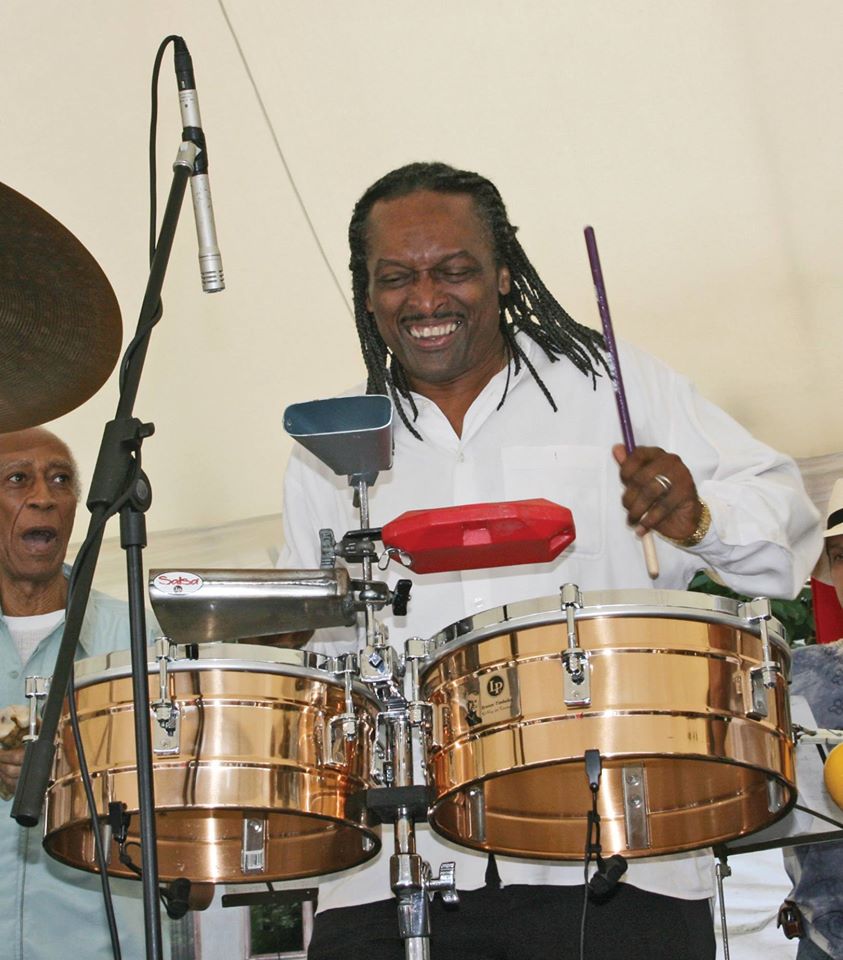
Orestes Vilato is one of the most influential figures in the world of Latin percussion

During the 1950s, the Vilato family moved to New York, the world capital of salsa, where the young Orestes would rise to fame as an innovator of his beloved traditional instrument, “Los Timbales.

While living in New York City for 25 years, Orestes was intimately involved with many musical organizations that played key roles in shaping the course of Latin music around the world.

Among the many groups were: Fania All Starts (founding member), Ray Barretto, Tipica 73 (founding member), Los Kimbos (founder-director), Tito Puente, Johnny Pacheco, Cheo Feliciano, Ismael Rivera, Joe Cuba, Eddie Palmieri, Ruben Blades, La Lupe, Celia Cruz, Rolando La Serie, Chico O’Farril, Lionel Hampton, Los Chavales de España, Cal Tjader.

Other artists he has recorded or worked with include: Winton and Bradford Marsalis, Paco De Lucía, Whitney Houston, Linda Ronstadt, Aretha Franklin, Willie Nelson, Herbie Hancock, McCoy Tyner, Cachao, Andy García, Emilio Estefan, Gloria Estefan, Paquito de Rivera, Dave Valentín, Mongo Santamaría, Armando Peraza, John Santos, Rebeca Mauleon, Giovanni Hidalgo and Raúl Rekow.

In 1980 he moved from New York to San Francisco, California, where he worked with Armando Peraza, in the band of Chicano rocker Carlos Santana.

He later recorded with American jazzmen Bobby Hucherson and Buddy Montgomery, and with Cuban percussionist Luis Conte.

He also works with Jon Santos’ Batachanga Orchestra and Machete Ensemble.

He is one of the most influential figures in the world of Latin percussion. He was born on May 12, 1944 in Camagüey, Cuba, currently resides in San Francisco, California in the United States
Orestes Vilató Born May 12, 1944 in Camagüey, Cuba

In 1992 he recorded with Israel López (Cachao) as well as with Cuban percussionist José Luis Quintana (Changuito).

In 2009 he recorded his production entitled Orestes Vilató ?- Its About Time, with a repertoire in the style of Salsa, Latin Jazz, Descarga.

In 1981, Mr. Vilato moved to the San Francisco Bay Area, where he continues to reside with his family.   From 1980 to 1989 he recorded and toured with Carlos Santana’s renowned band.

Orestes was nominated for a Grammy in 1995 (Latin Jazz category) for his CD, Ritmo y Candela con Patato y Changuito. In 2009 his solo CD Its About Time was nominated for a Latin Grammy.

Orestes has recorded several film soundtracks including  Our Latin Thing, Mambo Kings, Carlito’s Way, Steal Big Steal Little, The Bird Cage, Dance With Me, Just A Ticket, Things To Do In Denver and The Lost City.

He has been a special guest artist at multiple jazz festivals around the country and in Puerto Rico, including the San Jose Jazz Festival.   He has performed and taught at numerous music conservatories including the Berkeley School of Music, UCLA, the University of Fresno, Stanford University, as well as many conservatories abroad.

Orestes was honored at the Yerba Buena Garden, Monterey and San Francisco Jazz Festivals.

Orestes’ style is one of the most imitated and emulated among recording artists.

Orestes Vilató It's about time
Orestes Vilató It’s about Time

Credits
Acoustic Bass – Carlitos Puerto Jr.
Backing Vocals, Handclaps – James Zavaleta
Bass – René Camacho
Bongos, Cowbell – Johnny “Dandy” Rodriguez
Co-producer, Timbales, Bongos, Lead Vocals, Cowbell, Cajón, Guiro, Maracas, Claves, Handclaps, Backing Vocals, Music Director – Orestes Vilató
Congas – Joey De León
Engineer [Assistance] – Joshua Blanchard
Engineer, Mixed By – Jimmy Branly
Executive Producer – Camerina Campillo, Ralph Campillo
Flute, Soprano Saxophone, Alto Saxophone, Tenor Saxophone – Justo Almario
Lead Vocals, Handclaps, Backing Vocals – Adonis Puentes
Mastered By – Peter Doell
Piano – Alberto Salas
Piano, Arranged By, Handclaps, Backing Vocals, Music Director – Rebeca Mauleón
Producer [Associate] – Manolo Santana
Tres, Acoustic Guitar – Ramón Stagnaro
Trumpet – Luis Eric González*, Sean Billings

Home

What zouk is and how its origin was

Zouk and its origins

It is incredible to see how far certain rhythms and dances from all over the world have become popular in Europe.  One of them has been zouk, which can be defined as a pretty fast musical style which is traced directly back to the French Antilles, mostly on the islands of Guadeloupe and Martinique.

Zouk was viewed as only one sensual dance practiced by African slaves in the less favored areas of the continent at the turn of the 21st century.

In fact, some think that this genre originated in Cape Verde and spread throughout the Caribbean thanks to the slaves were moved into that part of the world. 

As can be seen, the history of zouk is not very different from that of many rhythms of this type that were exported all over the world from Africa. As well as other genres, zouk was merged with other local styles to get as a result a set of sounds that is more relevant than ever. 

How is the origin of zouk? 

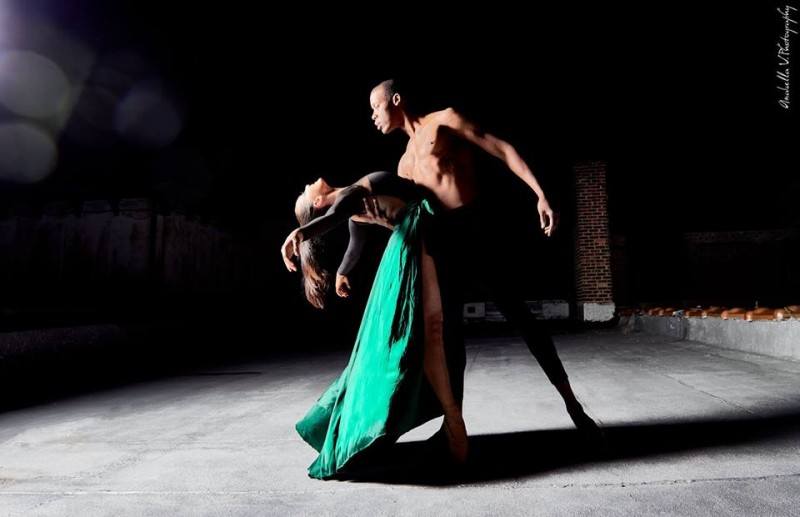
Two people dancing zouk with a dark background

According to the earliest records of the word zouk, it was the band Kassav that made this term popular during the 80’s decade, which means happiness or move with force. Supposedly, the rhythm was introduced by a large group of Haitian musicians in the above-mentioned decade. 

Since the 90’s decade, zouk began to diminish in popularity, but this rough patch did not last too long. When it arrived in Latin America, more specifically in Brazil, the genre started to mingle with local sounds and to adapt to the many shadesof lambada. That was the reason why zouk began to be known as lambada zouk, French lambada, among other nice monikers. 

So great was the rapport between zouk and lambada that they gave rise to a whole new mix known as lambazouk. While both rhythms appear to have separate origins, the truth is that these two genres have much more in common than you think. 

How to dance zouk 

Zouk and African slaves
Two people while dancing zouk

Officially, zouk has three different rhythms and one of its greatest characteristics is that it is always performed by couples while both members move in a very smooth and sensual way. It is possible to dance it with a lot of closeness or almost no physical contact on the part of the man and the woman. 

The man has a lead role in this dance and it is he is the one who leads the woman in order to keep up without losing balance at no time. It is the man who must propose all movements and steps that his female counterpart will reproduce on the dance floor. Everything depends on the boy the dance being varied, creative, and respectful of the essence of zouk in each step. 

All the woman has to do is allow the man to take control and follow his directions to the letter. Anyway, she needs to be very attentive to her back positioning and work hard on her style to achieve graceful and delicate movements. 

Home

Salsa Casino with ISM part 1

Salsa Casino. A style to enjoy in a group

Dancing is an art and / or activity where they use body movement, generally with music, as a form of expression and social interaction for entertainment, artistic, reproductive and religious purposes over time; giving rise to music and dance who have been created and performed in conjunction with forms of dance / music such as Salsa, Waltz, Tango, Disco, Electronic, among others.

Salsa is a danceable musical genre that emerged from a group of Cuban son and other Caribbean music genres, with jazz and other American rhythms. The fusion that those from Africa carried out in the Caribbean when they heard European music and wanted to mix it with their drums. Those origins focus especially on the Mambo, the Danzó, the Cha Cha Chá, the Guaracha and the Son Montuno, later enriched with instruments such as the saxophone, the trumpet or the trombone. The people who gave rise to Salsa were the Cuban and Puerto Rican exiles who popularized salsa in New York back in the 1950s of the 20th century and then throughout the worl.

Salsa Casino
casino salsa dance turns

Did you know that the Salsa Casino is also known as the “Rueda de Casino”, a style of “Salsa” that is danced in Cuba, a dance for the son montuno or guaracha. It is very varied in its movements that just seeing someone execute it, our feet go away and it transmits to us as if it were something contagious and we start dancing too, a clear example is the Casino Wheels Festival.

The term “Rueda de Casino” is characterized by being a group dance where at least 2 couples are needed to form a circle where different figures would be made to the rhythm of salsa, merengue, bachata and the partner was changed in a rotation and synchronization; also by the direction of the singer or leader who is in charge of dictating the figures by name and the rest of the group must execute them at the moment and always tries to send or sing a little confusing turns, giving the feeling that it was very difficult or complicated if you see it from the outside but when we are inside the wheel it is really fun.

When dancing Cuban salsa it is made up of circular movements where the woman and the man see each other briefly and then change direction, so it is different from other styles of salsa since their movements are rather straight.

This pleasant and dynamic dance is determined that if he makes a mistake, the couple is eliminated and must leave the wheel; One of its advantages is that this dance allows everyone who practices it to do aerobic work, which apparently is not an exhausted physical exercise but improves coordination, attention and of course agility.

enjoying let Salsa Casino dance
Dancing Salsa Casino on the boat in the sea

When we travel to Cuba, it is very common that on the days of Fiesta or Carnival, salsa casino dance competitions are held where the 2 wheels face each other, and the one that makes the least mistakes and has the greatest fluidity and beauty in their dance will be the winner.

So if you want to know more about the Salsa Casino, the best way to understand it fully is to practice it in an academy or in workshops and / or workshops of salsa events where they explain its history to you in a more comprehensive and practical way, learning to develop the steps in order to enjoy this dynamic dance.

Home

Orlando José Castillo: The Venezuelan sonero graduated in New York

Orlando José Castillo “Siempre Pa’lante”

He (Orlando José Castillo) is catalogued as one of the most important soneros that Venezuela has given to the world and considered a living legend of Afro-Caribbean music for his extensive, successful and extraordinary career during many years; for “International Salsa Magazine”, it is a great honor to have as a special guest on this occasion Orlando José Castillo “Watussi”, born in Marín, Yaracuy state, on March 23, 1949, who, since he was a child, moved with his parents to live in the parish of La Pastora in the city of Caracas.

Welcome Master Watussi and we hope that all salsa lovers through International Salsa Magazine, www.salsamundi.com, will know part of his life.

Thanks to all the staff for giving me the opportunity to read your magazine, which is already observed in Latin America, USA and Europe.

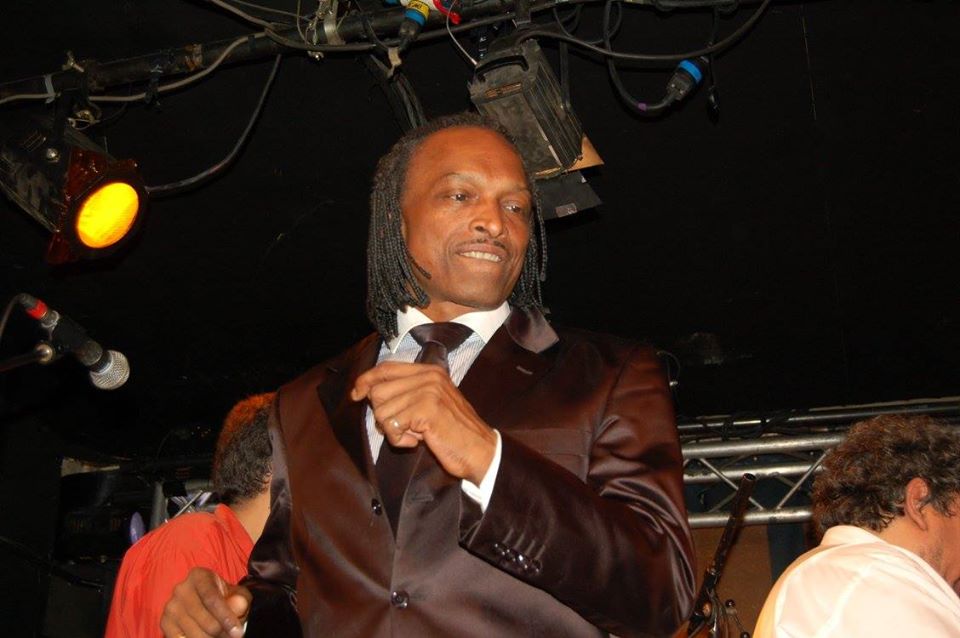
Orlando José Castillo "Watussi" The Venezuelan Sonero graduated in New York
Orlando José Castillo “Watussi”

And well, I am currently living in the city of Milan, Italy and let me tell you that I have beautiful and unforgettable memories of Barquisimeto, so for me it is a pleasure and an honor at the same time, to be sharing with all those people and my country.

To begin with, Maestro Watussi, which were the first groups and orchestras you were part of? Let me tell you that I started with Los Satélites, Federico y su Combo Latino, Porfi Jiménez, Príncipe y su Sexteto and that was super important, since they were the Venezuelan orchestras with which I began to form my career, especially with Los Satélites, Porfi, Federico; I sincerely owe the present of my life to all of them and that is why I do not want to leave them out of the picture.

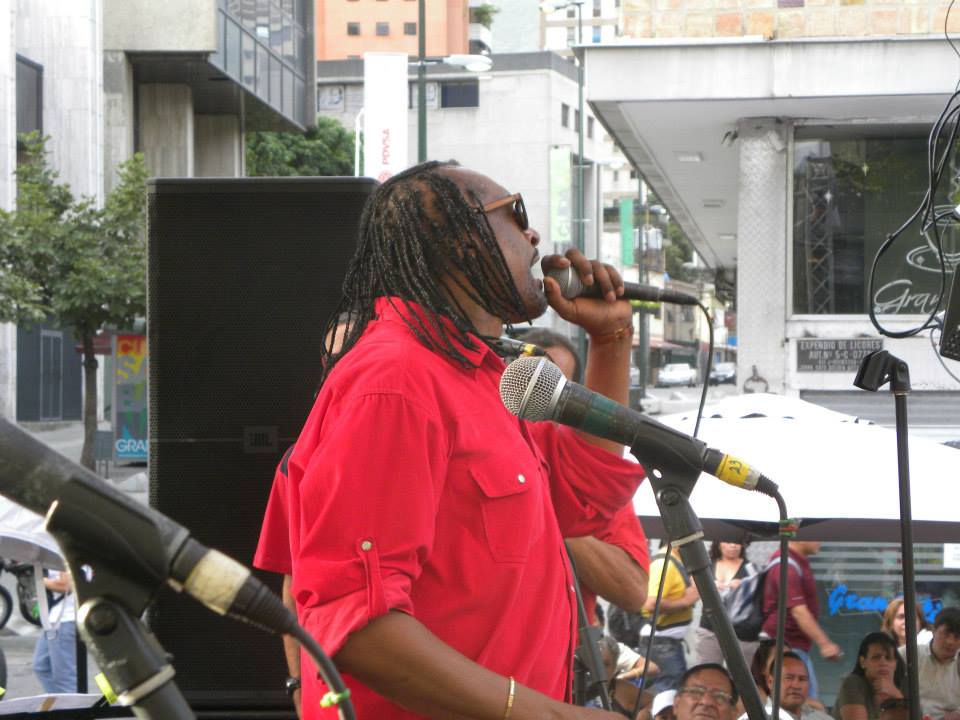
"Watussi" The Venezuelan Sonero graduated in New York
Orlando José Castillo “Watussi”

Very good teacher, we would like to talk about your career in Puerto Rico and in the United States, with the various groups with which you were part.

Well, I tell you that I left Venezuela in 1979 definitely because I traveled for the first time in 1971, musically speaking, and it was my first international tour to the island of Santo Domingo with Los Satélites and then we returned in 72 and in 1974 we were the first Venezuelan orchestra to set foot on American soil in New York City.

NY being on the most important stage in the world at that time as it was Madison Square Garden and the importance of imposing a hit of musical salsa in the Big Apple, with a song I recorded called “Traicionera”, by the master Carlos Guerra and recorded with “Los Satélites”, after that experience I was founder of the “Renovación”, from there I went to be part of “Federico y su Combo Latino”; Then I worked with Rafael Cortijo and his Combo in Puerto Rico in 1977.

Later, in 1979, I went to the island of Borinquén, Cortijo was already traveling to New York and because I could not accompany him, I was lucky enough to be asked by the maestro Bobby Valentín to be part of his band. I stayed with him for three months and at one point I went to New York, The strike of Puerto Rican musicians, as many Dominican musicians were entering the island, led to Bobby being criticized for having a Venezuelan singer instead of a Puerto Rican one.

Later, in New York, I joined Cortijo and Kako Bastar again, who was another teacher in my career and with him I learned to know that great city and at that time almost all the singers of the orquestas bravas, were beginning to do their own work as soloists and I began to work with Joe Cuba and his Sextet, Eddie Palmieri, Larry Harlow, La Típica 73, until I arrived at the “Conjunto Libre”, I was there for about a year and a half, I recorded with them “El changó de María”.

After I had signed with the Fania label, which was a mistake I made, because Cortijo and Kako were telling me not to do it, since I had Fania in my brain, I rushed and was with them for a year practically inactive in the discography and that cost me not to have recorded the last album with Rafael Cortijo and others.

I recorded with Fania “Mi rumba y yo” and told them to leave me alone, they let me go and I joined the orchestra of “Bobby Rodríguez y su Compañía” for three years, I recorded a very good album, including the songs “María Cristina”, “El Pintor”, “Homenaje a Cortijo”.

In fact Carlos, then I continued with Palmieri in 1987, when I had already recorded the album “Las Calaveras” with José Mangual Jr. and there I began my career as a soloist.

Later on I set up my orchestra in New York, but unfortunately work began to decline due to the closure of venues such as El Corso, Casablanca, Copacabana, El Palladium and that brought as a consequence much less work, but thank God, in 1988 I had the opportunity to go to Paris, invited by my compadre Alfredo Cutuflá, in the place of Cheo Feliciano, to do the dance of December 31st at the New Morning.

Excellent, master Watussi, and it must have been a great commitment to replace Cheo at that time, tell us about this experience. Yes, I was fortunate to take his place because he did not travel at that time without his orchestra and Alfredito Cutuflá told me to get Cheo, I had his telephone number, I gave it to him and he told me that if Cheo did not go, I would go, and well it was a tremendous success with Cutuflá and that opened the doors for me in Europe and specifically in Italy, where my friend Carlos Ugueto was based, who brought salsa to that country.

Orlando José Castillo "Watussi"
Orlando José Castillo “Watussi”

Ugueto played the first album of this genre on his radio program, in his club and after he found out that I was in France, he sent for me and facilitated a tour in Milan in 1990, since in 1989 I was in Panama, singing to my compadre’s daughter Roberto “Mano ‘e Piedra” Durán, his 15 year old party, together with Camilo Azuquita, exactly on December 16, 1989,

but on December 19 the invasion of Panama began and I had to stay there until January 5 and well Carlos, I go to Europe and start my tour in Holland, then London, where I did a show with the master Tito Puente, on December 30, 1990, there I was 2 months in the old continent; I returned to New York, where I was residing, and in 1991 I returned to Europe and that’s when I stayed here for good with my family in Milan.

Orlando José Castillo, when you come to Venezuela, we imagine you will feel very well because you are visiting your homeland?

Of course I do, professor, when I go to my country I recharge my batteries, because there is no place like Venezuela, no matter what happens and I tell you honestly, I hope one day to be able to be in Barquisimeto with you, especially to personally show my appreciation for this gesture of having given my name to that “Peña Salsera Orlando Watussi”, in the middle of 2019, being the first time in Venezuela, to give me an honor of that size; especially my thanks to Dany Castillo and my family there, precursors of that idea, and to all the musicians of the musical capital to whom I send a cordial greeting.

Master Watussi, I am remembering that you were integrating the “Clan of Salsa” here in our city, do you remember that too?

Obviously, my friend Carlos, I was there with one of the bravest singers that Venezuela has given, my little brother Willy Rodriguez, who unfortunately is no longer with us.

Willy “El Guaro”, took care of me in his house for a few days, until I got my house in Barquisimeto; I am going to take advantage of this interview professor, to thank the family of Aldemar Barrera, the family of Honorio, tremendous bass player, Coromoto, who was the engine of that movement; greetings equally to Egidio and to all those panas.

Carlos, I want to greet especially the people of the Orquesta Malecón, I hope that one day we can meet on a stage and make a little effort, or perhaps in the Peña itself.

Orlando José Castillo, what can you tell us about Maestro Baquedano? Santiago Baquedano is one of the best musicians Venezuela has ever given and with him I worked on Margarita Island for a few months and from there I went to “La Salsa Mayor” and then I went to Puerto Rico, but I feel proud to have shared with so many valuable people from my country in my 50 year artistic career.

And let me tell you Carlos, just to finish, I reiterate my congratulations and good wishes for you to continue always with the work you do with this salsa column and your radio program, which aims to support and encourage musical talent in salsa.

Thank you Carlos and God bless you, take care all of you in my country and don’t leave the house! Cool…!.


Home

  • « Go to Previous Page
  • Page 1
  • Interim pages omitted …
  • Page 134
  • Page 135
  • Page 136
  • Page 137
  • Go to Next Page »

International Salsa Magazine (ISM) is a monthly publication about Salsa activities around the world, that has been publishing since 2007. It is a world network of volunteers coordinated by ISM Magazine. We are working to strengthen all the events by working together.