
Search Results for: Van Van
North America / September 2024
UNITED STATESDIRECTORY OF NIGHTCLUBS |
||
| CALIFORNIA | FLORIDA | ILLINOIS |
| MICHIGAN | NEW JERSEY | NEW YORK |
| OHIO | PENNSYLVANIA | TEXAS |
| VIRGINIA | WASHINGTON | |
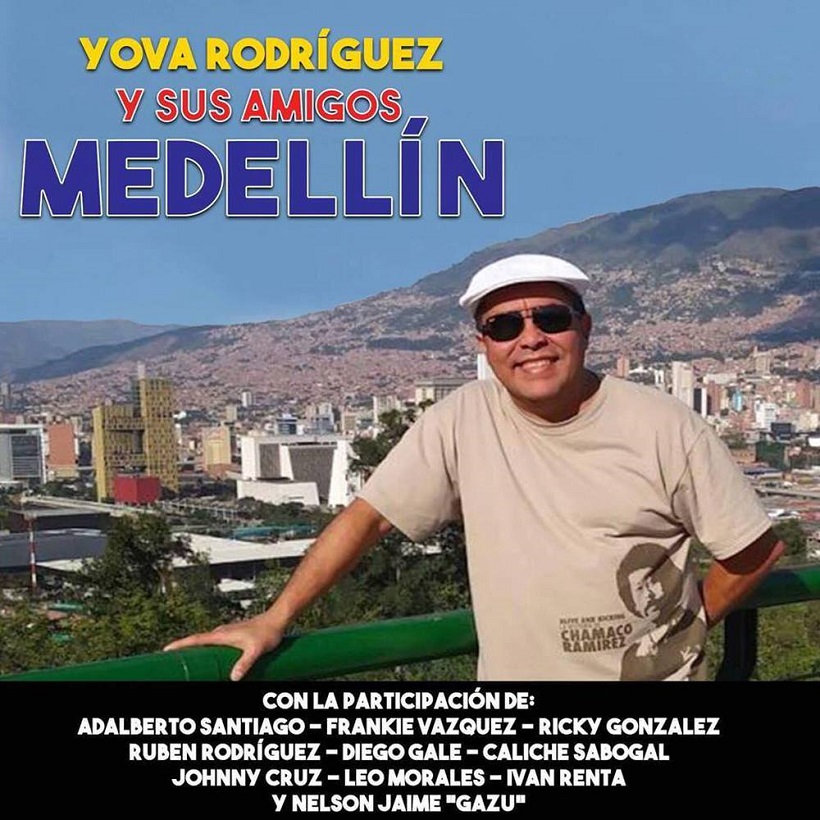
Yova Rodríguez
Latin America / Puerto Rico
Yova Rodríguez. The jibarito of Mayagüez.
Giovanni Yova Rodríguez Ruiz, was born in Mayagüez, being the youngest of six siblings, raised alone by his mother Doña Delia Ruiz Crespo. At the age of 7 he started in music singing Christmas bonuses and influenced by his maternal uncle José Ruiz Crespo ¨Pipo El Indio¨ and his great-uncle Antonio ¨Toño Ruiz who played Puerto Rican cuatro.

At the age of fifteen, he began his studies at the Ernesto Ramos Antonini Free School of Music in Mayagüez, Puerto Rico.
It is here that he began his singing career and minor percussion and at the age of 16 he became the singer of the school band. In 2004 the project ¨Yova Rodríguez & his group Sakao – Akà, Homage to Polo Montañez¨ began.
Since the release of her musical work, Yova Rodríguez, the ensemble Sakao – Akà, has become one of the most sought-after ensembles in Puerto Rico, Colombia, Venezuela and New York, since 2010 she has resided in The Big Apple, La Babel de Hierro N.Y. working on the musical composition for singers of the stature, Danny Rivera, Herman Olivera, Marcial Isturiz, Orquesta Boricua Legends, and the great Andy Montañez among others and to mention a few and traveling through several Latin American countries along with most of the artists already mentioned.

In 2016 he starts with his promotional song ¨Me Quedaré¨ with arrangements by trumpeter Nelson Jaime Gazu, a song dedicated to the thousands of Boricuas who have left their beloved Puerto Rico.
In 2017 he composes the song ¨Mi Barrio¨ dedicated to his native neighborhood and was presented in Mayagüez, at the same time Mayor José Guillermo Rodríguez gives him the keys to the city and a recognition, in the same year he composes the song ¨ Borinquén se Rivanta¨ where great luminaries of La Salsa participated in New York such as:
El Pulpo Colon, Jhon Benítez, Luis Mangual, José Dávila among others and by the hand of the Cuban trumpeter and arranger Agustín Someillan Garcia, in January 2018 it is presented in Medellín-Colombia in the prominent venue Son-Habana, returns to New York and composes the theme Medellín, it is presented on June 23 with a resounding total success in the event one day of Salsa for Medellín.
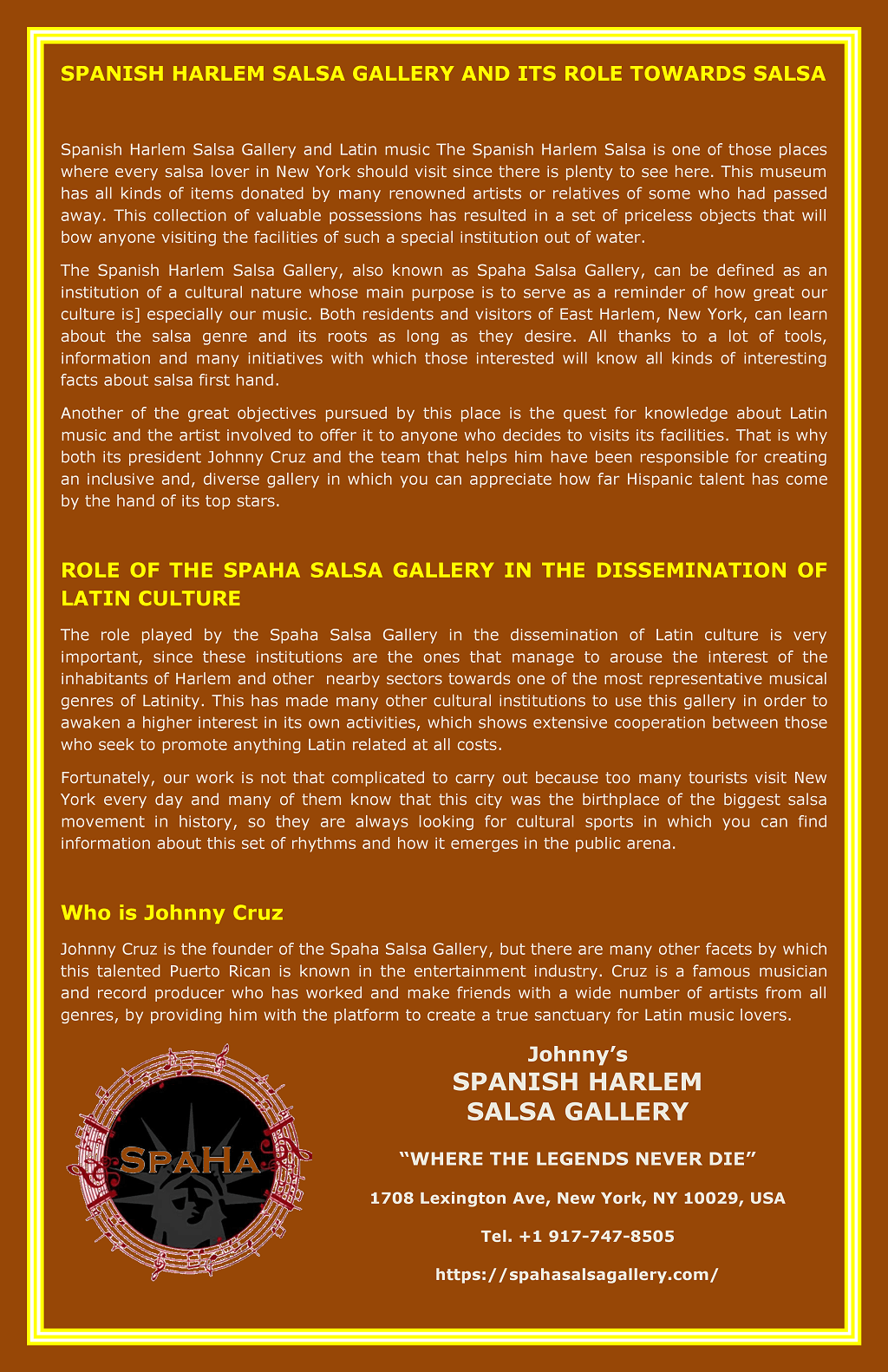
Yova Rodríguez himself informs me that he is already preparing his fourth record production by the hand of the pianist, arranger Arturo Ortiz. And at the same time he belongs to the board of directors of the Galería de La Salsa in Spanish Harlem in New York.

Rumberos del Callejón bring their new hit “Me Tienes Loco” Ft. Gilberto Santa Rosa
Northeast – Middle Atlantic – New York
Rumberos del Callejón New Single “Me Tienes Loco” Ft. Gilberto Santa Rosa is already here!!!
Rumberos del Callejón brings to the Salsero musical market their new promotional single “Me Tienes Loco” with the special guest, Gilberto Santa Rosa “El Caballero de la Salsa”. This third track of the album “Celebrando” presents contemporary salsa with a fresh and avant-garde touch.

The musical arrangements of “Me Tienes Loco” were in charge of Alberto Crespo, while Carlitos Padrón was responsible for the musical production. This third single of nine in total of “Celebrando” Volume 1 was recorded between Caracas – Venezuela and the capital of the World, New York.
In this CD, celebrating the anniversary for the 10 years of the orchestra you can listen the interpretation of the most famous artists of the Salsa genre, such as: the Puerto Ricans Tito Nieves, Gilberto Santa Rosa, and Maelo Ruíz, Domingo Quiñones, and for Venezuela there are the singers: Luis Fernando Borjas, Rodrigo Mendoza, Wilmer Lozano, Angel Vallenilla, Veruzca Verdú, Gonzalo Díaz and Memo Arroyave.

“Celebrando” Volumen 1 is available on all digital platforms.
Release Date: June 28th, 2018
| Credits: | |
| Javier Vásquez | Lyric |

| Alberto Crespo | Arrangements |
| Gilberto Santa Rosa | Lead Vocal |

| Alberto Crespo | Piano |
| José Tabares | Bass |
| Carlitos Padrón | Congas, Bongos & Timbales |
| Larry Flint | Minor Percussion |
| William Rada | Trumpets |
| Pedro Moya | Trombone |
| José Fariña | Baritone |
| Rodrigo Mendoza, Wilmer Lozano, Leo Gruber, Ángel Vallenilla | Chorus |

Vídeo: https://youtu.be/Ewcil67kjyQ
Nanette Hernández promotes the bomba and plena in New Jersey
We know that the most of our Latin countries have historically become known for genres such as salsa, merengue, bachata and more recently reggaeton and trap. However, the popularity of the aforementioned genres made us leave aside other more local rhythms that also deserve exposure.
On this occasion, we wanted to talk about the bomba and plena, so we resolved to interview Nanette Hernandez, who is one of its main proponents here in the United States, more specifically in New Jersey.

How Nanette became interested in the bomba and the plena
Nanette began by telling us that her interest in music was born thanks to her parents, who are Puerto Rican and moved to the United States, Pennsylvania, during the 1950s to continue their life in this new country. However, his home was built based on Puerto Rican culture and, of course, that included language and music. Her father had an ensemble that played jibaro music and Nanette grew up watching this, so this musical environment was always very familiar to her.
As she grew up, Nanette also became very interested in dancing and discovered that she really liked salsa when she was just a teenager. She remembers listening to Celia Cruz, Johnny Pacheco, El Combo de Puerto Rico and many of the most popular groups and musicians of the time, who also inspired her to keep dancing. She felt that she was encouraged just by dancing, so she continued to do so over the years, but not professionally.
After marrying Juan Cartagena and seeing that she and her husband shared a taste for Latin music, they began to frequent places where Puerto Rican music groups performed. That is how they were in a show of the dance and drum ensemble ”Los Pleneros de la 21”. They were so fascinated by what they saw and heard that both Nanette and Juan began to study the plena and bomba because they wanted to know everything about these rhythms. Their interest was such that they were even in contact and consistently et with the Cepeda family, which is a cultural institution with many years of experience in everything to do with the bomba and plena.
She also mentions that Roberto Cepeda, part of the aforementioned family, was very important in her decision to devote herself to promoting the bomba and plena and feels that he saw something in her that even herself was not able to see, so she decided to search for expert teachers in these genres to become more professional in the dancing and instrumental part in order to be able to teach them to others.

Differences between the bomba and plena
When we asked Nanette about the differences between the bomba and plena, she made it very clear that people often think that they are almost the same, but they are not. They are extremely different and have many differences from each other.
In the case of the bomba, it has re than 400 years of existence and originated in Africa. The genre arrived in America along with the slaves who were brought to the New Continent and the new inhabitants of these lands brought their improvised instruments with them such as the so-called ”barrels”, which have a great resemblance to drums. They are often accompanied by maracas.
In the case of the plena, this rhythm uses the pandero, the güiro and other smaller hand instruments with which they make a completely different sound from the bomba. To complement what Nanette told us, we can also say that the plena is believed to originate in Ponce, Puerto Rico, and its lyrics are very focused on comedy, activism and denunciation. In addition, it is also seen as a very peculiar mix between African and European music.
Another difference between the bomba and plena is that, in the bomba, it is the dancer who leads and guides the musicians, while in plena the opposite happens. These genres are very different from each other, but that does not change the fact that both complement each other perfectly well in any show or class.

How Segunda Quimbamba came about
Segunda Quimbamba is a project initiated in 1989 by Juan Cartagena, Nanette’s husband, which was born as a result of the couple’s interest in promoting two of the most important ancestral rhythms from Puerto Rico and preserving the most important musical traditions on the Island of Enchantent, such as the ”parrandas”. A few years later, they began introducing the bomba and plena until they became the center of the project.
In 1997, Nanette and Juan founded the Segunda Quimbamba Folkloric Center, which is a non-profit arts organization that seeks to promote the bomba and plena in New Jersey and the rest of the United States so that those interested can learn more about Puerto Rican music and culture in general. The organization also seeks to offer music and dance workshops at solidarity prices and even for free at times.
Nanette and Juan have been invited to participate in numerous events and have been recognized for the role they have played in promoting Latin music, especially that of Puerto Rico. For example, in 2023, The New Jersey State Council of The Arts recognized the couple with the New Jersey Heritage Fellowship Award in honor of what they have accomplished with this wonderful and ambitious musical project.
Read also: Edwin Ortiz y La Mafía del Guaguancó is present in ISM