• Skip to primary navigation
  • Skip to main content

International Salsa Magazine

  • HOME
  • Previous editions
    • 2026
      • ISM / March 2026
      • ISM / February 2026
      • ISM / January 2026
    • 2025
      • ISM / December 2025
      • ISM / November 2025
      • ISM / October 2025
      • ISM / September 2025
      • ISM / August 2025
      • ISM / July 2025
      • ISM / June 2025
      • ISM / May2025
      • ISM / April 2025
      • ISM / March 2025
      • ISM / February 2025
      • ISM / January 2025
    • 2024
      • ISM / December 2024
      • ISM / November 2024
      • ISM / October 2024
      • ISM / September 2024
      • ISM / August 2024
      • ISM / July 2024
      • ISM / June 2024
      • ISM / May 2024
      • ISM / April 2024
      • ISM / March 2024
      • ISM / February 2024
      • ISM / January 2024
    • 2023
      • ISM / December 2023
      • ISM / November 2023
      • ISM / October 2023
      • ISM – September 2023
      • ISM – August 2023
      • ISM July 2023
      • ISM Edition June 2023
      • ISM – May 2023
      • ISM April 2023
      • ISM March 2023
      • ISM February 2023
      • ISM January 2023
    • 2022
      • ISM December 2022
      • ISM November 2022
      • ISM October 2022
      • ISM September 2022
      • ISM August 2022
      • ISM July 2022
      • ISM June 2022
      • ISM May 2022
      • ISM February 2022
      • ISM January 2022
    • 2021
      • ISM December 2021
      • ISM November 2021
      • ISM October – 2021
      • ISM September 2021
      • ISM August 2021
      • ISM July 2021
      • ISM May 2021
      • ISM April 2021
      • ISM June 2021
      • ISM March 2021
      • ISM February 2021
      • ISM January 2021
    • 2020
      • ISM December 2020
      • ISM November 2020
      • ISM October 2020
      • ISM September 2020
      • ISM August 2020
      • ISM July 2020
      • ISM June 2020
      • ISM May 2020
      • ISM April 2020
      • ISM March 2020
      • ISM February 2020
      • ISM January 2020
    • 2019
      • ISM December 2019
      • ISM November 2019
      • ISM October 2019
      • ISM Septembre 2019
      • ISM August 2019
      • ISM July 2019
      • ISM June 2019
  • Spanish
  • Download Salsa App
    • Android
    • Apple

Search Results for: Van Van

Wilmer Sifontes “Music is one of the most important things in society”

Music has no boundaries, it has the magical power to bridge social and cultural divides. Such is the case of percussionist Wilmer Sifontes, born in Caracas on March 21, 1968, a year of great events worldwide, a native of the parish of La Vega.

In 1992 he travelled to the United Kingdom for the first time to participate with the Entreverao Group in the World Music Festival “Spirit of The Earth” of the BBC in London.

Thanks to his (Wilmer Sifontes) participation with this group, he got several offers to return to the United Kingdom, so from 1996 he decided to settle down definitively in that country.

His musical duality has allowed him to work with different musical groups and bring the intoxicating rhythms of the American continent to those latitudes. He tells us that; “Fortunately, music is a universal language, it is the flag that one carries and allows you to make your way in other spaces”.

Wilmer, sometimes we imagine that the passion for music comes from a family inheritance, I see that this is not the case with you, how were your musical beginnings?

“In my family there are no musicians, however, as a child I always listened to music, on the way to my house there were places where the orchestras rehearsed, and that I liked it, I started playing salsa, it was always my forte, the music worm began at 10 years old, when the theme of Pedro Navaja with Ruben Blades and Willie Colon was in fashion, in the classroom a classmate imitated that little grave on the desk, this impressed me so much that from that moment the message came to me and I said -this will be my thing-“.
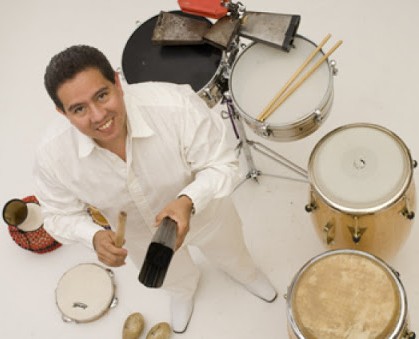
Wilmer Sifontes and his drums

That would be his entrance to the world of music

 “Yes, that was a message -but look at it-, I was a sportsman -I played Volleyball and Basketball-, and my sportsman friends wanted to be musicians, they were all adults and I was always with them as a boy, but they had no musical skills, no instruments, this prompted me to look for someone who would help me get into music, so, through my cousin I met the bassist José Machado

-he belongs to a family of musicians from La Vega-, they were my first teachers, they were always rehearsing and I saw, -a visual teaching – because I was a kid, they had a Cuban Son group called “Los Machados”.

At some point he played with them

 “After a while we started playing with the “Machados”, people were impressed to see such young boys playing, from him I received my first drumsticks, although I wanted to play bongo”.

How was that evolution?

 “In the neighborhood I continued with different groups, then with my cousin we created the “Orquesta La Conclave” and here we developed, we played in all the cultural events”. “We were rehearsing at Catia and Jesús Gómez -one of the singers of Sonero Clásico del Caribe- was always passing by and one day he told us that he needed a timbalero and a pianist, that if we wanted to work with him and we said yes, they played every night at La Caneca, a very famous place that was on Sucre Avenue in Catia”.

“This was my first night job, then I went to Silencio and played in different clubs”.
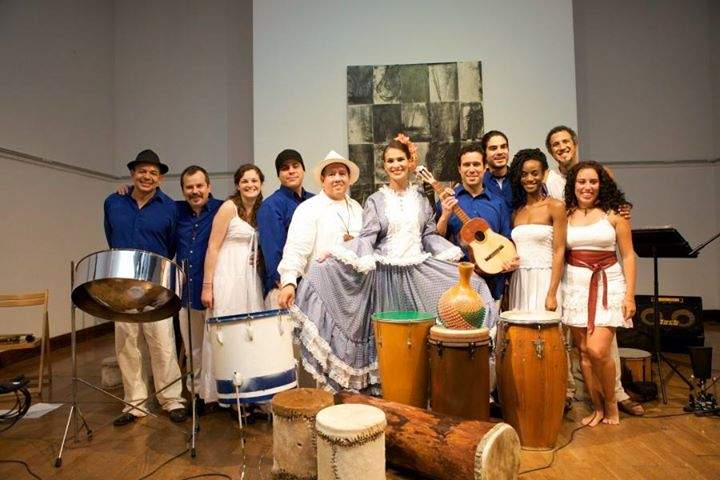
Wilmer Sifontes in the company of various artists

He is an empirical musician

“I made several attempts to study but… It was a little difficult, there were very rigorous classical schools at the time and I could not enroll, in one I went – La Lamas- together with my cousin, we took the exam and they scratched us (laughs), it is a very nice anecdote, we both sang without knowing the Black Tomasa”.

How does it come to perfection then?

 “I was playing by ear, it wasn’t something formal, as he already works in the nights in the clubs, a friend told me that in the Central University of Venezuela, Alberto Borregales and Orlando Poleo were giving classes, when I arrived I saw a great amount of people and I said: -whoa, here they are not going to accept me with that crowd- by chance, the teacher Borregales, makes a small group due to the little space that there was in the classroom, and at that moment I was going to evaluate them to decide who was left and who was not, fortunately I passed the test and I stayed”.

The experience of the street helped him

“(laughs), yes.”

Formally, Borregales was their teacher

 “Yes, but my first teachers were the Lp, besides the radio, I listened to a program called “Latin America the Cosmic Race”, with Borregales I entered with a greater discipline, he taught me to analyze, he indicated us what to read, what to listen. Later I was with Poleo in Caricuao, then in San Agustín and eventually went to Sarria. In the neighborhood I learned from Carlos “Tabaco” Quintana, he was one of my favorites, he was my inspiration, he was a timbalero with a terrible swing, excellent, in the neighborhood there were many good ones”.

“Apart from them I also learned from; Daniel Milano Mayora, Jesus Milano Palacios, in the Aquiles Nazoa Library -of Caricuao-, the Bigott Foundation and the Grupo Autóctono de la Vega”.

How was that jump from salsa to folklore?

 “I was offered to join the Grupo Autóctono de la Vega, with a great trajectory -it must be 40 or 50 years old by now- there is no role for the amount of people who have passed through there, it is the first group that makes the San Juan demonstrations in Caracas, this is from the Rivas and Ochoa family, it was my first school of folklore, they did dances, sports and then it was dedicated only to folklore music, both have been my teaching, I did not leave either of them”. “Then I played with many other folk and salsa groups, music is one of the most important things in society.”

The Grupo Autóctono de la Vega opened its doors to him, but the Agrupación Entreverao marked his future

“Yes, Entreverao marked my future, let’s say it was a show group, a quartet, its musical structure was very particular, harp, bass, drums and singer, then the percussion was introduced, the percussionist Rhay Herrera was their Director, I got a lot of experience with this group, we had a lot of work and learning, with them we made the first trip to the UK in 92”.

Wilmer Sifontes on stage

How did you decide that London would be your destination, why not another place more tropical, warmer, you did not think that you would face another culture, another language, another climate?

 “I was playing with Erick Franchesky, at that time he had 3 songs stuck in New York, we were going to go four or five of the band, it was almost confirmed, but it didn’t happen, music is like that, sometimes it offers you villas and castles and tomorrow you have nothing.” “I also had other proposals to come to the United Kingdom, the first thing that came out was this, that is, my destiny wanted me to come here”.

“Being out of your country, you learn other things, and that’s one of the particularities of my work, you learn to be more tolerant with people, as I know a lot of folklore from other places has allowed me to arrive, the culture is different to ours, is strong above all if you do not master the language, even if it is the basics, the climate if it was a shock, this is a fridge, (laughs)”.

I can’t imagine the English dancing and listening to Salsa, do they like the genre?

 “In the 90’s Salsa was very fashionable around here, there were many places to play, the acceptance of the music is excellent, when the Salsa boom, everyone wanted to learn to dance it, there are clubs to learn to dance, they have fallen in love with Latin American culture, they have been very receptive to those we have come to work with”. “I am the first Venezuelan to make a legal Folkloric Group in this country”.

Tell us a little about that project; AfroAmerica Project

 He founded it in 2007, it is an official group of typical and traditional Afro-Venezuelan music, people love Latin American music, they receive it very well, the name is due to a magazine that Jesus “Chucho” Garcia made, which speaks of Afro-Cuban music”.

 He continues to work with this project

“Yes, it is a group like Un Solo Pueblo, 90% is Venezuelan music, fulia, tambor, parranda, Calipso, Larense music, there are people who are outside Venezuela and do not know their music, then, we must show what we are, show our culture”.
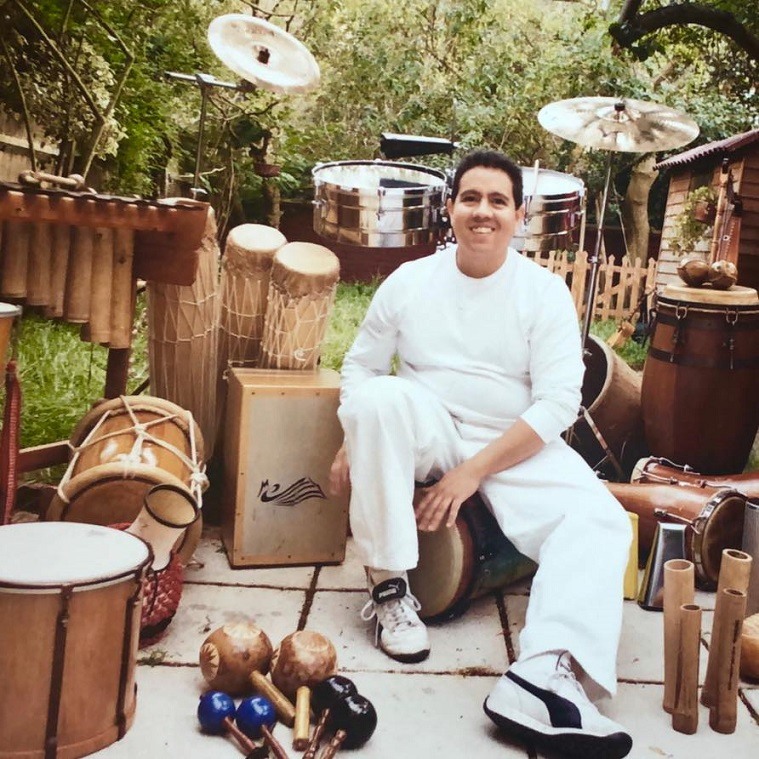
Photo of Wilmer Sifontes and his instruments

What groups have you worked with in the UK?

 “Any number of bands, when I arrived in the UK I started with a man named Kora, he played an African harp, his band was World Music, his music was a mix of African rhythms and the idea was to play Latin American percussion, as I have the virtue of playing different styles of music work with him”.

“Although I did a lot of Salsa in the early years, the other bands I remember are Conjunto Sabroso, Hussein Zahawy, Tumbaito, Ensamble Criollo, La Papayera, Salsa Nueva, The Voices of Naturale, La Charanga Rivera, Tango Tierra, Ensamble Criollo, Clara Rodríguez, Ola Onabule, AfroAmerica Project, Cubanito, Chacón y Su Timba, Bahareque, Salsa Céltica, Kora Colours, Los Charlys Orchestra, Classico Latino, Bilongo all Stars, among others”.

It’s easy for him to move through different genres

“Yes, I owe this to my country, thanks to all that learning I have been able to do so many things and share with so many people in different parts of the world.”

Thanks to this duality you have worked with and accompanied different artists, which ones do you remember?

“Among those I remember are Herman Olivera, Willie González, Maelo Ruiz, José Mangual Jr, Luisito Carrión, Roberto Torres,Tony Vega, Pedro Brull, Tito Gómez, Tito Nieves, Cano Estremera, Giovanni Hidalgo, Andrés Cepeda, Aterciopelados, Leroy Burges, Rodolfo Arcardi, Henry Fiol, Alci Acosta, and the Bands and groups in Venezuela are; Orquesta la Grande, Catatumbo, Entreverao, Criollo y Sabroso, Orquesta la Raza, and with whom I have participated are; Grupo Cosecha, Grupo Autóctono, Jesús Ruiz, La Gran Compañía and Eric Franchesky -who- among many others”.

Wilmer Sifontes in the studio with his instruments

Celtic Sauce, explain that to me, it sounds a little strange

“It’s a Scottish group that mixes Celtic music with Salsa, with them I started doing substitutions for the timbalero, it’s very nice and interesting, they use the traditional instruments of Scottish Folk and the instruments of Salsa and Latin Jazz, they have also mixed it with pop, with rock, with Indian music, that gives them a unique and characteristic sound to this group, with this group I have traveled the world”.

Another band you have worked with is Sidestepper, very famous for fusing elements of Antillean and Colombian music with electronic music.

“Yes, the band was formed in Colombia, by the English producer Richard Blair, he revolutionized the traditional sounds of the region by mixing them with avant-garde sounds, with them I made an interesting work”.

Tell us about the Salsa Nueva Project

“That is the project of the Venezuelan pianist Elena Riu, is the fusion of Salsa with classical arrangements, you can be listening to a kind of montuno, a tumbao’ on the piano and the minute it disappears and leaves a passage well classic, is Latin in classical music, had original themes, is a theme that is called sal-si-ta -so separated-, had songs by Ruben Blades, Ismael Rivera, very cool.

“She needed a rhythmic element and invited me to accompany them, two months later we recorded an album in a church”.

 How do you feel about conducting one of the most popular bands in London, El Conjunto Sabroso?

“It has given me a lot of foundation and satisfaction, it was founded by Mrs. Luisa Elena Caicedo, since I arrived here I started to work with them, she listened to my references and called me to make substitutions, then I was their director and assistant director”.

Wilmer Sifontes in the studio

With you, the saying goes… No one is a prophet in his own land

“I think that yes, many people have been prophets, but… after death or after many years -laughs-, I don’t know, at this moment it is so difficult to put a definition to this, although I believe that nobody is a prophet in his land”.

From whom or from whom has he taken his musical influence?

 “There are several, the list is long, Carlos “Tabaco” Quintana, Orlando Poleo, Alberto Borregales, Alfredo Villamizar, Orestes Vilato, Tito Puente, Dave Wackel, Ray Barreto, Un Solo Pueblo, Guaco, Paquito de Rivera, Giovanni Hidalgo, Paoli Mejias whom I had the pleasure to meet and accompany, El Trabuco Venezolano, La Fania All Star, Irakere Orchestra, and Puerto Rican and New York Salsa, among many others”.

How has your musical growth been?

 “I have learned a lot from each culture, from the Colombian, Cuban, Argentinean, African, knowing the folklore of other places teaches you a lot, sharing with people from all over makes you grow and learn every day, this is part of the particularity of my profession.”

How do you see the market right now, there is a great variety of music, everyone has their own style, what do you think of all this new, but sometimes not good?

 “I don’t know if it’s taking a turn or not, the truth is that Europe is different, it has another kind of market, which is not that I’m involved, previously there were many festivals, pop and rock are the popular music of this country, but, reggaeton has been influenced by society, it has been injected with a lot of money, apart from the impact of social networks, it reaches more people, social networks have changed the way music is sold in the world.

“People are scared of reggaeton, for me it depends on who is doing it, the market has changed because of the networks, anyone makes music, anyone plagiarizes music from others, we are in a time of change and music does not escape from it.”

What do you think about tributes and copies, is the musician’s creativity running out?

“When people are alive it is always good to highlight their contribution to the world, there will always be a reference to someone, but it is good that people are creative, and there are the brazen ones who shoot the songs and put other lyrics on them, it is like winning people over with other people’s work”.

“The musical genius has not declined, what happens is that there are no promotions, people who do not do commercial work, it costs a little more to reach, fight against the great machines that bet on other things, musical geniuses are born for generations, are counted.”

Wilmer Sifontes and his records

The first production of the Conjunto Sabroso is entitled “Ya tengo lo que quería, realmente”

 “You never get to have everything you want, but at that moment, we had what we wanted, in that production there are arrangements by Naty Martínez”.

Among your personal projects, which ones would stand out and what new proposals do you bring to the public?

“I was the founder of Ensamble Criollo, we still work with this, AfroAmerica Project, Wilmer Sifontes y Su Combo Caribe, Will Sifontes and his Latin Sound and I’m still working with Conjunto Sabroso as musical director, besides, I’m making a solo album, -let’s say it’s called Latin Jazz- it’s a mix of everything, of my musical career, I already have 3 numbers, there will be duets, quartets, guests, the production is going to be called “Handmade”.

If you were to choose between folklore and salsa

“I’ll take them both, they’re different loves, I still do folklore, salsa and fusions.”

What recommendation do you have for the relay generation

“My recommendation is that they prepare themselves, musically, but first of all their idiosyncrasy, we have to have very clear the bases of what we are and develop them with modern techniques and other elements from other countries, to have discipline, today it is easier to have the information, there are more institutes, the internet”.
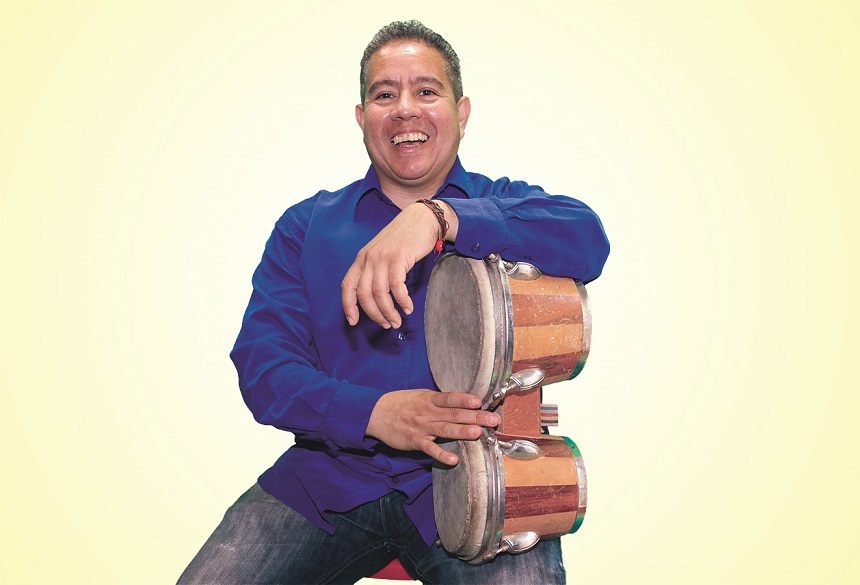
Wilmer Sifontes
Wilmer Sifontes


By Eling Blanco, ISM Journalist Correspondent, Caracas, Venezuela


Edwin “El Calvito” Reyes

Edwin El Calvito Reyes, Winner of the Paoli Prize 2019, as Tropical Revelation of the Year

Edwin El Calvito Reyes

Undoubtedly, today, considered by legends and colleagues of the salsa genre, as one of the fastest growing exponents, projecting and establishing its brand, at a firm pace and worldwide; Winner of the Paoli Prize 2019, as Tropical Revelation of the Year, he is Edwin “El Calvito Reyes”.

Born on April 19, 1974, he had his childhood in a humble 20-foot-square wooden house and graduated as an Electrician from the Higher Vocational School in his beloved Trujillo Alto in May 1992.

He then graduated with studies in Tele-Communication at the University of the Sacred Heart of P.R. This 2020, “El Calvito” is scheduled to finish his Master of Science, with a major in Entertainment Business, at Full Sail University in Orlando, FL. (Entertainment Business, Master of Science).

Edwin El Calvito Reyes on stage

Although in OCT 2018, it was his first appearance in the world, with his own musical proposal, “El Calvito” has a career and / or musical history, of more than 25 years, which began to the tune of Plena in his native Trujillo Alto.

Since childhood, music has been his passion. Edwin continued to show his leadership and passion for music, and already in 1993, Edwin began to make himself known in his hometown with PLENA, keeping the culture and tradition of a people alive. As early as 1996,

Edwin joined the US Army and, in his spare time, began singing salsa, thanks to Mr. Víctor París and Mr. Godreau “Papo Salsa” who offered him the first opportunity to share his talent with the community of Hinesville, Ga in 1996, singing salsa classics.

Since then, “El Calvito” has been performing all genres of Latin music in the United States; Never leaving behind its origin, nor its vision.

Edwin El Calvito Reyes with the award

“El Calvito” Reyes has several many LIVE SALSA performances in South Korea and the Middle East (Iraq, Afghanistan, Kuwait, Turkey), with more than 10 thousand soldiers (combined count) dancing to the rhythm of live music, relieving all types of stress in combat and highly raising their morale. A genuine leader, who brings that same leadership to the sauce in a very entertaining way.

Over time, thanks to Sergeant Alberto Sánchez and Sub-Officer Carlos Negrón, he joined the Official Salsa Orchestra in the U.S. Army (LATINO CONJUNTO DEL ARMY DE USA), to later become the officer in charge of it.

An Officer who, for 6 consecutive years, was personally tasked with selecting and forming the Only Latin Music Orchestra, ever assembled, in the US Army, whose purpose was to act for dignitaries and personalities (Michelle Obama, Hillary Clinton, Jennifer López, Olga Tañón, Vicente Fox, etc.), within the National Conventions of the League of United Latin American Citizens (LULAC) and Annual Presidential Galas. Clearly leaving an immense legacy in that difficult world. Also, El Trujillano is one of the few salseros in the world that has been able to perform live at the Seoul Olympic Stadium in South Korea.

Edwin El Calvito Reyes

Immediately after that performance, “El Calvito” performed in 2012, at the Asian Salsa Congress, where dancers from around the world gathered to compete along the rhythms of their music in the course of an extravaganza of 7 days.

He is an artist without equal. After 22 years of active military service, including more than 65 months accumulated in combat, “El Calvito” Reyes has established his own brand, appearing before a large number of people throughout the American country and Puerto Rico. “El Calvito” is a true warrior and avant-garde in this new era of salseros that will surely keep them dancing from start to finish.

Don’t wait for the magic call. He seeks his own, very professional, and has earned the respect of many employers, DJs and Promoters around the world, for his kindness, professionalism and above all his show.

In this past March 2020, “El Calvito” was one of the guests of honor for one of the Bailables prior to the National Day of Zalsa in Puerto Rico, sharing the stage with greats such as NG2, N’Klabe, Carlos Javier, and Abrante, as well as, Julio Badillo and the Salsa Stars, Julio López, Kayvan Vega and many more, making their music shine by its own light and gain the respect and admiration of several present, the international press and their colleagues.

Edwin El Calvito Reyes on stage

Also, Edwin is part of the first star cast to perform at the FIRST NATIONAL DAY OF LA ZALSA in ORLANDO, FL, alongside stars like Willie Rosario, Eddie Palmierie, India, Jerry Rivera, Grupo Niche and many more “El Calvito” does not stop here, as he has also been chosen to be a fundamental part of the 22nd Anniversary of the Salsa Cruise, along with stars such as Maelo Ruiz, Luisito Carrion, Andy Montañez, Grupo Gale, Grupo Niche and Chino Núñez.

Publicly blessed by Legends such as TITO NIEVES, TITO ROJAS, TITO ALLEN, BOBBY CRUZ, CHINO NÚÑEZ, LALO RODRIGUEZ, WILLIE ROSARIO, PAQUITO ACOSTA LUIS GONZALEZ “EL TSUNAMI”, among others, confirms Edwin “El Calvito” Reyes, as a S Today, at the level you deserve.

Since it came out live on OCT 2018, “el Calvito” has not stopped shining in its own light. Now, he celebrates the worldwide successes of his latest songs, “QUIERO BAILAR CON ELLA”, “TOCALE LA MOÑA”, “MI RITMO SE LLAMA” ZALSA “,” MI TIERRA QUERIDA ”SONEROS DE SANGRE NUEVA, and the most recent SO CALLED THE COUNT.

So what’s next for Edwin “El Calvito” Reyes? “Work hard, with honesty, respect and dignity, in favor of the genre of salsa, in general. Stay humble, loyal to my followers and, of course, continue with my faith in God.

Edwin “El Calvito” Reyes The music of our Hispanic brother and Boricua, Edwin “El Calvito” Reyes is found on all digital platforms (CD Baby, iTunes, Spotify, Amazon, Google Music, YouTube Music, etc.) His music continues to occupy prestigious positions on Global Radio.

Edwin “El Calvito” Reyes has a high reputation, as a truly dedicated human being, passionate about contributing to the salsa genre, who studies and respects the genre’s pioneers and their contemporaries.

With an energy on stage that will make you dance from start to finish. Also, as a person who provides a great environment with his leadership and professionalism, with Latin Music for his communities, but above all, as a family man; and of faith.

Edwin El Calvito Reyes

Wilson “Chembo” Corniel Jr.

Wilson “Chembo” Corniel Jr.“A sprinkling of be-bop, a touch of swing with a dollop of bomba, rumba, tango and danzón topped with ‘un chin’ de charanga.”

Grammy award nominated percussionist Wilson “Chembo” Corniel was born in Manhattan on November 22, 1953 of proud Puerto Rican parents; Chembo was raised in the humble streets of Red Hook, Brooklyn.

1- Wilson “Chembo” Corniel Jr

Wilson “Chembo” Corniel Jr

It was during these years, as a quick-witted youngster, that he had the privilege and honor to study with such percussion luminaries as, Tommy Lopez Sr., “Little Ray” Romero, Louie Bauzo, and Cachete Maldonado.

Chembo honed his skills at The Harbor Conservatory for the Performing Arts in New York, and also at the prestigious La Escuela Nacional de Arte in Havana, Cuba under the direction of the great Chucho Valdés.

His intense studies with such legends noted above channeled his energy onto a path where Wilson “Chembo” Corniel has now created a reputation for himself among musicians and the public. Today, he is considered as one of the best hard-hitting, versatile percussionists around.

Chembo teaches percussion to students at the SUNY Purchase Conservatory of Music and leads numerous clinics throughout the United States where he brings awareness to others of the rich Afro-Caribbean traditions.

Among his credits, Chembo was chosen to create his own instructional DVD called, “An Introduction to Hand Percussion: Volume I—Congas”. It was released in December of 2000 and with distribution by Warner Brothers it has been a success.

He’s been a vital endorser of Latin Percussion instruments since 1982 as he is currently for Remo drum heads, Vic Firth sticks and Sabian cymbals.

His touring credits are as long as his performing credits. Chembo has toured with many major artists throughout Europe, Asia, North & South America, and the Caribbean. Television credits include an appearance on the “Bill Cosby Show” and a recurring recording gig on Nickelodeon’s children show, “Dora the Explorer”.

Chembo continues to perform and/or record with many artists of different genres. He is currently concentrating on leading his own Latin Jazz quintet, “Chembo Corniel Quintet”. Chembo received a GRAMMY NOMINATION by NARAS IN 2009 for “BEST LATIN

JAZZ ALBUM” for his 2009 cd “Things I Wanted To Do”. This is a well-balanced Latin Jazz group that incorporates many rich traditions, such as writer Aurora Flores states:

“A sprinkling of be-bop, a touch of swing with a dollop of bomba, rumba, tango and danzón topped with ‘un chin’ de charanga.”

Wilson “Chembo” Corniel Jr. ARTISTS: RECORDINGS:

  • Wilson “Chembo” Corniel – “Land Of The Descendants” – 2016
  • Wilson “Chembo” Corniel – “Blue Monk” (ASM) – 2012
  • Wilson “Chembo” Corniel – “Things I Wanted To Do” – 2009
  • Akiko Tusuruga – Orient Express – 2009
  • Wilson “Chembo” Corniel – “For The Rest Of Your Life” – 2007
  • Mark Sherman – Family – 2007
  • Carlos Jimenez – El Flautista – 2007
  • Akiko Tusuruga – Sweet And Funky – 2006
  • Chris Washburne & SYOTOS – Land Of Nod – 2006
  • Chembo Corniel & Andrea Brachfeld – Beyond Standards 2006
  • Willie Martinez – La Familia – 2005
  • Hilton Ruiz – Steppin’ With T.P. – 2005
  • Wilson “Chembo” Corniel – Portrait In Rhythms – 2004
  • Ray Vega – Squeeze Squeeze2004
  • Chris Washburne & SYOTOS – Paradise In Trouble – 2003
  • Steve Wilson – Soulful Songs – 2003 Larry Harlow’s
  • Latin Jazz – Live At Birdland -12/02
  • Chico Freeman – By The Way -4/2002
  • Ray Vega – Pa’lante -3/2002
  • Blood, Sweat & Tears – Christmas Album -12/02
  • Chris Washburne & SYOTOS – The Other Side – 4/2001
  • David Gonzalez & LLB – Sofrito3/2000
  • Bobby Sanabria BIG BAND-Live At Birdland -2/2000
  • (Grammy Nominated) Chris Washburne & SYOTOS – Nuyorican Nights -10/99
  • Ray Vega – Boperation- 8/99
  • Larry Harlow – Latin Legends Band – 5/98
  • The Bronx Horns – Silver in the Bronx – 4/98
  • Greg Abate – Sweet Samba – 3/98
  • Buddy Montgomery Trio – Here Again -1/98
  • Ray Vega – Ray Vega -12/97
  • Willie Colón – Honra y Cultura Louie Ramirez – El Genio de la Salsa Jose Bello – Jose Bello y su Orchestra Bobby Rodriguez y la Compañia – Hay Que Cambiar La Rutina

ARTISTS: TOURS/PERFORMANCES:

  • Chucho Valdés
  • Hilton Ruiz
  • Buddy Montgomery
  • Angela Boll
  • Tito Puente
  • Grady Tate
  • Machito
  • Willie Colón
  • Toshiko Akiyoshi
  • Jane Bunnett & Spirits of Havana
  • Bobby Sanabria Big Band
  • Charlie Sepulveda
  • Andrea Brachfeld
  • Ray Vega
  • Bob Baldwin
  • Jose Alberto “El Canario”
  • Pete “El Conde” Rodriguez
  • Larry Harlow
  • Tito Nieves
  • Louie Ramirez
  • Chico Freeman
  • Chris Washburne & the Syotos Band
  • Chico O’Farrill Big Band
  • Bobby Rodriguez y Compañia
  • Lainie Kazan
  • Celia Cruz

The 5 most famous Latin music DJs in USA

Latin music is characterized by its incomparable rhythm. Those who have Latin blood vibrate when listening to songs that remind them of their roots. However, Latinos are not the only ones who enjoy them, audiences of all ages and nationalities end up trying to dance to the tune of salsa, merengue or bossa nova.

Its growth has been increasing over the years and more and more Latino artists are performing on large stages; Important events in the United States and become the favorites of non-Hispanic people.

For this reason, it is very common to listen to these types of songs in different bars and clubs. Some DJs based in the US have wanted to enhance their roots and, even when they dabble in other genres, they are still famous for their Latin mixes .

Famous DJs of Latin music

DJ Deorro

Erick Orrosquieta, is a DJ and music producer, born in California but to Mexican parents. It is characterized by its inclination towards electro house. However, it does not neglect the Latin music sets. To his credit he has pieces such as “Bailar” with Elvis Crespo, where he did not hesitate to place his personal stamp.

Dj Deorro
Dj Deorro

He is working on a new album where he plans to gather more Latin songs and songs in Spanish. Even when he tours different countries, he always plays in his native USA again.

“I want to grab the sounds we used to hear when we were little, cumbia, merengue, mariachi, everything, in order to give them new music”

DJ Louie Vega

Luis Ferdinand Vega Jr. is an American with Puerto Rican roots. His uncle was nothing more and nothing less than the famous singer Héctor Lavoe. Little Louie Vega, as he is also known, grew up surrounded by Latin music. For this reason, his training and his passion for music of this style have always been noticed.

Dj Louie Vega
Dj Louie Vega

He is one of those artists who enjoy each show and immerse themselves in what they do. Dj Louie had his beginnings at parties in the Bronx and has not neglected his Hispanic side. Making different Latin mixes that he does not stop taking advantage of in many of his presentations. One of his most requested songs is “My people by Héctor Lavoe”. He has also participated in songs with a tropical rhythm like “Starring” with Roberto Roena and performed live with the accompaniment of different percussionists.

“Music comes from our hearts and we try to express it. We don’t look at the others, we just follow what we think is our path, ”  he told ­estaybullshit.com.

DJ Buddha

Dj Buddha
Dj Buddha

Urals Vargas, born in the United States, is a renowned DJ, songwriter, producer and music publisher who has earned a good place in the industry. Recognized for including Latin music and dancehall among his mixes. He is one of the critics’ favorites and remains in constant innovation. DJ Buddha has an album called “Ultra Latino” that contains some of his most requested Latin tracks. In addition, it has countless tracks produced, remixed or written that today belong to renowned Latino artists.

“For me, success has been not putting myself alone in a genre because I make electronic music, … and yet, I have also made songs in the Latin market,” he said in an interview with Deyanira Martínez.

DJ Alex Sensation

Dj Alex Sensation
Dj Alex Sensation

He is a Colombian who grew up in the United States and from an early age began mixing at nightclubs. He also worked at the station La Mega 97.9 Fm, walking through different musical genres but not forgetting where he came from.

“I grew up listening to salsa and cumbia because of my roots. One of the fi­rst clubs where he played on the weekends was a Dominican club. There, I learned about the Dominican culture Bachata, Merengue, typical merengue when I was still very young. I made many Dominican friends and fell in love with their culture. I mix everything under that genre,” he commented for an interview.

He is considered a very valuable artist for music. In fact, he has participated in different festivals, parades in the Dominican Republic and Puerto Rico and has been awarded the ACE, an award from the Association of American Entertainment Critics.

DJ Cristhian Terán

Dj Cristhian Terán
Dj Cristhian Terán

This is a Venezuelan who has positioned herself in the city of the sun. Its proposal is based on Latin rhythms and is the favorite of most nightclubs. He has a history that has accompanied her since its inception in Venezuela. Caramelos de Cianuro, Chyno, Nacho and Guaco are some of the artists from her country with whom she has shared the stage. However, he has also managed to rub shoulders with singers such as Maluma, Alexis and Fido and Arcangel. Cristhian is one of the DJs who has managed to get the most out of the Latin genres and keep them present in the United States. His music is usually heard in the different clubs in Miami.

” Latin music “, a legacy that does not go out

Musical genres have been part of the citizen’s common life for more than fifty years. In principle, it originated to differentiate religious music from other styles. Starting the great variety of musical genres that we know today. The term “Latin music” was born in the United States to refer to the rhythms from Latin America.

This is due to the large number of groups that emerged in the 1950s. It sought to differentiate African American music from Latin American ones. From now on, different rhythms belonging to this category have come off, such as: salsa, merengue, bachata, cumbia, bossa nova, among others.

Long live Latin music!

Salsa, merengue and bachata, to name just a few, have become the flag of most Latinos; inside and outside their borders they dance, sing and teach others to move with that particular “son”. It is a rhythm that prints passion and a lot of dedication. The music industry is part of the history of this genre. Those who have managed to belong to their ranks have been immortalized through their songs. This movement has been on the rise, making those who were born in Latin American lands proud and accommodating documentaries and movies. Everyone wants to tell a story around Latin music!

5 movies you can’t miss

Films have become a window into the past and what we do not live but would like to recreate. In the case of music, there have been many themes that have been exposed. For this reason, we wanted to compile some of the best ones. You will love their content and you will want to see them immediately. Make your notes!

El Cantante, 2006

Movie - The Singer, 2006

The Singer, 2006

Héctor Lavoe is a Puerto Rican legend. A singer, composer and musical producer with a voice and talent what catapulted him as the greatest salsa performer in history. The film starring the also Puerto Rican Marc Anthony describes Lavoe’s life from his teenage years. The singer, as he is fondly remembered, traveled to New York City at just 16 years old.

Against his father’s will, he decided to go after his dreams. In the scenes we can see how he is part of a musical group and perform in a bar, he meets Eddie (Manny Pérez), Willie Colón (John Ortiz) and gets his first contract with a record label.

However, you will also get to know the darker side of Héctor Lavoe who went through drug and alcohol problems. Héctor meets and falls in love with Puchi (Jennifer López), mother of his son and a very important character in the film. Puchi accompanies him on this path of constant ups and downs until little by little his life begins to change.

They lose their son Tito, as a result of an accident with Héctor’s weapon, and he is definitely not the same again. A story that shows us the success of an artist, his talent and dedication, without neglecting his bad habits that led to his death.

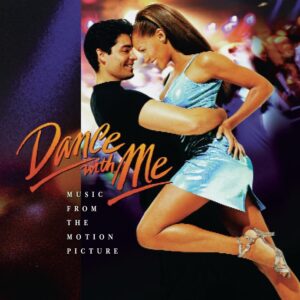
Dance with Me, 1998

Dance With me - Img

Dance With me – 1998

A film in which rhythm and romance will run through your veins. Chayanne and Vanessa Williams play a dance couple who meet in the middle of a great coincidence. Rafael Infante (Chayanne) loses his mother and decides to travel from Cuba to Texas to meet his father, the owner of a dance school.

When she gets to see him, she doesn’t know how to tell him the truth and prefers to apply for a job as a cleaning assistant. However, they realize how great a dancer he is and he begins to have participation in the academy. In the scenes we will be able to see how they get together through dance and enjoy the Latin rhythms. A fun film that should be among your weekend selection. Enjoy it!

Cuban Fury, 2014

Image of Cuban Fury 2014

Cuban Fury 2014

It tells us a story of love, self-improvement, improvement of self-esteem and, of course, salsa. Bruce Garrett (Nick Frost) is attracted to his boss Julia (Rashida Jones) and wants to conquer her through dancing. Garret had qualities for salsa but during his teens he was intimidated and put it aside.

Today, he wants to regain that rhythm, overcoming self-esteem issues and personal fears. For the character it is not easy to leave behind those events that marked his life. However, you must put aside self-pity and allow the dance to define everything. Will it have good results? Find out for yourself!

Ciudad Delirio, 2014

4- City of Delirium 2014

City of Delirium 2014

Cali, Colombia becomes the setting for an adventure full of dance and new experiences. Javier (Julian Villagrán) is a Spaniard who travels to Colombia for work and cannot help but fall in love with its people, customs and women. He meets Angie (Carolina Ramírez) a Colombian who owns a dance school. Their encounters are marked by the music and dancers that characterize this city. Javier ends up learning to dance salsa and guess what? Become an expert!

If you want to know more, find it now!

Shine, 2017

Shine 2017 - Latin music
Shine 2017 – Latin music

Shine tells us about two Puerto Rican brothers Ralphi Matas (Jorge Burgos) and Junior (Gilbert Saldivar) who have separated due to bad experiences and after a few years, they meet again. Between them, an even greater distance is created when they are on opposite sides of the fight for the gentrification of the area where they grew up.

The dance and cultural roots are present throughout the film, with Uncle Julio (Nelson Gonzales) trying to unite them again. Drama, dance and romance take sides in Shine, a very common story among Latinos in the United States who struggle not to let their principles die.

Latin music is life, it gives color, improves mood and is part of a cultural legacy that will continue to be maintained through the years. Every day new exponents of the genre appear and this will continue to happen over the years. So be it!

  • « Go to Previous Page
  • Page 1
  • Interim pages omitted …
  • Page 81
  • Page 82
  • Page 83
  • Page 84
  • Page 85
  • Interim pages omitted …
  • Page 135
  • Go to Next Page »

International Salsa Magazine (ISM) is a monthly publication about Salsa activities around the world, that has been publishing since 2007. It is a world network of volunteers coordinated by ISM Magazine. We are working to strengthen all the events by working together.