• Skip to primary navigation
  • Skip to main content

International Salsa Magazine

  • HOME
  • Previous editions
    • 2026
      • ISM / May 2026
      • ISM / April 2026
      • ISM / March 2026
      • ISM / February 2026
      • ISM / January 2026
    • 2025
      • ISM / December 2025
      • ISM / November 2025
      • ISM / October 2025
      • ISM / September 2025
      • ISM / August 2025
      • ISM / July 2025
      • ISM / June 2025
      • ISM / May2025
      • ISM / April 2025
      • ISM / March 2025
      • ISM / February 2025
      • ISM / January 2025
    • 2024
      • ISM / December 2024
      • ISM / November 2024
      • ISM / October 2024
      • ISM / September 2024
      • ISM / August 2024
      • ISM / July 2024
      • ISM / June 2024
      • ISM / May 2024
      • ISM / April 2024
      • ISM / March 2024
      • ISM / February 2024
      • ISM / January 2024
    • 2023
      • ISM / December 2023
      • ISM / November 2023
      • ISM / October 2023
      • ISM – September 2023
      • ISM – August 2023
      • ISM July 2023
      • ISM Edition June 2023
      • ISM – May 2023
      • ISM April 2023
      • ISM March 2023
      • ISM February 2023
      • ISM January 2023
    • 2022
      • ISM December 2022
      • ISM November 2022
      • ISM October 2022
      • ISM September 2022
      • ISM August 2022
      • ISM July 2022
      • ISM June 2022
      • ISM May 2022
      • ISM February 2022
      • ISM January 2022
    • 2021
      • ISM December 2021
      • ISM November 2021
      • ISM October – 2021
      • ISM September 2021
      • ISM August 2021
      • ISM July 2021
      • ISM May 2021
      • ISM April 2021
      • ISM June 2021
      • ISM March 2021
      • ISM February 2021
      • ISM January 2021
    • 2020
      • ISM December 2020
      • ISM November 2020
      • ISM October 2020
      • ISM September 2020
      • ISM August 2020
      • ISM July 2020
      • ISM June 2020
      • ISM May 2020
      • ISM April 2020
      • ISM March 2020
      • ISM February 2020
      • ISM January 2020
    • 2019
      • ISM December 2019
      • ISM November 2019
      • ISM October 2019
      • ISM Septembre 2019
      • ISM August 2019
      • ISM July 2019
      • ISM June 2019
    • 2016
      • ISM December 2016
  • Spanish
  • Download Salsa App
    • Android
    • Apple

Search Results for: Van Van

Carlos “Patato” Valdés one of the best percussionists in the history of Latin Jazz.

On November 4, 1926 in the Los Sitios neighborhood of Havana, Cuba, Carlos “Patato” Valdés was born. Known as Patato, he is, quite simply, one of the best percussionists in the history of music.

Patato was born into a very santera and very musical family, his father was a tres player of Los Apaches, the port germ of two illustrious sonera groups: the Sexteto Habanero and the Sexteto Nacional.

He learned to play the tres and the botijuela before turning to percussion, first on the cajones and finally on the congas.

He was an extraordinary percussionist of outstanding participation with the “Conjunto Kubavana”, “La Sonora Matancera”, “Conjunto Casino” and the “Orquesta de Tito Puente”, among other groups, both Son and Latin Jazz.

Formed in rumbero gatherings and carnival groups, Valdés became a professional in the early forties, after trying his luck as a boxer and dancer.

Carlos “Patato” Valdés uno de los mejores percusionistas en la historia del Jazz Latino

He played with Conjunto Kubavana, La Sonora Matancera and El Conjunto Casino. He accumulated nicknames: Zumbito (for his performances at the Zombie Club), Pingüino (for a dance he did on television) and Patato (for his small size), and in those days, dedicating oneself to music in Cuba guaranteed hardship. Besides, Patato wanted to experiment and that was not possible playing for dancers or tourists.

In 1954, he emigrated to New York, like his leather friends: Cándido Camero, Armando Peraza, Mongo Santamaría and the pioneer Chano Pozo (murdered there in 1948).

He immediately began working with Tito Puente. His first recording in the United States was the album Afro-cuban, by trumpeter Kenny Dorham, which opened with the intoxicating Afrodisia. Those were good times for tropical music.

He was the first percussionist to improvise “Solos” with 3 or more Congas at the same time. In addition, he was the creator of the “Congas Afinables”, instruments on which he would ride to dance making them sound rhythmically.

Patato Valdes was an excellent musician, an unforgettable person. Nervous and diminutive, he spoke with an impenetrable Cuban accent; he dressed elegantly, hiding the necklaces and bracelets of Changó and other “orishas”. He looked like a living caricature, but when he hit the percussions he became a divine creature: he had power, spectacularity, sense of melody.

Those skills made him an ambassador of Afro-Cuban rhythms in the jazz world, although he will also go down in history for his extraordinary rumba recordings.

In 1956, Patato appeared in the film Y Dios creó a la mujer, teaching the dances of his homeland to Brigitte Bardot. A great moment, although an implacable Guillermo Cabrera Infante criticized the actress’s movements: “she seems to commit suicide by dancing a cross between mambo and chachachá, a really toxic cross between mambo and chachachá”.

A flexible musician, Valdés sounded as comfortable playing with Machito’s big band as with Herbie Mann’s group. However, he felt indebted to the “rumba de solar” and in 1968 he recorded a revolutionary album with his friend Eugenio Arango, alias Totico.

The exuberant Patato & Totico had genuine Havana flavor, but enriched the basic percussion instrumentation with Cachao’s contrabass and Arsenio Rodriguez’s tres.Patato expanded the creative possibilities for percussionists by playing with three or more congas.

He also made their lives easier by developing a tunable conga: fed up with the traditional method (heating the leather over fire), he installed a metal hoop and keys for tensioning.

Carlos "Patato" Valdés
Carlos “Patato” Valdés

The LP company mass-produced his model, which was to become the standard for conga players. To promote it, he formed the Latin Percussion Jazz Ensemble with Tito Puente, Jorge Dalto and Alfredo de la Fé, among others, an orchestra that would end up becoming Puente’s big band in the early 80s.

It was during this period with Dalto that the album we have chosen for today began to take shape. It was titled “Patato, Master Piece” and it synthesizes all of Patato’s genius.

“Masterpiece” is an album that travels first class through tango, jazz, descarga, guaguancó and bolero, always in a masterful way and with a luxury crew made up of names like Jorge Dalto, Artie Webb, Michel Camilo, Jerry and Andy González, Nicky Marrero, Ignacio Berroa, Joe Santiago, Néstor Sánchez, Vicentino Valdés, and Sabú Martínez, among others.

The Art of Flavor.

Unfortunately Dalto had already passed away when in 1993 the project was released by the venerable German label Messidor, the same label that had already financed some impressive sessions of Patato with Mario Bauzá or Bebo Valdés, with whom he would later record the famous El Arte del Sabor.
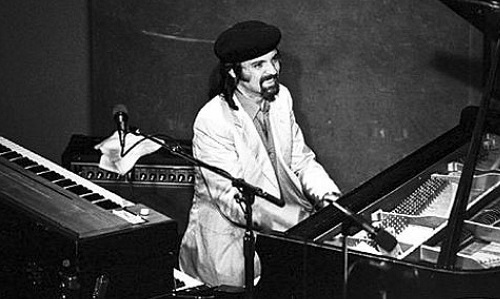
Jorge Dalton
Jorge Dalton

In fact, the great Argentine pianist had to be replaced for the last recording sessions that were made 6 years ago since his illness was too advanced, but he left us some incredible arrangements that were kept in the great majority of the themes.

Dalto left us in 1987 when he was only 39 years old. His replacement was nothing more and nothing less than a very young Michel Camilo.formed by 9 cuts among which we especially want to highlight the huge versions of Cute and Nica’s Dream, Masterpiece is an essential album for all lovers of Latin-jazz with capital letters and that is why we wanted to share it on a day as special as today.

Already recognized as a legend, Patato became more visible in the last 25 years: he had his own band, Afrojazzia, although The Conga Kings, with Cándido and Giovanni Hidalgo, turned out to be more popular.
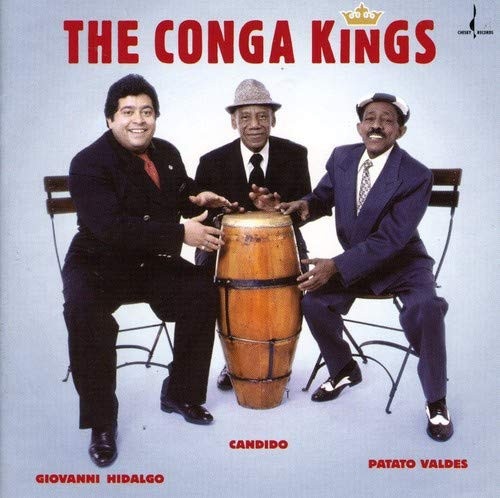
The Conga Kings Giovanni Hidalgo, Cándido Camero y Patato Valdez

He even made his way onto the modern dance floors, with a remix of San Francisco tiene su propio son. Just as he was returning from playing in California with the Conga Kings, his breathing began to fail.

The plane he was on had to make an emergency landing in Ohio to admit him to a hospital. The 81-year-old percussionist, a heavy smoker, was on his way to his beloved New York, but he would never get there. According to his relatives, he held out until December 4, the day of Santa Barbara, the Afro-Cuban equivalent of Changó, when the cables and tubes that kept him alive were removed.

Valdés died in Cleveland, USA, on December 4, 2007.

Fuentes: http://www.herencialatina.com/Patato/Patato_Valdes.htm

Imágenes: Martin Cohen de Congahead.com
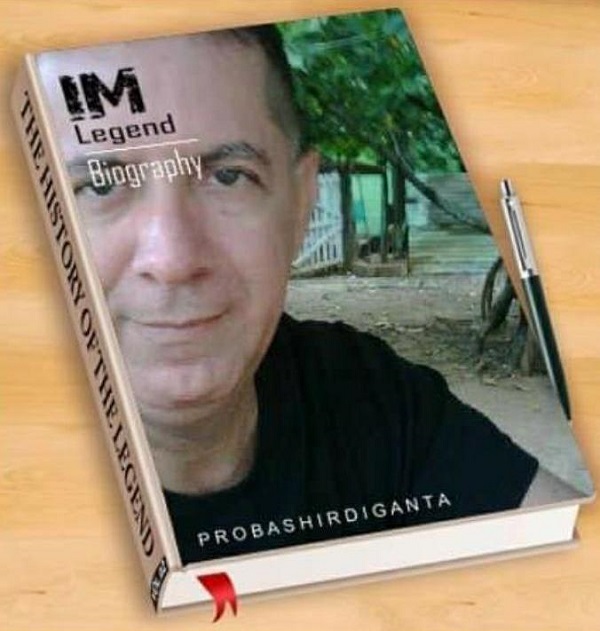
Carlos “Patato” Valdés

You can read: Irakere was a Cuban group that developed an important work in Cuban popular music and Latin Jazz under the direction of Chucho Valdés

Salsa and its detractors “Caiga quien Caiga”

International Salsa Magazine through salsagoogle.com presents Crisanto Edecio Romero Carpio from the Pearl of the Caribbean, Margarita Island and the history of our Caribbean musical culture.

A few months ago in conversations with my friend Salvador García Landaeta, a man with a great trajectory in the musical and radio field and a great connoisseur of the world of Salsa, I made a comment about the name of the title of this publication.

The history of our Caribbean musical culture has had a roller coaster of ups and downs in terms of our musical heroes.

La Salsa y sus detractores Caiga quien caiga

But the fact is that since our Caribbean musical identity was baptized with the name of Salsa, the so-called detractors began, an endless number of opinions that yes it was me, that yes it was sultanito, etc.

There began the tejemaneque, opinionators of office, radio inquisitors, professional payoleros, businessmen fascinerosos, and there was no shortage of rolo e vivos who took ownership of issues that were not even theirs to feast.

But I go much further because even in the Mecca of cinema some people got rich with some movies that it is better not to remember them so as not to play the game and not to stain the name of one of the best Salsa interpreters of all history.

Now, are we in the XXI Century or are we still in the Middle Ages? Our Latin Thing called Salsa today resists a demonic onslaught of criticism and a musical advance poor in lyrics and a denigrating theme towards women, our women, our daughters, our mothers. A vulgar and dishonest language and with an advertising, radio and audiovisual apparatus that costs millions of dollars worldwide.

But Salsa is still there, in every corner, in every neighborhood, in the old LPs that we keep as true musical treasures, in every gathering and conversation among friends.

Crisanto Edecio Romero Carpio

It is necessary to point out that all is not lost, people who from their communication trenches make a very important contribution.

It would be mean of me to point out any one in particular but when this “Message” arrives, many will know who I am referring to.

This article was a debt with my Salsera people, and to them I dedicate this reflection a day after learning of the death of one of the best interpreters that Puerto Rico has given, I am referring to Ubaldo “Lalo” Rodriguez.

I admired Lalo since his beginnings with Palmieri, his time with Machito and then with his solo project. A career full of successes, awards, and a situation that led him to face the evils of our society where it is easy to get in but very difficult to get out.

Crisanto Romero, Edgar Dolor Quijada y Salvador Garcia

The musical career of Lalo Rodriguez, a horse that was born among the greats and became Immortal (although some boasted of “killing him” after his death). Sad and painful for those characters.

Salsa does not die and will never die. And I close my commentary with a phrase written more than 2000 thousand years ago; let him who is without sin cast the first stone.

Crisanto Romero.

For the Ataca Quintero Project by Jaime Quintero and Salvador García.

https://www.facebook.com/crisantoedecio.romerocarpio

You can read: Hector Maisonave Manager of the Greatest Salseros in New York

Salsa singer Angel Rumba and what he has to say

Interview with Angel Rumba

Angel Manuel Ramos Sanchez, better known as Angel Rumba, is a New York singer of Puerto Rican descent with whom we had the great opportunity to talk about several issues of importance such as the beginning of his career with Pancho Bongó Y Su Orquesta, his debut as a soloist, the meaning behind his lyrics, among other things. It is a pleasure for us to have talked with this Latin talent and to bring the story to all our readers of International Salsa Magazine.

Angel Rumba tells us his story

His beginnings

Ramos Sanchez was born in New York City in the 1980s, when there was a well-established salsa movement in New York City and the United States in general. Evidently, little Angel could not be left out of this trend, especially if we take into account that through his veins ran Latin blood.

In addition, his father was a singer, musician and guitarist, so he always listened to salsa, merengue, bolero and other genres at home. It was at the age of seven when he started playing güiro, bongo and conga due to the curiosity generated by his father’s work, who spent a lot of time teaching his son to play as many instruments as possible.

In 1992 when Angel was 12 years old, he started playing with an orchestra called Projecto 3 in the city of Allentown, which represented his first opportunity to be on stage and show his face to an audience waiting to see what he could offer. It could be said that this was the beginning of what would become his life’s work.

Moving to California and Pennsylvania

Given that Angel’s father was a truck driver, the family had to move around a lot until 2003, the year in which he moved to Puerto Rico and lived there for three years. In 2006, he moved permanently to Pennsylvania, where he has been living until today.

Angel Rumba performing on stage

Release as a solo artist

When asked about his release as a solo artist, Angel stated that ”my beginnings were with merengue, but salsa always fascinated me because I really liked soneros such as Ismael Rivera, Gilberto Santa Rosa, El Canario and many more. I saw them improvising on stage and I always wanted to do the same.”

In 2014, he was given the chance to belong to the group Pancho Bongó Y Su Orquesta, which he was a member of for more than seven years until he wanted to make his own project in 2020. He felt he had the experience and took all the necessary stages to get to that point. In addition to that, being subject to command of a musical director greatly limits the creativity of the artists and the New Yorker singer no longer felt comfortable with what he was doing at that time.

The singer is also a composer and was not allowed to play his own music with the orchestra, which also led him to seek new horizons and, in turn, record his first solo track.

While acknowledging that this was no easy decision, he says that he has no regrets about it and all that he has been given from then until now has been a blessing for him and his family.

Obstacles during his solo career

On this subject, he confessed that many of his orchestra fellows were not happy with his decision to leave the group and he even felt that certain figures tried to put obstacles in his way so that he would not succeed in the way he wanted to. This is one of the reasons why he prefers not to show so much about his work and future projects to the public to avoid problems.

Angel Rumba in a photo shoot

”Mi sentimiento En Rumba”

The process of making this album was not easy, since the artist had to knock on many doors until making contact with Rafael Lozano, who arranged the first song ”Sin Un Amor”. This was a cover of a song by Los Panchos, so we can say that it is a tribute to the group in a totally different genre.

We went looking for musicians from several countries to work with u among whom was Angel Guzman, who plays trombone, baritone, saxophone, trumpet and many more. He also told us about sound engineer José Guerrero, who makes the mixing and mastering of the songs.

The album includes six songs composed by Angel himself and three that were adapted such as ”Perfidia” in a bolero version as a gift for fans of musical trios.

In total, the whole project has two merengues, two boleros and the rest are salsa songs.

Angel Rumba's last album ‘’Mi Sentimiento En Rumba’’
Angel Rumba’s last album ‘’Mi Sentimiento En Rumba’’

Salsa in a market dominated by trap and reggaeton

”Every genre has its audience and every artist has his fans” was what the singer answered when asked about the challenges facing a salsa singer in these times. With this, he shows that it does not bother him in the least that there are more popular genres than salsa and that every artist could have a strong fan base without this meaning involving damage to another one. He says that he will continue to create music with his favorite rhythms in spite of passing trends.

One thing he did emphasize is that there should be more artists who focus on writing and creating original music instead of doing so many covers. A lot of creativity is needed.

The importance of continuing to promote romantic love in the lyrics

The salsa exponent says that it is very important that music continues to promote romantic love and bring positive messages because unfortunately there are many genres focused on negative stuff such as disrespect for women, drugs, violence and much more. The salsa singer seeks to make his contribution to creating a better society in these hard times.

”The lyrics of the songs have always influenced society because their meanings anchor in the minds and the message endures” said Angel about this issue.

Read also: Are we really what we listen to?

Winterthur receives the Bachata Fusion Festival

Latin rhythms reach corners of Europe every day where it would never have been thought that these genres could be heard, much less danced. In this case, we have that Bachata is reaching unthinkable borders such as Switzerland, which is why the next Bachata Fusion Festival 2023 Carnival Edition will take place in the city of Winterthur in the Zurich region, during February. Know the details in the following lines.

Bachata Fusion Festival 2023 Carnival Edition in February

Young love couple dancing social danse kizomba or bachata

This festival is a continuation of the one that took place in November, a way to close Winter and begin Spring. It was the first festival dedicated exclusively to bachata, which was organized in Switzerland in the entire dance history of this country. And after that mega success it had, there was no reason not to organize another soon.

This edition will be dedicated to Carnival, a festival that is traditionally celebrated during the month of February in the Caribbean and South American countries. And when it comes to Latin rhythms, Carnival is a perfect concept to show them. That is why the organizers decided to carry out the Fusion with this premise but as always with the central axis of bachata.

As in the previous edition, the Carnival one will feature the best international artists, who in turn will attract the best dancers from all over Europe and other borders. But there is no need to be a professional dancer to enjoy the complete package that this festival offers. If you like Latin rhythms and even want to learn to dance next to the best dancers, this is your cue.

Confirmed artists include:

  • Mark & Sarah
  • Carlos & Idaira
  • Magda & Valerie
  • Gaby & Stefi
  • Dario & Sarah
  • Anthony & Ivana
  • Marco & Paola
  • Sorush – Let’s play bachata
  • Tony & Ana
  • DJ York
  • DJ Husky
  • DJ Paul G

The organizers at GO&Dance have left the prices of the packages and everything they offer. Prices range from €65 to €240, with various discounts depending on the package, and the days of reservation, remember that the closer the date is, there will be fewer opportunities for discounts or promotions. But from this moment Winterthur awaits you with open arms.

Winterthur, a historic city in the heart of Europe

Switzerland is a country located in the heart of Europe. It is very marked by its magnificent natural landscapes where the star is the central mountain range of the Alps. Its cities are must-see places on the continent, from Zurich, one of the most dynamic, to Winterthur, where culture takes center stage.

But there’s a lot to do in Winterthur while visiting for the festival. Just 30 minutes from Zurich, it has the largest continuous pedestrian zone in Europe, museums that house masterpieces of European art between the 14th and 20th centuries. Even presentations in the middle of the street, and a wide range of festivals since culture is the main thing in this city.

Despite not having the cosmopolitan air of many European cities, Winterthur has its own identity which makes it unique in the eyes of the visitor. And an excellent place to carry out the Bachata Fusion Festival 2023 Carnival Edition, this February will be a month highly anticipated by all.

Lizna Tovar winner in the category Voice Over of the year 2022 in Canary Islands Tenerife

Lizna Tovar is based in the city of Charallave, Miranda State in Venezuela.

She begins her steps in the radio in 2015, participating in a health segment for a radio program on 102.5fm in the state of San Carlos Edo. Cojedes, Venezuela.

The following year they change the program to the radio station Plata 105.7 FM, in which the director Gonzalo Playa offers him to dabble in depth in the locution, giving him the opportunity to have his own space to which he gave the name “La buena vibra en radio”, of urban cut inclined towards reggae, ska and rap.

Lizna Tovar
Lizna Tovar

Always with the intention of national support, she managed to be the most sought after program with the new talents in the region, always being the special guest in her different presentations.

Her preparation continued with “Gente de radio” and with the school of the director of the same station which gave the best school for great speakers of the state today.

In 2019 he advances to the Voice Over, managing to become the official voice of countless DJs. nationally and internationally, official voice of different stations such as Fantástica 97.5 FM in Venezuela, Latino FM Web of Canary Islands, Radio Constellation Musical of Arizona, among others.

Voice Over  del año 2022

He had the opportunity to identify the adult entertainment channel Venus.

The latter gave her a boost with the recordings in sensual tone, suggesting to many colleagues of the medium and her slogan was the sensual voice.

Continuing with her participation in radio, she was the female voice in the program Baúl Salsero and from there she moved on to her own production Voltaje Salsero, taking her to be the female voice in the presentations of different singers.

In conjunction with her colleague Deisy Bonett, she arrives to another production called Ni tam Santas ni tam Fiablas, broadcasted in K-ribeña stereo.

In August of this year she is announced her nomination for the Latin Gold Awards 2022 in the category of Voice Over in international mention, being the winner of the award and official voice of the same.

Latin Gold Award 1st Edition.

A well-deserved recognition to the evolving talent of singers, orchestras, DJs and communicators whose effort and dedication to achieve a space in the music industry deserve to be recognized, especially for working every day to provide entertainment, information and much Latin joy to all corners of the planet.

Voice Over  del año 2022 en Islas Canarias Tenerife

Premio Latino de Oro brings together an ecosystem composed of emerging artists and orchestras, as well as those of recognized trajectory and greater projection worldwide, providing a large niche of diversified talent that the entertainment industry requires daily, also concentrates the most representative network of DJs in the Latin world, in addition to the most global online Latin radio circuit that exists whose musical window is the dream of all artists.

Lizna Tovar ganadora en la categoría Voice Over  del año 2022 en Islas Canarias Tenerife

Today also active in social networks, she is part of a project called “Nuestra Visión” transmitted every Tuesday broadcast via instagram live, produced by Carlos Viloria in conjunction with the team formed by professor and historian Jeijal Perez and DJ. Julio the black.

She continues her preparation and constant learning in this medium and support for national talent, dedicated to carry out her projects with her motto “Always working for the positive” And it is that what is done from the heart transmits positive energies.

She does not think about rivalries or competitions, only to do a good job and in order to improve the quality, knowledge and experience.

Lizna Tovar (Voice Over)

 You can read: Saúl Delhom “Esta Salsa me gusta” one of the things I like the most is to learn, create and share

  • « Go to Previous Page
  • Page 1
  • Interim pages omitted …
  • Page 90
  • Page 91
  • Page 92
  • Page 93
  • Page 94
  • Interim pages omitted …
  • Page 137
  • Go to Next Page »

International Salsa Magazine (ISM) is a monthly publication about Salsa activities around the world, that has been publishing since 2007. It is a world network of volunteers coordinated by ISM Magazine. We are working to strengthen all the events by working together.