




| Events – November 2025 | ||
|
|
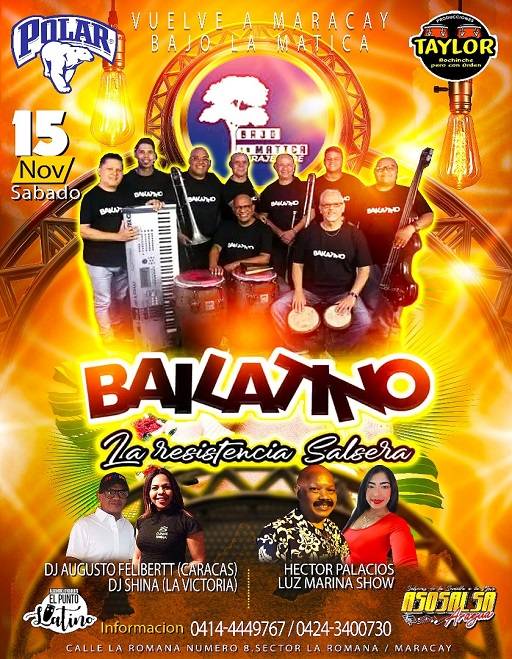 |
BAILATINO
|



| DIRECTORY OF NIGHTCLUBS | ||
|
|
|
|
|
|
|
|
|
|
|
|
|
|
|
|
|
|
|
|
|
|
|
|


| Events – November 2025 | ||
|
|
|
BAILATINO
|
| DIRECTORY OF NIGHTCLUBS | ||
|
|
|
|
|
|
|
|
|
|
|
|
|
|
|
|
|
|
|
|
|
|
|
|
Latin America / Argentina/ Buenos Aires
Kadenza Dance School is a dance academy located in Buenos Aires, Argentina. They don’t just teach people the steps of a musical rhythm; they demonstrate through their teaching that dancing nourishes the spirit of those who practice it. Not only that, but dance also allows for a connection with emotions, giving students more freedom for their spirit or soul.
KADENZA is a school geared toward students of all ages and with different goals, whether they wish to pursue a professional path or use dance as a form of recreation or therapy. All their students and teachers benefit from a comfortable reception area, spacious studios equipped with mirrors, barres, wooden floors, high-quality sound systems, and Wi-Fi throughout the studio. In short, it’s an ideal place to learn with passion, as the atmosphere is full of joy, respect, and good vibes, where one can enjoy what they love to do most… which is dancing.
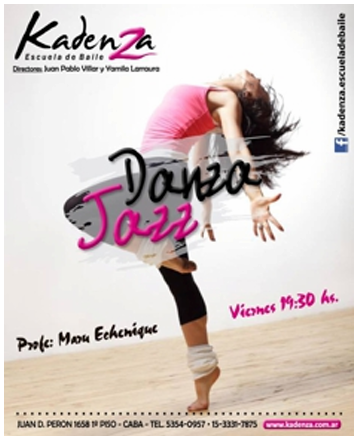
They also state that they are seriously committed to the quality of instruction, where qualified professors and instructors give their best in every class. This ensures their students incorporate the essentials of each technique and develop the maximum potential of their learning in the rhythms chosen by the student.
The School’s Directors are Yamila Larraura and Juan Pablo Villar, who mention that, “Anyone can open an Academy, but few are the ones that make a difference.”
If we want to know more about the history of these two directors, we can start with Yamila Larraura, who was born in Argentina. Since she was a child, she began listening to Afro-Latin music thanks to her father, “Jorge Washington Larraura,” who was of Uruguayan origin. When she was 14, she went on vacation to Villa Gesell with her parents and a friend of theirs. It was on this trip that her interest in Salsa was awakened, as she went to a place near the beach that played Salsa music and offered classes in the afternoon with all the people from the beach.
One of the songs heard back then was “El Muerto se fue de Rumba” by the group “Las Sabrosas Zarigüellas,” which was very catchy for everyone who heard it. After her vacation, she decided to enroll in Salsa classes, where her teachers were Pablo Demaro and Kimena Puente.
As for Juan Pablo Villar, during his youth, he worked as a waiter in a bar and took theater classes, which also included lessons in national folklore and Latin rhythms (Salsa). This was his first contact with dance, and from that moment, he developed an interest in it. One day, a person came to the bar and mentioned that they taught classes in a studio, asking if they could leave flyers at the bar for people who wanted to dance. Knowing this, Juan Pablo Villar decided to go to the Salsa classes taught by Professor Pablo Demaro.
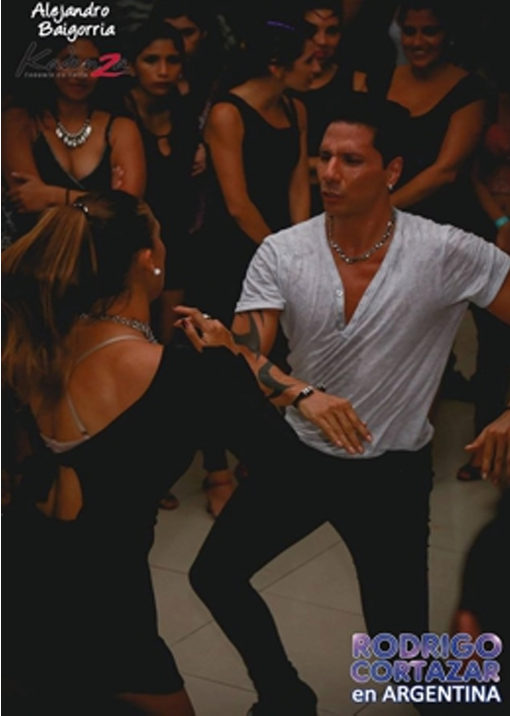
They explain that the Salsa classes back then were in a Cuban style, which featured fairly simple movements and figures. It was in these very classes that the future directors of KADENZA, Juan Pablo Villar and Yamila Larraura, first met.
To gain a better experience, and to teach and give classes, they had to learn new techniques. They decided to seek out the best teachers in Argentina, who at that time were from the “Escuela de Mambo en Dos,” led by teachers Liz Paredes and Carlos Aragón, until they moved to Italy in 2007.
Afterward, they formed a dance group with their colleagues called “Combo Bayres,” during which time they toured the country and performed on various stages. In 2007, Liz Paredes and Carlos Aragón returned from Italy and formed the “Compañía Mambo en Dos,” where Yamila Larraura and Juan Pablo Villar joined the project. They gained great experience in the artistic world, traveling to different Argentine cities like Mar del Plata, Rosario, among others.
They also had the opportunity to travel abroad, attending the Salsa Congress in Uruguay, and later going to the United States, to New York City, to present at the Salsa Congress where they met great dance legends like Eddie Torres. Another great experience they had was the honor of being the official dancers for the famous Venezuelan Salsa singer “Oscar D’León” and the Dominican Salsero José Alberto, also known as “El Canario.” By 2010, they left the Mambo en Dos company to start their own school.
The academy’s beginning went without a name for a year, simply referred to as Pablo and Yamila’s school, but they were always looking for a name that would identify the essence they wished to convey. They eventually came up with “Cadenza,” which in Italian means “style of free rhythms.” To make the name more original, they changed it to “KADENZA,” feeling proud of their choice.
For more information, contact them at:
Latin America / Venezuela / Caracas
It is an academy located in Caracas, Venezuela, founded by passionate dancers and instructors who dedicate their time and effort to teaching future well-rounded dancers. They use didactic methods to provide dance knowledge, expanding their students’ horizons and future at a national and international level.
They feature a great environment where students not only acquire dance knowledge but also enjoy their activity. They perform on stage to demonstrate the high quality of the show and to showcase innovative fusions of dance, aiming to position themselves as one of the best academies in the market.
In short, their vision as an academy is to “develop the best artistic working environment where our students learn and enjoy to the fullest.” “Basing this on the exigence and quality of our classes and shows, becoming a very competitive group, achieving national leadership and international recognition.”
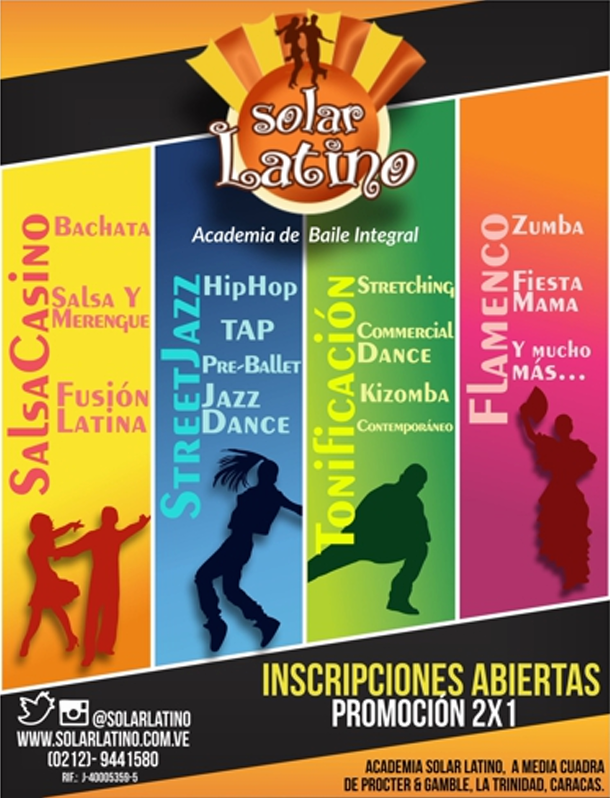
The academy started with a group of students who learned to dance Salsa Casino for recreation, and as time passed, it became something more serious.
Starting in 2004, they began teaching family and close friends, and within a few months, they already had at least 50 students.
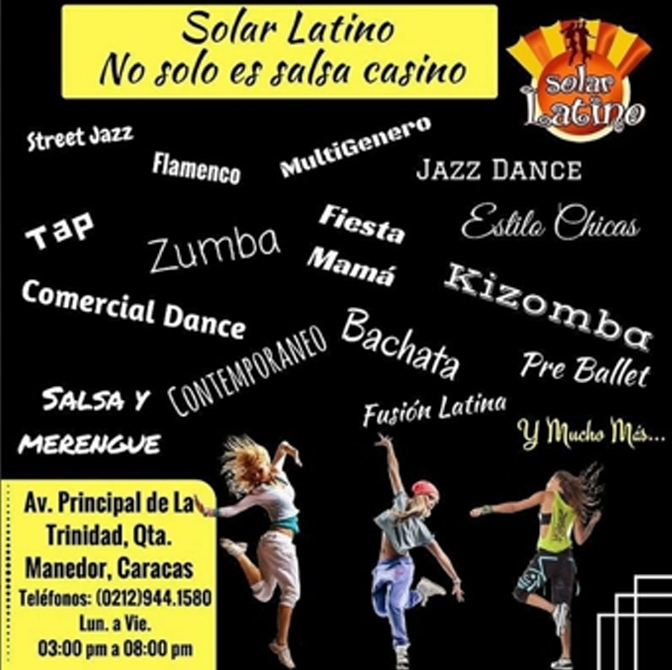
In 2006, the Solar Latino Academy was officially founded, starting with salsa casino. They later added diverse dance genres as they expanded their knowledge of integral dance and teaching methodologies, thus forming a large number of dance classes taught at the La Trinidad headquarters. The only founder currently at the academy is Oscar, who was responsible for instructing and training dancers and expanding the Academy. After achieving excellent results in national competitions and festivals, the Academy’s Dance Corps (Cuerpo de Baile) was formed.
They mention that they are currently a group passionate about dance and integral development, relying on dance as one of the most used tools for artistic and corporal expression. They also state that their work is maintained in constant artistic growth and teaching development, always applying “our innovative touch in everything we do.” They have even had the opportunity to participate in national and international festivals and, in addition to that, develop innovative events.
Latin America / Venezuela / Caracas
“There is a great variety of new artists who want to expand and promote their new talents to all lovers of salsa music. For this new edition, we present Jhonatan Araque, a Venezuelan born in Maracay, Aragua, on March 25, 1983. Since he was very young, he showed admiration and an inclination for music, especially singing. By the age of 14, he joined the Grupo Rumba Costeña for a year, performing as a soloist; later, he joined the quintet ‘Quinto Elemento,’ who interpret pop and ballad music. From that moment, he had the opportunity to perform at the ‘Forum’ of Valencia, his first experience performing in front of a significant audience.
He mentions that he began his studies at the ‘Tecnológico de Música de Valencia’ (Valencia Technological Institute of Music), where he graduated with a major in singing, obtaining excellent grades. By the age of 18, he decided to record his first solo demo, which opened the doors to his first record contract with the ‘Sonográfica’ record company, alongside the Moratinos brothers, forming part of a group called ‘Okey,’ experimenting with various genres on that album, such as ballads and pop with Latin and Spanish influences.
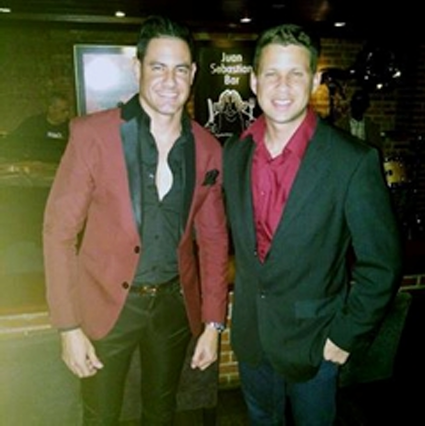
After performing in various nightclubs, he decided to join the salsa orchestra ‘Los Latinos,’ where he became known in the cities of Caracas, Maracay, and Valencia, having the opportunity to share the stage with great national and international performers of the genre, including: Hernan Olivera, Marcial Istúriz, Wilmer Lozano, Edgar ‘Dolor’ Quijada, Hildemaro, Erick Franchesqui, Rodrigo Mendoza, Ángel Flores, and Mariana La Sonera.
Additionally, he spent six months as the singer for La Dimensión Latina, performing with them in different cities across the country; he also auditioned and became part of the ‘Simón Bolívar Latin Caribbean Orchestra,’ belonging to the National System of Youth and Children’s Orchestras and Choirs of Venezuela, with which he had great experiences in various projects under the direction of maestro Alberto Vergara Icaza.
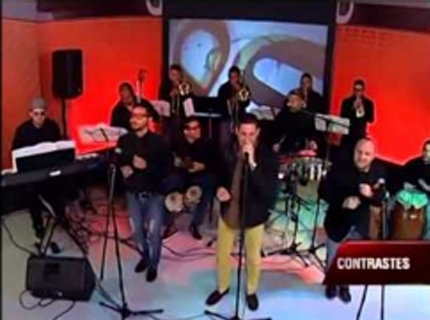
With all these new experiences, new opportunities arose for him in various forms to become part of renowned orchestras within the national salsa genre, such as Rumberos del Callejón, Orquesta Puma Band, El Combo de Venezuela, and the recording of two tracks with Fidel and Julito Antillano. In 2013, he decided to retire from La Latino Caribeña and form his own orchestra to lead ‘The Tribute Project to Jerry Rivera and Rey Ruiz.’
Jhonatan Araque’s orchestra is made up of very talented young Venezuelans with specific studies for each of the instruments they use. They are dedicated to presenting the audience with the interpretations that have been highly successful throughout their careers, thus paying tribute to these two singers of great international renown.
The members of this great orchestra are:
| Name | Role |
| Jonathan Araque | Solo Vocalist |
| Mauricio Marin | Backing Vocalist |
| Luis Martínez | Backing Vocalist |
| Angel Palma | Piano |
| Edwin Garcia | Bass |
| José “Puma” Reyna | Timbales |
| Braimy Mijares | Congas |
| Lukas Gomez | Bongos |
| Jose Anahole | Trumpet |
| William Rada | Trumpet |
| Pedro Xavier Moya | Trombone (Musical Director) |
| Leycester Licon | Trombone |
For more information, contact them at:
Contact Method
Phones
Jonathan Araque: +58 424-3443504 Pedro Xavier Moya: +58 416-3077868 0414-9276637
Facebook: https://www.facebook.com/ Bachology?hc_ref=SEARCH
Correo: [email protected]
YouTube: https://www.youtube.com/ channel/UCZP0snvp3tqkP24c X_fg1KQ
Twitter: @Bachology
For some time, Hispanic genres have attracted people from all over the world, who have been captivated by the rhythms and colors of our music and traditions. Such was the case of professional dancer and director of La Candela Flamenco Company, Ania Bartelmus, who despite her Polish roots, could not help but fall in love with these artistic expressions, prompting her to become one of the leading figures of flamenco in Atlanta, Georgia.
Ania was kind enough to take a few minutes out of her busy schedule to talk exclusively with International Salsa Magazine and treat some issues related to her beginnings and current career.
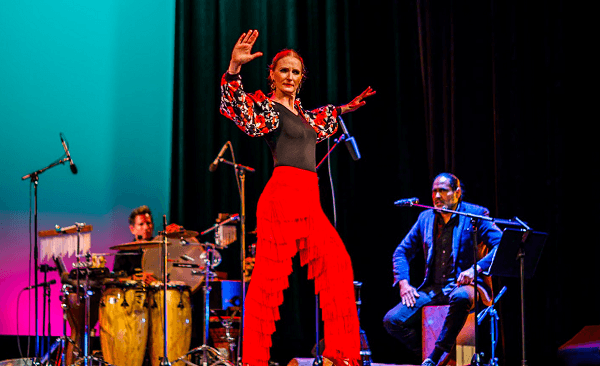
Although Ania was not born into a family of musicians or dancers, she has always been drawn to art and wanted to pursue one of its many branches as an adult. She started taking dance classes in different styles, including ballet, ballroom dancing, contemporary dance, and a little flamenco.
At that time, at 18 years old, the young woman recalls attending a flamenco show by Spanish composer and guitarist Paco Peña in her hometown. She was so fascinated by the musician’s performance that she wanted to focus a little more on that genre and, if possible, manage to professionalize.
Then, her dance classes began to fully focus on flamenco and at much more advanced levels than before. This appeared insufficient to her, so she decided to live in Seville, Spain, for a few years to learn directly from the source.
Ania was fortunate enough to have great teachers who turned her into the professional she is today and one of them was Curro Fernández, who affectionately nicknamed her “La Rubia de La Candela” when she was his student. During her first year in Seville, the dancer enrolled in the school of Esperanza Fernández and Miguel Vargas, the first being her singing teacher.
Esperanza was originally Ania’s teacher, but she was constantly touring and could not always attend the scheduled classes. Therefore, it was her father, Curro Fernández, who took her place and taught the classes instead of her, which made him some kind of father and mentor for Ania and the rest of her classmates. His knowledge and good humor made him one of the best references for the girl on the way she had to go.
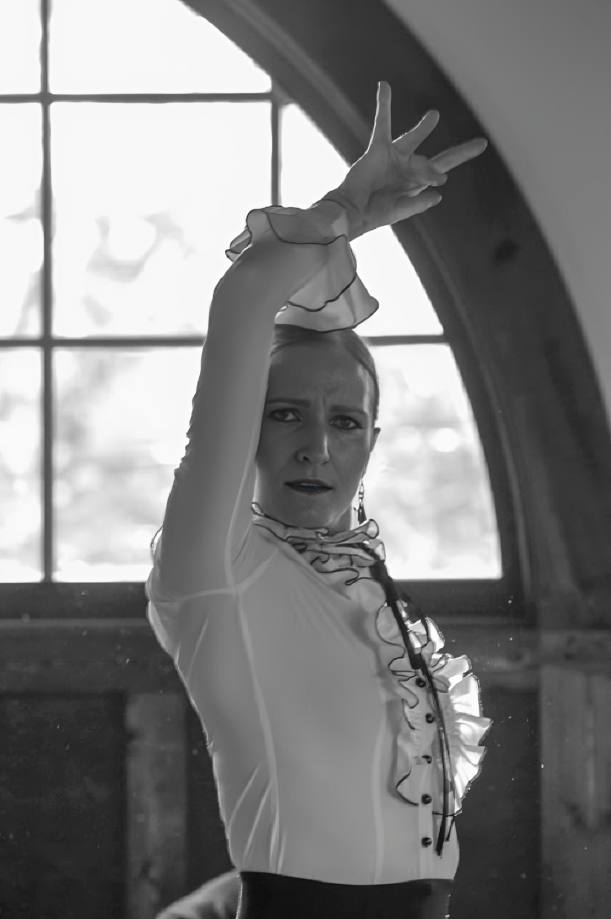
In 2014, Ania officially started her company, which initially received the name Ania Flamenco, but she later renamed it La Candela Flamenco in order to give more importance to Ania’s stage name.
At the beginning, the company was seeking to present Spain’s traditional flamenco, but this became a tough task to pull off in the United States, as many of the best flamenco singers are not based there. So Ania decided to change her strategy and opted for a more Latinized flamenco, since most of her musicians come from Latin countries and a large part of the public feels a much stronger connection to Latin genres than to traditional flamenco.
On this subject, he also said: “We continue to respect the main rules of traditional flamenco, but we do not include flamenco singers because of the difficulty in finding them in the city. Our shows focus on other flamenco elements where we can best showcase the tradition’s richness.”
La Candela Flamenco Latin Band is the company’s main group and is made up of a wide variety of famous musicians, one of them being Venezuelan guitarist José Chirinos, who joined the band in 2018 and contributed greatly to expanding the company’s horizons thanks to his background and the rhythms he brought from his homeland.
Thanks to Jose, Ania met Cuban percussionist Juan Pablo Solas Machado, who brought a lot of experience in flamenco, having been part of a company that toured the world with a Cuba’s flamencoised repertoire. The other percussionist who more recently joined is American Dave Holland, providing great knowledge about rhythms from around the world and serving as a connection between the Latin and the Anglo-Saxon souls for the rest of his bandmates.
We also cannot fail to mention Venezuelan pianist José Manuel García, one of last year’s great additions to the team along with fellow pianist Tony Castillo.
Finally, we also have Bulgarian flutist Teodora Stoyanova, whom Ania met through Jerry Fields, the percussionist with whom she started the company in 2014.
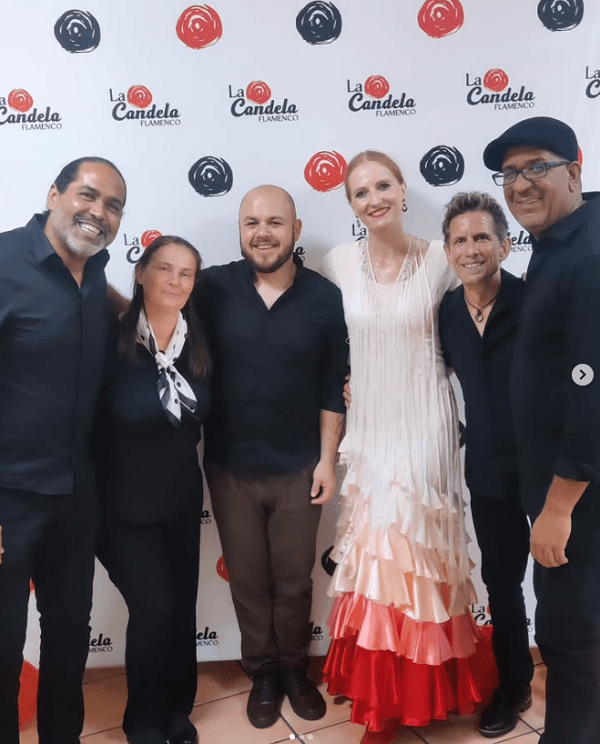
One of the major events in which La Candela Flamenco Latin Band usually participates annually is the Hispanic Heritage Celebration, to be held on October 25 at the Emory Performing Arts Studio in New York. This will be the third time they have presented this show in Atlanta, although in previous years, the concerts were held at the Roswell Cultural Arts Center.
Ania was first contacted to participate in the event in 2023, as its organizers wanted a show that reflected flamenco in the context of Hispanic heritage. On that occasion, Jose Chirinos played a leading role in the concert, while for the second edition, La Candela Flamenco Band featured the great talent of Mexican composer and guitarist Ricardito Sánchez and the aforementioned Tony Castillo. All of these musicians helped La Candela Flamenco to become more diverse and expand much more into Latin jazz and other rhythms of this type.
Thanks to the great job done by the team, for the second edition of the Hispanic Heritage Celebration, Ania noticed much more interest in the band’s performance than the previous year, and thanks to past experience, the next show worked best.
For the third edition, in which the talented dancer and her group will perform once again, International Salsa Magazine wishes them all the best and we have no doubt that everything will turn out in the best possible way.
Read also: Cuban singer-songwriter Osmay Calvo shows his versatility in the New Jersey music scene