• Skip to primary navigation
  • Skip to main content

International Salsa Magazine

  • HOME
  • Previous editions
    • 2026
      • ISM / May 2026
      • ISM / April 2026
      • ISM / March 2026
      • ISM / February 2026
      • ISM / January 2026
    • 2025
      • ISM / December 2025
      • ISM / November 2025
      • ISM / October 2025
      • ISM / September 2025
      • ISM / August 2025
      • ISM / July 2025
      • ISM / June 2025
      • ISM / May2025
      • ISM / April 2025
      • ISM / March 2025
      • ISM / February 2025
      • ISM / January 2025
    • 2024
      • ISM / December 2024
      • ISM / November 2024
      • ISM / October 2024
      • ISM / September 2024
      • ISM / August 2024
      • ISM / July 2024
      • ISM / June 2024
      • ISM / May 2024
      • ISM / April 2024
      • ISM / March 2024
      • ISM / February 2024
      • ISM / January 2024
    • 2023
      • ISM / December 2023
      • ISM / November 2023
      • ISM / October 2023
      • ISM – September 2023
      • ISM – August 2023
      • ISM July 2023
      • ISM Edition June 2023
      • ISM – May 2023
      • ISM April 2023
      • ISM March 2023
      • ISM February 2023
      • ISM January 2023
    • 2022
      • ISM December 2022
      • ISM November 2022
      • ISM October 2022
      • ISM September 2022
      • ISM August 2022
      • ISM July 2022
      • ISM June 2022
      • ISM May 2022
      • ISM February 2022
      • ISM January 2022
    • 2021
      • ISM December 2021
      • ISM November 2021
      • ISM October – 2021
      • ISM September 2021
      • ISM August 2021
      • ISM July 2021
      • ISM May 2021
      • ISM April 2021
      • ISM June 2021
      • ISM March 2021
      • ISM February 2021
      • ISM January 2021
    • 2020
      • ISM December 2020
      • ISM November 2020
      • ISM October 2020
      • ISM September 2020
      • ISM August 2020
      • ISM July 2020
      • ISM June 2020
      • ISM May 2020
      • ISM April 2020
      • ISM March 2020
      • ISM February 2020
      • ISM January 2020
    • 2019
      • ISM December 2019
      • ISM November 2019
      • ISM October 2019
      • ISM Septembre 2019
      • ISM August 2019
      • ISM July 2019
      • ISM June 2019
    • 2016
      • ISM December 2016
  • Spanish
  • Download Salsa App
    • Android
    • Apple

Search Results for: Venezuela

Meet the venezuelan Oeste 11 orchestra

Latin America /  Venezuela / Caracas
Members of the Oeste 11 Orchestra

Did you know that tropical music arises from the region surrounding the Caribbean Sea and the Antillean region of the American continent, where there is a mixture of rhythms from the African continent, fused with folklore and rhythms from the different American countries?

In this edition we can say that many music and dance lovers tend to choose Salsa and/or Tropical music, since they are musical genres that people enjoy as a couple or in a group, whether at an event, party or festival. giving it essence, life and sharing among all the members, for this reason there are many singers and members of orchestras that specialize in these genres, today we have as a special guest the Oeste 11 Orchestra from Caracas, Venezuela.

Oeste 11 Orchestra
Oeste 11 Orchestra

It was made up of young musicians belonging to the Venezuelan Orchestral Movement, among them the Venezuelan percussionist Alejandro Alfonzo who baptized it in 2007 with the name “Oeste 11” for all the musical experiences they shared since childhood, because most of their members were formed together in said parish.

It is currently made up of 13 musicians, who specialize in the musical genre “Salsa”, giving life to 2 discographies, the first entitled “AL NATURAL” that came out in 2015, consists of 8 unreleased songs and a cover. “With his songs I lie, Al natural, I forgot about you, Forget you, Medicine, You made fun of me, I have decided to forget you, My sweet friend and Dancing”

Oeste 11 Orchestra Photo

And for this month of May their second discography “Amor y gusto” will be available, which will be composed of 11 unreleased songs, and to give a preview of the new album they already presented us this March 31 their first single (theme), titled “ I want you to feel Mine”, which is accompanied by a music video that you can enjoy on her YouTube page https://www.youtube.com/watch?v=EpleKvxCg9Y.

And over the years they had the opportunity to share on stage with several well-known artists and/or groups, such as the Latin Dimension, Rafael el Pollo Brito, Proyecto A, Los Satélites, Magia Caribeña, Grupo Mango, and other national artists. of different musical genres.

Photo of the Oeste 11 Orchestra

Among their achievements, they mention that in the National Festival of Salsa Orchestras Dile no a la Payola de PDVSA la Estancia were the winners in 2014, they were also selected to honor the Sonora Ponceña for her 60 years of artistic career and were in the Festival Sounds Caracas.

If you want to listen to their discographies “Al Natural” and “I want you to feel mine”, they are available worldwide on the platforms Amazon, Itunes, Spotify, Tidal, Google Music, among others.

For more information:

  • E-mail: [email protected]
  • Facebook: https://www.facebook.com/Oeste11/
  • Twitter: https://twitter.com/oeste11?lang=es
  • Instagram: https://www.instagram.com/oeste11/?hl=es-la
  • YouTube: https://www.youtube.com/channel/UCR-wi3ybnoTbLH9C3-8keMA
  • Phones: +584242251360 / +584265161630 del manager Alejandro Alfonzo
Oeste 11
Oeste 11

Ronald Borjas is a Venezuelan singer, musician and composer

Ronald Borjas is currently considered one of the greatest exponents of salsa in Venezuela with an international projection that grows every year.

He is a Venezuelan singer, musician and composer, born in Maracaibo, the capital of the state of Zulia, on November 19, 1981.

Ronald Borjas is a Venezuelan singer, musician and composer

At the age of 10, his love for the timbal was born, a few years later, at the age of 14, he began singing as a soloist in the Bochinche Orchestra. Throughout his adolescence he stood out as a soloist in bands such as: Caribe, Asterisco, VHG and Bacanos.

He completed higher education at the Cecilio Acosta University (UNICA) where he obtained the degree of Bachelor of Music – Musical Education in 2002. In the same year he went on stage with the Venezuelan Super Band GUACO, where he debuted as a soloist and composer with the song “Te vas” from the album “El Sonido de Venezuela”.

Not only did he develop as a composer, Ronald also plays other percussion instruments such as the bass, the guitar and also the trumpet.

After 11 years as one of the main voices of Guaco, in 2014, Ronald decided to take another path and that is when the great project of his life began, developing his career as a soloist in genres such as Salsa, Bachata and Pop.

Ronald debuted as a soloist with the song “Te Doy Mi Voz” dedicated to his fans, with which he received the nomination for the Latin Grammy for “Best Tropical Song”. That same year, his musical godfather, Salsa legend Oscar D´ León invited him to his show at Madison Square Garden in New York, where he introduced him to thousands of people and baptized him as his “godson”.

That same year, he released “Te Encuentraré” a song that reached #1 on the Venezuelan radio charts Record Report and its video clip, filmed in New York, managed to enter the ranking of the most viewed videos on the HTV channel.

In 2015 he began his musical expansion to other borders, achieving success in countries such as Ecuador and Colombia where his third single titled “Dame Tu Amor” was positioned in the first places of the radio stations as well as in his native Venezuela, while in Peru, it was named the “tropical song of the summer”.

Ronald Borjas is currently considered one of the greatest exponents of salsa in Venezuela with an international projection.

At the end of that year he officially released his first album “Da Capo” with an event that brought together in Caracas, Venezuela a hundred figures of the national show, as well as the press, radio and TV of the country in an unprecedented event. This release in its first weeks, managed to accumulate more than 10,000 digital downloads on his official website www.ronaldborjas.com.

“Da Capo” had valuable collaborations and a first featuring with his godfather Oscar D´León, with whom he recorded “La Quiero Para Mi”. In addition, this album has songs by Amaury Gutierrez, Robert Vilera and his uncle Neguito Borjas, among others.

In 2016 he began releasing his song “Cántalo” which quickly became an anthem of joy and managed to position itself in the first place on Venezuelan radio. That year he won several national awards of great importance such as “Mara de Oro Internacional”, “Cacique De Oro”, Explosión Creativa and Supremacy, all of which recognized him as the “Salsa Singer of the Year”.

That same year he signed a contract with Sony Music as an artist from the Andean Region and embarked on his first international concert tour entitled “Da Capo tour” with which he visited Aruba, Panama and several cities in the United States.

In 2018, he released “Loco por Volverte a Ver” a song he wrote with Nacho Mendoza, Cáceres and Sharo Torres. He also made his second featuring with the “Caballero de la Salsa” Gilberto Santarosa with whom he released “Ellas te van lleva” the first collaboration with an international artist that also managed to position itself as number one on the radio charts.

Ronald Borjas is currently considered one of the greatest exponents of salsa in Venezuela

Shortly after, in 2019, he received a double nomination for “Album of the Year” with the song “Lo que pase aquí” as one of the songs on Tonny Succar’s album titled “Más de Mi” and “Salsa of the Year” with the song “No Queda Nada”. In addition to the collaboration he did with “Quintero´s Salsa Proyect” which was nominated for “Salsa Album of the Year”.

Also in 2019 he released his second album entitled “Bailamos Otra Vez” where he recorded songs of his own, as well as those of Servando Primera, Oscarcito and Amaury Gutiérrez. From this album come hits such as “Amor Demente” “Estoy Dispuesto” “Tu y Yo Tenemos” “Te Quiero para Mi” among others.

Shortly after he announced his collaboration with another former Guaco partner, Nelson Arrieta with whom he released the song “Sobran Los Momentos” which also gives name to the tour they would do together where they traveled through countries such as Argentina, Chile, Ecuador, Mexico, Colombia, Spain, Peru, Panama and the United States achieving great acceptance by the public.

He started the year 2020 with several collaborative releases. “Para Ustedes” from the album origenes where he participated as a guest and achieved #1 on the radio in Venezuela, then he released the song “Juegos Eróticos” with Victor Muñoz and promoted it in his country with great acceptance.

The “pandemic” stage begins and confinement did not stop him. In March he releases the version of the song “María Antonia” by the Venezuelan singer Gualberto Ibarreto, in April he releases “Aunque Parezca Extraño” with Manuel Petit who invites him to this collaboration. In May, together with his uncle Neguito Borjas, Jorge Luis Chacín and Nelson Arrieta they join in a project entitled “Los Mágicos”. In June “Ahora Me Llama” comes out, a song he had recorded for Rumberos del Callejón.

As if that were not enough, in July he records an intimate concert where he invites Victor Muñoz, his uncle Neguito Borjas and Nelson Arrieta to release it as a gift to his fans through his YouTube channel.

He closes the last months of 2020 with the song “Mía” written by Ronald and Salvador Solano that became the anthem of the ´Zumba´ reaching several places in the world. After this, he released one of his songs, “Ya Lo Decidí,” with which he again achieved first place on the radio and was accepted by the entire public.

He started 2021 as a special guest at Gilberto Santarosa’s concert at the Filmore Theater in Miami, where they performed the song “Ellas Te Van Llevando” together. Months later, he released the song he recorded as a duet with José Alberto “El Canario” entitled “A Mi Me Gusta” which quickly managed to position itself on the main playlists of digital platforms in the world. He closed that year with the song “Dime Cómo Hago” which he recorded with Nelson Arrieta and Oscarcito, a salsa that took over the public’s taste and today is one of the most chanted in his concerts.

2022 started with another important collaboration with Motiff, a song titled “Me Descontrola” which quickly entered the top spots on radio billboards and digital platform listings, and was also the song chosen by the renowned company Zumba to use as the official song at its world events.

In 2022, he also launched a very ambitious musical project that he carried out with his friends and fellow countrymen Adelmo Gauna and Nando De La Gente called “Los Pikis” with which they released a series of videos where they compiled erotic salsa hits from the 80s and 90s. Such was the success that in just two months they achieved more than a million views on YouTube.

In May 2022, the live concert titled “Sobran Los Momentos” premieres where Nelson Arrieta and Ronald Borjas invite the founder and lead voice of Guaco, Gustavo Aguado, and together perform several of the hits of the Venezuelan super band, such as “Vivo” “Pídeme” “Eres Más” and “Lo Eres Todo”. Oscarcito was also there performing his hit “Si Tu Me Besas” and the one he has with Arrieta and Borjas “Dime Cómo Hago”. All this incredible material can be enjoyed on the official YouTube channel of Ronald Borjas and Nelson Arrieta.

To close the year, he released the song “Se prende el Parampampan” with his musical friend, Acosta, a fun salsa that unites their musical styles, which together with a video recorded in Puerto Rico, managed to enter the public’s taste, turning this song into an anthem for Venezuelan parties. For his part, Ronald Borjas released a solo single titled “Los Vecinos” which is accompanied by a humorous video directed by Alex Galán.

2023 began for Ronald Borjas with his third featuring with an international artist, this time with the Puerto Rican legend, Tito Nieves. A romantic salsa titled “Te Busqué” that was accompanied by a video where the two singers can be seen in a performance and story. The video currently has more than half a million views on Ronald’s official YouTube channel.

Ronald Borjas
Ronald Borjas

Months later, Ronald reunited with his cousin Luis Fernando Borjas and recorded the song “Cuestión de Tiempo”, which was widely accepted by the public, surpassing two and a half million views of the video and positioned itself as one of the most listened to songs by “Lo Borjas” on digital platforms. This name gave rise to a joint tour with which they have traveled to the main cities of Venezuela, achieving sold out in each one of them.

He closed the year with a great concert “Live in Miami” where he reunited several of his musical colleagues and friends, such as Oscarcito, Victor Muñoz, Motiff, Los Pikis and for the first time since their separation, Toto and Beet from the group Caibo joined together with Ronald, performing the hits “La Despedida” and “La Promesa”. This great reunion of artists can be found on Borjas’ YouTube channel and has also surpassed more than 600,000 views in less than a year.

2024 began with his fourth song in a duet with an international artist, this time with the Nicaraguan, “the prince of salsa” Luis Enrique with whom he recorded “Y Si Mañana”. A great launch was made through the media in Venezuela and it has been a song that quickly became the favorite of the public of both singers and in a few weeks it was positioned in the main salsa lists on Spotify.

After this success, Ronald begins his “Tour LATAM 2024” through Colombia, Chile, Argentina, Peru, Panama and Uruguay, countries where he managed to sell out all his performances and reunite with his public after several years. The success of this tour will soon take him to Europe where he will be performing several shows in Spain and other countries that have not yet been announced.

Also Read: Tribute to Johnny “Dandy” Rodríguez Jr. His first recording was professionally with Tito Puente in 1964 and was titled “Exciting Rhythm of Tito Puente”

VENEZUELA CORRESPONDENT I.D. V6317848


The Secretary of International Salsa Magazine hereby requests all whom it may concern to extend all journalistic courtesies and permits to the journalist of ISM named herein

Augusto Felibert cedula

Emmited on June 2024

The road to success for Venezuelan harpist and cultural entrepreneur Ángel Tolosa

Thousands of Venezuelan artists have left the name of the South American nation high in recent years and today we will talk about one of the best harpists of his generation. It is great Angel Tolosa, with whom we had the joy of having a very pleasant exchange in which we touched on certain issues related to his fruitful musical career.   

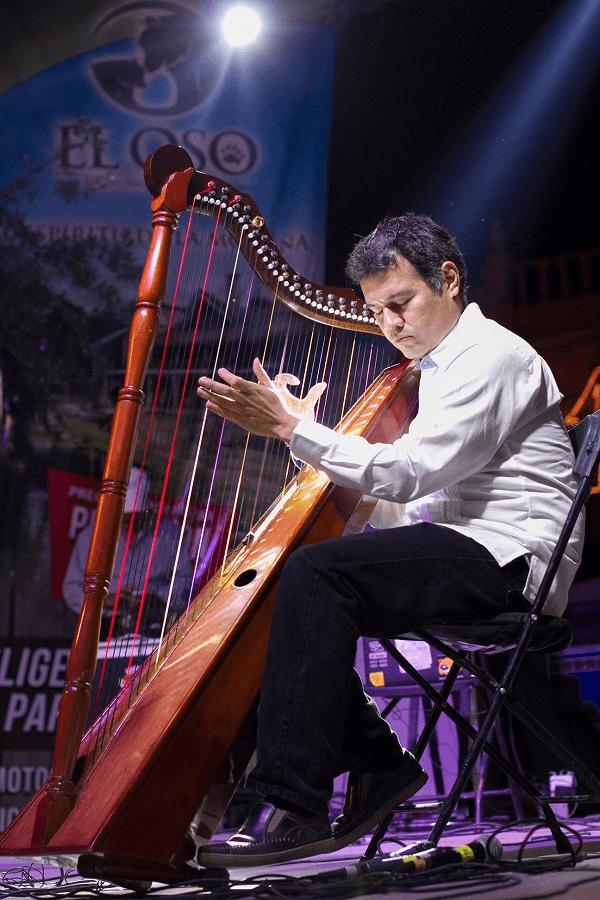
Ángel playing the harp
Venezuelan harpist Ángel Tolosa playing the harp live

Tolosa’s taste for Venezuelan popular and traditional music   

Something very important we have to mention about Angel is that he was born in the city of Caracas, Venezuela, so he managed to have a lot of contact with musical genres that were not only Venezuelan, but also from all over the world such as jazz, bossa nova, Cuban son and many others. This gave him a better understanding of music in general and a wider range of genres to choose from. 

There are many genres he likes, but without a doubt, Venezuelan music captivated him from the first time he heard it and, as he studied and analyzed it, he became much more aware of everything it had to offer at an artistic level. Ángel claims that ”no one can love what they don’t know”, so he has always been careful to learn as much as he could about Venezuelan music, so his is a knowledge-based love.   

Angel and the harp   

One advantage that Angel had is that he grew up in a profoundly musical environment, since music was always very important in his home. This led him to get started in folk singing when he was only four years old, which in turn, interested him in the piano and the Venezuelan cuatro. However, what definitely most caught his attention at so early an age until today was the harp, which according to Angel, was part of the life plan that God has for him.   

The musician even laughing says he believes that ”instruments are like their owners” since the harp interested him for being peculiar, versatile, elegant and demanding in terms of discipline to be played. These are characteristics that the artist perceives in himself when playing any piece, so he affirms that this is the instrument that most closely resembles his personality and style.   

Ángel posing with the harp
Ángel Tolosa posing for the camera with his main instrument, the harp

Ensamble A Contratiempo   

When Ángel and his brother José Luis noticed the talent they both had for music and the fabulous combination of what they made in this field, they decided they had to create something together and took the risk of creating Ensamble A Contratiempo, with which they sought to establish a platform on which they could share their musical interests with total freedom and without any restrictions. Angel defines it in short as ”a band with a universal sound, but with well-defined Venezuelan roots”.   

Ensamble A Contratiempo’s specialty is the so-called Afro-Venezuelan jazz and blends genres such as jazz, universal music, electronic elements and Afro-Venezuelan roots, resulting in a fresh and original urban sound that leaves no one who might listen to it indifferent.    

Something that characterizes this group is that it uses conventional instruments to play in unconventional ways. Ensamble A Contratiempo usually plays the harp, the cuatro, the violin, the bass and Afro-Venezuelan percussion.   

Both Ángel and his brother José Luis have enormous prestige and are seen as two of the most prolific art entrepreneurs of their generation and pioneers in the genres in which they perform, so this musical initiative was very well received in all sectors in which it has been heard.    

Together, the Tolosa brothers have even been able to design an essential vocabulary for learning to play the Latin harp and even contributed to the redesign of the Venezuelan harp as it was known before them. 

Within their extensive discography, we can mention some important titles such as ”Venezuelan Sounds”, ”Katuketi” and ”Ancien Roots”.   

Ángel and José Luis
Ángel Tolosa next to his brother, guitarrist José Luis Tolosa

Teaching and Agrupación Oficial de Cultura de la Zona Educativa del Estado Táchira 

As if this were not enough, Angel has also worked as a teacher and an important member of the Agrupación Oficial de Cultura de la Zona Educativa del Estado Táchira. 

In this regard, Angel explained that he worked for the Venezuelan Education Ministry for more than four years, an experience that helped him to design the educational services he currently offers in his cultural company, which also creates projects for various cultural institutions, universities and art centers around the world.    

On the subject of music education, the artist also emphasized that ”this is essential for the cognitive development of each person, the benefits that music has on those who not only have contact with it, but also play it have been demonstrated. Music is so demanding that it drives to have a structured life ruled by profound ethical principles and spirituality”.   

Bachelor of arts and ethnomusicology 

Angel has said that his Bachelor of Arts has been extremely important for his career as a musician, since from his point of view, ”music is a profession in which all disciplines of the world converge”. Everything he learned during his degree has allowed him to build diverse musical and business concepts under a much more orderly system. This career has offered him the necessary structure for the projects he has started with music, which he appreciates.   

In addition to this, Angel has also studied ethnomusicology, which can be defined as an academic area that involves various approaches to the study of music, but with special emphasis on social, cultural, identity aspects and more of this kind. This way of studying and perceiving music combines details that come from folklore, psychology, cultural anthropology and musicology at their most conventional.    

On the above, the harpist pointed out that ”Venezuela has a very deep sense of identity” and that the identity of a country is like the face and fingerprint that allows us its distinguishing features and what makes its inhabitants part of a whole. Of course, the typical music of the place is an essential part of what we have said.   

Since Angel is a lover of everything about Venezuela, he takes as a starting point his own profession to understand his own country in a much broader and rational sense, which he thinks Venezuelan society should do as a whole. It is necessary to know the concept of nation and of what we are and I don’t see any other road but culture” said the artist on the subject.  

It is clear that for the entrepreneur, studying music and its genres from its purest roots is a way to pay homage to the culture which we come from, an example that we should all replicate, even those who are not dedicated to music. 

Read also: Founder of Yambu Productions and host of ”Alma Del Barrio” Guido Herrera-Yance 

Venezuelan businesswoman Joanna Torres is an example to follow

There are many Venezuelans who, due to the economic and political crisis that has affected their country in recent years, have had to set off for new horizons and leave their homeland to look for a better future for themselves and their family. Such is the case of the businesswoman and founder of Arepas Latin Cuisine Joanna Torres, with whom we had the pleasure of conversing with recently. 

This talented young woman has a fascinating history of success and is a true inspiration to any Latino wanting to open paths in the United States or anywhere else in the world. That is why, from International Salsa Magazine, we decided to contact her and share her journey in the land of opportunities.  

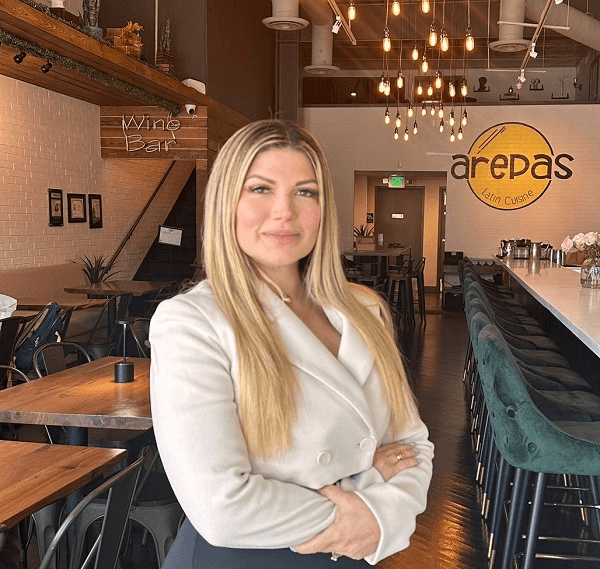
Businesswoman Joanna Torres
Venezuelan businesswoman and founder of Arepas Latin Cuisine Joanna Torres

Arrival in San Jose   

The first American city where Joanna arrived was Miami and her goal was to do a master’s degree, since she had studied her undergraduate career in Venezuela. Once there, she realized that she had a lot of trouble learning to speak English and there were few opportunities to practice it, since all with whom she interacted with spoke Spanish. 

It was then when a friend suggested the idea of moving with her to the city of San Jose, where it would make it easier for her to learn the language and spend time with people who spoke it all the time.  

How Joanna began to conceive the idea of becoming a businesswoman 

Two years after Joanna arrived in San Jose, she began working in a clinic and, together with her experience in administration and accounting, she learned everything she could about medical coding and the way medical procedures were coded. This gave her enough experience to dare to open his own medical consulting firm which has more than 22 years of operation and a total of 150 employees in Venezuela. 

The entire staff of the consulting firm residing in the South American country speaks English and takes care of serving all customers in the United States. Joanna even took it upon herself to provide her workers with their own fiber optic internet by contacting some telecommunications engineers, since this service in Venezuela is extremely poor. 

Since the medical consulting firm gave her the necessary experience as a businesswoman, she decided to expand into another area she was very passionate about: cooking. Joanna had been wanting to start a food truck in parallel to her current company for some time and saw the opportunity to do so through a friend and former college classmate who owned restaurants and food businesses. She proposed to Joanna to buy one of her restaurants and partner with her, which she finally accepted and that is how the first Arepa Latin Cuisine restaurant was born.   

Joanna and her team
Joanna Torres and part of her team in San Jose

Reducing failure possibilities for Arepas Latin Cuisine 

Joanna was aware that the possibilities of failure of her idea were high, but she told us that her extensive knowledge of finance was fundamental to overcome all obstacles. 

She was always clear that she had to look for ways to generate more income within the same company. That is why she and her staff have been responsible for providing lunch to employees from technology companies, making food for events such as birthdays or weddings, organizing pop-ups (temporary restaurants created to promote new menus and specific events) in order to innovate and always earn a stable income in the corporation. 

The businesswoman points out that she always tries to innovate, and with regard to this, she said ”I have invented some taco-arepas with which I use arepa flour to make the tacos and give them a different touch, so it would be a combination of both dishes. I always try to innovate and do different things to surprise people and keep them from getting bored”. 

”At the San Francisco headquarters, we have chosen the strong liquor license to start offering Venezuelan typical drinks and rum such as Diplomático or Ron Santa Teresa. We are also doing some remodeling in the place to make it much more pleasing to the eye” she continued. 

In addition, both the San Jose and San Francisco headquarters offer live music for diners to enjoy good Latin music while tasting their food. There is also a dance floor for those who wish to move to the rhythm of the orchestra of that day.   

Joana’s grandmother as an inspiration to create Arepas Latin Cuisine 

After taking the required steps, the first Arepas Latin Cuisine restaurant headquarters were opened in October 2021, but it was not easy. This was an effort made over many years in which Joanna did her best to be able to reach that point. 

The beginning of everything was her grandmother, with whom the Venezuelan learned everything she knows about cooking. She was a cook, a cooking teacher and taught cookery courses and workshops to support her 12 children because she was widowed at a very young age. Joanna tells us that, at that time, she and her children made ground corn arepas to sell to markets and restaurants. 

All this made her an inspiration to Joanna and led her to learn to cook since she was just nine. As a child, she knew that cooking would be important in her life. 

Lots of secrets that Joanna learned from her, such as the way in which the dough has to be kneaded, the difference between making homemade arepas and arepas to sell, the amounts of ingredients to be used, the way to prepare the fillings for the dishes, among other things.   

Joanna and her grandmother
Joanna Torres posing next to her grandmother, who sadly passed away on April 1, 2023

Reception to Venezuelan food in San Jose 

Joanna ensures that her recipes have been a boom in California, since there was no authentic Venezuelan food in San Jose, so her project was a pioneer in this area.   

The reception her food has got with Americans, Chinese, Indians, Vietnamese and many other nationalities has been truly amazing because dishes from Arepas Latin Cuisine, besides being extremely delicious, were something that has never been seen before.   

The taste for food at Arepas reached such a point that the restaurant provides lunch to more than 300 employees in several technology companies such as Netflix, Snapchat and Tinder. It is worth noting that workers who are benefited greatly appreciate being able to enjoy a rich and varied menu every day.   

The biggest challenges Joanna faces as a businesswoman  

One of the biggest challenges Joanna has faced is to find employees who know the Venezuelan and Colombian cuisine (there are also several Colombian dishes on the menu) as it should be. ”Finding cooks with great experience has been complicated, but with the arrival of Venezuelan and Colombian migrants in California, we have been able to find staff with knowledge in the culinary arena” said the businesswoman on this topic. 

For her, it is vitally important to employ people who are very clear about how to cook the main Colombian and Venezuelan dishes, so she takes this into account when recruiting her talents.   

In addition to that, Joanna also sells Venezuelan products and has a hard time finding them in San Jose, so she has to bring them directly from Florida in order to sell them in California.  

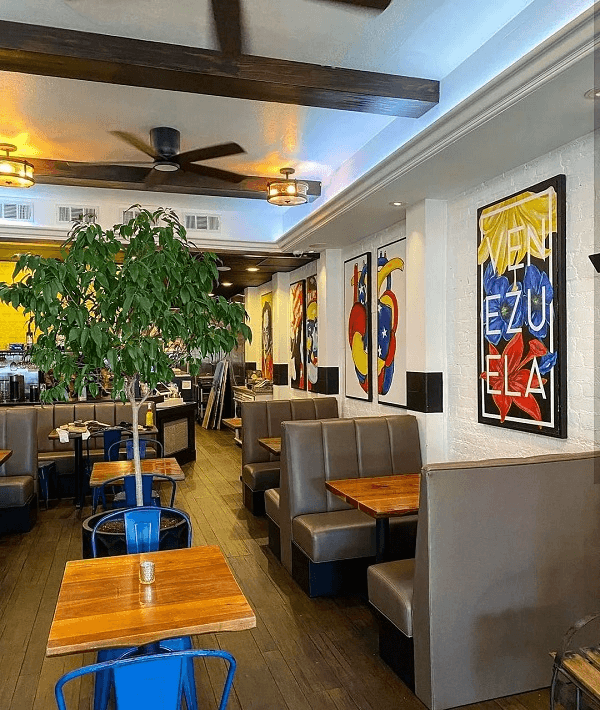
Joanna’s restaurant inside
That is what Arepas Latin Cuisine looks like on the inside

Advice for Latino migrants 

When Joanna was asked to give advice to future Latino migrants who wish to move to the United States, the first thing that she pointed out was that they must work very hard in that country to get ahead. In her particular case, she claims to have had three jobs at the same time, since she was alone in the United States and lived only from what she earned. 

She also added that ”you have to make sacrifices to succeed in life and always do things well according to the laws of the country that welcomes you. I think that there are many Venezuelans who confuse ‘native cunning’ (taking advantage or others and the economic, political and judicial system failures to do whatever you want without consequences) with intelligence, which makes them believe that they are above others and make serious mistakes. You have to do things well and eventually the much-desired success will come,” said Joanna on such an important issue. 

Read also: Young Puerto Rican singer Jeremy Bosch supports the Spanish Harlem Salsa Museum 

  • « Go to Previous Page
  • Page 1
  • Page 2
  • Page 3
  • Page 4
  • Page 5
  • Interim pages omitted …
  • Page 96
  • Go to Next Page »

International Salsa Magazine (ISM) is a monthly publication about Salsa activities around the world, that has been publishing since 2007. It is a world network of volunteers coordinated by ISM Magazine. We are working to strengthen all the events by working together.