• Skip to primary navigation
  • Skip to main content

International Salsa Magazine

  • HOME
  • Previous editions
    • 2026
      • ISM / March 2026
      • ISM / February 2026
      • ISM / January 2026
    • 2025
      • ISM / December 2025
      • ISM / November 2025
      • ISM / October 2025
      • ISM / September 2025
      • ISM / August 2025
      • ISM / July 2025
      • ISM / June 2025
      • ISM / May2025
      • ISM / April 2025
      • ISM / March 2025
      • ISM / February 2025
      • ISM / January 2025
    • 2024
      • ISM / December 2024
      • ISM / November 2024
      • ISM / October 2024
      • ISM / September 2024
      • ISM / August 2024
      • ISM / July 2024
      • ISM / June 2024
      • ISM / May 2024
      • ISM / April 2024
      • ISM / March 2024
      • ISM / February 2024
      • ISM / January 2024
    • 2023
      • ISM / December 2023
      • ISM / November 2023
      • ISM / October 2023
      • ISM – September 2023
      • ISM – August 2023
      • ISM July 2023
      • ISM Edition June 2023
      • ISM – May 2023
      • ISM April 2023
      • ISM March 2023
      • ISM February 2023
      • ISM January 2023
    • 2022
      • ISM December 2022
      • ISM November 2022
      • ISM October 2022
      • ISM September 2022
      • ISM August 2022
      • ISM July 2022
      • ISM June 2022
      • ISM May 2022
      • ISM February 2022
      • ISM January 2022
    • 2021
      • ISM December 2021
      • ISM November 2021
      • ISM October – 2021
      • ISM September 2021
      • ISM August 2021
      • ISM July 2021
      • ISM May 2021
      • ISM April 2021
      • ISM June 2021
      • ISM March 2021
      • ISM February 2021
      • ISM January 2021
    • 2020
      • ISM December 2020
      • ISM November 2020
      • ISM October 2020
      • ISM September 2020
      • ISM August 2020
      • ISM July 2020
      • ISM June 2020
      • ISM May 2020
      • ISM April 2020
      • ISM March 2020
      • ISM February 2020
      • ISM January 2020
    • 2019
      • ISM December 2019
      • ISM November 2019
      • ISM October 2019
      • ISM Septembre 2019
      • ISM August 2019
      • ISM July 2019
      • ISM June 2019
  • Download Salsa App
    • Android
    • Apple
  • Spanish

Search Results for: World Salsa

Luis “Papo” Marquez, Musician, singer, songwriter and producer

North America / Miami / Florida

This son of music, born on December 18, 1972, in the Pinar del Río Cuba Province, was raised between notes and chords that led him to be the artist he is today, known as Luis “Papo” Marquez, and considered a complete musician: trumpeter, composer, arranger, singer and music producer.

Luis Papo Márquez in the studio

As a child, he contemplated music as his environment, profession and way of life, thanks to his family who instilled in him all the passion for art and provided him with the tools to develop his knowledge. He began his trumpet studies at the age of 8 (eight) and, at 15 (fifteen), he already practiced professionally as a trumpet player in groups such as the Bella Mar Orchestra, Grupo Cumbre, musical grouping Los Trimmers, Grupo Íreme and Ricardo Hechemendía, in Pinar del Río and Havana.

Luis Papo Márquez
Luis Papo Márquez

At 19 (nineteen) he emigrated with his family to Venezuela, a country that opened the doors for his artistic consolidation, where he managed to make art on a large scale with the execution of his instrument and took the first steps within the world of composition and production.

“In Cuba, love and passion for music through the trumpet was born from me, but it was in Venezuela where I had, for the first time, the opportunity to look closely at how the art of composition worked. Suddenly, I was sitting in front of a piano and reading music sheet, trying to understand how they worked and falling in love with the trade. ” LPM
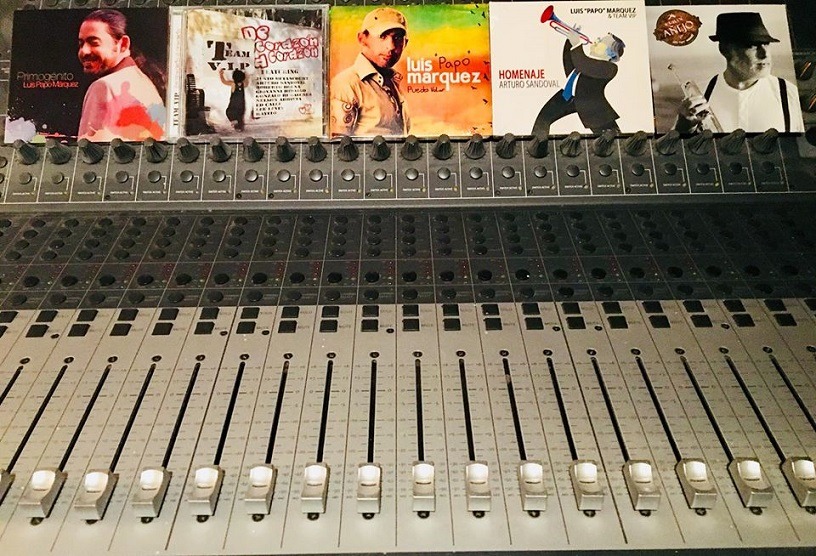
the equalizer equipment

This is how he started a successful career, thanks to his perseverance and permanent study, having the opportunity to play his trumpet with Venezuelan orchestras such as Mauricio Silva, Erick Franchesky, Naty and his Orchestra, Biella Da Costa, Ilan Chester, Sergio Pérez, Porfi Jimenez , Alfredo Naranjo, Orlando Poleo, Los Incorregibles, Mulato, Repicao and Guaco.

He continues forging his path and arrives in Miami, where he expands his international path with artists such as Jon Secada, Bacilos, Willy Chirino, Oscar D ‘León, Juan Gabriel, Gilberto Santa Rosa, Jerry Rivera, Celia Cruz, Cheo Feliciano, Chayanne, José Luís Quintana “Changuito”, Jose Alberto “El Canario”, Víctor Manuel, among others, with whom he has the opportunity to present himself as a trumpeter and in some cases, as arranger and producer.

Luis Papo Márquez playing trumpet

One of his biggest recognitions has been the delivery of an American Grammy Award for best music producer with the album “Son del Alma” by Willy Chirino; however, for LPM, the recognitions come day by day with the opportunity to make the music that moves and elevates them in their personal and artistic satisfaction.

Luis Papo Márquez defines himself as a “citizen of the world” born in Cuba and with a Cuban-Venezuelan heart. Work and discipline are his pillars to get ahead and his greatest passion will always be “creating music that makes the world move”.

Participation as Trumpeter and Arranger: Jon Secada, Bacilos, Willy Chirino, Juan Gabriel, Gilberto Santa Rosa, Jerry Rivera, Celia Cruz, Guaco, Cheo Feliciano, Chayanne, Edwin Bonilla, Luis Enrique, Victor Manuel, Rafael “El Pollo” Brito, Oscar D´León.
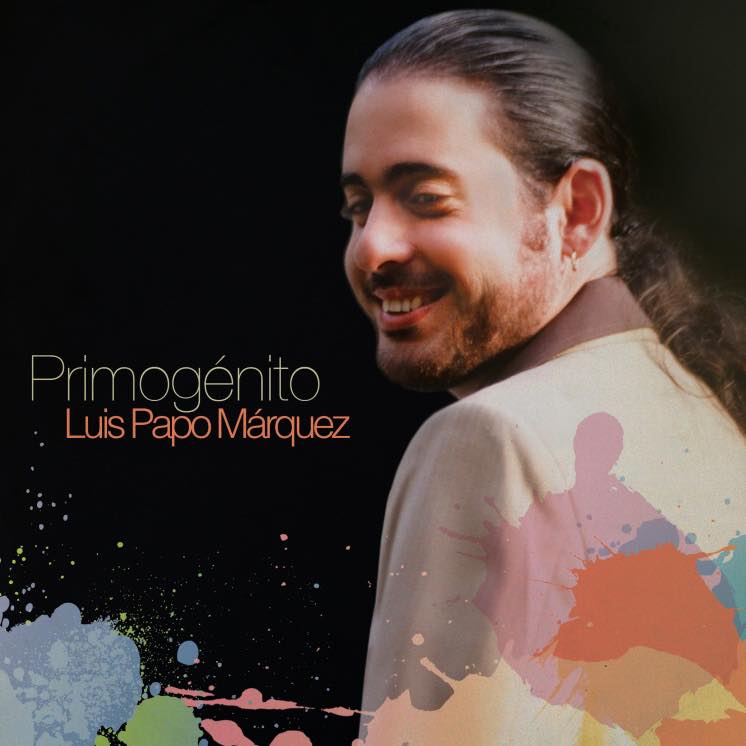
Primogénito Luis Papo Márquez

Record Productions:

  • Son del Alma (The rhythm of the soul). Willy Chirino. 2004. Grammy winner.
  • De corazon a corazon (From heart to heart). Team VIP. Luis Papo Marquez. 2007
  • Wireless Telegraphy. José Luis Quintana “Changuito”. 2007
  • Puedes volar (You can fly). Luis Papo Marquez. 2011
  • Arturo Sandoval tribute. 2016
  • Cuban Añejo. 2017
  • Firstborn. 2019

Gon Bops

USA / Los Ángeles / California

Gon Bops, Remains one of the oldest and most respected manufacturers of Latin instruments in the world

Gon Bops
Gon-Bops Logo

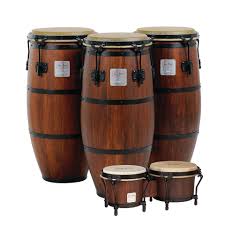
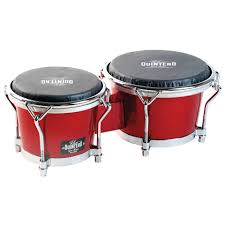
The Gon Bops legend began in 1954 California when Mexican-American Mariano Bobadilla (born in Guadalajara) – who would go on to become one of the most highly-regarded conga builders in the percussion industry – started designing and building Conga and Bongo drums.

A band instrument repairman and professional trumpet player, Bobadilla launched Gon Bops in his father’s old wooden garage in a downtown Los Angeles neighborhood.

He chose the name Gon Bops because “Gon” was one of the colloquial expressions of the time, as in, “everything is gone, man” – and “Bops” because his friends nicknamed him Bob, which sounded like “Bop” in the Latino dialect.

While Bobadilla’s drums remained true to the classic Cuban shape, he was a genuine innovator in the development of drum hardware. He designed the first teardrop crown with rounded counter hoops, developed to protect players’ hands – a concept that is now universally accepted.

He also gave birth to the first tunable hardware for congas and bongos in the United States. Having witnessed Cuban conga players heating up drums in their kitchens prior to performing, Bobadilla decided there had to be a simpler more reliable method to tension these instruments.

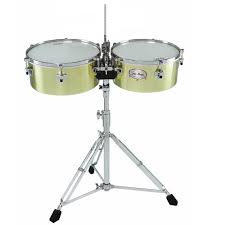
Other innovations from the young company were Taroles (wooden timbales), the first pre-mounted replacement heads for congas, chromatic tuned cowbells and numerous stands, adapters and other hardware.

Congas
Congas
Drums
Drums
Bongoes
Bongoes
Drums
Drums
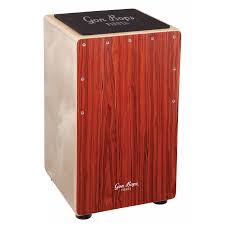
Gon Bops instruments

Gon Bops enjoyed great early success. The instruments were highly sought after by the top players of the era – giants like Alex Acuna, Mongo Santamaria, Francisco Aguabella, Armando Peraza, Poncho Sanchez, Jose Hernandez and Rich Barrientos – all of whom contributed invaluable R&D input. Gon Bops quickly became the undisputed leader in Latin percussion instruments and remained so throughout the 1950’s, 60’s and 70’s.

Mariano remained deeply committed to a hands-on role in production and retained complete control of the design and fabrication of all his products. As a result, Gon Bops instruments were mainstays on the biggest stages around the world, including the massive Woodstock festival in 1969.

But the winds of change were sweeping through the American percussion industry. By the time the 1980’s rolled around, all of the major US percussion manufacturers had moved offshore to manufacture their instruments.

Cheap Asian labor costs meant greater profits. But as manufacturing costs decreased, so did quality, and for that reason Bobadilla refused to mover his production outside of the US. As a result, Gon Bops began to struggle financially. Unable to compete against his larger competitors, Bobadilla had no choice but to close the doors of his highly regarded company.Thankfully, that was not to be the end of the Gon Bops brand.

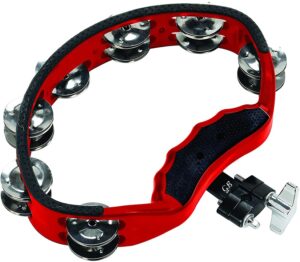
Pandereta
Pandereta

In 2001 Don Lombardi of US drum manufacturer DW bought the company along with all of its patents and trademarks. Lombardi had met Bobadilla in 1978 when he used Gon Bops Timbale shells to build DW brass snare drums, and subsequently had continued to seek R&D advice from Bobadilla.

It was a great fit, and it was no coincidence that the quality of DW drums and hardware continued to grow after the Gon Bops acquisition.

To run his newly acquired Gon Bops brand Lombardi hired the best drum craftsmen in the US. He even bought San Francisco-based Sol Percussion in order to conscript its founder – drum builder Akbar Moghaddam – to the Gon Bops cause.

instrument
instrument

Moghaddam brought along fellow drum craftsman Octavio Ruiz, and Lombardi teamed them up with Alejandro Perez, a drum builder who had worked with Mariano Bobadilla in the original Gon Bops factory.

In 2010 cymbal-maker SABIAN Inc. announced that it had purchased the inventory, intellectual property, patents and manufacturing equipment of Gon Bops from DW.

The deep commitment to innovation that SABIAN applied to its own instruments had inspired founder Robert Zildjian and his son, SABIAN President Andy Zildjian, to a search for like-minded instrument companies available for acquisition. And it was a happy circumstance had Lombardi had begun to seek a buyer for Gon Bops.


“We’re excited to begin this new chapter in SABIAN and Gon Bops history”, notes Andy Zildjian. “Gon Bops instruments are a perfect blend of vintage craftsmanship and innovative thinking. Since its founding in 1954, the company has pioneered several features and improvements that have forever changed Latin instruments.

We are excited about not only expanding distribution, but also continuing to focus on groundbreaking designs that represent clear improvements in meeting the needs of musicians. The pursuit of the best sound is what our craftsmen work for every day. We know the fit is perfect, above all, because sound matters.”

Today, Gon Bops remains one of the oldest and most respected manufacturers of Latin instruments in the world.

Domi Dance, A New Brand for Dance Comes to New York

North America / United States / New York

Domi Dance a brand of dance products, designed by ex-dancers for dancers.

Domi Dance; the city of New York saw the birth in 2019 of a new brand of products for the dance world, a brand that seeks to reach all corners where music, rhythm and dance can be presented.

From the hand of Dorelys Rodriguez, a former dancer who Since she was 7 years old, she has evidenced the world of dance, going from ballet, flamenco, salsa among other genres, I always dream of achieving many things in the world of dance, hence it will never be possible to separate from this beautiful discipline.

In her professional studies and work experience in the world of Marketing, she was able to devise a proposal that would marry her great passions, her line of work in the world of sales and her passion for dance, from which DomiDance emerged.

In the United States, Dorelys saw the opportunity to exploit her abilities to create a brand, a product, an object that would give her a new entrepreneurial and business life, without forgetting the main point of her idea, to be what the dancer needs, to reach your punctual needs with a range of high quality products at affordable prices for everyone, from the professional to the beginner who ventures into any discipline of this art.

Domi Dance since 2019 managed to position itself in many of the corners of the dance, starting with its first product presented the openwork stockings, little by little it developed innovative strategies to enter the commercial game, facing large established brands in the American market, it was able to enter through of online sales, a channel that allowed it to reach many people due to the boom in purchases through the web.

The brand claims to present its products under a line of first-class raw materials, quality is the main object in its line, they seek to offer quality above any point, customers can be sure of acquiring an object that will not be easy to beat.

When it comes to bringing it to life on the stage and in the dance halls, Dorelys tells us ¨we do not want a dancer to be under pressure not to sit on the floor for fear of breaking the stocking or shoes on difficult floors, we do not sell products Unbreakable but difficult to beat¨.

Logo Domi Dance
Logo Domi Dance

Domi dance is not a sales space for other products, they are manufacturers, they are exclusive when designing products for their brand, they generate new ideas based on the direct experience of the dancer, they are concerned with investigating the experiences lived with the use of clothing and footwear in the scene, an element that drives them as a brand concerned with giving the artist what he needs.

To date, it has a top-level range of textiles, ballet shoes, urban clothing and much more, all aimed at meeting needs in many disciplines. They continue betting on their sales framework through digital platforms such as Amazon, Ebay, social networks such as Instagram, Facebook, among others.

They have already developed a point of sale for Latin America, established trade in Panama, Colombia, Argentina, Venezuela and heading to other latitudes.

For this 2020, the projects are focused on designing footwear for flamenco, tap, expanding its textile line in leotards and garments of greater demand, working with masculine elements and continuing to advance in its expansion project throughout America and Europe. Follow them on their social networks through @domi.dance.


By Jose Perez, ISM Correspondent, Caracas, Venezuela


Great news from New York!

North America / USA / New York

In this edition (Johnny Cruz) I would like to tell you about the memorable career of my good friend Nicky Marrero, whom I esteem and consider to be one of the best timbaleros in the world and who has been an inspiration to many artists of different generations, even today. Also, Nicky is about to turn years this month.

Johnny Cruz show in New York

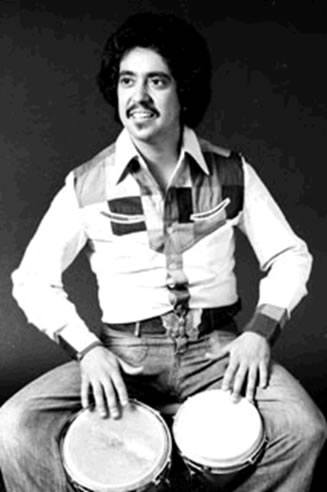
Born in the New York Bronx, the great percussionist and timpani teacher Nicholas Marrero

Known to all as Nicky Marrero, of Puerto Rican roots, came to the world on June 17, 1950 and grew up among musical instruments such as the maracas, güiros, and the guitars through his family. His born talent led him to start studying the drums, but he was seduced by the sounds and influence of Tito Puente and Willie Bobo.

His musical debut was with Orquesta Caribe. There has been speculation about his first recording at age 15 with Willie Colón’s band, but that recording was not released. His first published recordings, in which he participated as timpani player, were the albums El Malo and The Hustler, by Willie Colón, recorded in 1968 for the Fania Records label in LP format. He was invited to participate in a single titled Descarga de Dos Pianos with Charlie Palmieri and Louie Ramírez.

Nicky Marrero
Nicky Marrero

In 1968, Nicky Marrero worked with Eddie Palmieri’s band; That same year, he took part in the recording of the Champagne album, released by the Tico Records label. He has participated with maestro Eduardo Palmieri in fifteen albums between 1968 and 2018, most of them very successful.

In fact, with albums The Sun of Latin Music and Unfinished Masterpiece, they won the Latin Grammy Award. Nicky Marrero is one of the best timbaleros in the history of Latin music; in 1973, he replaced Orestes Vilato in the Fania All Stars of Pacheco and Masucci, with which he made tours, presentations and concerts playing the timpani in many countries of the world.

Nicky Marrero’s gigantic musical career has allowed him to participate in the most important Fania recordings; there are around 25 musical productions in which the imprint of his timpani, his bongo and his bell with La Fania All Stars has been registered.

Not only Latin music and Latin Jazz have had the participation of the Bronx timbalero, other musical genres such as Jazz, Rock, Funk, Soul, World, Country, Stage & Screen; have also had the participation of the portentous timbalero. The most important groups of Latin music, as well as the greatest musicians and singers of Salsa, have had the participation of this prodigious musician.

Nicky Marrero
Nicky Marrero

With great emotion, I congratulate and greet my friend Richard Román for the 25th Anniversary of Radio Salsa Superior, I wish him and his team many successes to continue his work in the world of music. The celebration will be virtual, given the circumstances, but stay tuned because many surprises come. The marvelous Salsa Superior team transmits day by day from Miami at salsasuperior.com/radio.

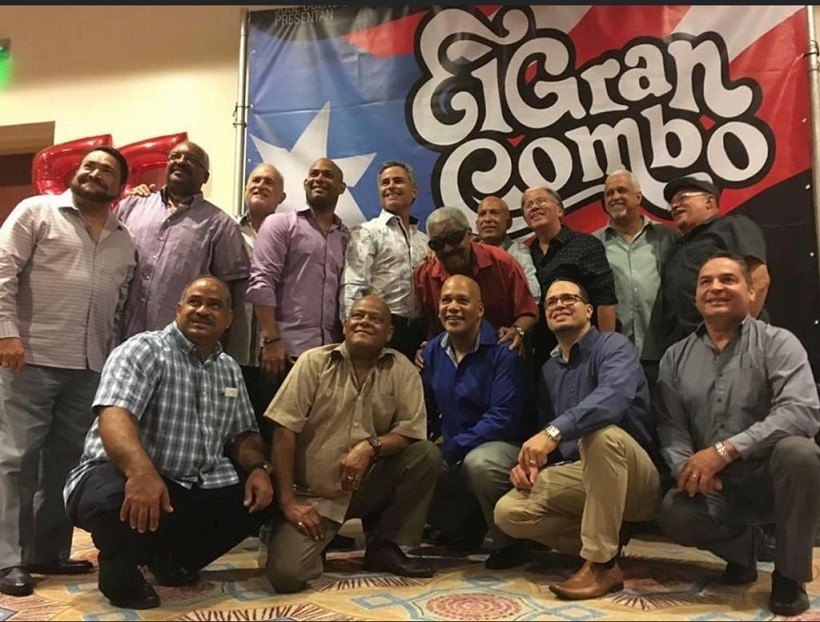
I want to congratulate my great friend Rafael Ithier and all the musicians of the Gran Combo on their 58th anniversary. Keep reaping successes and being part of the salsa tradition of those who love this genre. For many more years dancing to the rhythm of the Gran Combo of Puerto Rico.

Gran Combo Anniversary

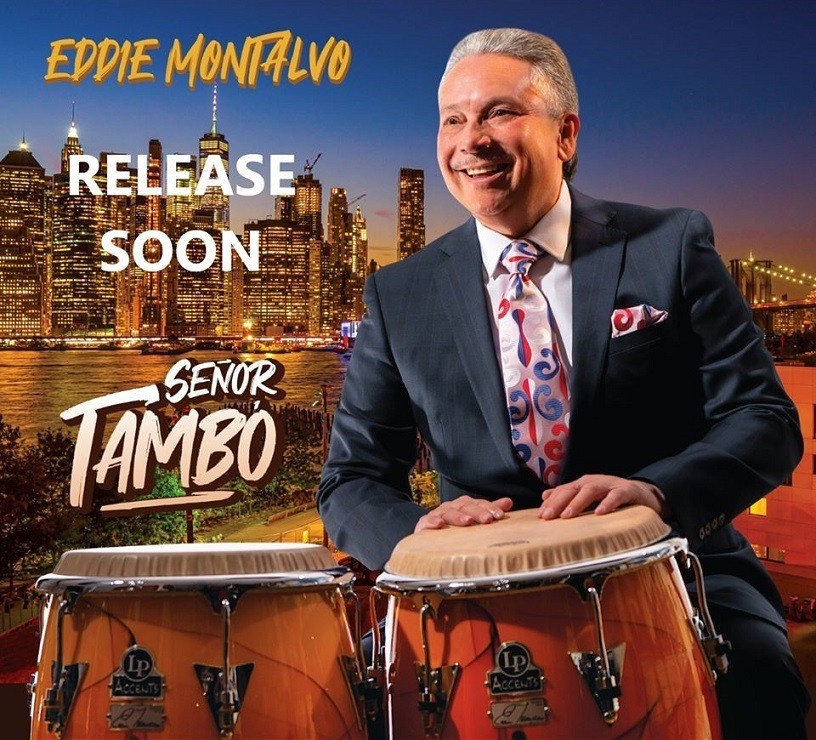
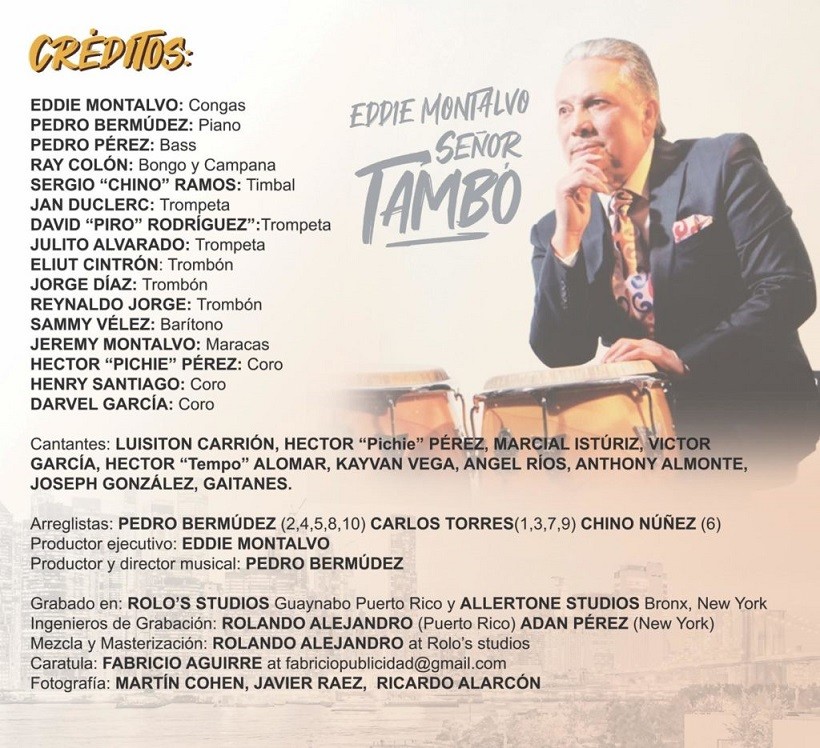
I also want to highly recommend Eddie Montalvo’s new CD: Señor Tambó. The great percussionist of the Stars of Fania and Six of the Solar delights us with a production that has ten songs in collaboration with prominent salsa exponents of the old and new school. A tribute to Rubén Blades with the participation of the Gaitanes. The musical production was in charge of Pedro Bermúdez and also has the musical arrangements of Carlos Torres and Chino Núñez. The production is available on all digital platforms and in traditional CD and Vinyl formats.

Eddie Montalvo's new CD: Señor Tambó.
Eddie Montalvo’s new CD: Señor Tambó.
Créditos señor tambó

Last but not least, It is an honor for me to invite you to tune in to my new Fm / Internet radio station on Live365.com: Salsagallery. Great music, artist interviews and much more made with love for you all. There is the link: https://live365.com/station/a77973

For now, it will not be possible to open to the public the Spanish Harlem Salsa Gallery in 1708 Lexington ave New York N.Y. 10029, but you can see the entire exhibition with more than 200 articles through our social media. Check the updates in our website: spahasalsagallery.com.

At the Spanish Harlem Salsa Gallery Museum we are happy to affirm that New York City is preparing to resume its activities little by little. We hope to have more news and soon as we can return to normality.

Remember not to leave your homes unless necessary, stay safe and stay home until the authorities tell us to. Health is first.

Johnny Cruz
Johnny Cruz

Contact: Johnny Cruz. 917-747-8505. [email protected].


By Johnny Cruz, ISM Correspondent, New York, New York City


Blue Note Jazz Club

North American/ USA / New York 

After 30 years of success, Blue Note continues to carry the torch for jazz into the 21st century in the cultural heart of New York

Since its inception in 1981, Blue Note has become one of the premier jazz clubs in the world and a cultural institution in Greenwich Village. Artists who have stopped playing in jazz clubs decades before, such as Sarah Vaughn, Lionel Hampton, Dizzy Gillespie, Stanley Turrentine, Oscar Peterson, Ray Brown, and Tito Puente, soon called Blue Note home.

Logo - Blue Note New York
Blue Note New York

In addition to the main acts that feature the likes of Chick Corea, McCoy Tyner, Joe Lovano, John Scofield, Robert Glasper and Chris Botti, Blue Note offers a Monday Night Series and the bi-weekly Late Night Groove Series to showcase New York’s up-and-coming jazz, soul, hip-hop, R&B and funk artists.

Over the years, Blue Note has been an economic engine for Greenwich Village, bringing in jazz fans from all over the world.

Blue Note New York – logo

The club receives rave reviews on a weekly basis in New York’s daily newspapers such as The New York Times and in international travel guides and magazines.

What makes Blue Note so special is that on a given night, anything can happen. It is not uncommon to see the likes of Stevie Wonder, Tony Bennett, Liza Minelli, and Quincy Jones get called up on stage from the audience to sit in.

1- Blue Note Jazz Club
Blue Note Jazz Club

Blue Note Jazz Club

131 W. 3rd St

New York, NY 10012

212-475-8592

  • « Go to Previous Page
  • Page 1
  • Interim pages omitted …
  • Page 119
  • Page 120
  • Page 121
  • Page 122
  • Page 123
  • Interim pages omitted …
  • Page 186
  • Go to Next Page »

International Salsa Magazine (ISM) is a monthly publication about Salsa activities around the world, that has been publishing since 2007. It is a world network of volunteers coordinated by ISM Magazine. We are working to strengthen all the events by working together.