• Skip to primary navigation
  • Skip to main content

International Salsa Magazine

  • HOME
  • Previous editions
    • 2026
      • ISM / April 2026
      • ISM / March 2026
      • ISM / February 2026
      • ISM / January 2026
    • 2025
      • ISM / December 2025
      • ISM / November 2025
      • ISM / October 2025
      • ISM / September 2025
      • ISM / August 2025
      • ISM / July 2025
      • ISM / June 2025
      • ISM / May2025
      • ISM / April 2025
      • ISM / March 2025
      • ISM / February 2025
      • ISM / January 2025
    • 2024
      • ISM / December 2024
      • ISM / November 2024
      • ISM / October 2024
      • ISM / September 2024
      • ISM / August 2024
      • ISM / July 2024
      • ISM / June 2024
      • ISM / May 2024
      • ISM / April 2024
      • ISM / March 2024
      • ISM / February 2024
      • ISM / January 2024
    • 2023
      • ISM / December 2023
      • ISM / November 2023
      • ISM / October 2023
      • ISM – September 2023
      • ISM – August 2023
      • ISM July 2023
      • ISM Edition June 2023
      • ISM – May 2023
      • ISM April 2023
      • ISM March 2023
      • ISM February 2023
      • ISM January 2023
    • 2022
      • ISM December 2022
      • ISM November 2022
      • ISM October 2022
      • ISM September 2022
      • ISM August 2022
      • ISM July 2022
      • ISM June 2022
      • ISM May 2022
      • ISM February 2022
      • ISM January 2022
    • 2021
      • ISM December 2021
      • ISM November 2021
      • ISM October – 2021
      • ISM September 2021
      • ISM August 2021
      • ISM July 2021
      • ISM May 2021
      • ISM April 2021
      • ISM June 2021
      • ISM March 2021
      • ISM February 2021
      • ISM January 2021
    • 2020
      • ISM December 2020
      • ISM November 2020
      • ISM October 2020
      • ISM September 2020
      • ISM August 2020
      • ISM July 2020
      • ISM June 2020
      • ISM May 2020
      • ISM April 2020
      • ISM March 2020
      • ISM February 2020
      • ISM January 2020
    • 2019
      • ISM December 2019
      • ISM November 2019
      • ISM October 2019
      • ISM Septembre 2019
      • ISM August 2019
      • ISM July 2019
      • ISM June 2019
    • 2016
      • ISM December 2016
  • Spanish
  • Download Salsa App
    • Android
    • Apple

Search Results for: World Salsa

Rosario Jermano

Europa / Italia / Napoles

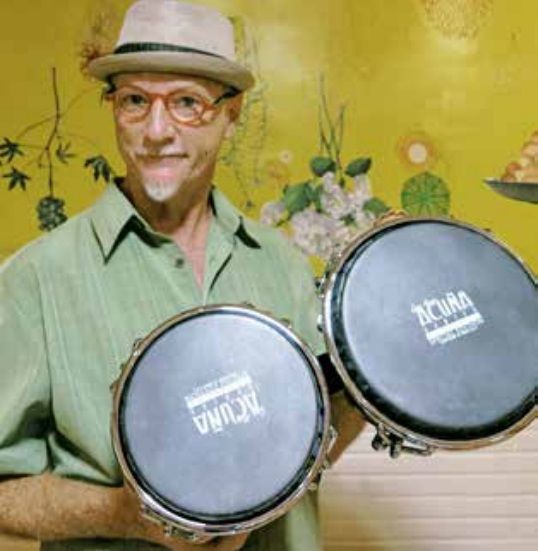
Rosario Jermano is probably the best known Italian percussionist, open to all types of traditional and worldwide ethnic music.
Rosario Jermano

Jermano’s Neapolitan origin together with his extraordinary intuitive interpretations have given birth to a music with a genuine Mediterranean sound with colours from World music and pop influences.
His world is not conned to the Neapolitan area, but is open to the sound and cultures of the entire Mediterranean area, mixed in a truly exciting blend.

The exotic Middle East as well as tribal Africa are united by the sound of his percussions to create what he himself calls “The breath of life”.

Rosario Jermano with his drums

Jermano has played with played with: Zucchero Fornaciari, Eros Ramazzotti, Fabrizio De Andre, Pino Daniele, Renato Zero, Rai Orchestra, Loredana Berte, Mia Martini, Ornella Vanoni, Gino Paoli, Fiorella Mannoia, Ana Belen, Edoardo Bennato, Eduardo De Crescenzo, Luca Barbarossa, Corrado Rustici, Raf, Riccardo Cocciante, New Perigeo, Toots Thielemans, David Foster, Gigi D’Alessio, Nuova Compagnia di Canto Popolare, Enzo Gragnaniello, Natascia Bonacci, Patch Stewart, Sting & Zucchero, Toquino, Luca De Filippo, Yaire, Jose Miguel Diez, Lorca, Tishubi y Giorgina, Andrea Bocelli, Tyromancino, Del Newman Orchestra.

For more information:
Facebook: https://www.facebook.com/R.Jermano/

Brad Dutz

North America / Los Angeles / California

Brad Dutz, His endorsements include Innovative Percussion, Gon Bops, Remo, Yamaha, Paiste and Roland

While recording CD’s for artists like Kiss, Willie Nelson, Michael Wolff, Tribal Tech, David Benoit, Rick Braun, Vinny Golia, Alanis Morrisette, LeAnn Rimes, Mitch Forman, Kim Richmond, Rickie Lee Jones, Hands’Onsemble and even actors Jeff Bridges and Ronny Cox, Brad Dutz tries to bring the strangest percussion instruments he has to the session to create a unique sound.

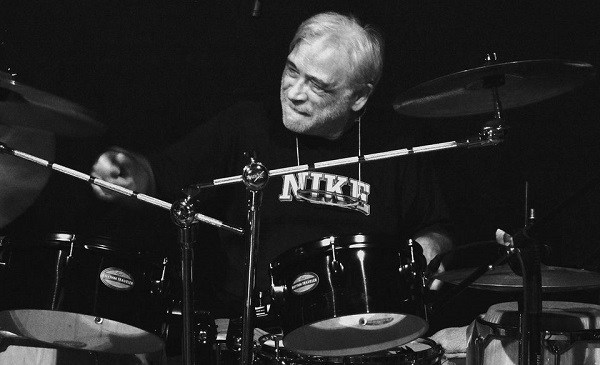
Brad Dutz and his drums

He can be heard on TV shows King of the Hill, Family Guy, American Dad, Enterprise and Firefly. Some of the movies that Brad has played on include Last Vegas, Battleship, Bourne Legacy, Cowboys And Aliens, Prince Of Egypt, Syriana, Hildago, Rugrats Of Egypt, Syriana, Hildago, Rugrats Go Wild, Star Trek 5, Ocean’s Eleven, Anchorman, Hollywood Homicide, Transformers 1 And 2, Rush Hour 3, Run Down, I Spy and Imax Films’ Mysteries Of Egypt, Mt. Kilamanjaro, The Amazon and Island Of Sharks.

As a member of BMI since 1985, Brad Dutz has produced over thirty CD s as a leader and composed the entire body of music on more than twenty of those releases. He is the owner of the publishing company Leaky Spleen music. The ensembles he has written for cover a wide range of instrumental combinations.

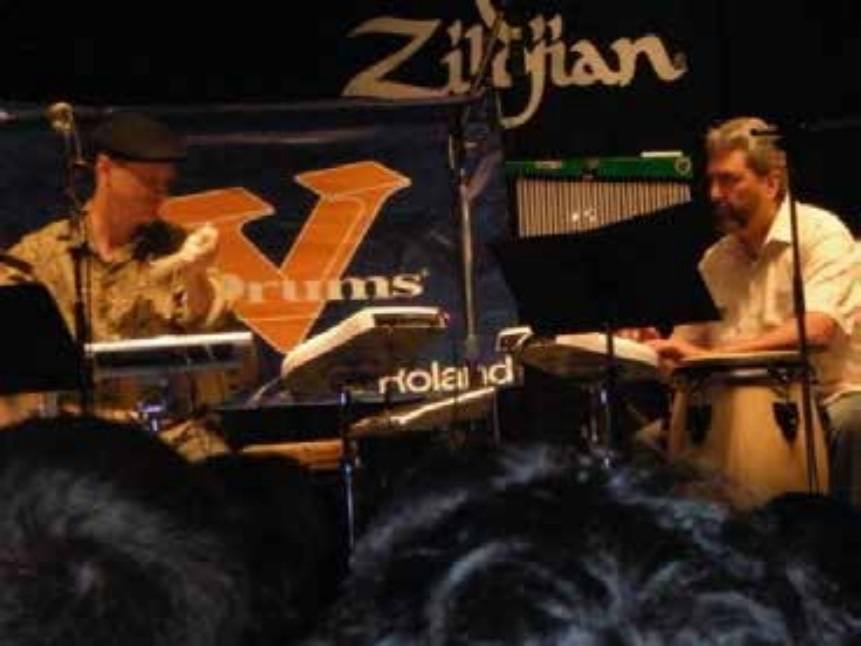
Brad Dutz in concert

In 1990, Brad Dutz started his composition studies of multiple scores mainly of 20th century music and privately with composers Terry Plumeri, Ron Jones, Russell Steinberg. In addition to CD projects, he has composed for dance companies and theatre as well as television, movies including a few silent films.

The main focus of his composition over the last twenty years however, has been his numerous CD releases.

Everything from solo pieces to nonets is featured on his compact discs. Last year saw the fourth release- ‘”Peripheral Hearing” ‘of his latest quartet project.

This unit has the unique instrumental combination of mallet percussion, oboe, cello and bass clarinet.

Other recent ensembles include The Other Three (a trio with Kim Richmond and John Fumo), Obliteration 4tet (found objects for percussionists), Polarity Taskmasters (keyboards, voice, Theremin, percussion) and the duet CD with reedman Vinny Golia.

In 2002 his Obliteration quartet was the subject of a documentary lm. As an educator, Brad has taught hand percussion at Cal State Long Beach since 1997.

He has conducted hundreds of clinics at colleges and high schools on a variety of topics (including studio work, composing for percussion, producing his own CD of world percussion and freelancing in the music industry) He has also conducted master classes, lectures at many schools including University of KY Cal Arts, Saddleback College, Chapman College, NIU, WINONA State in MN.

Cal state LA, Indiana University, UNT, WEBER College, USC, UCLA, EIU, Eagle Rock Community Center, Southern Methodist University, ISU, U. of I, MILLIKIN, Pierce College, University Nebraska, Southern Utah University, Brigham Young ,Utah state, University of Alaska- Fairbanks and many others.

In 1995, Brad Dutz was featured on four videotapes (now reissued on DVD) Have Fun Playing Hand Drums that taught newcomers about playing hand percussion.

In addition, for four years Brad Dutz wrote a monthly column for Drum Magazine on hand percussion and he has written three (3) books featuring his original compositions -Manipulations in Sound and Time, Music for Hand Percussion and Percussion Pieces for Duos, Trios and Quartets. There are brand new compositions since 2012 now published by Honey rock Music. His endorsements include Innovative Percussion, Gon Bops, Remo, Yamaha, Paiste and Roland.

Facebook: https://www.facebook.com/brad.dutz/abo ut?lst=833588259%3A569504777%3A15 81456694

Joe Bataan’s music remains in force

Joe Bataan in the Spaha Salsa Gallery

There are many artists of international stature have been in the Salsa Museum and left some valuable object in our facilities, and this month, it was the turn of American singer and musician Joe Bataan, who was kind enough to share with producer Johnny Cruz and his show partner Boris Calderón. 

Joe Bataan and Johnny Cruz in the Spaha Salsa Gallery

In one of the videos taken during the visit, the artist mentioned that the place was awesome and had expanded so much that another building would have to be made soon for so many valuable acquisitions. Let’s remember that both the artists and their families have been donating all kinds of garments, instruments and things related to their careers to be exhibited in the museum with the purpose of showing the public this valuable part of our culture.

After such an extraordinary exchange, we believe it believe to talk a little about the story of this talented man and how he has reaped all the success obtained at the time.

Story of Joe Battan

Bataan Nitollano is a New York singer of African-American and Filipino origin from his parents, but he grew up in the neighborhood of Harlem, where he got in trouble with the law and was trained in music.

Joe Bataan signing a jacket in the Spaha Salsa Gallery

While he spent a short time in prison, he studied music, and trained in playing the piano, something that would be extremely important for his artistic career. Once he was released, he formally began his career as a singer and formed his first group, which he named ”Joe Bataan and the Latin Swingers”. At that time, the young man was heavily influenced by two genres that were very fashionable at the time, which are boogaloo and Afro-American Doo-wop.

Although Bataan was not the first to enter the aforementioned genres, his very particular talent made him worthy of the attention of the newly created record label Fania Records, which signed the artist in 1966 and released his first single ”Gypsy Woman” the following year. The song ended up being a huge hit in the Latin community in New York City and laid the foundation for what would end up becoming what we know today as Latin Soul.

During the time Joe worked with Fania, he recorded about eight albums, which became a true sensation due to their mix of Doo-wop in Latin rhythms with English soul, which was quite new at the time. Everything was going well until he had some frictions with the label manager Jerry Masucci concerning the economic issue, so the singer ended up leaving the company to launch his own label Ghetto Records.

The artist's signature
The artist’s signature

In the 1980s, he spent a long time away from music to devote himself to teaching at the same center where he was held and experienced some health declines that kept him silent for quite some time until he ws back in play in 2005, when he released his album ”Call My Name” whose rhythms were based on Latin soul and got many positive reviews. This album proved that Bataan was still a talented artist even though his genres are no longer the most popular.

Today, he is a person with extensive experience in the world of music who is always willing to give his everything to any fan who wants to listen to him. The Spaha Salsa Gallery team is pleased to have had his presence in recent days, so we hope that meetings like this one can be repeated.

Read also: Life and career of Ernie Acevedo

Contact: Johnny Cruz. 917-747-8505. [email protected].


By Johnny Cruz, ISM Correspondent, New York, New York City


The Conjunto Bailatino “La Resistencia Salsera” again “Antes los ojos del Mundo” and here, “No hay quinto malo”

On April 21, 1991, in Venezuela, Bailatino “La Resistencia Salsera” was founded.

The Bailatino Ensemble, was born as a need to revalue and revitalize the Caribbean musical heritage so diverse and original; a heritage that refuses to die because it is part of our Cultural Identities, that is to say, it does not obey the dictates of fashion, nor the whims of the record companies, but our sense of belonging and our pride for the cultural contribution we have given to the world.

Bailatino represents the Salsa Resistance, Salsa without Concessions; it expresses the influences of the best musical groups that interpret the “Salsa Dura”, but, with its own identity.

Bailatino Llegó... Con Todo!!! 2003
Bailatino Llegó… Con Todo!!! 2003

The versatility, trajectory and professionalism of each of its members are known and recognized not only in the salsa world, but also in the wide range of Venezuelan music.

The musicians that make up Bailatino are constantly invited to accompany the best national and foreign orchestras that visit Venezuela; they are also requested in important international stages;

They have recorded different musical genres and are members of various Venezuelan orchestras. José “Cheo” Navarro, Marcial Istúriz, Edgar “Dolor” Quijada, Felipe Blanco, Johan Muñoz, Eliel Rivero, Alberto Crespo, José “Mortadelo” Soto, and Alexis Escobar (R.I.P) and replaced by Leo Pérez, make up a compendium of talent, knowledge and experiences whose result cannot be other than excellence and quality expressed in each of their interpretations.

Bailatino Llegó... Con Todo!!! 2005
Bailatino Llegó… Con Todo!!! 2005

Bailatino is the result of national and international musical influences, such as: La Dimensión Latina, Federico y su Combo Latino, El Grupo Mango, La Salsa Mayor and Tabaco y sus Metales, just to mention a few Venezuelan groups; likewise, Eddie Palmieri, Charlie Palmieri, Grupo Libre, Grupo Experimental Newyorkino, Ricardo Ray, Sonora Ponceña, Fania All Star , Mon Rivera, among others.

In 1995, Bailatino debuted in the framework of the International Theater Festival of Caracas, coincidentally in the spaces that previously was one of the temples of salsa and dance, the now disappeared “Sabor Latino”, formerly called “La Pelota”, sacred contexts of salsa and the nightlife of Caracas.

Bailatino has become one of the most popular and requested groups by the legion of “rumberos” and “rumberas”; salsa men and women, true experts and connoisseurs in the matter.

La Resistencia 2008, Bailatino
La Resistencia 2008

Who organize throughout the year the best salsa parties in Caracas, promoted and spread by means of oral tradition or selling tickets in the famous “Tío Pepe” of Sabana Grande, in Caracas.

These CDs are dedicated to all of them, because with their encouragement we were able to make our dream come true.

Bailatino has also performed on various stages in our capital and internationally:

Museo de Bellas Artes, Corp. Group, Espacios Unión, Trasnocho Cultural del Paseo Las Mercedes; Banco Central de Venezuela, Colegio de Ingenieros, Colegio de Médicos, El Maní es Así; “El Rincón Caribeño (currently “Rumba Aché”), Hawai Kai, El Atrio, Centro de arte la Estancia, celebrated its tenth anniversary at Casa del Artista, Aula Magna, first Metropolitan Salsa Festival, Herman among others. Internationally Bailatino makes his first presentation at the Jorge Isaac theater in Cali Colombia, he was invited to the festival “Salsa al parque” in Bogota Colombia, in 2007 he travels to the city of Dax France for the festival “Toros y Salsa”, in 2008 he travels to Mexico and that same year he performed at the Salsa summer festival in Cali, in that city, he also performed at the prestigious Changó nightclub; in 2009 we were in Australia; all these presentations with resounding success and acceptance.

Bailatino is a network of alliances, solidarity and complicity between musicians, composers, arrangers and friends from different professions and trades, who have contributed their grain of sand so that the Bailatino project, once the proposal was approved by music lovers and dancers, would not remain only in multitudinous presentations and excellent comments from its heterogeneous audience that multiplies every day.

Aniversario 2012
Aniversario 2012

Bailatino, is musical memory transmitted from one generation to another, reinterpreted with all the care and respect that the great masters deserve, who have contributed to design the musical map of Latin America.

The Bailatino group vindicates, once again, the place of honor that Latin Music deserves, not only for the Caribbean, Andean and Afro-American countries; it is a proposal within the framework of a globalized society, but also in a historical moment in which our cultural identities have a great capital to contribute in this multicultural and multiethnic counterpoint that currently exists in the world, in diverse fields and of course in the musical plane.

Currently they are preparing their fifth production entitled “No hay quinto malo”, and at the same time they have released two excellent songs with the brand of “Bailatino”, “Lo mismo de siempre” from the pen of José “Cheo” Navarro and a masterful arrangement José Soto “Mortadelo” in the vocal part Edgar “Dolor” Quijada, the second song entitled “Salsero Soy” composition and arrangements by pianist Alberto Crespo in the voice of the talented young Francisco Rojas and as special guest in this production the Sonero del siglo XXI Herman Olivera performing the song “El que te ama” another excellent composition and arrangements by Alberto Crespo.

Bailatino y Herman Olivera el Sonero del Siglo XXI
Bailatino and Herman Olivera el Sonero del Siglo XXI

For next Friday May 5, 2023 from 8:00 PM they will be performing at the public works club of Maracay in Venezuela with the help of “Taylor Productions” celebrating their 28th anniversary, an event that promises for the public of Maracay since La Ciudad Jardín is their second home.

El Conjunto Bailatino “La Resistencia Salsera”

Read also: Ronald Gòmez One of the most respected young soneros of the New Generation

Great conversation with New York singer Ralphy Ray

All about Ralphy Ray

Ralphy Ray is a New York songwriter and vocalist who spent a lot of his childhood in Barranquilla until he went to Miami to seek new horizons for his personal and professional life. As well as the vast majority of Latin artists who have found their way little by little, he has a very interesting story to tell to all his audience.

Ralphy Ray was born in New York, but grew up in Barranquilla

In International Salsa Magazine, we have been very interested in his story, so we decided to contact him and both he and his manager and friend John Caicedo have been very open to all the communication we did. Here are the issues we touched on during the conversation.

How his childhood influenced his music

Ralphy Ray was born in the United States, but his parents decided to return to Barranquilla when he was six years old, so he studied his primary and secondary in Colombia.

It is there where his interest in music began due to the great diversity of rhythms heard in that country such as vallenato, salsa, merengue, champeta and much more. What most got his attention to this branch of art was a certain group of tropical artists who aparked his love for this great profession to which he would dedicate his life.

When he turned nine years old, he began to study accordion for a short time, as he began to focus his mind on other areas such as singing and ballads. Whenever events were held at school, he was always included or he himself signed up to participate in them, so this curiosity for music continued to grow as the years went by.

His move to Miami

His move to Miami was due to personal reasons at first, since his uncle lived in that city and offered him to go live with him and count on his support once he decided to move to the United States definitely.

Today he says that it was one of the best decisions he could make in the professional field, as he had the opportunity to communicate and interact with local and very important groups in the industry, that’s when he met John Caicedo, who is now his manager and one of his greatest friends since then.

Now Ralphy lives in Miami, which has been very important in his carrer
Now Ralphy Ray lives in Miami, which has been very important in his carrer

He also began to interact and sing with great artists such as Celia Cruz, Eddie Santiago, Rey Ruiz, Luis Enrique, José Alberto ”El Canario” and many more. That is what has given him the experience he has today and made him take the risk of pursuing a solo career with his own style.

Solo career

Ralphy Ray was part of Los Babies De La Salsa, Los Hijos de La Arenosa, Grupos K-Oba, Sonora Carruseles, among others. When asked how he felt about the moment to launch as a soloist, he told us that the experience acquired with the aforementioned artists gave him the confidence he needed to take such an important step.

This decision was made in 2001, which is when he began to record solo. This path began with the single ”Mírala” of his own authorship.

Learning from other artists

Something Ralphy Ray says he has learned from all the artists he has worked with is discipline and the importance of being focused on what he does. Similarly, he also pointed out that you should never stop learning or mastering the technique needed to find the best version of yourself. ‘

‘The artists with whom I shared the stage taught me to give the best of myself at all times and to always be prepared to offer our talent with love and respect to the public”.

As far as things tat he advises not to do, he says that he has seen many artists being overwhelned by stress, fights and inconveniences. He points out that you have to know how to handle all these details and situations in front of the public no matter how difficult it could seem.

”There are also other cases in which some artists end up having friendships and relationships that are not good for them, which can lead them to lose their career and even their life. Many turn to drugs and other vices, but you always have to try to stay away from all that and focus on your own career” said the artist.

He also had memorable experiences and his conversations with Celia Cruz were very meaningful to him. ”La Guarachera de Cuba” always had good advice for new talents such as professionalism, punctuality, good physical image, vocal technique, among other details. ”I had great respect for Celia and I always keep in mind all the advice she gave me” he concluded on this topic.

Now Ralphy lives in Miami, which has been very important in his carrer
Now Ralphy Ray lives in Miami, which has been very important in his carrer

Es El Amor

When we wanted to know the ins and outs of his latest single ”Es El Amor”, he told us that it is part of a group of songs presented to him by a great friend and colleague.

He said to have fallen in love with the lyrics because they are very romantic and do not degrade women, in fact, they speak of a feeling that is being lost in the world: love. ”I want to let my fans and people who follow me know that we must always go with love and live in that beautiful story” said the artist.

As for the music video, he said he chose the beaches of Miami as the location to record his material because of the beauty of the place and that was what he wanted to show to the public. Besides, this city has been very important in his career and he thinks it is one of the most beautiful in the United States.

Read also: Larry Harlow ”El Judío de la Salsa”: innovative and irreverent

  • « Go to Previous Page
  • Page 1
  • Interim pages omitted …
  • Page 119
  • Page 120
  • Page 121
  • Page 122
  • Page 123
  • Interim pages omitted …
  • Page 189
  • Go to Next Page »

International Salsa Magazine (ISM) is a monthly publication about Salsa activities around the world, that has been publishing since 2007. It is a world network of volunteers coordinated by ISM Magazine. We are working to strengthen all the events by working together.