• Skip to primary navigation
  • Skip to main content

International Salsa Magazine

  • HOME
  • Previous editions
    • 2026
      • ISM / March 2026
      • ISM / February 2026
      • ISM / January 2026
    • 2025
      • ISM / December 2025
      • ISM / November 2025
      • ISM / October 2025
      • ISM / September 2025
      • ISM / August 2025
      • ISM / July 2025
      • ISM / June 2025
      • ISM / May2025
      • ISM / April 2025
      • ISM / March 2025
      • ISM / February 2025
      • ISM / January 2025
    • 2024
      • ISM / December 2024
      • ISM / November 2024
      • ISM / October 2024
      • ISM / September 2024
      • ISM / August 2024
      • ISM / July 2024
      • ISM / June 2024
      • ISM / May 2024
      • ISM / April 2024
      • ISM / March 2024
      • ISM / February 2024
      • ISM / January 2024
    • 2023
      • ISM / December 2023
      • ISM / November 2023
      • ISM / October 2023
      • ISM – September 2023
      • ISM – August 2023
      • ISM July 2023
      • ISM Edition June 2023
      • ISM – May 2023
      • ISM April 2023
      • ISM March 2023
      • ISM February 2023
      • ISM January 2023
    • 2022
      • ISM December 2022
      • ISM November 2022
      • ISM October 2022
      • ISM September 2022
      • ISM August 2022
      • ISM July 2022
      • ISM June 2022
      • ISM May 2022
      • ISM February 2022
      • ISM January 2022
    • 2021
      • ISM December 2021
      • ISM November 2021
      • ISM October – 2021
      • ISM September 2021
      • ISM August 2021
      • ISM July 2021
      • ISM May 2021
      • ISM April 2021
      • ISM June 2021
      • ISM March 2021
      • ISM February 2021
      • ISM January 2021
    • 2020
      • ISM December 2020
      • ISM November 2020
      • ISM October 2020
      • ISM September 2020
      • ISM August 2020
      • ISM July 2020
      • ISM June 2020
      • ISM May 2020
      • ISM April 2020
      • ISM March 2020
      • ISM February 2020
      • ISM January 2020
    • 2019
      • ISM December 2019
      • ISM November 2019
      • ISM October 2019
      • ISM Septembre 2019
      • ISM August 2019
      • ISM July 2019
      • ISM June 2019
  • Download Salsa App
    • Android
    • Apple
  • Spanish

Search Results for: World Salsa

The world congress you were waiting for is in Spain

Salsa returns to Spain in April, after the successful Congress in 2022, this year it was decided to hold the Salsa Spain World Congress in a new city, Valencia. The entire event will take place very close to the sea, and will be full of great artists in different fields of this tropical genre, along with demonstrations of other genres. Know all the details in the following lines.

Valencia receives the Salsa Spain World Congress

Valencia is a charming and welcoming city with a beautiful Mediterranean climate. Modern architecture mixes with ancient art, the city’s history and culture, to offer visitors a unique destination. The beaches, museums, parks, and festivals contribute to its vibrant cultural scene.

The City of Arts and Sciences is the pride of Valencia. Here, you can explore historic temples or ultra-modern buildings, surrounded by gardens paved with colorful mosaics. This Spanish city also offers numerous culinary options, from traditional tapas to excellent restaurants serving modern Spanish and international cuisine.

And it is precisely this destination that has been chosen to host the Salsa Spain World Congress 2023. The Salsa Spain World Congress is an annual salsa dance festival that is expected to take place every year in Spain. The event highlights the main styles and trends of salsa dedicated to professional dancers, dance enthusiasts, musicians and followers of the genre.

Last year the festival attracted hundreds of attendees who enjoyed spectacular dance shows, master classes, hands-on workshops, musical showcases, and some well-organized competitions. This colorful event will have a program dedicated to salsa and other tropical rhythms.

From April 14 to 16, Valencia will open its doors to all those professionals, and lovers of Latin dance to enjoy everything that the Salsa Spain World Congress will offer. All the events will take place at the Hotel Versus Gandía Palace, a beautiful brand new hotel, whose facilities are only 100 meters from Playa Gandía.

Great artists will highlight each activity

There are many artists confirmed for this great congress and there are still many who are confirming their participation. There will also be incredible performances by the following DJs, who will further elevate the party mood.

Regarding programming, the following information is handled, but is subject to change:

THURSDAY (a pre-party is not included):

  • 23h – 24h Workshop
  • 00h – 04h Part

FRIDAY:

  • 15h – 20h Workshops
  • 11:30h Doors Open
  • 24h – 1:30h Shows
  • 01h – 06h Party

SATURDAY:

  • 11 – 14h Workshops
  • 14h – 20h Workshops
  • Doors Opening 11pm
  • 23:30h – 1h Shows
  • 1:30 – 06h Party

SUNDAY:

  • 11 – 14h Workshops
  • 17h – 20h Pool Party
  • 22h – 23:30h Night workshop
  • 23:30h. – 04h Party

To know the price of the tickets, which will depend on what kind of ticket you are looking for, and in what condition you go, you can check the prices on the LaSalsaDelBaile portal. They also make available a WhatsApp number, and an email for any questions or doubts: [email protected].
Two radio programs of the salsa movement in California

Introduction

After the entire journey, the cultural salsa movement in the state of California is well established, which includes a good number of media outlets that focus on this and other Latin music genres. In this article, we are going to talk a little about two very important radio shows in Los Angeles, which play a very important role in the spread of salsa and its greatest exponents today.

They are the radio shows ”Alma Del Barrio” and ”Canto Tropical”, whose work has provided an immense contribution to the world of music and gained a huge audience both in Los Angeles and in the rest of the world.

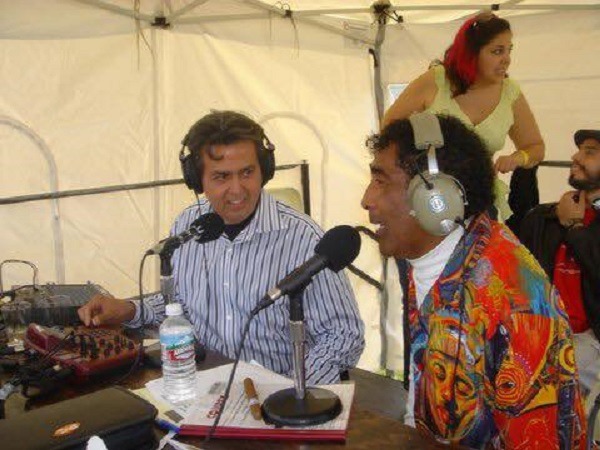
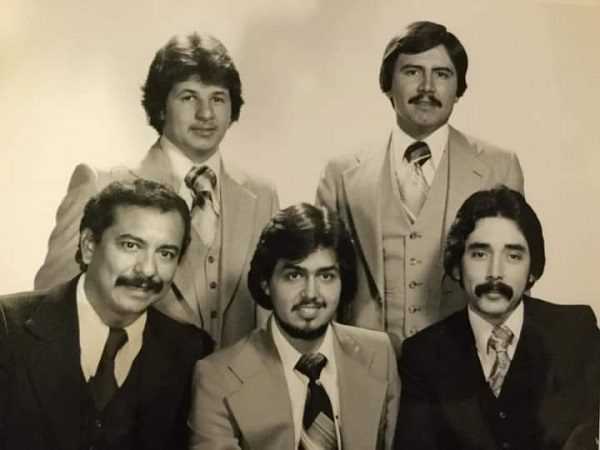
Five of the six Alma Del Barrio DJs Steve Lopez, founder Enrique Kiki Soto, Gustavo Aragon, Eddie Lopez, and Hector La Voz Resendez

Alma Del Barrio

In the autumn of 1973, what would become one of the most important Latin radio shows in Los Angeles started to go on the air, which is known as ”Alma Del Barrio” to this day and its main founders were Enrique Soto and Raul Villa, who were still university students at the time. What Raul and Enrique were looking for with this show was to educate the audience musically speaking and ensure that listeners to learn much more about their favorite artists.

A key part of this show is to interview the greatest exponents of the salsa genre and some of these have been Celia Cruz, Chucho Valdes, Manny Oquendo, Tito Puente, Roberto Roena and many more. Thanks to these conversations, fans of these artists have managed to learn more about their favorite artists and their future projects.

From the day of its founding, the show has been broadcast through the radio waves of KXLU, which is one of the largest radio stations in Los Angeles and offers all kinds of variety and musical genres in its programming.

Host Eddie López and Venezuelan Latin music bandleader Rudy Regalado

Canto Tropical

”Canto Tropical” is a radio show created with the firm intention of serving as a bridge to unite generations, cultures and countries that appear to not have anything to do with each other. The main musical genres on which the programming is based are salsa, Latin jazz, merengue, Afro-Cuban rhythms, among others. The music comes from all over the world, but most of the material comes from South and Central America and the Caribbean.

In addition to being always aware of the latest Latin music, hosts Kathy Diaz and Hector Resendez always make sure to get the best interviews with the most famous local and foreign artists so that their fans can get to know them better both personally and professionally. Likewise, listeners have the possibility to participate in contests and sweeptakes to win free tickets to concerts and events that are of their interest.

One of the requirements to be met by the show is to always invite local artists and singers to help them promote their music, new albums and concerts. In this way, the audience is aware of what local talent is currently doing. In fact, there are many figures who are still thankful for the exposure given the program, thanks to which they have achieved the popularity they were seeking.

Another detail that cannot be overlooked is that several social and community organizations have publicly thanked the show for its voluntary work and its hosts Kathy and Hector, who have even written for major publications such as Hispanic, Bilboard Magazine CASHBOX, among others.

Alma Del Barrio's logo
Alma Del Barrio’s logo

Read also: Son Del Monte’s musical director and timbalero Manuel Rivera

Salsa at Hacienda El Paraíso with Los Lebron Brothers Orchestra

The house of Hacienda El Paraíso or Casa de la Sierra, was built between 1816 and 1828, by Don Victor Cabal, a cattle rancher from Bugueño and ex-mayor of Cali. On June 20, 1854 it was sold to Don Jorge Enrique Isaacs, father of the poet, in whose hands it remained until June 15, 1858.

On April 18, 1953 it was acquired by the Department of Valle del Cauca and its first restoration was carried out by the master Luis Alberto Acuña in 1954.

It was declared a National Monument on December 30, 1959. It currently holds the status of Cultural Interest of the Nation.

With Law 397 of 1997 the properties previously declared national monuments were considered as properties of cultural interest and by Law 1185 of 2008 the BIC were defined as such due to the special interest that the property has for the community throughout the national territory…” (Law 1185 of 2008, Article 5, which modifies Article 8 of Law 397 of 1997).

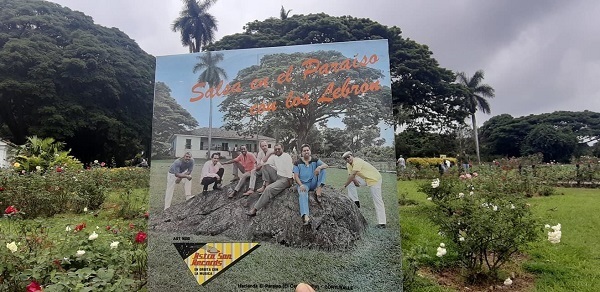
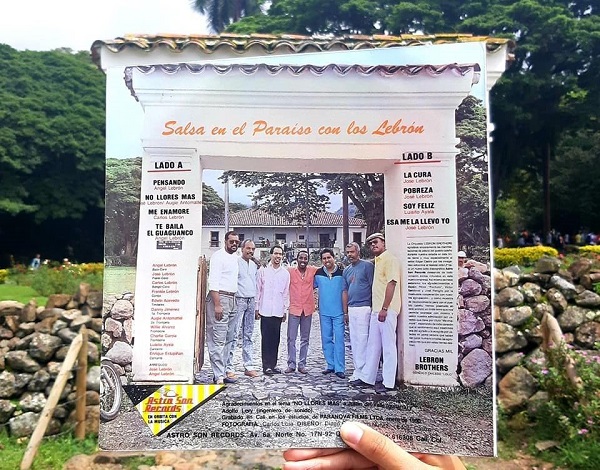
Los Lebron Brothers agradecidos y maravillados con Cali graban en enero de 1990 el elepé “Salsa en el Paraíso”

The Hacienda El Paraíso de Cali, setting of “María” written by Jorge Isaacs, a novel of an impossible romance and such wonderful landscapes that some Japanese decided to live in these lands just by reading the novel, landscapes that the Lebron Brothers also fell in love with.

The Lebron Brothers, grateful and amazed with Cali, recorded in January 1990 the LP “Salsa en el Paraíso” for the short-lived Cali label AstroSon Records, the hit of the album was the song “Thinking” with vocals by Luisito Ayala (RIP).

Los Lebron Brothers“ Salsa en el Paraíso”

The Lebrón Rosa family was born with the union of Francisco Lebrón Feliciano and Julia Rosa Sosa (mother of Pablo López Rosa) in Aguadilla (Puerto Rico), where María Antonia, José, Ángel and Carlos Enrique were born. They moved to New York in 1952, where Frank was born; they were educated in a purely musical environment, the father wrote décimas and in the family most of them were musicians and played cuatro and guitar, besides singing.

Pablo Lopez, since childhood was noted for his voice, was born on June 30, 1937 in Aguadilla, Puerto Rico.

Already settled in New York, he organized a trio “Las Tres Monedas” (1954). In 1962 José and Ángel formed their first group called Los Eltones.

Pablo founded the Orquesta Arecibeña (1965). Pablo managed to get the owner of the La Vega club in Brooklyn to give them an opportunity to audition, at which time José joined the Arecibeña as a pianist. In 1966 Angel Lebron y su Combo was formed, where his brother Carlos is the pianist.

The opportunity to record came from the hand of businessman George Goldner, head of the Cotique label, thanks to the fact that he had agreed to listen to them live.

As this meeting was important, Angel and Jose asked their brother Pablo to accompany them on vocals, to take advantage of his veteran and wonderful style.

The brothers Angel, Jose, Pablo and Carlos performed two boogaloos in their own way and style. It was Goldner who suggested that they call themselves Los Hermanos Lebrón and asked them to prepare a complete album.

Frank Lebron, Dj. Augusto Felibertt y Jose Lebron

The album appeared in 1967 under the title Psychodelic goes latin, which included the hit Summertime blues.

Thanks to the overwhelming success of the first work, in 1968 they presented their second album, The Brooklyn Bums, name of a famous baseball team. They released nine songs with interpretations in English and Spanish.

In 1969 the productions I Believe, (Lo tuyo Llegará) and Brother, (Pancho el Loco y Fe). These hits catapulted them internationally before the Latin American public, tracing a new musical horizon.

The boogaloo began to lose ground and Los Hermanos Lebrón reflected this change by producing an album entirely in Spanish with the title Llegamos, containing the songs Mi fracaso, Tus recuerdos (a song that achieved Pablo’s recognition as a great Bolerista).

BOOM…! SALSA…..!

In the same year with the production of the album Salsa y Control, success was glimpsed giving relevance and turning the term Salsa into a worldwide social phenomenon; where the younger brother (Frank Lebrón) makes his debut.

The innovations of three chorus singers (dubbed) were present, which gave it a true seal of distinction. In the boleros, they searched for the traditional sound of the Puerto Rican trios.

Los Lebron Brothers Orchestra

You can read: Luigi Texidor el Negrito del Sabor

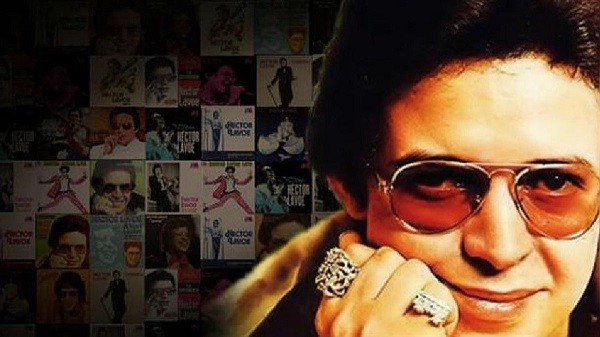
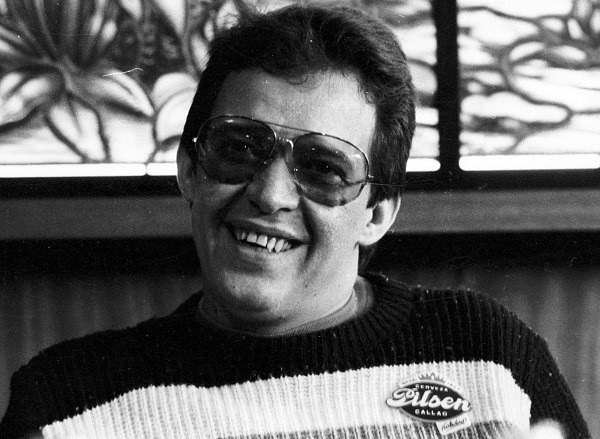
International Salsa Magazine showcases important facts about Héctor Lavoe

(Héctor Juan Pérez Martínez; Ponce, 1946 – New York, 1993) Puerto Rican singer and composer, considered one of the best interpreters of Caribbean music of all time and a pioneer in the introduction of New York salsa in the early 1970s.

He was part of the legendary orchestra of trombonist Willie Colón and was known by the nickname of El Cantante de los Cantantes.

-.Héctor Juan Pérez Martínez was born on September 30, 1946 in Ponce, Puerto Rico. His parents Luis and Francisca are musicians who, from song to song, manage to support a large family of several children.

-. In the year of Hector’s birth, the singers who would influence him are much older: Daniel Santos is 30 years old; Ismael Rivera, better known as “Maelo”, is 15; and Jose “Cheo” Feliciano is eleven.

-. At the age of three, he suffers his first loss: the death of Francisca Martínez, his mother.

-. Juan Morel Campos is a music academy where his father enrolls him. Héctor begins to learn classical music, but he quickly decides to learn what is played in the streets. Jesús Sánchez Erazo, better known as “Chuito el de Bayamón”, is his first idol.

-. Sings the song Campanitas de cristal, a bolero composed by Rafael Hernández Marín, at a school party.

-. In the early sixties, he forms with friends, including Papo Luca, a group that performs boleros and salsas. He earns 18 dollars a night and his talent seduces the people of Ponce. He is invited to sing on television programs. Musicians Felipe Rodríguez and Tito Lara give him a promising future.

-. At the age of 17, being recognized in his native Ponce, he travels to New York. His family does not agree with his departure. In the city he is greeted by the ghost of the death of a brother, who was supposedly a drug addict. He stays in the apartment of Priscila, one of his older sisters.

Héctor Juan Pérez Martínez

Before joining the Fania All Stars for the first time, a group directed by the Dominican Johnny Pacheco, he was part of bands such as Orquesta Nueva York and Alegre All Stars.

-. In 1966, at the age of 21, he sings alongside Pete Rodríguez, Adalberto Santiago, Tito Puente, Richie Ray, among other artists, in the incipient Fania All Stars. He meets Willie Colón, an American musician with Puerto Rican parents. “We both knew the world in the Bronx neighborhood. I learned to speak Spanish with Hector, although at first I understood what he was saying. I remember he had a brilliant sense of humor and was a great imitator of singers,” said Colón in an interview.

-. In 1967, he achieved fame with his first album with Willie Colón. It is a mixture of genres such as guaracha, plena and guaguancó, and is entitled El Malo. The album is a tribute to the slum culture of the United States and Latin America.

-. He tries to work as a painter, but his sister won’t allow it. After two weeks, he attends a musical rehearsal with his backing vocalist friend Roberto Garcia. Hector takes the microphone and makes the orchestra directors fall in love with him.

-. At the beginning of 1968 he meets Carmen, a follower he meets at a concert. On October 30 of that year Jose Alberto, his first son, is born.

-. After the birth of Jose Alberto, he has his second son with Nilda Román, another follower. With her, who is nicknamed “La Puchi”, he finally marries and stays in an apartment in Queens. Héctor Junior is the name of his second son.

-. At the end of the sixties he becomes addicted to drugs. In more than one stage he leaves the audience in a daze.

-. In 1971 he is called again to record, together with other stars, Fania All Stars at the Cheetah. This combo featured Cheo Feliciano, Richie Ray, Ismael Miranda, Celia Cruz and the young Rubén Blades. In 1973, the group filled the Yankee Stadium bleachers. Anacaona, Quítate tú and Ahora vengo yo are some of their hits.

-. With Willie Colón, he recorded more than 18 albums between 1967 and 1973. Thousands of reissues of Asalto navideño, El Juicio and Lo Mato were made. Che che colé, Ausencia, Calle luna calle sol, Todo tiene su final are the most requested songs by the Latin American public.

(H3) -. Willie Colón dissolves the duet in 1974. However, both continue to work. Lavoe’s talent continues despite his excesses and the author of Talento de televisión knows it well.

-. In 1975 he releases La voz, his first solo album. This incursion is interpreted as a second wind in his career. So much is his energy to continue that he releases eight more albums. De ti depende (1976) is a collection of boleros and Comedia (1978) breaks sales with the song El cantante, written by Rubén Blades. This work was also produced by Willie Colón, who that year teamed up with Blades to record Siembra, the best-selling salsa album.

-. His interpretation of El cantante helps to build the nickname “El cantante de los cantantes” (The singer of the singers).

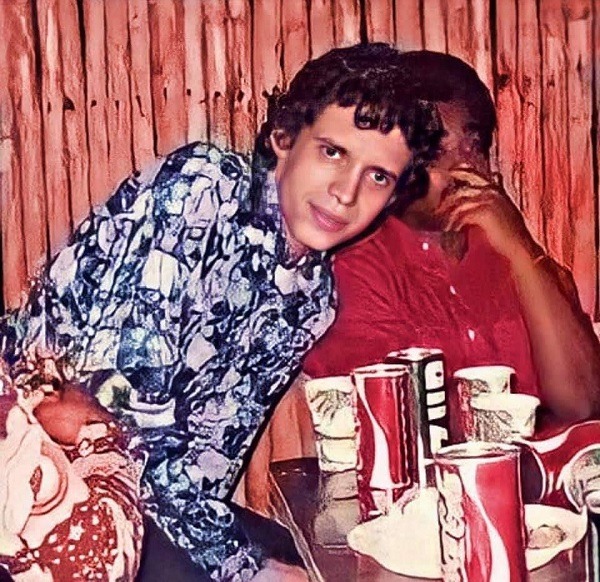
-. He performs at the Coliseo Evangelista Mora in Cali in 1977. This concert was attended by the writer Andrés Caicedo, who managed to take a picture with Lavoe in the dressing room. Months later, the author of ¡Qué viva la música! committed suicide with an overdose of barbiturates.

-. As a result of a strong depression, Lavoe is interned in a mental sanatorium in the United States in 1977. His heroin addiction, which he had begun to suffer at the end of the sixties, is not only known by those close to him but also by his fans. “He paid a lot of attention to me and, when he was in trouble, he would call me”, confessed singer Ismael Miranda in an interview.

-. Lives in Cali between November 1982 and March 1983 at the Hotel Aristi. He is a regular singer at the Juan Pachanga discotheque, owned by Larry Landa, a concert organizer. In the capital of the Valley it is said that Lavoe takes drugs during the day and tries to sing at night.

Hector Lavoe el Cantante de los Cantantes

In February 1987, due to a fire, he jumps out of his apartment in Queens. At the same time, in Puerto Rico, his mother-in-law is stabbed to death.

-. On May 7, 1987, his son Hector is hit by a stray bullet. “That death broke his heart,” said Tito Nieves in an interview. “At that moment Héctor Lavoe’s soul dies”.

-. He is diagnosed with AIDS in 1988. Those who visit him in the hospital maintain that he does not lose his sense of humor nor his desire to return to the stage.

-. In Bayamón, Puerto Rico, he sings Mi Gente in a patron saint festival. But his presentation is sabotaged by one of the organizers who supposedly owes him money; in the middle of the song the lights are turned off and Lavoe is left without sound to continue.

-. In 1988, he throws himself from the ninth floor of a hotel in San Juan. He survives to continue fighting the battle. He sings on a Bronx street in 1989. His physical deterioration is a reflection of his state of mind. Lavoe is a ghost of his former self.

Héctor Lavoe
Héctor Lavoe

-. Tito Nieves is one of his friends who accompanies him in his difficult days. Lavoe depended on other people to live. A thrombosis paralyzes part of his body.

-. In March 1993, pushed by his record company, he makes his last presentation in New Jersey. He sings with Roberto Roena’s orchestra. Maestro Roena is not able to play in front of the “Singer of singers”. “It was too much to put him on stage”, he said indignantly.

-. At the age of 46 he dies of a cardiac arrest, on June 29, 1993, in New York. “He came into the world to enjoy it and suffer it. Although he was not happy, he made many people happy,” said his sister Priscila.

-. He is buried in Puerto Rico. He is accompanied by a horde of followers. The presence of his friend Ismael Miranda stands out, who bids him farewell saying: “He is not here with us, but his music continues”.

-. In 2007, El cantante, a movie inspired by his life, was released. It stars Marc Anthony and Jennifer Lopez.

-. Currently there are two monuments in his honor. One in his native Ponce, Puerto Rico, and another in Callao, Peru.

Héctor Lavoe

You can read: Génesis of Salsa, its essence, characteristics, rhythm, history and expansión

Salsa and its detractors “Caiga quien Caiga”

International Salsa Magazine through salsagoogle.com presents Crisanto Edecio Romero Carpio from the Pearl of the Caribbean, Margarita Island and the history of our Caribbean musical culture.

A few months ago in conversations with my friend Salvador García Landaeta, a man with a great trajectory in the musical and radio field and a great connoisseur of the world of Salsa, I made a comment about the name of the title of this publication.

The history of our Caribbean musical culture has had a roller coaster of ups and downs in terms of our musical heroes.

La Salsa y sus detractores Caiga quien caiga

But the fact is that since our Caribbean musical identity was baptized with the name of Salsa, the so-called detractors began, an endless number of opinions that yes it was me, that yes it was sultanito, etc.

There began the tejemaneque, opinionators of office, radio inquisitors, professional payoleros, businessmen fascinerosos, and there was no shortage of rolo e vivos who took ownership of issues that were not even theirs to feast.

But I go much further because even in the Mecca of cinema some people got rich with some movies that it is better not to remember them so as not to play the game and not to stain the name of one of the best Salsa interpreters of all history.

Now, are we in the XXI Century or are we still in the Middle Ages? Our Latin Thing called Salsa today resists a demonic onslaught of criticism and a musical advance poor in lyrics and a denigrating theme towards women, our women, our daughters, our mothers. A vulgar and dishonest language and with an advertising, radio and audiovisual apparatus that costs millions of dollars worldwide.

But Salsa is still there, in every corner, in every neighborhood, in the old LPs that we keep as true musical treasures, in every gathering and conversation among friends.

Crisanto Edecio Romero Carpio

It is necessary to point out that all is not lost, people who from their communication trenches make a very important contribution.

It would be mean of me to point out any one in particular but when this “Message” arrives, many will know who I am referring to.

This article was a debt with my Salsera people, and to them I dedicate this reflection a day after learning of the death of one of the best interpreters that Puerto Rico has given, I am referring to Ubaldo “Lalo” Rodriguez.

I admired Lalo since his beginnings with Palmieri, his time with Machito and then with his solo project. A career full of successes, awards, and a situation that led him to face the evils of our society where it is easy to get in but very difficult to get out.

Crisanto Romero, Edgar Dolor Quijada y Salvador Garcia

The musical career of Lalo Rodriguez, a horse that was born among the greats and became Immortal (although some boasted of “killing him” after his death). Sad and painful for those characters.

Salsa does not die and will never die. And I close my commentary with a phrase written more than 2000 thousand years ago; let him who is without sin cast the first stone.

Crisanto Romero.

For the Ataca Quintero Project by Jaime Quintero and Salvador García.

https://www.facebook.com/crisantoedecio.romerocarpio

You can read: Hector Maisonave Manager of the Greatest Salseros in New York

  • « Go to Previous Page
  • Page 1
  • Interim pages omitted …
  • Page 21
  • Page 22
  • Page 23
  • Page 24
  • Page 25
  • Interim pages omitted …
  • Page 186
  • Go to Next Page »

International Salsa Magazine (ISM) is a monthly publication about Salsa activities around the world, that has been publishing since 2007. It is a world network of volunteers coordinated by ISM Magazine. We are working to strengthen all the events by working together.