• Skip to primary navigation
  • Skip to main content

International Salsa Magazine

  • HOME
  • Previous editions
    • 2026
      • ISM / April 2026
      • ISM / March 2026
      • ISM / February 2026
      • ISM / January 2026
    • 2025
      • ISM / December 2025
      • ISM / November 2025
      • ISM / October 2025
      • ISM / September 2025
      • ISM / August 2025
      • ISM / July 2025
      • ISM / June 2025
      • ISM / May2025
      • ISM / April 2025
      • ISM / March 2025
      • ISM / February 2025
      • ISM / January 2025
    • 2024
      • ISM / December 2024
      • ISM / November 2024
      • ISM / October 2024
      • ISM / September 2024
      • ISM / August 2024
      • ISM / July 2024
      • ISM / June 2024
      • ISM / May 2024
      • ISM / April 2024
      • ISM / March 2024
      • ISM / February 2024
      • ISM / January 2024
    • 2023
      • ISM / December 2023
      • ISM / November 2023
      • ISM / October 2023
      • ISM – September 2023
      • ISM – August 2023
      • ISM July 2023
      • ISM Edition June 2023
      • ISM – May 2023
      • ISM April 2023
      • ISM March 2023
      • ISM February 2023
      • ISM January 2023
    • 2022
      • ISM December 2022
      • ISM November 2022
      • ISM October 2022
      • ISM September 2022
      • ISM August 2022
      • ISM July 2022
      • ISM June 2022
      • ISM May 2022
      • ISM February 2022
      • ISM January 2022
    • 2021
      • ISM December 2021
      • ISM November 2021
      • ISM October – 2021
      • ISM September 2021
      • ISM August 2021
      • ISM July 2021
      • ISM May 2021
      • ISM April 2021
      • ISM June 2021
      • ISM March 2021
      • ISM February 2021
      • ISM January 2021
    • 2020
      • ISM December 2020
      • ISM November 2020
      • ISM October 2020
      • ISM September 2020
      • ISM August 2020
      • ISM July 2020
      • ISM June 2020
      • ISM May 2020
      • ISM April 2020
      • ISM March 2020
      • ISM February 2020
      • ISM January 2020
    • 2019
      • ISM December 2019
      • ISM November 2019
      • ISM October 2019
      • ISM Septembre 2019
      • ISM August 2019
      • ISM July 2019
      • ISM June 2019
    • 2016
      • ISM December 2016
  • Spanish
  • Download Salsa App
    • Android
    • Apple

Search Results for: World Salsa

Andrew Mark Mclaughlin is an author, composer, writer and professor of language

Andrew Mark Mclaughlin is a Canadian-born author, composer, writer, professor of language, and lover of Latin culture and music of Canadian origin. Born in Oshawa, Ontario in 1977, he reveals a special sensitivity from an early age.


He developed his teenage life between studies, sports and his first approach to music where he participated in a rock band called Trailerpark Cinderellas.

Being a teenager and on a vacation visit to the Dominican Republic in the bateyes to the rhythm of the cane cutting, he discovers the magic and rhythm of Latin music that will become one of his two great passions, the other, the spirit of public service accompanied by his delivery as a teacher.

First, he continued his studies at the University of Toronto, then at the University of Salamanca, Spain. And finally, at the Faculty of Education at York University.

In 2001, he started working as a professor of literature and language in Pickering, Ontario. That same year, he started composing and singing.

In 2001, he started working as a professor of literature and language in Pickering, Ontario. That same year, he started composing and singing
Andrew Mark Mclaughlin is an author, composer, writer and professor of language

In 2006, with that permanent concern that characterizes him, he and Carmen Muñoz Franco founded Learning for Hope (Aprendiendo por la Esperanza), which is a non-profit organization, with the sole intention of working with educational communities in the Sacred Valley of the Incas, Cusco, Peru. The project operates to the present day.

The heart of the project is an educational center for boys and girls in orphanages, including victims of human trafficking.

In 2010, as an enlargement of the project, he arrived in El Salvador to work with the Agape Foundation, which does charity work throughout the country.

Thanks to this work, he met Rubén Flamenco, the director of Salsalvador Allstars, which is the most important salsa band in the country.

In honor of Geovanny Torres, a common friend who was suffering from a sad disease, Andrew composed his first song in Spanish, “Cúrame con Salsa”, a song that continues to be played on the radio stations of the country.

Due to the success of this song, the opportunity arises to play the song Terremoto with Giro Lopez, celebrated Puerto Rican salsa singer. Since then, with that energy, creativity and strength that characterize him, he has created more than a thousand songs ranging from salsa to cumbia including bachata and romantic ballad.

His mind and adventurous spirit have taken him out to many places where he has had the opportunity to meet many musicians, who are ambassadors of his creativity today, including Puerto Rico, Mexico, Bolivia, Peru, El Salvador, Chile and Colombia.

By: Diana Marie Miami Correspondent for International Salsa Magazine


SOME OF HIS SONGS

FRANKY SWING & DAVID CUEVAS: MI MEJOR MEDICINA

 https://www.youtube.com/watch?v=7xGt8FxwpUM

YANI BORRELL: TE DEDICO

https://www.youtube.com/watch?v=WbczlNplncw

IZIS LA ENFERMERA DE LA SALSA: CORRE CONMIGO

https://www.youtube.com/watch?v=LLV7pXVx_Zw

FRANKY SWING: TE AMO LOCAMENTE (MEXICO AND VENEZUELA)

https://www.youtube.com/watch?v=4RIcgOgXDdg

LUIGGY LAMBIS: MI GRAN AMOR (COLOMBIA AND CHILE)

https://www.youtube.com/watch?v=5kpQCxZ71EY

LUIGGY LAMBIS: CHICA SALSERA (COLOMBIA AND CHILE)

https://www.youtube.com/watch?v=86VwbAW4F9Q

NKLABE & SALZON: MANOS DE AMOR (PUERTO RICO & EL SALVADOR)

*NOMINATED FOR TROPICAL SONG OF THE YEAR

*Produced by: Diego Gale

 https://www.youtube.com/watch?v=80jMABYs2Zc

GIRO LOPEZ: TERREMOTO  (PUERTO RICO)

*It reached No. 1 on the SALSOUL RADIO charts

https://www.youtube.com/watch?v=FkMG7JRq71g

GIRO LOPEZ: AQUÍ ESTARE (PUERTO RICO)

*It reached No. 4 on the Miami DJ pool chart

https://www.youtube.com/watch?v=Ty-IjNUt5Tg

EMI SANTIAGO: ESCLAVO DE AMOR (COLOMBIA)

*It reached No. 1 on the LA TROJA RADIO charts

https://www.youtube.com/watch?v=vqMd_wJBTEA

SALSALVADOR ALLSTARS: CURAME CON SALSA (EL SALVADOR)

https://www.youtube.com/watch?v=HH_isr8oJvU

It reached third place in the World Salsa Championship 2020

SALSALVADOR ALLSTARS: SONRISONA (EL SALVADOR)

https://www.youtube.com/watch?v=QLoA_OKTH5M

SALZON: SALSA SECRETA (EL SALVADOR)

https://www.youtube.com/watch?v=HO2GgpGWxAQ

SALZON: AMOR ILOGICO

https://www.youtube.com/watch?v=2o5VywA3Cco

CODIGO FHER: ESA SONRISA  (BOLIVIA)

https://www.youtube.com/watch?v=Aki-nX84lvI

Home

Professor MSc. Carlos Colmenárez

Mauricio Silva with ¡fury!

Composer, arranger, producer, pianist, trombonist, vocalist and conductor he participated in the recording of more than 200 productions.

It is a great honor and the pleasant satisfaction of having one of the most prolific, successful and recognized Venezuelan musicians who works as a composer, arranger, producer, pianist, trombonist, vocalist and conductor as a special guest; who is also recognized by all salsa fans at home and internationally.

We refer to Mauricio Silva, who has a musical lineage inherited from his grandfather Manuel Silva Linares and his father Miguel Angel Silva; the latter stood out as the jazz bassist for Gerry Weil, Billo’s Caracas Boys, Los Melódicos and Orquesta de Porfi Jiménez, among others; his uncle Rafael Silva was considered one of the best and most experienced trombonists in Venezuela.

Composer, arranger, producer, pianist, trombonist, vocalist and conductor He participated in the recording of more than 200 productions
Mauricio Silva with ¡fury!

Some of his brothers are also musicians and include: Josué Miguel Silva (now deceased) and Daniel Silva, an outstanding bassist and singer in diverse orchestras nationally and internationally. His son Briant Silva and his nephew Harold Silva are part of the new generation.

Mauricio Silva was born in Caracas on December 30th and became interested in training very well in his profession from a very young age which is why he studied with great Venezuelan and foreign musicians.

He has participated in the recording of more than 200 productions. Some of them with: Sexteto Juventud, La Crítica de Oscar D’León, Wladimir y su Constelación, Dimensión Latina, Los Satélites, La Salsa Mayor, Arabella y su banda, Los Melódicos, Billo’s Caracas Boys, Silva y Guerra, Mauricio Silva y su orquesta, Oscar D’León, Cheo Valenzuela, Caribbean Magic, Porfi Jiménez, Salserín, Erick Franchesky, Guaco, El Trabuco Venezolano, Wílmer Lozano, Legacy of Venezuelan Salsa, Legacy of World Salsa, among others. His compositions include Se Necesita rumbero (recorded by Oscar D’León), Te haré feliz, Debe ser el amor and Canto al Madera.

To start this interesting interview, we want to welcome to Mauricio to “Salsa Escrita” the salsa column in which we support musical talent and promote the event of our Latin music nationally and globally through International Salsa Magazine www.salsagoogle.com.

Thank you very much Professor Carlos, the truth is that I am very happy to appera as a guest in your widely-read column and I want to send my greetings to your readers and followers, I am very happy to share with you.

Master Mauricio for us it is a pleasure to interact through this prestige means of communication, let me tell you that we consider you a great idol of our Afro-Caribbean music and want to know how you started liking music. Carlos, music means everything to me, it is my formula of life and I am in it as long as I can remember. Through many studies and divine support for everything I have done and although I am not the most successful in the world, I feel very satisfied with it.

Well Mauricio, by the way, by the time you were in the orchestra “La Crítica”, were you influenced by any musician?

Yes, when I was in La Crítica, I was very much influenced by Oscar D’León as the main factor, when I saw him playing and singing with that incredible swing, that definitely left its mark and listening to artists of the time such as Andy Montañez, El Gran Combo, Ismael Rivera, Héctor Lavoe, Celia Cruz and note that life allowed me to work with all of them;

because I worked with Hector, Celia, Oscar and many others from Puerto Rico, Cuba and my training was routed to tropical music by accompanying Daniel Santos, Celio Gonzalez, Alberto Beltran and the commitment was greater to know that they came from the Sonora Matancera and that is how my taste for music was cultivated.

And to start this interesting interview, we want to welcome you Mauricio to "Salsa Escrita" the salsa column, where we project the musical talent and make known the events of our Latin music nationally and globally through International Salsa Magazine www.salsagoogle.com.
Mauricio Silva has participated in the recording of more than 200 productions

When was the idea of singing born, Mauricio? Really, the idea of singing was not one of my goals, it dit not crossed my mind to be a singer, and moreover, being in front of an orchestra got me so nervous, since being behind made feel like a duck to water, conducting, playing, but not facing the public. I did not consider myself a singer, I simply have a normal ear to have a guide to melodies of the songs, the fact that I started singing was with “Salsa, Silva y Guerra”.

Manuel Guerra had asked me for some musical arrangements for one of his projects, which was going to be recorded in Puerto Rico with arrangers from there such as Ray Santos and Máximo Torres.

Manuel Guerra had asked me for some musical arrangements for a project of his, which was going to be recorded in Puerto Rico with arrangers from there, with Ray Santos and Máximo Torres.
“Salsa, Silva y Guerra”

I made arrangements to two of my compositions for him: “Qué linda es la vida”, “Se va el amor”, and well, it was recorded on the island of Puerto Rico, that was spectacular, but the “Black Friday” occurred and costs doubled, so Manuel had to finish the production in Venezuela and then he asked me to help him finish it, we set up the trombone, chorus and I took him to ride the voice, but Manuel had tone problems with the songs, he did not get the tones in the right way, I recorded all the guides to the songs, I learned them and I recorded them for him.

Well, we have been trying to get him to record for 3 months, but he could never record that and the sound guy said that I was doing well without being a singer and he wasn’t.

And yet, at the end, I ended up recording that album, which was called “Salsa, Silva y Guerra”, because I got involved with Manuel Guerra and the label Rodven decided to call it that, and there the singer Mauricio Silva was born without wanting to. I never intended to be a singer, so when it is for you, it is like you do not even take off and so begins my career as a vocalist. Mauricio, we understand that you participated in more than two hundred productions and that shows that you are a very active musician in the music industry due to your professionalism.

When was the idea of singing born, Mauricio? Really, the idea of singing was not one of my goals, it dit not crossed my mind to be a singer, and moreover, being in front of an orchestra got me so nervous, since being behind made feel like a duck to water, conducting, playing, but not facing the public. I did not consider myself a singer, I simply have a normal ear to have a guide to melodies of the songs, the fact that I started singing was with “Salsa, Silva y Guerra”.

Manuel Guerra had asked me for some musical arrangements for one of his projects, which was going to be recorded in Puerto Rico with arrangers from there such as Ray Santos and Máximo Torres.

I made arrangements to two of my compositions for him: “Qué linda es la vida”, “Se va el amor”, and well, it was recorded on the island of Puerto Rico, that was spectacular, but the “Black Friday” occurred and costs doubled, so Manuel had to finish the production in Venezuela and then he asked me to help him finish it, we set up the trombone, chorus and I took him to ride the voice, but Manuel had tone problems with the songs.

He did not get the tones in the right way, I recorded all the guides to the songs, I learned them and I recorded them for him. Well, we have been trying to get him to record for 3 months, but he could never record that and the sound guy said that I was doing well without being a singer and he wasn’t.

And yet, at the end, I ended up recording that album, which was called “Salsa, Silva y Guerra”, because I got involved with Manuel Guerra and the label Rodven decided to call it that, and there the singer Mauricio Silva was born without wanting to. I never intended to be a singer, so when it is for you, it is like you do not even take off and so begins my career as a vocalist. Mauricio, we understand that you participated in more than two hundred productions and that shows that you are a very active musician in the music industry due to your professionalism.

Tell us: look, I had about 200 albums I had them computed, but I don’t know, I lost count.

For example, these days I met again with a musician from Barranquilla, we had already worked together in 1987 during a musical tour of the United States, me as a pianist in an orchestra and him as a timbalero, who is very famous in his city and I made an arrangement for him at that time and he brought back to that work and told me it was on Youtube.

So my participation has been as an arranger, musician, pianist, trombonist, choirboy, apart from the records I have served as a singer or as a guest.

I remember that I worked with “El Trabuco Venezolano”, artists from Panama, Puerto Rico, Colombia, naturally Venezuela, the United States, and Cuba.

I have done many things, both with salsa, boleros, bagpipes and much more, what happens is that I am more known in the salsa style, Venezuelan music, jazz, Bosanova, merengue, the Billo’s music, Los Melodicos, actively participating with them and salsa I have done work with Choco Orta from Puerto Rico, El Canario, Oscar D’León, Arabella, with the song’s arrangement I made of “Callejón” by Tite Curet Alonso; the truth is that I’m not complaining. Mauricio, by the way, an almost obligatory question, what have you made in such confinement by the pandemic there in Miami and how has Covid-19 affected you?

Tell us: well, the year 2020 was very difficult for all of us and the main thing that can never stop is the food and medicines supply; but entertainment and recreation is paralyzed and has timidly begun to move a little bit, but they have even stopped it again because the pandemic is still going on and here vaccination began here but the first to receive them will be the doctors, the nurses, elderly people, children and the general public, which, hopefully, will be the solution by 2021 and so artists will return to the stage.

I was affected by the coronavirus, it really hit me, solitary confinement for 15 days with many symptoms, but it detected with the exam, I did all medical treatment, I went through a lot of depression, but thank goodness I woke up much better one Sunsay and I said, am I cured? (laughter) then I had another test and it was negative, but it is an experience that has killed colleagues, friends and family; here in Florida, more than 2000 people are infected daily and 3000 people die every day in the whole country, but we remain optimistic with respect to work out airy.

Mauricio, do you have any upcoming project? Yes, there are always projects, I am producing new artists that will be know later on, but the global legacy of salsa is the most recent thing I put on the market, it is a tribute to salsa, so that the new generations can get to know that salsa that falled us in love in the 70s, 80s and 90s.

This is on all digital platforms and there is also the legacy of Venezuelan salsa. Likewise, the album “Billo’s Legendarios” in which I got the chance to be the arranger and in charge of the musical part of that production with the participation of: Carlos Vives, Oscar D’León, Charlie Aponte, Wilfrido Vargas, Sergio Vargas, Alex Bueno, Eddie Herrera, Don Fulano and Mily Quesada; in addition, the Venezuelan singer Karina and the vocalists of Billo’s Caracas Boys are special guests.

This is on all digital platforms and there is also the legacy of Venezuelan salsa
The legacy of Venezuelan Salsa.

I am also working with the new from “Adolescentes” in its new phase from the hand of El Negro Mendoza.

I am doing the “Legendary Billo’s No. 2” and in talks with Gilberto Santa Rosa, Tito Nieves, Silvestre Dangon, Carlos Vives, who wants to sing the theme “La Casa de Fernando”, and also I am helping many colleagues because the world of the record has changed a lot, there are no longer record companies that support, so stay tuned to 2021 because very good productions are coming.
“Billo’s Legendary” – Mauricio Silva

Mauricio, tell us, which singers have you accompanied in your successful career? Well, I had the honor of learning and playing with Alberto Beltrán, Celio González, Daniel Santos, those three singers from “Sonora Matancera”, we accompanied them with “La Crítica”, but even then, I accompanied Ruddy Márquez, José Luis Rodríguez, Oscar D’León, Celia Cruz, Héctor Lavoe, Justo Betancourt, Ismael Miranda, Eddie Santiago, Vity Ruiz, Maelo Ruiz, Tito Rojas (QEPD), Pedro Arroyo, Luisito Carrión, Rafu Warner, most of those artists from the 80s and 90s, and many more with whom I had the opportunity to be formed, musically speaking.

Mauricio, to finish, we have a friend in common, Nelson García “Nelsonero” in Barquisimeto, how was your work with him? Speaking of Nelson, is to talk about a great musician, a great person, from the first time I knew him, we were connected, we made a record with very few resources, but there was a magic of a talented boy who looked for a musician that is me and he put himself in his hands, and let them take him, although the songs are mostly from him or almost all the songs were from Nelson and I made those arrangements looking for a style with trombones and baritone sax, resulting in an album with a lot of heart, and from then on.

Many doors have been opened to Nelson for his way of being and he has traveled to many places in the world, and I really love him very much, I ask you to support him because he is one of those real talents, he is not made up, he is not manufactured, he is natural, that is Nelson de Jesus “Nelsonero”.

Dear Salsa fans, regular Salsa Escrita readers, we are very grateful to Mauricio Silva for the interaction we have had, give us a final message: Thank you Professor Carlos, of course, very grateful for allowing me to share in your widely read salsa column in which you promote and support the talent from my country and the rest of Latin America; I hope we can meet up again soon; I have a little bit of Barquisimeto, because I have an aunt who lives in the urbanization El Obelisco, I have cousins, godparents, Rafael Ure and a very big big greeting to all of them.

I love that city a lot, the “Musical City of Venezuela”, I have numerous friends there and I participated in orchestras such as: Nino y si Orquesta, La Banda Actual, they are all friends and we share a lot, so I send my greetings to all of them, thank you for this opportunity Professor Carlos Colmenárez “The Friend of the Salseros” and I hope to see you soon, we love you with fury!

after the rehearsal with the Los Angeles Philharmonic with Gustavo Dudamel and Oscar D'Leon - Mauricio Silva
Mauricio Silva after the rehearsal with the Los Angeles Philharmonic with Gustavo Dudamel and Oscar D’Leon

 See you next time and keep dancing  salsa!


Choco Orta The Queen of Flavor

Choco Orta: “The Queen of Flavor and the Diva of Puerto Rico”

Virgen Milagros Orta Rodríguez is the first name of “La Reina Del Sabor”: Choco Orta, as this Puerto Rican actress, percussionist and singer-songwriter is internationally known. She was born in Santurce, a traditional neighborhood in San Juan, the capital city of La Isla Del Encanto.

Choco Orta The Queen of Flavor and the Diva of Puerto Rico
Choco Orta Diva of Puerto Rico

Choco is the only female daughter in a home formed by the brothers Tomás Jr., Jaime, Gilberto (her twin) and Ismael; fruits of the union of don Tomás Orta Abad and doña Andrea Rodríguez Rivera. By the way, the brothers are mostly percussionists, among amateurs and professionals.

The father, Don Tomás, is an excellent guitarist and Mrs. Andrea, the mother, has a privileged voice. We could say, then, that Choco Orta’s talents are “purebred”.

In Santurce, specifically in the area known as El Chícharo, Choco’s childhood, adolescence, and youth are present.

The blackness of this neighborhood cradled and nursed her, imprinting on her a deep imprint that she knew how to capitalize on and externalize in her artistic development.

Choco still remembers and celebrates the improvised musical meetings in her neighborhood with neighbors and friends, in which to the rhythm of percussion instruments they recreated the famous rumbas that blacks and blacks of the Caribbean turned into one of the most recognized standards of their culture.

This activity led her to become interested in her musical training, which she did in a self-taught manner first and then alongside renowned musicians from the patio such as Giovanni “Mañenguito” Hidalgo, Anthony Carrillo, and Angel “Cachete” Maldonado.

Recognized teachers of the Conservatory of Music of Puerto Rico offered him knowledge of Theory and Solfeggio, and great cultivators (men and women) of classical and popular dance also contributed to mold the artist that we know today.

In the academic field Choco Orta, she is a graduate of the University of Puerto Rico.

She has a Bachelor of Arts degree after graduating with honors (Cum Laude) from the Theater Education Program of the Rio Piedras campus of this prestigious University.

Choco’s academic formation, oriented to the teaching of Theater in schools, was not capitalized as such; however, it allowed her to venture into the stage by staging diverse plays in Puerto Rico such as “La Verdadera Historia De Pedro Navaja”, “El Bombón De Elena”, etc.; she even mounted her own show: “Choco, Mambo Y Algo Más” (at the end of the ’80s), through which she musically recreated the golden ages of the ’40s and ’50s.

We finish the current appearance of this brilliant artistic career of Choco Orta with the celebration of its 30 years in music
She was born in Santurce, a traditional neighborhood in San Juan, the capital city of La Isla Del Encanto

Television programs such as “La Tiendita De La Esquina” (comedy) and “Latino” (musical program), also record Choco’s talent. As if that weren’t enough, the seventh art: the cinema, also knew about the talent of this complete artist. “Bala Perdida”, “Dios Los Cria” and “Assassins 1995” are proof of Choco Orta’s talent and versatility.

Her entrance to the recording rooms is produced by the hand of the famous trombonist and conductor Julio “Gunda” Merced, who on one occasion enjoyed an improvised presentation of Choco with the Giants of the South.

That night, Gunda Merced made the approach to Choco, and some months later the musical production AND SOMETHING MORE! (Gunda Merced Y Su Salsa Fever) included the songs “Huracán” in Choco Orta’s voice and “El Baile Del Buey Cansao” (Choco Orta in duet with Raquel Velázquez). The year was 1987.

The first years of the 90’s present us with a multifaceted Choco Orta: always in music and accompanied by diverse formations: trios, quartets, etc.; also doing jingles and commercials for radio and television, but also internationalizing her work with various participations in the Club Hammou (southeast of France known as French Riviera or Costa Azul) and as it corresponds in an artist avid of knowledge: nourishing herself with the people and their culture.

By 1997 -always under the guidance of Julio “Gunda” Merced- with the support of the record label Musical Productions (MP) of the late but always remembered Tony Moreno, Choco Orta published his debut album. It was titled SENTIMIENTO Y SABOR (Feeling and Flavor) and presented us with 10 very well achieved cuts that quickly placed themselves at the top of the Latin music charts (Basta, Y Qué De MI, Yo Perdí El Corazón, El Hombre Que Yo Amo, etc.).

By the way, this production was presented at the MIDEM Convention for Latin America, which is why Choco Orta recorded an official video clip of the song “El Hombre Que Yo Amo”. MIDEM is the chapter for music professionals of Reed MIDEM: a professional market organizer founded back in 1963.

SENTIMIENTO Y SABOR was also featured in PULSE Magazine! (USA) and Choco would later be invested as Ambassador of Puerto Rican Culture in Tampa, Florida. He also obtained the Farándula Award (Puerto Rico) as best salsa singer and made an extensive and acclaimed tour in the Dominican Republic, performing in various Dominican stages including television sets.

She is remembered -also- until today, her ovation and applause with La Universidad De La Salsa, El Gran Combo de Puerto Rico, for the 16th edition of the National Salsa Day (1999) in the Juan Loubriel Stadium in Bayamón.

In 2001, Choco Orta received an invitation from Banco Popular de Puerto Rico to be part of their famous annual production entitled RAÍCES. Here Choco performs two songs with the accompaniment of two important musical institutions from the patio, the Orchestra of Maestro Lito Peña (Para Los Boricuas Ausentes) and the Orchestra of Maestro William Cepeda (Melitón Tombé).

That same year, it was part of the production of the Borinquen quartet player José Antonio Rivera Colón, better known as “Tony Mapeyé”, with the title VIEQUES, TIERRA PARA LA PAZ. Here he prints his vocal record in the songs Ni Bala Inerte Ni Viva and Plegaria Por Vieques.

Then to round off a great year, the release of his second production is made official: this one would be titled LA REINA DEL SABOR and from that record label, we continue enjoying the quality and flavor of songs like La Nueva Reina Del Sabor, Que Pague, Se Acabó Y Punto, etc. In this production, the tribute paid to “El Rey Del Timbal” stands out: Ernesto “Tito” Puente, who was the one who nicknamed Choco as “La Nueva Reina Del Sabor” (The New Queen of Flavor), a theme that is also Choco’s incursion into composing.

The repercussion of the song was such that Choco Orta briefly established himself in New York where he performed in renowned venues such as the Copacabana, to offer successful presentations, accompanied by orchestras such as that of the famous Dominican pianist and arranger Ricky González.

At this time of year, we also highlight her journey through various cities of the Major Island: Cuba, where she was loudly applauded during her participation in the Fifteenth International Festival of Golden Boleros and distinguished as the Favorite Daughter of Christ, a community near Santiago (Cuba).

The years between 2001 and 2009, allowed Choco to record in three recognized collaborations:

– HIJOS DE LA SALSA GORDA: published in 2004 under the concept of La Mundial De La Salsa with the direction of the pianist and arranger Willie Sotelo. Here Choco Orta performs the song “Me Saludas A La Tuya”.

– Cuando Hay Amor” is another of Choco’s well-achieved songs that includes his profuse record of collaborations. This number is part of the production EL CORTE PERFECTO (2004) with the Orquesta Sueño Del Caribe.

– In 2006, Mr. Afinque Willie Rosario publishes his production LA BANDA QUE DELEITA in which he invites Choco to bring to life with his voice the song “Lo Que Más Yo Quiero”, a song -by the way- that is a must in Choco’s personal presentations.

We arrive to the year 2009, musically speaking, and Choco Orta of the hand of “El Caballero De La Salsa” Gilberto Santa Rosa, as well as of Charlie Donato (both in the executive production and choirs) and Rei Peña (in the musical direction), publishes its third discographical plate. This one is entitled AHORA MISMO, a production of nine successful songs among which “Ahora Mismo”, “Por Accidente”, “Marido Majadero”, etc. stand out. We highlight in this production the duet with Moncho Rivera -his guest on the album- to evoke and pay tribute to the remembered union between Celia Cruz & Ismael Rivera for the song “Cúcala”.

Choco Orta
Choco Orta What’s Yours is a Lie

In 2011, Choco delighted us with a new production entitled CHOCO SWING. This work was considered among the 20 Best Productions of 2011 by the National Foundation for Popular Culture. On this plate we find again Rei Peña as a musical producer, Choco’s pen stands out represented by the excellent theme Homenaje A Las Soneras, a tribute made a song with which Choco highlights the presence of women in the musical world; additionally, you can enjoy compositions of Gino Meléndez and Raúl Marrero, among others; having magnificent arrangements of musicians of the height of Ricky Zayas, Guillermo Calderón, Ernesto “Tito” Rivera, Carlos Torres, etc.

The next seven years (2011 – 2018) have been prolific in collaborations and here is a synthesis of these:

– Ralphy Santi y Su Conjunto (2012): The Puerto Rican musician (Ponce) invites Choco Orta to be part of his extensive discography. The musical production is entitled HOMAGE TO THE DANCER and there he performs the song “Sin Clave Y Bongó No Hay Son”.

– Orquesta Guayacan (2013): The popular Colombian group celebrated at that time its 25 years of institutional musical trajectory, for which they publish the production 25 YEARS, 25 SUCCESSES, 25 ARTISTS, in which Choco is responsible for the theme “Como Una Hoguera”.

– Kambalache Negro (2014): Group led by Peruvian percussionist Robert “El Chino” Bolaños, an “old” acquaintance of Choco as he integrated and is part of Choco’s musical staff for his presentations at the Iron Babel: New York. In this production titled POR FINAL EN LA CALLE, Choco performs the song “Añoranzas”.

– La Orquesta Del Solar (2017): Orchestra whose musical epicenter is the Spanish capital: Madrid and is composed of musicians of various nationalities (Peruvian, Colombian, Venezuelan, Spanish, etc.) and led by Ecuadorian Julio Mena. In this production entitled BACK TO MY ROOTS, several of the singers that the group usually accompanies when they perform in Spain are invited. Choco Orta is the voice of the song “No Insistas Más”.

– Medley Soledad Bravo” song that will be part of the production LEGACY OF WORLD SALSA of the outstanding Venezuelan musician and arranger Mauricio Silva. In this medley, Choco Orta participates with Marianella (Venezuela) and Mélida Trujillo (Panama). Choco interprets the song “Son Desangrado” by Silvio Rodríguez and his colleagues the song “Déjala Bailar” by Chico Buarque.

– Noel Quintana & The Latin Crew (2018): Recent musical work by percussionist Noel Quintana who has invited a series of renowned singers to this production. Choco Orta gives life to Pedro Jesús’ composition “Qué Viva La Salsa”, a tribute this time to the dancer, an important element of this artistic binomial: dance-music. The production is entitled NOEL QUINTANA & THE LATN CREW VOL. 1.

– Abran Paso Orchestra: The Abran Paso Orchestra is getting ready to launch its new musical production soon. For this musical work, Choco has been invited to interpret a theme of the French musician and composer Paul Mauriat that, for the Latin environment, decades ago La Lupe adapted and interpreted (in Spanish) for our enjoyment. Its title: “Si Vuelves Tu”.

We should also refer to some singles that were recorded by Choco Orta, as is the case here:

– Chico Is The Man (2010): Adaptation of the song that José Feliciano (Chico And The Man) popularized, aimed at celebrating the arrival of the young Mexican soccer player Javier Hernández Balcázar known as “Chicharito” to England when he was hired by the English soccer team Manchester United.

– Killing Me Softly (2013): Crossover of the theme “Killing Me Softly With His Song” by Charles Fox and Norman Gimbel, based on Lori Lieberman’s poem “Killing Me Softly With His Blues”. Lori was his first performer but became notorious in the early ’70s with Roberta Flack. Choco gives this song a characteristic feeling when performed in its original language.

– Bomba Lamento Para Oscar López Rivera (2015): Interpreted to the rhythm of bomba, this song by Choco Orta demanded the immediate release of the now free Oscar López Rivera: a Puerto Rican politician who defended the independence of the island and who served 35 years in prison in the United States.

– Tofu Sin Lechón (2016): This song is based on the lifestyle of its composer and performer who has had a vegan lifestyle for approximately 30 years.

We round up and finish the present semblance of this brilliant artistic career of Choco Orta with the celebration of her 30 years in music. An event also marked by the publication of the musical production entitled CHOCO ORTA: 30 AÑOS REPARTIENDO SABOR.

At the beginning of 2017, he published the song “Te Perdí La Fe” by the notable Elizabethan composer (Puerto Rico) Johnny Ortiz, with which he began the recordings of his fifth personal musical work. He then recorded in Colombia an inspiration of the late poet Petronio Álvarez, “Mi Buenaventura”.

It continues with a theme of the also disappeared composer Palenque, that made very popular Ismael Rivera with Cortijo y Su Combo: “Severa”, here Choco Orta correctly “improvises” vindicating in first person Severa as a black woman and although humble, beautiful and intellectual.

It was March of that year when Puerto Rico received waves of media and fans of the salsa movement and their representatives, who from different parts of the planet attended the “National Salsa Day” organized by the Z-93 radio company.

The festivities begin in the days before the central (usually the third Sunday of the month) and for the past year, Choco Orta took advantage of the occasion and captivated the attendance of the dance of its 30th Anniversary in The Latin Roots, a local located in El Viejo San Juan.

The presence in Puerto Rico of José Alberto “El Canario”, one of the guests of the National Day, made possible the recording in the studios of Maestro Ángel “Cucco” Peña of the song “Sé Que Tú”, an event to which a good part of the international press had access.

Lino Iglesias, Choco’s friend and ad honorem advisor, composed the song “Choco Orta: 30 Años De Sentimiento Y Sabor”, a musical portrait of The Queen of Flavor is recorded before her trip to Cuba with the purpose of recording the songs “Canta Choco Canta” by the Cuban singer-songwriter living in Puerto Rico Juan José “Juanchi” Hernández and the bolero “Miénteme” (“Chamaco” Domínguez) under the arrangements of the Cuban guitarist and composer Reinaldo “Rey” Montesinos Muñoz and a pleiad of musicians from La Isla Mayor.

He includes in this production a theme of his own authorship and that he interprets together with Ismael “Maelo” Ruiz; by the way, a theme of the daily life and of necessary listening and analysis. Finally, he closes his production with the invitation of his musical brother, the great Herman Olivera, with whom he performs the song “Otro Amor”.

The production, although it should have been published at the end of last year, only saw the light in March of this year due to the circumstances that were lived after the passage of the hurricanes Irma and Maria (of this last one especially), that paralyzed all type of activity in Puerto Rico.

Weeks prior to this natural phenomenon, Choco Orta performed under the concept of The Last Fania Legends, which brought together in a much-applauded concert the still existing and former members of the Fania Machinery with a group of renowned guest musicians and singers, a concert of approximately four hours made the Rubén Rodríguez Coliseum in Bayamón vibrate. For this show, Choco Orta paid a well-deserved tribute to Queen Rumba Celia Cruz, through three of her popular songs: Kimbara, Yerbero Moderno, and Bemba Colorá, whose performance brought the respectable audience to its feet.

To round out the faena, cutting “tail and ear”, Choco Orta joined the legendary duo Richie Ray & Bobby Cruz, interpreting with them in a majestic way the theme “Cuando Me Digas Si”.

We return then to the launch of their recent production, the same one that is of great acceptance in Puerto Rico; Colombia, Peru, New York, and other countries and cities that pride themselves in being salsa musicians. He has been positioning himself with several of the themes that integrate this production, especially “Choco Orta: 30 Años De Sentimiento Y Sabor”, “Te Perdí La Fe” and “Otro Amor”.

It is also necessary to highlight the facet of Choco Orta as a woman who fights for the interests of her country and for a greater presence of women in the music industry; this through panels and talks in academic spaces and by sponsoring and promoting attendance at vegetarian and vegan restaurants, as well as diverse businesses.

We celebrate the trajectory of this great representative of Puerto Rican culture and her musical trail, which has been captured in acclaimed productions of her own and prestigious collaborations. The maturity is notorious and the feeling and flavor has also aged. Congratulations because we need and will have Choco for a while, we are sure of that.

Choco Orta, virtual concert, Saturday November 21st 7pm. From My Home to the World 3
Choco Orta of my House to the World

Home

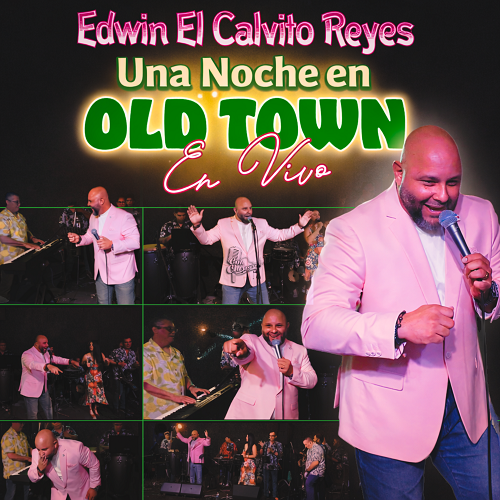
Let’s talk about Una noche en Old Town “en vivo,” while staying true to the musical journey of “El Calvito” Reyes

“Yes, Una noche en Old Town was an event held for about 100 people at a restaurant in the area known as Old Town in Kissimmee, Florida. Old Town is a park that feels like a year-round festival, 365 days a year,” the artist explains. This marks the third musical production from the Puerto Rican singer-songwriter known in the salsa world as “El Calvito,” one of the most fervent champions of the Salsa Nueva movement.

With this release, Edwin puts his salsa and his talent at the service of his followers. His repertoire spans classic salsa, romantic salsa, and what he calls “conscious salsa.”

Edwin “El Calvito” Reyes acknowledges that while everything has already been invented, the key is to stay focused and execute the ideas swirling in his mind. The press release for the new live album, titled Una noche en Old Town, notes: “Remember in the ’90s when many artists (…) recorded live productions? That was a trend that (…) went down in salsa history.”

The Production

The final product is a “live” recording of his orchestra. The production turned what was originally planned as a birthday party at Old Town Park in Kissimmee into a full album. Sound engineer Joseph Díaz captured the session, which was later mixed and mastered by pianist and engineer Víctor Romero. The content was further polished at Harmony Recording Studios in Orlando, Florida.

The album features the collective performance of the musicians who have accompanied the singer for years, including their appearance at the 2025 Día Nacional de la Zalsa in Orlando. The lineup includes:

  • John López: Congas
  • Daniel Ortiz: Timbales
  • Manny Urbina: Bongo
  • Víctor Romero: Piano and Musical Direction
  • Yasmani Roque & Marcos Rivera: Trumpets
  • Bert Laboy: Trombone
  • José Castro Marchán: Baritone Sax
  • Una Noche en Old Town Edwin El Calvito Reyes
    Una Noche en Old Town Edwin El Calvito Reyes
  • The night at Old Town also featured guest appearances by heavyweights such as Kriptony Texeira, Harold Montañez, and José Novoa. Additionally, Richie Nieves, the well-known voice of KQ FM Radio in Orlando, handled the album’s intro.

The Origin

The stage was set specifically at El Cilantrillo restaurant within Old Town. The event celebrated the birthday of Javier Colón, owner of La Feria Salsera and Edwin’s partner for the veteran-focused dance events that Edwin has successfully led in recent years. Javier hired “El Calvito’s” orchestra, the performance was recorded, and from that session, this authentic album was born.

By chance, the date of the party coincided with one of the most important days on the Puerto Rican salsa calendar: the traditional Holy Saturday Dance (Sábado de Gloria). “Many Latinos don’t understand and ask, ‘Are you guys seriously holding a dance on Holy Saturday?’ So, unintentionally, we tapped into that tradition—and it is a tradition in every sense of the word. By trying to keep it alive, we (Puerto Ricans) have shared it with the rest of the Hispanic public.”

According to Edwin, the performance was originally recorded for promotional purposes. However, the artist felt it was such a great capture of the evening’s energy that he consulted his musical director, Víctor Romero, to see what he thought of the idea.

The Release

Coincidence dictated that the album be published and available on digital platforms exactly one year after the recording. The producer admits it was a high-risk project because it was recorded live during an organic event outside of a controlled studio environment. The classic covers Edwin included as tributes to “those who have passed” (arranged as medleys) were his biggest concern, yet they ultimately earned widespread approval.

“El Calvito” Reyes says he doesn’t fear the critics. Driven by passion, he decided to release this 10-track production—eight of which he wrote himself, plus two salsa hit medleys—aiming to win over dancers, listeners, and collectors alike.

Tracklist:

  1. ‘Medley salsa nueva’
  2. ‘Así llamaban al Conde’
  3. ‘Homenaje a los que se nos fueron I y II’
  4. ‘Dime mi Buen Señor’
  5. ‘Tú del sur, yo del norte’
  6. ‘El karma’
  7. ‘Tócame la moña’
  8. ‘Baila cha cha chá’
  9. ‘Solo tiempo pa’ rumba’
  10. ‘Orgulloso de ser latino’

Stream & Connect: The album is available digitally on YouTube Music, Spotify, and Apple Music. Each track has a corresponding video at: https://www.youtube.com/@ElCalvitoReyesOficial/. The orchestra is available for bookings. You can reach the office via phone or WhatsApp at +1-912-980-8476 or by email at [email protected].

For more on the music of Edwin “El Calvito” Reyes, visit: https://solo.to/elcalvitoreyes

Bella Martinez Puerto Rico

Read Also: Edwin “El Calvito” Reyes el Sonero de la Sangre Nueva “Amor de Actualidad”

David Frankel pursued music and created Avenida B Band to reconnect with the memory of his father

After coupling on our schedules, we were able to speak with bandleader and pianist David Frankel, whose story of how he became interested in music and eventually dedicated himself to it is truly fascinating. It also shows that not only Latinos and their descendants can fall in love with these rhythms, but also people outside our culture. This is because David has Russian and Polish heritage, which did not prevent him from falling in love with Latin music so intensely.

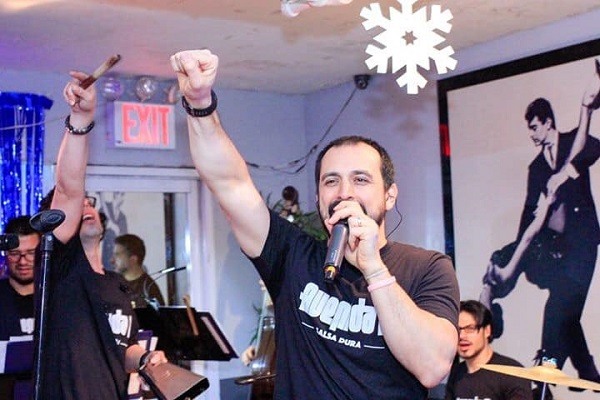
David and Ricky playing
David Frankel and Ricky Rosa playing live some years ago

What inspired David to pursue music

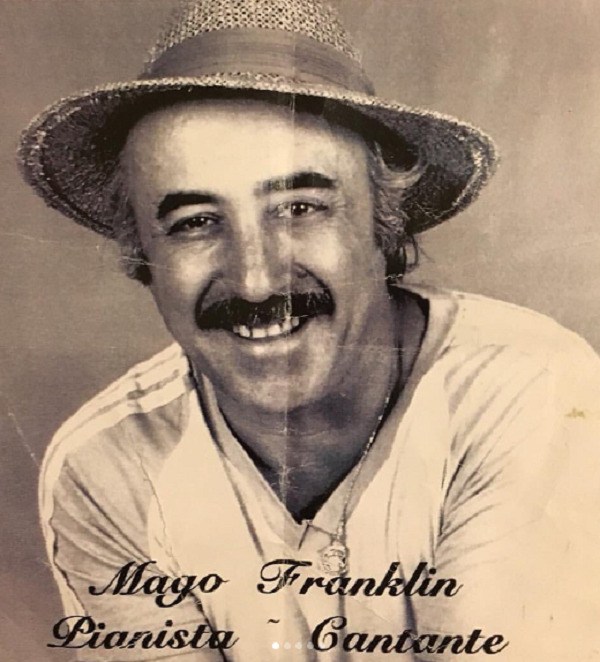
David was born in Lower Manhattan, New York, where there were many Latin families at the time. The neighborhood housed many Puerto Ricans and Dominicans. To this we must add that his father, Daniel “El Mago del Órgano” Franklin, was a musician and moved to that very place where Papote Jiménez, Ismael Miranda, Markolino, Freddy Lugo, Henry Fiol, Luis Ayala, and many others lived. Besides being a neighborhood full of artists, it was much cheaper living there, so he thought it was the ideal place for him.

It is worth noting that Daniel knew how to write music and read scores, but he had never played Latin music before in his life. He began to know it when several musicians he worked with asked for his help to read their scores, which led him to fall in love with Afro-Cuban music and develop an interest in salsa and merengue.

When David was born in 1979, Daniel had already been making music for about 15 years and had earned the nickname “The Organ Wizard” thanks to some band competitions held at a club in the Bronx. From a very young age, the boy watched bands rehearsing on the first floor of his house, so this salsa scene was natural for him. However, David had nothing to do with music until the death of his father in 2003.

David never had any interest in entering the art world, but the void left by Daniel’s death in his life drove him to study music, looking to connect with his father in some way. From there, he began taking piano and percussion classes, but he did not stop there. He also started to go out social dancing in the New York nightclubs and to know a bit more the nightlife of the city. On one occasion, a woman left him alone on the dance floor, and he was so ashamed in that moment that he decided to take classes and learn to dance.

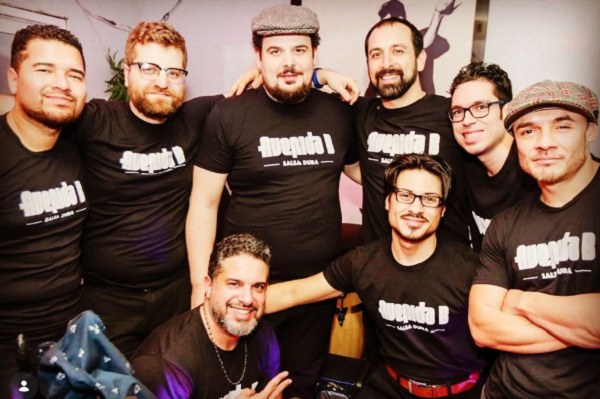
David and the rest of Avenida B
The Avenida B Crew:
Juan Bowers – piano
Alvin Céspedes – bass
Ricky Rosa – congas/coro
Brian Pozo – bongos/coro/stage direction
Jhohan Hernandez – timbales
Demetrios Kehagias – trombone
Dan Lehner – trombone
David Frankel – lead vocals

That was when he realized that all the local bands played almost the same genres and songs, but there was no need for that because there was a world of possibilities in the Latin music he had discovered during his classes. There is a world beyond La Fania, and he learned that thanks to dance schools. All this thinking led him to create his own band with different music, to the old-school style he had always loved. 

His father had always told him salsa is for dancing, and if you are not playing dance music, you are doing it wrong.

Which teachers taught David?

After thanking us for the question, David then proceeded to explain that there was a school in New York called the Harbor Conservatory for the Performing Arts, located at 104th Street and Fifth Avenue in Manhattan. The heads of the education programmes there were Ramón Rodríguez and Louis Bauzó, who were excellent musicians and great people whom he met thanks to his father, who was a piano teacher at that institution. David used to accompany Daniel to the school and met both teachers through him.

Following his father’s death, David returned to that same conservatory to study singing with Ramón, while also studying percussion with Georgie Delgado and piano with Louis. In short, this institution was of vital importance for his career, and the many things he learned there were momentous both personally and professionally. 

As for the dance, he enrolled at the Baila Society school in New York through some friends, but later studied at others such as Santo Rico Dance and Dance On 2.

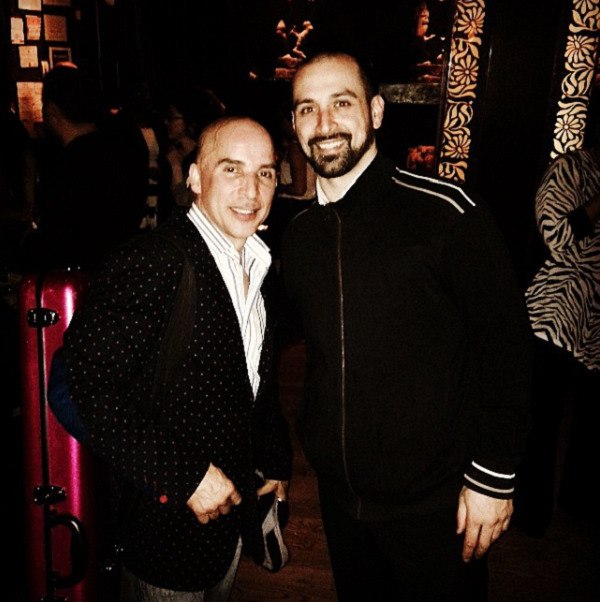
Jimmy and David
Jimmy Bosch and David Frankel

Avenida B Band

David began his career as a musician by playing boogaloo with a group called Spanglish Fly and a few other small bands. After everything he had studied and learned, already for the year 2011, the idea of creating his own group started percolating in his mind, so he posted an ad online looking for musicians and called some former classmates who might be interested in the proposal. That was how he managed to gather a decent number of people with whom he could finally put the Avenida B project together.

He chose salsa dura as his main genre because it is the kind of music that makes him want to dance, and given his background, this was very important to him.

He is also about to release an album in tribute to his father, which he has named “El Mago,” and it will feature some of his own songs; it is scheduled to be released in July 2026. 

David's father
Daniel ”El Mago del Órgano” Franklin, David’s father

Read also: Puerto Rican bandleader and musician Diana Sosa talks about her many projects in Nashville, Tennessee

  • « Go to Previous Page
  • Page 1
  • Interim pages omitted …
  • Page 46
  • Page 47
  • Page 48
  • Page 49
  • Page 50
  • Interim pages omitted …
  • Page 189
  • Go to Next Page »

International Salsa Magazine (ISM) is a monthly publication about Salsa activities around the world, that has been publishing since 2007. It is a world network of volunteers coordinated by ISM Magazine. We are working to strengthen all the events by working together.