


José Charlie Maldonado Rodríguez, artistically known only as Charlie Maldonado, is a Puerto Rican singer who has a great talent as a backup singer and sonero, which he has been developing throughout a prominent and very successful career in the world of music.
After having read his biography and being interested in the journey he has been on in salsa, we decided to contact him and arrange a conversation in which we could learn more about him and everything he has done to get here. Next, is a little bit of Charlie’s beginnings and, later on, everything he told us.
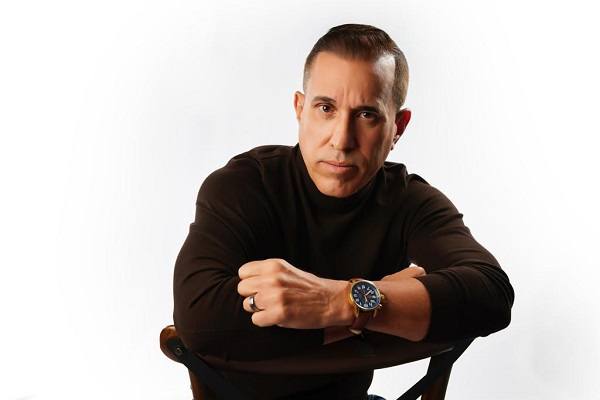
Charlie was born on October 4, 1964 in the city of San Juan, Puerto Rico. At a very young age, he was always exposed to boleros and salsa music, as his father belonged to a musical trio that was very popular at the time.
For those years, he listened to Ismael Rivera, Cheo Feliciano, Gilberto Monroig, Danny Rivera, Marco Antonio Muñiz, among others. Charlie said that, with such references at that time, it was impossible not to be enchanted by the music, so his interest in this branch of the arts grew and grew over time.
His interest got to the point where he wanted to learn to play percussion instruments such as the tambourines, the maracas, the drums and, most especially, the bongo (it was the first instrument Charlie learned to play).
Although he does not consider himself as the best bongo player of the world, he is believed to be very capable of playing it efficiently and delighting the listening audience. Most interestingly, he did not achieve this level through formal academic training at an institute, but through constant practice at ”rumbones de esquina” (congregation of people who play music, dance and drink alcohol on a street corner), school activities, family gatherings and Christmas parties.
These informal activities in which he was able to participate gave him the opportunity to develop as an artist from a very young age. In addition, his father and other musicians in the family helped him a lot in this process. The magic you feel when you play music, the family warmth and interaction with the public are not learned in any academy,” said Charlie.
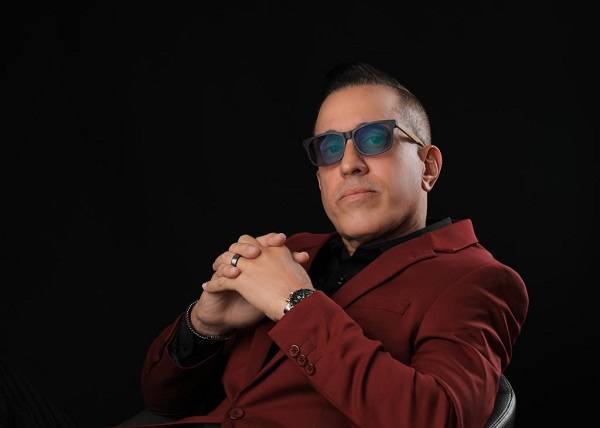
The first opportunity for Charlie to play in a professional group came with The Saljaztet in 1990 thanks to its founder Bobby Concepción, who saw him singing in one of those street parties and believed in his talent and what could be done with it.
Bobby is an industry veteran who has worked with many orchestras such as Orquesta Panamericana and La Orquesta del Maestro Willie Rosario. Being around him taught him a lot and he gained a lot of experience by seeing him in action on stage.
He even taught him some vocal and instrumental techniques to apply in his performances.
Charlie keeps the best memories of this group, its director and his colleagues. He is extremely grateful for everything he learned from them and continues to apply many of these things today.
”Every human being who comes into our lives has a lot to contribute and teach us. Lord made is different, so all the musicians I’ve worked with have taught me different things” said the artist.
Osvaldo ”Cuchón” Núñez is a brilliant musician who was very dynamic on stage. He was able to play the trumpet, do chorus and lead at the same time. He performed all of these functions excellently, which is why Charlie paid too much attention to what he was doing and copied him.
Raphy Levitt from La Selecta de Puerto Rico was an extremely regimented person who ran the orchestra very well and was excellent for business. He had an almost military discipline and was extremely picky about his musicians and vocalists, to the point that he made them rehearse separately depending on their roles on stage.
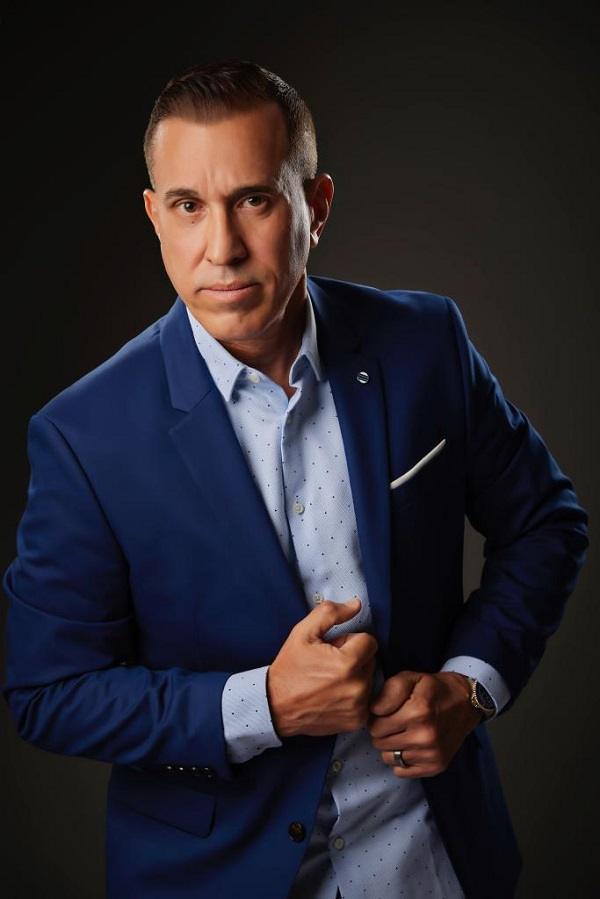
In the case of Sammy Marrero, he was always at the height of Levitt’s demands and sometimes exceeded them. In addition to being extremely disciplined, he always lived up to what was required of him on each project and even a little more. He even worked with him when he had his own orchestra, a period in which Charlie learned even more from him.
On this subject, the singer concludes that ”The personalities mentioned have taught me three fundamental things: discipline, perseverance and respect for the public”.
The idea of becoming a soloist was always on his mind, but it was not until 2016 that he was able to carry it forward. The previous year, in 2015, the maestro Raphy Levitt unfortunately passed away, at which time Charlie had some songs recorded.
He was already thinking about becoming independent and creating his own musical project, but had not decided to leave the orchestra until the death of Levitt. That is when he got hands on work and finished the record production he had already started.
In 2016, he launched his first solo project entitled ”Dueño de Nada”, whose songs are mostly written by Charlie Ramos. The only cover in the album is precisely ”Dueño de Nada”, which was written by Manuel Alejandro and masterfully played by José Luis Rodríguez ”El Puma” in the 1980’s.
His most recent album is entitled ”Vida Artificial”, which was released in September last year and addresses very interesting and current issues. The single that gives its name to the whole album, ”Vida Artificial”, ”is perfect for today. Phones, tablets and computers are damaging everyone’s mind. There are families who sit at the table, but don’t even talk to each other focus their attention to electronic devices. Technology is important, but we can’t be connected to it all the time. That was the message we wanted to bring with Artificial Life” said Charlie.

Charlie is about to release a song titled ”Señora Rumba” written by Eduardo Saya. The material has already been recorded and Charlie and his team are working on the video clip, which has a few shots filmed. It is expected to be released this August.
Likewise, he is working on his concerts and private presentations in Puerto Rico, but some opportunities are opening up in Colombia in the future.
También lee: We spoke with Andrea Chaparro from Lulada Club
 |
Salsa Week RomaniaAug 07 2023 – Aug 13 2023
https://www.facebook.com/events/722217712863148
|
Club D’orAddress: Strada Ion Creanga 15., Vama Veche, Romania, 905500 DescriptionThe 17th edition of Salsa Week Romania offers 34 workshops, 143 party hours, 4 competitions, 42 shows with more than 76 national and international artists. Cost pass: € 148 |
Latino America / Venezuela / Caracas
Very soon the theme will be released, Cuidadillo there ok
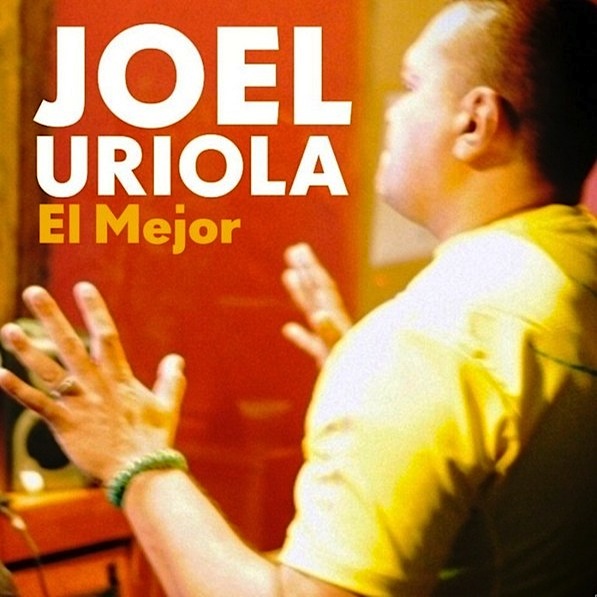
This Venezuelan pianist, arranger and musical producer was born on January 4, 1963 in Caracas, in the popular parish of Antímano, the same one that saw the birth of Sonero del Mundo Oscar D´ León, by chance or his destiny was already written and en route. towards a dream that over the years would come true; be the best and that your work is recognized both nationally and internationally.
In our gathering, Joel tells us that when he is classified as the best, he has nothing to do with competing with others or with airs of greatness, but with surpassing himself in everything he proposes, he tells us that “my path is longer, but I came as Joel Uriola”, his name is a seal that ensures quality work.
With 38 years of musical career, Joel Uriola has plenty of talent, level and experience, in each production he uses the best group of Venezuelan musicians and continues to be at the forefront of music, all this is demonstrated in the more than 1000 musical productions in which he has participated as a performer, director or musical producer, with national and international artists.
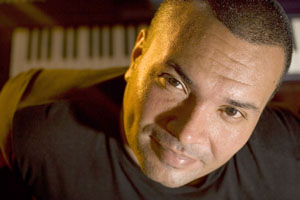
Joel Uriola The best?
“That’s right, metaphysics says that you can’t talk about yourself in a negative way, you can’t sell a product if you don’t have good marketing, you must see beyond, be your own manager, most record companies are in the hands of ignorant people. the music that drive the artist’s work”. “Artists have the obligation to cultivate themselves, learn and not only be musicians, we must project ourselves in a big way”.
How did your childhood develop and what was the atmosphere of the time like?
“I had a good education in my home, with values, a grandmother with character, who told me that no matter where you lived, your behavior would make a difference, she always motivated me, just like my mother who also instilled in me to prepare myself, my grandmother was an enterprising woman, my father was a rumba guitarist and a professor at the Católica”. “I remember that I saw the debut of the Trabuco Venezolano in the CC Propatria, as fate would have it, my mother had an office there, as did the people of the Latin Dimension.”
At what age did you start in music and with which orchestras did you take your first steps?
“My musical beginnings took place at the “Prudencio Esáa” School of Music, starting professionally at the age of 17 with a group called Galaxia, I was the conga player, it was a Son group and we rehearsed at the observatory”. “Then I became part of the Caracuchos of Joseito Rodríguez from 1977 to 1979, whom I met thanks to Jesús “Totin” Rebolledo, later with the Latin Dimension from 1979 to 1980, from Cesar Monges I learned a great deal, and from 83 to 87 with Oscar D´ León.
And why is there that change from the conga to the piano?
“Due to the noise I made in the house when I was rehearsing and the equipment turned on at full volume, my mother subliminally gave me an organ, it was less noise, and then I began to imitate what the pianists did in a self-taught way, I remember the theme of Pete Rodríguez… What things life has, life, life”. “Then my mother bought me a piano and took me to audition at the School of Music and I stayed, I was a student of teacher Tiero Pezzuti, Gerry Well and Samuel del Real”. “In the nightclubs of El Rosal I did many substitutions, there I polished myself, I had a good preparation and some great teachers who are my friends”.
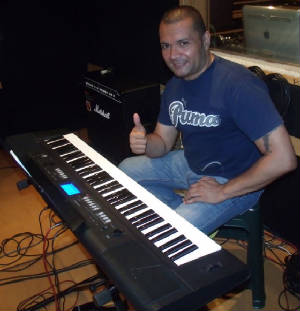
What anecdotes do you have about your experience of working alongside Oscar D´ León, and about that piano solo on the song “Cuídate bien”, did you ever think that being so young, almost 20 years old, your name would remain forever on the mind of the salsero?
“The time with Oscar was glorious, I got to know many places, we toured for 3 and 4 months, we enjoyed ourselves but we also had a lot of fun, I learned a great deal and disciplined.” “I had the blessing of meeting many musicians that I admired such as Eddie Palmieri, Salvador Cuevas, Barry Rogers, among others, with Domingo Quiñones I made a great friendship.” “As for improvisation, I feel great pride, it was something that came out at that time, I don’t know if it will come out again -laughs-“.
Which musician has been your biggest influence?
Markolino Diamond, Eddie Palmieri, Papo Lucca.
A pianist you admire?
“Markolino Diamond is my idol, a lot of what I do has to do with this guy, if he were alive he wouldn’t exist…”. “He was irreverent, crazy, he broke the schemes.”
How do you see the response of the salsa audience with your productions?
“There will always be admirers and detractors, with the level of awareness that you gain, it doesn’t bother you that there are people who don’t like your work, I make music for everyone”. “Public opinion can kill you if you are not prepared for it, but you must believe in what you do.”
How do you see the support of the media to spread your music?
“Thank God the record companies disappeared, those who knew the least about music controlled them, they decided that it was commercial and that it was not, in the alternative media there is response and support, however, social networks allow you to reach in a matter of seconds many places and you can do your own marketing”.
What do you think about the fusions that you are doing with salsa, for example, salsa and reggaeton?
“It works perfectly, it’s urban salsa, reggaeton with its lyrical content has improved a lot, they’ve softened it, reggaeton artists have great economic and communication support.” “The good things are guaranteed, reggaeton is seen as Salsa was seen in its beginnings, with bad eyes, but you see, Salsa is worldwide even the Chinese dance it, people consume what the radio puts on it, even if it’s bad, there’s room for everyone”.
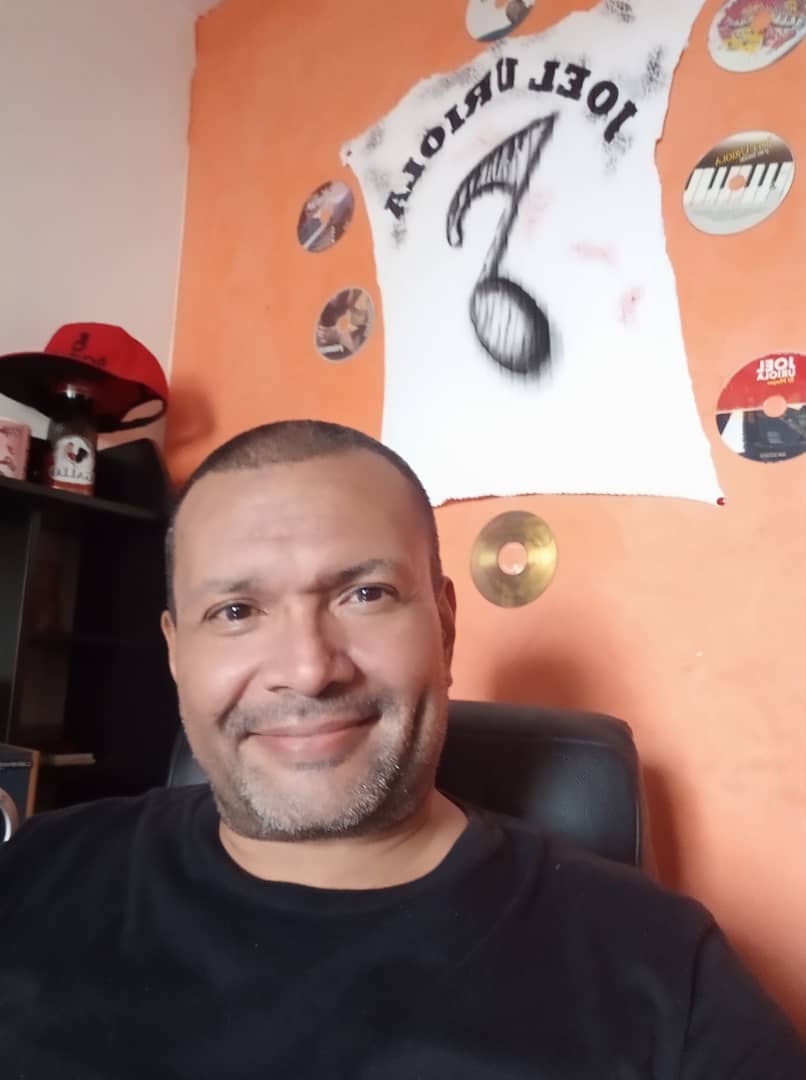
As a music teacher, what have you contributed to the country?
“Train the next generation, in values and discipline, and that seed continues to germinate, help people regardless of how they sometimes pay you.”
Why musician and not another profession?
“I wanted to be Disip (Venezuela’s intelligence corps), but when one is born marked for something, that’s what goes… My destiny is music.”
How do you see the music industry right now?
“Everyone is recording with their own effort, you make a song, you upload it to the networks, we have that powerful tool in our favor; the record companies limited you, hardly any albums are recorded anymore”.
Can you live from music?
“Well… Thank God I can do it, every day I get up like a conuquero to work, I can live from music.”
Of the 9 productions under your belt, which do you think is the best or the most important for you?
“Babalawo (2009), the best achieved, the best worked in all aspects, was sold in all religious houses.”
What motivated you to form your own orchestra?
“I’ve always been a leader, that’s why I decided to form my own orchestra, everyone has their moment”.
Isn’t it a difficult job to compose and arrange?
“You are born for this, it is not difficult, you must study and prepare yourself, my muse can arrive at 3 a.m., I get up and add or season my music in my own way, I listen to traditional Cuban music, jazz that inspire me.”
What is Joel Uriola doing right now?
“Currently I dedicate myself to producing for other artists of the Salsero genre, always offering quality, the most recent is the work with the Mercadonegro Orchestra with the theme Rumba Negrito”.
You are the arranger of the 3 songs that made the Bailatino orchestra known internationally, you have been the Producer and arranger in five songs of “Rumberos del callejón”, among other Venezuelan artists. What does it feel like to contribute so that other Venezuelans are successful?
“At the moment you do things, you do it with the best intention, and that is the greatest satisfaction, helping others grow regardless of how they pay.”
Do you feel that unity and camaraderie are lacking in the salsa guild?
“Totally, without unity nothing is achieved.”
What do you think of copying, imitating and not creating?
“He who imitates is destined to fail, one must have personality, you must not cling to something foreign to survive, what you do has more value, you must have creative capacity”.
Future plans or present?
“I am recording two songs, Cuidadillo there ok composition by Maurice Melo, a salsa with tasty rhythmic elements, timba and hard sauce, and the second song You are the teacher has a Christian connotation, with the Praise Orchestra, the song is my own. , a cool sauce with Christian sauce”.
Joel reaffirms us “My road is long, but I arrive as Joel Uriola, I am who I am, I am the best”.