








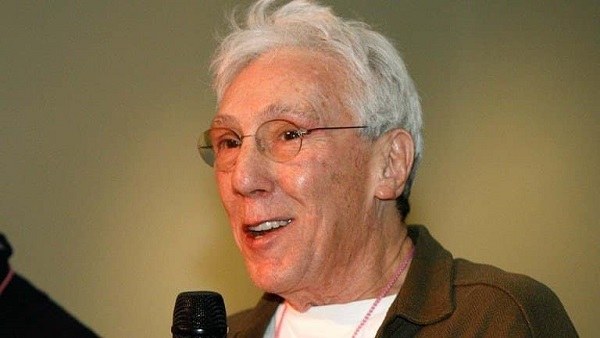
On March 8, 2021, we received the deplorable news of Leon Gast‘s death, who was a very notable American film director, producer, cinematographer and editor who was the director of the film based on the Fania All Stars, ”Our Latin Thing’‘. The unfortunate demise occurred when the director was 85 years old and the news was reported by friend and colleague Barbara Kopple.
Given the important contributions made by Mr. Cast offered to Latin music during his lifetime, we did not want to waste this opportunity to pay homage to his work through this material. Next, we will talk a little about his life and everything achieved both porfessionally and personally.
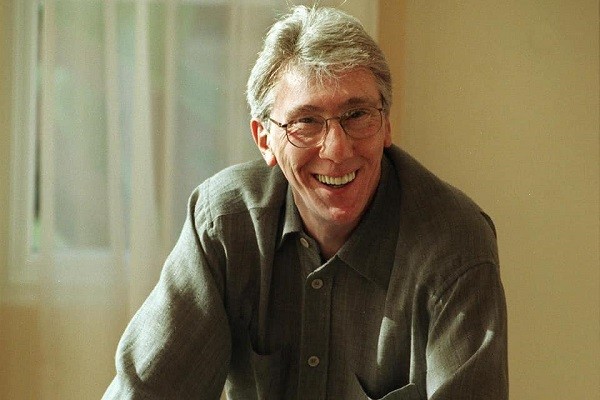
Leon Jacques Gast was born on March 30, 1936 in New Jersey, studied at Henry Snyder High School and graduated with a degree in Dramatic Arts at Columbia University. During tha time of his life, he worked alongside writer and broadcaster Lowell Thomas in the television series ”High Adventure”, which meant one of his first triumphs at a professional level, but it definitely would not be the only one.
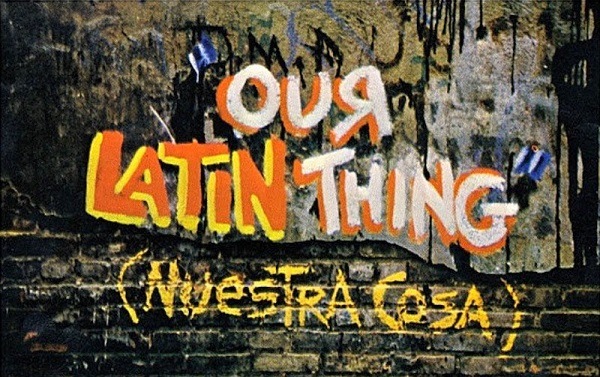
Another reason why Gast began to be so well known was thanks to his talent for photography, which would begin to be recognized in a number of famous magazines and print media such as Vogue and Esquire. In that regard, the producer began to create covers for the famous Fania All-Stars, which led him to create ”Nuestra cosa latina”. This documentary has been one of the greatest film projects that the filmmaker has carried out and many consider it a very important contribution to the consolidation of salsa as the cultural movement that it would later become.
”Our Latin Thing” is a documentary film that consisted in portraying how the Latin music scene in New York City was like in the 1970s. The material basically focuses on the concert made by the Fania All Stars at the Cheetah nightclub in August 1971. For many, this event marked the birth of the salsa genre as a movement.
The concert attracted two thousand people and resulted in the albums ”Live At The Cheetah Volume 1” and ”Live At The Cheetah Volume 2”, which were very well received by fans of that time. The event was the consecration of the Fania All Stars as one of the most famous musical groups in Latin music history.
In addition to that, Cast accompanied the famous orchestra and many other Latin music artists to Africa in order to record each and every one of their performances during the Zaire 74 Festival.
The film has been taken by many institutions as a reference to continue promoting salsa and music in general from its release to today.
Another of the biggest successes of this famous filmmaker was ”When We Were Kings”, which was a film released in 1996 and focused on important events for the United States such as Waltergate, the resignation of President Nixon, activism against racism, sports, mythical boxing matches and much more.
Another important project conducted by him was ”Manny”, which was focused on world famous boxing champion Manny Pacquiao’s life and his most important moments.
On April 18, 1953 it was acquired by the Department of Valle del Cauca and its first restoration was carried out by the master Luis Alberto Acuña in 1954.
It was declared a National Monument on December 30, 1959. It currently holds the status of Cultural Interest of the Nation.
With Law 397 of 1997 the properties previously declared national monuments were considered as properties of cultural interest and by Law 1185 of 2008 the BIC were defined as such due to the special interest that the property has for the community throughout the national territory…” (Law 1185 of 2008, Article 5, which modifies Article 8 of Law 397 of 1997).
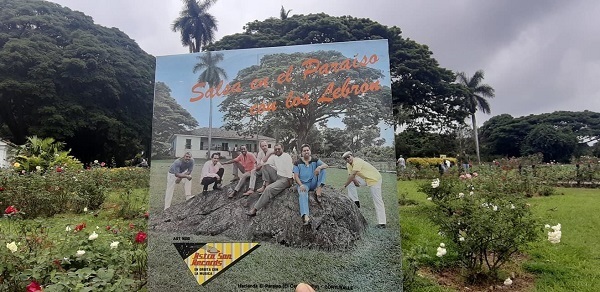
The Hacienda El Paraíso de Cali, setting of “María” written by Jorge Isaacs, a novel of an impossible romance and such wonderful landscapes that some Japanese decided to live in these lands just by reading the novel, landscapes that the Lebron Brothers also fell in love with.
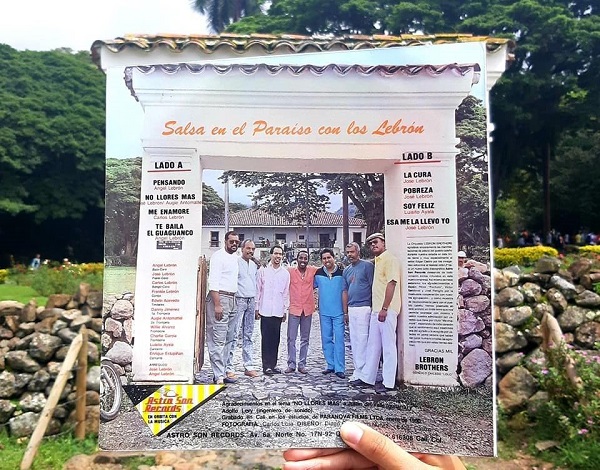
The Lebrón Rosa family was born with the union of Francisco Lebrón Feliciano and Julia Rosa Sosa (mother of Pablo López Rosa) in Aguadilla (Puerto Rico), where María Antonia, José, Ángel and Carlos Enrique were born. They moved to New York in 1952, where Frank was born; they were educated in a purely musical environment, the father wrote décimas and in the family most of them were musicians and played cuatro and guitar, besides singing.
Pablo Lopez, since childhood was noted for his voice, was born on June 30, 1937 in Aguadilla, Puerto Rico.
Already settled in New York, he organized a trio “Las Tres Monedas” (1954). In 1962 José and Ángel formed their first group called Los Eltones.
Pablo founded the Orquesta Arecibeña (1965). Pablo managed to get the owner of the La Vega club in Brooklyn to give them an opportunity to audition, at which time José joined the Arecibeña as a pianist. In 1966 Angel Lebron y su Combo was formed, where his brother Carlos is the pianist.
The opportunity to record came from the hand of businessman George Goldner, head of the Cotique label, thanks to the fact that he had agreed to listen to them live.
As this meeting was important, Angel and Jose asked their brother Pablo to accompany them on vocals, to take advantage of his veteran and wonderful style.

The album appeared in 1967 under the title Psychodelic goes latin, which included the hit Summertime blues.
Thanks to the overwhelming success of the first work, in 1968 they presented their second album, The Brooklyn Bums, name of a famous baseball team. They released nine songs with interpretations in English and Spanish.
In 1969 the productions I Believe, (Lo tuyo Llegará) and Brother, (Pancho el Loco y Fe). These hits catapulted them internationally before the Latin American public, tracing a new musical horizon.
The boogaloo began to lose ground and Los Hermanos Lebrón reflected this change by producing an album entirely in Spanish with the title Llegamos, containing the songs Mi fracaso, Tus recuerdos (a song that achieved Pablo’s recognition as a great Bolerista).
BOOM…! SALSA…..!
In the same year with the production of the album Salsa y Control, success was glimpsed giving relevance and turning the term Salsa into a worldwide social phenomenon; where the younger brother (Frank Lebrón) makes his debut.
You can read: Luigi Texidor el Negrito del Sabor




