• Skip to primary navigation
  • Skip to main content

International Salsa Magazine

  • HOME
  • Previous editions
    • 2026
      • ISM / April 2026
      • ISM / March 2026
      • ISM / February 2026
      • ISM / January 2026
    • 2025
      • ISM / December 2025
      • ISM / November 2025
      • ISM / October 2025
      • ISM / September 2025
      • ISM / August 2025
      • ISM / July 2025
      • ISM / June 2025
      • ISM / May2025
      • ISM / April 2025
      • ISM / March 2025
      • ISM / February 2025
      • ISM / January 2025
    • 2024
      • ISM / December 2024
      • ISM / November 2024
      • ISM / October 2024
      • ISM / September 2024
      • ISM / August 2024
      • ISM / July 2024
      • ISM / June 2024
      • ISM / May 2024
      • ISM / April 2024
      • ISM / March 2024
      • ISM / February 2024
      • ISM / January 2024
    • 2023
      • ISM / December 2023
      • ISM / November 2023
      • ISM / October 2023
      • ISM – September 2023
      • ISM – August 2023
      • ISM July 2023
      • ISM Edition June 2023
      • ISM – May 2023
      • ISM April 2023
      • ISM March 2023
      • ISM February 2023
      • ISM January 2023
    • 2022
      • ISM December 2022
      • ISM November 2022
      • ISM October 2022
      • ISM September 2022
      • ISM August 2022
      • ISM July 2022
      • ISM June 2022
      • ISM May 2022
      • ISM February 2022
      • ISM January 2022
    • 2021
      • ISM December 2021
      • ISM November 2021
      • ISM October – 2021
      • ISM September 2021
      • ISM August 2021
      • ISM July 2021
      • ISM May 2021
      • ISM April 2021
      • ISM June 2021
      • ISM March 2021
      • ISM February 2021
      • ISM January 2021
    • 2020
      • ISM December 2020
      • ISM November 2020
      • ISM October 2020
      • ISM September 2020
      • ISM August 2020
      • ISM July 2020
      • ISM June 2020
      • ISM May 2020
      • ISM April 2020
      • ISM March 2020
      • ISM February 2020
      • ISM January 2020
    • 2019
      • ISM December 2019
      • ISM November 2019
      • ISM October 2019
      • ISM Septembre 2019
      • ISM August 2019
      • ISM July 2019
      • ISM June 2019
    • 2016
      • ISM December 2016
  • Spanish
  • Download Salsa App
    • Android
    • Apple

Search Results for: dance

Perspectives of our senses in being an excellent Dj. and or Musicalizer

It is known as Disc Jockey (also known with the abbreviation of DJ, and its Anglo-Saxon pronunciation of Deejay) or disyóquey to “the person who selects and mixes recorded music of his own or of other composers and artists, to be listened to by an audience”.

Musicalizador: is that person who can extract a periodic and varied list of an equis amount of songs of proven success loaded in the storage system.
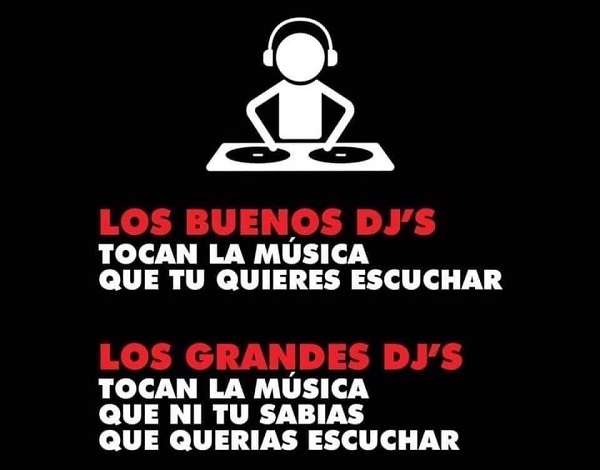
Many people and/or dancers express the controversy of the musicalizadores and Dj’s. Of the rumbas salseras of all the times nowadays that call it of (Salsa Guateque and Baúl).

With respect to the content or musical selection that they place or propose each one to give to understand to the public rumbero dancer.

Today there are many musicalizers and above all self-appointed “Dj`s” and they use to call themselves from one day to another and what they do not know that to reach this art they must study and know the art of basic music such as harmonies, theory and solfeggio, to be more complex.

First, one thing is to be a Dj and another musicalizer, both have to know music, but the Dj is responsible for making the mix of one over the other in couplings of the song without distorting the original revolutions or Bpm that makes you feel the harmony of both in one. Making the dancers flow and make the place feel good and cool.


The Djs and musicalizers have a difficult task to bring the creativity and the magic to put to dance to their public some traditional and others demanding to be able to over carry a rumba or danceable night.

This work has been difficult, but also easy to have an ear to select a song with a good sense of lyrics and above all with a harmonious and contagious arrangement that gives pleasure at the time of dancing. Making of them the work of how and when to place the melody to make the hook between the public/dancer.

The public rumbero, dancer…It is hard to understand that going out one night and feeling the atmosphere with something musical that not only you like, but also your partner or whoever you ask to dance likes the theme. Remember that not only the song makes the night enjoyable, but also the sound of the song and the people around you.
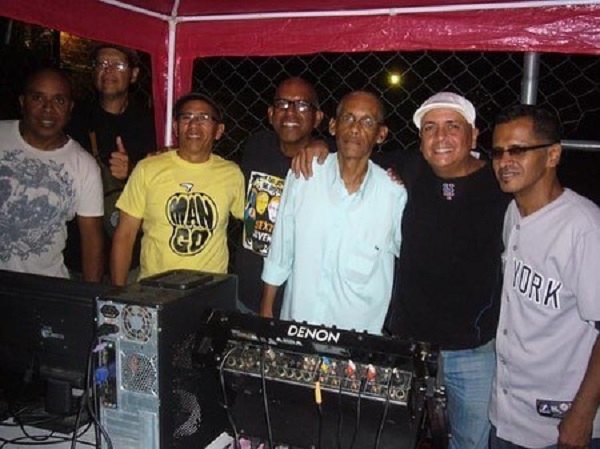
On the other hand, there is the audience that is not even a dancer. Many have the bad sense to bother with a drink in hand, dance alone, even take pictures and record the musicians and / or DJs. They get in the way of those who really want to enjoy the dance floor.

The criticisms are constructive to be better for the next dance, remember that there is a lot of music from the older music stirring memories of the public. As well as the newest, given that the music is modern and evolving.

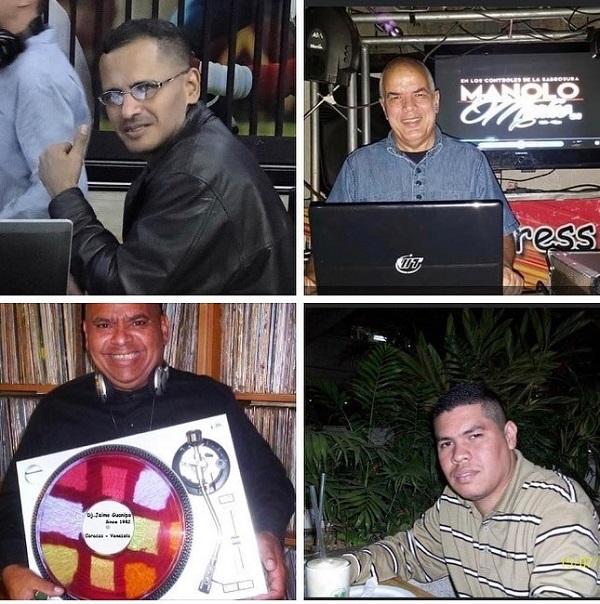
With this I do not mean that all are bad, on the contrary there are good musicians and DJs par excellence that I follow for many years. But there is a large group that is coming out in this that lacks some of the conditions mentioned above.
For DJ’s

  1. If you are going to play a number, play the original. The musicians, composers, arrangers and dancers will thank you for it.
  2. Music with instrument downloads are UNCOMFORTABLE FOR DANCING. Know how to choose which solos are danceable. Give swing to the dancer.
  3. Don’t cut the end of the music, or mix it up. It takes away the happy moment of that final punch.
  4. Just because it’s fast doesn’t mean it’s danceable; listen and see how people enjoy the different tempos in the music.
  5. Hey…the guajira, the son montuno, the chachacha…whatever you call it, it’s part of the genre. Why do you have to ask for it and they look at you funny? Out of every three to four salsas, a chacha goes down very well.


Where To Go Dancing Salsa In Africa During September

Latest news from the Salsero movement in Morocco, Ghana, and Ivory Coast

In September, we came with more force and recharged. In this edition, we offer you the compilation of the best Salsa and Bachata events so that you don’t stay without being part of the Latin scene of the African continent during the last month of summer.

World Salsa Congress Marrakech 2022

Leyenda: James Torres (Organizer and DJ of World Salsa Congress Marrakech)

After the cessation of the event for a year due to the pandemic in Morocco, the World Salsa Congress Marrakech 2022 returns from Wednesday, August 31st to Tuesday, September 6th with four dance floors for the enjoyment of Salsa in the NY and LA style, Cuban Salsa, Bachata, and Kizomba.

A six-day event of Salsa parties, total relaxation, entertainment, workshops, and international live shows with the participation of 2,000 people from 48 countries around the world at the Palmeraie Resorts hotel located in Circuit de la Palmeraie 40000 Marrakesh, Morocco.

In this eighth edition, every day in the Atlas Room will be a pool party with special guests and international DJs. On Friday, September 2nd, the shows will begin (10 PM – 11:30 PM), on Saturday, September 3rd, five hours of lessons will be held at different levels simultaneously in five rooms (10:30 AM – 3:50 PM), and On Sunday, September 4th, classes will begin at 11 AM and will end this day with the closing party at Nikki Beach with international DJs (Dress code: White).

The DJs that will be entertaining the World Salsa Congress Marrakech 2022 https://www.salsacongress-marrakech.com/programme.php?lang=en are DJ Tronky (Rome), DJ Mascalzone (Rome), DJ Mauri (Amsterdam), DJ Kamal “Salsa Dura” (NRW/Germany), DJ Juan (New York), DJ Babacar (Porto/London), DJ Marco Polo (Helsinki/Finland), DJ Miguel (Miami), DJ “El Loco” Hicham (Nantes/ France), DJ Giorgio Rod (Paris), DJ Ale “El Cubano” (Cuba), DJ Kito Et Jal’s (Rabat/Morocco), and DJ Myster’Youss (Montreal).

The secret party 1001 Night with international DJs will be on Monday, September 5th starting at 9 PM. €10 must be paid for the cost of the transport service. The price of tickets for the six days of Salsa Immersion, Pool Parties, and 33° Sun is €260.

Salsa Dance Night 

Leyenda: Salsa Dance Night (Wednesday 7th, 14th, 21st, and 28th September)

The entertainment company Vienna City Limited offers Salsa every Wednesday night from 6 PM to 11:30 PM at the Vienna City Hotel located on Emmanuel Quist Rd, Tema, Ghana (West African country).

This business chain with more than 20 years of experience maintains the quality standard in Salsa dance nights with regular training.

This nightclub in the Vienna City Hotel https://viennacity.com.gh/ has established itself as one of the most influential in the seaside city of Tema over the years. Here, you can enjoy a variety of drinks and exotic cocktails, as well as resident and guest DJs that will keep you dancing the night away.

The Meridian Lounge Bar is the soul of the hotel. It has an elegant style and a beautiful panoramic view of the neighborhood. The lounge bar lounge is also dedicated to game nights, comedy, and live Jazz on the weekends. So, don’t miss the opportunity to enjoy Salsa in Ghana every Wednesday in September.

Baila Conmigo – Soirée Latino

Leyenda: Salsa, Kizomba, Bachata – (Free Entry) 

On Friday, September 16th, you can attend the 100% Latin evening (Salsa, Kizomba, and Bachata) with resident DJs at the Cacao Lounge located inside the Sofitel Abidjan Hôtel Ivoire https://www.facebook.com/SofitelAbidjan (5 stars) located at Boulevard Hassan II 08 Bp 01, Abidjan, Ivory Coast (country in West Africa) starting at 7 PM.

Admission is free, you must use the Mask at all times, and there will be a Hydroalcoholic Gel available.

And if you are a beginner, it does not matter because the professionals of Social Dance Abidjan will be there to support you in your immersion in the dance of Latin rhythms.

Unique Latin atmosphere, Tapas, DJ, and a majestic environment of water and vegetation you will find at the Sofitel Abidjan Hotel Ivoire, a combination of French luxury and African charm on the Ivory Coast.

Salsa Invades Belgium In September

We tell you about 5 Salsa events that you cannot miss

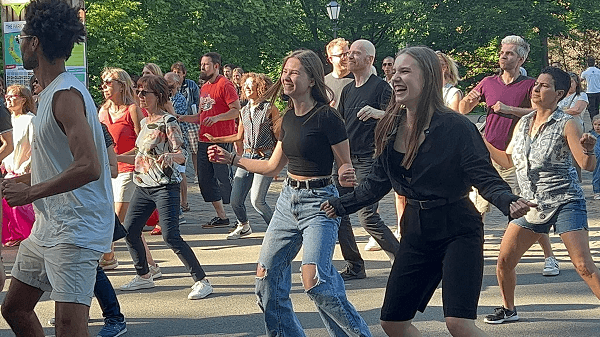
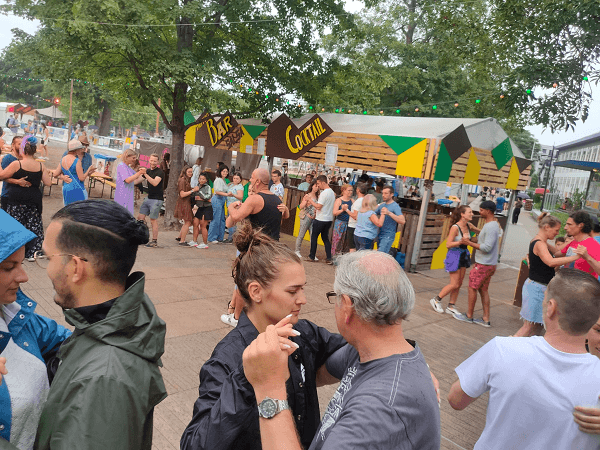
Salsa Park

Caption: Food & Latin Music at Josaphat Park in Belgium

We started with the dance school specializing in Cuban Salsa, Cuban Style, and Rueda de Casino in the capital of Belgium (Brussels), Danza Mania. This academy with more than a decade of experience teaches Salsa classes for all levels with an emphasis on mastering combinations, movements, and figures in a fun and relaxed environment.

The Danza Mania’s motto https://danzamania.be/ is Dancing with Feeling, which is the motive to offer the last free workshop for all Salsa lovers on Friday, September 2nd.

At 7 PM the lessons will begin for those salseros who want to start in Cuban Salsa but don’t worry, they will also teach classes for intermediate and advanced levels. An hour after Salsa Party will begin with DJ Felito, and at 8:45 PM, there will be entertainment with the Danza Mania team. The workshop will end with the last Salsa Party with DJ Felito from 9 PM until dawn. Where? At La Laiterie in the heart of Josaphat Park, 1030, Schaerbeek, Belgium. Dare to participate and have a pleasant recreation at no cost in a warm and welcoming environment.

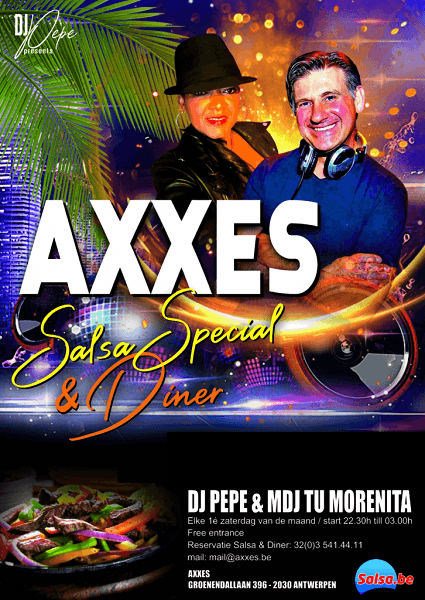
Axxes Café

Caption: A pleasant evening with dinner and lots of Salsa

We continue with the second recommendation in this edition and it is Axxes Café https://www.axxes.be/. In this venue, you can taste delicious Mexican dishes and tasty cocktails.  Additionally you can dance to Latin rhythms such as Southern Salsa, Bachata, Merengue, and Kizomba every first Saturday of the month from 11:30 PM to 3 AM. Admission is free.

DJ Pepe is in charge of making this Salsa night a reality since last Saturday, July 22nd (2022). This resident DJ of Latin night in Belgium for almost two decades traveled for the first time to Old Havana (Cuba) in 1997, where he fell in love with this musical genre. Since then, he has been a faithful lover of Salsa, and is currently the organizer of the Salsa evening at the Salsa Axxes restaurant and café in the Kinepolis complex. Address: Groenendaallaan 396, 2030 Merksem. Enjoy the most southern atmosphere in Belgium!

Mambo Surge Weekend 

Caption: Daily workshops from 1 PM to 6 PM

The second weekend of this month Mambo Surge Weekend www.mambosurge.com event will be held in its first edition with workshops (7 PM – 8 PM), shows (11 PM), and social events in three different rooms of the Theater of Dramatic Art OC Djoelen, Steenweg op Mol 3/Bus 2, Oud-Turnhout, Belgium from 9 PM.

Mambo Surge Weekend is a cooperation of experienced Salsa event organizers whose goal is to create quality events that spread love and passion for this Afro-Caribbean rhythm.

Mambo Surge Weekend is from September 9th to 10th and will feature the following local DJs team: DJ CyCy, DJ Asmadi, DJ Cisko, DJ Louis, and DJ Lukas “El Taz” mixing the best Caribbean music. The cost to attend this event is €80.

10 Dance Delirium Salsa Festival Gante

Caption: Tickets for the daily Salsa parties range from 10 EUR to 15 EUR

This seventh edition of the festival will take place from Friday, September 2nd to Sunday, September 4th and will be packed with three days and three nights of parties in two areas (Salsa/ Bachata), around 20 hours of varied workshops, shows from at 11:30 PM, meet & greet with national and international artists, and three DJs: DJ Willy VIP, DJ Cisko and DJ Alfons doing their best mixes.

The location for this edition of the 10 Dance Delirium Salsa Festival Ghent www.10dancefestival.be will be the modern dance complex, Doxtudio, located at Dok-Noord 7/107, Gent. The cost of the Full Pass is 85 EUR, and street parking will be free from 11 PM to 9 AM each day.

But, if you want to continue the fun with the team of the young and dynamic dance school in Ghent, Lékip Dance, Dox Summer Sundays 2022 will take place on Sunday, September 11th, with two hours of lessons. From 8 PM to 9 PM the Afro Body Movement class will be held, and an hour later, you will be able to do the Rueda Cuban Style lesson by the pair of instructors Osbanis & Anneta from Poland.


Papo Rosario with his “Salsa de La Buena” at the Spanish Harlem Salsa Gallery Museum

Papo Rosario and his “Salsa de La Buena”

We are incredibly pleased to talk about Luis Alberto Rosario, better known as Papo Rosario, who can be considered one of the most beloved salseros by people who have enjoyed his music for decades. In addition to being a very cloase and kind man to everyone around him, his musical and acting talent is undeniable.

Isidro Infante next to Papo Rosario

After having sung along with El Gran Combo de Puerto Rico for more than 40 years, Rosario makes his debut as a soloist with his first recording work “Salsa de La Buena”, in which he receives the full support of maestro Isidro Infante. Both Rosario and Infante are part of Salsaneo Records, which is close to becoming one of the most important music labels thanks to its contemporary salsa. Thanks to the counselling and advice received from Isidro, Papo has managed to create one of the most important and interesting albums in 2002.

One of the things that makes the album stand out is the great amount of danceable rhythms, positive lyrics, good vocals and fresh sonority. It is evident that the essence of the artist always stands out and he does not let himself be dragged along by what he learned during his time in El Gran Combo. While it is true that there are some traits learned from his friend and former colleague Jerry Vivas, Rosario seems pretty determined to distance hemself from the past and focus on a vastly different future.

Rosario and Infante recording in the studio

What “Salsa de La Buena” is 

“Salsa de La Buena” has many tracks that can perfectly mark a before and after in current Latin music. It starts with a beautiful hymn to optimism and perseverance called “Gracias”, which is one of the four songs composed by the pen of maestro Infante. In the case of “Salsa de La Buena”, the song that gives its name to the entire album, speaks of the connection the singer has with his people as an exponent of the salsa genre. The arrangements and piano melodies are reminiscent of what Richie Ray and Bobby Valentín did when they sang “Los Reyes de La Salsa”.

Isidro also shows his great talent with “Los refranes de Don Yeyo”, a beautiful piano solo where you can see how important the Caribbean collection of proverbs is for the culture at large.

Johnny Cruz with Papo Rosario

Promotion for Papo Rosario’s album 

In a conversation between Papo Rosario and Johnny Cruz, director of the Spanish Harlem Salsa Gallery Museum, the two talk about this recording work and the artist tells how did the whole process go.

Rosario has said that both he and Infante had studied together, but had built their careers separately until they met again recently. That’s when he proposed him to make some arrangements to his songs, but they ended up collaborating to make the album in full. The main objective of the record production was to bring a positive message to the peoples and do what God has put on their shoulders.

In the same way, he pointed out that the salsa museum was quite empty the last time he went, but he was surprised to see that all those spaces have been filling up with truly valuable objects for salsa and its fans.

From there, they gave their regards to Isidro Infante and invited him to the museum to join them and talk about “Salsa de La Buena” and other issues that arise.

Johnny Cruz, Papo Rosario and Rubio Boris

        By Johnny Cruz, ISM Correspondents, New York, New York City

Michiel Braam: The Virtuous Pianist from Nijmegen

Two years after the creation of the Latin Jazz album XYZ with Son Bent Braam

Michiel Braam presented XYZ at the Music Meeting Festival. “The festival takes place in Nijmegen, where I was born (1964), grew up, and still live”. Foto: Marjan Smeijsters

Virtuous pianist, masterful producer, and surprising composer. Winner of the Podium award (1998) and Boy Edgar (1996/1997). Musician trained by conviction and at the ArtEZ Music Academy in Arnhem. His lifestyle is synchrony between freedom, creativity, teaching, and love. It is how he presents us his life and his works in Nijmegen, Michiel Braam.

This friendly artist with a protective childhood where love prevailed always had the support and freedom to develop and create everything he considered necessary to him. Michiel is the only one in his family who turned to music professionally, but the rhythm of melodies runs through his veins. His parents played the piano self-taught. His mother wrote notes while his father just improvised.

During high school, he participated in a band for which he wrote and arranged all the music. He studied at the conservatory and founded his more minor quartet Bentje Braam (“Little Band Braam”) in 1985. In the same year, he traveled with his band to Sweden to be the first Dutch group to open the EBU Jazz Festival and wrote his first composition for the Dutch radio “Cows and Beasts”. A year later, he created the band Bik Bent Braam.

“Music is, as long as I know, everything to me. I feel better with music. I dance when I’m happy, and music comforts me when I’m not doing so well… It seemed like a logical step to pursue what I enjoyed most.” Michiel Braam https://www.michielbraam.com/

By 1988 Braam had had no contact with Latin music until percussionist André Groen asked him to be the pianist for his Orquesta Europea de Danzón. In this regard, this wonderful pianist told us: “He wanted a pianist who had a wild free Jazz attitude and who didn’t only play the well-known Latin patterns because he thought that fitted better with the authentic Cuban music. That music immediately appealed to me, especially because of its rhythmic impact, but also because as a pianist, you have a lot of freedom to go in all directions during improvisations. I have touched on those Latin patterns to some extent and in the course of the 10 years that I played in that orchestra I managed to master them better, but it was mainly the combination of freedom and rhythm. That orchestra lasted ten years and we celebrated the thirtieth anniversary in 2018 with a couple of concerts. Great to do that again and I felt again exactly why I found it so appealing back then”.

In 1988 Michiel won the Podium Prize, an encouragement prize for Dutch Jazz music and in 1996/1997 he won the Boy Edgar, the highest prize for Dutch Jazz.

This pianist, the architect of great projects, built a party based on the Latin alphabet of Western culture on the album XYZ released in 2020, creating a danceable mix that includes Mambo, Rumba, Son, Danzón, Boogaloo, Calypso, Rumba, Bembé, Mozambique, Samba, Afro, Bolero, Cha-cha, Merengue, Bembé, and Samba. Michiel is also the Director of the Jazz and Pop department of the ArtEZ conservatory and founded a Danzón orchestra. Now, I leave you with the rest of this wonderful interview that I had the opportunity to do with the great Maestro Michiel Braam. Enjoy!

They have played on the ZomerJazzFiets tour, North Sea Jazz, and Bimhuis. Likewise, some of the members of the orchestra are fluent in Spanish.

– How did the idea of the Latin jazz album XYZ come about?

In 1995 I wrote “The XYZ of Bik Bent Braam” for my big orchestra at the time, Bik Bent Braam (phonetic Dutch for “Big Band Braam”). I thought it would be fun to make a festive version of it to celebrate the 25th anniversary. The XYZ was (and is) a 26-part suite, with a piece for each letter of the alphabet, starting with Aardedonker (English title Atramentous, Spanish Apagado, both not exact translations…) and ending with Zwoerdspek (Zaftig, Zafio). I revisited all the pieces in 2020 and paired various styles with the original material. In the 1995 original, they were mostly jazz-like styles (bebop, free improv, swing, jazz ballad, etc), but Chachachtig was a rumba even then. It is the only piece that has not changed its mood substantially.

– What happened to the previous members and how did the new members take hold?

The original orchestra Bik Bent Braam was composed of top musicians from the Dutch improvised music scene. The orchestra existed from 1986 to 2013 and had a number of lineup changes. In the final version of Bik Bent Braam there were only a few members left from the very beginning. That the musicians of Bik Bent Braam could read well was not really a requirement, the core was affinity with swing and great improvisational skills. For this new version, it was important not only that the musicians were excellent improvisers, but also that they had to have a feel for Latin music and also that they were outstanding readers, because I did not foresee that there would be very much rehearsal time and the notes are quite challenging. Bik Bent Braam was subsidized with government funding and I could then easily occupy a longer period with many rehearsals. Son Bent Braam, the current line-up, does not have its own subsidy, so we have to look at each concert and hope that everyone can make it. There have been quite a few subs, and they too have to be able to improvise and read well.

– Tell us about your Danzón orchestra.

André (André Groen – Percussionist) wanted to immerse himself in traditional Cuban music. There is so much richness in the danzón with its fixed forms that pass by in each piece with the most beautiful melodies and the wildest spaces for improvising on highly danceable rhythms. We found the instrumentation with violins, cello, flute, percussion, double bass, and piano attractive. After ten years I got too busy with my jazz ensembles, by then I was touring all over the world with Bik Bent Braam and other groups and especially with my Trio BraamDeJoodeVatcher. I could hardly combine it anymore with the Danzón Orchestra and the great pianist Peter van Marle took my place, which made me feel very humble. The European Danzón Orchestra then existed for another year or so. I honestly don’t know why it stopped then. In 2018 we did a couple of reunion concerts, great fun to do.

– How many years have you been in charge of the Jazz and Pop department of the ArtEZ conservatory and what do you teach the new generations based on your experience?

I have been head of the program since 1992. It is part of a broad arts university and is located in a building that also houses dance, theater, fine art, applied art, fashion, and creative writing. As a head, I don’t teach very much… only when students very specifically ask for it a few hours of individual lessons per year and a few group lessons, and I also regularly give master students some lessons. My message is usually quite short and clear: there are millions of people who play an instrument excellently, and you can probably teach an orangutan to play Keith Jarrett better than Keith does himself, but – apart from the fact that that would be a fun YouTube hit – there is no point; in our music, it is almost all about an authentic voice, including all the shortcomings that are in everyone, which also make you a unique musician. Obviously, you must have many skills as a musician, but my life motto is that one’s deficiencies are far more important for one’s personality than one’s skills, and that attitude underlies my whole vision of art education.

“With Nos Otrobanda have started to concentrate on the music of Noro Morales and have his composition Maria Cervantes (single) firmly in our program. His music will probably be the subject of our new album”. Foto: Marjan Smeijsters

– What are your next projects?

Everything is starting up again post-covid. I want to record a solo album on my grand piano, a so-called “Alurip”. That’s an aluminum grand piano made in the fifties with a specific sound. And the album of our trio Nos Otrobanda, which specializes in Antillean music, is almost sold out. That doesn’t matter obviously, if there are no more physical copies then you can always hear the music through iTunes, Spotify, etc, but it’s a great opportunity to make new recordings again and the intention is to go to Curacao and record music in the Fortkerk in Willemstad, the place where we did a couple of concerts in 2018. That was a great experience, what a nice place and sweet audience!

– How was the process to make a living from music?

I stuck pretty firmly to the rule that you have to do what you like and not let yourself be distracted too much from that. And I look for what it takes to make it happen. From 1996 to 2012 I received an annual government subsidy to realize my projects. I am also a real musician in the sense that I have a mixed professional practice (playing, writing, teaching, producing, almost every musician has roughly that mix) which means that it is always possible to make a living out of it and we never had to worry about bread and a place to live.

Michiel Braam & Son Bent Braam Orchestra.  Foto: Marjan Smeijsters

I make music mainly because I can’t do otherwise. Music is a way to communicate; it makes you a little better… Leitmotiv in everything is that in music, I am free to do anything I want. For example, I did play Purcell’s Dido and Aeneas with the exquisite reed quintet Calefax, also improvising on the various songs from that opera.” Michiel Braam

Home

  • « Go to Previous Page
  • Page 1
  • Interim pages omitted …
  • Page 114
  • Page 115
  • Page 116
  • Page 117
  • Page 118
  • Interim pages omitted …
  • Page 168
  • Go to Next Page »

International Salsa Magazine (ISM) is a monthly publication about Salsa activities around the world, that has been publishing since 2007. It is a world network of volunteers coordinated by ISM Magazine. We are working to strengthen all the events by working together.