









VANCOUVER
Directory of North American nightclubs |
||
|
|
||
|
|
|
|
|
|
||
|
|
|
|
|
|
|
|
|
|
|
|
|
|
|
|















VANCOUVER
Directory of North American nightclubs |
||
|
|
||
|
|
|
|
|
|
||
|
|
|
|
|
|
|
|
|
|
|
|
|
|
|
|
In International Salsa Magazine, we have always tried to cover all types of Latin music artists, including producers, arrangers, composers, singers, musicians, dancers, and club owners. However, it is also important to talk to other platforms that promote Latin music as we do, so we contacted the creator of the website Salsa Vida, Takeshi Young, to learn a little more about this online media site and everything it has to offer the public.

In view of the trouble digital marketing specialist, dance teacher, and competitor Takeshi Young went to create a site like Salsa Vida, we obviously had to ask what relationship he had with Latin music. He replied that he loves to dance and has been doing so for about 19 years. His attendance at various salsa events led him to create a calendar for the San Francisco Bay Area, where he currently resides.
The acceptance he had led him to include much more content like articles, events, guides, and much more. The main goal was to show salsa lovers all the places they could go to enjoy this genre, but over time, Salsa Vida was turning into a sort of online newspaper that provided information on many other things related to the same topic, especially dance academies. For its operation, it uses tools like WordPress, iTools, and Chat GPT as an information bank to his writings, most of which are of his authorship.
He used the name “Salsa Vida” because of the lifestyle that he associated with salsa, which he considered to be unifying, nourishing, and joyful.
One of the most annoying parts about creating Salsa Vida was the calendar, as Takeshi always had to keep an eye on updates, date changes, and event cancellations. Fortunately, he always received information from many of the organizers, who told him when there were any changes in their schedules.

Takeshi pointed out that, at present, Salsa Vida’s most important goal is to teach and promote salsa around the world, which has led him to write all kinds of articles in which he seeks to educate his community on all kinds of topics related to Latin music, such as “what is pachanga” or “what is cha cha chá.” With this, he wants those interested in learning about dancing or knowing more about this rich world to have a starting point from the theoretical part.
In addition to that, the website still maintains the calendar to help salsa lovers find events related to their passion near their homes.
Takeshi claims to have so many contacts with a lot of bands, especially in the Bay Area, which has helped him keep on growing his website. However, the people he interacts with most in this environment are dancers and instructors who give him a lot of information about their work with their academies and students.
Moreover, his work has also helped him gain invites and press passes to all kinds of events and concerts in both San Francisco and the rest of California, allowing him to cover them and bring the latest updates to his loyal readers.

As for Takeshi and Salsa Vida’s goals for the coming months, the creative young man keeps searching for and publishing events from around the world for his readers to see, as well as highlighting the importance of expanding and publishing even more countries in his calendar so that many more salsa fans from other latitudes can use Salsa Vida to find what they want.
Today, the Salsa Vida calendar has events in about 80 countries, but Takeshi says it is not enough and wants to expand much more to other locations. He also wants to add more languages to make visitors to his page feel more comfortable, and new sections such as “Dancepedia” that would come to be a kind of Wikipedia, but focused on dance.
And if that were not enough, he wants to design an app through which those interested can use the same functions of the site in a much more comfortable and interactive way from any mobile device.
As well as handling Salsa Vida, Takeshi is also a digital marketing specialist and teaches salsa at San Jose State University twice a week.
Importantly, he has a BA in philosophy and a BS in software engineering, both from the aforementioned university. During those years, he was also a member of his class’s salsa and mambo clubs.
Read also: Haitian bandleader and musician Mac Gregore Brunis fulfills his dream in Montreal
During his childhood, around the age of 8 or 10, he moved with his family to New York City, where he lived in East Harlem (Upper Manhattan). Musical influences indicate that from a young age, he was strongly influenced by the music of Cortijo y su Combo and Ismael Rivera.
Before or concurrently with his musical career, he worked in the jewelry business; he was a messenger and later learned to cut and polish diamonds, a skill that allowed him to self-finance his musical career and pay high salaries to his musicians.

Musical Career
His Beginnings: He started as a timbalero in Ray Jay’s orchestra, where he debuted as a singer, replacing the lead vocalist.
Notable Hits: Among his most popular songs are: “Nostalgia,” “Sol de Mi Vida,” “Perico Macoña,” “Lejos de Ti,” “Hace Tiempo,” “El Cantante y la Orquesta,” “Sabor de los Rumberos Nuevos,” “Bomba Carambomba,” and his celebrated rendition of the bolero “Dos Gardenias.”
His Unique Style is recognized for its unorthodox approach and distinctive vocal timbre, which earned him the nickname “El Diferente” (The Different One).
He was a highly independent artist who self-financed his albums and founded his own record label, Celanac Records.
Tours and Retirement
International Tours: He toured internationally, visiting countries such as Panama (his first), Venezuela (where he performed at the Poliedro de Caracas in 1982), Colombia, and Peru. It is said that he never performed with his orchestra in his native Puerto Rico.
He retired in the late 1990s, deciding to leave the stage.

50 Years Since the Launch of “Sabor” (1975)
The Album: The album titled “Sabor” by Angel Canales was released under the Alegre Records label in 1975.
Only a boricua (Puerto Rican) who has been absent from their homeland knows what it’s like to be away from Puerto Rico when winter arrives in New York City. Or when you’re inside a taxi or walking the congested streets of the Bronx or the Latino barrio, and all you see around you are skyscrapers and more skyscrapers. The anxiety and sense of helplessness that overwhelm your spirit in the concrete jungle can only be calmed by memories.
The song is a guaguancó with lyrics that evoke images of old San Juan, Villa Palmeras and its rich bomba heritage, Boca de Cangrejos, fried fritters on the grill, and the river that crosses through the old Ancón de Loíza Aldea, where his grandmother lived. “Lejos De Ti” remains the most remembered track from “Sabor,” an album produced by Joe Cain, recorded in late 1974, and released by Alegre Records on Monday, November 10, 1975.
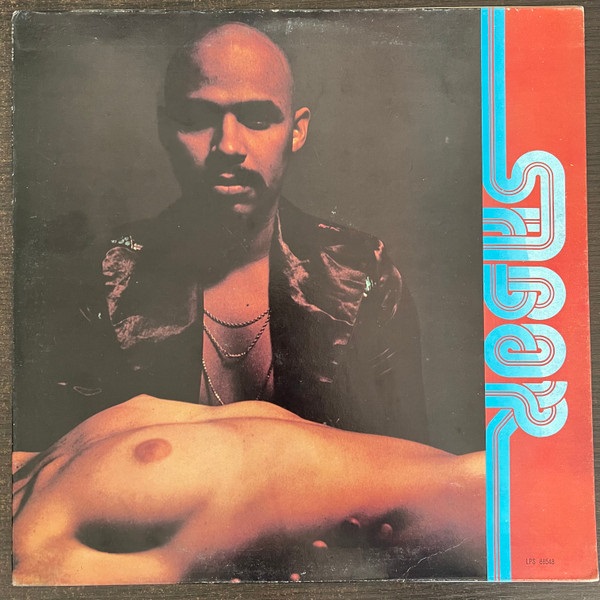
This album is considered one of the best salsa releases of the 1970s.
Canales’ Style: Canales favored a different style of interpreting Afro-Caribbean rhythms, combining elements from Héctor Lavoe, Ismael Rivera, Vicentico Valdés, and Paquito Pérez (the singer of the Orquesta Zodiac of Loíza). He extended the melodies with his nasal voice, challenging the poetry of the montunos, but going off-key and mispronouncing some words. His diction was far from perfect.
Production: The architect of Canales’ success was Colombian pianist Edy Martínez, who arranged seven of the eight tracks on this session, from cut #2 to #8. Due to a prior commitment with Mongo Santamaría’s band, he left his compatriot José Madrid in charge of the piano performance on this record.
Canales reappeared four years later with the Orquesta Sabor los Rumberos Nuevos with an arrangement by Louie Cruz. That same year, 1975, Larry Harlow produced Mark Dimond’s classic “Beethoven’s V” featuring vocalists Frankie Dante and Chivirico Dávila. “Sabor” was a huge hit.
Tours and Artistic Choices: The singer toured Europe, the United States, and South America, where Colombians, Panamanians, and Peruvians remember him fondly to this day, despite health issues forcing him to retire from the stage.
During the golden age of salsa, singers were expected to master all genres, and boleros were no exception. His vocalization on “La Hiedra” (a track written by Saverio Saratini and Vincenzo D’Acquisto) and “No Te Acostumbres” (a track belonging to Doris Aghian’s catalog) is notable for its theatricality, a trick Canales employed to mask the limitations of his voice.
Legacy: Before becoming a professional singer, Canales worked as a jeweler. A look at the covers of his first two albums is enough to conclude that he was a pioneer in the use of bling-bling in salsa. As a composer, Canales was a solid chronicler of barrio life. The story told in “Perico Macoña” is a good example: a man who smokes a joint and loses all self-control, insulting his own friends with his abrupt comments.
The re-issue of “Sabor” is a fitting tribute to the memory of the late Joe Cain.
Credits
Collaboration:
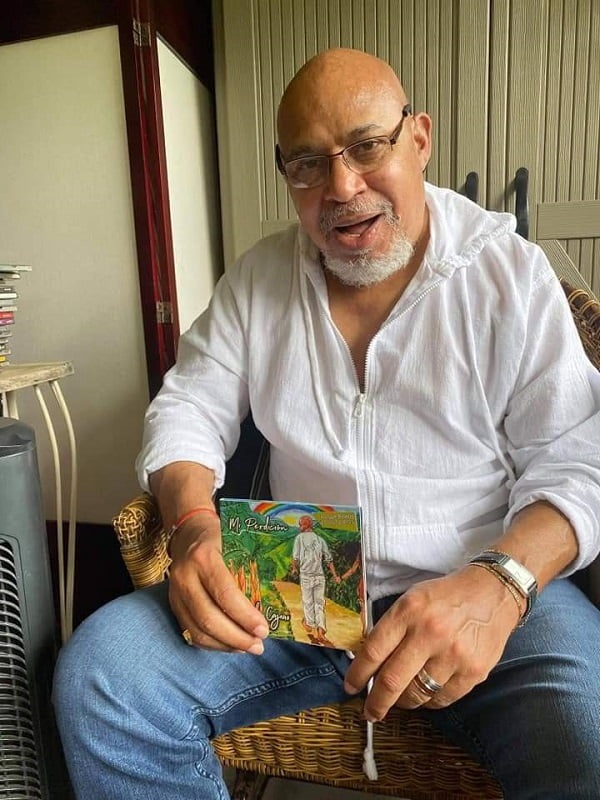
The acclaimed Venezuelan pianist, arranger, and music producer Alberto Crespo joins legendary Puerto Rican sonero Carlos Santos and the talented Grupo Bacheo to present their latest musical track titled “Narci.”

This original composition by Ali Delgado and José Granados, featuring arrangements by Alberto Crespo himself, fuses a modern sound with the unmistakable rhythm of salsa, guaranteeing a musical experience that will delight dancers.
Alberto Crespo: A Piano Master with an International Career.
By age seventeen, he was already touring with renowned orchestras, sharing the stage with icons such as Naty y Su Orquesta, Celia Cruz, Bobby Capó, Carmen Delia Depini, Carlos Cano Estremera, Andy Montañés, Ismael Miranda, Pete Conde Rodríguez, and José Mangual Jr., among many others.

With over three decades of experience in salsa and Latin Jazz, Crespo has consolidated his reputation as a highly prestigious producer, arranger, and pianist. His impressive list of collaborations includes national and international artists such as Maikel Stuart, Frankie Morales (former singer for Tito Puente), Orquesta Bailatino, Grupo Mango, Herman Olivera, Rumberos de Callejón, Gilberto Santa Rosa, and Naty y Su Orquesta. His versatility has led him to be part of the most prominent musical groups in Venezuela.
Carlos Santos: A Classy Sonero with a Legendary Trajectory.
Santos has left classics for posterity such as “Chacaboom,” “Las cosas de la vida” and “Amor verdadero” with Joey Pastrana, as well as “Flores para tu altar” and “Me imagino” with Conjunto Candela. His voice also enriched productions by Eddie Palmieri and Los Kimbos with tracks like “Caridad” and “Todo el mundo.” During his time with El Apollo Sound, he garnered hits such as “El Progreso” and “Háblame ahora.”

Carlos Santos currently resides in Florida, United States, and continues to delight audiences with his international and local performances.

Production Credits
General Production
Musical Team
Musicians
Recording and Post-Production
Important Note by Alberto Crespo:
I was working on the arrangement for the song NARCI, and when I reached the chorus, I wanted to find a beautiful melody with a different harmony, like a chorus of angels singing from heaven. I was pacing around my workspace and the areas near my house, searching for ideas.
My wife, Adriangela, was listening to what I was developing to achieve a final connection, and all of a sudden, she sang that beautiful melody to me. I immediately copied it and added the chords, and honestly, it was something magical, very spiritual… “Ya no estás más a mi lado, cómo te extraño, mi amor, cómo te extraño…” (You are no longer by my side, how I miss you, my love, how I miss you…) That final unison of the chorus is very subtle and sentimental.
Video
Video: Chongo Productions LLC

Listen to “Narci” on YouTube:
Alberto Crespo y Bacheo
+58 4142521642
After finishing school, Malia dedicated herself to music. She worked as a waitress while organizing a backing band, singing ballads and classic jazz in London bars and clubs.
During a visit to New York, she heard a pop-jazz track sung in French by vocalist Liane Foly, produced by André Manoukian. She contacted Manoukian to ask for his help, and they began working on her 2002 debut album, Yellow Daffodils. Although the release included English lyrics, it achieved recognition in France and Germany.
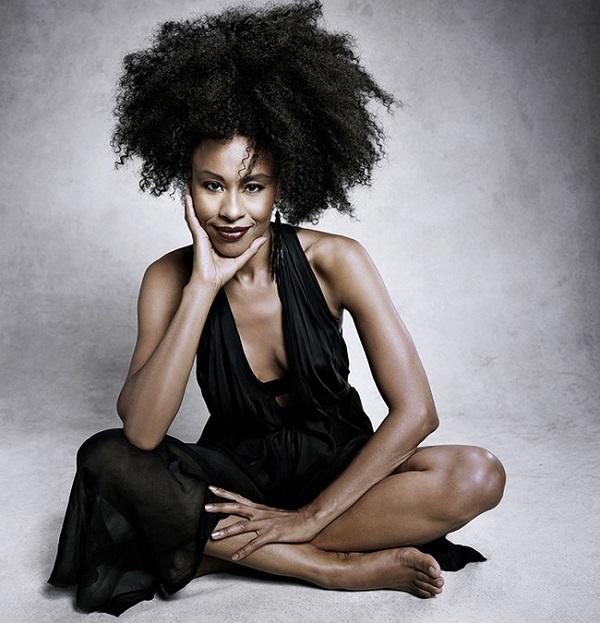
Her subsequent releases, Echoes of Dreams (2004) and Young Bones (2007), were highly acclaimed among jazz fans across Europe. Malia is known for her expressive voice. From the beginning, she found her way to the stage and her singing style flirted with sounds from the 1960s and 1970s.

“My heart beats for many things. I think that is because I come from a marriage of mixed heritage. I have never felt like I am one thing or the other; I am more of a fusion of both, and my music reflects that. I feel I am evolving as a human being, and although music is simply a medium for expression, I like the idea of resonating with it, if its rhythm suits me.
The blues has always been dear to my heart: it is a cathartic, precious, and profound experience, whether playing it or hearing it on the radio. When I first heard Billie Holiday sing ‘Blue Moon,’ I could feel it in every cell of my body.
She had a very powerful effect on me. Sentimental blues, originating in tragic situations, sometimes even reflecting my own experiences… No matter how bad family, friends, politics, lovers, governments, or society may be, they can never destroy the forces of good in this world.
And as time passes, I find more and more of the truth that is rooted in my soul. And I finally feel mature enough to understand this wonderful musical tradition, because the blues means life.”
And if the blues means life, Malia is the energy that allows the blues to have a soul, a voice. It has been a long time since a contemporary artist paid such a beautiful homage to the blues—a style that, in the year 2020, deserves to have the dust shaken off.

Hip-hop, blues, and jazz are evolving into hundreds of regional variants, far from their original roots. Malia’s music can undoubtedly be considered an impressive testament to this worldwide fusion.
After moving from the southern African republic of Malawi to London at age fourteen, the singer spent her adolescence in the UK capital (Note: the “Big Apple” is the nickname for New York, which contradicts having spent her adolescence in London. The original text was left, but the inconsistent use of the term is corrected).
Malia recorded three albums in France with André Manoukian: Yellow Daffodils (2002), Echoes of Dreams (2004), and Young Bones (2007), all created in Manoukian’s Parisian studio.
In 2010, she met Swiss producer Boris Blank, who, since the 80s as part of the avant-garde duo Yello (The Race, Bostich) with Dieter Meyer, has garnered great success. In 2012, Malia released a tribute to Nina Simone, Black Orchid, which won that year’s ECHO Jazz Award. In 2014, Boris Blank produced the eleven electronic-style songs for her album Convergence.
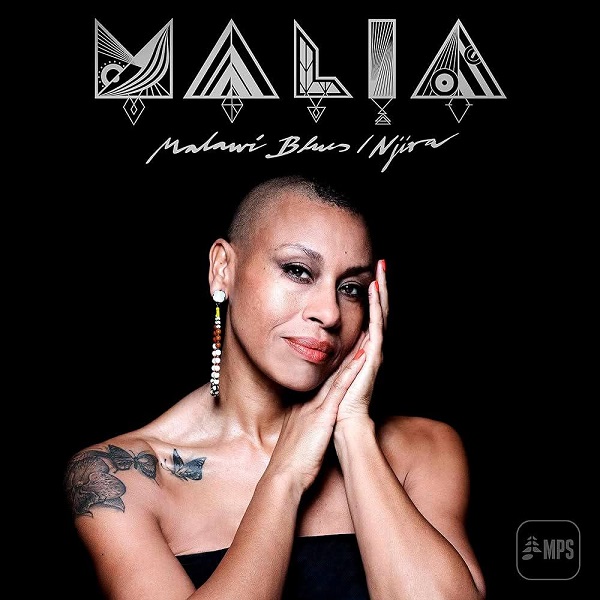
The album features thoughtful, mostly slow-tempo original tracks, with sparsely orchestrated piano, accompanied by guitar and percussion, including an almost minimalist version of the classic ‘Moon River.’ From the outset, with Malawi Blues/Njira, Malia recalls the sound of her childhood.
The local vibes of the Kwela and Kwasa-Kwasa traditions are felt not only in the moving “Love Is Holding Both Our Hands.” “I humbly consider it my duty to pass on the rich traditions and stories, just as my ancestors did, as my grandparents and parents did when we would sit around the fire in the evenings in Malawi, eating nsima with pumpkin leaves and peanut sauce.” Of course, that is only one aspect of her rich work.
Her songs are characterized by artistic experiences and experiments, an amalgam that has shaped Malia’s life and a lasting effect of her time in the London club scene, where she was able to sharpen her sense of rhythm in small bars in front of reduced audiences. Here, she could always adjust her sets live, night after night.
This musical diversity now benefits her, when, in Chipadzuwa (a southern African colloquial term for a beautiful woman), she alternates between the regional language, Chichewa, and the universal language, English, with a mellifluous ease.
Malia – Malawi Blues / Njira (2016)
Tracks:
Musicians:
About Malawi, The Warm Heart of Africa
Malawi, known as the “Warm Heart of Africa” for the kindness of its people, is a landlocked country located in southeastern Africa. It is famous for its stunning natural landscapes, highlands, and, above all, the vast Lake Malawi, which covers approximately 20% of its territory.
Culture and History
Tourism and Nature The main tourist attraction is Lake Malawi, the third-largest lake in Africa, known for harboring more fish species than any other lake in the world, including about 1,000 species of cichlids. The country offers an authentic travel experience and is considered one of the safest countries in Africa for visitors.
🎤 Personal Data on Malia
Collaboration: