• Skip to primary navigation
  • Skip to main content

International Salsa Magazine

  • HOME
  • Previous editions
    • 2026
      • ISM / March 2026
      • ISM / February 2026
      • ISM / January 2026
    • 2025
      • ISM / December 2025
      • ISM / November 2025
      • ISM / October 2025
      • ISM / September 2025
      • ISM / August 2025
      • ISM / July 2025
      • ISM / June 2025
      • ISM / May2025
      • ISM / April 2025
      • ISM / March 2025
      • ISM / February 2025
      • ISM / January 2025
    • 2024
      • ISM / December 2024
      • ISM / November 2024
      • ISM / October 2024
      • ISM / September 2024
      • ISM / August 2024
      • ISM / July 2024
      • ISM / June 2024
      • ISM / May 2024
      • ISM / April 2024
      • ISM / March 2024
      • ISM / February 2024
      • ISM / January 2024
    • 2023
      • ISM / December 2023
      • ISM / November 2023
      • ISM / October 2023
      • ISM – September 2023
      • ISM – August 2023
      • ISM July 2023
      • ISM Edition June 2023
      • ISM – May 2023
      • ISM April 2023
      • ISM March 2023
      • ISM February 2023
      • ISM January 2023
    • 2022
      • ISM December 2022
      • ISM November 2022
      • ISM October 2022
      • ISM September 2022
      • ISM August 2022
      • ISM July 2022
      • ISM June 2022
      • ISM May 2022
      • ISM February 2022
      • ISM January 2022
    • 2021
      • ISM December 2021
      • ISM November 2021
      • ISM October – 2021
      • ISM September 2021
      • ISM August 2021
      • ISM July 2021
      • ISM May 2021
      • ISM April 2021
      • ISM June 2021
      • ISM March 2021
      • ISM February 2021
      • ISM January 2021
    • 2020
      • ISM December 2020
      • ISM November 2020
      • ISM October 2020
      • ISM September 2020
      • ISM August 2020
      • ISM July 2020
      • ISM June 2020
      • ISM May 2020
      • ISM April 2020
      • ISM March 2020
      • ISM February 2020
      • ISM January 2020
    • 2019
      • ISM December 2019
      • ISM November 2019
      • ISM October 2019
      • ISM Septembre 2019
      • ISM August 2019
      • ISM July 2019
      • ISM June 2019
  • Spanish
  • Download Salsa App
    • Android
    • Apple

Search Results for: dancers

Toronto Dance Salsa Canada’s Largest Salsa Dance School

North America / Canada / Toronto

A place where you are welcome with open arms, people don’t judge you but look to understand you, value you for the special person that you are. Toronto Dance Salsa, Canada’s largest salsa dance school.

“Beautifully taught with careful attention to the appropriate tempo for the class. Atmosphere was excellent with structure and solid teaching while keeping it fun. The timing just before sunday social is great too – one reason I did the class was to provide the nudge to turn up to social” Student Testimonial

Flyers - Toronto Dance Salsa Canada's
Flyers – Toronto Dance Salsa Canada’s

All of the instructors have a lot of experience, enthusiastic and passion for Salsa. Besite Toronto Dance Salsa staff, they count with a big family of 60 volunteers who are committed to assisting the students.

Their volunteers are current or former senior Toronto Dance Salsa students who have caught the salsa bug and hold a great passion for sharing their love of salsa with others. All the classes have at least 6 volunteers who take their own time to walk around the room providing advice and guidance during the lesson and are also available to join the rotation if they have an absent student which assists them in maintaining an even number of male and female dancers in each lesson.

If you are interested in becoming a volunteer, visit http://www.torontodancesalsa.ca where you can find all the requirements.

Their students are constantly contacting Toronto Dance Salsa instructors through [email protected] so the can share with them how Toronto Dance Salsa changed their life.

“Toronto Dance Salsa has changed my life because it helped me tackle my fear of dancing and rebuild my confidence. I had an extremely rough year and my confidence was already at “rock bottom”. Student story

Photo of Salsa Dance School - Toronto Dance Salsa Canada's
Photo of Salsa Dance School – Toronto Dance Salsa Canada’s

If you live in Toronto and want to learn how to dance Salsa, don’t hesitate to visit Toronto Dance Salsa http://www.torontodancesalsa.ca where you can find all the information about you are looking for about lessons, volunteering, events, instructors and much more.

  • Address: 5095 Yonge Street, 2nd Floor, Toronto, ON
  • Intersection: Yonge between Finch and Sheppard
  • Subway: Right on top of North York Civic Centre Subway
  • Parking: 2hrs free validated customer parking

Sizzling Summer Nights dancer April Connella breaks silence on Orlando Delgado and her career

A while ago, we wrote a story about Sizzling Summer Nights, which is a series of outdoor performances by long-established and emerging orchestras at the Autry Museum of the American West, Los Angeles. However, we never had the opportunity to talk to any of those involved in the event, but that has changed in the last few days, as we have had the joy of speaking with professional dancer, dance teacher and choreographer April Connella, who will give us details on her career and professional life. 

April at an event
April Connella at one of her dance events

How April became interested in dancing

April started to become interested in everything related to dancing from a young age, but the one who really introduced her in this world is Orlando Delgado, who was a salsa instructor and dancer in Los Angeles. It turns out that in this same city, someone close to Orlando saw April dancing in events by chance and told her to go to Orlando’s studio, meet him and take classes with him to reach her full potential. So she did and the connection between the two was instantaneous and, over time, they became friends and Orlando came to be someone very special in her life.

They became a dance couple, taught classes and did many events together until the untimely passing of Orlando in September 2023 due to a long battle with cancer

Sizzling Summer Nights

April was telling us that it was Orlando they really contacted to participate in Sizzling Summer Nights. One of his students in one of his dance classes, who turned out to be one of the organizers, suggested that both he and April attend these events, since the previous instructors had left, so he was looking for new ones.

Since then about eight years have passed and Sizzling Summer Nights has become one of the biggest salsa and Latin music events of the summer, largely due to the effort made by the talented duo.

Orlando and April in Sizzling Summer Nights
Orlando Delgado and April Connella at the Autry’s Sizzling Summer Nights some years ago

How Orlando’s death affected April

The dancer also confessed to us that Orlando’s loss has affected her personally and professionally, to the degree of saying that, together with him, she has lost a part of herself that feels that she will never be able to recover. Many have asked her why she does not get a new dance partner, but she finds it difficult to do that. She recognizes that there are many good dancers who could fill that spot, but finding someone she has the relationship and emotional connection she had with her previous partner is impossible. You do not get that anywhere else.

However, despite this painful loss, April knows she has to move forward in spite of everything and carry out her projects as hard as it is. In fact, one of those challenges is that April herself also happened to be sick with cancer and is in remission.

To this we must add that one of the things keeps her going is the great passion she feels for what she does and she believes that her profession is a part of her soul she cannot let die too. Not to mention that she has felt the support of the entire salsa community that knew Orlando in life and helped her to continue her work.

April and Chino Espinoza
Chino Espinoza from the group Chino Espinoza Y Los Dueños del Son and April Connella

April’s Feel Da Beat

The dance instructor explained that April’s Feel Da Beat is actually a new version of the previous dance company that was only called Feel Da Beat and was directed by Orlando. After the two meet, they not only become dance partners and best friends, but also business partners. 

Then, Orlando was planning to retire at some point due to age, so he wanted his project to be in the hands of someone he could trust and that was April, whom he taught everything he knew so he could delegate what he had built so far to her. When Delgado’s health was already very frail, both he and April discussed the matter of the company and concluded that the best thing to do was to transfer it to her and change its name to April’s Feel Da Beat. After that, it was up to her to handle the project alone and adjust to this new stage without Orlando by her side.

She does not have a big team working for her right now, but she does work with many artists and dancers for the various events in which she performs.

Orlando and his friendship with April
Orlando and April had a strong friendship until the day of his death

Read also: Los Boleros Latin Band Bandleader Rudy Furlan kindly talked to us

Ismael ‘Pat’ Quintana, born in Ponce Puerto Rico, began his musical career in 1961 alongside Eddie Palmieri and La Perfecta

Ismael ‘Pat’ Quintana, born in Ponce, Puerto Rico, began his musical career in 1961 alongside Eddie Palmieri and La Perfecta

smael 'Pat' Quintana, born in Ponce, Puerto Rico, began his musical career in 1961 alongside Eddie Palmieri and La Perfecta
smael ‘Pat’ Quintana, born in Ponce, Puerto Rico, began his musical career in 1961 alongside Eddie Palmieri and La Perfecta

Commemorating one more anniversary of the departure of the Maestro: Ismael Quintana (Ponce, June 3, 1937-Colorado, April 16, 2016) was a Puerto Rican singer and composer of salsa, bolero and other genres of Caribbean music.

He began his musical career in 1961 alongside Eddie Palmieri and La Perfecta, and later continued as a solo singer.

In 1970, he signed with Fania Records and joined the Fania All Stars, in addition to recording more solo albums.

By 2012, his health condition prevented him from continuing to perform and he stopped giving concerts.

In April 2016, he died of a heart attack at his residence in Colorado in the United States at 78 years of age and paid the first tributes.

Quintana was the singer who gave the name salsa to Afro-Caribbean music, after having heard it in Venezuela.

Ismael ‘Pat’ Quintana, born in Ponce, a town rich in culture on the beautiful island of Puerto Rico, moved to New York when he was very young. It was in the South Bronx that he fell in love with Latin music.

Ismael 'Pat' Quintana
Ismael ‘Pat’ Quintana

During these early years, he played percussion with a variety of bands throughout New York City.

He persevered and eventually joined Angel Natel’s orchestra as a teenage bongosero.

During one memorable night in 1959, the band was asked to play a particular number for one of the club’s dancers.

Natel’s singer was not familiar with the song, but Ismael was. He stepped up to the microphone, performed the song and in the process electrified the crowd with his talented voice. That night launched a magnificent career, a career that would eventually position Quintana as one of the most prominent vocalists in Latin music.

In 1961, visionary keyboardist Eddie Palmieri decided to leave the sanctuary of Tito Rodriguez’s eminent orchestra to pursue the dream of forming his own band.

Eddie was present when Quintana auditioned for Orlando Marin’s popular orchestra.

The pianist would eventually track him down and offer him the opportunity to become the lead singer of his new orchestra, La Perfecta.

This proved to be a vital move in Eddie’s quest to become one of the top Latin music bandleaders. Their alliance would last 12 years.

Together, Quintana and Palmieri pushed the boundaries of progressive salsa, creating dissonant improvisations that fused the raw tradition of Afro-Caribbean music (exemplified by the singer’s hardcore sonics) with a relentless desire to experiment (illustrated by Palmieri’s choice of electronic keyboards, use of structures borrowed from other musical formats, as well as meandering solos that had their own idiosyncratic logic).

Quintana inició su carrera musical en 1961 al lado de Eddie Palmieri y La Perfecta

The 1965 album Azúcar Pa’Tí is probably the aesthetic pinnacle of their collaboration. It featured classic salsa anthems such as “Oyelo Que Te Conviene”, included here for your listening pleasure.

Another unforgettable moment was Eddie’s decision to record a double LP set in the Sing Sing penitentiary.

Quintana’s voice sounds appropriately impassioned on that socially significant 1972 concert recording.

By 1973, Quintana had decided to embark on a solo career. He signed a contract with UA Latino Records and recorded two albums of excellent quality.

Quintana En 1970, firma con el sello Fania Records

The second of these two releases gave him the opportunity to sing tangos and ballads, backed by a spectacular orchestra led by South American arrangers Héctor Garrido and Jorge Calandrelli.

Surprisingly, the singer has stated in interviews that he prefers to dance ballads and boleros rather than sing more fast-paced material.

Quintana’s first work for Vaya Records was recorded in 1974, It included the hit “La Blusita Colorá”, which is featured in this collection.

The singer also collaborated with keyboardist and bandleader of La Sonora Ponceña Papo Lucca, as well as Ricardo Marrero.

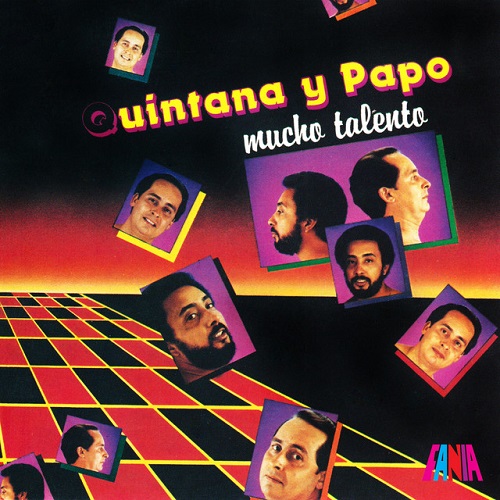
Quintana y Papo Mucho Talento

In 1975, Quintana was invited to join the legendary Fania All-Stars as one of their lead vocalists.

He appeared in the movie Salsa and participated in many of the combo’s historic performances, delivering a blistering version of the self-written “Mi Debilidad” at Yankee Stadium.

When not traveling the world with the All-Stars, Quintana could be found in the recording studio, working on material that appeared on his albums for Vaya Records.

Ismael Quintana’s name appears on many classic albums from the salsa explosion of the 1970s, both as a background singer and as a percussionist.

His phenomenal vocal abilities have obscured the fact that he is one of the most exciting maracas players in the genre.

He is also an innovative composer, having written many of the songs that make up Eddie Palmieri’s seminal albums of that era.

Quintana is also known as one of the nicest guys in the Latin music business.

A true professional who is never late for his concerts and a devoted family man who doesn’t smoke or drink.

Ponce in Puerto Rico has given birth to several legendary Latin singers, from Héctor Lavoé and Cheo Feliciano to Ednita Nazario and Pete ‘El Conde’ Rodríguez. Ismael Quintana is yet another luminary from that region.

This Latin Heritage compilation is a well-deserved tribute to one of salsa’s best. Fania All Stars.

By:

Marino Del Jesus

Historia Salsera

Dj. Augusto Felibertt

Also Read: The Royalty of our Latin Music Pete “El Conde” Rodríguez first singer signed by Fania Records label

Liz Rojas and John Narvaez share their experience with the San Francisco Salsa Festival

The San Francisco Salsa Festival is one of the most important Latin music events in The Bay Area and California in general, so we could not miss it. Eduardo Guilarte, senior editor of International Salsa Magazine attended on our behalf to witness firsthand everything that happened over the three days of the festival, as in previous years. 

To learn a little more about the most important facts related to the festival, Elizabeth Rojas and John Narvaez have made room in their busy schedule to talk with us and relate some elements and details of this fifteenth edition, which we are infinitely grateful. 

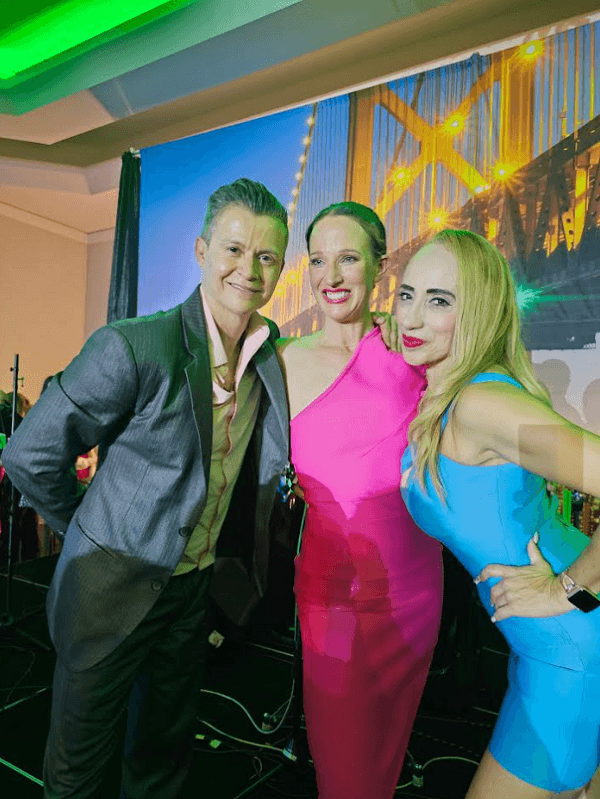
John, Liz, and Angie at the festival
John Narvaez, Angie Seminario y Liz Rojas

How was the 15th edition of the San Francisco Salsa Festival organized? 

Liz tells us that the organization of this edition started last year immediately following the previous festival to avoid wasting time and handle contingencies as soon as possible. Whenever they complete an edition, they immediately start to organize the next one, since all the details to keep in mind are too many to leave them for another time.

Liz and John always have to confirm orchestras and artists in advance, but they have a very efficient team of friends and partners to help them with everything related to the event. For this reason, every year it has become easier to make the preparations faster and more efficiently.

Novelties compared to other years

As for the novelties of this edition compared to other years, it could be shown that there was much more influx of people wanting to enjoy the activities offered. In addition to that, the dancers made sure that the program included more guests for classes, dance workshops on Friday, shows and competitions, which in turn helped to attract more interested public.

Another innovative detail was the invitation to local teachers in order to attract their students and people from their academies in general.

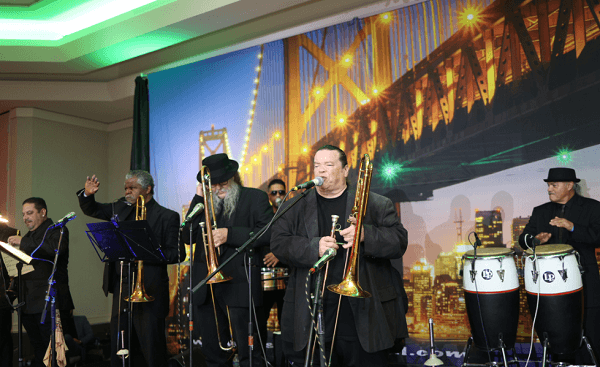
Latin Rhythm Boys at the festival
The Latin Rhythm Boys playing at the San Francisco Salsa Festival

Adding to all this, Liz and John sought to take much more into account the bachata dancers and artists in order to offer a little more variety in terms of musical genres and not just salsa.

Situation with the Orquesta La Máxima 79

No matter how majestic an event can be, there are always facts that can tarnish a little the satisfaction of organizers with all that has been achieved. This not so pleasant situation was the regrettable absence of the orchestra La Máxima 79, which was unable to travel to the United States at the last minute because of visa related issues.

John described how the days went by and the visas for the members of the group were not issued, to the point that the immigration department had not even conducted the first interviews. Because of this, they began to consider the possibility that La Máxima might not perform their show as planned. 

However, this didn’t stop them from having a card up their sleeve, so replacing La Máxima 79, they hired the amazingly talented Ray de La Paz, whose concert was amazing and delighted the audience with his fabulous show. They had to do much more publicity in the last few days due to the unforeseen change, but fortunately, it was all worth it.

They met Ray de La Paz in Hong Kong in 2004 during one of his shows where they were dancers on stage with him. Although they did not know him at the time, they really liked how he sang, so they called him up for the festival. They proposed to him to participate through Javier Cabanillas, another musician hired for the festival, who was a friend of his and kindly provided them with his contact information to invite him.

Ray at the festival
Ray de La Paz on the red carpet at the San Francisco Salsa Festival

When we wanted to know how the organization deals with last-minute inconveniences, Liz commented that they already had a plan B for such an eventuality. The main organizer of the event, Angie Seminario, and John had already talked about what to do in a situation of this kind. Likewise, they did not wait for the last moment to replace the missing orchestra, but acted quickly and worked on an alternative in parallel. At this point, John highlighted the importance of cultivating good connections and relationships with many musicians, so that they can count on them in emergencies.

Despite everything, they do not give up and will do whatever it takes to bring La Máxima to the festival next year. They are already working on this issue with the company’s lawyer.

The hardest thing to organize the San Francisco Salsa Festival

Together with last-minute absences, another problem which Liz and John face when organizing the festival is the hotel booking process for the time planned. Booking for the selected days and times of the festival and the multiple activities to be developed can turn to a headache, even more so than the organization of the workshops and concerts.

Also, the economic and time requirements can be very complex depending on what an event needs. The fines imposed by the government on venues that exceed the time limits with their events are well known, so planning failures should be avoided at all costs. 

John also added that it is always very complicated to deal with people and the selection process of the best staff to work with is not always easy. ”We always look for people who are equal or better than us. We make sure to surround ourselves with people who are even smarter and more capable than us so that they can see what we can’t” said the dancer and entrepreneur.

John, Anfie, Liz, and Ray at the festival
John Narvaez, Angie Seminario, Liz Rojas, and Ray de La Paz

How John and Liz feel now in comparison to the first festival

When compared this latest edition with the first one, John says that both he and Liz are extremely proud of what has been achieved so far. The artist assures that for him it is a great honor to be able to have Liz by his side, then thanks her for accompanying him and making the festival and the rest of the things they have achieved possible. 

Meanwhile, Liz fully agrees with her partner and also said she feels very proud of what they have accomplished all these years. Since we have seen other artists doing big dance events, John and I set out to achieve the same thing someday and we are very proud to have been able to make it possible” said the dancer ending her speech.

Julio at the festival
Julio Bravo playing the maracas during Ray de La Paz concert

Read also: Kiki Valera and his talented and special family’s great legacy

Gira Tango

Latin America / Venezuela / Caracas

For lovers of Tango, what better way to learn or practice it than at the “Gira Tango” Dance Academy that offers tango classes in Caracas, Venezuela. They also organize dinners, shows and tastings, not to mention that they work with the Embassies of Argentina and Uruguay.

The Vision and objective of the Academy is to promote national tango talent, where they seek meeting places to share knowledge, entertain the public in order to connect everyone through this style of dance.

Photo by Siulhy Santander and Leonel Colina - Gira Tango
Photo by Siulhy Santander and Leonel Colina – Gira Tango

Starting in 2015, the “National Tango Encounter” was organized, an artistic production that for a week offered the 5 municipalities of Caracas opportunities to enjoy classes, concerts, live shows and milongas in plazas, shopping centers and restaurants; and from that moment it was held annually, being for this month of November 2017 its 3rd edition in conjunction with the embassies of Uruguay and Argentina.

The workshops will be held on the 4th, 11th, 18th and 25th. If you wish to attend the classes at CELARG, look for information through 0412-9507209 or 0414-3206975 and register through the email [email protected]. Wear comfortable clothes and choose shoes that slide. In the case of women, Gira Tango recommends wearing heels without a platform that support the ankle.

Dancers and Teachers

The dancers and teachers that make up the academy are Siulhy Santander and Leonel Colina, founders of the Academy, who are dedicated to teaching tango and cultural management, not to mention that both were trained by internationally recognized teachers John Erban and Clarissa Sanchez. , Sofiani Figueroa, Daniel Martinez, Mario Morales, Daniel Naccuchio, Cristina Sosa, Fernando Galera and Vilma Vegas, among other exponents of tango with a great career.

Siulhy Santander and Leonel Colina

Siulhy Santander

She began his Tango studies in 2008 at the Centro Uruguayo Venezolano with the Academia Tango Caracas, directed by professors Frank Zambrano and Yore Rivas, without mentioning that he worked as a member of the dance corps of the Tango Caracas group until 2014, where He participated in various stagings and shows such as “Misterio Tango” and “10 Años de Tango Caracas”, where he met Leonel Colina. I also carry out workshops in Buenos Aires, Argentina, with professors Mario Morales, Fernando Galera and Vilma Vega in 2009 and 2012.

Siulhy Santander
Siulhy Santander

Leonel Colina

He was a student of Nationalist Dances from 1994 to 2001 in the Los Cocuyos Dance Group. He learned different types of dance such as Joropo, Calypso, Gaita, Drums, Bagpipes, Drums and Venezuelan Merengue. However, he decided to start studying again in 2007 at Academia Tango Caracas with professors Frank Zambrano, Yore Rivas, Frank Obregon and Sofiani Figueroa.

Leonel Colina
Leonel Colina

Starting in 2008, she worked as a member of the dance corps of the Tango Caracas group, participating in shows such as “Misterio Tango” and “10 years of Tango Caracas”, meeting Siulhy Santander Since 2011, the pair of dancers participated in the staging of the show “Misterio Tango”, which ran for two seasons at the Celarg theater and this couple has participated in cultural festivals such as:

  • IV International Meeting and III National Tango Championship, Caracas 2009.
  • V International Meeting and IV National Tango Championship, Tango 2010.
  • VI International Meeting and V National Tango Championship, Caracas 2011.
  • XVI International Dance Festival – Maracaibo (2011).
  • XVIII International Dance Festival – Maracaibo (2013).
  • Second Edition of the Ucab Dance Festival (2013).
  • Caracas International Theater Festival (2015).
  • World Tango Championship Medellin (2015).
Photo by Siulhy Santander and Leonel Colina

For more information:

  • WebSite: http://giratango.net/
  • Facebook: https://www.facebook.com/giratango/
  • Instagram: https://www.instagram.com/giratango/
  • Twitter: https://twitter.com/giratango
  • Email: [email protected]
  • Phones: +58 4129507209 / +58 4143206975


  • « Go to Previous Page
  • Page 1
  • Interim pages omitted …
  • Page 11
  • Page 12
  • Page 13
  • Page 14
  • Page 15
  • Interim pages omitted …
  • Page 53
  • Go to Next Page »

International Salsa Magazine (ISM) is a monthly publication about Salsa activities around the world, that has been publishing since 2007. It is a world network of volunteers coordinated by ISM Magazine. We are working to strengthen all the events by working together.