• Skip to primary navigation
  • Skip to main content

International Salsa Magazine

  • HOME
  • Previous editions
    • 2026
      • ISM / March 2026
      • ISM / February 2026
      • ISM / January 2026
    • 2025
      • ISM / December 2025
      • ISM / November 2025
      • ISM / October 2025
      • ISM / September 2025
      • ISM / August 2025
      • ISM / July 2025
      • ISM / June 2025
      • ISM / May2025
      • ISM / April 2025
      • ISM / March 2025
      • ISM / February 2025
      • ISM / January 2025
    • 2024
      • ISM / December 2024
      • ISM / November 2024
      • ISM / October 2024
      • ISM / September 2024
      • ISM / August 2024
      • ISM / July 2024
      • ISM / June 2024
      • ISM / May 2024
      • ISM / April 2024
      • ISM / March 2024
      • ISM / February 2024
      • ISM / January 2024
    • 2023
      • ISM / December 2023
      • ISM / November 2023
      • ISM / October 2023
      • ISM – September 2023
      • ISM – August 2023
      • ISM July 2023
      • ISM Edition June 2023
      • ISM – May 2023
      • ISM April 2023
      • ISM March 2023
      • ISM February 2023
      • ISM January 2023
    • 2022
      • ISM December 2022
      • ISM November 2022
      • ISM October 2022
      • ISM September 2022
      • ISM August 2022
      • ISM July 2022
      • ISM June 2022
      • ISM May 2022
      • ISM February 2022
      • ISM January 2022
    • 2021
      • ISM December 2021
      • ISM November 2021
      • ISM October – 2021
      • ISM September 2021
      • ISM August 2021
      • ISM July 2021
      • ISM May 2021
      • ISM April 2021
      • ISM June 2021
      • ISM March 2021
      • ISM February 2021
      • ISM January 2021
    • 2020
      • ISM December 2020
      • ISM November 2020
      • ISM October 2020
      • ISM September 2020
      • ISM August 2020
      • ISM July 2020
      • ISM June 2020
      • ISM May 2020
      • ISM April 2020
      • ISM March 2020
      • ISM February 2020
      • ISM January 2020
    • 2019
      • ISM December 2019
      • ISM November 2019
      • ISM October 2019
      • ISM Septembre 2019
      • ISM August 2019
      • ISM July 2019
      • ISM June 2019
  • Download Salsa App
    • Android
    • Apple
  • Spanish

Search Results for: flute

Dominican bandleader and musical director Orlando Santana talks about La Makina and his career in general

Orlando Santana, the bandleader and musical director of La Makina, has made room in his busy schedule filled with studio recordings to talk about the most interesting topics of his career and, of course, the group that has given him more fame.

The Dominican artist has built an interesting career that led to his aforementioned group, which was founded in Borinquén (the name given to Puerto Rico before the arrival of the Spanish). Naturally, the genre by which La Makina is best known is merengue, implying that the Dominican Republic is still present in mind and heart.
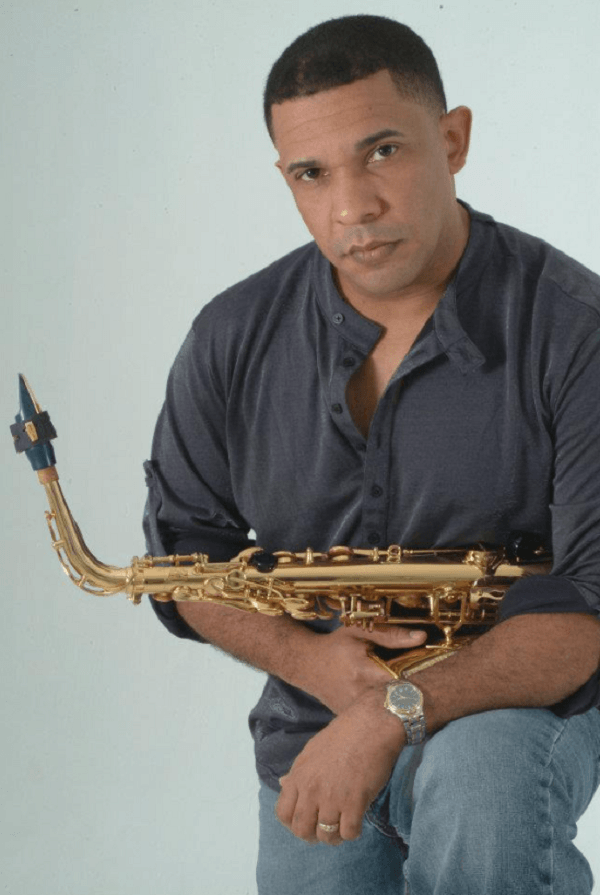
Orlando with his saxophone
Orlando Santana with his saxophone

Orlando’s Beginnings in Music

Orlando started his story by saying that music had a significant presence in his life because his father, Santiago Santana, was a music teacher who taught in their own home. He taught all types of instruments such as the saxophone, trumpet, flute, piano, bandoneon, clarinet, guitar, and many more. Additionally, he also knew about harmony, solfège (sung), and solfège (spoken).

This led to his son learning to play instruments at a very young age and being interested in this way of life. 

Orlando’s Music Education

When Orlando moved to Miami, he took private piano lessons for a while, just as his father did with his students, but it was from Richie Ray and Bobby Cruz whom he really learned. He attended their church and took advantage of his visits to receive some piano lessons from Richie, while his brother David Santana, who was already a veteran musician, bought him his first saxophone and taught him many other tricks of the trade.

Early experiences as a paid professional

As for the beginning of his professional practice, Orlando, as a 15-year-old boy, started with the orchestra Dioni Fernández y El Equipo, from which the great Sergio Vargas emerged. In fact, they entered together a television channel (Color Visión, Channel 9) on the same day in Santo Domingo. This group is still active today, and Sergio Vargas’s own brother, Caqui Vargas, is currently part of it.
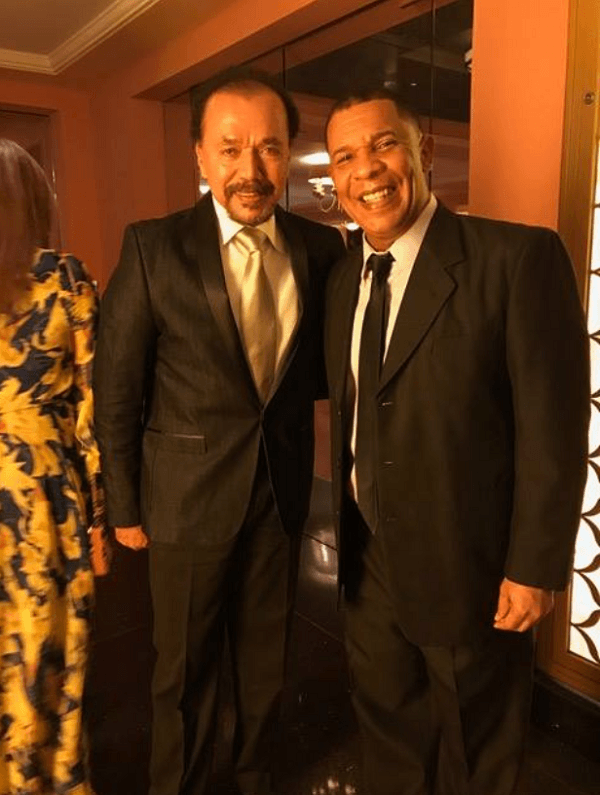
Bobby and Orlando
Bobby Valentín and Orlando Santana

Some time later, he had the opportunity to perform along with Wilfrido Vargas, which he describes as an incredible experience, since Vargas’s orchestra had a very challenging repertoire and he had to prepare himself very well in order to play along with the merengue exponents and his musicians. Orlando came on as a substitute replacing his brother on some tours, where he showed he had the capacity to keep up with their pace and improvise just like Wilfrido did so with ease on stage.

Among the most important things this time taught him, the artist mentioned discipline, the importance of always practicing his instruments, and a permanent focus on what he wanted to achieve. Another thing he mentioned was the significant improvement in his ability to improvise and release new material constantly.

He also learned a lot from Toño Rosario, Peter Cruz, Cuco Valoy, Ramón Orlando, and Elías Santana (Orlando’s first cousin and trumpeter for Conjunto Quisqueya). With all of them, he also came to play both merengue and other genres. 

How La Makina Band was founded

Orlando met Fernando Colón in Toño Rosario’s orchestra, while he was a saxophonist, and Fernando entered as a bassist. At the same time, Orlando was writing some arrangements for Los Sabrosos del Merengue, and as it so happens that Fernando was also working with them, so they were always in constant contact.

When Orlando decided to found an orchestra, it was he who called him and accepted his proposal. That was when both artists founded La Makina in 1996, though the process started a year earlier when they set up a company for that purpose.
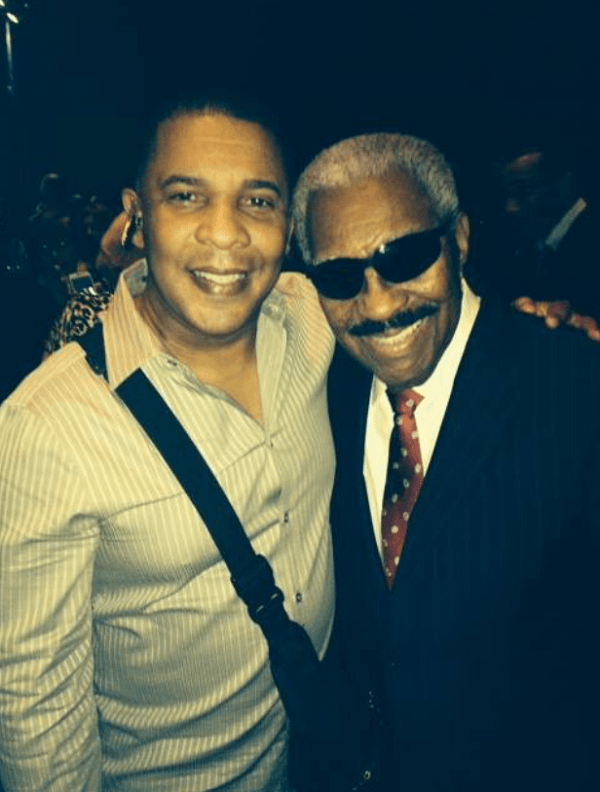
Orlando and Rafael
Orlano Santana and Rafael Ithier from El Gran Combo de Puerto Rico

His Role as producer and director

Regarding his role as producer and director of La Makina, he points out the importance of preparing and studying to exercise these areas of music. In his case, he had already spent many years working on important record productions, including those he did together with his cousin Cesar Cuesta, with whom he formed a small orchestra that covered songs by very famous bands. He created his own musical arrangements for these new versions to differentiate them from the original songs and wrote scores for other musicians.

In addition, he served as music producer for Grupomanía and wrote songs for artists such as Toño Rosario, Elvis Crespo, Oscarito, Manny Manuel, and many others.

Current Members of La Makina

Of the original members of La Makina, the only one left is Orlando himself, but he has been joined by other equally-talented musicians, including Carlitos Rivera and his own son, Anderson Santana.
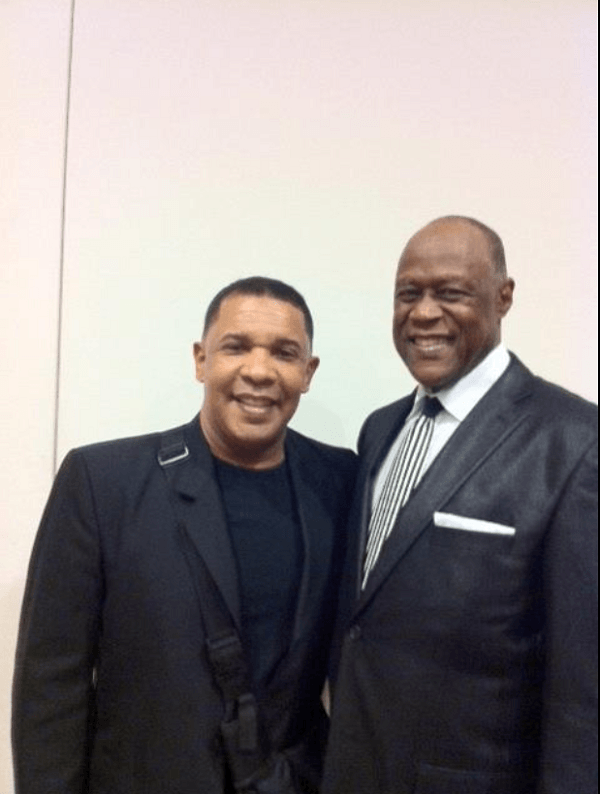
Orlando and Johnny
Orlando Santana and Johnny Ventura in San Juan, Puerto Rico

Current projects

This conversation had been delayed a few times due to how busy Orlando was in the studio working on new music, so obviously we had to ask what it was all about.

He told us that he and the rest of the group were working on a remastering of La Makina’s greatest hits, but with other arrangements and a fresh color. They also plan to include songs recorded by other artists but written by Orlando for them. He did not want to say what these would be so they would be a surprise for the audience.

Read also: Don Perignon Y La Puertorriqueña releases his new album ‘‘Classique et Savoureux’’

Los Van Van Orchestra

European Union

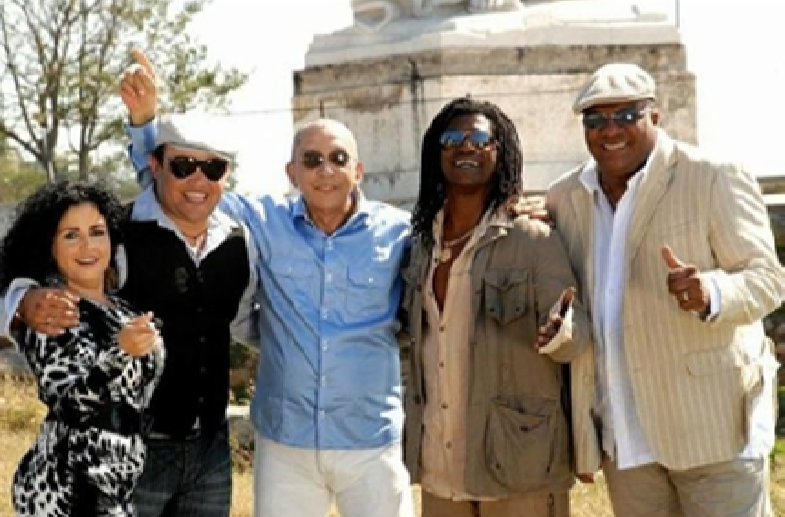
Los Van Van Orchestra. The Flavor in Zurich

1960-1969

Vital to the success and peculiar sound of Van Van, was the career of its director Juan Formell. Before founding it on December 4, 1969, ventures as bassist in several groups, from the Orchestra of the Cuban Institute of Radio and Television, to several groups are and jazz, these multiple experiences conditioned their future.

Its passage by the Orquesta Reve marked a turning point in the search for the style I wanted to achieve. He tested his innovative spirit giving it some sound and format solutions.

It incorporates bass, organeta, electric guitar, violins and flute replaced the five by the system. The vocal work was replaced by mounting quartets own voices. This experiment served as a starting point for, once created the VAN VAN, their contagious rhythm patterns sit in popular dance music.

Los Van Van Orchestra

1970-1979

Earlier this decade important critics and connoisseurs of the subject could notice the successful future of the Van Van. Juan Formell maintaining the contributions made to the previous group (The Revé), enriched the set with other instruments such as percussion, that an exceptional and unique way, were weaving what would define as the SONGO.

This mode of address are elements taken from jazz and rock, it consists of a rhythmic design combined with a figurative percussion piano and bass. Then creating harmonic and melodic different timbres.

José Luis Quintana (Changuito), Raul Cardenas (the Yulo), Cesar Pedroso (Pupi), Fernando Leyva, Jesus Linares, Orlando Canto, José Luis Cortés (The rough), Julio Noronha, Gerardo Miró, William Sanchez, Jose Luis Martinez Miguel angel Rasalps (Lele), together with its director, explored all possible ways and then came to this rhythm that becomes the basis of its sound.

It is for these years that begin recording their first five albums and debuted on several international stages.

1980-1989

This represents an important period for the orchestra. They break their own style incorporating the bronco and cracking of the trombones sound. Turn introduced synthesizers, keyboards with multiple sound possibilities. The use of synthesized saxophone and electric violins draw much attention at the time. In addition to his recording material have new triumphs as: Báilalo eh! Ah! (1982), Come, see and move (1984), Havana itself (1985), Eso que anda (1986), We the Caribbean (1987), wanting (1988) is over, and finally Songo gives way to a new stage.

Van Van Orchestra collash 1980-1989

A hallmark of the group is the use of the picaresque, irony, manners in their songs. Becoming a sort of chronicle of the Cuban reality, his writings offer a social circumstance, themes that recreate the jocular of everyday life.

In these years his music transcends borders and Latin American venues like the Empire in London, England, Austria, Switzerland and Germany are witnessing a pace capable of passing the most skeptical of the dancers.

1990-1999

90 start with a tour around the country celebrating its 20 years, evolving into the contemporary timbre and go in search of more complex and preciosistas as the father expressions.

Their latest results leave no doubt that reach maturity. Pieces like “Give him cadela” and “That’s my problem” Disco Sugar (1993), “I am normal, natural” and “What a surprise” the latest in vivo (1994), “Let anger” and “De equals “Ay ampárame god (1995) and” This puts you bad head “and” Take her to your vacilón “Te puts the bad head (1997) are some of the records that predate came VAN VAN ( 1999) containing “Van Van arrived Permit”, “the black is cooking” and “Temba tomb timba”, works that have ravaged mercilessly in the context of salsa, for their contagious rhythm, joy and good taste. All retain the seal of the group even when using other orchestral resources.

Los Van Van Orchestra collash 1990-1999

2000

Thanks a work of more than thirty years with the Grammy award with Disco Van Van is here or Llego Van Van. Award for best salsa album recorded by soloists, duos and vocal and Instrumentalist groups. (It’s worth noting that the award received is not the Anglophone Grammy Latino) Such award is the result of its continued making magic for over thirty years.

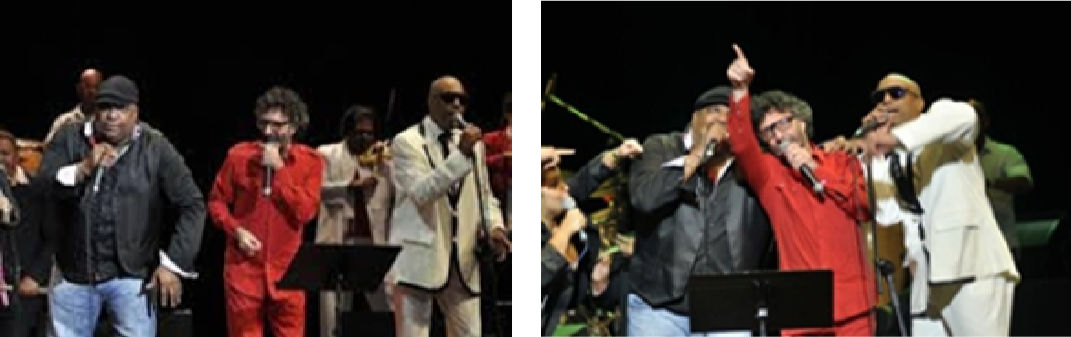
Los Van Van Orchestra in concierto

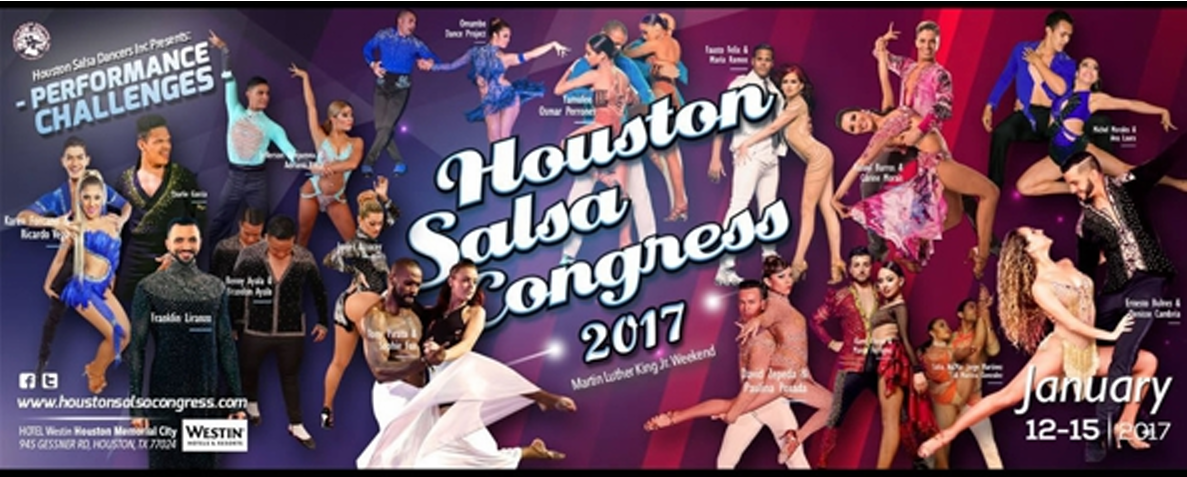
Houston Salsa Congress 2017

North America /  USA / Texas

In 2000, Houston Salsa Dancers, Inc. hosted the first Congress of its kind in the City of Houston. Today, the Houston Salsa Congress continues to highlight the beauty, creativity, and culture of Latin dance and music with our featured performing artists and musical artists.

Houston Salsa Congres 2017

HOUSTON SALSA CONGRESS 2017

Houston Salsa Dancers, Inc. is officially recognized as a nonprofit corporation who hosts the LARGEST Salsa Socials in Houston every month raising funds for the annual HSD, Inc. Scholarship Program. Through this program, HSD has helped dozens of students from the Houston area by awarding a cumulative total of over $25,000 in scholarships.

Scholarships are awarded annually at the LARGEST Salsa event in the South, the Houston Salsa Congress, every Martin Luther King, Jr weekend.

The Houston Salsa Congress has become a must-attend event for many dancers and performers. Being the first non-profit Congress, the HSD Board Members are always innovating and changing how Congresses are managed setting the bar high for other events to follow the remainder of the year. The Congress consist of performances by only the best in Salsa and other dances, weekend workshops to help dancers improve their skills, and some of the best social dancing in the world!

Houston Salsa Congress 2017

Another way HSD is stepping above the rest is through its event called “Bailando Hacia La Universidad (“Dancing Your Way to College”)” which was designed to educate High School students on attending college and college admission. (We bring in guests speakers and end it with a special performance… Example agenda: http://www.houstonsalsacongress.com/schedule_collegeday.php).

Houston Salsa Dancers, Inc. also hosts the “SalsaDURA Saturday” social every 1st Saturday every month. SalsaDURA is also called the mini-Congress of the South attracting dancers and performers from all around the world. This monthly event helps fund the Scholarship fund along with the Houston Salsa Congress event.

BANDS

JOSÉ ALBERTO “EL CANARIO”

José Alberto Justiniano (born December 22, 1958 in Villa Consuelo district, Santo Domingo, Dominican Republic), better known by his stage name José Alberto “El Canario” is a Dominican salsa singer. José Alberto moved to Puerto Rico with his family at the age of 7, and inspired by Latin music went on to polish his singing at Las Antillas Military Academy. He relocated to New York in the early 1970s and sang with several orchestras. He received international attention as the bandleader of Tipica 73 in October 1977.

José Alberto started his own band in 1983, and became a major Latin star after the release of his 1984 debut Noches Calientes. His 1991 album Dance With Me, which established a new style of salsa called salsa romántica. He has sung hit songs such as “Sueño Contigo” His voice was widely adored by his fans, and his exceptional whistling abilities (being able to improvise as if he was playing a traverse flute) led them to give him the nickname El Canario (The Canary).

JOSÉ ALBERTO "EL CANARIO"
JOSÉ ALBERTO “EL CANARIO”

El Canario has enjoyed success in the United States and Europe, but especially throughout Latin America, including in his native Dominican Republic, Puerto Rico, Peru, Venezuela, Panama, and Ecuador. El Canario in 1999 also was part of the biggest Latin American festival in Australian history at The Bacardi Darling Harbor Latin American Festival in Sydney, as supporting act for salsa performer Celia Cruz with over 22,000 people in attendance.

On 24 May 2008, José Alberto celebrated 30 years in the music industry at the United Palace Theater in New York City. Among the several special guests were Oscar D’León, Ismael Miranda, Raulín Rosendo, Joe Arroyo, and Latin music mogul Ralph Mercado.

JOSÉ ALBERTO "EL CANARIO"
JOSÉ ALBERTO “EL CANARIO”

Bobby Valentín & His Orchestra

Valentín (birth name: Roberto Valentin) was born in June 9, 194, in Orocovis, Puerto Rico. He was taught by his father to play the guitar at a young age. When his mother died in 1947, he went to live with his older sister and was raised in the town of Coamo where he received his primary education and studied music. When he was 11 years old, he participated in a local talent contest with a trio that he had formed.

He played the guitar and sang for the trio and they won the first place prize. One of his teachers suggested that he attend the Jose I. Quinton Academy of Music, which he did. It was there that he learned to play the trumpet.

Valentin en concierto

In 1956, Valentín moved with his family to New York City where he attended George Washington High School and continued to take music lessons. In 1958, he went to play for Joe Quijano but, shortly after, he played in the band of Willie Rosario, who was from the same neighborhood.

MUSICAL CAREER

In 1963, Valentín joined Tito Rodriguez (after not being hired by Tito in a recording session because of his age, he was given a chance and was added to his regular band) and traveled twice with Tito’s orchestra to Venezuela. He also made musical arrangements for Tito and at times for Charlie Palmieri, Joe Quijano, Willie Rosario, and Ray Barretto. In 1965, he formed his own band and was signed by the Fania Record Label. He recorded “El Mensajero” (The Messenger) and “Young Man With a Horn”. He held his first concert in Puerto Rico during that period of time.

In 1975, Valentín left Fania and founded his own record label “Bronco Records” and released the recordings of “Va a la Carcel” Vol 1 and Vol 2, recorded “live” at “El Oso Blanco”, Puerto Rico’s oldest state penitentiary. At the time, Marvin Santiago was the singer on Valentín’s band; his biggest hit with Valentín was “Soy Boricua”, an ode to Puerto Rican nationality that has since become a patriotic song for the pro-independence faction of the island.

In 1978, salsa singer Cano Estremera made his singing debut with Valentín’s orchestra and recorded various major hits for the band, particularly the Roberto Angleró song “La boda de ella” and “Manuel García”. During the years Valentín has been featured in recordings (and occasional live appearances) by Larry Harlow, Ismael Miranda, Roberto Roena, Cheo Feliciano and Celia Cruz. He also provided backdrop for the Billyván Santiago (Marvin’s youngest brother) song “Mata la cucaracha”, a sleeper hit in Puerto Rico during the 2002 Christmas season.

Houston Salsa Congress 2017. TICKETS
Full Event Pass: $280.00 (USD)
Full Event Pass + VIP Upgrade: $310.00 (USD)
Night Pass (ALL NIGHTS): $110.00 (USD)
Night Pass + VIP Upgrade (ALL NIGHTS): $165.00 (USD)
Night Pass (THURSDAY ONLY): $35.00 (USD)
Night Pass (FRIDAY ONLY): $35.00 (USD)
Night Pass (SATURDAY ONLY): $35.00 (USD)
Night Pass (SUNDAY ONLY): $35.00 (USD)
www.houstonsalsacongress.com
Houston Salsa Congres 2017 FLYER

“El Caballero de la Salsa” Kicks Off “Íntimo” in Puerto Rico

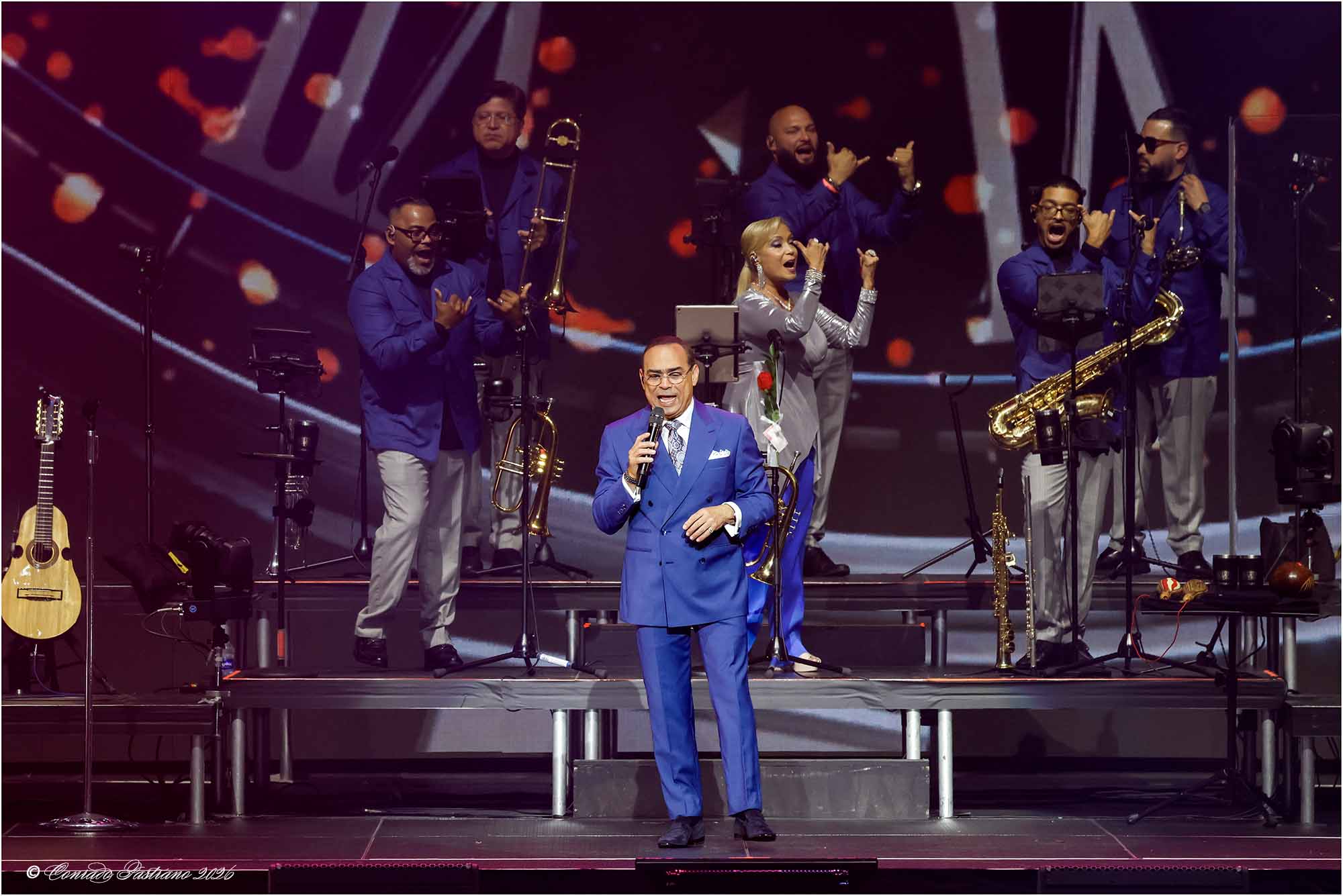
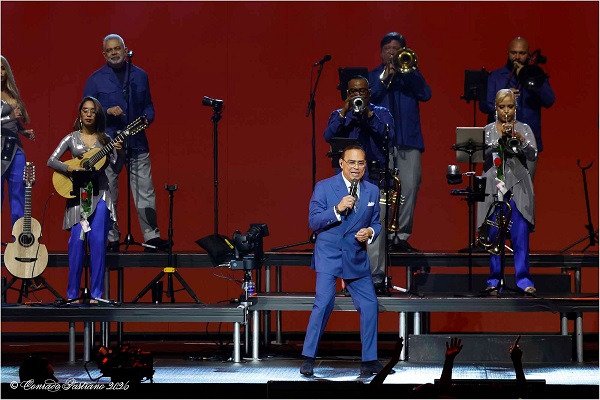
With performances on February 14 and 15, 2026, at the Coliseo de Puerto Rico, Gilberto Santa Rosa started the year “at home” with two sold-out shows and the successful launch of his “Íntimo” tour. That is always the goal. On the island, the audience is as demanding as they are generous and the singer knows it. Following the concerts, “El Caballero” posted on social media: “Puerto Rico, thank you for giving us two nights full of love, dancing, and so much music at home! What a thrill it is to sing at home!”

“El Caballero de la Salsa” Kicks Off "Íntimo" in Puerto Rico
“El Caballero de la Salsa” Kicks Off “Íntimo” in Puerto Rico

On January 30 of this year, the album that shares the tour’s title was released. In Puerto Rico, two shows were scheduled for Valentine’s Day weekend. The first coincided with Valentine’s Saturday; the second was added for the following day due to how quickly the first round of tickets sold out.

At exactly 6:46 PM on Sunday, February 15, 2026, the stage of the Coliseo de Puerto Rico welcomed Gilberto Santa Rosa’s orchestra to begin the second concert, marking the salsa singer’s long-awaited reunion with the Puerto Rican public. According to a press release from Edumil Ruiz’s agency: “These performances are part of a series of special concerts celebrating the month of love (…) and represent the long-awaited reunion of ‘El Caballero de la Salsa’ with his Puerto Rican audience after two years since his last performance on the island.”

A Night of Rhythms and Ovations

The performance began with high energy and impact from the very first track. The opening bars were seasoned with the sounds of the Puerto Rican cuatro, played by Fabiola Muñoz. “Déjate querer” featured a timbal solo by Pete Perignon, while “Cartas sobre la mesa” highlighted Saviel Cartagena’s saxophone. These were followed by “Ahora o nunca,” “Tú,” “Amor para la historia,” “Quiéreme,” and “Almas gemelas,” which featured Juan Carlos Vega on an aerophone solo; followed by “Yo no te pido” and “Conciencia,” for which the audience gave the artist a thunderous standing ovation.

Between songs, Santa Rosa took a moment to address the crowd: “I was born, raised, and live here. And it moves me to know that here in Puerto Rico, I am still dearly loved.” He added that he is a fan of singing to the brokenhearted with “scorned” lyrics set to savory, danceable arrangements. Addressing the contradiction of that combination, he stated, “We Puerto Ricans are capable of crying and dancing at the same time,” capping the explanation with: “That’s just how passionate we are.”

152 With the performances on February 14 and 15, 2026 at the Coliseo de Puerto Rico, Gilberto Santa Rosa began the year in "his home" with two sold-out shows.

152
With the performances on February 14 and 15, 2026 at the Coliseo de Puerto Rico, Gilberto Santa Rosa began the year in “his home” with two sold-out shows.

After his remarks, “Gilbertito” explained he would welcome a beloved artist to sing “Misterio,” an urban salsa track with lyrics “about a relationship where you don’t know if it’s coming or going, starting or ending.” Gerardo Rivas took the lead in his solo role, which required Pete Perignon to fill in on the congas while Pedro Marcano took over the timbales.

Tributes and Special Guests

Later, Gilberto Santa Rosa dedicated a segment of the concert to a legend Puerto Rico bid farewell to last December. He stated that Rafael Ithier was a musical genius whom he considered a mentor and a father in music, dedicating the iconic “Las hojas blancas” to him. Notably, the production featured a team of sign language interpreters who translated the entire concert in real time.

The repertoire also included “Vino tinto,” “Cosas nuevas” highlighting Pedro Marcano on the flugelhorn and “No me dejes solo,” which kicked off with a mozambique rhythm and rumba clave on the drums, courtesy of Gerardo Rivas and Tito Echevarría. The most anticipated moment arrived when Santa Rosa asked the crowd to join him in a chorus that allowed “El Caballero” to pay his respects to special guests. The “Choliseo” vibrated as the crowd chanted: “Mira quien llegó / Quién está ahí / Qué bueno que te vino a ver” (Look who arrived / Who is there / How good they came to see you). The tenacious sonero greeted the following guests in perfect rhyme and with his trademark elegance: Don Perignon, Luisito Ayala, Luis Vázquez, Juan José Hernández, Elwood Cruz, Marilin Pupo, Cucco Peña, Lissette Álvarez, Willie Chirino, his wife Alexandra Malagón (whom he called “The owner of my heart”), and Ismael Miranda, among others.

The evening continued with “No pensé enamorarme otra vez” and “Para vivir,” for which he was joined by Yeika Álvarez and “a representation of the Arturo Somohano Philharmonic Orchestra of Puerto Rico.”

Gerardo Rivas (Hijo de Jerry Rivas el reemplaso de Jimmie Morales), Gilberto Santa Rosa y Pete Pergnon

A Monument to Nostalgia

“Tengo una muñeca,” followed by a fusion that progressed from boogaloo to cha-cha-cha and finally to salsa with Gilberto showcasing his skill on the maracas led us into a monument of nostalgia. The memory of the conga player Santa Rosa had worked with since their days in Willie Rosario’s orchestra until his passing in 2021 was honored with “Impaciencia.” The song showcased the Jimmie Morales Signature Series drums by Remo Percussion©, which sponsored “El Rey del Seco” (The King of the Dry Hit) from 2005 to 2016.

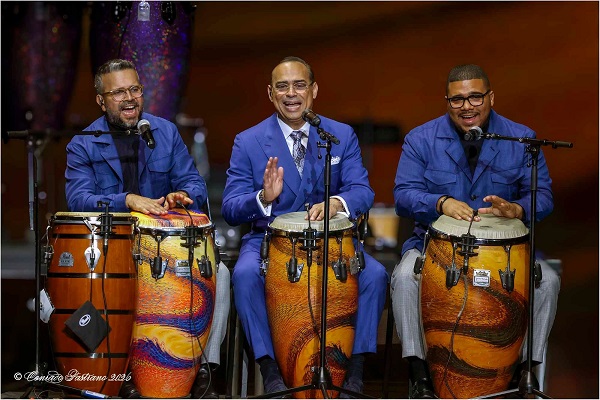
During this segment, “El Caballero” displayed his own skills as a talented conguero while singing, accompanied by Gerardo Rivas (the orchestra’s conga player) and Pete Perignon (the timbalero) on either side. While the audience was spellbound by the sight of the three musicians at their drums, this writer wondered if Gilberto was reminiscing about the days when he used to imagine he was a singer, using an upside-down trash can as a drum in the group led by Don Perignon.

The “Army of One”

This intervention was followed by “La agarro bajando,” which preceded the introduction of the band members, “musically directed by the master of the trombone,” Georgie Torres. The lineup included:

  • Backing vocals: Yeika Alvarez and Gino Ramírez.
  • Puerto Rican Cuatro: Fabiola “The one who holds her own” Muñoz.
  • Trumpet: Rebecca Zambrana (with the orchestra for 29 years) and Pedro Marcano.
  • Trombone: Anthony Rosado (also a ballroom dance champion).
  • Saxophone/Flute: Francisco “Paquito” Cruz and Saviel Cartagena.
  • Piano: Luis Marín.
  • Congas: Gerardo Rivas.
  • Timbales: Pete Perignon Morales.
  • Bongos: Rafael “Tito” Echevarría.
  • Bass: The legend Johnny Torres.
  • Keyboard/Aerophone: Dr. Juan Carlos Vega.
  • Vocals: Michael Pérez.

Santa Rosa also praised the technical and audiovisual teams, producer Rafo Muñiz, and Edumil Ruiz, noting that “all these people make this work.”

After identifying his team who gave a masterclass in what the military calls an “Army of One” the hits “Conteo regresivo,” “Perdóname,” “Que alguien me diga,” and “Que manera de quererte” rang out. Gilberto Santa Rosa celebrated Valentine’s weekend by once again proving why he holds the loyalty and preference of his Puerto Rican fanbase.

From the start, the energy never wavered. The crowd sang and danced along with the artist, the musicians, and the dancers on stage. The vast repertoire serves as a reminder of the countless hits “El Caballero de la Salsa” has collected throughout his prolific career.

Bella Martinez Puerto Rico


Also Read: Bandleader and conga player Tony Rosa tells us how he built his career

Willie Colón The “Architect of Salsa” Enters Immortality

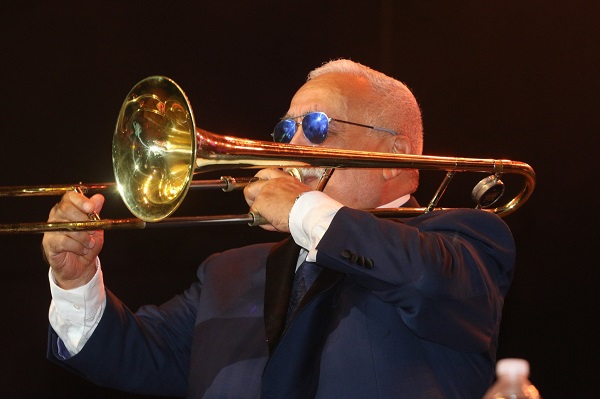
February 21, 2026, will be etched into the history of Latin music as the day the “street trombone” fell silent to become an eternal echo.

A Sorrowful Farewell: February 2026

After several days of uncertainty and reports regarding his delicate health, the passing of William Anthony Colón Román was confirmed in New York City at the age of 75.

Willie Colón, the Architect of Salsa, Passes into Immortality

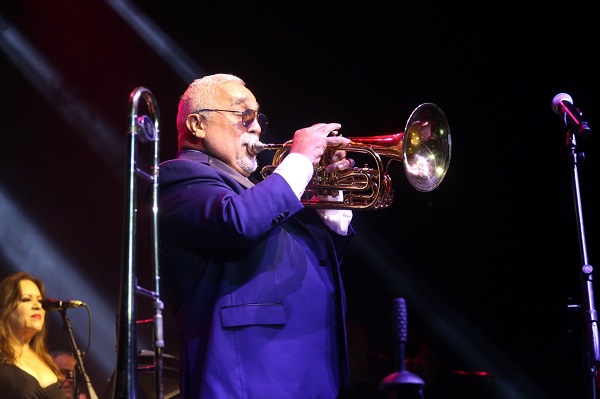
Producer, trombonist, visionary. He was the architect of a sound that broke the mold and redefined salsa from New York for the entire world.

With his aggressive trombone, his innovative musical concepts, and his leadership within the historic Fania All-Stars, he marked an era that can never be repeated.

The musician, who had already shown signs of physical frailty following his retirement from the stage in 2023, suffered severe respiratory complications that kept him hospitalized during his final days.

Iconic figures like Rubén Blades and the entire Fania family have expressed their grief, noting that we haven’t just lost a musician, but the “Malo” (The Bad Boy) who revolutionized the visual and sonic identity of Latinos in New York.

A Legacy of Rebellion and Sophistication

Unlike other bandleaders, Willie Colón didn’t just make music; he told cinematic stories. From his early days with Héctor Lavoe to his era of social consciousness with Rubén Blades, Colón transformed salsa into a vehicle for urban narrative.

With his aggressive trombone playing, innovative musical concept, and leadership within the historic Fania All-Stars
  • Innovation: He was responsible for putting the trombone at center stage, creating that “heavy,” raw sound that defined the Bronx.
  • Identity: Through his iconic album covers (emulating FBI “Wanted” posters), he constructed the mystique of the Latin anti-hero.

His Eternal Anthems

Willie Colón’s catalog is the backbone of every party and social reflection in Latin America. Among his most remembered tracks, more relevant today than ever, are:

Song Significance
El Gran Varón A milestone in social lyrics regarding identity and redemption.
Idilio The most romantic and melodic facet of his mature era.
Pedro Navaja The ultimate expression of narrative salsa produced alongside Blades.
Gitana A classic of sentiment and rhythmic fusion.

Beyond the Trombone: Activism and Service

In his later years, Willie Colón’s life was also defined by his work offstage. He served as an activist, a community leader in New York, and held positions in organizations advocating for Hispanic rights. His life was a testament to the fact that art and social commitment can walk hand-in-hand.

Producer, trombonist, visionary. Architect of a sound that broke molds and redefined salsa from New York to the world.

Producer, trombonist, visionary. Architect of a sound that broke molds and redefined salsa from New York to the world.

The Centennial on the Horizon

Though the Maestro has physically departed in 2026, his office and family have made it clear that his music will live on. Releases of unedited material and tribute concerts are expected as we pave the road toward the centennial of his birth in 2050.

“Time passes, and I am left unable to speak to you”  Willie Colón.

His music will continue to speak for him on every corner where a trombone sounds and in every heart that feels the pulse of urban salsa.

His talent was more than rhythm: it was identity, the barrio, resistance, and living history. Today, we don’t just say goodbye to a musician; we say goodbye to a pillar, a North Star, and an entire chapter of our Latin culture.

Anecdote:

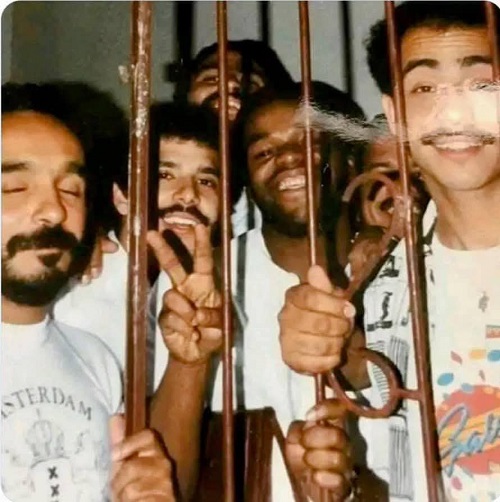
Willie Colón had a notorious incident in Medellín in 1985 when he refused to perform at the Iván de Bedout Coliseum because the promoters of “Rumba Producciones” failed to pay the agreed amount. Police arrested him along with 13 of his musicians, and they were detained for two days at the Belén neighborhood police station.

The audience, who had waited for hours, grew unruly, leading to riots that resulted in six injuries and significant property damage. This episode inspired the song “Especial No. 5,” which narrates Colón’s experience inside cell number five of that station.

Willie Colón had an incident in Medellín in 1985

Special Contribution by Julio Cesar Galindo Alarcón (Lima, Peru)

A posthumous tribute to the great Willie Colón (1950-2026): The greatest disciple of Mon Rivera by his own admission and today a legend of our passionate salsa.

Willie Colón: From “Classic Urban Salsa” to “Symphonic Salsa”

His musical production clarifies and proves that “salsa” does not only originate from Cuban and Puerto Rican rhythms, but also from American, Brazilian, and other Latin influences.

When Willie produced and recorded his 1977 instrumental-only album, El Baquiné de Angelitos Negros, he expanded the orchestral lineup to include violins, saxophone, flute, cello, and trumpet. While the work had little commercial success and went largely unnoticed during his triumphant career, it served as more than just a platform for his “salsa” fusions with Jazz, Funk, Soul, and R&B. It was the starting point for producing grander orchestral arrangements with a larger number of musicians, thus becoming the precursor to what is now known as “Symphonic Salsa.”

Four years after this beginning, in 1981, this “Symphonic Salsa” reached its peak when Willie released his second solo album, Fantasmas dedicated to and motivated by the loss of his younger sister, Cindy. The album included a track he composed, with musical arrangements by Luis Cruz, titled “Toma Mis Manos” (Take My Hands).

This piece, dealing with the somber theme of death, is considered by this author (due to the quality of the composition and the fabulous “Symphonic” orchestration) to be an authentic and grand masterpiece of “Classic Salsa.” It blends Funk, Soul, R&B, and Bossa Nova with Willie’s excellent vocals, serving as a spectacular prelude to that other legendary, yet often overlooked, symphonic track recorded in 1991 by the “Canary of Carolina,” the great Lalo Rodríguez: “El niño, el hombre, el soñador y el loco.”

To conclude, with the immense pain that his departure brings, I accompany this tribute with the aforementioned song: “Toma Mis Manos,” an unforgettable composition by the recent legend of our “salsa” the great Willie Colón, famously known as “The Bad Boy of the Bronx.”

The legendary musician and his wife Julia Colón were married for decades and share three children (

The legendary musician and his wife Julia Colón were married for decades and share three children

Also Read: The legacy of Leopoldo Pineda, the ambassador of the trombone in La Maquinaria Fania All Stars

  • Page 1
  • Page 2
  • Page 3
  • Interim pages omitted …
  • Page 18
  • Go to Next Page »

International Salsa Magazine (ISM) is a monthly publication about Salsa activities around the world, that has been publishing since 2007. It is a world network of volunteers coordinated by ISM Magazine. We are working to strengthen all the events by working together.