• Skip to primary navigation
  • Skip to main content

International Salsa Magazine

  • Home
  • Previous editions
    • 2025
      • ISM / November 2025
      • ISM / October 2025
      • ISM / September 2025
      • ISM / August 2025
      • ISM / July 2025
      • ISM / June 2025
      • ISM / May2025
      • ISM / April 2025
      • ISM / March 2025
      • ISM / February 2025
      • ISM / January 2025
    • 2024
      • ISM / December 2024
      • ISM / November 2024
      • ISM / October 2024
      • ISM / September 2024
      • ISM / August 2024
      • ISM / July 2024
      • ISM / June 2024
      • ISM / May 2024
      • ISM / April 2024
      • ISM / March 2024
      • ISM / February 2024
      • ISM / January 2024
    • 2023
      • ISM / December 2023
      • ISM / November 2023
      • ISM / October 2023
      • ISM – September 2023
      • ISM – August 2023
      • ISM July 2023
      • ISM Edition June 2023
      • ISM – May 2023
      • ISM April 2023
      • ISM March 2023
      • ISM February 2023
      • ISM January 2023
    • 2022
      • ISM December 2022
      • ISM November 2022
      • ISM October 2022
      • ISM September 2022
      • ISM August 2022
      • ISM July 2022
      • ISM June 2022
      • ISM May 2022
      • ISM February 2022
      • ISM January 2022
    • 2021
      • ISM December 2021
      • ISM November 2021
      • ISM October – 2021
      • ISM September 2021
      • ISM August 2021
      • ISM July 2021
      • ISM May 2021
      • ISM April 2021
      • ISM June 2021
      • ISM March 2021
      • ISM February 2021
      • ISM January 2021
    • 2020
      • ISM December 2020
      • ISM November 2020
      • ISM October 2020
      • ISM September 2020
      • ISM August 2020
      • ISM July 2020
      • ISM June 2020
      • ISM May 2020
      • ISM April 2020
      • ISM March 2020
      • ISM February 2020
      • ISM January 2020
    • 2019
      • ISM December 2019
      • ISM November 2019
      • ISM October 2019
      • ISM Septembre 2019
      • ISM August 2019
      • ISM July 2019
      • ISM June 2019
      • ISM May 2019
      • ISM April 2019
      • ISM March 2019
      • ISM February 2019
      • ISM January 2019
    • 2018
      • ISM December 2018
      • ISM November 2018
      • ISM October 2018
      • ISM September 2018
      • ISM August 2018
      • ISM July 2018
      • ISM June 2018
      • ISM May 2018
      • ISM April 2018
      • ISM March 2018
      • ISM February 2018
      • ISM January 2018
    • 2017
      • ISM December 2017
      • ISM November 2017
      • ISM October 2017
      • ISM September 2017
      • ISM August 2017
      • ISM July 2017
      • ISM June 2017
      • ISM May 2017
      • ISM April 2017
  • Download Salsa App
    • Android
    • Apple
  • Spanish

Search Results for: guaguancó

David Atanacio Percussionist, Composer and Singer Unveils a New Sound

David Atanacio, grounded in the values of honesty, integrity, loyalty, responsibility, and respect, appears to be an individual of strong moral and ethical character. He is someone who can be fully trusted, a faithful and committed friend and colleague who always tells the truth and acts with righteousness.

His sense of responsibility ensures he fulfills his commitments, while his respect makes him a considerate, open person capable of building harmonious relationships. Together, these values suggest a dependable, upright, and kind personality, making him a positive and admired presence.

Born in New York City and raised in Puerto Rico, specifically in the municipalities of Bayamón and Cataño, David Atanacio has cultivated a unique musical identity rooted in a powerful fusion of Cuban rumba, flamenco rumba, and Afro-Caribbean influences.

David Atanacio Percussionist, Composer and Singer

In 1993, he began his musical journey as a bongo player for his uncle’s “Grupo Típico,” later joining a local orchestra as a conguero in 1996. In 1997, he was presented with the opportunity to become a singer, marking a turning point in his musical destiny.

Recruited to co-found “Grupo Folclórico Yuba Iré,” it was with this group that he began to perfect his mastery of rhythms like La Bomba, La Plena, El Guaguancó, El Yambú, and more. During this same period, David Atanacio discovered his talent for composing and began writing his first songs, including one titled “Lo que dice el Tambor” (What the Drum Says).

He was recommended to work with the “Orquesta Abran Paso” from Puerto Rico, with whom he accompanied luminaries such as Ismael Miranda, Adalberto Santiago, Junior “Hommy” González (RIP), Larry Harlow (RIP), among others.

He then received a call from the Puerto Rican Maestro “Paoli Mejías,” percussionist for “Carlos Santana’s” group, who invited him to be part of his first musical project, “Mi Tambor.” On this album, David’s song “Lo Que Dice el Tambor” was recorded, appearing as Track No. 7. The album was nominated for “Best Latin Jazz Album” at the Latin Grammys in 2004.

David Atanacio: Percussionist, Composer, and Singer Unveils a New Sound

David Atanacio: Percussionist, Composer, and Singer Unveils a New Sound

In 2003, the King of Rhythm, Mr. Afinque “Don Willie Rosario,” invited David to join the front line of his orchestra, where he remained until 2005. After leaving Willie Rosario’s Orchestra, David decided to move with his family to Tampa, Florida.

Even in his new home, David never lost touch with his roots. One day, he received a call to contribute background vocals to the production “Sobrevolando” by the acclaimed Puerto Rican group “Cultura Profética” (2019). This production earned them the Latin Grammy for “Best Alternative Album” in 2020 and a nomination for “Best Latin Rock or Alternative Album” at the 2020 Grammy Awards.

David Atanacio is a “Sonero de Calle” (Street Sonero), with ample talent and ability to succeed. He is a percussionist, composer, and possesses the added artistry of the “Soneo del Guaguancó” (Guaguancó vocal improvisation).

Atanacio is now releasing his musical proposal, “David Atanacio & Champán D’ Barrio,” featuring aged salsa and plenty of flavor.

David Atanacio & Champán D' Barrio
David Atanacio & Champán D’ Barrio

The album contains ten tracks, eight of which are his original compositions. The production features special guest Herman Olivera, who performs a duet with David on a meticulously crafted song titled “De la Vieja Escuela” (From the Old School). The first single from this project, “Lo que dice el Tambor,” is hitting the airwaves, now presented under his orchestrated concept, “David Atanacio & Champán D’ Barrio.”

The Puerto Rican sonero recently released his latest single, “No Me Llores Más” (Don’t Cry For Me Anymore), a masterfully interwoven piece that pays homage to the musical genres that have shaped his artistic journey. The song perfectly fuses Cuban rumba, guaguancó, Spanish flamenco rumba, and son.

More than just a song, No Me Llores Más is a deeply personal sonic exploration that honors the genres that have influenced David Atanacio since his beginnings.

More than just a song, “No Me Llores Más” is a deeply personal sonic exploration that honors the genres that have influenced David Atanacio since his beginnings. Rhythms such as trova, décimas, aguinaldo, bomba, and plena have profoundly impacted his musical development, adding unique nuances to his artistic expression and reaffirming his commitment to the cultural heritage of his homeland and the Caribbean.

“No Me Llores Más” Credits:

  • Lyrics, Music, and Lead Vocals: David Atanacio
  • Background Vocals: Herman Olivera Jr. & Adriel González
  • Musical Arrangement: Carlos García
  • Piano: Yassel Puppo
  • Bass: Kevin Pagan
  • Trombone Solo: Carloscar Cepero
  • Percussion: Diego Centeno
  • Spanish Guitar: Alex García Potia

With an exquisite arrangement by Carlos García and impeccable execution by top-tier musicians, “No Me Llores Más” marks a new chapter in David Atanacio’s career. It’s where tradition and vanguard embrace to the rhythm of the drum, the guitar, and pure emotion.

This track will be available on all digital platforms starting June 14, 2025.

The rumba lives, the son renews, and David Atanacio’s voice celebrates it!

Press Contact: David Atanacio [email protected] 813-569-9581

Reference: Luis Rojas
Also Read: Herman Olivera the sonero of the 21st century

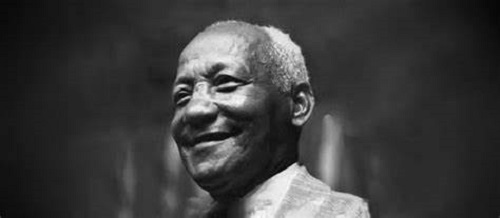
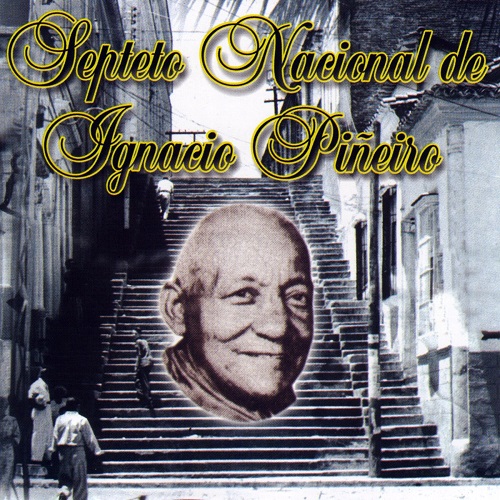
Ignacio Piñero Septeto Nacional has played an important role in Cuba’s music for more than seven decades

Founded by Havana-born bassist and vocalist Ignacio Piñero in 1927, the Septeto Nacional De Ignacio Piñero has played an important role in Cuba’s music for more than seven decades.

Fundado por el bajista y vocalista nacido en La Habana Ignacio Piñero en 1927

Pioneers of son, a rhythmic blend of African and Cuban music that evolved into salsa, mambo and Latin jazz, the group was the first son band to incorporate the trumpet as the main instrument.

Ignacio Piñero’s Septeto Nacional gained worldwide recognition with its performance at the 1928 Universal Exposition in Seville, and was reportedly the first group to mention “Salsa” in a song “Echale Salsita” recorded in 1933. The song composed by Piñero, was adapted by George Gershwin for the opening theme of his “Cuban Overture”.

Since Piñero’s death in 1968, after 41 years at the helm of the band, the Septeto Nacional De Ignacio Piñero has been led by a series of leaders.

Guitarist and composer Rafael Ortiz, who took over after Piñero’s death, bequeathed the position to vocalist Carlos Embale in 1982.

After leaving the group due to illness in 1998 Embale’s leadership was inherited by guitarist Richard Aymee Castro. True to their original musical roots, Ignacio Piñero’s Septeto Nacional continues to offer a danceable blend of montano, merengue, bolero, rumba and cha cha cha. Craig Harris.

Ignacio Pineiro
Ignacio Pineiro

Ignacio Piñero was one of the Pioneers of Son Cubano

In 1906 he already knew and had assimilated the different toques of the African cabildos that existed in the neighborhood of Pueblo Nuevo, which he later incorporated into some of his creations.

He began his artistic career with the group claves and guaguancó El Timbre de Oro, later he directed Los Roncos de Pueblo Nuevo, in which he developed as a decimist and director, at the same time he took his first steps as a composer.

From this stage are: Cuando tú, tu desengaño veas, Dónde estabas anoche, El Edén de Los Roncos, Mañana te espero, niña. Later he joined the group Renacimiento de Pueblo Nuevo.

To the folkloric values that Piñeiro cultivated in these groups, he contributed a wider melodic-harmonic development and a greater depth and poetic flight.

In 1926 he was one of the founders, together with María Teresa Vera, of the Sexteto Occidente, with which he made his first tour to the United States in order to record an album with this group.

In 1927 he founded the Sexteto Nacional, formed by Ignacio Piñeiro, director and double bass; Alberto Villalón, guitar; Francisco González Solares, tres; Abelardo Barroso, lead vocals; Juan de la Cruz, tenor; Bienvenido León, baritone and maracas, and José Manuel Carrera Incharte (El Chino), bongo; that same year trumpeter Lázaro Herrera joined the group. With this septet he traveled to New York, where he recorded his first works.

In 1929 he participated with the Septeto Nacional in the Fair-Exposition of Seville, Spain; in that country they were hired as exclusive artists by the company SEDECA, and toured other cities of that country: Vigo, La Coruña, Santander, Madrid and Valladolid; in addition, they performed in the theaters Torero, Jovellanos, the Cine-Teatro Grado, and the cabaret Maicú, all in Madrid. In 1930 he was one of the founders of the National Association of Cuban Soneros.

Pioneros del son, una mezcla rítmica de música africana y cubana

They performed at the Sans-Souci cabaret (1930); in 1931 they performed at the Lavín and CMCG radio stations; in 1932, at the Dos Hermanos Hotel, he premiered Buey viejo; that same year the American composer George Gershwin came to Havana, at the CMCJ radio station he listened to Piñeiro’s son Échale salsita, from which he later used the theme played on the trumpet in his Cuban Overture.

In 1933 he performed at the Fair-Exhibition A Century of Progress, held in Chicago, United States.

In 1934 Piñeiro retired from the septet, which from 1935 was directed by trumpeter Lázaro Herrera. In 1954, Piñeiro reappeared as leader of the septet, with which he appeared on the television program Música de Ayer y de Hoy.

As a composer, Ignacio Piñeiro broke, although he took elements from the form of the oriental son, in which its creators used the quatrain and the tenth; an example of this break is his son Buey viejo, from 1932:

Carretero no maltrates a ese pobre buey tan viejo, que ya doblbla la cabeza por el peso de los tarros, y por senda de guijarros va tirando la carreta, y nunca llega a la meta, término de su dolor.

Piñeiro was one of those synthesis cases that managed to capture, develop and express the full richness of the son.

The structural modifications, the cadence, the rhythm and the use of refined melodies and lyrics, achieved by this creator and interpreted by the Septeto Nacional, make it possible to say that the work of this singular artist, although he did not mark the boundaries of son (which corresponded to the Sexteto Habanero), he did turn it into a son that today we can call classic, which became a model for its further development.

When Ignacio Piñeiro founded the Septeto Nacional, his purpose was to be a high exponent of the Cuban son and its various variants, he himself made use of those variants, composing guajira-son, canción-son, afro-son, so he worked with the elements offered by the oriental son, to which he gave a broader treatment, both musically and literary.

According to Miriam Villa: “If we analyze the organization of the literary text, we observe in his work the formal use of metrically heterogeneous links subjected to rhythm, characterized by the presence of accented and unaccented elements within the system of units that are repeated at intervals between them.

Piñeiro must not have been concerned about the meter in the text as a pattern, since through the rhythm of the composition he achieves the contrast relations, making the change of meter express a change in the thematic movement, either from intermittences or accentuations or sometimes both, which give it different semantic nuances and alternations of tensions and distensions.

And elsewhere Villa states: “Another aspect that in relation to the literary text is reflected in Piñeiro’s creative work is that of the thematic contents; these are shown from a diversification with greater scope in relation to his contemporaries.

His work can be divided into multiple themes among which are love, homeland, philosophical reflection, politics, the bucolic, the infantile, expressed in a variety of forms: satirical, apologetic, humorous and with greater depth than in the sonorous production that preceded him and even with which he shared.

With the Septeto Nacional, Piñeiro appears in the musical short El frutero, and in the film Nosotros la música, by director Rogelio París.

Ignacio Piñeiro Septeto Nacional

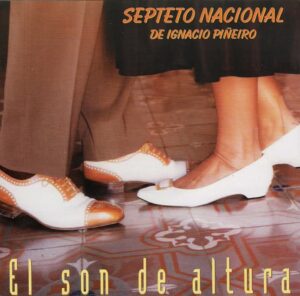
Septeto Nacional de Ignacio Piñero El Son de Altura

El Son de Altura (1998)

Tracks:

  1. Mayeya – No Juegues Con Los Santos (Son) (I. Piñeiro)
  2. Bardo (Bolero-son) (I. Piñeiro)
  3. Lejana Campiña (Guajira-son) (I. Piñeiro)
  4. Canta La Vueltabajera (Guajira-son) (I. Piñeiro)
  5. Guanajo Relleno (Guaracha-son) (I. Piñeiro)
  6. Esas No Son Cubanas (Son) (I. Piñeiro)
  7. Suavecito (Son) (I. Piñeiro)
  8. Alma Guajira (Guajira-son) (I. Piñeiro)
  9. Castigador (Son) (I. Piñeiro)
  10. Échale Salsita (Son-pregón) (I. Piñeiro)
  11. EI Viandero (Son-pregón) (Ernesto Muñoz)
  12. Son De La Loma (Son) (Miguel MGllamoros)
  13. Trompeta Querida (Boleró-son) (Lózoro Herrera)
  14. La Mujer De Antonio (Son) (Miguel Matamoros)
  15. La Cachimba De San Juan (Son) (l. Plñeiro)
  16. EI Alfiler (Son) (l. Plñeiro)
  17. Noche De Conga (Son) (l. Plñeiro)
  18. EI Paralitico (Son) (Miguel Matamoros)

By:

EcuRed

Dj. Augusto Felibertt

L’Òstia Latin Jazz

Also Read: From Cuba El Septeto Son de Nipe vienen Abriendo Caminos

Salsa, territory of joy.

Latin America / Venezuela / Caracas

Salsa, territory of joy, language of celebration, enjoyment of the towns and their people, was born from a confluence of facts, geniuses and rhythms. Confluence that happened in the faith of the same religion: Afro-Cuban music.

Salsa pal Bailador
Salsa pal Bailador

And that mixture, which Richie Ray and Bobby Cruz cleverly described as “similar to the tomato sauce that is put on hamburgers to give them flavor”, was summed up in the insightful sentence of the occasional witness, the journalist Phidias Escalona: “the music that you make is salsa. From now on we will call it sauce”.

The year was 1968 and although the new rhythm already existed, there had been no consensus on the name. And that consensus began to emerge -perhaps for the first time- on the album “Los Durisimos The Strong Ones, Salsa y Control”, by Richie Ray and Bobby Cruz. Later, Richie himself would add: “The word was born around us, (however,) if it weren’t for (Jerry) Masucci there would be no salsa, because he brought it to the world.”

In 1960s New York Harlem, black Americans had begun to like Latin music, despite not speaking Spanish.

Ama a tu musa como a ti mismo - Salsa
Ama a tu musa como a ti mismo – Salsa

The guajira dazzled them until they made them dance. Believing that the mixture of boogaloo, blues, mambo, guaguancó or son montuno, was a variant of the boogaloo invented by Chubby Checker, the new rhythm was founded, incorporating the concepts of the Latin spirit in their interpretations and that -technically- they would add to the baggage : percussion, piano, violins, trumpets, trombones and whatever instrument would serve to give it flavor and richness.

Cocola' Wears - Venezuela Salsa
Cocola’ Wears – Venezuela Salsa

Musically, for example, the so-called “blue notes” would be added (that is how the overtones of the acoustically weak E and B notes, last to be added to the scale, where they would be relocated between Lam and Lam) would be added to the new fusions. Then came the downloads and phrases that we know until now as characteristics of salsa.

Thus the sauce was born. And so it has been transformed, always within the circle that encloses joy, passion and enjoyment, history, experiences, fortune or misfortune, seen from different perspectives: urban, social, sensual or everyday.

Tocadisco - musica
Tocadisco – music

Federico Betancourt “Pioneer of Salsa in Venezuela”

Latin America / Venezuela / Carabobo

Jesús Federico Betancourt was born in the city of Valencia, Carabobo state, on March 22, 1940. He was always attracted to music from a very young age.

Photo of Federico Betancourt on stage

In his adolescence, he liked Cuban rhythms, being influenced by Sonora Matancera, Mon Rivera, Eddie Palmieri and Joe Cotto. Before entering the entertainment world, he works at the Bank of Venezuela.

He affirms that he has not carried out formal studies at the musical level, learning the necessary theory to be able to perform as an orchestra conductor, but without interest in interpreting any instrument, but with a well-tuned ear, which has allowed him to remain in the music business for decades. , in fact on certain occasions he is named as the King of the Güiro.

Photo by Federico Betancourt

His career began when he entered the Los Selectos Orchestra, where they played songs by the Billos Caracas Boy’s and the Los Melodicos Orchestra, which were at their peak in the 1960s, all this in a particular way, said Orchestra did not go beyond that.

In 1965, Federico Betancourt decides to satisfy his artistic restlessness and founds a band called Federico y su Combo Latino. The members that made up this band were chosen from among the founder and together with Roberto Monserrat.

But it was not until the middle of 1966, when the twenty-six (26) year old undertook the recording of the LP that would make him famous forever. This record production entitled LLEGO LA SALSA, would mark an important stage in Venezuelan Salsa, because it was the first LP that made use of the word SALSA in the country.

Federico Betancourt
Federico Betancourt

Federico Betancourt himself recounts that the Venezuelan announcer Phidias Danilo Escalona had a Radio Program called LA HORA DE LA SALSA, EL SABOR Y EL BEMBÉ, where all the Cuban and Puerto Rican Caribbean rhythms that were fashionable at the time were placed, among those who highlighted La Sonora Matancera with Celia Cruz, Tito Puente, Joe Cuba, Tito Rodríguez among others, and who was the one who supported them the most in terms of recording the album.

The production was recorded under the Palacio label, and the LP was titled LLEGÓ LA SALSA, he affirms that the title was chosen without taking into account the importance that it would revert in the future, he also affirms that it was not the name that gave him success , the album was a “bump” in sales, since all the songs were the most requested at the time, using his words: “The album sold like hot cakes”.

The music lovers of the time requested it on specialized sites such as the LA SALSA album. Federico says: “The father of the word SALSA was Phidias Danilo Escalona, ​​he used it for the first time in his radio program, and I, humbly, with the success of my LP, gave him the push for its mass use.”

Federico Betancourt - Photo
Federico Betancourt – Photo

In Venezuela, the word SALSA was welcomed by the public willingly, since it suggested a mixture of flavors, which was exactly what happened in the Phidias program, but at the level of rhythms. After the appearance of Federico’s album, all the shows that were performed at the level of Caribbean and Cuban rhythms, carried the name of SALSA.

It is important to name the musicians who took part in this historic production: The musicians are: Ali Rojas Bongo and Cencerro, Roberto Monserrat Music Director and Timbal, Pedro Medina Congas, Alfredo Arcas Trombone, César Pinto Trumpet, Enrique Iriarte Piano, Rafael Prado Bass, Carlín Rodríguez Singer and maracas, Dimas Pedroza Singer, Federico Betancourt Güiro and Director of the Orchestra. The musical arrangements were by the famous trumpeter Eduvigis Carrillo (RIP). Production themes:

Llego la Salsa CD - Federico su Combo Latino
Llego la Salsa CD – Federico su Combo Latino
1.- Cocolía

2.- Conmigo
3.- El Pachanguero

4.- Sancocho Caliente
5.- Guaguancó Manía

6.- Celosa

7.- Despierta Rumbero

8.- No Critiquen
9.- Saoco

10.- Baila Yemaya
11.- Café Y Pan

12.- Que Me Querías

After the success obtained with the record work, the time came for the first international outing, which was to Colombia, in 1969. It happened because the singer of Los Melodicos, Víctor Piñero, informed Betancourt that he was stuck in Cartagena and Barranquilla with the themes El Cobrador and Federico Boogaloo. After the information, the young musician went to the neighboring country and got a contract for the famous Reina del Mar parties, in Cartagena, on November 11, 1969.

The experience of the band was so good, that in 1970 they returned to visit the country. From then until our days Federico y su Combo continues to be an emblematic and legendary band in Venezuela, for this reason the WEB of the classy salsero SALSA BRAVA, offers its respects to such an important salsa figure.

Discography
1966 Llegó La Salsa Palacio (LPS-6171)
1966 Salsa y Sabor Palacio (LPS-6185)
1967 Más Salsa Palacio (LPS-6205)
1967 Durísimo – Vol. 4 Palacio (LPS-6216)
1968 Federico Boogaloo Palacio (LPS-6228)
1968 Psicodélico Con Salsa Gilmar (LPG-110)
1969 Mejor Que Nunca Gilmar (LPG-111)
1969 Vibración y Ritmo Sonus (102-17080)
1970 Dos Sets Velvet (LPV-1539)
1970 La Machaca Velvet (LPV-1539)
1973 Federico Si Te Pone A Bailar Palacio (LPS-6332)
1975 Derrape De Salsa BASF (10.068)
1976 Siguelo Ahí…. a Lo Cortico BASF (10.070)
1977 Ayer y Hoy BASF (10.076)
1977 Esto Es Lo Mejor Palacio (LPS-6372)
1978 Mis Exitos y Más BASF (10.079)
1978 Sabor Foca (LPF-10.037)
1979 Federico y Su Combo Foca (LPF-10.120)
1979 Federico y Su Orq. – El Maestro Discomoda (DCM-1128)
1980 Federico y Su Orq. con Memo Morales Discomoda (DCM-1148)
1982 No Le Digan Integra (PF-14.075)
1983 Nuevamente Palacio (LPS-66.541)
1984 SaaaBroooSo! Palacio (LPS-66.552)
Compilation
1996 Mis Exitos y Más…Vol.1 Sonograma
1996 Mis Exitos y Más…Vol.2 Sonograma
1996 Mis Exitos y Más…Vol.3 Sonograma
2005 El Pionero De La Salsa Palacio
2008 Salsa De Oro Gilmar


Latin America / January 2025

Fundación Cultural Madera 15 donde la Hermandad, el Deporte, la Danza y la Salsa van de la manoEnrique “Culebra” Iriarte, master of the piano and musical compositionLarry Harlow and Ismael Miranda: beginning of the so-called “Salsa Arseniana” in honor of the music of Arsenio Rodriguez, the creator of Son Montuno and “King of Guaguanco”.Calibrated maracas

DIRECTORY OF NIGHTCLUBS

Argentina flag
ARGENTINA

Aruba circular flag
ARUBA

Belize circular flag
BELIZE

Bolivia circular flag
BOLIVIA

Brazil flag
BRAZIL

Chile circular flag
CHILE

Colombia
COLOMBIA

Costa Rica circular flag
COSTA RICA

Cuba circular flag
CUBA

Dominican Republic
DOMINICAN REPUBLIC

Ecuador circular flag
ECUADOR

Guatenala circular flag
GUATEMALA

Mexico Circular flag
MEXICO

Panama circular flag
PANAMA

Peru circular flag
PERU

Puerto Rico circular flag
PUERTO RICO

Venezuela circular flag
VENEZUELA
  • « Go to Previous Page
  • Page 1
  • Page 2
  • Page 3
  • Page 4
  • Interim pages omitted …
  • Page 17
  • Go to Next Page »

International Salsa Magazine (ISM) is a monthly publication about Salsa activities around the world, that has been publishing since 2007. It is a world network of volunteers coordinated by ISM Magazine. We are working to strengthen all the events by working together.