Search Results for: jazz club
Gabriel from the band Changüí Majadero talks about traditional Cuban Music
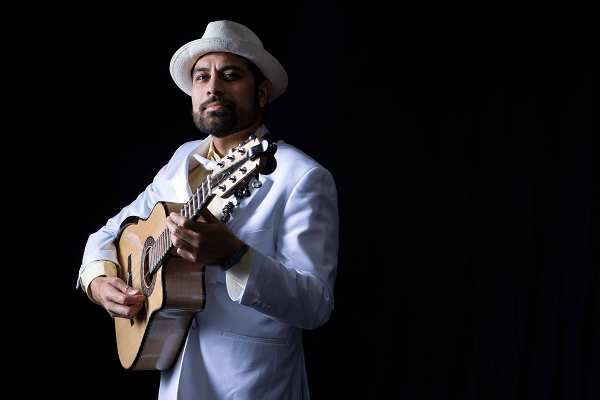
Latin America is the birthplace of so many different musical genres that a lot of us could never even know them all. Although salsa is our main focus, there are many Latin genres that also deserve our full attention and, in this writing, we are going to talk about one of them: the changüí. That is why we interviewed one of its main exponents: Gabriel García, leader and founder of the band Changüí Majadero.

Gabriel’s beginnings in music
Gabriel started relating a little of his history with music. Something interesting to say about this artist is that his beginnings in music did not take place as a child like many others, but when he was about 19 years old.
Before being a musician, Gabriel was an amateur boxer since he was a child and, thanks to his dedication, he went on to win Gold Gloves and was part of sport organizations in his native Mexico. The sport was the center of his life until a school friend of his lent him a guitar and taught him how to play along some chords. This was the beginning of his interest in music.
Apart from this, he learned that his grandmother was an opera singer in her youth, which increased his desire to start experimenting with music and focused entirely on it, to the point that he applied the same discipline as with boxing at the time.
Gabriel then decided it was time to be academically trained in what would become his new passion, so he took a degree in jazz and a subsequent master’s degree in Afro-Latin music. This is interesting because he did not grow up with these genres and had not heard them before, so studying them was something new for the artist. And of course, he did not know changüí either.

The Cuban Tres
Let us remember that Gabriel was a guitarist and jazz player and his initial training was based on this, but that changed as he got to know Cuban rhythms and salsa itself. Something that caught his attention is that salsa hardly ever uses the guitar, until one day he heard a son montuno record with something very similar to a guitar, but it was not one. It was a Cuban tres.
When he realized that the tres was the root of all this type of music, he set himself to learning to play it and bought one. To help himself, he began listening to artists and groups such as Buena Vista Social Club and the famous tres player Pancho Amat, who was the one Gabriel became interested in the Cuban tres for.
Then, a friend told him that, if he wanted to know the roots of this instrument, he had to study changüí. The problem was that, at that time, there was very little information about this genre, so it became much more difficult for him to learn about it. The only thing he had was a record by the most famous changüí group, whose name was Changüí Majadero.
There was so little Gabriel could know about changüí that he met Cubans born and raised outside Guantánamo who did not know it, since it came from very rural areas. For the same reason, changüí was unable to reach the big cities like Havana, where most foreign tourists went.
Given that there was only little information available on changüí, Gabriel chose to do part of his master’s degree in Guantánamo and that is when he finally got to know this genre for real. He also had the opportunity to make friends with changüí teachers, who helped him a lot to understand it, including the founder of the group Changüí Guantánamo.

Changüí Majadero
After returning to Los Angeles with all the information he collected in Guantánamo, he began recording videos for YouTube playing the original changüí and its typical instruments. Alfredo Ortiz, a very popular salsa percussionist in Los Angeles and member of the orchestra Son Mayor, saw these videos and immediately contacted Gabriel to invite him to play with his group. Subsequently, they all decided to form a new group based on this not so well known genre.
Gabriel explains that he and the other members decided to call the group ChangüÍ Majadero because it was relegated to being heard only by poor farmers in Cuba, so the wealthy people from the big cities referred to ChangüÍ in a derogatory sense as ”música majadera” (music for uneducated and poor people).
The guantanameros who played changüÍ started using the word ”majadero” in their lyrics, but to refer to how proud they were about their roots and this genre. This fact made Gabriel and the other musicians choose to use ”changüí majadero” as the name for their group.
Fortunately, this situation has changed over time thanks to those who have been interested in making changüí known to the rest of Cuba and the world. After many years of work, it has become much more popular and well respected compared to other times, but it is still not enough. In the words of Gabriel, it is necessary to pursue efforts to make this traditional and folkloric genre more relevant every day.
Read also: Berklee Online: The Best Option for Learning Music Online
Latin America / February 2024
Arranger, composer and pianist Carlos Ordiano
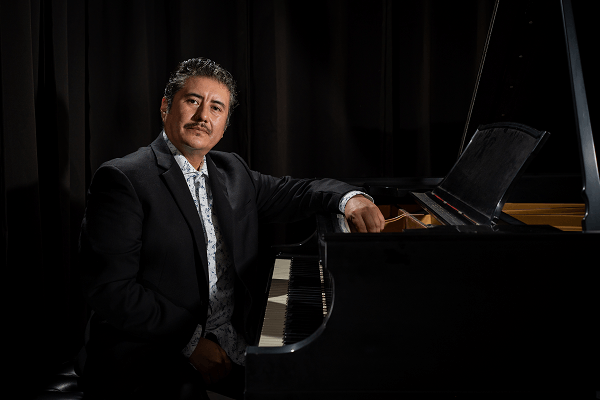
Carlos Ordiano is a talented arranger, pianist and composer who has given us the honor of talking to us and telling us a bit about his career.
Carlos was born in Southern California and was raised in a family of Latino parents who have always loved the music of their roots, which led the artist to be continuously exposed to these rhythms from an early age.
With a consolidated career, his specialty is Latin jazz piano and he has a long list of collaborations with big names in the California music industry.

Carlos’ beginnings in music
After thanking the invitation to this interview, Carlos told us a little bit about how his interest in music began since he was a child. He told us that no one in his family was engaged in music professionally, but one day an uncle of his gave him a toy piano when he was five years old.
He loved the gift so much he told his father he wanted to devote himself to music as a young child, which led him to hire a piano instructor for his son so that he could learn to play the instrument as soon as possible. The problem was that the child only learned by watching his instructor’s hands, so he never learned to read music. The day came when the teacher gave up and told Carlos’ father to find someone else, since he could do nothing for the boy.
After that disappointment, Carlos stopped playing for a year until he resumed his interest in music and again took piano lessons, obtaining much better results than the last time.
During his learning process, he played a little bit bass and trumpet, but no instrument ever became as important as the piano.
His brothers Ruben and Oscar were also taking music lessons in parallel and decided to follow the path of music like Carlos. Ruben is a bass player and Oscar is a guitarist.
When he was 19, he went to study recording engineering at Golden West College, but he found this career very boring, so he decided to learn to read and compose music, since he did not have much experience with these areas yet. This is how he started playing in a Latin jazz band in which he learned a lot more about music in general and got a lot of support from the band leader and, of course, from his parents.

Groups
Carlos has participated in several groups from various genres and the first one was formed by him and his uncles when he was a child. The music they made consisted of cumbias and rancheras back then.
When he arrived at school, he began to focus his attention on Latin jazz, salsa, son montuno and other Latin genres, which led him to participate in groups based on these rhythms. In fact, he also began to be a replacement in several salsa groups when a member was missing. This is how he gained the experience he needed to work with other artists and orchestras in different areas.
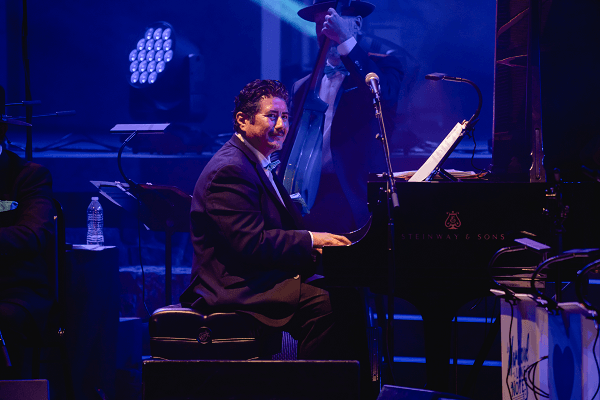
Such is the case of the jazz-funk group Modern Time, with which he plays in a small Californian club every Wednesday and Sunday. From time to time, he also plays with his brother Rubén in Santa Ana and, on these occasions, they call themselves The Ordiano Brothers.
Another important group he became involved with was La Santa Cecilia. La Marisoul, their lead singer, had a big band project and wanted his friend Carlos to arrange some of their new songs, which gave a unique touch to the chords of each piece of music.

Santa Ana Community College
As for his time at Santa Ana Community College, Carlos confesses that he was not a very good student, since he had no interest in subjects such as English or mathematics. He was only interested in music and that is what he focused all his attention on. This caused him to take a long time to graduate and obtain the academic degree he was opting for.
After searching many institutes, he finally obtained a scholarship at Cal State Long Beach College thanks to which he studied things like orchestration for big bands and small groups. During his studies at this school, he only had to pay for parking and textbooks he needed. His stay at this school helped him create many important connections in the industry until finally graduating in 2010 and earning his bachelor’s degree in jazz piano.
To clinch the matter, Carlos has pointed out that the academic part is important to have more specialized vocabulary in music and build links with other colleagues, but at the end of the day, this is not necessary for a musician to be good. In fact, he said that many of the musicians he most admires do not have any formal academic training, so it is not strictly necessary to have a university degree in that field.
Read also: Large projects of Mexican pianist and composer Irving Flores
Chile Directory 2024