
• Skip to primary navigation
  • Skip to main content

International Salsa Magazine

  • HOME
  • Previous editions
    • 2026
      • ISM / March 2026
      • ISM / February 2026
      • ISM / January 2026
    • 2025
      • ISM / December 2025
      • ISM / November 2025
      • ISM / October 2025
      • ISM / September 2025
      • ISM / August 2025
      • ISM / July 2025
      • ISM / June 2025
      • ISM / May2025
      • ISM / April 2025
      • ISM / March 2025
      • ISM / February 2025
      • ISM / January 2025
    • 2024
      • ISM / December 2024
      • ISM / November 2024
      • ISM / October 2024
      • ISM / September 2024
      • ISM / August 2024
      • ISM / July 2024
      • ISM / June 2024
      • ISM / May 2024
      • ISM / April 2024
      • ISM / March 2024
      • ISM / February 2024
      • ISM / January 2024
    • 2023
      • ISM / December 2023
      • ISM / November 2023
      • ISM / October 2023
      • ISM – September 2023
      • ISM – August 2023
      • ISM July 2023
      • ISM Edition June 2023
      • ISM – May 2023
      • ISM April 2023
      • ISM March 2023
      • ISM February 2023
      • ISM January 2023
    • 2022
      • ISM December 2022
      • ISM November 2022
      • ISM October 2022
      • ISM September 2022
      • ISM August 2022
      • ISM July 2022
      • ISM June 2022
      • ISM May 2022
      • ISM February 2022
      • ISM January 2022
    • 2021
      • ISM December 2021
      • ISM November 2021
      • ISM October – 2021
      • ISM September 2021
      • ISM August 2021
      • ISM July 2021
      • ISM May 2021
      • ISM April 2021
      • ISM June 2021
      • ISM March 2021
      • ISM February 2021
      • ISM January 2021
    • 2020
      • ISM December 2020
      • ISM November 2020
      • ISM October 2020
      • ISM September 2020
      • ISM August 2020
      • ISM July 2020
      • ISM June 2020
      • ISM May 2020
      • ISM April 2020
      • ISM March 2020
      • ISM February 2020
      • ISM January 2020
    • 2019
      • ISM December 2019
      • ISM November 2019
      • ISM October 2019
      • ISM Septembre 2019
      • ISM August 2019
      • ISM July 2019
      • ISM June 2019
  • Spanish
  • Download Salsa App
    • Android
    • Apple

Search Results for: music

ISM / September 2024

ISM september -2024 Left ISM September-2024 Right
SalsaApp-L SalsaApp-R
North America September 2024
Latin America September 2024
Europe September 2024
Africa September 2024
Asia September 2024
Oceania September 2024
MedeJazz
Cover donate September 2024

“We are the Latin music world network”

Do you enjoy Latin music? Would you like to get more involved in this genre and share your passion for Salsa, Bachata, Kizomba, Merengue and more. Why not joint our Global Team of volunteers as a correspondent?
You can ask for more details with no obligation and we’ll be happy to talk to you about the benefits that come with the role [Read more…] about ISM / September 2024


Africa / September 2024
Calibrated maracasMartinez attorney

AFRICA

Angola circular flag
ANGOLA
DIRECTORY OF NIGHTCLUBS

Jango Veleiro - Restaurante Esplanada
Jango Veleiro – Restaurante Esplanada
Ilha do Cabo, Rº Murtala Mohamed
Luanda, Angola
+244 936313285

Casa da Música Talatona
Avenida S8, Espaços Avenida, 2do anda, porta 36,Talatona
Luanda, Angola
+244 923 888 903

CAMINITO
Caminito Nigth Club
Rua da India, Bairro Cruzeiro
Luanda, Angola
+244 930 430 495
Marginal Lounge Conceito 3D
Marginal Lounge
Avenida 4 de Fevereiro, Marginal de Luanda, Edifício Deana Day Spa
Luanda, Angola
+244 940 814 393

South Africa cIRCULAR FLAG
SOUTH AFRICA

DIRECTORY OF NIGHTCLUBS

Pa Mi Corazon Academic
Pa Mi Corazon
Suite 4, 680 Musgrave Rd, Essenwood, Durban, 4001, South Africa
+27 83 376 0283

Salsa Addicts Academic
Salsa addicts
47 5th Ave, Parkhurst
Randburg, 2193, Sudáfrica
+27 72 992 8536 +27 72 992 8536
AFRICA SEPTEMBER 2024 FESTIVALS by Karina Bernales

Morocco circle flag
MOROCCO
Marakech 2024

World Salsa Congress Marrakech

Sep 04 / 11 2024

Palmeraie Palace and Resort
Parc de la Palmeraie, Circuit de la Palmeraie
Marrakech, Morocco

€ 130

Marrakech Bailamos 2024

Marrakech Bailaimos

Sep 19 / 23 2024

Palm Plaza & Spa
Avenue du 7ème Art
Maroc, Morocco 40000

€ 110

Asia / September 2024

Calibrated maracasBill Martinez

Japan circular flag
JAPAN
DIRECTORY OF NIGHTCLUBS

Bar Mirage
Bar Mirage
5F VORT Roppongi Briller, 3-14-14 Roppongi, Minato-ku
Tokyo 106-0032, Japan
+03-5860-6946

Fiesta
Fiesta Latin Spot Bar
3F, 1 Chome-14-6 Kabukicho, Shinjuku City
Tokyo 160-0021, Japan
+81 90-1086-2878

El Cafe Latino Tokyo
El Cafe Latino
3 Chome-15-24 Roppongi, Minato City
Tokyo 106-0032, Japan
+81 3-3402-8989

JBA
Studio JBA
11-8 HAT Chuo-ku
Chuo City, Tokio 103-0011, Japan
+81 3 62310638

jsdc
Japan Social Dance Club
1-19-5-705 Shibuya-ku
Tokyo 150-0042, Japan
+81 3 5939-7262

Studio Pepe
Studio Pepe
7-17-12 Minato-ku
Tokyo106-0032, Japan
+81 090-4705-715

La Tropi Azabu
La Tropi Azabu
3F Roppongi Azelea Bldf. 1-3-6 Nishi-Azabu, Minato-ku
Tokyo1060031, Japan
+81 3 6804-5776

Latin Club Leon
Latin Club Leon
5-17-6 B1 Shinjuku, Shinjuku-ku
Tokyo 160-0022, Japan
+81 90-6474-5638

Hong Kong `circular flag
HONG KONG
DIRECTORY OF NIGHTCLUBS

PCL
Petticoat Lane
8F, California Tower, 30-32 D’Aguilar Street, Central
Hong Kong, Hong Kong
+852 2808 2893

DANCETRINITY
Dancetrinity
8/F, Fung Woo Centre, 279-281 Des Voeux Road Central
Hong Kong, Hong Kong
+852 9634 9770

Sole Mio Restaurant
Sole Mio
Upper Ground Floor, 51 Elgin Street, Soho. Central
Hong Kong, Hong Kong
+852 5508 8244

Solar LKF
Solar LKF
+2F, Ho Lee Commercial Building, 38-44 D’Aguilar Street
+Central District, Hong Kong 0000
+852 65467339

After Work Salsa Party
Pong, 1st Floor, Ho Lee Commercial Building, 38-44 D’Aquilar Street, Lan Kwai
Fong Central & Western District, Hong Kong
+852 6389 6213

ISRAEL
DIRECTORY OF NIGHTCLUBS

Havana Music Club
Havana Music Club
Yigal Alon St 126
Tel Aviv-Yafo, Israel
+972 3-562-3456

Thailand circular flag
THAILAND
DIRECTORY OF NIGHTCLUBS

bAFROS lOUNGE
Bafros
Sugar Club Complex Sukhumvit Soi 11
Bangkok 10110, Thailand
+66 63 039 8700

Havana Social Cocktail Bar
Havana Social
1/1 Sukhumvit Rd. Soi 11
Bangkok, Thailand
+66 2 821 6111

MillionSpace
MillionSpace Rooftop Bar & Bristro
Soi Sukhumvit 32, Khlong Tan, Khlong Toei
Bangkok 10110, Thailand
+66 83 898 9939
ASIA SEPTEMBER 2024 FESTIVAL by Karina Bernales

Israel circle flag
ISRAEL
Caramelo Festival 2024

CARAMELO FESTIVAL

Sep 19 / 22 2024
‎Leonardo Club Eilat
Kampen St
Eila, Israel
Nis 999

My mother sang tango

One of the Latin genres that is currently on the rise is tango, so it is common to find more and more people linked to it. There are even many who have made tango one of the most important passions of their lives, as in the case of Carlos Álvarez Guevara, with whom we have had the fortune to talk exclusively about this and other interesting topics.   

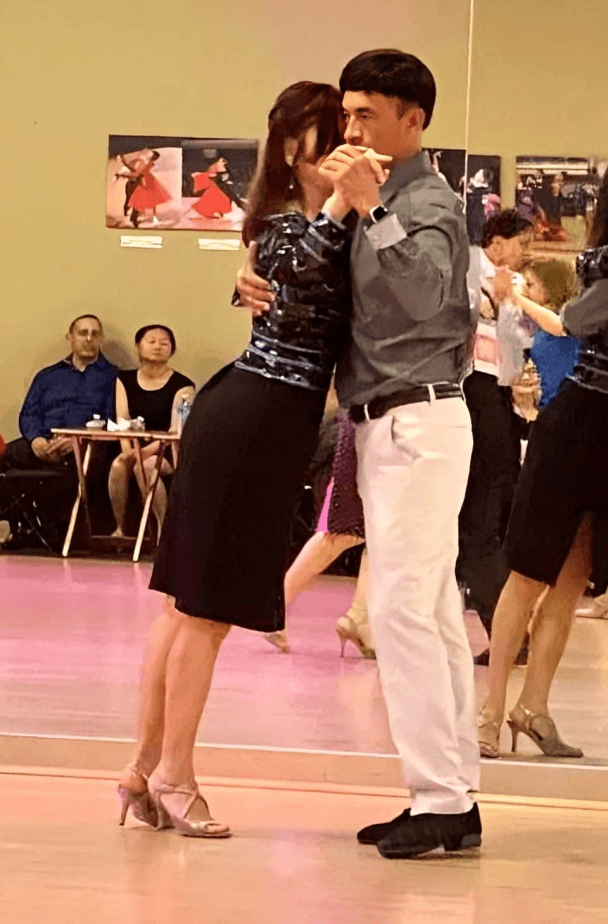
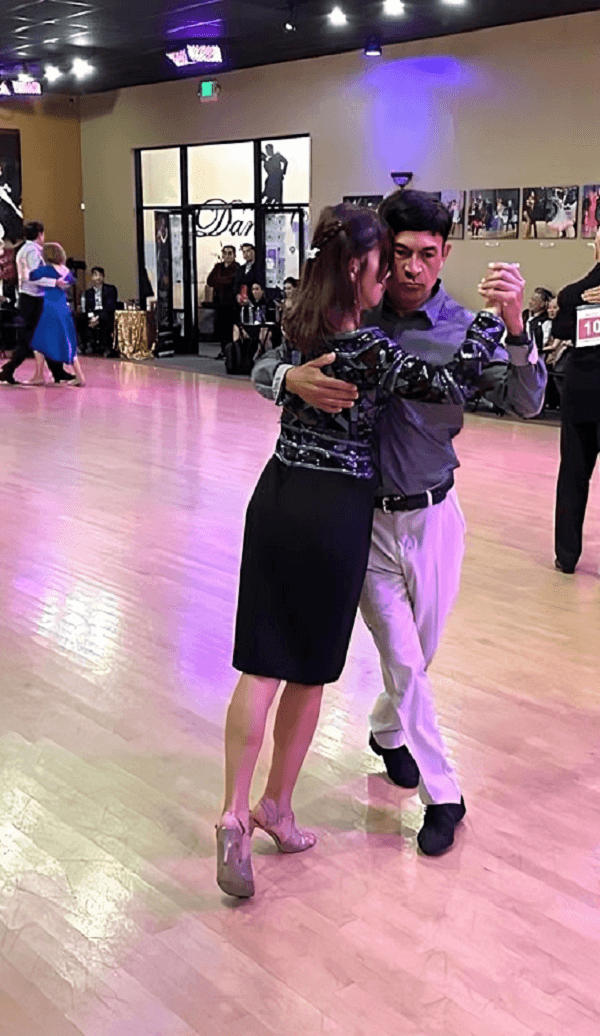
Carlos dancing tango
Carlos dancing with his dance partners in tango classes

Childhood with a tango singer mother   

Carlos’ contact with tango began during his early childhood thanks to his mother, who was a tango singer and dancer.   

Carlos describes his early live in El Salvador and points out that, back then, there were no cassettes or CD players with which to listen to music, so people had to make do with what they heard on the radio. His mother went to a well-known radio station to take part in singing competitions.   

It is then that the boy would listen to his mother rehearse for the competitions with old tango songs, which made him memorize them perfectly and be able to sing them in full. The rest is history.   

How Carlos sees tango today   

Today Carlos is a tango and salsa dancer, a genre that has also been important in his musical journey. However, he sings the songs he dances to at amateur level.   

For many years, he left aside music to devote himself to become a mechanic, a job from which he recently retired after more than 40 years of hard work. It was when he turned 45 that he fully resumed his love for tango and enrolled in dance classes to remember everything he had learned with his mother. 

This is why Carlos says that he is much more professional in dancing than in singing, since he dedicated much more time and effort to the former to become an expert in the field. Dancing, of course, is accompanied by singing, but it has less hierarchy in terms of the artist’s priorities.   

He has reached such a level of excellence in these disciplines that some friends of his put him in touch with Eduardo Guilarte, director of International Salsa Magazine, so that he could talk to us and his talents would become better known.    

Carlos was a mechanic
Carlos was a mechanic during a great part of his life, but tango is his biggest passion

Time dedicated to mechanics and dance   

Regarding the time dedicated to his formal work and dancing, Carlos claims he never had any problems, since he knew how to organize very well in this aspect. 

He always devotes his time to dance on weekends, days where he frequented, and still frequents, nightclubs with friends with whom he dances and spends very pleasant moments that clear his mind of everyday life.   

In addition to that, he also has a karaoke machine at home with which he also sings and practices his repertoire to delight anyone who wants to hear him on any nightclub stage.   

What Carlos has learned from tango   

Just as Carlos has been dedicated to singing and dancing tango, he has also invested time in learning about its history to give more depth to the knowledge he has about this genre and he wanted to share with us a little of what he has learned.  

He told us that one of the things he was most fascinated to learn is that tango has roots from many places and times around the world, although nowadays it is seen as an Argentine genre. Something that many do not know is that it has its origins in the arrival of Africans in the ”New World”, which played a fundamental role in the emergence of tango in Argentina and Uruguay, which were under Spanish rule.    

Both countries were transit ports for slave traffic, so the new inhabitants of these places brought with the their music and customs, which were mixed with the local music and customs to give rise to what is known today as tango. 

A very interesting detail he told us is that, when European sailors stopped in these countries and went to bars to look for drinks and some company, so the ladys in these places danced tango to seduce and provoke them. At that time, this kind of music was perceived as the lowest level of society to the point that the Catholic Church demanded its parishioners not to dance tango, but it turns out that the genre was pleasing to the people and nothing could be done about it.    

In the end, puritans had no choice but to embrace this wonderful dance and, today, people of all social classes, ages and races enjoy it without any complex.   

Carlos with his family
Carlos with his mothers, brothers and dog Mozote

The lyrics and references of tango    

Since Carlos has very extensive knowledge of everything about the genre and its lyrics, we wanted to know what he has studied about it.    

‘‘Tango can be many things at the same time. It can touch on issues related to the moral conduct of the individuals and, like many Latin genres, it also serves to mock and criticize politicians. It can also be an ode to love, spite and regret for having lost the loved one” Carlos shared with us on the subject.    

‘‘This genre can deal with many subjects at the same time, but one of the most recurrent is frustration with failed love and I don’t think that will change in a long time” said Carlos.   

Regarding the issue of the greatest artists who have inspired him to dance and sing tango, he mentioned Carlos di Sarli, Carlos Gardel, Oswaldo Pugliese and Enrique Rodríguez.   

What Carlos feels at singing and dancing tango   

Carlos describes listening to any tango song as ”listening to your own national anthem in a foreign country”. For him, listening to any piece sung by his parents in the past is a source of pride and takes him back to the most beautiful moments of his childhood. 

Carlos pointed out that ”when you are driven by loving emotions and some thoughts are trapped, you can express them through singing and dancing, which is what I always do”.    

The artist pointed out that he loves this world and it is one of the things that fills him the most in life, so he is grateful to be able to talk about it in International Salsa Magazine and express what it makes him feel to the world. 

Read also: Bolivian guitarist Gabriel Navia and his love for music 

The Bolivian charango with Spanish roots

There are many instruments that have greatly contributed to make Latin music and its great exponents known worldwide, but unfortunately they are not very popular and the general public is unable to identify them. Such is the case of the charango, which we will talk about in this opportunity.   

The charango can be defined as a stringed instrument that is part of the lute family and has its origin in the South American Andean region. It is believed that it began to gain popularity during the Viceroyalty of Peru. It has approximately five pairs of strings, but there are some models that have a greater or lesser number of strings.   

Here is more information and interesting facts about the charango and its history.   

Federico playing the charango
Peruvian charanguista Federico Tarazona playing the charango

How the charango is created in the first place    

Although it was not possible to determine exactly when the charango began to be played, it was found that it existed from the 17th century and was inspired by the Canarian timple (a stringed instrument from the Canary Islands that has five strings).   

The Canarian timple was always very present in the so-called ”Spanish charangas”, which were a type of parades or comparsas that took place in the street. This is the origin of the name ”charango” with which it would be called from now on.   

How the charango began to become popular   

Previously, it was an instrument used exclusively by the more rural classes of the time and was closely related to the indigenous population. However, since the 1950s, this situation began to change and the charango started to be heard in more urban areas, which led residents of such places to participate in concerts and folkloric activities for all audiences.   

the one responsible for this was Bolivian-born musician and luthier Mauro Núñez, who in 1944 began to use the charango to disseminate folk music and peduce new charango models in order to popularize it even more. This led many other musicians to find their own musical styles with the instrument, which brought the charango to concert halls and theaters all over Bolivia.   

A few years later, the charango arrived in Ecuador, but in the 1960s, it reached Argentina and some European countries. During those same years, several artists from Bolivia, Peru and Argentina began to tour the world and, as a result, ended up taking the charango to the rest of Europe, the United States and Japan.    

In 1973, Bolivian charanguista and composer William Ernesto Centellas took the initiative to create la Sociedad Boliviana de Charango with the support of charanguista Abdón Caméo and singer-songwriter Ernesto Cavour Aramayo. This society organizes the Congreso Nacional de Charango and the Encuentro Internacional de Charanguistas every two years.   

Nowadays, everyone accepts the idea that the home city of the charango is the city of Potosí and, due to the way its later diffusion went, the town of Aiquile was very important for the instrument to the point that today it is known as the ”Capital of the Charango”.  

A Youtuber playing the charango
A Youtuber teaching how to play a charango

How is the charango and how is it played? 

The charango is shaped like the guitar, although it tends to be slightly smaller. Likewise, its sound box has a smaller size and the neck is much shorter. Among the most common sizes, we can mention 50cm, 60cm and 75cm. Generally, it has five pairs of strings, but there are some Peruvian models that may have four strings, two at eaither end and a double string in the middle. 

The way in which the charango is tuned varies depending on the area and the musician’s preferences, but the most common tuning is natural temple. Just like the guitar, the charango also has the third-order strings octaved between them.   

As for the way the charango should be played, the techniques most used by the charanguistas are the rasgueos, the repiques and the tremolo. In talking about the most popular rhythms, we cannot fail to mention the Huayno, the Carnaval, the Cuenca, among others.    

Playing the charango can be quite a challenge for beginning musicians, but with enough effort and dedication, incredible results can be achieved even for the most inexperienced. 

Read also: Yes, I speak the ancient African Lucumi toungue: The second language of salsa 

  • « Go to Previous Page
  • Page 1
  • Interim pages omitted …
  • Page 111
  • Page 112
  • Page 113
  • Page 114
  • Page 115
  • Interim pages omitted …
  • Page 294
  • Go to Next Page »

International Salsa Magazine (ISM) is a monthly publication about Salsa activities around the world, that has been publishing since 2007. It is a world network of volunteers coordinated by ISM Magazine. We are working to strengthen all the events by working together.