• Skip to primary navigation
  • Skip to main content

International Salsa Magazine

  • HOME
  • Previous editions
    • 2026
      • ISM / March 2026
      • ISM / February 2026
      • ISM / January 2026
    • 2025
      • ISM / December 2025
      • ISM / November 2025
      • ISM / October 2025
      • ISM / September 2025
      • ISM / August 2025
      • ISM / July 2025
      • ISM / June 2025
      • ISM / May2025
      • ISM / April 2025
      • ISM / March 2025
      • ISM / February 2025
      • ISM / January 2025
    • 2024
      • ISM / December 2024
      • ISM / November 2024
      • ISM / October 2024
      • ISM / September 2024
      • ISM / August 2024
      • ISM / July 2024
      • ISM / June 2024
      • ISM / May 2024
      • ISM / April 2024
      • ISM / March 2024
      • ISM / February 2024
      • ISM / January 2024
    • 2023
      • ISM / December 2023
      • ISM / November 2023
      • ISM / October 2023
      • ISM – September 2023
      • ISM – August 2023
      • ISM July 2023
      • ISM Edition June 2023
      • ISM – May 2023
      • ISM April 2023
      • ISM March 2023
      • ISM February 2023
      • ISM January 2023
    • 2022
      • ISM December 2022
      • ISM November 2022
      • ISM October 2022
      • ISM September 2022
      • ISM August 2022
      • ISM July 2022
      • ISM June 2022
      • ISM May 2022
      • ISM February 2022
      • ISM January 2022
    • 2021
      • ISM December 2021
      • ISM November 2021
      • ISM October – 2021
      • ISM September 2021
      • ISM August 2021
      • ISM July 2021
      • ISM May 2021
      • ISM April 2021
      • ISM June 2021
      • ISM March 2021
      • ISM February 2021
      • ISM January 2021
    • 2020
      • ISM December 2020
      • ISM November 2020
      • ISM October 2020
      • ISM September 2020
      • ISM August 2020
      • ISM July 2020
      • ISM June 2020
      • ISM May 2020
      • ISM April 2020
      • ISM March 2020
      • ISM February 2020
      • ISM January 2020
    • 2019
      • ISM December 2019
      • ISM November 2019
      • ISM October 2019
      • ISM Septembre 2019
      • ISM August 2019
      • ISM July 2019
      • ISM June 2019
  • Download Salsa App
    • Android
    • Apple
  • Spanish

Search Results for: music

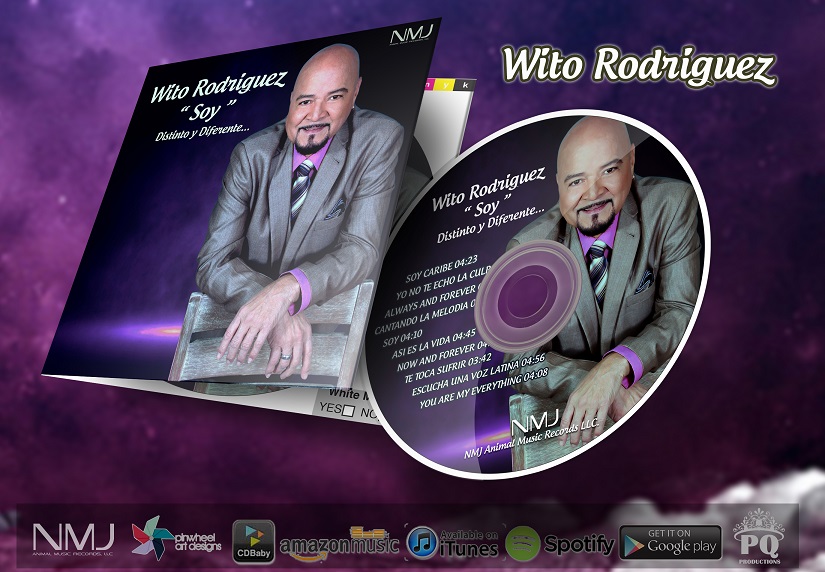
1 New artist Wito Rodriguez “I am distinct and different”

Norte America / Estados Unidos / Florida

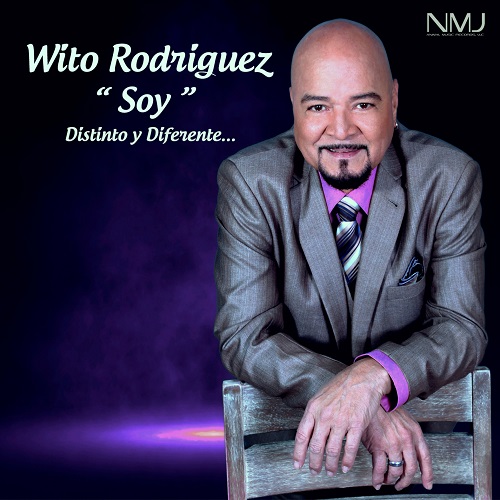
Wito Rodriguez. “I am distinct and different”

Irwin “Wito” Rodríguez was born in Chicago to Puerto Rican parents and got his start in the musical field as a singer and musician. During his teenage years, he performed with a Rock and Roll band as a guitarist.
In 1968 Wito Rodriguez decided to move to “La Isla Del Encanto”, Puerto Rico, in order to search for his musical roots and experience the spicy sounds of his beloved Latin Ritmo.

His first encounter in the Salsa genre was with a Puerto Rican percussionist from the 60’s called “Chacón y su Orquesta”, where Wito learned all the Latin rhythms such as Guaguancó, Boogaloo, Mozambique, etc.

Chacón was his coach in Latin percussion instruments and Wito also fell in love with maracas.

Wito Rodriguez returned to Chicago in 1971 to join “Orquesta La Justicia” a local band that opened shows for artists such as: Ismael Rivera, Ray Barreto, Willie Colón, El Gran Combo and the legendary “Fania All Stars”.

Like many young men of that time, in 1973 Wito Rodriguez decided to join the United States Army and was sent to Europe.

During his stay in Germany, Wito Rodriguez took singing lessons with the Opera singer Barbra Sutton, and at the same time he created two bands with the names of “El Conjunto Sabor” and “La Sonora Antillana”.

These orchestras accompanied artists of the Salsa genre such as: Adalberto Santiago, Ismael Miranda, Tito Allen, Santitos Colón, Pete “El Conde” Rodríguez and the queen of Salsa, Celia Cruz.

After his retirement from the army, Wito joined forces with German band leader Rudi Fuesers and created the European Salsa Orchestra “Conexion Latina”.

With Conexion Latina, Wito Rodriguez recorded two albums; “Calorcito” and “Un Poco Loco”.

He also had the great experience of recording two songs with the band of Director and Arranger Peter Herbolzheimer.

During the 80’s, Wito wanted to broaden his horizons by forming his own groups called “Wito Rodriguez y Orchestra” and “Wito Con Cache”.

Missing his family and friends, Wito “crossed the pond” to return to the United States to finish his Army career.

He never gave up his passion for music, a new big band sound was on his mind, and he returns to the spotlight with the Wito Rodriguez Salsa Jazz Orchestra under the musical direction of trumpeter and arranger, Gino Picart.

“What a wonderful world” or “What a Wonderful World” is his third album released in January 2015.

Although busy in 2016 with live performances, a new album had also been produced and recorded between South America Venezuela and Orlando, Florida.

The most recent production called “Como el Viento” will be released in 2017. This album contains a compilation of songs recorded over the years in Europe than ever for the Western Hemisphere. I hope you enjoy your first solo release… What a wonderful world!

In 2018 Wito released another CD called “The Best of Wito” which has a mix of all the songs that fans thought were the best and respected their preferences.

Wito also has four new singles that he has released from his new album, which will be available from February 2019.

Through the internet platforms you can find these releases.

Always and Forever, Soy Caribe, Yo No Te Echo La Culpa and Now and Forever are the ones that have been released so far.

“As a bilingual singer, I am blessed to contribute to the music industry in my songs, singing them in English and Spanish, unity through my music in a mix of salsa and R&B, etc.” Wito Rodriguez

In the year of 2018. Wito Rodriguez was blessed to be nominated at the Hollywood Music Media Awards (HMMA) in Los Angeles, CA in November 2018.

You can also see his certificate as an honoree at the Fox Music Awards USA, Miami in November 2018, who was nominated and honored for being the Army Veteran Salsero Singer.

The Chicago Salsa Congress was one of its great events in 2018.

In March 2019 his new bilingual production Soy Distinto Y Diferente came out with the song Soy Caribe already nominated at the Hollywood Media Music Awards on November 20, 2019 in Hollywood California.
NMJ Animal Music Records LLC. [email protected]

PQ Promotions/Management Jenny Morales [email protected]

(682-554-4851 or (813-785-3086))
Anderson Quintero

North America / United State / California

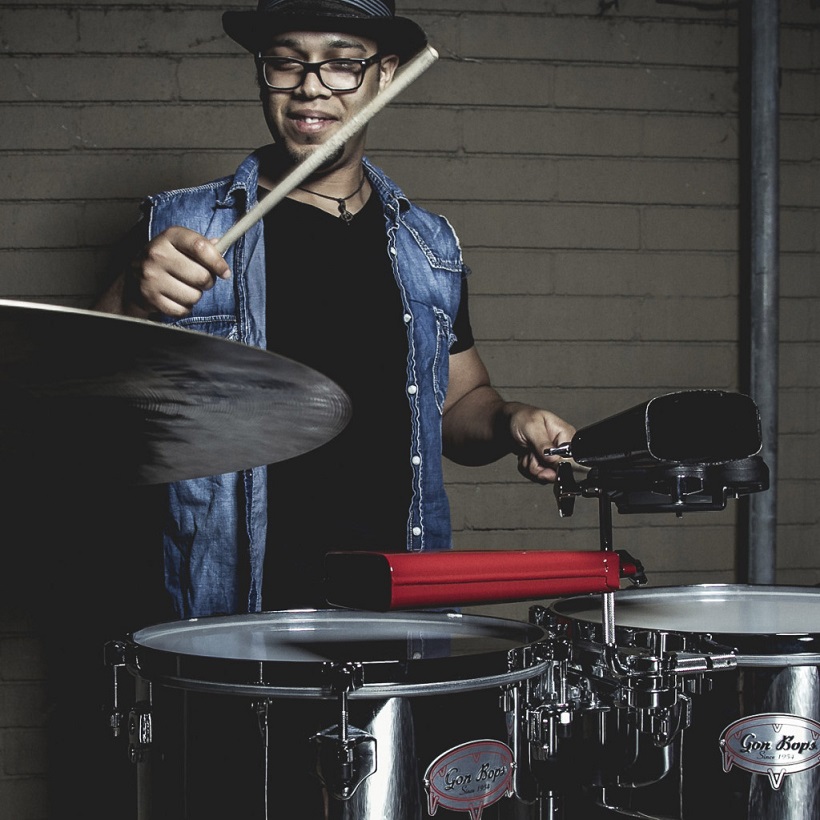
Anderson Quintero. The Multi Percussionist of relief generation in the Quintero Dynasty

Anderson Quintero began his musical career at the age of seven, when he joined Salserin, the only children’s Salsa orchestra visiting more than 10 countries.

Anderson Quintero
Anderson Quintero

Throughout his journey in this group, the young Anderson Quintero demonstrated the talent inherited from his father and the rest of his paternal family, who have been recognized as the greatest percussionists in Venezuela.

While in Salserin, Anderson Quintero became the official timbale player of the group, however he continued his developed on other percussion instruments.

This experience led him to visit about 20 countries, and record 5 musical productions.

Nevertheless, the talent that flowed through Quintero’s veins grew stronger with his studies in the Conservatory José Angel Lamas, along with lessons through which he discovered an interest for drumset.

Well-known musicians such as Vinnie Colaiuta, Tony Williams, Elvin Jones, Paul Wertico, Brian Blade, Robby Ameen, Jack Dejohnettee, and others, have influenced his musical career.

His talent on the drums eventually led him to join several rock bands in the city of Caracas, Venezuela.

During 2004 and 2005, Anderson Quintero was part of the band that accompanied Venezuelan singer/songwriter/Grammy Award Winner Franco de Vita on his tour “Mil y una Historias”, visiting more than 10 countries and garnering 2 Grammy nominations in 2006. That same year Quintero met up with two ex-band members of Salserin, Servando and Florentino, and joined their band “Enamorame”, playing drums and the timbales.

In mid-2006, Anderson Quintero moved to New York City, where he began to gain international recognition. Since then, he has performed with Jerry Rivera, Obie Bermudez, Louie Vega, Don Omar, Servando Y Florentino, Chino Y Nacho, Luisito Quintero Percussion Madness, Paloma San Basilio, Huascar Barradas , Aditus, Vanessa May, Kevin Jones, Tenth worlds, Sheila Charles (Ray Charles’ daughter), Emilly King, Taxi Amarillo, and Willie Colon’s bands, with whom he has traveled internationally.

Anderson worked on a musical about the life of the “Guarachera de América” Celia Cruz, in an Off-Broadway show.

He is a first-call session drummer in Venezuela and has recorded with the most important artist in that country in many different styles of music: pop, rock, folk, ethnic, latin, and jazz.

He’s also on tour with Venezuelan Trombon Ensamble, the best known trombone players in Venezuela. He recently joined the band of Spanish singer Paloma San Basilio, playing drums for their American tour.

In 2011 Quintero won a Grammy for Chino y Nacho’s album “mi nina bonita”.

He recently recorded drums on the album “punto ciego” by Venezuela’s progressive rock band LEXESTET and on “third element” by Luisito Quintero.

Anderson began 2014 touring with Frank Quintero and then joined the salsa orquestra “Los Adolescentes” for a tour around Mexico.

Currently he finds himself in the city of Los Angeles, California where he continues his musical career.


La Topa Tolondra & its Salsa with Criterion – Colombia

Latin America / Colombia / Cali

Something magical happens in a unique space in Cali – Colombia: Topa Tolondra

La Topa Tolondra & its Salsa with Criterion ¨ A magical place in a unique space in Santiago de Cali¨

Because what matters is the music and its only and great protagonist “la salsa” a whole universe of happy individuals united by the melody, and all this happens because the salsa is tattooed in the hearts of many caleños and visitors to the area who It becomes evident on the dance floor, where you can find that visiting salsa public from all over the world that dances professionally, there are also those who dance well and those who don’t dance, but who doesn’t give a damn? “nothing”.

Those who are stung or guilla of dancers, those who go in sandals, those who go with tennis, those who go with heels, those who go elegant, those who go relaxed, the dreadlocks with long hair, those with afros, the gentleman and the lady, the chickens, the urban cyclists and even the rockers… and the list is endless because what matters is the music and its only and great protagonist “salsa”

“Lovers of Salsa and Bolero romantics attend weekly without age limits” To the rhythm of the Charanga, the Pachanga, the Boogaloo, the Guajira and the Son Cubano, it is enjoyed every night at the Topa Tolondra. Something unique happens in that magical place and that is that everyone forgets what they will say and they enjoy it from start to finish. In addition, local and international artists such as:

Esteban Copete y su Kintelo Paci co, Habana con Cola, Los Hermanos Lebrón, Clandestina Orquesta, Africali, Ebano y Marl, Bailatino, La Negramenta, Bobby Valentín and among others. For special dates ¬these and events such as Halloween that is approaching are organized. In “La Topa” as it is already known in Cali, sounds resound that arrived in the city between the 50s and 70s, where Salsa shapes the body and bolero its spirit, and going a little deeper we also perceive inclusive energies.

“Having fun is the only requirement to attend” “The Environment” For an unforgettable night you need two halves. The first is a table, chairs, water and drinks. And the second, and perhaps the most important: music and hit.

In Topa Tolondra there is plenty of space for gozadera, to sit down, to toast. Time does not run and there is no decache… “La Música” Here they marry the old guard of Los Hermanos Lebrón, Ángel Canales, La Sonora Ponceña, Frankie Dante and La Flamboyán.

The curatorship of its owner Carlos Ospina, its disc jockey and owner, is to learn it. It is not at all about impressing, it is about knowing how to find the subject at the right time.

¨Variety¨ Mondays are for foreigners. On Tuesdays there is a cinema-forum space and separate classes that are included with the 3 for 1 promotion (for every 3 Salsa songs, one bolero). Wednesdays are the best dancers in the city, Thursdays are dedicated to live salsa.

Finally, Fridays and Saturdays are reserved for these traditional Topa. “To Many Degrees” If your hair is long, bring something to tie it up with. If you are wearing a long-sleeved shirt, roll up the sleeves. If you are one of those people who is not used to consuming water, be prepared to drink what has not been drunk in a year. In La Topa you feel the harsh heat, so it is necessary to establish breaks to go outside to cool off “the heat outside will seem cool to you.”

For a round night, the ideal combination is beer, brandy and water, in dosed sips. Does the temperature exhaust? Yes, but it doesn’t matter if the song that is playing touches your ¬bras and reaches your heart. If you don’t know La Topa Tolondra, be sure to go and if you want to get a clearer idea before visiting, visit their fan page on Facebook www.facebook.com/Latopabar but don’t stay intrigued! Location of La Topa Tolondra. Cl. 5 #13-7, Cali, Valle del Cauca, Colombia Telephone: +57 323 5972646

Samba The dance that wakes up Carnival in Brazil 

Latin America / Brasil 

“The samba” The dance that wakes up Carnival in Brazil 

Despite the fact that carnivals are known worldwide for their costumes and samba parties, none is as good as the carnival that takes place in Brazil, Rio de Janeiro, especially in the Sambadrome, known for being one of the largest open-air spaces in the city. city ​​where one can hold big events.

The Brazilian Carnival or the Carioca Carnival is a great event where Brazilians and tourists meet to dance and see the great festivals offered by the different dance academies and/or samba studios where the evaluation of each one will depend on the rhythm, participation, costumes and the originality of the parade.

Samba dancers at the carnival

Samba is the national music of Brazil, which has Afro-Brazilian origin of 2 times 4 times but the beginning was specifically in Angola before reaching Brazil; It currently has a style that has currently received many fusions and is very varied.

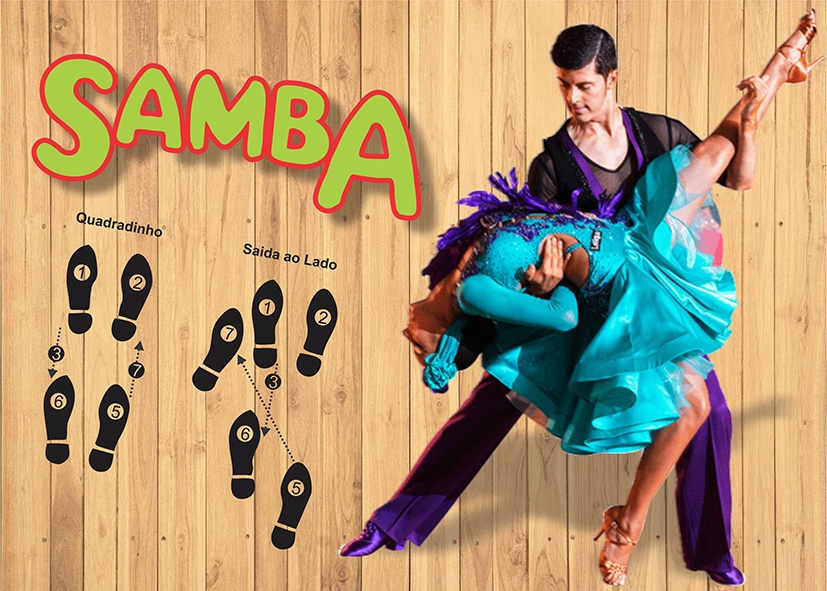
To learn to dance it, one begins with the progressive basic movement that consists of the normal basic step and the lateral basic step (left and right, front and back), then the whisk step that consists of the variation of the lateral basic step and instead of carrying the other foot next to the leading foot, you will take it backwards if you want to know all the details of this step visit the following page (https://es.wikihow.com/bailar-samba), the next step is the stationary walk of samba where the person who performs it in a closed position holding the partner with both hands, unlike the position explained at the beginning; the arms should be extended.

The leader will have his left leg extended behind him, while the follower will have the same position but with his right leg behind him, the inside leg will be the one that stabilizes him and in this way the couple will not move and will stay in one place.

The samba walk is the displacement that is carried out in a very similar way to the stationary one, but in a walking position; it is very similar to the closed one, but it forms an open “V”; the left side of the leader and the right side of the follower should be slightly turned outwards so that the opposite sides of both are next to each other. To perform this move, start with your outside leg diagonally behind your inside stabilizer leg.

One of the secrets so that the movement reflects the essence of this music is the “rebote” between one step and another, there must be a fluid transition that engages the whole body and to achieve this it is possible to think that we are constantly stepping on different objects that appear in our way and that we quickly try to lift our foot so as not to break them. It is very important that this bounce is expressed with the whole body, and not just with the legs.

Among the recommendations to perform an effective and great dance is concentration and looking forward over the shoulders of your partner.

Among the many benefits that dances give, Samba has certain privileges not only physically but also psychologically.

  • On a physical level:
    • Strengthens the legs, as it tones them since the movements are very fast and continuous.
    • Flat stomach, since in the dance they must have the abdominals contracted and the body stretched.
    • Slims the hip for extensive movements.
  • On a psychological level: it releases stress since the person plays sports by practicing it, in such a way that it helps the body to release tension, resulting in fun and relaxation.
Steps to dance samba

Now that we know more about samba and its influence on carnival at an international level, can we say that it is a single style? Well, no… Did you know that the “Carnival” differs in the different ways in which it is carried out or developed in each city?

It is true that there are many traits in common, such as their origins and motivations. One of the most attractive characteristics in Brazil is that it takes place in the open air, which means that the visitor has a more active participation at a lower cost and can dance and enjoy the shows and/or shows that take place during the marches.

by the academies with their dancers wearing their best costumes and Samba steps as well as the allegorical cars and also the public can enjoy and see the electric trios (they are musical groups that travel the city in equipped trucks playing music) at street parties river; and not only in “Rio” it is celebrated but it can be found in Recife and Olinda, in Salvador de Bahía, the city where Samba was born – Florianópolis, among others.

These cities have an architectural beauty that seduces the visitor and transports them historically both historically and culturally.

If you want to have your own experience, do not miss the next carnival in Brazil 2020 that will take place from February 21 to 26, you can buy your tickets here https://www.carnavales-brasil.com/rio-brasil/carnaval /tickets-tickets/dates-2020/buy .

La Candela Salsa Orchestra

Europe / Spain / Tenerife

La Candela Salsa Orchestra

The band is made up of eight musicians settled in Tenerife Canary Islands

La Orquesta Candela Salsa

La Candela is a small independent orchestra that in recent years has made a place for itself among the preferences of salsa dancers.

Her proposal is aimed at “hooking” the dancer with the original rhythms of salsa such as son montuno, guaguancó, mambo or chachachá, recovering the sound of the era in which what is known today as Salsa was forged.

The band is made up of eight musicians based in Tenerife (Canary Islands).

Its target audience is the salsa dancer on1 & on2, a great consumer of this type of music.

However, they have also conquered the hearts of the salsa music lovers who are staunch consumers of hard sauce.

The live La Candela show is a roller coaster of sensations that aims to spread joy and good vibes with a varied repertoire in terms of the danceable rhythms that are included within the salsa genre.

With him they have been presented in Spain and in other European countries such as Germany or Switzerland throughout these five years of activity.

La Candela’s style is inspired by the repertoire and execution style of the master Joe Cuba and his Sextet.

They have brought back to life some of their best classic songs that are still a reference for the dancer today.

With this spirit, her first musical project was born: On Fire, which was released in November 2015 and was a very good business card.

The album includes some classic songs by maestro Joe Cuba, such as “La Palomilla”, “Clave Mambo” or “El Ritmo de Joe Cuba”, along with self-written songs such as our first two singles, entitled “Es Guaguancó” and “For her”.

In 2017 and thanks to the executive production of Batlei Productions, a new project by La Candela was born with a closer sound and with many new features, without leaving behind our essence, headed by the first single titled “Se Prentó”, On Time moves between the primitive and the new, rescuing jewels and offering deserved tributes to some of the great pioneers of Afro-Cuban danceable music, like Tito Rodríguez or Frank Grillo “Machito”.

They are currently preparing what will be their third studio album with a new line-up of Musicians

We are also in the process of reserving the album “On Time” with a crowdfounding project, in which 300 LPs of this production have been put on sale in a limited edition: https://qrates.com/projects/20837- on-time In addition, we have launched a merchandising store where you can find all kinds of products with the unmistakable seal of La Candela Salsa Orchestra: https://lacandelasalsa.threadless.com/

  • Video clip of “Sin Ti”: https://youtu.be/WkV2hvCeXhE
  • Switzerland summary video: https://youtu.be/whUDfAx0Fwc
  • Benidorm video summary: https://youtu.be/j3puMxehsQk
  • Website: http://lacandelasalsa.com
  • Facebook: https://www.facebook.com/lacandelasalsa
  • Instagram: http://instagram.com/lacandelasalsa
  • « Go to Previous Page
  • Page 1
  • Interim pages omitted …
  • Page 159
  • Page 160
  • Page 161
  • Page 162
  • Page 163
  • Interim pages omitted …
  • Page 293
  • Go to Next Page »

International Salsa Magazine (ISM) is a monthly publication about Salsa activities around the world, that has been publishing since 2007. It is a world network of volunteers coordinated by ISM Magazine. We are working to strengthen all the events by working together.