• Skip to primary navigation
  • Skip to main content

International Salsa Magazine

  • HOME
  • Previous editions
    • 2026
      • ISM / August 2026
      • ISM / July 2026
      • ISM / June 2026
      • ISM / May 2026
      • ISM / April 2026
      • ISM / March 2026
      • ISM / February 2026
      • ISM / January 2026
    • 2025
      • ISM / December 2025
      • ISM / November 2025
      • ISM / October 2025
      • ISM / September 2025
      • ISM / August 2025
      • ISM / July 2025
      • ISM / June 2025
      • ISM / May2025
      • ISM / April 2025
      • ISM / March 2025
      • ISM / February 2025
      • ISM / January 2025
    • 2024
      • ISM / December 2024
      • ISM / November 2024
      • ISM / October 2024
      • ISM / September 2024
      • ISM / August 2024
      • ISM / July 2024
      • ISM / June 2024
      • ISM / May 2024
      • ISM / April 2024
      • ISM / March 2024
      • ISM / February 2024
      • ISM / January 2024
    • 2023
      • ISM / December 2023
      • ISM / November 2023
      • ISM / October 2023
      • ISM – September 2023
      • ISM – August 2023
      • ISM July 2023
      • ISM Edition June 2023
      • ISM – May 2023
      • ISM April 2023
      • ISM March 2023
      • ISM February 2023
      • ISM January 2023
    • 2022
      • ISM December 2022
      • ISM November 2022
      • ISM October 2022
      • ISM September 2022
      • ISM August 2022
      • ISM July 2022
      • ISM June 2022
      • ISM May 2022
      • ISM February 2022
      • ISM January 2022
    • 2021
      • ISM December 2021
      • ISM November 2021
      • ISM October – 2021
      • ISM September 2021
      • ISM August 2021
      • ISM July 2021
      • ISM May 2021
      • ISM April 2021
      • ISM June 2021
      • ISM March 2021
      • ISM February 2021
      • ISM January 2021
    • 2020
      • ISM December 2020
      • ISM November 2020
      • ISM October 2020
      • ISM September 2020
      • ISM August 2020
      • ISM July 2020
      • ISM June 2020
      • ISM May 2020
      • ISM April 2020
      • ISM March 2020
      • ISM February 2020
      • ISM January 2020
    • 2019
      • ISM December 2019
      • ISM November 2019
      • ISM October 2019
      • ISM Septembre 2019
      • ISM August 2019
      • ISM July 2019
      • ISM June 2019
      • ISM May 2019
      • ISM April 2019
      • ISM March 2019
      • ISM February 2019
      • ISM January 2019
    • 2018
      • ISM December 2018
      • ISM November 2018
      • ISM October 2018
      • ISM September 2018
      • ISM August 2018
      • ISM July 2018
      • ISM June 2018
      • ISM May 2018
      • ISM April 2018
      • ISM March 2018
      • ISM February 2018
      • ISM January 2018
    • 2017
      • ISM December 2017
      • ISM November 2017
      • ISM October 2017
      • ISM September 2017
      • ISM August 2017
      • ISM July 2017
      • ISM June 2017
      • ISM May 2017
      • ISM April 2017
      • ISM March 2017
      • ISM February 2017
      • ISM January 2017
    • 2016
      • ISM December 2016
      • ISM November 2016
      • ISM October 2016
      • ISM September 2016
  • Spanish
  • Download Salsa App
    • Android
    • Apple

Search Results for: music

Ray Rodríguez and The Colao Band promote Latin music in San Antonio, Texas

Ray Rodríguez is a talented professional musician and ex-serviceman with whom we’ve had the great pleasure of talking to about his career and other interesting details of his life in general. This descendant of Puerto Ricans has shown us a little-known side of himself, and we’re more than happy to share it with our dear readers today, May 1, 2026.

Ray posing
Ray Rodríguez posing for the camera

How Ray got his start in Music and who inspired him

Ray came from a family full of musicians, but his father and grandfather dedicated themselves to the craft of building string instruments such as guitars, requintos, and cuatros. His grandfather, besides being a craftsman, was also a very talented musician, so he was in high demand in his town to liven up events of all kinds. Seeing so many musicians testing the quality of the instruments at home all the time, little Ray tried to be around to learn the tones he heard.

Over time, he had his own guitar and carried it with everywhere he went, something that his family always supported, and he is so grateful for that.

Enlistment into the United States Army

Music was always very present in Rey’s life, but he had not yet mastered it very well, and his interest in it had not developed much at all, so he joined the United States Army. However, once there, some of his fellow soldiers were also musicians, and taught him to play other instruments, but it did not end there. It was at this stage that his interest in singing was sparked and he dedicated to this profession after his retirement. That was 26 years ago. 

He came to be there for a total of six years. In the beginning, he joined as an infantryman and later became an artilleryman. He also attended aviation school for about a year, but unfortunately had an accident that fractured his leg in six places, so he was given the option of staying or changing jobs again, and he chose the latter.

It should be noted that he spent much of his service in Germany, and being there, he devoted much of his free time to listening to music that reminded him of his roots and playing it as a hobby.
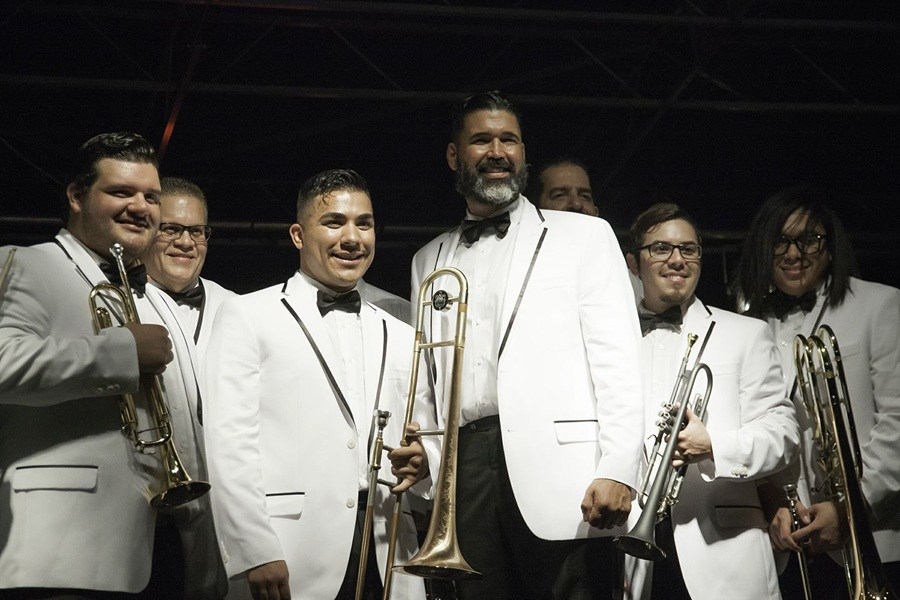
Ray and The Colao Band
Ray Rodríguez and The Colao Band at the Jazz Festival in Helotes

Why he chose Texas back to the United States

Having been born in Boston, Massachusetts, it struck us that he chose Texas as his new home. On this subject, he told us that his best friend was parked at Lackland Air Force Base in San Antonio and invited Ray to visit him. The artist enjoyed his walk around the city so much that he decided to stay there, so he applied to work at the City of San Antonio Aviation Department and got the position. After completing his retirement procedure, that was how he went directly to San Antonio, where he continues to live to this day. 

As for the musical panorama he found there, what dominated the most at the time was regional Mexican music, so salsa, merengue, and other genres of that type were just beginning to take their place on the local music scene. Fortunately, things have changed since then. During those same years, Ray was invited to a rehearsal with the merengue band Grupo Chocolate to serve as a backup singer, and he spent about six years singing with them, but also became the band’s manager and owner.

Already in the year 2007, the band unfortunately broke up and all the members went their separate ways, which is when Ray finally decided to form his own band, The Ray Colao Band. 

The Colao Band

For a time, Ray was the singer of Tito Puente Jr.’s band, and both he and the timbalero were having lunch at a restaurant and talking about the band Ray wanted to start. Ray explained to him that his project was like a mix of everything and that it was all “colado” (in this context, it means everything is mixed together). In addition, he always snuck into someone else’s stage without being part of the group (”colado’’ in Spanish), so Puente gave him the idea to use that name for his band, and it was.
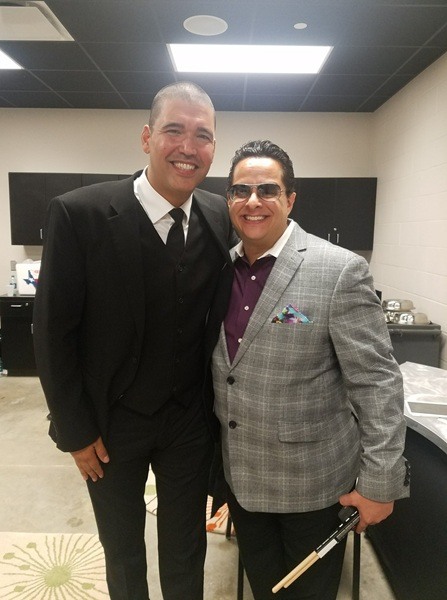
Ray and Tito
Ray Rodríguez and Tito Puente Jr.

As for his accompanying musicians today, we can mention guitarist and singer Jessi García, guitarist, pianist, and bassist Rogelio Romer Hidalgo, singer Gilberto Álvarez, percussionist Georgie Padilla, and the late Jesús Navarrete. These were the members who formed the core of the band, and almost all have been working alongside Ray for about 18 years continuously, except for Gilberto, who spent some time in Puerto Rico but then rejoined them. After them, The Colao Band also welcomed Hainel García and Robert García.

In addition to the band, Ray has also been able to open his own restaurant, Cuba 1918, which he has been running for about four years. He says the project is going very well and that it has become a music and arts venue where he hires various bands to entertain customers during their meal.

Read also: Actress, comedian, and singer Carmen Nydia Velázquez tells us about the best of her career
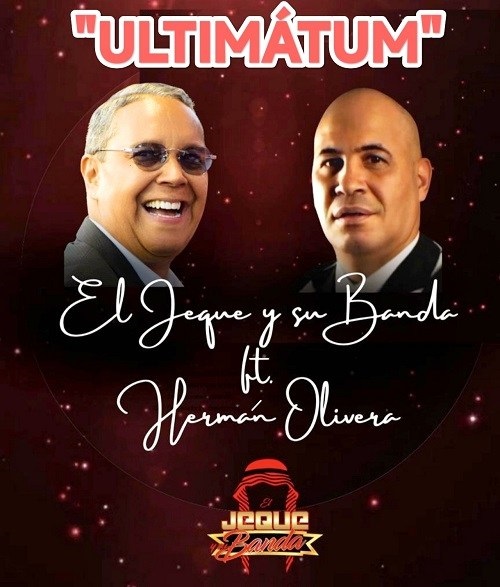

The Jeque and his Band present: “Ultimatum”, a musical gem with Hermán Olivera

A masterful fusion that redefines Guaguancó and Cha-Cha, celebrating the group’s tenth anniversary.

El Jeque y su Banda is a salsa ensemble based in Venezuela.

Under the direction of its founder and general manager, Lic. Ángel Martínez “El Jeque,” and with the impeccable musical direction, arrangements, and piano work of the renowned William “Willie” Melo, the band has established itself as a benchmark in the genre.

El Jeque y su Banda presenta “Ultimátum”, una joya musical junto a Hermán Olivera

Approaching ten years of professional trajectory, maintaining their momentum through persistence, passion, and dedication to their craft, the group celebrates this anniversary with the release of their fourth studio production: Evolución…El Jeque y sus Estrellas.

The Launch: “Ultimátum”

The purpose of this release is to announce the launch of their second promotional single, a piece crafted for the true music connoisseur: “Ultimátum.”

This musical gem features a collaboration with a legend of the genre, a world-renowned sonero and vocalist: Hermenegildo Olivera Suárez, globally known as “Hermán Olivera, El Sonero del Siglo XXI.”

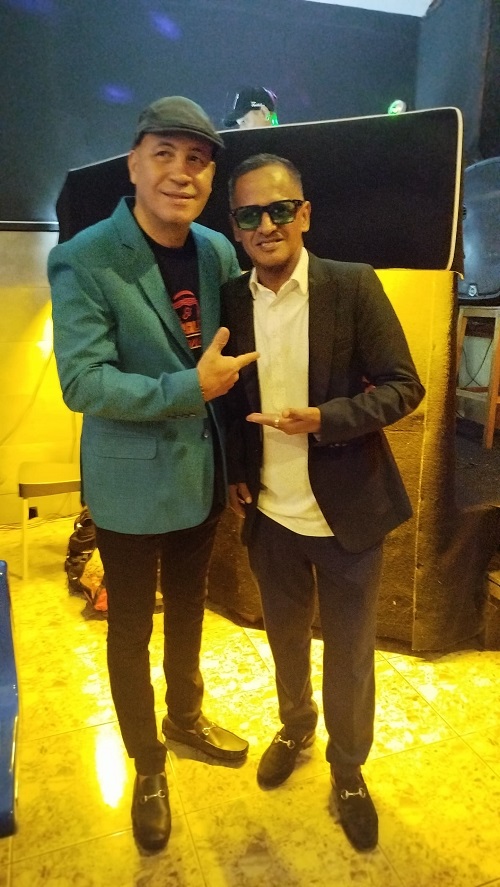
Herman Olivera El Sonero del Siglo XII y Dj. Augusto Felibert

History and Evolution

This romantic-style track was originally recorded in 1981 by the great Puerto Rican interpreter Felipe “La Voz” Rodríguez.

The song was written by the legendary Puerto Rican composer Luz Celenia Tirado, who was the first woman recognized in the island’s challenging guild of troubadours and also performed on that original production.

On this occasion, El Jeque y su Banda takes the work in a new direction, transforming it into an aggressive Guaguancó fused with an elegant Cha-Cha.

The concept for this version was a creative endeavor led by Hermán Olivera, who defined the essence and intent of the track.

Ángel Martínez “El Jeque” y Dj. Augusto Felibertt

Subsequently, Luis Alberto and Willie Melo shaped the project, solidifying the final musical structure under the pen and direction of William “Willie” Melo, with the co-production of Luis Alberto “Redlouis” (Manager, Producer & Booking for Hermán Olivera).

Musical Virtuosity

It is remarkable how these music aficionados manage to mesh Guaguancó and Cha-Cha originally fused with a bolero with a versatility that preserves the essence, cadence, and appeal of the piece.

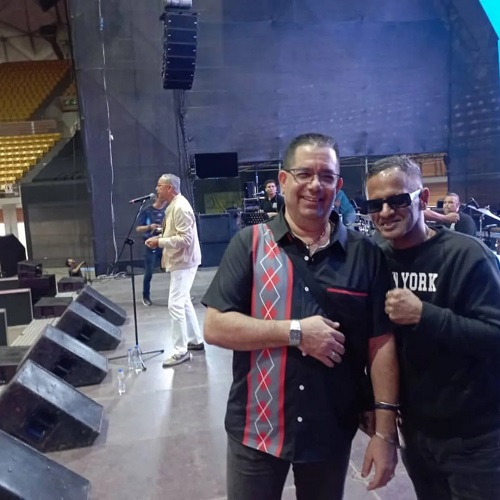
Herman Olivera Soneando Luis Rojas y Augusto Felibertt prueba de Sonido en el marco del evento Salsa Bajo la Cúpula Poliedro de Caracas.

Willie Melo masterfully integrates Hermán Olivera’s characteristic sound, marked by the influences of Manny Oquendo’s Conjunto Libre and the maestro Eddie Palmieri.

The arrangement, loaded with dissonant notes and power, softens its impact with the magic of the Cha-Cha, allowing Hermán to display his artistry in the soneo.

This interplay between the irreverent, the melodic, and the elegant makes “Ultimátum” a mandatory addition to any quality music lover’s playlist.

Production Credits

The excellence of this single is made possible by the participation of these great Venezuelan musicians:

  • Musicians: Yomar “Caballo” Méndez, Julito Antillano, Luis Ruíz, Joel “Pajarraco” Rivas, Frank Haslam, and Willie Melo.

  • Backing Vocals (Cha-Cha): Maestro Nino Segarra, accompanied by Rodrigo Mendoza and Wilmer Lozano.

  • Recording (Lead and Backing Vocals): Nino Segarra Studios (Puerto Rico).

  • Musical Recording, Mixing, and Mastering: Dale Cerebro Estudio, led by engineer Emmanuel “Cerebro” Romero.

Everything stated above summarizes a work with all the necessary elements to become a radio hit and, above all, an essential piece in your music library.

El Jeque y su Banda
El Jeque y su Banda

Sincerely,

Lic. Ángel Martínez “El Jeque”

Collaborations:

Luis Alberto “Redlouis” (Manager, Producer & Booking for Hermán Olivera)

Dj. Augusto Felibertt

Also Read: Hermán Olivera “El Sonero del Siglo XXI”

Jairo Varela Music, Identity, and Social Narrative

The BE MORE publishing house is proud to announce the release of the new book by journalist and music researcher Robert Téllez M.

The work offers a deep dive into the social and narrative dimensions of the compositions of Jairo Varela, founder of the world-renowned Grupo Niche. It illustrates how his lyrics transcend music to become chronicles that interpret Latin American reality.

More than just a repertoire of songs, Jairo Varela’s legacy serves as a testament to memory and identity, born from his profound Afro-descendant roots. From this perspective, the book develops a discourse analysis that explores the symbols and meanings structuring his lyrics within a historical and social context.

Categorized within the field of ethnomusicology, the literary work proposes a rare perspective in Salsa studies: understanding Jairo Varela as a narrator of social reality.

“Through his lyrics, Jairo Varela challenged indifference, exposing what many preferred to keep silent,” states author Robert Téllez M.

To develop this research, the author brought together an interdisciplinary team of specialists in anthropology, communication, law, education, history, linguistics, music, journalism, and poetry from across Latin America. This diversity shapes a study organized into seven chapters, where symbols, metaphors, and narrative structures within Varela’s songwriting are analyzed and deconstructed.

“With an honesty that never yielded to artifice, Jairo Varela mapped the social landscape of everyday life; he narrated the intimate without betraying the collective, all in an effort to better understand the world,” Téllez notes.

As an innovative feature, the book Jairo Varela: Music, Identity, and Social Narrative incorporates QR codes that lead directly to Maestro Varela’s compositions. Each code allows the reader to use their mobile device to access the songs analyzed via Grupo Niche’s profile on Spotify, enhancing the connection between the written word and musical creation.

The publication also includes a prologue by writer Bella Martínez, illustrations by Frank Rosado, and photographs from the Varela family archive—elements that provide essential context to the composer’s creative universe.

Jairo Varela: Music, Identity, and Social Narrative is now available to the public on Amazon, with worldwide shipping.

The Book: Jairo Varela. Music, Identity, and Social Narrative

Jairo Varela (1949–2012)

Varela was the creator and founder of the iconic Grupo Niche and one of the most influential figures in Colombian Salsa. It was Jairo Varela who built the prestige of this orchestra through his artistic vision and his talent as a composer and director. With those five letters Niche Varela changed the course of Salsa made in Colombia, elevating it to a level of international respect.

Jairo Varela. Música, Identidad y Narrativa Social

Throughout his musical career, Jairo Varela wrote hundreds of songs and produced dozens of albums for his group. His compositions including “Cali Pachanguero” (recognized by Billboard magazine as one of the 50 most important songs in the history of Latin music), “Buenaventura y Caney,” “Mi pueblo natal,” “Ana Milé,” “Un caso social,” and “Han cogido la cosa” have traveled the world and become classics. In his lyrics, Varela portrayed everyday Latin American stories and the identity of Afro-descendant communities.

When Grupo Niche’s music plays, there is something for every listener. Behind that diversity lies the creative intuition of Jairo Varela, a composer who knew how to turn local stories into universal emotions. For this reason, from its beginnings in the late seventies to its international acclaim, the group has brought the rhythmic power, joy, and character of its culture to stages worldwide.

About the Author

Robert Téllez M. is a social communicator, radio and TV broadcaster, and producer with over 20 years of experience. He is an accomplished interviewer, journalist, and music researcher.

His analyses and reflections have been published in outlets such as Revista Semana, El Espectador, El Tiempo, El País, La República, and Agencia EFE, among others. He has also contributed to the scientific journal Nómadas of the Universidad Central de Colombia.

Robert Téllez is also the author of Ray Barretto: Giant Force (2016), whose English translation won a silver medal for Best Translation (Spanish to English) at the 2021 International Latino Book Awards.

In 2019, he presented the authorized biography Willie Rosario: The King of Rhythm, with a second edition released in 2024. He served as a judge for the annual international minimalist poetry contest for the anthology titled Siglema 575: Say What You Want to Say (2024).

As a result of his extensive research, Robert Téllez serves as a consultant and lecturer on topics related to the appreciation of Salsa music.

Press Contact: [email protected]


Roberto Tellez

Also Read: Willie Rosario, El Rey del ritmo by journalist and music researcher Robert Téllez M.

Timbalero Manolito Rodríguez Debuts a Fresh Sound as Musical Director of La Zónica

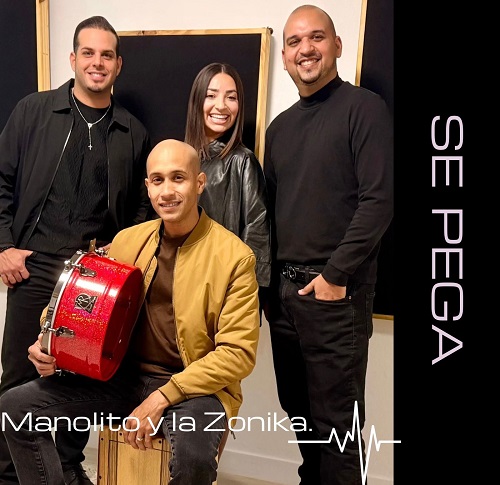
On Friday, March 27, 2026, Manolito Rodríguez and La Zónica performed at La Respuesta, a unique venue a hall where diverse musical genres blend, creating an atmosphere where a dance concert serves as the artists’ formal introduction to the public. The ensemble has been working together since August 2025, when the new orchestra was formed under the leadership of the virtuoso timbalero.

Timbalero Manolito Rodríguez arrives with a renewed energy as musical director of La Zónica

When Manolito began assembling the group, he sought out songs that resonated with him, such as “Gente Luminosa” and “A Mi Medida.” He has also been working with unreleased compositions by Anthony García and Leni Prieto. La Zónica marks a new chapter for the timbalero as the director of his own orchestra. Nevertheless, they continue to perform hits from Manolito’s previous era, now brought to life by the vocal front: Ángel Pomales, Joelis Crespo, and Gabriel Cotto. Manolito has promised to step back from singing to focus entirely on his instrument and musical direction.

The director of La Zónica hopes the dance concert at La Respuesta on March 27 marked a turning point for the band. “It’s an event we’ve been working on with great intensity,” Manolito says with enthusiasm. With energy and conviction, the timbalero adds: “I want to leave a legacy like El Gran Combo de Puerto Rico, like Sonora Ponceña, like Roberto Roena’s Apollo Sound, or Willie Rosario’s band. I want people to say in 25 years, ‘Look, that’s Manolito’s La Zónica.’ It’s a long road, but it’s possible.”

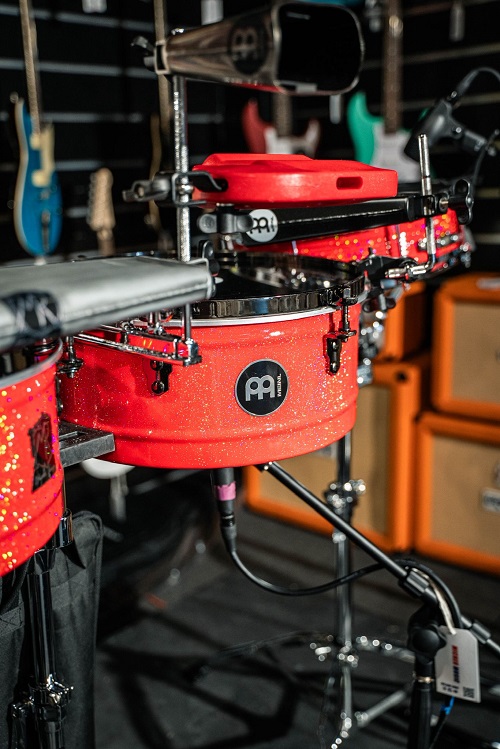
As if that weren’t enough, a new line of Meinl Percussion instruments, inspired by the young Puerto Rican timbalero, is now available.

The new line of instruments - from Meinl Percussion - inspired by Manolito
The new line of instruments – from Meinl Percussion – inspired by Manolito

A Prodigy’s Journey

The career of this salsa virtuoso began early. Manolito Rodríguez is a percussionist, musical director, singer, and dancer. While he was still in middle school, piano genius Papo Lucca invited him to record on the 45th-anniversary album, Homenaje a Tres Grandes del Teclado. “At that time, I was just entering the Escuela Libre de Música; I was in ninth grade,” the timbalero recalls. Four years later, upon graduating from the Ernesto Ramos Antonini ELM in San Juan, Manolito earned the timbalero chair with Sonora Ponceña on Papo Lucca’s recommendation. “Don Quique” accepted him, and the young musician remained with the group for four years.

Puerto Rico’s salsa stages watched Manolito Rodríguez grow up, flanked by musical institutions such as Sonora Ponceña, his now-colleague Willie Rosario, and Roberto Roena’s Apollo Sound.

His skill as a percussionist grew by leaps and bounds, and his versatility was tested on multiple fronts. In fact, his vocals were featured with the orchestra Del Sur al Norte, led by the renowned director, arranger, and producer, trumpet master Julito Alvarado. “Julito was the first one who gave me the opportunity to record as a singer,” Manolito acknowledged in an interview.

Manolito Rodríguez and La Zónica performed at La Respuesta, a different venue.

Thanks to his interactions with salsa veterans since childhood, Manolito served as musical director for various youth projects along the way. This included Revolución Juvenil in high school and Manolito y su Trabuco, an orchestra that performed every Wednesday at El Doble Seis in Caguas.

Legacy and Discipline

According to Manolito himself now a music professor—he owes much of his career to the support of his mother and grandmother, who nurtured his musical interests and encouraged him to pursue formal training. Today, the instrumentalist considers himself a “music worker” who approaches his craft with respect and maturity.

His new orchestra, La Zónica, finds him with a different mindset: he wants to concentrate on the timbales and direction. He considers Master Willie Rosario—who treats him as a protégé one of his greatest influences as a timbalero-bandleader. Rodríguez shares that when he read the authorized biography of “Mr. Afinque” (Willie Rosario, El Rey del Ritmo by researcher Robert Téllez) and saw himself mentioned, he was overcome with emotion. “My eyes welled up. I didn’t expect it,” he says. “Since I started taking things seriously, Willie has always mentored me.”

Despite his vast experience, the young musician felt deeply blessed to be chosen to fill in for the leader of “the band that delights” (la banda que deleita) on several occasions, and to perform at the Willie Rosario Centenary concert at the Coliseo de Puerto Rico. “I feel very fortunate because Willie is a very serious person, someone highly respected in the world of salsa with an impeccable career. He is a true role model.”

Following the passing of Roberto Roena, Rodríguez was also entrusted with the legacy of the Apollo Sound—a testament to the confidence and solidity he projects despite his youth. “Wow, yes. It was an honor,” he recalls nostalgically. “Roberto was the first person to give me a big break in Puerto Rico,” referring to his participation in the 1998 Día Nacional de la Zalsa at the Juan Ramón Loubriel Stadium in Bayamón.

The timbalero Manolito Rodríguez

On Sunday, March 22, 2026, Manolito Rodríguez returned to the Día Nacional de la Zalsa as the timbalero and director of La Zónica, a project that debuted last November during Sonora Ponceña’s 70th-anniversary concert. The current lineup includes: Airemyelisse Díaz (bass), Reinaldo Burgos (piano), Savier Díaz (congas), Manolito Rodríguez (timbales/director), Carlos Arroyo (bongo), Víctor “Yuca” Maldonado (baritone sax), Efraín Martínez (tenor sax), Rubén Díaz (trumpet), and Jan Santana (flugelhorn).

Manolito is well aware that “people pay to be entertained,” as he mentioned in a Zoom interview, and he views himself as a craftsman of music. He feels fortunate to be a full-time musician. “That’s what keeps me grounded. I get paid to make music. I am a music worker with great aspirations who trusts his talent and knows he must stay focused.”

Bella Martinez Puerto Rico

Also Read: Sessions from La Loma brings together salsa fans from all over the world in Puerto Rico

Puerto Rican bandleader and musician Diana Sosa talks about her many projects in Nashville, Tennessee

We had a wonderful and very nice conversation with Puerto Rican percussionist, timbalera, conga player, and cuatro player Diana Sosa, who kindly told us about all the projects she has in the pipeline. Her husband and bandmate, guitarist and vocalist Chuck Nelson, put us in touch with her so we could learn more about both the project they share and the one she has undertaken on her own.

Then these are the things the talented Puerto Rican shared with us on this warm Sunday before Easter.

Diana Sosa is playing
Diana Sosa is posing for the camera while playing the timbales

How Diana got into the world of music

Diana was born and raised in Puerto Rico, where she began to love music and play, but not professionally yet. She was just experimenting with some traditional instruments of her homeland, such as the Puerto Rican cuatro, which she even studied with a private teacher. 

At the age of 39, she moved to Nashville, Tennessee, where she finally got her first big opportunities in music, and the background she brought for years helped her a lot. It all started with a short rehearsal she was invited to, and from there, she has done nothing but prove what she is really made of. 

Of course, she keeps studying and preparing to improve every day. When she is not learning to play with fellow musicians like John Santos, she is taking online courses to solve any doubts she may have.

Diana’s first opportunity with The Bicho Brothers

The first serious group that gave Diana the opportunity to develop professionally—and with which she keeps to playing to this day is The Bicho Brothers, a classic rock band whose members really appreciated the contribution provided by Diana. For this reason, it is she who brings that Latin flavor, the product of her heritage and years of training in these genres.

Something that really attracted the audience was that she was the only woman in the group and, incidentally, she played the timbales, which was uncommon back then. In addition, she added atypical sounds to certain well-known songs, which was also remarkable.

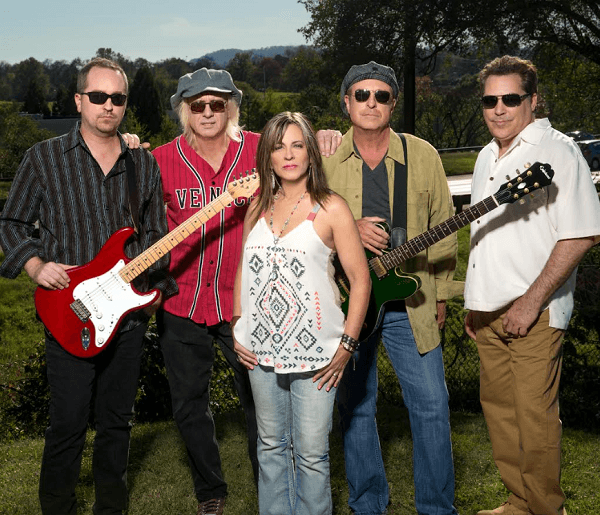
Diana Sosa and the rest of the Bicho Brothers
The Bicho Brothers from left to right: Jeff Krinks (guitar and vocals), Ron Krasinski (drums), Diana Sosa (timbales, congas, percussion, and Puerto Rican cuatro), Chuck Nelson (guitar and vocals), and Kenny Zarider (keyboards and vocals)

Another important personality who encouraged her to follow this route was the great producer Bill Cuomo, who told her she was very good at playing but needed to improve her technique. Twenty years later, it can be said that she took him at his Word seeing all she has achieved since then. From that point on, there have been many other projects and opportunities that make her very happy and keep her fulfilled.

Soul Sacrifice

Soul Sacrifice is a Santana tribute band founded in 1969 that has won a high reputation in Nashville by becoming one of the best tributes to Santana to date. The mix of familiar melodies and infectious rhythms they play at every show transports audiences to the biggest classics of the legendary Latin rock group created by Carlos Santana.

The band also includes some of the same members of The Bicho Brothers, such as the cases of Diana and Chuck due to all the years they have spent playing together, but including Cuban musician John Santos. He plays a fundamental role in making people feel they are listening to the original Santana rather than an imitation, which is why both he and Diana are key to the band’s performance.

Diana Sosa with Diana's Mambo Maniacs
Diana Sosa playing with Diana’s Mambo Maniacs

Diana’s Mambo Maniacs

Diana also has her own project, which she decided to call Diana’s Mambo Manics. This Latin music group was founded in the early summer of 2025 as part of Hispanic Heritage Month. In that time of year, there are always many festivals dedicated to Hispanic and Latin music in the United States and around the world, so Diana and a group of musicians she had been in contact with for some time took the opportunity to play wherever they were able to make themselves known.

Among some of the musicians in the band we can mention John Santos as singer and timbalero, whose presence is essential at every show. The group also includes conga player Josvany Cordero, bassist Isoel Villareal, pianist Kenny Zarider, trumpeter Joe Mercado, and trombonist Huge Lindsay.

The main difference between this band, The Bicho Brothers and Soul Sacrifice is that it plays exclusively Latin music, but of the great artists in the 1950s and 1960s who performed at the Palladium Ballroom, the Copacabana, El Corso, Chez José & 3 and 1, among many others. Diana feels that, to a certain extent, she pays tribute to her parents, who used to go dancing and enjoying these rhythms to some of these places in their youth.

However, not all are covers. She is about to release an original song featuring Puerto Rican cuatro player Prodigio Claudio, but she did not have the details to share with us yet.

Diana and Tito Puente Jr.
Diana Sosa Playing with Tito Puente Jr.

Read also: Bandleader and bongosero Ray Degaldo is here to talk about his life and career

  • « Go to Previous Page
  • Page 1
  • Page 2
  • Page 3
  • Page 4
  • Page 5
  • Interim pages omitted …
  • Page 316
  • Go to Next Page »

International Salsa Magazine (ISM) is a monthly publication covering salsa activities around the world and has been publishing since 2007. It is a worldwide network of volunteers coordinated by ISM Magazine. Together, we work to strengthen salsa events around the world.