• Skip to primary navigation
  • Skip to main content

International Salsa Magazine

  • HOME
  • Previous editions
    • 2026
      • ISM / March 2026
      • ISM / February 2026
      • ISM / January 2026
    • 2025
      • ISM / December 2025
      • ISM / November 2025
      • ISM / October 2025
      • ISM / September 2025
      • ISM / August 2025
      • ISM / July 2025
      • ISM / June 2025
      • ISM / May2025
      • ISM / April 2025
      • ISM / March 2025
      • ISM / February 2025
      • ISM / January 2025
    • 2024
      • ISM / December 2024
      • ISM / November 2024
      • ISM / October 2024
      • ISM / September 2024
      • ISM / August 2024
      • ISM / July 2024
      • ISM / June 2024
      • ISM / May 2024
      • ISM / April 2024
      • ISM / March 2024
      • ISM / February 2024
      • ISM / January 2024
    • 2023
      • ISM / December 2023
      • ISM / November 2023
      • ISM / October 2023
      • ISM – September 2023
      • ISM – August 2023
      • ISM July 2023
      • ISM Edition June 2023
      • ISM – May 2023
      • ISM April 2023
      • ISM March 2023
      • ISM February 2023
      • ISM January 2023
    • 2022
      • ISM December 2022
      • ISM November 2022
      • ISM October 2022
      • ISM September 2022
      • ISM August 2022
      • ISM July 2022
      • ISM June 2022
      • ISM May 2022
      • ISM February 2022
      • ISM January 2022
    • 2021
      • ISM December 2021
      • ISM November 2021
      • ISM October – 2021
      • ISM September 2021
      • ISM August 2021
      • ISM July 2021
      • ISM May 2021
      • ISM April 2021
      • ISM June 2021
      • ISM March 2021
      • ISM February 2021
      • ISM January 2021
    • 2020
      • ISM December 2020
      • ISM November 2020
      • ISM October 2020
      • ISM September 2020
      • ISM August 2020
      • ISM July 2020
      • ISM June 2020
      • ISM May 2020
      • ISM April 2020
      • ISM March 2020
      • ISM February 2020
      • ISM January 2020
    • 2019
      • ISM December 2019
      • ISM November 2019
      • ISM October 2019
      • ISM Septembre 2019
      • ISM August 2019
      • ISM July 2019
      • ISM June 2019
  • Spanish
  • Download Salsa App
    • Android
    • Apple

Search Results for: music

Salsa y Sentimiento Academy

Latin America / Argentina / San clemente del Tuyú

Salsa y Sentimiento is renowned as the first dance academy in the Partido de la Costa. Founded in April 2012 by its current director, Mr. Gerardo Osvaldo Russo, the academy offers a wide range of classes for both adults and children.

The curriculum includes Salsa, Bachata, Reggaeton, Pop Dance, Contemporary, “Ritmos” (various rhythms), Tango, and Introduction to Dance. Beyond daily classes, the academy is a vibrant community hub that organizes parties, festivals, conventions, and events. These activities bring together Salsa and Bachata enthusiasts from across the country and around the world, making it a premier destination for international visitors every year.

Salsa y Sentimiento Academy - San Clemente Salsa Congress
Salsa y Sentimiento Academy – San Clemente Sals

Gerardo Osvaldo Russo

Mr. Gerardo Osvaldo Russo was born on July 3, 1984, and resides in the coastal town of San Clemente del Tuyú, Argentina. His passion for Latin music began in 2005 when he first started dancing and listening to Salsa. This spark soon grew into a lifelong dedication to various Caribbean rhythms.

In 2009, he pursued a professional certification in Caribbean Rhythms at “SAOCO” Studio, one of the top training facilities in Argentina. To complete his studies, Gerardo demonstrated immense commitment by traveling 300 kilometers (approx. 185 miles) every week. It was during this time that he made the pivotal decision to dedicate his life to teaching and developing the ambitious dance projects he had envisioned for the future.

“He mentions that the city where he lived offered no way to get trained since there were few resources, and he couldn’t manage to carry out everything he had in mind. Additionally, his motivation was to grow personally as an instructor and dancer, allowing him to share all the knowledge he was acquiring with the people attending his classes. In 2008, he began teaching—initially as a hobby for a year and a half—until he made the decision to work 100% in his profession. Consequently, today he has his own dance studio called ‘Academia Salsa y Sentimiento,’ which opened in 2012 and where he currently serves as coordinator and instructor. He is also in charge of organizing the ‘San Clemente Salsa Congress,’ which he has done for about 3 years, and he organizes annual Salsa, Bachata, and other Caribbean rhythm parties for his institution; these include seminars and training sessions with high-quality, experienced instructors.”

The reason behind the opening of the “Salsa y Sentimiento Academy” was essentially a need among the people, not only in their own city but also in neighboring towns within the Partido de la Costa—the region where San Clemente del Tuyú is located. This provided them the opportunity to learn how to dance, express themselves, and find a place of freedom and belonging, while also meeting people and socializing. Consequently, it is known for being the first registered dance academy in the entire region, with the founder feeling very proud of both the team and himself.

In short, they mention that their goal has always been for people to feel identified with the activities they perform, finding a place where they can learn and have fun while recharging their energy. Students joining the academy can do so without any prior experience or knowledge of the rhythm they wish to practice. For this year, 2017, they plan to launch their official website to provide more information beyond their Facebook account. At the academy, students can start from scratch, but those who already have experience are also welcome since there are several different levels.

We work with people from 3 years old and up. The greatest goal achieved was creating an International Salsa Congress, where they aimed to take their students to compete. In 2016, they were able to do so with the reggaeton group led by teacher “Maximiliano Laplaca,” reaching the finals of one of the most important competitions in Argentina and South America, called the “Argentine Aerobics and Dance Tournament” (TAAD).

This year, along with other businesses in the city, they are working to provide benefits to their students. The goal is not only for them to have the chance to learn and have fun, but also to access discounts and benefits at shops in San Clemente. There is also a project for the coming years to train teachers who graduate from our Academy.

At the end, Gerardo Russo gives us a message for both current students and future apprentices: “My message as a teacher, but primarily as a human being, is for you not to stop chasing your dreams. As long as you work hard with responsibility, passion, and respect, things can be achieved. I also want to tell anyone who wants to come to the Salsa y Sentimiento Academy that they will find a place not only to learn to dance and train, but also a supportive group of people. It is a place where you can freely express yourself and bring out everything you have inside. Both adults and children are united by our passion for dance. We are teachers who love what we do and wish to pass it on to new generations. We are always open to hearing from anyone with new ideas to build a better SALSA Y SENTIMIENTO ACADEMY every year”.

For this year, 2017, the schedule for the various rhythms mentioned above has been available since January and February, so that everyone is informed before joining.

This magnificent Academy is located at 21st Street No. 139, between 24th and 1st Streets in San Clemente del Tuyú, Argentina

Don Perignon and La Puertorriqueña Release Classique et Savoureux

Timbalero, director, and music producer Pedro Luis Morales Cortijo, better known as “Don Perignon,” presents the 14th musical production from the “dancer’s orchestra” titled Classique et Savoureux. The leader of La Puertorriqueña features three guest vocalists on the album: Venezuelan musician and sonero Marcial Istúriz; Josué Rosado, one of the most iconic voices from La Puertorriqueña’s history; and “El Niño de Trastalleres,” Andy Montañez. With this record, Don Perignon reinforces his commitment to producing “flavorful” salsa with the dancer in mind.

In September 2025, Don Perignon and Andy Montañez reunited in the recording studio to reinvent “La Bikina.” The digital single fused the signature sound of Don Perignon’s La Puertorriqueña with the seasoned expertise of Andy Montañez. This alliance revives a nostalgic duo—the “dancing timbal” and the “singing compressor” that dates back to 1981. At that time, “Perín” took the reins as Andy’s musical director at the invitation of the legendary vocalist following his departure from Dimensión Latina. From that eight-year partnership, Andy Montañez still treasures Don Perignon’s participation in the 1988 recording of El Eterno Enamorado (TH-Rodven), where the latter not only played the timbales but also served as the album’s musical director. Regarding this, Andy says: “I remember him with great affection and appreciate his discipline in directing that recording, especially because every track became a hit.”

Don Perignon and La Puertorriqueña Release Classique et Savoureux

As promised in earlier press releases, that single was the prelude to Classique et Savoureux, where “La Bikina” is featured as the third track. Don Perignon released the song arranged by pianist and composer Domingo García 60 years after its original composition. The song, originally titled “The Beginning,” was penned by Mexican songwriter Rubén Fuentes Gasson.

Tracklist and Credits

The tracklist for Classique et Savoureux is as follows:

  • “Ella Sigue Bailando”: Composed and performed by Joe González; arranged by Andy Guzmán.
  • “Hay Que Quererlas”: Composed and performed by José Karlo Ribot; arranged by Roberto Pérez.
  • “Pura Imagen”: A classic piece by Adalberto Álvarez, vocalized by Joe González; arranged by Juan C. Cardona.
  • “Ayer Te Vi”: Written by Rubén Rada, featuring the vocals of Henry Santiago; arranged by Ramón Sánchez.
  • “No Se Equivocan”: Written and performed by José Karlo Ribot; arranged by Carlos “Cuto” Soto.
  • “Yo Soy Guaracha”: Written by Ángel Santos, performed by Marcial Istúriz; arranged by Carlos García.
  • A Medley of Boleros: Featuring “Necesito Llamar Su Atención” (Roberto and Erasmo Carlo) and “Mírame Más” (Julio Gutiérrez), performed by Henry Santiago and Joe González; arranged by Juan C. Cardona with a flute solo by Roberto Calderón.
  • “Será Mejor”: The closing track, written by Héctor Olmo and arranged by Juan C. Cardona, featuring vocalist Josué Rosado.

The Musicians

Leading his musical generation on the timbales and as director, Don Perignon was backed by the musicians of La Puertorriqueña and several guest artists. On the congas, Antonio “Coqui” Marrero, Jean Carlos Camuñas, and the late William “Kachiro” Thompson ensured the time and clave remained rhythmically precise. On the bongos, you can hear the distinctive touch of one of the original members of La Puertorriqueña, Miguel Aponte. On bass, the unmistakable Efraín Hernández interacts with Juan Rivera on piano. Other pianists on the recording include Luis Marín, Leni Prieto, and Ricky Rodríguez. The production is rounded out by the backing vocals of the incomparable Henry Santiago, Juan Bautista, and Joe González. The trumpet section featured Ángel and Richie Segarra along with Jesús Alonso; Sammy Vélez on baritone sax; and the trombones were handled by Juan C. Cardona, Gamalier González, César Javier Ayala, and Carlos “Cuto” Soto.

Pedro Luis Morales Cortijo “Don Perignon”

The album was recorded at the studios of Rolando Alejandro and Angelito Segarra, with mastering by Wiso Rivera.

This release “reaffirms Don Perignon’s commitment to the evolution of salsa in the digital age” without neglecting physical formats, as the album is available on CD and LP to ensure the music is accessible to everyone.

With the title Classique et Savoureux, Don Perignon honors more than four decades of using his stage name inspired by the French champagne Dom Pérignon. He expresses gratitude for the longevity of a concept that began without a clear goal but was built on heavy discipline and the firm purpose of making music for the dancer. In an interview, the bandleader stated that his musical project “is already a classic, thanks to the dancers who have appreciated and supported its sabrosura (flavor).”

Also Read: Long live the music! Repeat after me: “Long live the musicians so they can keep making it.” And I’ll add: “Long live SALSA!”

Bella Martinez Puerto Rico

Bandleader Arturo O’Farrill leaves behind Birdland to look for other opportunities

After making some room in his packed schedule, we finally managed to meet with bandleader, composer, and pianist Arturo O’Farrill, who after arriving in Richmond, Virginia, greeted us and talked about various interesting topics related to his long and successful career.

Of course, we did not miss the opportunity to ask if it is true that he and his orchestra will drop out of performing at Birdland as they had done over the past 29 years and what other projects in door they have from now on.

Arturo O'Farrill posing for the camera
Bandleader and pianist Arturo O’Farrill posing for the camera

What was his childhood like with two artist parents?

Arturo is the son of Cuban conductor, arranger, and musician Chico O’Farrill and Mexican singer Lupe Valero, so it is natural that he would show an interest in art like them. In addition, being the first male child in the family, there was lots of expectations on him and anything he could get, so he was enrolled in piano lessons and fortunately he had good aptitude for the instrument and was very present at his father’s parties and events with many other artists. 

So, he was for a time studying music on Saturdays until he discovered a Miles Davis album in his living room. He says that listening to it changed his life forever, and the song that most marked him was “Seven Steps to Heaven.” At that time, he knew he was going to become a professional musician by choice, not because his father had decided it for him.

He decided to become the best pianist he could be, and because of how busy Chico was with his own career, Arturo studied jazz alongside other young musicians. Some time later, he met bassist Andy González, who finally made him understand his Latin roots and encouraged him to study artists such as Charlie Palmieri and Eddie Palmieri.

“Precisely thanks to Andy, now I understand that our music is a treasure of the Afro-Latin diaspora, and the music my father and so many others of his generation made, for me, is the most incredible thing in the world,” said Arturo.

Arturo O'Farrill 02 2026
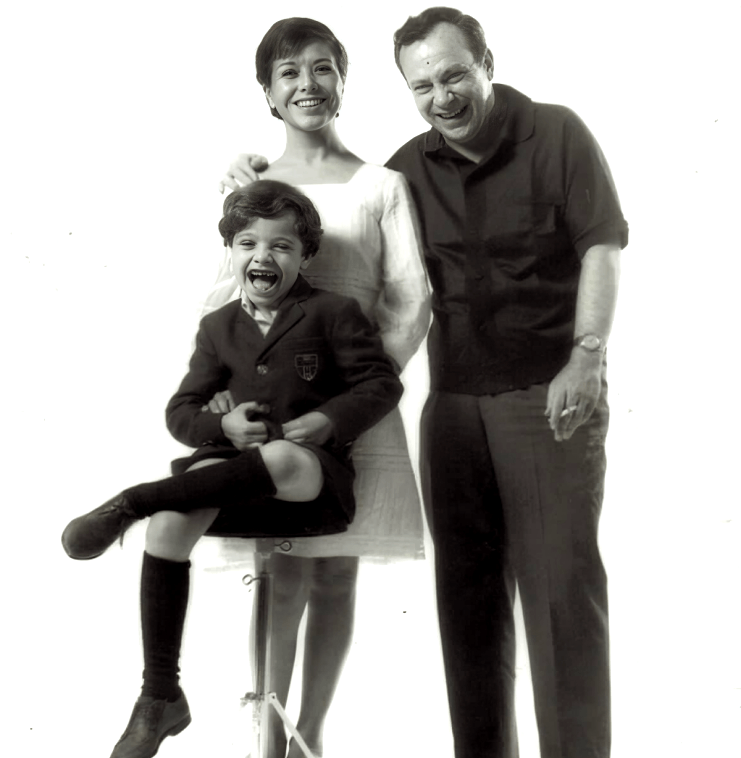
Arturo O’Farrill with his parents Lupe Valero and Chico O’Farrill

Arturo’s musical education

The artist studied at several top academic institutions, including LaGuardia High School of Music and Art, the Manhattan School of Music, the Brooklyn College Conservatory of Music, and the Aaron Copland School of Music. He clarified that he did not graduate from the Manhattan School of Music, but he does recognize that it was there that he began to truly understand music.

In the case of LaGuardia High School for Music and Art, his parents had to withdraw him because he never attended classes, as he was not interested in history and mathematics, but only in music. He was then enrolled in City As School and got his GED (General Educational Development). Later, at Brooklyn College, he met Professor Teófilo Ruiz, who taught him the importance of forging a social and political conscience, which had a profound impact on his development as a professional and a person. 

While working as a musician, Arturo earned his bachelor’s and master’s degrees at Queens College. He spent some time playing, studying, and teaching until Wynton Marsalis, artistic director of the jazz at Lincoln Center program, asked him to create an orchestra for the venue, which they called the Lincoln Center Jazz Orchestra. He worked there for five years until he knew he had to continue his career elsewhere.

Chico O’Farrill Afro-Cuban Jazz Orchestra

After playing along with the great jazz star Carla Bley and Machito, Arturo finally joined his father’s orchestra, the Chico O’Farrill Afro-Cuban Jazz Orchestra, at a time when they were creating many jingles for commercials. When the world was rediscovering Chico, his health was unfortunately in bad shape, so his son stood by his side to support him any way he could.

In the end, he had no other option than taking charge and, together with the rest of the musicians, recording the band’s last three albums. One thing that he had very clear when he took up this challenge was that he did not want to compete with his dad or be constantly compared to him, though he knew it was inevitable. In fact, after doing a concert with him, when he came home, he found a voicemail from someone saying: “You don’t have a fortieth of your father’s talent. In fact, I’ll see you picking through garbage.”

Arturo O'Farrill with the Grammy
Arturo O’Farrill posing with the Grammy he won in 2023

Despite the hurtful comments, it was liberating for him to hear it, since someone had the stupidity to compare him with his father when it did not make sense. That pushed him to use his own compositions in the orchestra, continue creating new music, and have a completely different path from Chico O’Farrill. Unknowingly, the man who insulted him had helped him throw off the mental and artistic chains that bound him by fear of being compared.

Afro Latin Jazz Orchestra

Although Arturo was sorry for leaving Chico’s orchestra, he knew he had to make many changes. One of them was that he wanted intergenerational musicians, more races and nationalities. This also led him to change the name of “Afro-Cuban Jazz Orchestra” to “Afro Latin Jazz Orchestra” because, from his point of view, Latin music must include not only Cuba, but also countries such as Puerto Rico, Colombia, Bolivia, Peru, Mexico, and many others.

Despite these changes, Arturo and his orchestra kept playing every Sunday at the prestigious Birdland jazz club, something they had been doing since 1997, before the death of Chico O’Farrill. However, 29 years after that important proposal, Arturo announced on social networks that he would not perform there anymore, but he was very grateful to the staff and management of Birdland for the opportunity they gave him over so many years.

When we wanted to know the reasons for this decision, the artist just told us that this was largely due to “creative and financial disagreements that were making the working environment very toxic,” so the best thing was to cut to the chase and seek pastures new. He assures us that his words do not want to disrespect anyone and that he wishes the best for both the club and its staff, who always treated him and his musicians the best. 

Eddie and Arturo
Eddie Palmieri and Arturo O’Farrill some years ago

Afro-Latin Jazz Alliance and Casa Belongó

The musician also wanted to talk about his foundation Afro Latin Jazz Alliance, which seeks to educate, play, and preserve. The project has grown so much that today it has 49 teachers, 21 public schools, and a preprofessional program known as “The Fat Cats,” which aims to help young musicians join an orchestra and exploit their talent as never before. 

After several formal requests, New York City finally agreed to construct a building with affordable apartments for residents of East Harlem and the first floors are destined to house Casa Belongó. These spaces will include a theater, a jazz club, a healthy restaurant, rehearsal rooms, classrooms, and much more. “Imagine that the power of our Latino community will physically change New York City history,” she concluded on this topic. 

Read also: Music reviewer and photojournalist Ricky Ricardo describes his work from the last 35 years

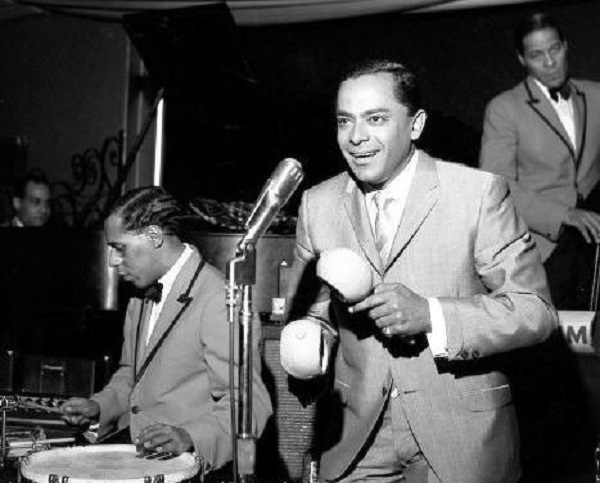
Tito Rodríguez The Unforgettable “Gentleman of Salsa”

A journey through the life and legacy of Pablo Rodríguez Lozada, the voice that defined an era between mambo and bolero.

Pablo Rodríguez Lozada, known worldwide as Tito Rodríguez, was born on January 4, 1923, in Santurce, Puerto Rico. From early childhood, young Tito displayed a natural affinity for Caribbean rhythms, organizing the ensemble Sexteto Nacional alongside his lifelong friend, Mariano Artau.

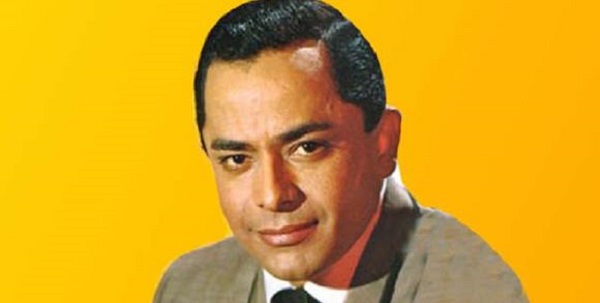
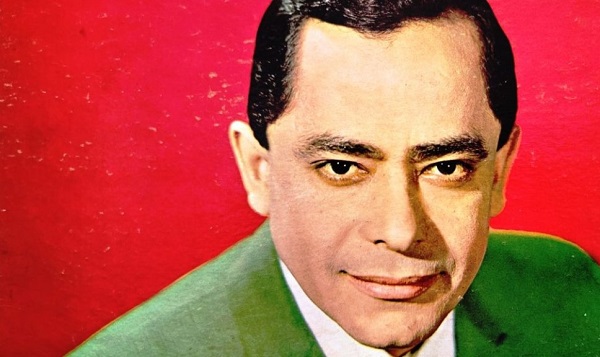
Pablo Rodríguez Lozada, conocido mundialmente como Tito Rodríguez

The Early Steps of a Prodigy

At the age of 13, his professional career began to take shape when he joined Conjunto Típico Ladí (also known as Conjunto de Industrias Nativas), led by Ladislao Martínez. Shortly after, he joined the Cuarteto Mayarí under the direction of Plácido Acevedo, where he played maracas and sang second vocals. Although this stint lasted only four months and left no studio recordings, it was fundamental to his musical development.

In 1939, at just 16 years old, Tito emigrated to New York City with hopes of carving out his own musical path. His first jobs in the Big Apple included collaborations with his brother Johnny Rodríguez’s orchestra and recordings with Cuarteto Marcano.

After passing through prestigious groups like Cuarteto Caney and the orchestras of Enric Madriguera and Xavier Cugat, he had to pause his rising career in 1945 to serve in the U.S. Army.

El legado de Tito Rodríguez es analizado este domingo en el Viejo San Juan. (Foto UA Latino)

The Rise of the “Mambo Devil”

Upon his discharge, Cuban pianist José Curbelo recruited him for his band. It was at the China Doll nightclub where Tito met Japanese-American chorus girl Takeku Kunimatsu (Tobi Kei), who would become his wife and lifelong partner.

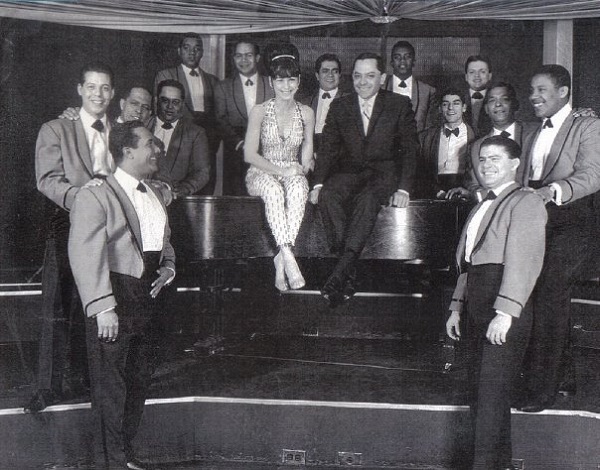
In 1948, Tito founded his own group: the Mambo Devils. During the height of the mambo craze, Rodríguez entered into a legendary musical rivalry with Tito Puente and Machito’s orchestra.

Under the Tico Records label, he renamed his group Los Lobos del Mambo. Ever conscious of the importance of formal training, he enrolled in the Juilliard School of Music, where he studied percussion, vibraphone, and xylophone.

Un recorrido por la vida y el legado de Pablo Rodríguez Lozada, la voz que definió una era entre el mambo y el bolero

Reinvention: From Mambo to Bolero

In 1953, he signed with RCA Victor, formally establishing the name Tito Rodríguez and his Orchestra. Years later, in 1960, he achieved massive mainstream success with United Artists and the album Live at the Palladium.

However, in 1963, an artistic union dispute prevented him from performing with his usual musicians. Refusing to back down, he took on the challenge of radically shifting his style: he traded the frenzy of mambo for the intimacy of boleros accompanied by a string orchestra. The result was the album From Tito Rodríguez with Love, a commercial phenomenon that established him as an unparalleled romantic crooner.

Return to Puerto Rico and the Beginning of the End

After dissolving his orchestra in 1966 due to contractual issues, he returned to Puerto Rico to star in his own television program. However, nostalgia and his enduring passion brought him back to New York for the record Estoy como nunca.

Tito Rodriguez era excelente tanto en guarachas como en boleros. Esto lo convirtió en uno de los artistas más versátiles de la época.

It was in 1967 when the first symptoms of leukemia appeared. Despite the diagnosis, Tito continued to work. In 1971, he founded his own label, TR Records, releasing the iconic album Inolvidable (Unforgettable).

A Final Farewell on Stage

In 1972, he celebrated 25 years in the industry with a show at the El Tumi club in Lima, Peru, alongside Lucho Macedo’s orchestra. This live recording would prove to be a premonition of his end.

Ignoring medical advice, he gave his final performance at Madison Square Garden on February 2, 1973, alongside Machito’s orchestra. During the show, his health failed, and he had to be hospitalized. Finally, on February 28, 1973, Tito Rodríguez passed away in New York in the arms of his wife.

Per the singer’s express wish, his remains were returned to Puerto Rico. At his funeral, legendary figures of the music world paid their respects, including his old rival, Tito Puente. Today, his ashes rest alongside those of his wife, while his voice continues to resonate as one of the most elegant and versatile pillars in the history of Latin music.

Also Read: Tito Rodríguez, Jr. “The Palladium legacy lives on”

10th Annual Salsa Festival in Cuba: A Milestone Between Stage Lights and the Shadow of Crisis

The event founded by Maykel Blanco celebrates a decade of history amidst blackouts and inflation that make access difficult for the local public.

Havana. What began in 2016 as a personal dream for musician Maykel Blanco has evolved into Cuba’s most significant cultural tourism event for the genre.

As the Salsa Festival reaches its 10th edition, it has succeeded in uniting top-tier orchestras under a single project, fostering an organic exchange between local dancers and international visitors who travel specifically for the occasion.

Festival de la Salsa 2026

However, the announcement of this year’s celebration scheduled for February 26 to March 1 at Club 500 comes at a time of extreme fragility for the country.

While the government promotes the festival as a showcase of “credibility and growth,” the Cuban population is grappling with a profound economic crisis characterized by daily blackouts, shortages of basic goods, and a steady decline in quality of life.

Tributes and a Star-Studded Lineup

This special edition will pay tribute to the 70th anniversary of Elito Revé y su Charangón, an iconic institution of popular dance music. Organizers announced in a press conference that the event will feature a strong international presence, including foreign dance instructors and DJs.

Starting Friday, February 27, four high-caliber orchestras will perform each night. Among the confirmed headliners are:

  • Los Van Van
  • Alexander Abreu y Havana D’Primera
  • Adalberto Álvarez y su Son
  • Alain Pérez
  • Willy García (Special guest from Colombia, former vocalist of Grupo Niche).
Cartel Oficial de los Artistas que estarán en la 10ma edición de el festival de la salsa en Cuba

The Economic Barrier to Entry

Despite its cultural relevance, ticket prices have sparked debate. Presale tickets at Cine Yara were set at 800 Cuban Pesos (CUP), a price that will rise to 1,000 CUP per night at the venue.

In a context of stagnant wages and runaway inflation, these figures are out of reach for many everyday Cubans, highlighting the gap between official propaganda and daily reality.

Main Concert Schedule

Date Featured Artists
Thursday, Feb 26 Opening Gala: Issac Delgado, Los Muñequitos de Matanzas, and Eduardo Sandoval.
Friday, Feb 27 Los Van Van, Manolito Simonet y su Trabuco, Papucho y Manana Club.
Saturday, Feb 28 Maykel Blanco y su Salsa Mayor, Adalberto Álvarez y su Son, Alain Pérez, and Willy García.
Sunday, March 1 Alexander Abreu y Havana D’Primera, Haila Mompié, and Elito Revé y su Charangón.
PROGRAMACIÓN OFICIAL (Horarios) de todas los conciertos que brindaremos en EL Festival dela salsa en cuba en su 10ma Edición

Beyond the Music: An Immersive Experience

The festival—driven by MB Producciones, ARTEX, and the Paradiso Agency—is not limited to evening performances (which begin at 9:00 p.m.). The agenda also includes:

  • Dance Workshops: Classes in Casino (Cuban salsa), Rumba, Son, and the popular “Reparto” genre, taught by prestigious instructors.
  • Pool Parties: Meet-and-greets with national and international DJs at the Memories Miramar Hotel.
  • Academic Forums: Lectures on the evolution of popular music and the legacy of figures like Elio Revé Matos.
Presentadores Oficiales de la 10ma edición del Festival de Salsa en Cuba

Once again, the Salsa Festival presents itself as a musical oasis on an island mired in uncertainty, leaving open the question of whether art can truly build bridges in the midst of such a structural crisis.

Also Read: Compay Segundo The Eternal Patriarch of Cuban Son

  • « Go to Previous Page
  • Page 1
  • Interim pages omitted …
  • Page 47
  • Page 48
  • Page 49
  • Page 50
  • Page 51
  • Interim pages omitted …
  • Page 294
  • Go to Next Page »

International Salsa Magazine (ISM) is a monthly publication about Salsa activities around the world, that has been publishing since 2007. It is a world network of volunteers coordinated by ISM Magazine. We are working to strengthen all the events by working together.