• Skip to primary navigation
  • Skip to main content

International Salsa Magazine

  • HOME
  • Previous editions
    • 2026
      • ISM / June 2026
      • ISM / May 2026
      • ISM / April 2026
      • ISM / March 2026
      • ISM / February 2026
      • ISM / January 2026
    • 2025
      • ISM / December 2025
      • ISM / November 2025
      • ISM / October 2025
      • ISM / September 2025
      • ISM / August 2025
      • ISM / July 2025
      • ISM / June 2025
      • ISM / May2025
      • ISM / April 2025
      • ISM / March 2025
      • ISM / February 2025
      • ISM / January 2025
    • 2024
      • ISM / December 2024
      • ISM / November 2024
      • ISM / October 2024
      • ISM / September 2024
      • ISM / August 2024
      • ISM / July 2024
      • ISM / June 2024
      • ISM / May 2024
      • ISM / April 2024
      • ISM / March 2024
      • ISM / February 2024
      • ISM / January 2024
    • 2023
      • ISM / December 2023
      • ISM / November 2023
      • ISM / October 2023
      • ISM – September 2023
      • ISM – August 2023
      • ISM July 2023
      • ISM Edition June 2023
      • ISM – May 2023
      • ISM April 2023
      • ISM March 2023
      • ISM February 2023
      • ISM January 2023
    • 2022
      • ISM December 2022
      • ISM November 2022
      • ISM October 2022
      • ISM September 2022
      • ISM August 2022
      • ISM July 2022
      • ISM June 2022
      • ISM May 2022
      • ISM February 2022
      • ISM January 2022
    • 2021
      • ISM December 2021
      • ISM November 2021
      • ISM October – 2021
      • ISM September 2021
      • ISM August 2021
      • ISM July 2021
      • ISM May 2021
      • ISM April 2021
      • ISM June 2021
      • ISM March 2021
      • ISM February 2021
      • ISM January 2021
    • 2020
      • ISM December 2020
      • ISM November 2020
      • ISM October 2020
      • ISM September 2020
      • ISM August 2020
      • ISM July 2020
      • ISM June 2020
      • ISM May 2020
      • ISM April 2020
      • ISM March 2020
      • ISM February 2020
      • ISM January 2020
    • 2019
      • ISM December 2019
      • ISM November 2019
      • ISM October 2019
      • ISM Septembre 2019
      • ISM August 2019
      • ISM July 2019
      • ISM June 2019
    • 2016
      • ISM December 2016
      • ISM November 2016
      • ISM October 2016
  • Spanish
  • Download Salsa App
    • Android
    • Apple

Search Results for: orchestra

Puerto Rican Trombonist and percussionist Arturo Vazquez Jr. from Projecto 7 Salsa & Latin Jazz Band

Trombonist and percussionist Arturo Vazquez Jr. is joining us today to talk about his career and his current band, Projecto 7. This salsa and jazz band features an interesting mix of Latin genres and is often invited to popular local venues in Illinois, where Arturo and his bandmates live, including Two Brothers Roundhouse, Joe’s on Weed, and MCM Pub.

Here is a summary of how much we talk about his early years, the foundation of the band, and his current professional activities.

Arturo Vazquez singing
Percussionist and trombonist Arturo Vazquez Jr singing live

Arturo’s beginnings in music while he was still a child 

As usual, before delving into other issues, we wanted to know a little about Arturo’s beginnings in music to establish a chronology, and he told us that he expressed interest in this world when he was just a 10-year-old boy. His grandfather was a musician, and he and his colleagues often organized parties in the municipality of Patillas, Puerto Rico, where the family lived, and jíbara music was always present in everyday life.

The first instruments he learned to play were the timbales and the bongo, but after his grandfather passed away, he was given the accordion his grandfather had played, although unfortunately it did not really catch his attention. That was why he remained focused on percussion. Furthermore, knowing how important it is to get a proper academic education, he studied at the Free School of Music in Puerto Rico for a time, but due to the financial difficulties that his parents were experiencing at the time, they decided to move with their son to New York.

In the mentioned city, he continued his percussion studies at the School of Liberal Arts, being Willie Colón and Tito Puente his greatest inspirations to become a professional musician.

Years later, specifically in the 1970s, his parents found work in Chicago and moved there. That was where Arturo studied high school and met many aspiring percussionists, so the competition was brutal. Therefore, the orchestra’s conductor offered him the trombone spot and gave him a large bass trombone. 
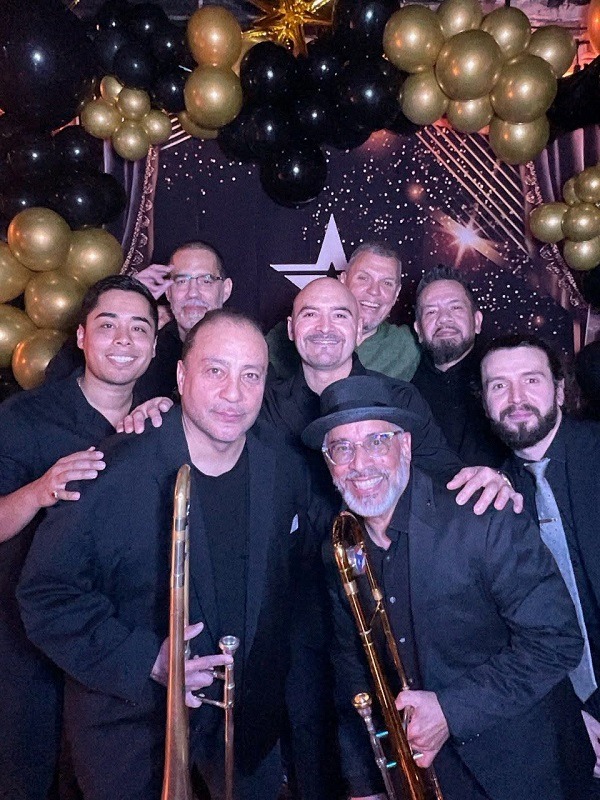
projecto 7 led by Arturo
This is Projecto 7 Salsa & Jazz Band led by Arturo Vazquez

After he graduated, he began studying at the University of Illinois in Chicago, where he learned to read music and improvise with Professor J.J. Johnson during symphony orchestra concerts. Once he had gained a more or less acceptable experience in trombone practice, he remembered why or who inspired him to play in the first place, so he began playing in way Willie Colón would. That was not very common in his time, since most trombonists were classical musicians, but he did not care at all, so he started to entirely focus on salsa.

At the same time, he also specialized as a bomba and plena percussionist, so he trained at the Segundo Ruíz Belvis Cultural Center with maestro Rafael Cepeda, better known as “The Patriarch of Bomba and Plena” in Puerto Rico, who traveled to Chicago to teach percussion alongside AfriCaribe, a nonprofit cultural organization led by bandleader and singer Evaristo “Tito” Rodriguez. That was how Arturo also learned to play the pandereta and the barril, but with a focus on bomba and plena.

Professional opportunities before Projecto 7

Before creating his own group, Arturo gained considerable musical proficiency. In the area where he lived in Chicago, there were many gangs recruiting young people to sell drugs, resulting in the emergence of numerous initiatives that sought to keep kids off the streets such as El Congreso Puertorriqueño, whose main goal was to introduce them to Latin music. It was then that the artist met a record label called Caribe, thanks to which he made his first recording as a trombonist with the Orquesta La Unión. This was essentially one of several orchestras that served as a warm up for major groups and artists such as Hector Lavoe, Willie Colón, Ismael Miranda, Ray Barretto, and many others.

Projecto 7 playing at the Cubby Bear
Projecto 7 Salsa & Jazz Band playing at the Cubby Bear in Chicago

Before becoming a soloist, he put aside his career as a musician for more than 10 years because it was not enough to support his family, which already included two daughters. During those years, he studied psychology at the University of Chicago, studied therapy and rehabilitation at the University of Puerto Rico, and taught psychology and therapy at the Elgin Community College.

He worked in Puerto Rico from 1981 to 1988, when he moved to Miami to test the atmosphere in the city, but competition among Latino, especially Cubans, made it impossible for him to make a name for himself there, so he went to try his luck in Elgin, located about 31 miles from Chicago, where he eventually worked as a professional therapist and psychology professor. 

Projecto 7 Salsa & Latin Jazz Band

His group, Projecto 7, started at a parranda in which Arturo and Los Hnos Rodriguez in Elgin. The artists invited him to join them and propose new things for the project. When the brothers’ orchestra disbanded, Arturo received a call from a former member of Orquesta La Selecta, Joe González, who moved to Elgin to care for his sick father. González proposed Arturo and other musicians to form a new group called Projecto 7, since there would be seven artists in the group.

Since then, they have made efforts to keep the same lineup of musicians, including musical director, pianist, and bassist Juan Rivera; trombonist Tony Morales; singer Ricky Rodríguez; and bongo player Luis Angel Palermo.

Read also: Steel pan percussionist Brad Shores shows us the best of Caribbean music in Florida

Angie Machado, “El Colorao” The Trumpeter’s Trumpeter and a Living Musical Legend

A legacy carved in brass and talent.

The history of Latin music especially Salsa and Afro-Cuban Jazz could never be written without mentioning the bright, precise, and melodic tone of a trumpet that has shaped the course of countless hit records.

Angie Machado Un legado tallado en bronce y talento

That signature sound belongs to one man: Ángel Vicente Machado Santiago, known universally throughout the artistic community as Angie Machado.

On June 23, 2026, the music world dressed to the nines to celebrate the birthday of this titan. Born in 1954 in the picturesque municipality of Arroyo, Puerto Rico, Angie Machado has not only witnessed the evolution of tropical music over the last five decades; he has been one of its foundational architects.

His career stands as living proof that musical genius, when cultivated with rigorous discipline, transcends passing trends and becomes legendary.

The Forging of a Virtuoso

His path to excellence was no accident. From a very young age, Angie understood that a natural gift for music required a solid vehicle for expression. His formal training began at the prestigious Escuela Libre de Música, a breeding ground for talent in Puerto Rico, where he developed the foundational skills to understand the language of brass and wind instruments.

Later, he made the leap to the Conservatory a space where, beyond musical theory, he absorbed a philosophy of life: discipline as the only route to mastery.

Angie Machado y Dj Andy Rodriguez

Under the tutelage of rigorous maestros and fueling his growth by analytically listening to history’s greatest trumpet virtuosos, Machado understood that music is not just played; it is studied, reflected upon, and felt deeply.

Those grueling hours of constant practice, where the sound of his trumpet filled every corner, became the bedrock of the “old school” style that distinguishes him today.

That school didn’t just teach notes; it taught phrasing, style, respect for the arrangement, and, above all, the intuition to know when the trumpet should lead and when it should elegantly embrace the melody.

The Trumpet That Defined an Era To speak of Angie Machado is to speak of the history of Salsa itself. His talent was never confined to classrooms or local bands; he rapidly became an indispensable session musician.

If you look at the liner notes of the most iconic albums that defined the “Golden Era” of Salsa, you are almost guaranteed to find his name in the credits.

Dj Augusto Felibertt y Angie Machado

His ability to adapt to diverse styles from the required grit in Willie Rosario’s orchestra or the explosiveness of Tommy Olivencia, to the subtle elegance demanded by Gilberto Santa Rosa or the unmatched swing of Bobby Valentín positioned him as the most sought-after trumpet player in the industry.

The roster of icons with whom he has shared the stage and the studio is, quite simply, staggering. He has been the musical partner-in-crime to Cheo Feliciano, the soul of Frankie Ruiz’s recordings, the technical and creative backbone for Eddie Palmieri, and a brother-in-arms to Oscar D’León.

His trumpet has traveled the world, backing maestros like Justo Betancourt, Andy Montañez, Lalo Rodríguez, Paquito Guzmán, and Viti Ruiz, as well as a powerhouse of artists ranging from traditional sounds to contemporary fusions, including Luis Enrique and Alex León.

A Living Legend What makes Angie Machado a truly singular figure is not just his résumé, but his enduring relevance. In an industry in constant flux, he has preserved the absolute integrity of his sound.

His “privileged old-school” pedigree doesn’t mean he is stuck in the past; it means he possesses a technical foundation so robust that it allows him to collaborate seamlessly with any generation of musicians.

To those who know him, Angie is not just the trumpet player who can nail a recording session in minutes with breathtaking precision; he is a silent mentor a man who has watched the decades roll by while maintaining the same humility and love for the instrument he had when he first started out in Arroyo.

As we celebrate another year of his life, we are not just celebrating an exceptional musician; we are honoring a living piece of our cultural heritage.

Angie Machado reminds us that behind every great song that has made us dance or cry, there is a human being whose dedication and discipline have turned the brass of a trumpet into pure poetry.

Also Read: The King of Bass Mr. Bobby Valentin

Phil Robinson Blends Sensitivity and Tradition in His New Single “Allí Me Enamoré”

A Romantic Salsa Gem That Transforms the Bond of Friendship Into an Honest Declaration of Love

Romantic salsa adds a new gem to its repertoire with the release of “Allí Me Enamoré” (“There, I Fell in Love”), the latest single by Phil Robinson.

Phil Robinson une sensibilidad y tradición en su nuevo sencillo “Allí Me Enamoré”

It is a track filled with sensitivity, nostalgia, and emotion that aims to reconnect the audience with the genre’s narrative essence.

Composed by Puerto Rican songwriter Andy Roldán renowned for his ability to translate intimate feelings into deeply human lyrics this song unfolds as a love story that blossoms from the complicity of a sincere friendship into an inevitable confession of the heart.

From its opening verses “Hola amiga, ahora que al fin puedo mirarte a los ojos…” (“Hello my friend, now that I can finally look into your eyes…”) the track draws us into an intimate, almost confessional conversation, where the protagonist opens the pages of his soul to reveal a long-held feeling.

The lyrics journey through memories, silences, glances, and restrained emotions, building a narrative that many listeners will easily identify with: that exact moment when friendship is no longer enough because love has already taken root.

Phil Robinson delivers a warm and honest performance, anchoring every phrase with an emotional weight that highlights the depth of the lyrics. His voice successfully balances tenderness and passion, turning the song into an intimate, almost cinematic experience where every word feels lived in real time.

One of the greatest achievements of “Allí Me Enamoré” is its capacity to bridge the present day without abandoning salsa traditions. The contemporary reference to the everyday act of “opening your profile where I can see you” embeds the song into the emotional language of the digital age, bringing modernity to a classic story of unrequited love.

The chorus “En las páginas de tu alma, amiga, allí me enamoré” (“In the pages of your soul, my friend, there I fell in love”) stands as the poetic centerpiece of the composition: a delicate metaphor that transforms the human soul into an open book, an intimate territory where true love is born. This imagery gives the track its own unique identity, making it a memorable piece within today’s romantic repertoire.

La salsa romántica suma una nueva joya a su repertorio con el lanzamiento de “Allí Me Enamoré”, el más reciente sencillo interpretado por Phil Robinson.

Musically, the single is built upon an elegant melodic foundation, remaining faithful to the core DNA of romantic salsa, with arrangements designed to embrace the lyrics without stealing the spotlight.

The instrumentation subtly accompanies the emotional development of the story, allowing both the vocals and the message to breathe naturally.

With this release, Phil Robinson reaffirms his commitment to a style of salsa that not only invites people to dance but also to feel, remember, and confess. “Allí Me Enamoré” is a song for those who have loved in silence, for those who discovered too late that a friendship concealed a deep love, and for those who still believe in the power of a great story sung with absolute truth.

THE MUSICAL CAREER OF PHIL ROBINSON

Phil Robinson is a sonero, songwriter, performer, and director of his own orchestra. His charisma and his entrepreneurial, creative, and positive attitude allow everyone who speaks with him to enter his world, captivated by his love for music and his passion for learning, evolving, and improving every day. Robinson has loved the arts from a very young age.

Orquesta Yaré was the dream of a young man who, like Phil, wanted to make it big in the world of Latin music. It was founded and directed by Leroy Gutiérrez (conguero, timbalero, and bongosero), featuring original tracks alongside his brothers Johnny (bongosero) and Loui (trumpeter).

At the time, Leroy was a percussionist, but he also taught himself to play the piano. Gutiérrez invited Phil to join the group to turn him into a star. Yaré was a 12-piece orchestra, and all of their music was entirely original.

Phil Robinson
Phil Robinson

During a performance at Landis Park in Vineland, New Jersey, Orquesta Yaré backed the legendary Néstor Sánchez and Larry Harlow, the “Judío Maravilloso” (The Marvelous Jew) of the Fania All-Stars, who attended as guest artists. For Phil, it was a dream come true to share the stage with icons he so deeply admired. Years after that historic performance, Robinson reunited with Larry Harlow in Los Angeles and was able to share a photograph of that very first experience together.

As his musical journey evolved, he became the lead vocalist for Henry Mora and the All Star Salsa Orchestra of Los Angeles, while also collaborating with various local bands.

From there, he went on to become the lead voice for Eric Matos and Orquesta La Caliente, as well as Papo Rodríguez y La Sorpresa.

With the latter group, he recorded two original songs composed by Puerto Rican pianist Nelson Montalvo: “Fantasía” and “Mi Regalo,” which were included in the 2005 album titled Oye Salsa Sabor y Clave.

During Phil’s tenure with Papo Rodríguez, the renowned Panamanian singer Camilo Azuquita arrived in the city, and the band transformed into Azuquita y su Melao.

Phil served as his lead vocalist and primary background singer for several years, performing at prestigious venues such as the Hollywood Palladium and sharing the stage with iconic industry figures. Thanks to these valuable collaborations, Robinson fully polished his signature style.

Phil Robinson es sonero, compositor, ejecutante y director de su propia orquesta

Throughout his career, Phil has shared the stage with legends of the stature of Adalberto Santiago, Tony Vega, Herman Olivera, Yolanda Rivera, Meñique, Luigi Texidor, Wichy Camacho, Cuban singer Franco, Willie Chirino, and Celia Cruz, among many others.

After seven years of dedicated work, Phil completed and released his latest musical project titled Entre Dos Mundos (Between Two Worlds), produced by Arturo Solar.

This production features classic compositions from renowned authors such as Armando Manzanero, Ted Koehler, Harold Arlen, Virgilio and Homero Expósito, Enrique Benítez, Vicente Garrido Calderón, and Jesús Alejandro, alongside original tracks penned by Phil himself.

Robinson notes that, starting in 2023, he became a TV spokesperson and the MC (master of ceremonies) for the San Juan Puerto Rican Festival.

KCAL Channel 9 LA KCAL Channel LA Promoviendo el Festival Boricua en KCAL 9 Los Angeles

Here at Malanga Radio, we celebrate this premiere as proof that romantic salsa remains alive, evolving with new voices, new pens, and new emotions.


Allí Me Enamoré” is now available on all digital platforms.

Chechy Rosado

Public Relations

+57 301 685 2655

Barranquilla – Colombia

Also Read: Phil Robinson Sonero, composer and performer bandleader

Rumbon de Caracas

Latin America / Venezuela / Caracas

“El Rumbon de Caracas” is a party that brings together a variety of genres to kick off the holiday season, starting November 12th at the Ciudad Tamanaco Shopping Center (CCCT) in Caracas, Venezuela. The lineup includes Salserin, Francisco Pacheco y su Pueblo, Jonathan Moly, Guaco, and special guest El Gran Combo de Puerto Rico. The event begins at 4:00 pm (16:00). Tickets are available through TicketMundo, with prices ranging from 15,000.01 Bs to 45,000 Bs.

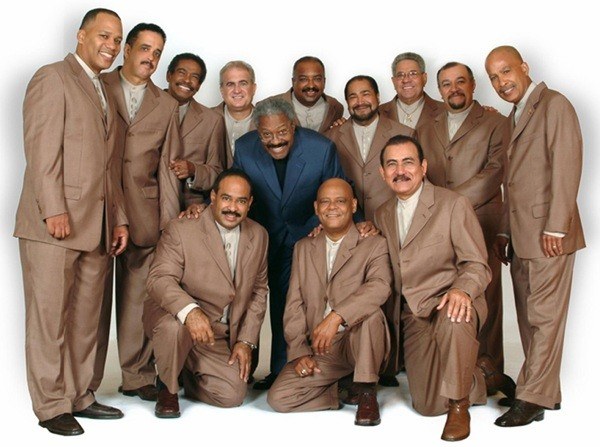
El Gran Combo de Puerto Rico is a Puerto Rican salsa band that is as successful in its home country as it is one of the most well-known throughout Latin America. Unlike other salsa orchestras, particularly those that emerged in New York from the 1960s onward, this group, known as “Mulatos del Sabor,” has always protected its musical timbre from complex innovations and experiments, safeguarding the unique, simple, and rhythmic sound that has characterized it since its founding on May 26, 1962.

Rumbon de Caracas
Rumbon de Caracas

We also have “Guaco,” the Venezuelan orchestra born in the city of Maracaibo, Venezuela, which evolved to become recognized as a Super Band of Venezuela. Influenced by rhythms such as salsa, pop, funk, jazz, and gaita zuliana, its rhythm remains unique and constitutes a style in itself.

Similarly, we have “Salserin,” known as the children’s and youth salsa orchestra formed in Venezuela in 1993, where the musical genres are pop, ballad, Latin, and primarily salsa. This orchestra boasts over 7 million copies of its albums sold worldwide, as well as 11 productions, 6 novels, 1 feature film, 1 radio drama, and more than 50 gold and platinum records.

For more information about tickets, please contact:

  • http://venezuela.ticketmundo.com/Evento/Rumb%C3%B3n-de-Caracas/4574
  • http://clasesdesalsa.net/wp-content/uploads/2011/01/El-Gran-Combo.jpg


Ismael Miranda

North America / USA / New York

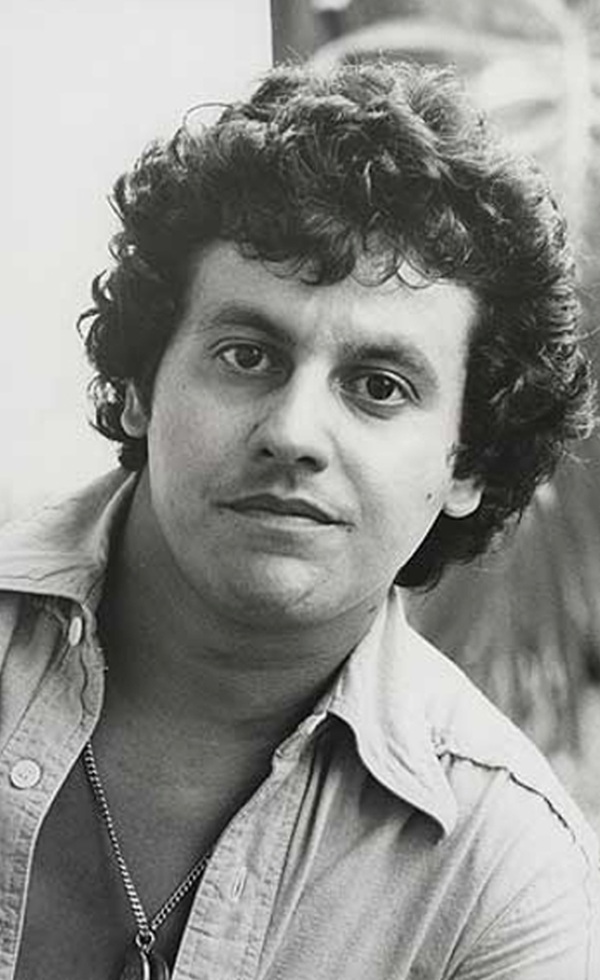
Ismael Miranda was born in the village of Aguada, Puerto Rico, on 20 February 1950. At an early age he moved to New York, where he began his passion for music. In 16, he recorded his first hit song “Rumbón melon” with Joey Pastrana. Then, he became part of the Orchestra Harlow in 1967, with which he achieved success of the song “Abran Paso”.

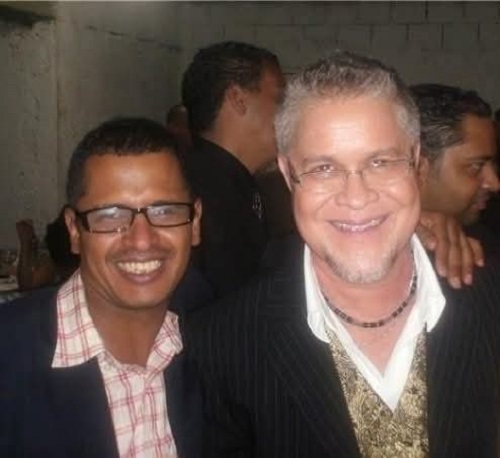
Ismael Miranda
Ismael Miranda

Ismael Miranda - Photo
Ismael Miranda – Photo

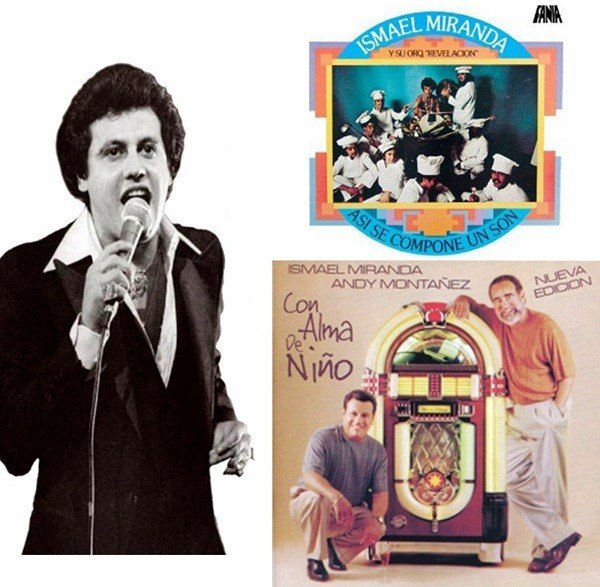
Ismael dabbled solo in 1972, with a new production called “Opportunity”. He also formed his own band called “The Revelation” and recorded another CD called “Así se compone un son”. In addition to having other notable songs, the title track was a resounding success in Latin America, the United States and Europe. The next year saw the light the album In Fa Menor, appearing again the song of the same title, “In Fa Menor”, among other successes.

Miranda continued producing hits, with songs such as “Borinquen tiene Montuno”, “La Cama Vacía”, “La Copa Rota”, “Como Mi Pueblo” y “Las Cuarentas; all were widely broadcast radio media. His compositions also achieved success with pieces like “Señor Sereno”, “Abren Paso”, “Lupe, Lupe” and “Pa ‘Bravo Yo” song made famous by the Cuban salsero, Justo Betancourt.

Ismael Miranda - Collash
Ismael Miranda – Collash

In 1974, the founders of the Fania, Jerry Masucci and Johnny Pacheco, asked Ishmael to form part of the Fania All Stars, where he was dubbed “El Niño Bonito de la Salsa” by being the youngest of all members. In the 80’s, he found success with the Fania, such as “No me digan que es muy tarde” and “Galera tres.”

Also, Ismael created his own label, under which he recorded several productions, including “Por el buen camino”, of which the theme “Careta” was a hit in 1985, plus two holiday productions. The early stage salsa enjoyed its best, and the debut of Miranda with his own band, Orquesta Revelation, could not be timelier.

Ismael Miranda - Photo 1
Ismael Miranda – Photo 1

For 2000, Ismael recorded several productions under the direction of Gilberto Santa Rosa, titled “Vengo con todo”, “Tequila and ron” (which was nominated for a Grammy in 2003), and “Special Edition”. At 2005, reached #1 on the Billboard chart, with the theme “Se fue y me dejó” with Andy Montanez and Cheka, produced by Sergio George. In 2007, he recorded his first Christian production called “Buscando el Camino” in which the theme “Como el Águila” achieved great success. In 2008, he launched the production called “De regreso al son”. For 2011, Ismael recorded his second Christian production “Aferrado a ti”, which issues “Francotirador” and “Sabes que te amo” were big hits.

Ismael Miranda - Photo 2
Ismael Miranda – Photo 2

In 2014, after a successful tour to mark its 45th anniversary in the Salsa, Ismael met with Victor Manuelle, to whom he delegated the production of his latest album “Son 45”. This production is very modern, but retains the classical influence of salsa, and has proven to have the support of the whole public salsero. From his first days on the market, this new album, started climbing positions in the lists of the prestigious music magazine Billboard, with the theme that gives the name to the album “Son 45”.

Ismael Miranda - Photo 3
Ismael Miranda – Photo 3

Entered 2015, The Pretty Boy of Salsa positioned in the first place with the same subject, under the category “Air Play” magazine, the second member of the Fania All-Star to reach the #1 position for the second time, place before conquered only by the Guarachera del Mundo, Celia Cruz. Ismael made history again when launching his second promotional theme of this production, “Bajo, piano and bongo” again ranked at #1 on the Billboard charts in the same category, becoming the most #1’s has reached among members of Fania. As if that were not enough, this production has also been nominated for a Latin Grammy in the category “Best Salsa Album”.

Ismael Miranda - Photo 4
Ismael Miranda – Photo 4

During the course of his great career, Miranda has recorded more than 20 albums and has performed with notable artists such as Nicky Marrero, Hector “Bomberito” Zarzuela, Reinaldo Jorge, Ismael Quintana, Willie Colon, Ray Barreto and Luis ‘Perico’ Ortiz.

Ismael Miranda - Flyers
Ismael Miranda – Flyers
  • « Go to Previous Page
  • Page 1
  • Interim pages omitted …
  • Page 13
  • Page 14
  • Page 15
  • Page 16
  • Page 17
  • Interim pages omitted …
  • Page 161
  • Go to Next Page »

International Salsa Magazine (ISM) is a monthly publication covering salsa activities around the world and has been publishing since 2007. It is a worldwide network of volunteers coordinated by ISM Magazine. Together, we work to strengthen salsa events around the world.