• Skip to primary navigation
  • Skip to main content

International Salsa Magazine

  • HOME
  • Previous editions
    • 2026
      • ISM / March 2026
      • ISM / February 2026
      • ISM / January 2026
    • 2025
      • ISM / December 2025
      • ISM / November 2025
      • ISM / October 2025
      • ISM / September 2025
      • ISM / August 2025
      • ISM / July 2025
      • ISM / June 2025
      • ISM / May2025
      • ISM / April 2025
      • ISM / March 2025
      • ISM / February 2025
      • ISM / January 2025
    • 2024
      • ISM / December 2024
      • ISM / November 2024
      • ISM / October 2024
      • ISM / September 2024
      • ISM / August 2024
      • ISM / July 2024
      • ISM / June 2024
      • ISM / May 2024
      • ISM / April 2024
      • ISM / March 2024
      • ISM / February 2024
      • ISM / January 2024
    • 2023
      • ISM / December 2023
      • ISM / November 2023
      • ISM / October 2023
      • ISM – September 2023
      • ISM – August 2023
      • ISM July 2023
      • ISM Edition June 2023
      • ISM – May 2023
      • ISM April 2023
      • ISM March 2023
      • ISM February 2023
      • ISM January 2023
    • 2022
      • ISM December 2022
      • ISM November 2022
      • ISM October 2022
      • ISM September 2022
      • ISM August 2022
      • ISM July 2022
      • ISM June 2022
      • ISM May 2022
      • ISM February 2022
      • ISM January 2022
    • 2021
      • ISM December 2021
      • ISM November 2021
      • ISM October – 2021
      • ISM September 2021
      • ISM August 2021
      • ISM July 2021
      • ISM May 2021
      • ISM April 2021
      • ISM June 2021
      • ISM March 2021
      • ISM February 2021
      • ISM January 2021
    • 2020
      • ISM December 2020
      • ISM November 2020
      • ISM October 2020
      • ISM September 2020
      • ISM August 2020
      • ISM July 2020
      • ISM June 2020
      • ISM May 2020
      • ISM April 2020
      • ISM March 2020
      • ISM February 2020
      • ISM January 2020
    • 2019
      • ISM December 2019
      • ISM November 2019
      • ISM October 2019
      • ISM Septembre 2019
      • ISM August 2019
      • ISM July 2019
      • ISM June 2019
  • Download Salsa App
    • Android
    • Apple
  • Spanish

Search Results for: record company

Paoli Mejías A Talent Forged in the Streets and Discipline with a New Sound in Latin Jazz

From legendary sideman to the leader of a limitless musical vanguard.

Paoli Mejías is a pivotal figure in the evolution of contemporary percussion, renowned for his seamless fusion of Latin jazz with masterful conga technique.
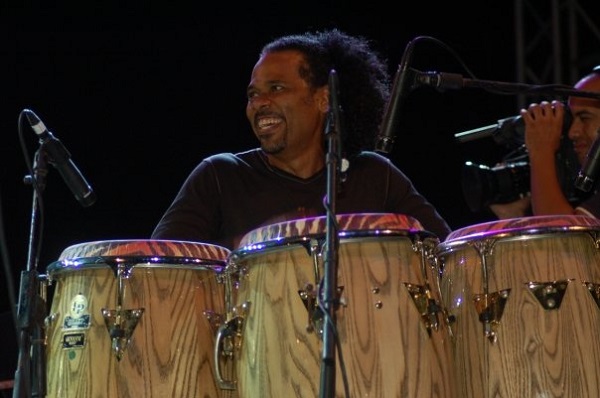
Paoli Mejias: From accompanying legends to leading a musical vanguard without borders

Paoli Mejias: From accompanying legends to leading a musical vanguard without borders

While he is an exceptional multi-percussionist, his command of the congas has established him as one of the most in-demand soloists in the world.

He is distinguished by a melodic style; he doesn’t just keep time he makes the drums “sing,” utilizing precise tuning and astonishing speed.

After touring the globe alongside icons such as Eddie Palmieri, Tito Puente, Seis del Solar, Chick Corea, and Marc Anthony, Mejías has solidified his status as an international benchmark. His vast musical, folkloric, and cultural knowledge positions him today not only as a percussion virtuoso but as a visionary leading his own quintet.

With a career marked by success, Mejías has produced three high-caliber independent albums: Mi Tambor (2004), which received a Latin Grammy nomination, Transcend (2006), and Jazzambia (2008).
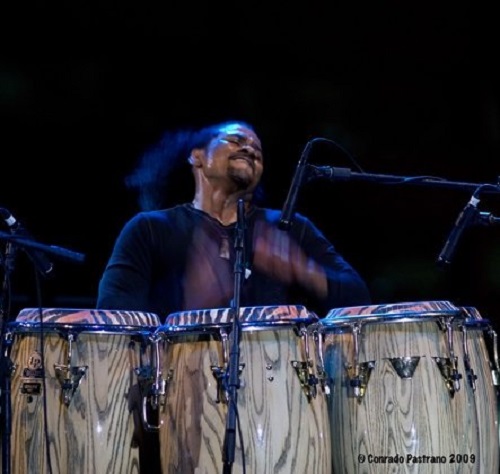
Paoli Mejías, a talent forged in the streets and through discipline

Paoli Mejías, a talent forged in the streets and through discipline

These works have placed the Puerto Rican percussionist at the forefront of the genre, earning glowing reviews in the world’s most influential publications, including JazzTimes, DownBeat, Jazziz, and Modern Drummer.

A Talent Forged in the Streets and Discipline

Born in Río Piedras, Puerto Rico, on March 7, 1970, Paoli discovered his calling at the age of twelve. Inspired by the records of Carlos “Patato” Valdés and Ray Barretto, and the innovation of groups like Batacumbele and Irakere, he bought his first conga and began a self-taught journey.

Without formal teachers, he learned the language of percussion by mimicking the sounds emanating from his favorite vinyl records.
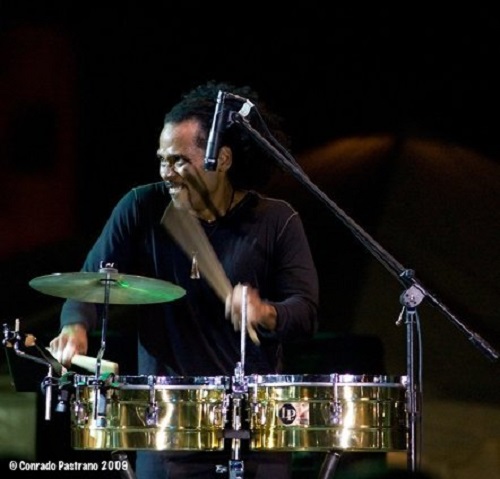
Paoli Mejía with Nuevo Sonido en el Jazz Latino

Paoli Mejía with Nuevo Sonido en el Jazz Latino

His true training took place in the effervescent musical atmosphere of San Juan, absorbing the styles of his mentors in street rumbas.

His professional debut came via Rafú Wagner (former vocalist for Bobby Valentín), and while still a teenager, he was already collaborating with renowned local artists such as José Nogueras, Glenn Monroig, and Charlie Sepúlveda.

The Leap to the Global Stage

His impeccable technique and melodic sensitivity quickly made him the preferred sideman for the greats. For over eight years, he was a key member of maestro Eddie Palmieri’s orchestra, recording on historic projects like Masterpiece/Obra Maestra (with Tito Puente), which won a Grammy Award.
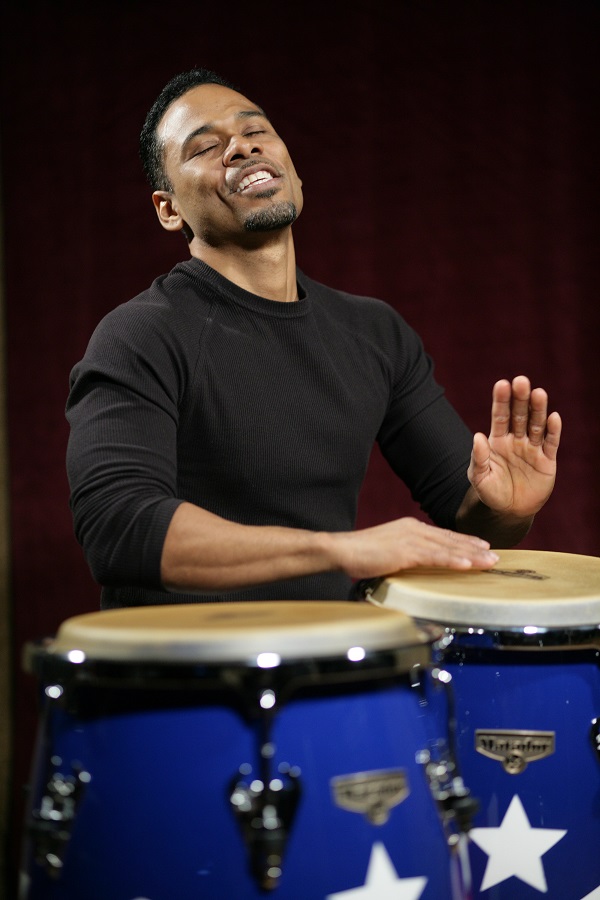
Paoli Mejías is a fundamental figure when discussing the evolution of contemporary percussion

His discography now exceeds 20 commercial productions, including the nominated Acuarela de Tambores.

This exposure to world music enriched his creative fire. As Elmer González noted in Latin Beat: “Through Mi Tambor, Paoli achieves a watercolor of rhythms and textures that make this album one of the best Afro-Latin jazz productions released as a leader, and he aspires to continue a career forged on the stages of the world’s most important festivals.”

Beyond the Traditional Genre

Today, Paoli Mejías’ group offers a style that transcends labels. His proposal fuses the “Salsa Gorda” of the big orchestras with Puerto Rican bomba and plena, incorporating nuances of Greek, Flamenco, Indian, and African music. The result is a vibrant experience where the audience ceases to be spectators and becomes participants.

His versatility was cemented at the Heineken Jazz Festival, where critics highlighted his absolute mastery of minor percussion, timbales, bongos, and ethnic instruments like the Nigerian Udu, hailing him as one of the most complete percussionists of our time.
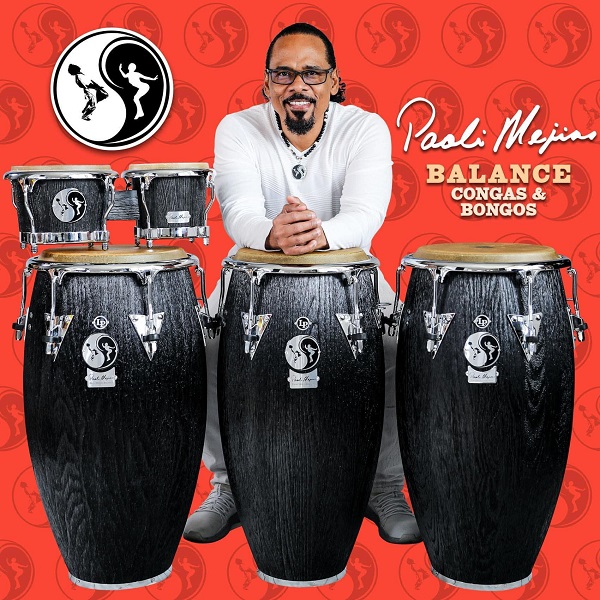
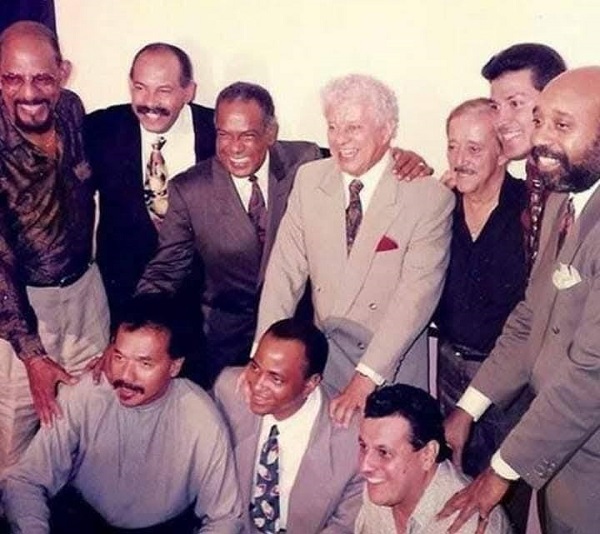
Paoli was there: Eddie Palmieri, Tito Puente, Seis del Solar, Chick Corea and Marc Anthony

Paoli was there: Eddie Palmieri, Tito Puente, Seis del Solar, Chick Corea and Marc Anthony

Beyond his role as a performer, the “Maestro” shares his knowledge by conducting clinics at prestigious institutions such as the University of Washington, the University of New Mexico, and the Puerto Rico Conservatory of Music.

Sponsored by leading brands like Latin Percussion and Sabian, Paoli Mejías continues to elevate the legacy of Latin jazz into exciting new dimensions.

Member of Santana

Paoli Mejías is a world-renowned percussionist who was a member of the band Santana, led by Carlos Santana.

Joining Santana: Paoli joined the group in 2013, taking over the conga chair. His arrival brought an impressive technical energy and rhythmic depth, establishing him as a fundamental piece of the band’s world tours for several years.

Source: Paoli Mejías

Photos: Paoli Mejías Archives / © Martin Cohen

Also Read: Carlos “Patato” Valdés: One of the Greatest Percussionists in Latin Jazz History
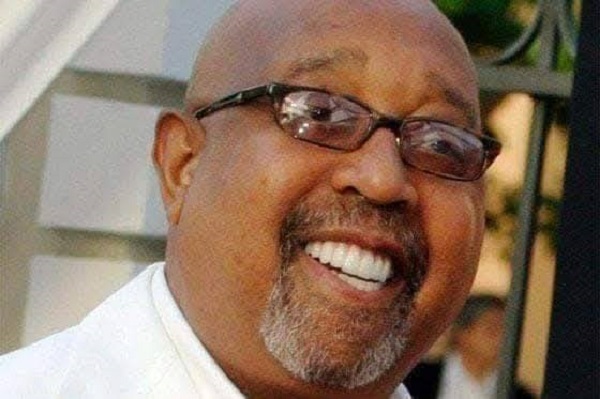
Ralph Mercado: The Visionary Who Turned the Rhythm of the Barrio into a Global Phenomenon

The Giant of New York Salsa

Ralph Mercado was a music promoter and an iconic figure of Salsa and Latin music in New York. More than just an entrepreneur, Mercado was the strategist who took Salsa out of local New York clubs and placed it on the world’s most prestigious stages.

Through his vision, the sound of Latin identity found a commercial language without losing its “street” essence, making him the most influential tropical music mogul of the 20th century.

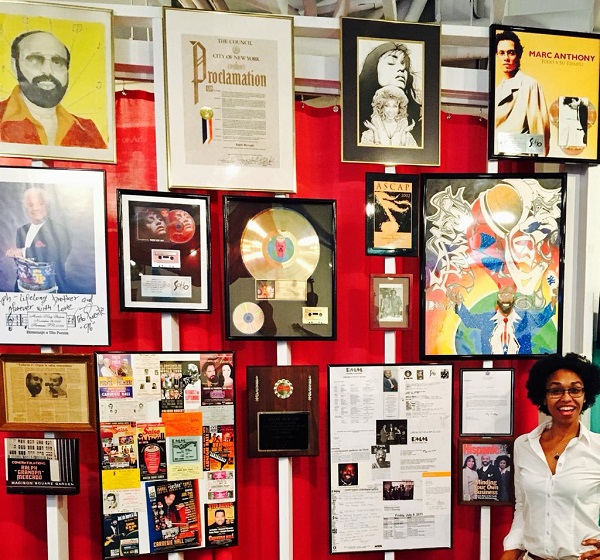
Ralph Mercado, the visionary who transformed the rhythm of the neighborhood into a global phenomenon

Creator of “The Perfect Combination”; Early Days in the Bronx and Brooklyn

Of Puerto Rican and Dominican descent, Mercado was born on September 29, 1941, in Brooklyn. As a mere teenager, he was already organizing parties and dances as the president of a neighborhood social club.

He later founded the 3 & 1 Club on Atlantic Avenue, which hosted local bands and musicians such as Eddie Palmieri and Richie Ray & Bobby Cruz, among many others. Shortly thereafter, he created his first production and promotion company, Showstoppers, through which he promoted R&B acts of the caliber of James Brown, Aretha Franklin, Gladys Knight & the Pips, The Stylistics, and The Chi-Lites.

Expanding the Empire

He eventually ventured into Manhattan, where he helped expand the legendary Fania All-Stars, promoted dances at the Cheetah Nightclub, and presented Latin Jazz artists at venues like the Red Garter and the Village Gate. In 1972, Mercado established RMM Management, representing Palmieri and Ray Barretto.

Ralph Mercado was a music promoter and an emblematic figure of salsa and Latin music in New York

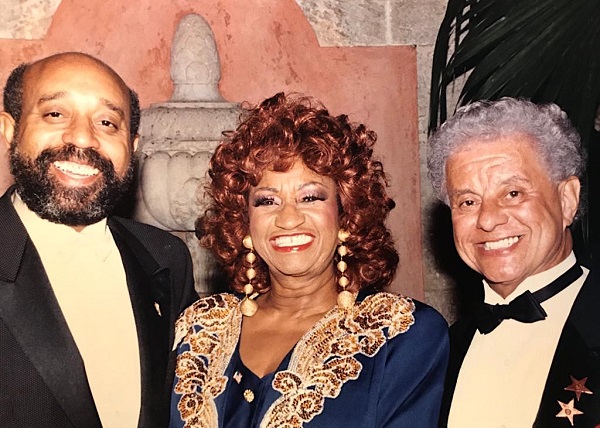
He managed the genre’s biggest stars, including Tito Puente and Celia Cruz, with whom he worked for 25 years. “I learned so much from her,” Mercado told the AP in July 2003, following the passing of the “Queen of Salsa.” “I witnessed the impact she had in every country we visited.”

Mercado credited Cruz and Puente with the internationalization of Salsa. “They were two artists with so much talent and such good hearts… something unrepeatable,” he expressed at the time.

The RMM Phenomenon

By 1987, his popular “Latin Tinge” nights at the Palladium attracted hundreds of salseros every Thursday. In 1992, he founded the independent label RMM, which branched into RMM Records, RMM Filmworks, and two publishing houses. With a catalog of over 140 artists, the label sold millions of albums annually.

Mercado brought Salsa to South America and to places as remote as Africa, Asia, and Israel. He personally discovered and launched the careers of talents like Marc Anthony, La India, Domingo Quiñones, Tony Vega, José Alberto “El Canario,” and Tito Nieves. For his work, he received numerous accolades, including the Billboard Lifetime Achievement Award in 1999.

Mercado creador de La Combinación Perfecta; RMM

The RMM Label: A Hit Factory

Mercado’s impact was solidified by his ability to adapt tradition to changing times. While others clung to the past, Ralph understood the potential of Salsa Romántica and the power of international collaborations. RMM didn’t just produce records; it produced culture, documenting the history of the rhythm through videos and massive concerts that redefined the concept of Latin entertainment.

His influence extended far beyond recording. As a promoter, he opened markets in Europe, Asia, and throughout Latin America, ensuring the tumbao was heard in every corner of the planet. He was a relentless negotiator and a protector of the legends’ legacies, ensuring that Latin Jazz and Salsa Dura maintained their academic prestige while dominating the pop charts.

An Indelible Legacy

“Without him, I don’t believe the Fania All-Stars would have achieved the success they did,” stated Eddie Palmieri. Meanwhile, promoter Leo Tizol remembered him as someone “accessible and noble” who never refused to share his knowledge with those starting out.

Mercado, Celia y Puene

Ralph Mercado passed away on March 10, 2009, surrounded by his wife Cynthia, his five children, his siblings, and his grandchildren. His departure left a void that as the greats of music often say can never be filled.

Source: RMM / Photo: Ralph Mercado Archives

Also Read: Hector Maisonave Manager of the Greatest Salseros in New York

Dominican bandleader and musical director Orlando Santana talks about La Makina and his career in general

Orlando Santana, the bandleader and musical director of La Makina, has made room in his busy schedule filled with studio recordings to talk about the most interesting topics of his career and, of course, the group that has given him more fame.

The Dominican artist has built an interesting career that led to his aforementioned group, which was founded in Borinquén (the name given to Puerto Rico before the arrival of the Spanish). Naturally, the genre by which La Makina is best known is merengue, implying that the Dominican Republic is still present in mind and heart.

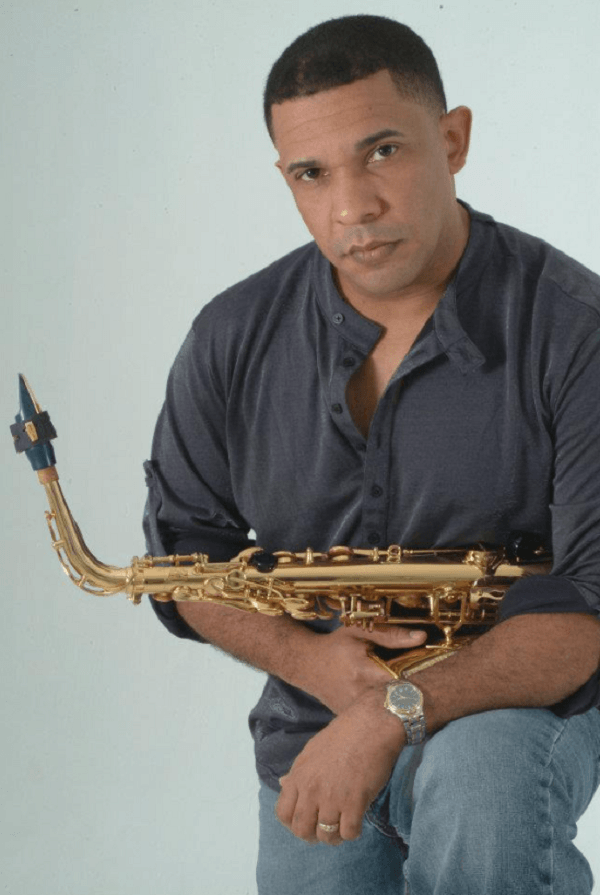
Orlando with his saxophone
Orlando Santana with his saxophone

Orlando’s Beginnings in Music

Orlando started his story by saying that music had a significant presence in his life because his father, Santiago Santana, was a music teacher who taught in their own home. He taught all types of instruments such as the saxophone, trumpet, flute, piano, bandoneon, clarinet, guitar, and many more. Additionally, he also knew about harmony, solfège (sung), and solfège (spoken).

This led to his son learning to play instruments at a very young age and being interested in this way of life. 

Orlando’s Music Education

When Orlando moved to Miami, he took private piano lessons for a while, just as his father did with his students, but it was from Richie Ray and Bobby Cruz whom he really learned. He attended their church and took advantage of his visits to receive some piano lessons from Richie, while his brother David Santana, who was already a veteran musician, bought him his first saxophone and taught him many other tricks of the trade.

Early experiences as a paid professional

As for the beginning of his professional practice, Orlando, as a 15-year-old boy, started with the orchestra Dioni Fernández y El Equipo, from which the great Sergio Vargas emerged. In fact, they entered together a television channel (Color Visión, Channel 9) on the same day in Santo Domingo. This group is still active today, and Sergio Vargas’s own brother, Caqui Vargas, is currently part of it.

Bobby and Orlando
Bobby Valentín and Orlando Santana

Some time later, he had the opportunity to perform along with Wilfrido Vargas, which he describes as an incredible experience, since Vargas’s orchestra had a very challenging repertoire and he had to prepare himself very well in order to play along with the merengue exponents and his musicians. Orlando came on as a substitute replacing his brother on some tours, where he showed he had the capacity to keep up with their pace and improvise just like Wilfrido did so with ease on stage.

Among the most important things this time taught him, the artist mentioned discipline, the importance of always practicing his instruments, and a permanent focus on what he wanted to achieve. Another thing he mentioned was the significant improvement in his ability to improvise and release new material constantly.

He also learned a lot from Toño Rosario, Peter Cruz, Cuco Valoy, Ramón Orlando, and Elías Santana (Orlando’s first cousin and trumpeter for Conjunto Quisqueya). With all of them, he also came to play both merengue and other genres. 

How La Makina Band was founded

Orlando met Fernando Colón in Toño Rosario’s orchestra, while he was a saxophonist, and Fernando entered as a bassist. At the same time, Orlando was writing some arrangements for Los Sabrosos del Merengue, and as it so happens that Fernando was also working with them, so they were always in constant contact.

When Orlando decided to found an orchestra, it was he who called him and accepted his proposal. That was when both artists founded La Makina in 1996, though the process started a year earlier when they set up a company for that purpose.

Orlando and Rafael
Orlano Santana and Rafael Ithier from El Gran Combo de Puerto Rico

His Role as producer and director

Regarding his role as producer and director of La Makina, he points out the importance of preparing and studying to exercise these areas of music. In his case, he had already spent many years working on important record productions, including those he did together with his cousin Cesar Cuesta, with whom he formed a small orchestra that covered songs by very famous bands. He created his own musical arrangements for these new versions to differentiate them from the original songs and wrote scores for other musicians.

In addition, he served as music producer for Grupomanía and wrote songs for artists such as Toño Rosario, Elvis Crespo, Oscarito, Manny Manuel, and many others.

Current Members of La Makina

Of the original members of La Makina, the only one left is Orlando himself, but he has been joined by other equally-talented musicians, including Carlitos Rivera and his own son, Anderson Santana.

Orlando and Johnny
Orlando Santana and Johnny Ventura in San Juan, Puerto Rico

Current projects

This conversation had been delayed a few times due to how busy Orlando was in the studio working on new music, so obviously we had to ask what it was all about.

He told us that he and the rest of the group were working on a remastering of La Makina’s greatest hits, but with other arrangements and a fresh color. They also plan to include songs recorded by other artists but written by Orlando for them. He did not want to say what these would be so they would be a surprise for the audience.

Read also: Don Perignon Y La Puertorriqueña releases his new album ‘‘Classique et Savoureux’’

Rey Ruíz visits the Salsa Museum and talks about his prolific career

The Salsa Museum is celebrating the tremendous and valuable support of Cuban singer-songwriter Reinerio Ruíz Santiago, known to the world as Rey Ruíz, whom I had the pleasure to interview along with El Rubio Boris on our show Salsamania.

The artist was not only in our facilities to tell us important details about his career and share some of his time with us, but he also granted us the honor of gifting us one of the suits he used to wear for several of his most important shows. We are very grateful for the distinction he has made with us, and now let us mention some of the most important topics we discussed with the salsa singer.

Rey posing for the camera
Cuban singer-songwriter Rey Ruiz posing for the camera

Rey’s life in Cuba

Rey sang since his childhood to the point that his parents said he sang songs without words and started imitating the sounds his father taught him. He began to study music in sixth grade in his native Cuba, but his interest went far beyond simple childlike curiosity, so his parents enrolled him at the music conservatory in Havana so that he could have a more formal training. 

Soon after, he appeared on Cuban television and sang for the orchestras “La Riverside” and “Los Dadas” at the then Habana Hilton.

Rey’s beginnings in music

Among many interesting things, Rey told us that he left his country at the age of 24, turned 25 in Miami, and arrived in Puerto Rico at 26. Shortly after arriving in Miami, he took a salsa demo to a record label, since Puerto Rican salsa was experiencing a long boom at the time, so they advised him to choose that genre. 

Then, he got down to work with his producer Toby Villarini, recently deceased, to create the album.

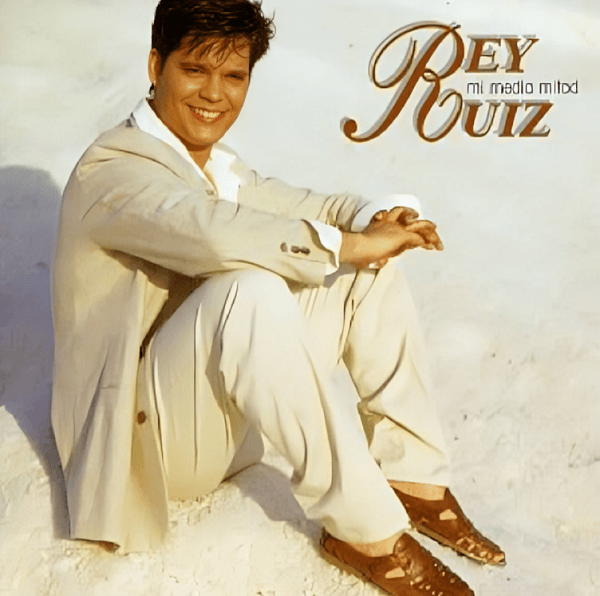
Mi Media Mitad
Cover of the album ”Mi Media Mitad’’

Following the success obtained, the record label asked him to move to Puerto Rico, where they got him an apartment for about six months so he could make a life there and focus on his music. He then began working with musical director Guillermo Calderón’s orchestra, until Rey felt confident enough to say that the orchestra was his about a year later.

In 1994, he released his second album ”Mi Media Mitad” and the cover includes a very young Rey on a mountain of salt posing for the camera in a beige outfit and with a big smile on his face. The arrangements were made by Ernesto Sánchez, who also passed away recently at a very young age.

What Ray Ruiz is doing now

When El Rubio and I wanted to know what Rey is doing now, the singer confessed that he had chosen a career in which work never ends and that always makes him seek progress. “You’re always looking for ways to produce something new and show people what you’re doing at the recording and show production level.” In fact, the day after the interview, on February 14, he had a concert to celebrate Valentine’s Day at the Lehman Center for the Performing Arts in New York City. 

Johnny and Rey
Johnny Cruz and Rey Ruiz at the Salsa Museum

He told us that it was the first time he performed as a solo artist at this venue, something he wanted to do for many years and finally got it. Never before has he performed in New York without the company of another artist or orchestra, so he was very happy and excited about living that new experience in his career.

Opinions about the Salsa Museum

Rey Ruiz had to leave soon to make final arrangements for the next day’s show, but we could not let him go without asking for his honest opinion about the Salsa Museum. When we asked him, he told us that he loved the place and that seeing what the museum exhibits was like seeing history. The history of salsa and all the artists who have been part of that genre. He also said that being here was like going to school because, even he who has been in this business for so many years, he has learned a lot from what he has seen.

He concluded by saying goodbye and thanking us for the opportunity to share with us and be on our platform.

Johnny Cruz ISM


Read also: Caoba Y Bambú, Tito Rivera’s first discographic production

Background and reactions to Bad Bunny’s halftime show in The Super Bowl

The Super Bowl is the name given to the final match of the National Football League (or simply known as the NFL) championship, whose opponents are the winners of the National Football Conference and the American Football Conference. The match is due on the second Sunday of February every year and is one of the most watched broadcasts in the United States, but it is not the only thing that grabs viewers’ attention that day.

Over the years, the Super Bowl has become one of the most important social events in the country, to the point that it is one of the days of the year when more food and drink are consumed. One of its biggest attractions, and a matter of controversy from time to time, since its inception has been the Halftime Show. 

Absolutely every edition has featured a musical performance during halftime of the match. In the beginning, college marching bands were responsible for taking up the cudgel for the show, but its growing popularity got much more famous singers and bands be hired to take this prime spot.

There have been great and supremely talented artists, such as the exceptional case of Michael Jackson, who gave one of the most legendary and memorable performances to date. Likewise, artists such as U2, Justin Timberlake, Prince, Paul McCartney, The Rolling Stones, and Madonna, among others have also participated there. More recently, Shakira, Jennifer Lopez, Rihanna, and Usher have performed at the halftime show.

However, few musical performances have caused as much controversy as this year’s, which was performed by music producer, rapper, and reggaeton artist Benito Antonio Martínez Ocasio, known as Bad Bunny.

How Bad Bunny started his show
This is how the Bad Bunny’s halftime show started

Who is Bad Bunny?

Seeing everything he has achieved on a professional and artistic level, we could find it hard to believe the humble origins of the Puerto Rican artist, who grew up in a working-class household and was the son of a truck driver and a teacher who always instilled in their son the taste for music since childhood. By that time, many of his acquaintances started calling Benito “Bad Bunny” because of a sweet photo of him wearing bunny ears and having an annoying face.

What is known of his working life before becoming an artist is that for a time he worked as a bagger at Econo Supermarket while uploading the songs he composed to SoundCloud, material which reached the ears of producer DJ Luian. Through him, he managed to be signed to the label Hear This Music in 2016 and strengthened himself as an artist by collaborating with urban music greats such as J Balvin, Ozuna, and Cardi B. From there, his fame and popularity did nothing but grow and grow.

After that, what came next was a string of hits from his albums, which were “X 100PRE,” “YHLQMDLG,” “El Último Tour del Mundo,” “Un Verano Sin Ti,” “Nadie Sabe Lo Que Va A Pasar,” and “DeBÍ TiRAR MáS FOToS.” Following the release of “X 100PRE,” the Puerto Rican left Hear This Music and broke his professional relationships with DJ Luian and Mambo Kingz due to creative differences and the lack of support for their projects. 

Already in 2018, it was finally confirmed that “El Conejo Malo” left Hear The Music to join Rimas Entertainment led by his manager Noah Assad, who is the current CEO, public face, and majority owner of the company. However, the main investor since its founding in 2014 was former Venezuelan military officer and public official Rafael Jimenez Dan, whose links with the late President Hugo Chávez have made him a controversial figure and, to some extent, harmful to the company. For this reason, every effort has been made to disassociate Jiménez from the label until he finally sold his 60% stake in 2023, when Assad took full control of Rimas and Sony Music stepped in as a new investor.

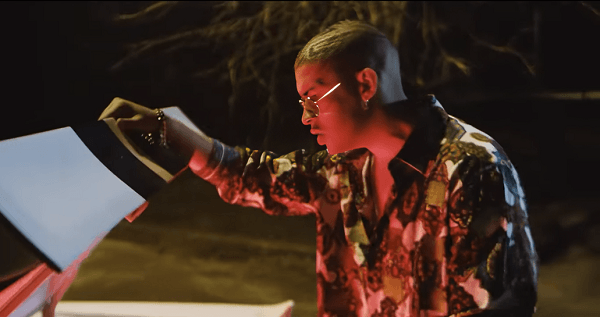
Bad Bunny singing ''Soy Peor''
Bad bunny in his videoclip ”Soy Peor” during his time with Hear The Music

However, this situation inflicts no injury on the image and great success of Bad Bunny, who clearly has nothing to do with these businesses and operations between the owners of his current record label.

Social and political stances

In recent years, Bad Bunny has used his art to put a magnifying glass on important issues for Puerto Rican and Latino communities. Some of them are the exodus of many inhabitants of the island, gentrification, the energy crisis, and the territory’s status of associated state. In fact, he participated in the 2019 protests demanding the resignation of then Governor Ricardo Rosselló and released the song “El Apagón” and financed a documentary of the same name denouncing the constant blackouts, the terrible service provided by the private company Luma Energy, the privatization of beaches, and the government’s abandonment of Puerto Rico’s infrastructure. 

As for the Latino community in the United States, the artist has been very vocal about Immigration and Customs Enforcement (ICE) proceedings against illegal immigrants and recent altercations with some protesters who claim that the institution has criminalized Latinos, no matter if they are criminals or not. Moreover, in his acceptance speech for his Grammy in the category of Best Urban Music Album, he said, “ICE out! We are not savages, we are not animals… we are humans and we are Americans.”

With this prelude, it is clear how Bad Bunny would focus his show at the Super Bowl a week later on February 8 of this year.

Bad Bunny during his performance
Bad Bunny during his performance in the Super Bowl

Bad Bunny’s participation in the Super Bowl

The NFL and the production company Roc Nation, led by American rapper Jay-Z, chose Bad Bunny as the main artist for the halftime show in order to attract a global and Latino audience, a decision that obtained Commissioner Roger Goodell‘s support, which earned him a tsunami of criticism from much of the American public. What is known about this is that Jay-Z took into account his cultural impact and status as a Spanish-language musical leader, aiming to go for freshness and novelty on stage. 

So, that was how February 8 arrived with a very high expectation for what the artist and his team had prepared for that day. And boy, did they have a few surprises.

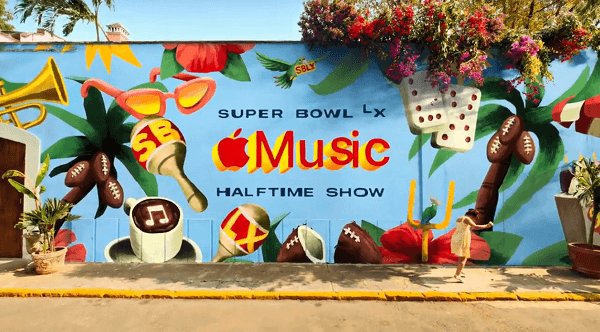
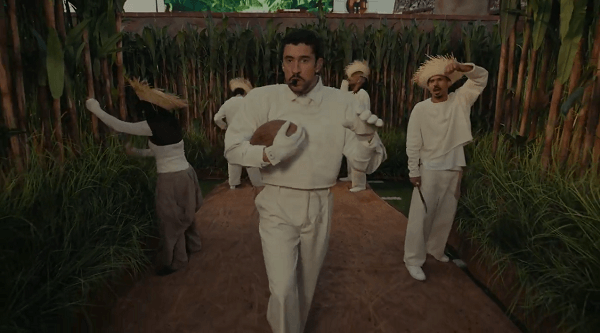
The performance, executed entirely in Spanish, was a tribute to Puerto Rico and Latin America in general. During the 15 minutes the Puerto Rican artist was on stage, scenography represented typical elements from the Island of Enchantment and much of Latin America, such as sugar cane fields, men playing dominoes, piragua stands, boxers, plastic chairs, barbershops, among others. 

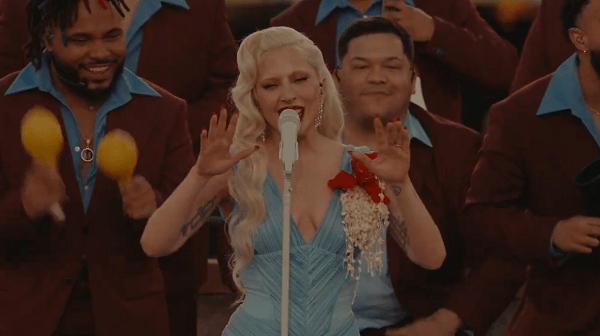
He kicked off the concert with one of his greatest hits, “Tití Me Preguntó,” followed by a remix of some of the most iconic songs by reggaeton artists such as Daddy Yankee, Don Omar, and Tego Calderón. One of the big surprises was the appearance of Lady Gaga performing “Die With A Smile” in salsa version and dancing with Bad Bunny to make way for Ricky Martin singing “Lo Que Pasó En Hawaii” in open protest against the parallels between the situation in Hawaii and that of Puerto Rico today. 

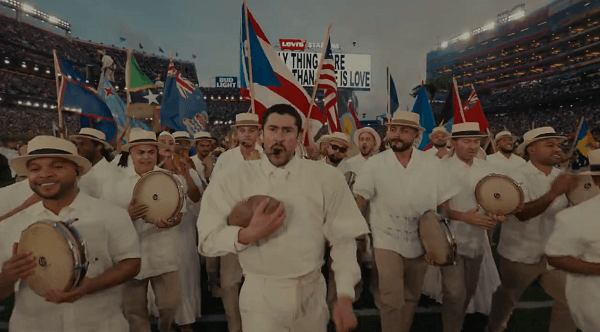
The show closed with the urban artist saying “God Bless America” and proceeding to list all the countries that comprise the American continent alongside people waving their flags. 

Lady Gaga singing
Lady Gaga singing ”Die With A Smile’’ in salsa version

Some reactions after the show

Reactions to the show were extremely divided. While much of the Latino audience welcomed the Benito’s message, many Americans found it boring and confusing because of unfamiliar references and language barrier. However, it is clear that it had a profound impact and will extend the conversation about Latinos for a long time. 

Even aside from art and the quality of the performance, many understand that the show goes much further than the artist and his actions, but rather the social and political message he wanted to bring to the United States and the world, to the point that President Donald Trump himself described it as “absolutely terrible, one of the worst, EVER!” He also added that the show “doesn’t represent our standards of Success, Creativity, and Excellence” of the United States and that it was “a slap in the face to our country.”

However, other personalities like Jimmy Fallon, who has had Bad Bunny on his show, have shown his support to the artist on numerous occasions both on his show and social media. He also received support and praise from singers such as Katy Perry, Kacey Musgraves, and Alicia Keys. 

Bad Bunny with the flags
Bad Bunny with the flags of Latino countries

A Puerto Rican artist’s perspective on Bad Bunny’s show

There have been many reactions from all over the world, but what do Puerto Ricans themselves think about it? To know what a Puerto Rican artist thinks about this great event, we spoke with singer, comedian, and actress Carmen Nydia Velázquez, who shared her thoughts about “el conejo malo” and all the debate his show generated in the media and social networks. The performer noted the following:

”In common with the vast majority of Puerto Ricans, I am deeply proud of our Bad Bunny’s performance in the Benito Bowl. He was spectacular! The fact that our beautiful island has given birth to a world-famous artist who has reached the most coveted stage for any artist fills your heart with joy. But the most important thing about Benito is his commitment to give us a relevant place in the world, with our Spanish language and our culture. The noise surrounding Benito’s participation, before, during, and after the Super Bowl seems to have no end. It’s now history!”

Read also: Musician and entrepreneur of Latin origin Jorge Torres talks about his band and his company

  • « Go to Previous Page
  • Page 1
  • Interim pages omitted …
  • Page 7
  • Page 8
  • Page 9
  • Page 10
  • Page 11
  • Interim pages omitted …
  • Page 42
  • Go to Next Page »

International Salsa Magazine (ISM) is a monthly publication about Salsa activities around the world, that has been publishing since 2007. It is a world network of volunteers coordinated by ISM Magazine. We are working to strengthen all the events by working together.