• Skip to primary navigation
  • Skip to main content

International Salsa Magazine

  • HOME
  • Previous editions
    • 2026
      • ISM / April 2026
      • ISM / March 2026
      • ISM / February 2026
      • ISM / January 2026
    • 2025
      • ISM / December 2025
      • ISM / November 2025
      • ISM / October 2025
      • ISM / September 2025
      • ISM / August 2025
      • ISM / July 2025
      • ISM / June 2025
      • ISM / May2025
      • ISM / April 2025
      • ISM / March 2025
      • ISM / February 2025
      • ISM / January 2025
    • 2024
      • ISM / December 2024
      • ISM / November 2024
      • ISM / October 2024
      • ISM / September 2024
      • ISM / August 2024
      • ISM / July 2024
      • ISM / June 2024
      • ISM / May 2024
      • ISM / April 2024
      • ISM / March 2024
      • ISM / February 2024
      • ISM / January 2024
    • 2023
      • ISM / December 2023
      • ISM / November 2023
      • ISM / October 2023
      • ISM – September 2023
      • ISM – August 2023
      • ISM July 2023
      • ISM Edition June 2023
      • ISM – May 2023
      • ISM April 2023
      • ISM March 2023
      • ISM February 2023
      • ISM January 2023
    • 2022
      • ISM December 2022
      • ISM November 2022
      • ISM October 2022
      • ISM September 2022
      • ISM August 2022
      • ISM July 2022
      • ISM June 2022
      • ISM May 2022
      • ISM February 2022
      • ISM January 2022
    • 2021
      • ISM December 2021
      • ISM November 2021
      • ISM October – 2021
      • ISM September 2021
      • ISM August 2021
      • ISM July 2021
      • ISM May 2021
      • ISM April 2021
      • ISM June 2021
      • ISM March 2021
      • ISM February 2021
      • ISM January 2021
    • 2020
      • ISM December 2020
      • ISM November 2020
      • ISM October 2020
      • ISM September 2020
      • ISM August 2020
      • ISM July 2020
      • ISM June 2020
      • ISM May 2020
      • ISM April 2020
      • ISM March 2020
      • ISM February 2020
      • ISM January 2020
    • 2019
      • ISM December 2019
      • ISM November 2019
      • ISM October 2019
      • ISM Septembre 2019
      • ISM August 2019
      • ISM July 2019
      • ISM June 2019
  • Spanish
  • Download Salsa App
    • Android
    • Apple

Search Results for: rhythm

Gustavo Collazos

Latinoamerica / Colombia / Cali

Gustavo Collazos tells us. Its history and its Salsa Caleña

Did you know that in the beautiful city of Cali, Colombia, the rhythm that prevailed both musically and commercially and culturally of all the Latin rhythms that came to the country was Salsa? A musical style from the Caribbean, which over time achieved an evolution, giving rise to Salsa Caleña, a new and different style of composing and dancing Salsa that is characterized by being a very fun, cheerful, fast dance by the dancers who dance it. they dance.

Well this time we have the opportunity to meet Gustavo A. Collazos, founder and director of the Academia Fiebre Latina, who tells us his story as a dancer and lover of Salsa Caleña:

Gustavo Collazos, has been a lover of Salsa since he was 8 years old, from his 14 years he dedicated himself to teaching salsa dance to the children of the sector since it was something that he was passionate about.

Fiebre Latina
Fiebre Latina

With the passage of time, he formed the “Latin Fever” Academy in Colombia, thanks to the support of his brother and partners, including “Carlos Ceballo” director of “Salsa Pura”, a company dedicated to teaching foreigners in Cali, ” Francy Barahona” based in Paris, pioneer of Salsa Caleña in Europe, “Eduardo Alban” with Anfitriones, who trains new talents to give continuity to the process.

With the aim of creating a brand that would be different in the musical world, they began to merge acrobatics, rhythms and techniques from other dance disciplines of all genres but based on Salsa Caleña, placing them in a competitive and show format creating an unstoppable fever.

Photo of Gustavo Collazos - Salsa Caleña
Photo of Gustavo Collazos – Salsa Caleña

Currently the Fiebre Latina Academy has not had a headquarters for 3 years, so Gustavo dedicated himself to expanding Salsa in the USA as artistic director of “Cali Salsa Miami”; He is known and considered by his students and/or followers to be a teacher, due to his career and contribution to salsa. For now, he has toured Colombia, Switzerland, Miami and India (currently living there) expanding his culture as a dancer, workshop facilitator and choreographer. , letting people know how spectacular is.. Salsa

Photo of a choreography in Salsa Caleña in Fiebre Latina

Now I start a project in “Casa Latin”, where they bring the experience of living Latin dance, especially Salsa Caleña, the festivity and joy in India, making them the pioneers in Asia and under the support of their brand and experience to position their culture there.

Salsa Caleña in Fiebre Latina

He had the opportunity to be a finalist in the Reality Colombia has talent version of “Got Talent” where he contributed the knowledge of recognizing salsa as a significant element in high-performance shows.

To learn with the “Casa Latin” Academy, it is not necessary to have experience, that is, you can start from scratch according to your dance goal, participating in the classes. Gustavo mentions that “Dancing is not just exercise, dancing frees you, leads you to set goals, to achieve them, to enjoy the melody of music, to meet cultures, people and make new friends”…

“dancing is a profession like any other, we are dreamers who leave everything they have learned in their life in a person, and it remains eternally in their being, we not only teach to dance we give emotions, moments, life. Once you start dancing you can’t stop. It is you, your partner, the music and the world put into a melody”.

Gustavo Collazos - Salsa Caleña
Gustavo Collazos – Salsa Caleña

For more information:

WebSite:

  • Fiebre Latina: https://www.fiebrelatinacolombia.com/
  • Casa Latín: http://casalatin.com/

Facebook:

  • Gustavo A. Collazos: https://www.facebook.com/fiebrelatinacol
  • Fiebre Latina: https://www.facebook.com/fiebrelatinacolombia/?timeline_context_item_type=intro_card_work&timeline_context_item_source=100000181341290
  • Casa Latín: https://www.facebook.com/CasaLatin/

Instagram:

  • Fiebre Latina:
  • Casa Latín: https://www.instagram.com/casalatin/

Twitter:

  • Fiebre Latina: https://twitter.com/fiebrelatinacol?lang=es
  • Casa Latín: https://twitter.com/casalatin

YouTube:

  • Fiebre Latina: https://www.youtube.com/fiebrelatina
  • Casa Latín: https://www.youtube.com/channel/UCTIUEsU50MX8TT_EsXS6Inw

Teléfono:

  • Casa Latín: +91 87929 23775   /  +91 73491 52846

Salsa trip – Where to dance Salsa in Europe?

Europe

Do you want to go to Europe but you don’t know where are the best places to dance? Do you want to enter in the passionate salsa world? Are you looking for adventures and meet new people? International Salsa Magazine wants to guide you to the best salsa and Latin places in Europe. In this edition we show you the dance life in three different countries: Ireland, Switzerland and England.

Ireland

Strictly Salsa

This academy/club offers a weekly Salsa Classes and a Salsa Club every Thursday in The National Stadium on the South Circular Road, Dublin. The classes are divided for categories:

Strictly Salsa Dublin
  • Ladies: Alexandra – Ladies Styling with Body movement. For those of you who know Alex, this will be one of the greatest most indebted workshop focused around not just footwork and styling but how to use your body and techniques and tips on how to practice and perfect what will be thought to you in class. It will not just be watch me then try it, Alex loves questions and wants to share her knowledge.
  • Men: Claudiu – This for you guys will really help you put more flavor and movement into your dancing skills, incorporating all this with steps that are very usable on the social dance floor, there will be elements of Rumba & Guaguanco and by the end it should all come together nicely. As with Alex, Claudius knowledge is very deep so ask as many questions as possible to maximize the time.

For more info: http://strictlysalsa.ie/


Salsa Dublin

A lot of our instructors are also performers and they have a huge amount of experience performing on stage /in competitions/ at weddings & parties. The academy has dancers from Ireland, Turkey, Poland, Spain, Romania, and each one brings their own individual strengths to our group.

The teacher’s team has two previous winners of the Irish Salsa Championships, and the current (2012) Champion of the Irish Bachata Open. We also have instructors with backgrounds in Ballroom, Hip Hop, Ballet, Contemporary etc. which gives the team a greater understanding of musicality and a deeper appreciation for what they teach.

Salsa Dublin
Salsa Dublin

Development of the dancers is a key focus in our structure. Through regular team meetings, teachers training and dance group practice, we are able to keep physically and mentally growing and improving. You never stop learning no matter how good you are, so we are always striving to better ourselves. This academy works with world class international teachers and champions, bringing them to Ireland so that they can share their knowledge and ideas with the academy and their students.

Workshops are crafted for all levels of Salsa and Bachata lovers. A day of workshop involves a total of 4 hours of learning from four local and international dance instructors!! You will be sharing this amazing experience with both your fellow learners and from people from outside the regular classes.


For more info: SalsaDublin.com


Switzerland

La Movida Laussane

La Movida/Poco Loco is a bar-restaurant known by its Latin-Mexican aesthetic and food, which also offers special nights and parties for Salsa and Latin music lovers. With the performances of Dj’s and live bands, this special club is bringing all the Latin flavor to Switzerland. Cocktails, food, music and more!

Poco Loco
Poco Loco

For more info and reservations: https://pocoloco-movida.ch/


Salsa Passion Company

Whether you are completely new to the art, or experienced dancer, Salsa Passion Company has the knowledge and the experience to bring you further with your dance skills.

The academy philosophy is understanding that dance is about social and fun, but while you are investing your time and money to learn, why not learn it properly.

They’ve develop a “step by step” method that is fun and efficient for everyone to learn. They teach the “know how”. You will learn the vocabulary and the techniques of how to put them together, so you can be.

To learn how to dance Salsa, you should first understand the rhythm of Salsa, the steps, the body movement, the TWO persons but only ONE system principle in order to dance together with harmony, then move on to the turns and figures, and that’s the focus of the academy.

For more info: http://www.salsapassion.ch/d_course.html


England

Caramelo Latin Dance

Looking for Salsa classes in London? You’ve come to the right place! At Caramelo Latin Dance you will find only the highest quality tuition in Crossbody Salsa On1 and On2, as well as in and many other Latin dances.

Caramelo Group - Salsa
Caramelo Group – Salsa

The 4-week Latin dance courses are perfect for a consistent and immersive approach that will help you see a marked progression in your dancing irrespective of your level.

Classes take place on Wednesdays and Thursdays. You can Combine your Salsa classes with Bachata, NY Mambo On2, Cha Cha Cha, Pachanga and Styling and enjoy Latin dancing to the fullest!

For more info: http://www.caramelolatindance.co.uk/


Incognito Dance

Incognito Dance Company (IDC) was established in 1999. It has some of the most experienced and qualified Latin Dance instructors and performers in Europe. All our Latin dance courses, workshops, holidays, events and clubs are run and taught by highly trained, friendly instructors who encourage dancers of all levels to enjoy the spirit of dance.

Try the award winning Gold, Silver & Bronze Salsa Courses, learn to dance, have fun, keep fit and meet new friends. Check out the private lessons, weekly classes, regular workshops, bootcamps, monthly parties, holidays, and special events.


Experienced dancers are given fun, technically challenging classes, and plenty of hours to social dance to the latest Latin music by our fabulous DJ’s. The academy teach many Latin dance styles of salsa from LA Style, NY Style, Cuban and Puerto Rican, as well as Bachata, Kizomba, Cha Cha, Reggaeton, Latin Hip Hop, Merengue etc.

For more info and classes: https://www.incognitodance.com/


Salsa Soho London

The best place to celebrate your Latin roots! Salsa classes every night of the week, amazing drinks menu with over 50 cocktails and of course non- stop Latin music.

This club/restaurant has menus to suit all occasions and tastes. For a bigger party or less formal occasion they Sharing Planks are perfect and includes Salsa favorites like tacos and Iberico ham croquettes. Special events, birthdays, parties and more, with the best atmosphere in London!

Salsa Soho
Salsa Soho

For more info and reservations: https://www.bar-salsa.com/soho

Louie Ramírez. The Hidden Talent of Salsa Ahead of its time

North America / USA / New York

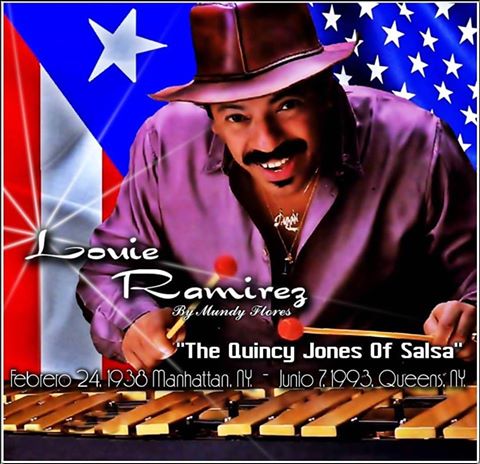
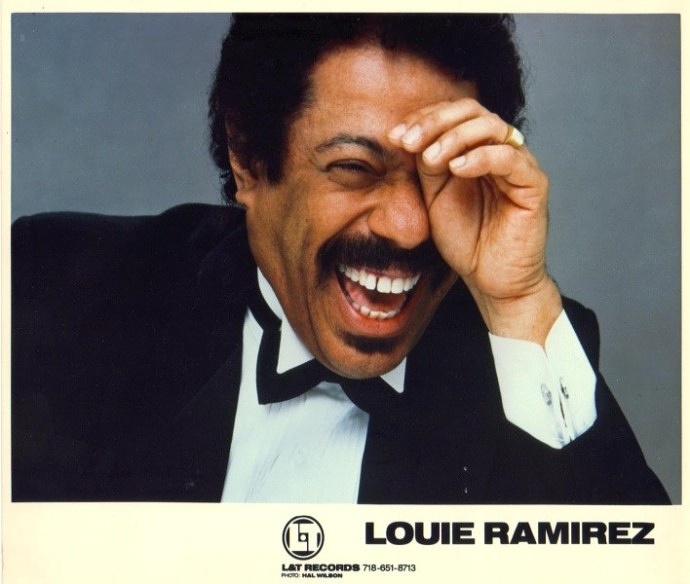
Louie Ramírez.

Music often requires characters who are always behind the scenes and support the work of singers and performers with their talent, who are ultimately the ones who “put on their face” and become popular. Sometimes, however, these anonymous characters rise to fame in order to perform their own work and even become more popular than any popular singer.

In the case of Pop, this character is called Quincy Jones, of whom it is enough to say that he has been an arranger for Frank Sinatra and a producer for Michael Jackson. A nobody”. In the case of Salsa, these characters have been symbolized by Jones’ emulator, a guy named Louie Ramírez who has done everything with everyone.

Louie Ramírez
Louie Ramírez

One afternoon in 1994, Ramírez was driving his car down the highway that would take him to Variety Studios in New York. It was going to be a quick session since he only needed one song to complete his 20th album as conductor. Perhaps that was why he was nervous and that filled him with anxiety. Minutes later he couldn’t resist the feeling and had to pull over to the side of the car. He had not finished doing it when a cardiac arrest ended his life.

Louie Ramírez
Louie Ramírez

Louie Ramirez was a genius. The classic man to whom everyone turns for advice and solutions to their problems. It didn’t matter if they were young or old musicians. The fact was, Louie had the answer, and visiting him was like rubbing Aladdin’s lamp. That was a characteristic that always accompanied him, from that first recording “Conozca a Louie Ramírez” in 1963.

He was 20 years old at the time and had already stood out for composing some pachangas and arranging for Pete and Tito Rodríguez’s orchestras. The commentator Dick Sugar then presented it like this: Ramírez breaks the image of the director of a group that uses the talent of other composers and becomes a follower of a rhythm. No, Louie Ramírez is a creator in his genre.

Louie Ramírez Photo
Louie Ramírez Photo

That talent did not go unnoticed by the new Czar of Latin music in New York, Jerry Masucci, who hired him as a star for Fania Records and at the same time, as an arranger for the orchestras and ensembles that belonged to the record company. Ramírez was soon involved in work and was only able to record two albums during the sixties, “Good news” and “Alí Babá”.

On that last album appeared the hit that allowed him to be a famous artist, El Títere, a true Salsa classic. The theme was sung by Rudy Calzado, the third of the soneros that Louie had used without finding the ideal. That was a burden that accompanied him as a director during the seventies, when he used singers of the stature of Pete Bonet, Tito Allen, Jimmy Sabater, “Azuquita” Rodríguez, Adalberto Santiago, and even Rubén Blades.

Louie Ramírez
Louie Ramírez

It was with Blades, precisely, that he made an anthological album, “Louie Ramírez and his friends”, in which the song Paula C was included, with an arrangement of those that deserve -hats off-. By then, Ramírez was considered in New York as the most progressive arranger that Salsa had, thanks to the brilliant work done for the Fania All Stars. An excellent job had been the instrumental arrangement of Juan Pachanga, to be sung by Blades, of Canta Canta for a performance by Cheo Feliciano, and of the entire album “Algo nuevo” that Tito Rodríguez sang with Louie’s orchestra.

But the high point of Ramírez’s career came in 1980 when Joni Figueras, representative of the K-Tel International label, hired him to arrange the ballads Todo se derrumbó and Estar Enamorado de Manuel Alejandro. The album, which included these and other tracks, was released two years later under the title “Hot Night” and was recorded by Louie’s own orchestra.

Louie Ramírez - Salsa Progresiva
Louie Ramírez – Salsa Progresiva

This is how the Salsa-ballad or Salsa-romántica was born in a job that Ramírez continued until his death, making attempts at Latin Jazz from time to time, which he loved. That is why he recorded an album in tribute to Cal Tjader, where Louie was director, producer, composer and arranger, in addition to playing the timpani and his favorite instrument: the vibraphone.

Louie Ramírez was a genius in arranging, in a career where those of Guantanamera and Isadora stand out for Celia Cruz, El Guiro de Macorina for Johnny Pacheco and El Caminante for Roberto Torres. Apart from this, there are his works for the Alegre and the Cesta All Stars. Regarding this profile of Ramírez, the critic Eleazar López defined it very well:

Louie Ramírez - salsero
Louie Ramírez – salsero

It is not easy to arrange for a dance band, especially when it comes to a group that cultivates the hot tropical genre. Many musicians feel influenced by Jazz and the result of their orchestrations leaves a void in the dancer. Others arrange simple, but so simple that they repeat and copy themselves, and the result is tiresome music, without any degree of creativity: music that says nothing, that leaves nothing. Louie Ramírez has found the perfect balance… that’s why he always stays current.

Louie Ramírez flyers

Edgardo ‘‘El Bambino’’ and his extensive and interesting musical career

Edgardo ”El Bambino” Otero Lugo is the one to whom we want to dedicate some of the lines of this edition in International Salsa Magazine. The talented Puerto Rican vocalist has given us a few minutes of his time to talk exclusively about his beginnings, his career and other unpublished details that are not read in other media.   

dgardo ‘’El Bambino’’
This is Puerto Rican singer Edgardo ”El Bambino” Otero Lugo

Edgardo’s childhood and music   

As Edgardo’s childhood took place in his hometown of Vega Baja, Puerto Rico, the artist recalls that he would sit on the balcony of his house and play with buckets and sticks to pretend to play music. His mother, fed up with the noise he made, decided to enroll him in the school choir so that he could explore his curiosity about music in a more professional way. That was when he was in the fifth grade of the elementary school.   

As the years went by, the boy’s love for music just kept growing, until he got his first big opportunity thanks to singer-songwriter Edwin Crespo, who had already written for famous groups such as La Sonora Ponceña at the time. Back then, Edgardo was only 14 or 15 years old, so he still needed a lot of guidance on these issues, so maestro Crespo was the ideal person for that. 

It just so happenes that Pedro Crespo, Edwin’s father, was the founder of his own orchestra and grandfather of some of Edgardo’s cousins. Since they all lived nearby, Edwin heard him singing one day and liked his voice, so he offered to teach him how to sing professionally and invited him to join his Orquesta Ética, which is where it all began.   

By being part of the Orquesta Ética, Edwin decided to spend two or three days a week explaining to Edgardo what to do and how to do it so that everything would go wonderfully for the young vocalist, and that is exactly what happened. So much so that Edgardo spent about three years singing for the group, in which he claims to have learned much of what he knows today.   

Edgardo ‘’El Bambino’’ next to Frankie
Edgardo ”El Bambino” next to ”El Sonero del Barrio” Frankie Vazquez

The Rukanos   

After having left Orquesta La Ética, Edgardo was also part of Orquesta Los Rukanos, which was much bigger, had more instruments and more musicians. Therefore, it represented a bigger and more complex challenge. 

In 1981, he was invited to join the group by a Guyanese friend and colleague named Ferniand Pudia, who asked Edgardo to join him in a musical project he was working on, which he would name Los Rukanos, paying homage to the term used to refer to peasants and working class men in the South American country.    

Alongside with this orchestra, of which Edgardo was also one of the founders, he managed to perform in completely new stages and to follow his path in the learning of this complex and rich world that is music.   

Conjunto Quisqueya   

During a concert in his hometown, the members of Conjunto Quisqueya heard Edgardo singing and liked his voice so much that they invited him to play with them in a project for Nelson García, who at that time was the second trumpet of the orchestra.   

Having accepted the offer, the group recorded a whole LP called ”Nelson García y Merengue ’86”, which was a very nice experience for Edgardo since he had never had the opportunity to record in a studio before and finally he was able to do so. And it was not just any studio, but one of the most important in Puerto Rico, which was Tele-Sound Recording Studios.   

”Playing with the members of Conjunto Quisqueya was a spectacular experience. Their musicians are wonderful human beings with whom I still have very strong friendship bonds” said Edgardo about his experience in the ensemble.   

Edgardo ‘’El Bambino’’ in the army
Edgardo ”El Bambino” singing during his time in the army

Orquesta La Nueva Época de Ángel Rivera 

There were some years that merengue was gaining a lot of popularity in Puerto Rico, so the artists and groups of the moment had to adapt to fulfill the musical taste of the audience. Such was the case of saxophonist Angel Rivera, also originally from Vega Baja, who created an orchestra and invited several musicians to play with him, including Edgardo.    

The result was good acceptance from the public to the extent that the orchestra participated in competitions and won some awards thanks to the work done.    

This was very useful for Edgardo’s career, since he succeeded in diversifying his rhythms and learning to play new things and genres, which made him acquire a lot of knowledge. Until such time as he played with Conjunto Quisqueya, he had only done salsa, so trying merengue was really enriching for the musician.   

Service time in the army   

Edgardo was in the Puerto Rico National Guard for about 24 years in total and he remembers a time when he was mobilized to the Iraq War in 2006, the year in which he met Edwin ”El Calvito” Reyes, who was part of the 3rd Infantry. El Calvito” had a group whose lead singer could not speak Spanish, so he learned the lyrics phonetically in order to perform them.   

The chemistry between all the members was so great that they even played a few times at the U.S. base in Baghdad, where he stayed until 2008. It was then that he returned to Puerto Rico to adapt gradually to civilian life again, during which time he met Raphy Santana and joined his Tribute Orchestra, which made music to pay homage to maestro Héctor Lavoe.   

Permanent move to the United States   

In 2019, both Edgardo and his wife were retired from their jobs, so they thought it was a good time for a change of scenery, as they felt that nothing interesting was going on musically. This led them to move to the United States to settle permanently there, although he continued to travel to Puerto Rico to meet some commitments with La Corporación Latina, of which he was still part at that time. 

Read also: Momotombo SF with former members of Malo and Santana 

Cuqui Pacheco endorses the Salsa Museum and present the new book about Johnny Pacheco

The Salsa Museum and myself, Johnny Cruz, are pleased to welcome the former life partner of maestro Johnny Pacheco, María Elena Pacheco, better known as Cuqui Pacheco. The artist’s widow spoke exclusively with me and Rubio Boris about the new book by Juan Moreno-Velázquez entitled ”Johnny Pacheco: tres de café, dos de azúcar y ¡ponle salsa!” 

The maestro’s artistic and personal life continues to venom a particular interest to his biggest fans, so you can’t miss this spectacular compilation of some of the most interesting anecdotes of Johnny Pacheco’s career. Below, we will discuss some of the topics covered in the written material.   

Cover of Johnny Pacheco’s book
Cover of the book ”Johnny Pacheco: tres de café, dos de azúcar y ¡ponle salsa!”

What are the book’s main objectives? 

What Moreno-Velázquez looks for in the first place with this book is to do justice to the life and work of the world famous musician by describing some of the most important stages of his life, so that his loyal public will know far more about the record businessman and producer.   

One thing we want to point out in the story is that there were many things that led Pacheco to the place he obtained in the industry, such as the influence of his father Rafael Arias Pacheco, his percussion studies, his ability to perform and the talent for arranging he found out he had. 

After going down all that path as a musician, the artist began to develop a much broader and deeper vision of everything about the industry, to the extent that he became one of the greatest music entrepreneurs and forever changed the way businesses were run in showbiz. 

The book also aims to shed as much light as possible on Pacheco’s work, as the subject has been little documented. It could be said that one of the few documentaries that addresses the subject of the flutist and the stars who have been part of La Fania is ”Yo Soy La Salsa” whose trailer can be found on the YouTube platform. However, ”Johnny Pacheco: tres de café, dos de azúcar y ¡ponle salsa!” will surely expose unpublished or little-known aspects. 

In addition to this, the book memorialized the explanation of how Pacheco managed to turn salsa into some kind of Caribbean identity that made millions of Latinos identify with a single emotion no matter in which country they were born or where they currently live. 

Cuqui Pacheco and Samuel Pereyra
Cuqui and Samuel Pereyra, general administrator of the Banco de Reservas (the financial institution that published Pacheco’s biography) / Courtesy to the organizers

Issues raised in the book 

Before becoming the mogul he came to be, Pacheco had already demonstrated his creative skills with rhythms he popularized thanks to his talent, such as the pachanga and the charanga Pacheco. The book gives a very interesting account of facts, persons, circumstances, coincidences and anecdotes that are little mentioned publicly, which increases its value at a bibliographical level in the eyes of any student of salsa or Latin music in general.   

Moreover, the text also refers to the impact Pacheco had on music as a result of some factors among which we can mention his experience, musical sense, leadership and great interpretation of the experiences lived by other orchestras.  

The importance of this book lies in the exaltation of Pacheco’s work and the legacy left by him after his tragic death on that fateful day of February 15, 2021. It is sure to become an obligatory reference for anyone who wishes to learn more about the story not only of this musician, but of salsa in general. 

Johnny Cru ISM corresponde in New York City

Read also: Willie González supports the Spanish Harlem Salsa Museum 

  • « Go to Previous Page
  • Page 1
  • Interim pages omitted …
  • Page 33
  • Page 34
  • Page 35
  • Page 36
  • Page 37
  • Interim pages omitted …
  • Page 129
  • Go to Next Page »

International Salsa Magazine (ISM) is a monthly publication about Salsa activities around the world, that has been publishing since 2007. It is a world network of volunteers coordinated by ISM Magazine. We are working to strengthen all the events by working together.