• Skip to primary navigation
  • Skip to main content

International Salsa Magazine

  • HOME
  • Previous editions
    • 2026
      • ISM / April 2026
      • ISM / March 2026
      • ISM / February 2026
      • ISM / January 2026
    • 2025
      • ISM / December 2025
      • ISM / November 2025
      • ISM / October 2025
      • ISM / September 2025
      • ISM / August 2025
      • ISM / July 2025
      • ISM / June 2025
      • ISM / May2025
      • ISM / April 2025
      • ISM / March 2025
      • ISM / February 2025
      • ISM / January 2025
    • 2024
      • ISM / December 2024
      • ISM / November 2024
      • ISM / October 2024
      • ISM / September 2024
      • ISM / August 2024
      • ISM / July 2024
      • ISM / June 2024
      • ISM / May 2024
      • ISM / April 2024
      • ISM / March 2024
      • ISM / February 2024
      • ISM / January 2024
    • 2023
      • ISM / December 2023
      • ISM / November 2023
      • ISM / October 2023
      • ISM – September 2023
      • ISM – August 2023
      • ISM July 2023
      • ISM Edition June 2023
      • ISM – May 2023
      • ISM April 2023
      • ISM March 2023
      • ISM February 2023
      • ISM January 2023
    • 2022
      • ISM December 2022
      • ISM November 2022
      • ISM October 2022
      • ISM September 2022
      • ISM August 2022
      • ISM July 2022
      • ISM June 2022
      • ISM May 2022
      • ISM February 2022
      • ISM January 2022
    • 2021
      • ISM December 2021
      • ISM November 2021
      • ISM October – 2021
      • ISM September 2021
      • ISM August 2021
      • ISM July 2021
      • ISM May 2021
      • ISM April 2021
      • ISM June 2021
      • ISM March 2021
      • ISM February 2021
      • ISM January 2021
    • 2020
      • ISM December 2020
      • ISM November 2020
      • ISM October 2020
      • ISM September 2020
      • ISM August 2020
      • ISM July 2020
      • ISM June 2020
      • ISM May 2020
      • ISM April 2020
      • ISM March 2020
      • ISM February 2020
      • ISM January 2020
    • 2019
      • ISM December 2019
      • ISM November 2019
      • ISM October 2019
      • ISM Septembre 2019
      • ISM August 2019
      • ISM July 2019
      • ISM June 2019
  • Spanish
  • Download Salsa App
    • Android
    • Apple

Search Results for: rhythm

Eric Duffau and his 26-year Tempo Latino’s legacy

North America / USA / New York

The biggest festival in Europe reaches its twenty-sixth edition and its founder told us how this journey began. International Salsa Magazine met with Eric Duffau and was able to talk about the beginning of the festival and the history behind the event that houses more than 60,000 people each year.

Tempo Latino Festival

Tempo Latino Festival is “The only one”. For 25 years has kept its artistic approach in the heart and around Afro-Cuban and Latin Music. Its region, “Occitanie”, in the department of Gers, opens up internationally by supporting the cultural adventure. A beautiful project built south pride and prize of risks to produce all these artists.

Eric Duffau is a music lover in all its splendour. He arrived in Paris in 1982, from his small village Vic-Fezensac to devote himself to the formal study of music. He studied classical music, medieval music, jazz, and at the same time, he met Mambo, Cha-Cha-Cha, Salsa and Latin Jazz. With his formal apprenticeships, he met the Temp, and with his learning in the streets of Paris, he met a range of Latin rhythms that were combined divinely to form what we nowadays know as Tempo Latino.
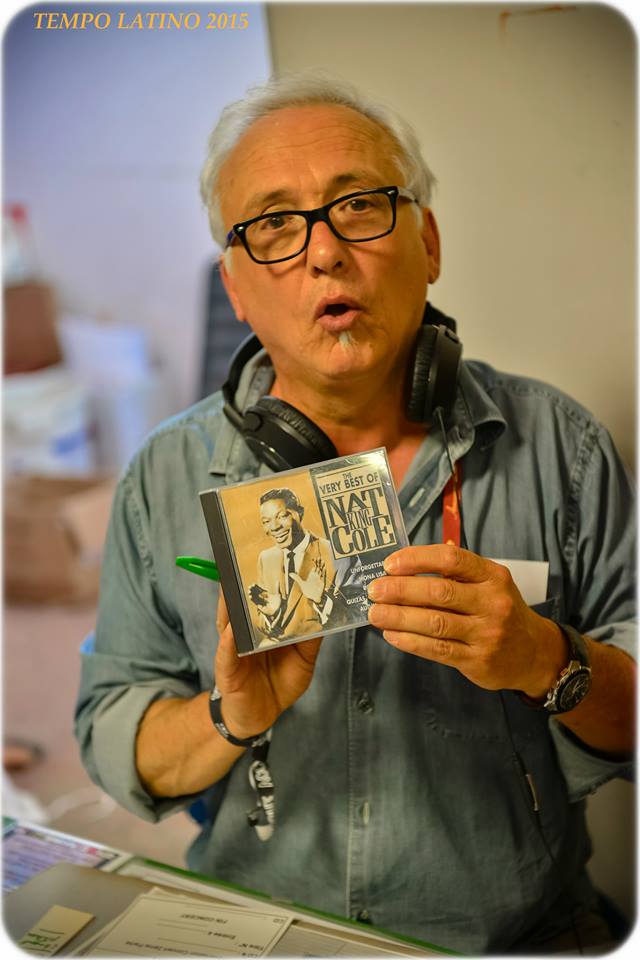
Eric Duffau
Eric Duffau

With this idea, he put together a 6-page project and in 1993 he returned to his village to seek the support of all those who wanted to collaborate. This is how in 1994 the first edition of the festival was held with 100 volunteers, becoming known among journalists, the public in France, Europe and the world.

The first edition was attended by 3,500 people with paid entrance, over the years the capacity of this arena up to 7,000 people paying every day, plus those who attend the other locations throughout Vic-Fizensac. Today, more than 60,000 travel to this small village to dance for 4 days in every corner.

To Vic-Fezensac, that has 3,700 habitants, is preparing itself during the whole year to welcome to a mixed race public and traveler, essential artists or to discover, proposing a festival under the heat of the end of July where everyone will have the freedom to go to the meeting of rhythms, people, flavors and other shared pleasures.

The Tempo Latino’s team is a well-oiled team that leads several projects of front and in which everyone knows what to do. All members of this team are passionate and possess very strong skills and a spirit of solidarity mark.
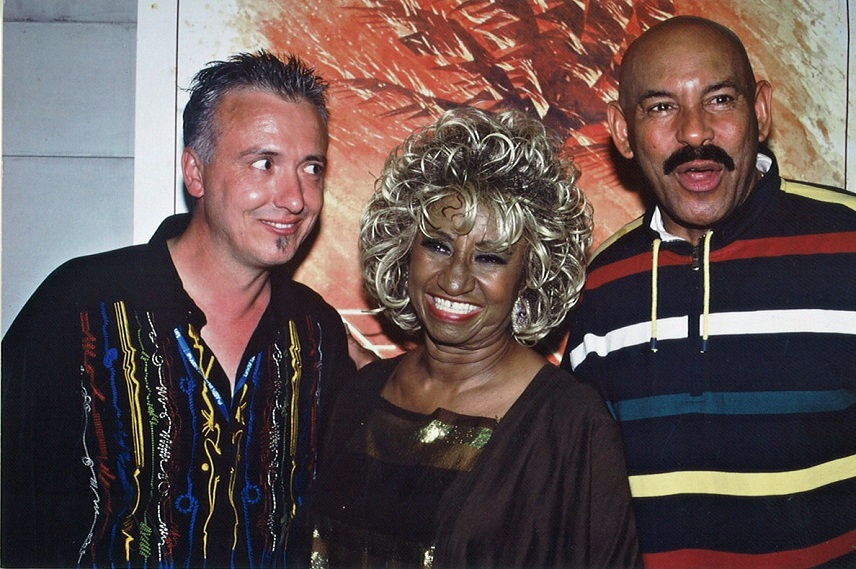
Eric Duffau, Celia Cruz y Oscar D Leon

To pay attention to every detail the festival count with:

7 members of the board | 2 employees

500 volunteers | 22 commissions

2 months of editing before festival

From this year, Mr. Jean-François Labit, will replace Mr. Eric Duffau as president of the Festival.

Some of the great figures in the world of Latin music who have passed through Arènes Joseph Fourniol in 15 avenue Edmond Berges, 32190 Vic-Fezensac are:

Israel López “Cachao”

Celia Cruz

Jimmy Bosch

Ósar D’Leon

Yuri Buenaventura

Willie Colon

Ernesto «Tito» Puente

Richie Ray & Bobby Cruz

And hundreds more in 26 years…
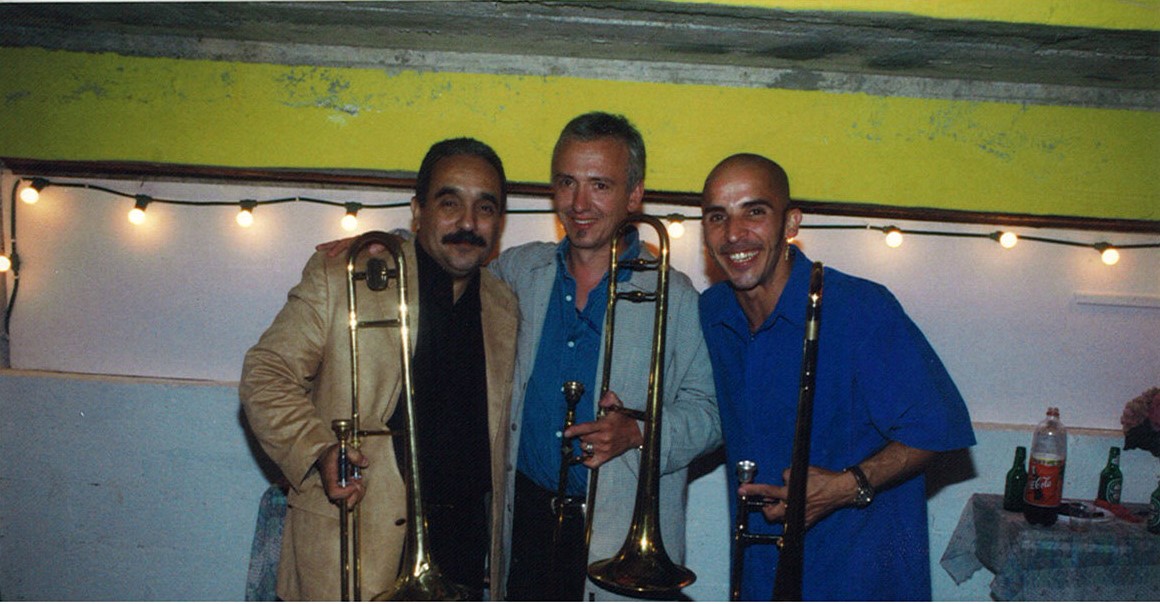
Eric Duffau, Wilile Colon, Eric Jimmy Bosch 1999

Where is Vic-Fezensac?

Vic in Fesensac in Occitan, is a town and commune in France, located in the Midi-Pyrénées region, department of Gers, in the district of Auch and canton of Vic-Fezensac. Is one of the last towns in France which still showcases bullfighting. The main feria takes place over the Pentecost weekend. On this occasion, tens of thousands of people gather all night long over the weekend in the tiny streets of the city. It is the first big “feria” of the year in Southwestern France. Small bodegas crowded with people are open until the morning comes, “bands” (bands of popular Basque or Gascon music) goes on the streets.

At the end of July, the Tempo Latino salsa festival takes place. Night markets (“Marchés de Nuit”) are also held in summer.

If you are in USA and want to go to the biggest Salsa Festival, you can fly with some cheap options that International Salsa Magazine finds for you:

Frenchbee:

San Francisco  – Paris

$500 round trip

www.frenchbee.com

La Compagnie:

New York – Nice

$1065 round trip in Business Class

www.lacompagnie.com
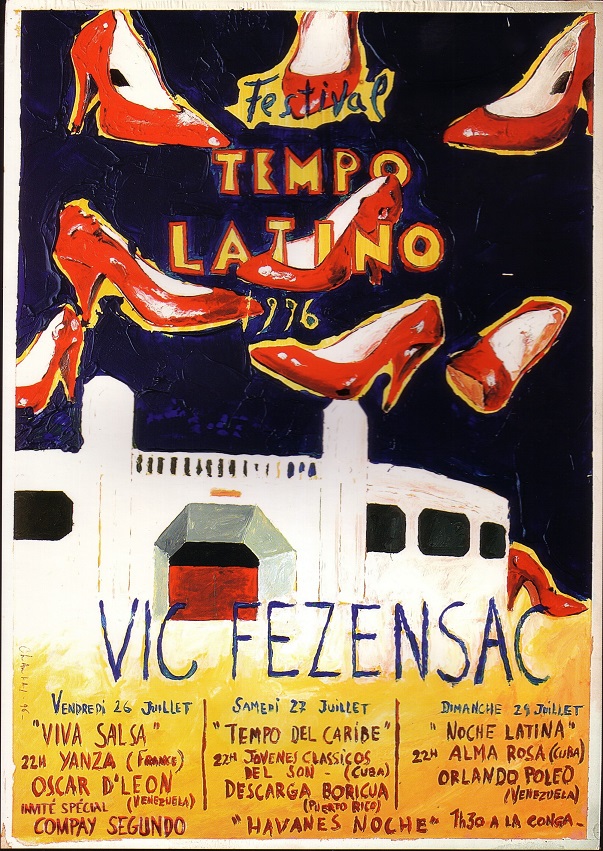
Tempo Latino Festival 1996 Jean-Paul Chambas flyer

Find them everywhere:

Web: http://tempo-latino.com

Facebook: https://www.facebook.com/tempolatino/

Twitter: https://twitter.com/tempo_latino?lang=fr

Instagram: https://www.instagram.com/tempolatino

Youtube: https://www.youtube.com/channel/UCRjFUG_yf9EgX-5FAPZwJGg

¡Attack Sergio! Unbreakable: A fun read because of the contradictory content

I placed the order online on October 25, 2023. By return email, I received confirmation of payment and a promise to receive my copy the following week.

However, after several days I received a delay notification from the supplier. It was understandable that an artist of Sergio George’s stature would trigger interest in acquiring the work that promised to tell his story, perspective and opinion on the music industry. Exactly on November 25, 2023, the order arrived.

¡Attack Sergio! Unbreakable: A fun read because of the contradictory content

As a reader, I was deeply disappointed with the content of the “book”. Attack Sergio! Unbreakable falls short of being an autobiography. I would classify it as a self-help book with little depth, no substance.

Writing a book requires literary knowledge, basing the content on rigorous research and stating the data with mathematical precision.

The cover of the text is appropriate for the trajectory of the artist who is the subject of the text. However, the data on the cover that assures that he is the winner of 19 Grammy awards contradicts the text.  Specifically, on the third page of the introduction it says that he is the winner of 18 or 19. Evidently, the recently launched book should not be taken as a reference for a subject of such seriousness.

From the legal page it is clear that Sergio George is the author and that Janice Rodriguez was in charge of editing. Sadly, the work lacked editorial care, which detracts from the literary value of what is presented. There are many expressions that seem to be literal translations from English and that do not necessarily maintain the idiomatic integrity of what the author wants to express.  Now, if that were the case, you should stop counting the missing and extra accents.

Having said that, I am going to manage my criticism, since space is limited and the idea is not to write another book about the “book”.  Certainly, in the world of the versed salsero, of which I am one, the most awarded producer in Latin music has a great story to tell. But his literary delivery fell short. I understand the intention to approach his complaint as a self-help book. But that grand intention also failed.

I read in each of the 128 pages discontent, loathing, complaint, frustration, resentment and wounded self-esteem. Objectively, you have to read carefully to see that what he claims to do is the opposite of what has brought him so much controversy.

In his usual combative style Sergio George launches harsh criticisms of salsa artists. Resentment has won out over objectivity. Each blow takes away the value of his exposition, until it becomes the outlet that we all need to have at given moments.

Sergio George
Sergio George

Of course, emotional maturity is what prevents one from publishing matters that should remain in the privacy of conversations between the affected parties.

With a high sense of arrogance, characteristic of narcissistic personalities, the author accuses the “great salseros” of having murdered salsa because of their ego, pointing them out as the culprits of the death of the “musical genre”.

This becomes another of the great contradictions of the text. At times he claims that salsa is not a genre, but on multiple occasions he refers to salsa as a musical genre. On the other hand, he says that salsa is in danger of extinction shortly before assuring that it is dead.  His point of view in that sense is not clear either, although he does state near the end that there is a legacy that does not die.

This is the contradictory nature of the reading, whose common thread is the attack. That may be the origin of the idea of the title, although at first glance one might think that “Attack Sergio!” is the repetition of the battle cry that invites him to attack the piano, while he prolifically produces music.

Marc Anthony y Sergio George

I believe in the evolution of the species and I see that the adaptations through which salsa has gone through are similar to the genetic modifications necessary so that, within each species, the fittest survive.

The text has several anecdotes. However, due to the lack of details, these do not add value to the construction of the history of salsa. In some of them, the names of certain characters are not mentioned. I guess the author did not want to enter into a request for relays or preferred not to risk dealing with legal controversies.

With so much that Sergio George has contributed to the history of Latin music, it is a mistake that the book has not been given more structure and objectivity.

Sergio George has been a cornerstone in the history of Afro-Latin rhythms and is the owner of a brilliant musical career that has made many shine. But to that exposure, the text does not do justice either.

Bella Martinez Puerto Rico


Also Read: Metamorphosis: from music to photojournalism, a reinvention without limits

The Royalty of our Latin Music Pete “El Conde” Rodríguez first singer signed by Fania Records label

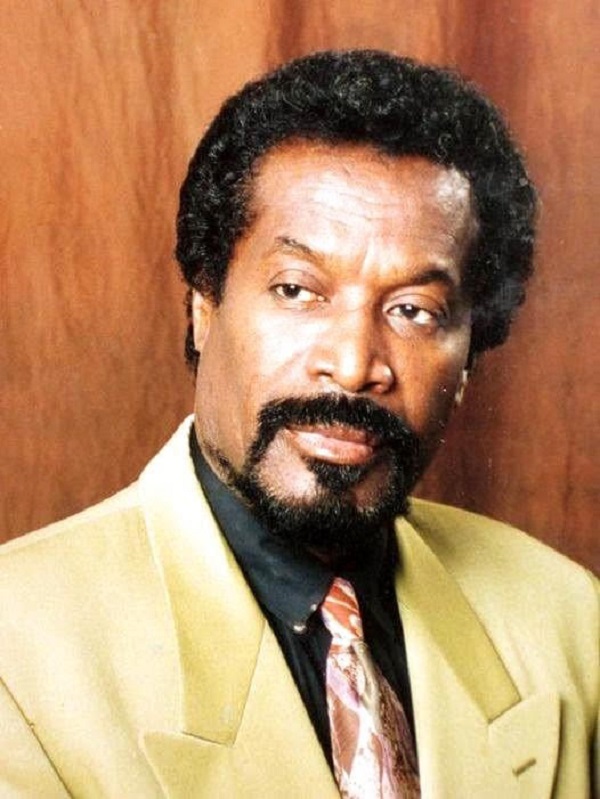
Pedro Juan Rodríguez, Pete “El Conde” Rodríguez “La Realeza de la Salsa” (Born in Ponce, Puerto Rico on January 31, 1933).

First singer signed to the Fania Records label in conjunction with the Johnny Pacheco Orchestra and of outstanding participation with the Fania All Stars and his own orchestra.

Pete “El Conde” Rodríguez

His father, who made his living as a musician playing in a string quartet that entertained parties and social gatherings, guided him during his first steps as a musician.

By the age of 6, little Pedro was very skilled with the bongo and singing popular Puerto Rican songs of the time.

Things became difficult after the death of his father and as a teenager Pete had to emigrate to the United States (1946) to live with his aunt in New York.

Once in New York, Pete managed to establish himself as a percussionist in the Orquesta Oriental Cubana. Before, long before joining the great Pacheco, Pete had to go through several orchestras among which stand out: Las Jóvenes Estrellas de Cuba (57), the Típica Novel and the Broadway from which he left for personal reasons.

In May 1962 Pete Rodriguez (he was not yet called El Conde), joined Pacheco in a Charanguero orchestra (flute, violin, rhythm and chorus). The first album with Pacheco was Suavito in 1963.

By 64 Jhonny Pacheco and Jerry Massucci founded Fania Records and created the internationally recognized Fania All Stars.

Pete was the first singer that Fania had, and on his shoulders was the responsibility of taking that project forward. On Fania’s first album Cañonazo (1964) Pete performs the song Fania, a composition by Josualdo Bolanos, with which the orchestra was inaugurated.

The Realiza of our Latin Music Pete "El Conde" Rodriguez
The Realiza of our Latin Music Pete “El Conde” Rodriguez

Rodriguez’s first appearance with Fania was at the Greenwich Village Red Garter Club in 1968.

For reasons of life Pete had to leave Jhonny Pacheco’s group; the concrete reasons for this separation will remain a mystery, but it seems that his departure was due to personal disagreements with other members of the group.

After Pacheco, Pete packed up his motets and moved with Rey Roig and the Sensación group (1964-1968). From his time with this group w For the years 66-67, Pete returned to the ranks with Pacheco. This was a more mature stage where the marvelous duo achieved their greatest hits: Azuquita Mami, Convergencia, La Esencia del Guaguanco, Sonero, Viralo al Reves and others.

The turmoil of the time, the world events, the new way of dressing and people’s way of thinking made Pete change his appearance; he let his beard grow and changed his hairstyle a little. This change gave him a new image and a new name “EL CONDE”.

The Pacheco-Rodriguez duo lasted approximately 8 years, since in 74 El Conde decided to go solo.

That same year El Conde released his best selling and Grammy award winning album El Conde (1974). Two years later (1976) El Conde became part of the Salsa Hall of Fame immortalizing himself with Catalina la O.

With the appearance of Salsa Romántica and the onslaught of Dominican merengue in the markets, salsa entered a crisis which was reflected in the musical work of El Conde. So between 1983 and 1990 El Conde managed to record only 5 albums of which Salsobita (1987) stands out.

In 1993 El Conde made way for his son Pete Emilio and his daughter Cita Rodriguez who joined the group as second voice and backing vocalist.

The family was already complete because Francis Rodriguez, his wife, was in charge of the administrative and financial part of the group.ere the following songs Salsa, Bailando Conmigo and his hit El Rincón.

El Conde made his last recording on the Masterpiece Album (1999) with Tito Puente (1923-2000) and Eddie Palmieri. This album is considered posthumous because in that same year (2000) Tito and El Conde passed away.

Cepelio de Pete El Conde Jhonny Pachoco, Cheo Feliciano, Ismael Miranda y Papo Lucca

El Conde had suffered from heart problems for many years, but was always reluctant to have open heart surgery. Pete “El Conde” Rodriguez passed away of a heart attack on Saturday, December 2, 2000.

His remains were taken to his native Puerto Rico. He is survived by his wife Francis, his two sons Cita and Pedro Emilio, and his grandchildren.

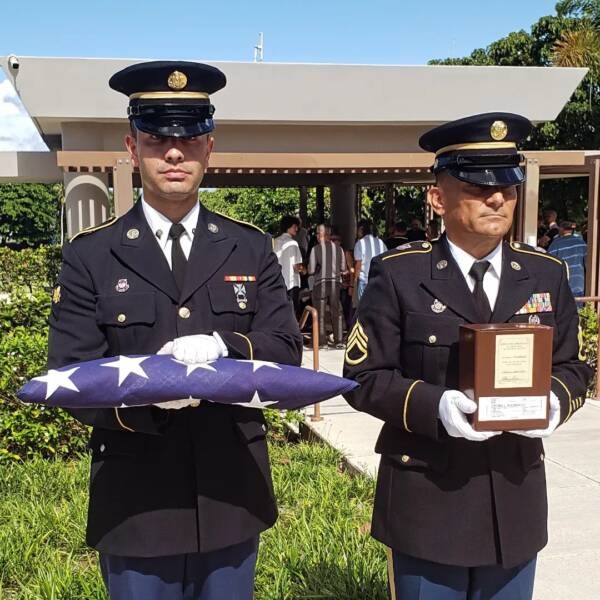
Remains of Pete “El Conde” Rodríguez finally rest on the island. December 7, 2023 – After his death in 2000, the remains of Ponceño singer Pete “El Conde” Rodríguez were transferred from New York to the National Cemetery for veterans in Bayamón.

Ashes of Pete El Conde Rodriguez

Source: El Pozo de la Salsa

Also Read: Héctor Martignon has been one of the most sought-after pianists on the Latin jazz scene in New York

The Rumba Madre and its roots in Basque culture

The Rumba Madre is a Nashville-based group whose characteristics are very interesting and make it different from many other artists and orchestras that have appeared in this section over the past few years.   

On this occasion, we had the pleasure of talking with Basque guitarist and tresero David Vila, who revealed the most important details about the creation of The Rumba Madre and his own musical career before and after the group, so just sit tight because there is a very interesting story coming on. 

guitarrist David Vila
Basque guitarist and tresero David Vila, who kindly talked to us

Music in David’s childhood 

When David was just a little boy, in his entire family, only his grandfather liked to sing. In contrary to the case of many other artists we have had the pleasure of interviewing here, David does not come from a family of musicians, but that did not keep him from developing a taste for this artistic side over time. 

Being very small, his parents moved from Galicia to the Basque Country to work and seek a new life. In this autonomous community, the cultural environment turned very lively and punk and other similar rhythms were at their peak of popularity, which got him interested in the tuna guitar and other instruments. He also started listening a lot to jazz and blues, which became fashionable in those years. 

Since David had no possibility to be formally educated in music, he just listened carefully and imitated the sounds the best he could until he decided that he needed to go one step further in his budding career as a musician. It was then when he moved to London, England, to study his degree in guitar. He had already worked as a musician in Spain, so this work experience was very useful to what he would do later on.   

Aside from having obtained his degree in music, David also toured around Europe with some local bands, which he continued to do in the United States when he moved to Nashville.  

Currently, he is a Hispanic popular music professor at the university level, so he teaches everything he has learned to young people who want to follow his same path.   

Rubén Darío, Benjamín Alexander, and David Vila
Nicaraguan guitarist Rubén Darío, Puerto Rican bassist Benjamín Alexander, and Basque guitar player David Vila

Nashville  

The first U.S. city David went to live in was Chicago because he was very interested in exploring the blues and other genres from that part of the country, but David did not have the visa required for entry into the U.S. at the time, so his plans to go there were inevitably postponed. When he was finally able to travel, he had no choice but to go to Nebraska and stay there for about two years for lack of a better option.   

Subsequently, he chose the city of Nashville as his final destination because of the large amount of musicians who live and work there. He even went so far as to call this place ”The Disneyland of musicians” because of all the opportunities it presents in this area.   

Another positive aspect for artists is that there are a lot of well-known record labels and studios to work with, making it an excellent choice for artists looking for a place to start or continue their careers. The locals themselves call it ”the music city” and have a saying that goes ”the worst waiter is a better musician than you,” making it clear how music is perceived in Nashville.   

David’s inclination for Latin music 

In England, David had already been studying some flamenco and, while it is true that he was not an expert yet, there were not many musicians in Nebraska who played that genre, so he caught the attention of many of his colleagues and groups that requested his services. The same thing happened in Nashville and the fact that he spoke Spanish reinforced the idea that he played Latin music.   

The above led many to believe that David was capable of playing both Flamenco and Cuban music without any problem, which was not entirely certain at the time. This is how he ended up playing guitar in a Cuban son band, thanks to which he had to learn to play the Cuban tres in order to be in the band.   

Although at first, it was too complicated for him, he focused on practicing a lot and listening to recordings of treseros to be able to imitate them as well as possible. Thanks to his effort and commitment, David learned how to play it and he spent five or six years doing it until he created his own group, The Rumba Madre.   

David laughingly recalls that his goal when moving to Nashville was to play country music as he did in England, but there were so many country musicians that he chose to explore another niche and ended up studying and playing Latin and Caribbean music.   

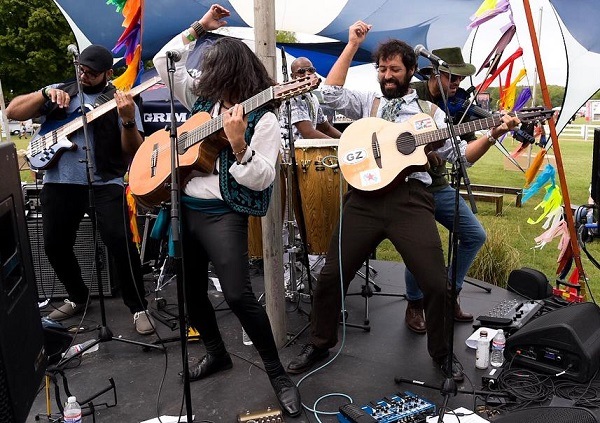
The Rumba Madre
The Rumba Madre playing live

The Rumba Madre  

After all the experience gained by David in those years, he thought it was time to create his own project and, for this, he chose two colleagues he met in that same musical context in Nashville, Nicaraguan guitarist Rubén Darío and Puerto Rican bassist Benjamín Alexander.   

The three artists coincided many times in different bands and concerts in which they played together, so they already knew each other’s styles very well. Since they were all Spanish-speaking, migrants and musicians, they saw that they had many things in common and established a friendship that led to a band.  

Both David and Ruben took advantage of the many compositions they had made in recent years and used them as repertoire for the project that was coming. Not much time would pass before music venues and festivals began to take them into account. 

On one such occasion, they met Cultura Profética keyboardist and composer Iván Gutiérrez Carrasquillo, who had lived in Miami his whole life, but decided to try his hand in Nashville, Gutiérrez was so impressed with the music made by The Rumba Madre that he proposed them to make an album. He also acted as a contact point for The Rumba Madre to be in touch with companies and labels that would be key to the success of the group later.   

They were going to release their first album in 2020, but could not present and promote it due to the pandemic, so they had no choice but to wait for things to die down.   

So far, The Rumba Madre has experimented with rumba, punk, Cuban son, salsa, flamenco, tango and many other genres. 

Read also: We welcome Patricio Angulo from Rumbaché to ISM 

Producer and saxophonist Martin Franco talks about his passion for music

Martin Franco is a talented New York’s producer, sound engineer, composer, vocalist, percussionist and saxophonist who has had a big trajectory in music, which he shared with us in a half-hour conversation we had.   

The artist of Colombian parents has been kind enough to reveal some of the most important details of his artistic career and the process by which he has managed to become the professional in the music field he is today, so we hope the information revealed here will be liked by those who usually follow our publications.  

Martin, founder of Mambo Soul Band
This is Martin Franco, saxophonist and founder of Mambo Soul Band

Martin’s interest in music while still a child 

Something important we did not know about Martín is that, although both his parents are Colombian, they moved to Mexico when he was little and he spent the first eight years of his childhood in that country, before moving to Laredo, Texas.   

At his new school in the US, he and his classmates were allowed to choose the instrument they liked most to learn to play it and the boy chose the saxophone, as he thought it was ”the most beautiful” at the time.   

When Martin began his training, he discovered that he had a real taste for music and began to see it as a pleasant pastime and not an obligation, which led his mother to buy him his own saxophone and tell him to ”throw forward to music” if that was what he liked. 

When he turned 12, the family moved back to New York, where Martin started to take music more seriously and meet people related to the industry. That was when percussion and tropical music also caught his attention, as Texas was packed with Mexican cumbia and other such rhythms.   

On the other hand, New York had an immense Puerto Rican community and even his own aunts had married Puerto Ricans. Since this was the dominant community in the city in those years, Martin began hearing the conga, the keyboard, the trombone, the timbales and all the music made by the Fania. It was then when his musical tastes and plans began to change.   

Martin and the rest of the group
Martin Franco and the rest of his orchestra Mambo Soul Band

Martín’s beginnings in music in New York City 

When he arrived in New York, Martin was not old enough to start a professional career, so he was engaged to play with friends in the streets, houses, apartments and private parties. However, this time helped him a lot to gain experience and his family was a great support in all this.   

Martín, his family and some of his friends used to go to see live Latin artists and orchestras such as Celia Cruz, Héctor Lavoe, Tito Puente, Eddie Palmieri, Ray Barretto, Mongo Santamaría, among others. This also represented part of his motivation to do salsa in the future, although he also liked American jazz, which features the saxophone, his favorite instrument.   

The mix of Latin and American genres resulted in the music that became popular in those years, and the music Martin makes today has much of what he learned back then. It was a mix of Caribbean tropical rhythms, jazz and American funk.   

The musician considers that American and Latin rhythms have complimented each other over the years and he always tries to unite them in his performances, just like English and Spanish.  

Mambo Soul Band 

The name ”Mambo Soul Band” is a mixture of ”mambo”, which means ”to greet someone” or ”to communicate” in some African dialects, and ”soul” in English. This resulted in something like ”to communicate from the soul”, a concept that fascinated Martin. At the same time, both are the names for well-known musical genres, the one Latino and the other American. 

He selected these genres as the name of his band because they contain what influenced him musically speaking. Latin jazz, soul and funk were the genres on which Martin based his songwriting for the band he was creating and he hired musicians who had experience with these rhythms. And in case they do not master any of them, he teaches them.   

According to Martín, guitarists and bassists are the ones who usually have more problems when playing or learning to play these genres, while a percussionist usually has a greater dominion over these areas. 

Another variant of the same project also led by Martín is Mambo Soul Jazz, which offers music and songs much more inclined to the American way. Mambo Soul Jazz is more aimed at quiet events where people do not usually dance much and just want background music to enjoy the evening. 

The choose of one or the another will vary depending on the public of the day, although the basis of everything is always Latin music.  

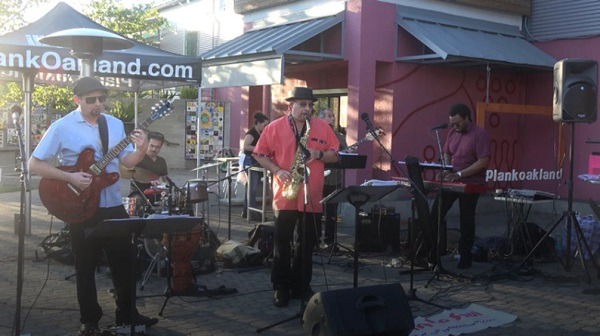
Martin performing live
Martin Franco and Mambo Soul Band performing live

The most challenging aspects of the Latin music scene 

In the view of Martin based on his experience, one of the most challenging things for him and his musicians is the economic issue. At the level where they are, they do not make big profits from their work, which contrasts to the high cost of living in California.  

This situation has led many of the musicians to have parallel jobs that allow them subsistence since it is very difficult to make a living from music. The only alternative is to constantly tour with famous groups, but not everyone is willing to do that, so they prefer to work on other things. 

In his particular case, he can afford to live only from music because he is the leader of the orchestra and the one who is in charge of getting contracts and shows for the group.  

What we took from the conversation 

From the beginning, we have noticed that Martin is a man absolutely passionate about his Latin roots and all that comes with them, especially the musical part. He always stressed that everything he does is for his love of music.   

It is our pleasure to have the opportunity to talk with this great exponent of Latin and Afro-Caribbean music and we offer him our best wishes for success from now on. 

Read also: Lengaïa Salsa Brava is killing it in Montréal 

  • « Go to Previous Page
  • Page 1
  • Interim pages omitted …
  • Page 48
  • Page 49
  • Page 50
  • Page 51
  • Page 52
  • Interim pages omitted …
  • Page 129
  • Go to Next Page »

International Salsa Magazine (ISM) is a monthly publication about Salsa activities around the world, that has been publishing since 2007. It is a world network of volunteers coordinated by ISM Magazine. We are working to strengthen all the events by working together.