• Skip to primary navigation
  • Skip to main content

International Salsa Magazine

  • HOME
  • Previous editions
    • 2026
      • ISM / April 2026
      • ISM / March 2026
      • ISM / February 2026
      • ISM / January 2026
    • 2025
      • ISM / December 2025
      • ISM / November 2025
      • ISM / October 2025
      • ISM / September 2025
      • ISM / August 2025
      • ISM / July 2025
      • ISM / June 2025
      • ISM / May2025
      • ISM / April 2025
      • ISM / March 2025
      • ISM / February 2025
      • ISM / January 2025
    • 2024
      • ISM / December 2024
      • ISM / November 2024
      • ISM / October 2024
      • ISM / September 2024
      • ISM / August 2024
      • ISM / July 2024
      • ISM / June 2024
      • ISM / May 2024
      • ISM / April 2024
      • ISM / March 2024
      • ISM / February 2024
      • ISM / January 2024
    • 2023
      • ISM / December 2023
      • ISM / November 2023
      • ISM / October 2023
      • ISM – September 2023
      • ISM – August 2023
      • ISM July 2023
      • ISM Edition June 2023
      • ISM – May 2023
      • ISM April 2023
      • ISM March 2023
      • ISM February 2023
      • ISM January 2023
    • 2022
      • ISM December 2022
      • ISM November 2022
      • ISM October 2022
      • ISM September 2022
      • ISM August 2022
      • ISM July 2022
      • ISM June 2022
      • ISM May 2022
      • ISM February 2022
      • ISM January 2022
    • 2021
      • ISM December 2021
      • ISM November 2021
      • ISM October – 2021
      • ISM September 2021
      • ISM August 2021
      • ISM July 2021
      • ISM May 2021
      • ISM April 2021
      • ISM June 2021
      • ISM March 2021
      • ISM February 2021
      • ISM January 2021
    • 2020
      • ISM December 2020
      • ISM November 2020
      • ISM October 2020
      • ISM September 2020
      • ISM August 2020
      • ISM July 2020
      • ISM June 2020
      • ISM May 2020
      • ISM April 2020
      • ISM March 2020
      • ISM February 2020
      • ISM January 2020
    • 2019
      • ISM December 2019
      • ISM November 2019
      • ISM October 2019
      • ISM Septembre 2019
      • ISM August 2019
      • ISM July 2019
      • ISM June 2019
  • Spanish
  • Download Salsa App
    • Android
    • Apple

Search Results for: salsa

Alfredo “Chocolate” Armenteros: The Golden Legacy of the Cuban Trumpet

The history of Latin music cannot be written without mentioning the metallic brilliance and elegant phrasing of Alfredo “Chocolate” Armenteros.

Regarded by musicologists and peers as the “Latin Louis Armstrong,” Armenteros was more than just a trumpet virtuoso; he was a sonic architect who bridged the gap between traditional Cuban son, New York jazz, and the high-energy explosion of salsa.
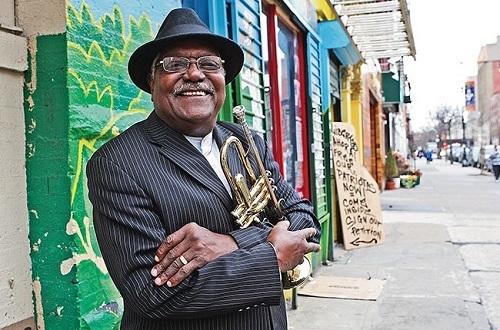
Chocolate Armenteros🇨🇺fue una leyenda excelsa de la música cubana

Born on April 4, 1928, in Las Villas, Cuba, Armenteros carried the soul of his homeland to the world’s most prestigious stages.

His nickname, which became a hallmark of artistic quality, originated from a curious anecdote the musician shared in 2013: a young woman had mistaken him for the famous boxer “Kid Chocolate.”

What began as a case of mistaken identity ultimately became the name of a legend who would deliver his “knockouts” not with fists, but with perfect notes.

The Forging of a Master: From Arsenio Rodríguez to the “Bárbaro del Ritmo”

The career of Chocolate Armenteros serves as a detailed roadmap of the Golden Age of Cuban music. In 1950, he joined the ensemble of the “Blind Marvel,” Arsenio Rodríguez.
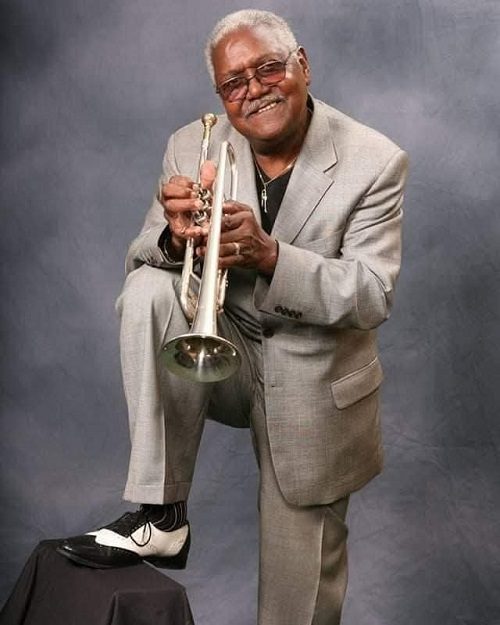
Alfredo Chocolate Armenteros el Legado de Oro de la Trompeta Cubana

Under Rodríguez’s tutelage, he recorded essential pieces of the Caribbean songbook such as “Deuda,” “Tengo que olvidarte,” and the iconic “La vida es un sueño.”

This period was vital in defining his style: a fusion of technical discipline and a gift for organic improvisation.

His rise was meteoric. By 1953, he was already a member of Sonora Matancera, the island’s most influential musical institution. That same year, he participated in a historic milestone: the founding of the band led by his cousin, the great Benny Moré.
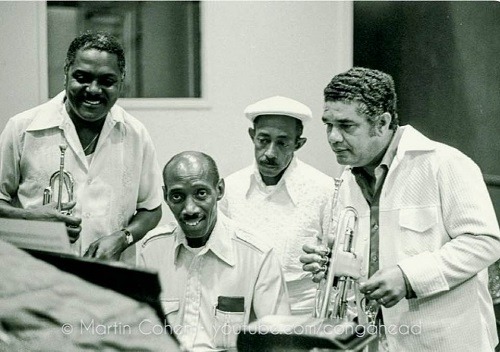
Alfredo Chocolate Armenteros, Lino Frias, Carlos Patato Valdez y el Negro Vivar 1973

The sound of Chocolate’s trumpet was a key gear in the machinery of Moré’s “Tribu,” cementing his status as the most sought-after instrumentalist of his generation.

Conquering New York and the Global Stage

In November 1958, Armenteros’ destiny changed forever. He traveled to New York with the Fajardo y sus Estrellas orchestra for a private performance at the Waldorf Astoria Hotel.

The event carried high-level political weight: it was a gala for the presidential campaign of then-candidate John F. Kennedy. Following this encounter with the Big Apple, the trumpeter decided to settle permanently in the city, becoming an ambassador for Caribbean rhythms at the epicenter of jazz.

In New York, his talent flowed through the most influential groups of the era:

  • The Machito Orchestra (1963): Where he fused Cubop with Afro-Cuban jazz.
  • Eddie Palmieri (70s): Contributing his power to the experimental sound of salsa brava.
  • Tico-Alegre All Stars (1975): Sharing the stage with giants like Celia Cruz, Tito Puente, Ismael Rivera, and Cachao.

An Endless and Eternal Style

In the late 70s and early 80s, Armenteros not only returned to collaborate with Sonora Matancera but also took the definitive step as a bandleader.

Under his own direction, he left behind memorable productions such as Chocolate Dice (1982) and Estrellas de Chocolate (1987), proving that his creative well never ran dry.The most admirable aspect of Armenteros was his artistic longevity. He remained active in festivals and concerts well into his 80s, preserving a privileged embouchure and a sense of timing that seemed to defy the laws of physics.

Alfredo Chocolate Armenteros y Eddie Moltalvo

Today, nearly a century after his birth, Alfredo “Chocolate” Armenteros remains the gold standard for trumpeters. His life was a testament to elegance, his music a bridge between nations, and his trumpet an eternal echo of Cuban identity that continues to resonate in every jazz descarga and every salsa step around the world.


Also Read: Larry Harlow and Ismael Miranda: The birth of “Arsenian Salsa,” a tribute to the music of Arsenio Rodríguez the creator of Son Montuno and the “King of Guaguancó.”

ISM December 2016

Portada - ISM December 2016

North America thubnails - ISM December 2016

Europe thubnails - ISM December 2016

Latin America thubnails - ISM December 2016

Contraportada - ISM December 2016

Europe – December 2016

Nossa Kizomba thubnails - Nossa Kizomba thubnails - Europa - Diciembre 2016

100% KIZOMBA NEW YEAR PARTY thubnails i- Europe - December 2016

Cuban Salsa Festival thubnails - Europe - December 2016

North America – December 2016

Christmas in New York thubnails - North America - December 2016

Pietros thubnails - North America - December 2016

Ray Rodríguez and The Colao Band promote Latin music in San Antonio, Texas

Ray Rodríguez is a talented professional musician and ex-serviceman with whom we’ve had the great pleasure of talking to about his career and other interesting details of his life in general. This descendant of Puerto Ricans has shown us a little-known side of himself, and we’re more than happy to share it with our dear readers today, May 1, 2026.

Ray posing
Ray Rodríguez posing for the camera

How Ray got his start in Music and who inspired him

Ray came from a family full of musicians, but his father and grandfather dedicated themselves to the craft of building string instruments such as guitars, requintos, and cuatros. His grandfather, besides being a craftsman, was also a very talented musician, so he was in high demand in his town to liven up events of all kinds. Seeing so many musicians testing the quality of the instruments at home all the time, little Ray tried to be around to learn the tones he heard.

Over time, he had his own guitar and carried it with everywhere he went, something that his family always supported, and he is so grateful for that.

Enlistment into the United States Army

Music was always very present in Rey’s life, but he had not yet mastered it very well, and his interest in it had not developed much at all, so he joined the United States Army. However, once there, some of his fellow soldiers were also musicians, and taught him to play other instruments, but it did not end there. It was at this stage that his interest in singing was sparked and he dedicated to this profession after his retirement. That was 26 years ago. 

He came to be there for a total of six years. In the beginning, he joined as an infantryman and later became an artilleryman. He also attended aviation school for about a year, but unfortunately had an accident that fractured his leg in six places, so he was given the option of staying or changing jobs again, and he chose the latter.

It should be noted that he spent much of his service in Germany, and being there, he devoted much of his free time to listening to music that reminded him of his roots and playing it as a hobby.

Ray and The Colao Band
Ray Rodríguez and The Colao Band at the Jazz Festival in Helotes

Why he chose Texas back to the United States

Having been born in Boston, Massachusetts, it struck us that he chose Texas as his new home. On this subject, he told us that his best friend was parked at Lackland Air Force Base in San Antonio and invited Ray to visit him. The artist enjoyed his walk around the city so much that he decided to stay there, so he applied to work at the City of San Antonio Aviation Department and got the position. After completing his retirement procedure, that was how he went directly to San Antonio, where he continues to live to this day. 

As for the musical panorama he found there, what dominated the most at the time was regional Mexican music, so salsa, merengue, and other genres of that type were just beginning to take their place on the local music scene. Fortunately, things have changed since then. During those same years, Ray was invited to a rehearsal with the merengue band Grupo Chocolate to serve as a backup singer, and he spent about six years singing with them, but also became the band’s manager and owner.

Already in the year 2007, the band unfortunately broke up and all the members went their separate ways, which is when Ray finally decided to form his own band, The Ray Colao Band. 

The Colao Band

For a time, Ray was the singer of Tito Puente Jr.’s band, and both he and the timbalero were having lunch at a restaurant and talking about the band Ray wanted to start. Ray explained to him that his project was like a mix of everything and that it was all “colado” (in this context, it means everything is mixed together). In addition, he always snuck into someone else’s stage without being part of the group (”colado’’ in Spanish), so Puente gave him the idea to use that name for his band, and it was.

Ray and Tito
Ray Rodríguez and Tito Puente Jr.

As for his accompanying musicians today, we can mention guitarist and singer Jessi García, guitarist, pianist, and bassist Rogelio Romer Hidalgo, singer Gilberto Álvarez, percussionist Georgie Padilla, and the late Jesús Navarrete. These were the members who formed the core of the band, and almost all have been working alongside Ray for about 18 years continuously, except for Gilberto, who spent some time in Puerto Rico but then rejoined them. After them, The Colao Band also welcomed Hainel García and Robert García.

In addition to the band, Ray has also been able to open his own restaurant, Cuba 1918, which he has been running for about four years. He says the project is going very well and that it has become a music and arts venue where he hires various bands to entertain customers during their meal.

Read also: Actress, comedian, and singer Carmen Nydia Velázquez tells us about the best of her career

  • « Go to Previous Page
  • Page 1
  • Interim pages omitted …
  • Page 55
  • Page 56
  • Page 57
  • Page 58
  • Page 59
  • Interim pages omitted …
  • Page 402
  • Go to Next Page »

International Salsa Magazine (ISM) is a monthly publication about Salsa activities around the world, that has been publishing since 2007. It is a world network of volunteers coordinated by ISM Magazine. We are working to strengthen all the events by working together.