• Skip to primary navigation
  • Skip to main content

International Salsa Magazine

  • HOME
  • Previous editions
    • 2026
      • ISM / March 2026
      • ISM / February 2026
      • ISM / January 2026
    • 2025
      • ISM / December 2025
      • ISM / November 2025
      • ISM / October 2025
      • ISM / September 2025
      • ISM / August 2025
      • ISM / July 2025
      • ISM / June 2025
      • ISM / May2025
      • ISM / April 2025
      • ISM / March 2025
      • ISM / February 2025
      • ISM / January 2025
    • 2024
      • ISM / December 2024
      • ISM / November 2024
      • ISM / October 2024
      • ISM / September 2024
      • ISM / August 2024
      • ISM / July 2024
      • ISM / June 2024
      • ISM / May 2024
      • ISM / April 2024
      • ISM / March 2024
      • ISM / February 2024
      • ISM / January 2024
    • 2023
      • ISM / December 2023
      • ISM / November 2023
      • ISM / October 2023
      • ISM – September 2023
      • ISM – August 2023
      • ISM July 2023
      • ISM Edition June 2023
      • ISM – May 2023
      • ISM April 2023
      • ISM March 2023
      • ISM February 2023
      • ISM January 2023
    • 2022
      • ISM December 2022
      • ISM November 2022
      • ISM October 2022
      • ISM September 2022
      • ISM August 2022
      • ISM July 2022
      • ISM June 2022
      • ISM May 2022
      • ISM February 2022
      • ISM January 2022
    • 2021
      • ISM December 2021
      • ISM November 2021
      • ISM October – 2021
      • ISM September 2021
      • ISM August 2021
      • ISM July 2021
      • ISM May 2021
      • ISM April 2021
      • ISM June 2021
      • ISM March 2021
      • ISM February 2021
      • ISM January 2021
    • 2020
      • ISM December 2020
      • ISM November 2020
      • ISM October 2020
      • ISM September 2020
      • ISM August 2020
      • ISM July 2020
      • ISM June 2020
      • ISM May 2020
      • ISM April 2020
      • ISM March 2020
      • ISM February 2020
      • ISM January 2020
    • 2019
      • ISM December 2019
      • ISM November 2019
      • ISM October 2019
      • ISM Septembre 2019
      • ISM August 2019
      • ISM July 2019
      • ISM June 2019
  • Spanish
  • Download Salsa App
    • Android
    • Apple

Search Results for: salsa in venezuela

The story of how Oscar D’León’s “La Salsa Mayor” came about

How Oscar D’ León’s “La Salsa Mayor” came about, is a story that has already been commented on, including the subsequent separation of musicians that the aforementioned orchestra had, which gave way to the formation of another well-known group (Nuestra Orquesta la Salsa Mayor), is also a well-known story, but one as a good music lover always wants to continue to investigate and whenever the opportunity arises to make a healthy discussion about the subject in question, one does so without any qualms.

That is why it is never too much to remember some interesting facts that adorn this story, such as the headline that appeared on the front page of Swing Latino magazine in November 1977, which read: “KO a la Dimensión? OSCAR D’LEÓN after signing WLADIMIR.

In summary, the article said that Wladimir had intentions of leaving Dimension because of an alleged refusal of a loan request, a situation that induced the vocalist to want to sign with another orchestra. Another excerpt of the article says that Oscar D’León in his eagerness to have Wladimir in his orchestra, would have given him the money to satisfy his economic needs, but in exchange he would have signed a contract with the orchestra.
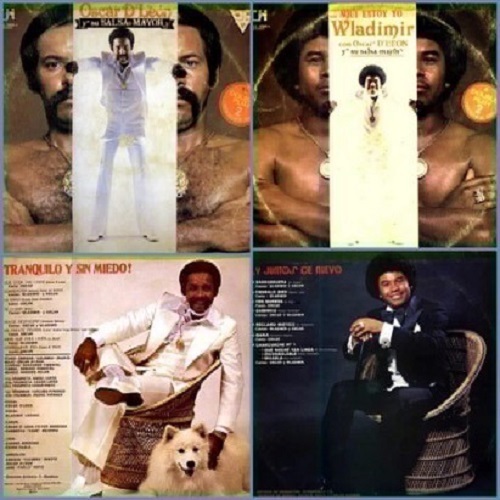
“La Salsa Mayor“de Oscar D’León

In short, by that time in November 1977, these were only speculations, of course, as it is also mentioned in the article in a jocular way “When the river sounds it is because it brings stones”.

The truth is that the year 1978 arrived and in the Swing Latino of March another headline appeared on the front page “¡LA DIMENSIÓN LATINA SE VA DE VENEZUELA! pero Wladimir se queda con Oscar”, which clearly shows that those speculations or rumors that were made in the salsa milieu at that time were a reality that quickly materialized.

“Last February 20, the bolerista presented his resignation to Dimensión Latina and began to work his notice period. In the meantime, he has already begun his rehearsals with Salsa Mayor and will soon be fully incorporated into this group that already threatens to become a real monster not only nationally but also beyond our borders, which we have no doubt he will now achieve with this valuable acquisition” (Swing Latino. March 1978).

Now, only a month had passed when another news about the orchestra of the dancing bass shakes the salsa milieu, “¡SE DISOLVIO LA SALSA MAYOR!”, headline that appeared in Swing Latino for May 1978 and stating: “Seven of the ten musicians that made up the prestigious group of Oscar D’León, left the orchestra for economic reasons”.

The rest is already known history, the negrito from Antimano reassembled his orchestra with some musicians from “La Critica” and others who came from the orchestra “La Renovación”, which at the same time also dissolved and the rumba continued.
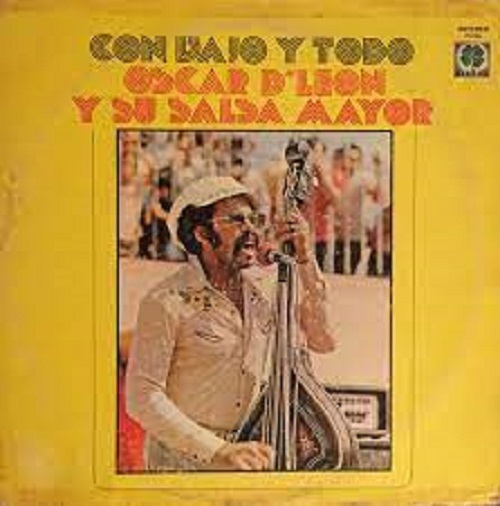
Con Bajo y Todo  Oscar D' León's "La Salsa Mayor"
Con Bajo y Todo  Oscar D’ León’s “La Salsa Mayor”

In August of that year 1978, Oscar D’León’s last album was announced under the name of “LA SALSA MAYOR”, a fabulous double LP, that just by looking at its cover you could already feel the strength with which the sonero from Caracas was coming along with the diminutive in stature but great with his voice, Wladimir Lozano.

The internal title of the album spoke for itself, “TRANQUILO Y SIN MIEDO”, this makes us think that the phrase had a double meaning, remember that the musicians who defected to form the other Salsa Mayor, recorded that famous song: “Fuimos Amigos”, where they throw a few puns at Oscar and this “calm and fearless”, returns them in the song: “La Mano”… “Why did not you follow me when I gave you my hand?”Now it weighs on you, you fell in the mud”… Chorus: “Que te vaaaya bien”.

The album is excellent as almost all the ones published by D’León in those past decades, all the songs are good, but I can’t help but comment and recognize that the song that I liked and still like the most from this double album is “MARIA”, maybe because in every man’s life there has always been a Maria…My respects and salsalutation to all of you.
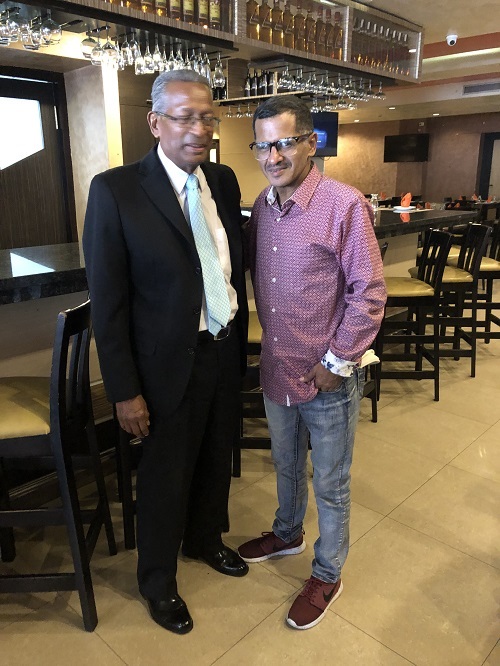
Enrrique “Culebra” Irierte y Dj. Augusto Felibertt

Oscar D’León y su Salsa Mayor (double play) (1978) ths-1225

Disc 1 – Side A

  1. Que cosa tan linda (Oscar D’León) Singer: Oscar D’León
  2. Consentida (Alfredo Nuñez de Borbón) Singers: Wladimir and Oscar
  3. La mano (Sandy Omar González) Sung by: Oscar
  4. Te llamo (D.D.) Sing: Wladimir and Oscar

Disc 1 – Side B

  1. Dulce desengaño (Armando Beltrán) Sung by: Oscar and Wladimir
  2. De frente Panamá (L: Andrés Vega, M: José Zamora) Sung: Oscar D’León
  3. Mira que eres linda (J. Brito) Sung by: Wladimir Lozano
  4. Consígueme eso (Pedro N. Perez) Sings: Oscar D’León

Disc 2 – Side A

  1. Sandunguera (M. Guerra) Sung by: Wladimir and Oscar.
  2. Piénsalo bien (Agustín Lara) Sings: Wladimir Lozano
  3. Ven morena (R. Paz) Sing: Oscar D’Leó
  4. Ausencia (Rafael Hernández) Sing: Oscar and Wladimir

Disc 2 – Side B

  1. Reclamo místico (M. Matamoros) Sing: Wladimir y Oscar

María (Florentino Padrón) Sing: Oscar D’León

  1. Chancunche No. 1: Sing: Wladimir and Oscar

*Que noche tan linda (B. Diez, A. M. Romeu)

*Inconsolable (Rafael Hernández)

*Micaela (Raúl Guillaume)]

Musicians:

Enrique “Culebra” Iriarte (Piano).

Oscar D’León (Bass)

Rhadames Pimentel (Congas)

Edward Pimentel (Timbal)

Hungary Rojas (Bongo)

Ángel López (1st Trumpet)

César López (2nd Trumpet)

César Pinto (3rd Trumpet)

Tarcisio Piñango (1st Trombone)

Pedro Piñando (2nd Trombone)

Andrés Mendoza / Pedro Vilela (Tres)

Oscar D’León (Vocal)

Wladimir Lozano (Vocal)

Oscar D’León / Víctor Mendoza / Humberto “Tigre” Becerra (Backing Vocals)

Enrique Iriarte / Oscar D’León / José “Cholo” Ortiz (Arrangements)

Other Credits:

Intersonido C.A. Recording Studios.

Sound Technicians: Agustín Verde and Carlos Guzmán

Mixing: Rafael Hernandez

Art Direction: Víctor Mendoza

Idea, Design and Album Art: Drago Fernández

Photos: All Freddy.

Source:

José “Cheo” Guevara

Enrrique “Culebra” Iriarte

Enrrique “Culebra” Iriarte

You can read: Víctor Porfirio Baloa Díaz, more commonly known as Porfi Baloa

”Salsa Con Sabor’’ and its contribution to salsa music

Platfoms to promote salsa

Just as we always promote the artists and musicians who keep alive salsa and Latin genres, we also think it is important to highlight the work of communicators who have taken the task of continuing to spread the traditional Latin music through the resources that technology has made available to us. Such is the case of Charlie Perez and the web page ”Salsa Con Sabor”, which he has been running for several years.

We talked to this talented young man, who has illustrated very well how his work has been throughout these years with the management of ”Salsa Con Sabor”, interesting anecdotes and what he earned from all this process.

Charlie Pérez, administrator of ''Salsa Con Sabor''
Charlie Pérez, administrator of ”Salsa Con Sabor”

Conversation with Charlie Perez from ”Salsa Con Todo”

Salsa Con Sabor was born in 2010. I was always a salsa enthusiast and it runs in the family because my father has always loved tropical music, salsa, guaguancó, son montuno, bolero, among others. I became curious about these topics while naving in the social networks, so I created a Facebook page whose aim was to be a music space to share with salsa fans around the world. By this means, we began to share music, artist biographies, salsa history, salsa ephemeris and many more” were the words spoken by Charlie when asked how this project came about.

He also told us that the page was gaining a popularity that he and his team decided to shape this idea through the creation of a website, a YouTube channel and accounts in the rest of social media. All this led several independent artists to send their musical works to ”Salsa Con Sabor” to be shared and diffused.

Important to note that all members of this great team are professionals nothing linked to the world of music. They are simply people who enjoy Latin genres and want them to stay alive over time.

Charlie Pérez and his wife Wilendy Rosario

What do you see in an artist before spreading his or her music?

I like to support all artists, but I don’t deny that I focus a lot on the quality of the work presented. I always check certain aspects such as the cover art, the image and how music was worked, showing whether or not an album will be worth it. We always give the opportunity to all artists to send us their work, but they must have a standard quality” said Charlie on the subject related to unknown artists sending him their albums.

Successes to date

Perez has told us that he feels incredibly grateful for all the doors ”Salsa Con Sabor” has opened for him. He has met many important people in the industry and artists with whom he has developed good friendships, something he really values.

This space has also allowed him to expand to other fields. In the case of Charlie, he is a marketer and always had the desire to start his own business, which added to his knowledge of the music industry and marketing, led him to create his own advertising agency called Tumba Media Productions. The company is dedicated to dissemination activities such as press releases, graphic design, among other things.

Another thing that has been very important for the future career of this young man has been song writing. Composing his own material has earned him contact with great artists such as Venezuelan singer Néstor Pacheco, who motivated him to make music and with whom he has a clase friendship. They even wrote some songs together such as ”Sabor y Guaguancó” and ”Mamá Inés”.

Logo of the website
Logo of the website

The best experiences with the website

Regarding this point, Charlie replied that his reviews have received many positive messages from the public and many artists. He and his collaborators are very glad that so many people keep an eye on their content and that their platform let them know abut new music in terms of salsa, guaguancó, bolero, son montuno and other associated genres.

We are great popuizers of new music that nobody knows about due to the amount of content you can find, which makes us very happy and be satisfied with our work” says Charlie.

Activity during the pandemic

From the pandemic, we started working on interviews a lot more than before and had to focus on making video content. Video editing tools were very important for us at this stage, since it wasn’t just about doing interviews, but also about downloading them and doing all the corresponding editing to show them to the public in the most professional way possible” says the administrator of ”Salsa Con Sabor” about his experience with the pandemic.

He also told us that there were many artists he interviewed with whom he thought would never connect, which was made possible thanks to the tools that technology offers us today. In that sense, his wife Wilendy Rosario was very important in this entire process, as she was in charge of making contacts and conducting many of these interviews in that frame of time. She is described by her husband as a fundamental part of this project thanks to her communication style and charisma.

Read also: Broadcaster and host of Con Sabor Y Amor Latino Tatiana Mezarina

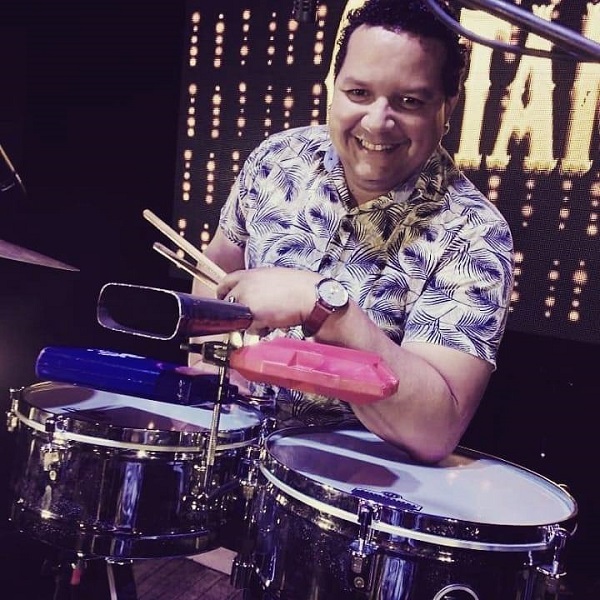
Edgar “Balín” Ocando Venezuelan percussionist musician based in Mexico

Edgar “Balín” Ocando, Venezuelan musician born in Caracas in the parish of El Recreo, specifically in block 7 and 8 of Simón Rodríguez.

He studied music at the José Reyna school located behind the same building where he lived, he also studied at the Conac de Sarria with maestro Orlando Poleo.

In his childhood he met with friends who had the same restlessness and passion for music, getting together every weekend to make noise as the neighbor said to the one who had to endure the music end after end.

As a result of these rehearsals he ended up in a group with which he began his music career and received his first professional payment at the age of 14 with the group Ases de la Gaita, a group formed by childhood friends in order to get away from drugs, which for the 80s was very strong.

Edgar “Balín” Ocando músico percusionista venezolano radicado en México

In high school he joined the ranks of the Venezuelan Children’s Choir under the direction of maestro Raul Cabrera. During his time in the choir, the son of Professor Cabrera, known as Raulito, formed the salsa group Sabor Latino and became part of it.

Coming from a musical family, he always looked for a way to be close to his uncles Rafael and Yelitza Sivira, who were singers of the Polifónico Rafael Suarez and always looked for a way to be present in the rehearsals.

Yelitza Sivira was the one who took the responsibility to take him and he only sat and watched how they vocalized with the piano with the help of the director Maria Cabrera. It was then when they created the Polifónico Infantil Rafael Suarez and he became a baritone.

Already in adolescence at the age of 17 years old, he started working in a bank through a scholarship granted by the institution Insbanca, and while working, the Coral del Banco Italo Venezolano was created, thus participating in bank choral meetings, it was then that he returned to music as an instrumentalist when he saw in a newspaper advertisement that they requested a drummer to be part of a group of bagpipes, for which he went to the audition where there were countless drummers and of which he was left with the position thus becoming part of Estrellas de la Gaita.

The following year he was invited by a friend to join the group Santoral of Freddy Rangel, arriving to record for the first time in Requena Studios, the following year in full rehearsal with Santoral I was called to join the group Los Caracuchos of Joseito Rodriguez, forming part as a drummer for 2 years and recording in Manoca Studios, it was then where he enters the percussion workshops of the Biggot Foundation with the teachers Alexander Livinali and Williams Troconis.

He was in the ranks of important Venezuelan groups and orchestras such as Los Caracuchos, Catatumbo, Los Casanovas, Melody Gaita, Sabor Latino, Orquesta La Moderna, etc.

Edgar “Balín” Ocando

In 1999 he changed course and moved to Mexico where he has participated as a percussionist and backing vocalist in groups such as Cokodrilos, Kumbia Kings,

Sonora 100% Dinamita, Alicia Villarreal and today he has his own orchestra called Rumba Latina de Venezuela, which he formed in 2005 and has opened concerts for great international figures such as: Oscar D’ León, Willie Colon, Víctor Manuelle, Porfi Baloa y sus Adolescentes, Nigga, etc.

As well as Mexican artists such as Julión Álvarez, Los Tucanes de Tijuana, Mariana Seoane, El Grupo Pesado, Germán Montero, El Poder del Norte, Emilio Navaira among others.

Integrated by musicians of different nationalities from Venezuela, Cuba, Dominican Republic, Mexico and hand in hand with our representation office and record label Indepe Music, we will continue to bring our music to more and more people in every corner of the country.

Edgar Ocando Manager

Phone (52)-8132179324

Email: [email protected]

Edgar Balin Ocando

You can read: Anacaona The Cuban Female Orchestra

Chevy El Pitirre De La Salsa and his interesting career

José Flores Pérez

Jose Flores Perez, better known as Chevy El Pitirre De La Salsa, is a salsa singer who was born in the town of Cidra, Puerto Rico, but currently resides in Georgia. We have had a very pleasant conversation with the salsa exponent, in which we have touched on certain various professional and personal tissues never mentioned before. It is a real pleasure for us that he has agreed to talk with us and tell a little more of his personal story on this platform, which is International Salsa Magazine.

Chevy El Pitirre De La Salsa was born in Puerto Rico, but now lives in Georgia, United States

Origin of his artistic name

”Chevy” is a nickname his parents and friends always gave him and ”pitirre” refers to a Puerto Rican bird with very short dize, but a very strong character. Maestro Felix Ortiz name him ”El Pitirre” because of the way he sings and improvise in the stage and the trust between them was such that he even became the music director of his orchestra. This combination of nicknames was what made Flores start to become known by that way during the last four years of his career.

Influences and predilection for salsa music

The reason Chevy opted for salsa was the great influence from his family. His father was a salsa singer for local orchestras in Chicago, which made him listen to various Puerto Rican genres such as salsa, bolero, jibaro music and trova throughout his childhood.

There were years when he really enjoyed listening to hip hop and rap in the late 80’s and early 90’s, but it didn’t take long for him to reconnect with salsa when he started listening to Héctor Lavoe, Ismael Rivera, Sammy Marrero, Bobby Valentín, Cano Estremera, among others. Listening to all these idols and what they achieved led him to take salsa much more seriously.

Chevy El Pitirre De La Salsa performing on stage

His time in the military and formal beginnings in music

During his time in the military, he performed in different orchestras and accompanied various artists throughout Atlanta. Although this was a demanding career, he organized himself to pursue his interest in music. When he leaves the armed forces, he went to Puerto Rico, where he lived for a great deal of time until he moved to Georgia in 2016.

His current residence is still in this state for professional reasons totally unrelated to music, but he had been there around the time he served in the army, so this part of the United States was not unknown to him. It is there that he resumesd his musical career after so many years.

In 2017, he began to compose, but it was not until two years later when he decided to launch as a soloist, make his first single ”Instrumento de amor” and carry out his first independent musical project entitled ”Entre el amor y el vacilón”.

In this same year 2019, he took advantage of the internet and social networks to become known at an international level and released his second record production during the pandemic, but the singer does not think this situation has hurt his carrer. On the contrary, he believes that social media and digital platforms gave him the push he needed to promote his artistic proposal.

Chevy El Pitirre De La Salsa recording in the studio

Recent projects

One of his most recent projects was carried out in 2019, is titled ”Atacando en Navidad” and was born from the songs ”Arbolito de Navidad” and ”Compay no se me raje”. The first is written by Chevy, but the latter was composed by the legend Johnny Vega. At some point, the artist decided that these two singles were not enough, so he created a full album based on the Puerto Rican parranda he always enjoyed as a child. The result is a mix of nostalgia, sadness, love and joy. He tells how Christmas was celebrated at home, his childhood dreams, what this time meant to his family and the sadness when a loved one dies that year.

One of the most significant songs is ”Navidad Sin Parranda”, which was written a year before Chevy’s mother died. She was so ill at the time that the whole family thought she suddenly would lose her life, but fortunately she did not. Back then, the salsero was beginning to imagine a life and a Christmas without his mother, as she kept the family together and her house was the meeting place for all the important dates.

It just so happens that Venezuelan musical arranger Willy Melo lost his father within a few days of receiving the song, so he was very connected to that same pain around the same time.

Read also: Isaac and Esteban Hernández, two brothers making history

Today’s feature in “International Salsa Magazine” is multi-instrumentalist Jorge Gregorio Rojas Perozo

The name of the city of Barquisimeto continues to be known as the musical capital of Venezuela.

Characteristic by which, for years, is national and international reference and for proof of this, excellent musicians born in this city, who triumph and shine with their own light, demonstrating quality and versatility in all Latin rhythms stand out.

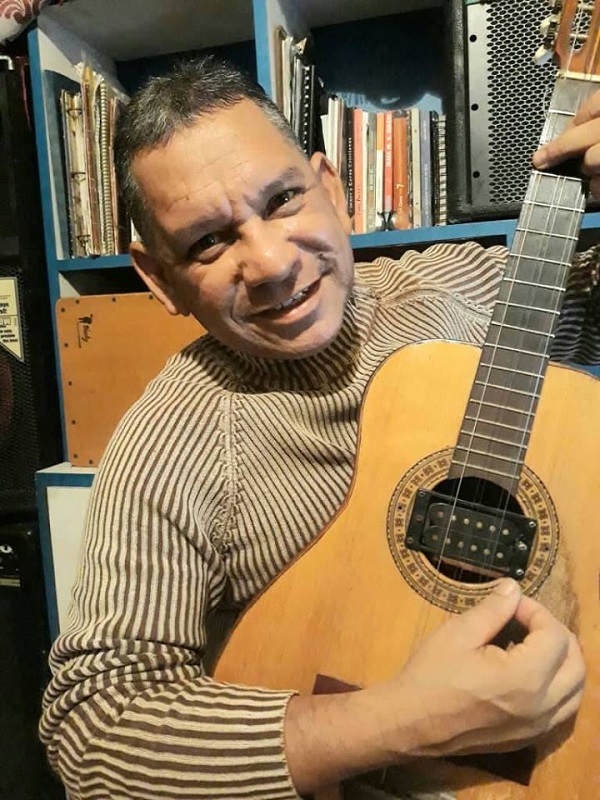
And today’s character in “Salsa Escrita” is the multi-instrumentalist Jorge Gregorio Rojas Perozo, artistically known as Jorge “El Papi” Rojas, extraordinary tres player, guitarist, bassist, arranger, composer, producer and teacher of Latin rhythms and tumbaos.

Jorge Gregorio Rojas Perozo

“El Papi”, as he is commonly known, was born on November 28th in the city of Crepuscular and from a very young age he started in this wonderful art of music, studying at the Vicente Emilio Sojo Music Conservatory.

Welcome Jorge to “Salsa Escrita”, through International Salsa Magazine, www.salsagoogle.com our readers want to know your wide and successful trajectory.

Thank you Professor Carlos Colmenárez for giving me the opportunity to appear in your well read and well known salsa column.

Jorge, tell us in general terms, with which groups have you been part of?

Professor, in 1986 I was director and founder of Grupo Identidad Caribe, in the salsa genre, then in 1987, founder of Grupo Miyare, also salsa.

From 1988 to 1992, director of the Orquesta Profecía (Christian salsa); 1996 to 2003, director of the Orquesta Monumental. From 2003 to 2008 I was director of the Epsilon Band (rock-pop) with music from the 60’s, 70’s and 80’s and from 2003 to 2010, bass player, accompanying on tours in Venezuela of: Henry Stephen, Trino Mora, Los Tres Tristes Tigres, Carlos Moreno, Los Pasteles Verdes, Los Ángeles Negros, Mirtha Pérez, Tania and Leo Dan; from 2007 to 2009, accompanying musician for singers: Mervin Rodriguez, Aurita Uribarri and Marco Molina.

Jorge “El Papi” Rojas, extraordinario tresista, guitarrista, bajista, arreglista, compositor

In 2012 to the present, tres player of “Sasón Latino”; in 2018, musical director of the Orquesta Siete Mangos y una Flor.

Today I direct the salsa group “Coimbre” and in parallel I am recording my own production of salsa and sones with lyrics and arrangements of my authorship to provide a contribution to Latin music from the state of Lara.

Also, I am giving virtual classes of Latin rhythms and tumbaos in the Cuban tres, bass and guitar, both nationally and internationally.

Very interesting and admirable your trajectory; Jorge, by the way, I remember a performance of you with the “Orquesta Profecía”, alternating with the “Estrellas de Fania” in the Municipal Coliseum of Barquisimeto, how was that experience? Well professor, it was an unforgettable experience, to be sharing the stage with Ismael Miranda, Larry Harlow, Bobby Valentin, Richie Ray, Bobby Cruz, Pete “Conde” Rodriguez and Jhonny Pacheco; in an unforgettable night, where we opened that concert, taking pleasant impressions from the audience and salsa specialists.

Jorge “El Papi” Rojas

And I tell you professor, besides alternating with Fania here in Barquisimeto, we also did it in the Poliedro of Caracas, in a tour made by them in our country in 1993.

And as for international tours, which countries have you visited? Professor Carlos, I had the honor of performing in the brother country of Neogranadino with the salsa group “Coimbre”, where the Colombian salsa public enjoyed the Afro-Caribbean music, made by musicians from Barquisimeto; visiting the cities of Cucuta and Medellin.

Recently we accompanied the sonero Ramoncito Mendez in his show at the end of 2019, here in the state of Lara. Current projects “Papi”, what do you have out there? Friend Carlos, at the moment, as I told you at the beginning, I am finishing my production and simultaneously I am teaching online classes, with people from abroad.

What are your digital platforms? They are, Facebook: Jorge El Papi Rojas; phone +58 426 3531337; email: [email protected]. Finally, on behalf of Salsa Escrita, we would like to congratulate you for your vast and interesting artistic career and we hope you continue to succeed in our country and abroad, with the help of God Almighty.

Multi-instrumentista Jorge Gregorio Rojas Perozo

Thank you Professor Carlos Colmenárez, for the interview in your salsa column, very grateful and I wish you long life to continue supporting and projecting the musicians from Barquisimeto, Venezuela and around the world.

Jorge El Papi Rojas

You can read: Henry Valladares, a brilliant, versatile, and disciplined percussionist

  • « Go to Previous Page
  • Page 1
  • Interim pages omitted …
  • Page 11
  • Page 12
  • Page 13
  • Page 14
  • Page 15
  • Interim pages omitted …
  • Page 94
  • Go to Next Page »

International Salsa Magazine (ISM) is a monthly publication about Salsa activities around the world, that has been publishing since 2007. It is a world network of volunteers coordinated by ISM Magazine. We are working to strengthen all the events by working together.