• Skip to primary navigation
  • Skip to main content

International Salsa Magazine

  • HOME
  • Previous editions
    • 2026
      • ISM / May 2026
      • ISM / April 2026
      • ISM / March 2026
      • ISM / February 2026
      • ISM / January 2026
    • 2025
      • ISM / December 2025
      • ISM / November 2025
      • ISM / October 2025
      • ISM / September 2025
      • ISM / August 2025
      • ISM / July 2025
      • ISM / June 2025
      • ISM / May2025
      • ISM / April 2025
      • ISM / March 2025
      • ISM / February 2025
      • ISM / January 2025
    • 2024
      • ISM / December 2024
      • ISM / November 2024
      • ISM / October 2024
      • ISM / September 2024
      • ISM / August 2024
      • ISM / July 2024
      • ISM / June 2024
      • ISM / May 2024
      • ISM / April 2024
      • ISM / March 2024
      • ISM / February 2024
      • ISM / January 2024
    • 2023
      • ISM / December 2023
      • ISM / November 2023
      • ISM / October 2023
      • ISM – September 2023
      • ISM – August 2023
      • ISM July 2023
      • ISM Edition June 2023
      • ISM – May 2023
      • ISM April 2023
      • ISM March 2023
      • ISM February 2023
      • ISM January 2023
    • 2022
      • ISM December 2022
      • ISM November 2022
      • ISM October 2022
      • ISM September 2022
      • ISM August 2022
      • ISM July 2022
      • ISM June 2022
      • ISM May 2022
      • ISM February 2022
      • ISM January 2022
    • 2021
      • ISM December 2021
      • ISM November 2021
      • ISM October – 2021
      • ISM September 2021
      • ISM August 2021
      • ISM July 2021
      • ISM May 2021
      • ISM April 2021
      • ISM June 2021
      • ISM March 2021
      • ISM February 2021
      • ISM January 2021
    • 2020
      • ISM December 2020
      • ISM November 2020
      • ISM October 2020
      • ISM September 2020
      • ISM August 2020
      • ISM July 2020
      • ISM June 2020
      • ISM May 2020
      • ISM April 2020
      • ISM March 2020
      • ISM February 2020
      • ISM January 2020
    • 2019
      • ISM December 2019
      • ISM November 2019
      • ISM October 2019
      • ISM Septembre 2019
      • ISM August 2019
      • ISM July 2019
      • ISM June 2019
    • 2016
      • ISM December 2016
  • Spanish
  • Download Salsa App
    • Android
    • Apple

Search Results for: salsa in venezuela

Chevy El Pitirre De La Salsa and his interesting career

José Flores Pérez

Jose Flores Perez, better known as Chevy El Pitirre De La Salsa, is a salsa singer who was born in the town of Cidra, Puerto Rico, but currently resides in Georgia. We have had a very pleasant conversation with the salsa exponent, in which we have touched on certain various professional and personal tissues never mentioned before. It is a real pleasure for us that he has agreed to talk with us and tell a little more of his personal story on this platform, which is International Salsa Magazine.

Chevy El Pitirre De La Salsa was born in Puerto Rico, but now lives in Georgia, United States

Origin of his artistic name

”Chevy” is a nickname his parents and friends always gave him and ”pitirre” refers to a Puerto Rican bird with very short dize, but a very strong character. Maestro Felix Ortiz name him ”El Pitirre” because of the way he sings and improvise in the stage and the trust between them was such that he even became the music director of his orchestra. This combination of nicknames was what made Flores start to become known by that way during the last four years of his career.

Influences and predilection for salsa music

The reason Chevy opted for salsa was the great influence from his family. His father was a salsa singer for local orchestras in Chicago, which made him listen to various Puerto Rican genres such as salsa, bolero, jibaro music and trova throughout his childhood.

There were years when he really enjoyed listening to hip hop and rap in the late 80’s and early 90’s, but it didn’t take long for him to reconnect with salsa when he started listening to Héctor Lavoe, Ismael Rivera, Sammy Marrero, Bobby Valentín, Cano Estremera, among others. Listening to all these idols and what they achieved led him to take salsa much more seriously.

Chevy El Pitirre De La Salsa performing on stage

His time in the military and formal beginnings in music

During his time in the military, he performed in different orchestras and accompanied various artists throughout Atlanta. Although this was a demanding career, he organized himself to pursue his interest in music. When he leaves the armed forces, he went to Puerto Rico, where he lived for a great deal of time until he moved to Georgia in 2016.

His current residence is still in this state for professional reasons totally unrelated to music, but he had been there around the time he served in the army, so this part of the United States was not unknown to him. It is there that he resumesd his musical career after so many years.

In 2017, he began to compose, but it was not until two years later when he decided to launch as a soloist, make his first single ”Instrumento de amor” and carry out his first independent musical project entitled ”Entre el amor y el vacilón”.

In this same year 2019, he took advantage of the internet and social networks to become known at an international level and released his second record production during the pandemic, but the singer does not think this situation has hurt his carrer. On the contrary, he believes that social media and digital platforms gave him the push he needed to promote his artistic proposal.

Chevy El Pitirre De La Salsa recording in the studio

Recent projects

One of his most recent projects was carried out in 2019, is titled ”Atacando en Navidad” and was born from the songs ”Arbolito de Navidad” and ”Compay no se me raje”. The first is written by Chevy, but the latter was composed by the legend Johnny Vega. At some point, the artist decided that these two singles were not enough, so he created a full album based on the Puerto Rican parranda he always enjoyed as a child. The result is a mix of nostalgia, sadness, love and joy. He tells how Christmas was celebrated at home, his childhood dreams, what this time meant to his family and the sadness when a loved one dies that year.

One of the most significant songs is ”Navidad Sin Parranda”, which was written a year before Chevy’s mother died. She was so ill at the time that the whole family thought she suddenly would lose her life, but fortunately she did not. Back then, the salsero was beginning to imagine a life and a Christmas without his mother, as she kept the family together and her house was the meeting place for all the important dates.

It just so happens that Venezuelan musical arranger Willy Melo lost his father within a few days of receiving the song, so he was very connected to that same pain around the same time.

Read also: Isaac and Esteban Hernández, two brothers making history

Today’s feature in “International Salsa Magazine” is multi-instrumentalist Jorge Gregorio Rojas Perozo

The name of the city of Barquisimeto continues to be known as the musical capital of Venezuela.

Characteristic by which, for years, is national and international reference and for proof of this, excellent musicians born in this city, who triumph and shine with their own light, demonstrating quality and versatility in all Latin rhythms stand out.

And today’s character in “Salsa Escrita” is the multi-instrumentalist Jorge Gregorio Rojas Perozo, artistically known as Jorge “El Papi” Rojas, extraordinary tres player, guitarist, bassist, arranger, composer, producer and teacher of Latin rhythms and tumbaos.

Jorge Gregorio Rojas Perozo

“El Papi”, as he is commonly known, was born on November 28th in the city of Crepuscular and from a very young age he started in this wonderful art of music, studying at the Vicente Emilio Sojo Music Conservatory.

Welcome Jorge to “Salsa Escrita”, through International Salsa Magazine, www.salsagoogle.com our readers want to know your wide and successful trajectory.

Thank you Professor Carlos Colmenárez for giving me the opportunity to appear in your well read and well known salsa column.

Jorge, tell us in general terms, with which groups have you been part of?

Professor, in 1986 I was director and founder of Grupo Identidad Caribe, in the salsa genre, then in 1987, founder of Grupo Miyare, also salsa.

From 1988 to 1992, director of the Orquesta Profecía (Christian salsa); 1996 to 2003, director of the Orquesta Monumental. From 2003 to 2008 I was director of the Epsilon Band (rock-pop) with music from the 60’s, 70’s and 80’s and from 2003 to 2010, bass player, accompanying on tours in Venezuela of: Henry Stephen, Trino Mora, Los Tres Tristes Tigres, Carlos Moreno, Los Pasteles Verdes, Los Ángeles Negros, Mirtha Pérez, Tania and Leo Dan; from 2007 to 2009, accompanying musician for singers: Mervin Rodriguez, Aurita Uribarri and Marco Molina.

Jorge “El Papi” Rojas, extraordinario tresista, guitarrista, bajista, arreglista, compositor

In 2012 to the present, tres player of “Sasón Latino”; in 2018, musical director of the Orquesta Siete Mangos y una Flor.

Today I direct the salsa group “Coimbre” and in parallel I am recording my own production of salsa and sones with lyrics and arrangements of my authorship to provide a contribution to Latin music from the state of Lara.

Also, I am giving virtual classes of Latin rhythms and tumbaos in the Cuban tres, bass and guitar, both nationally and internationally.

Very interesting and admirable your trajectory; Jorge, by the way, I remember a performance of you with the “Orquesta Profecía”, alternating with the “Estrellas de Fania” in the Municipal Coliseum of Barquisimeto, how was that experience? Well professor, it was an unforgettable experience, to be sharing the stage with Ismael Miranda, Larry Harlow, Bobby Valentin, Richie Ray, Bobby Cruz, Pete “Conde” Rodriguez and Jhonny Pacheco; in an unforgettable night, where we opened that concert, taking pleasant impressions from the audience and salsa specialists.

Jorge “El Papi” Rojas

And I tell you professor, besides alternating with Fania here in Barquisimeto, we also did it in the Poliedro of Caracas, in a tour made by them in our country in 1993.

And as for international tours, which countries have you visited? Professor Carlos, I had the honor of performing in the brother country of Neogranadino with the salsa group “Coimbre”, where the Colombian salsa public enjoyed the Afro-Caribbean music, made by musicians from Barquisimeto; visiting the cities of Cucuta and Medellin.

Recently we accompanied the sonero Ramoncito Mendez in his show at the end of 2019, here in the state of Lara. Current projects “Papi”, what do you have out there? Friend Carlos, at the moment, as I told you at the beginning, I am finishing my production and simultaneously I am teaching online classes, with people from abroad.

What are your digital platforms? They are, Facebook: Jorge El Papi Rojas; phone +58 426 3531337; email: [email protected]. Finally, on behalf of Salsa Escrita, we would like to congratulate you for your vast and interesting artistic career and we hope you continue to succeed in our country and abroad, with the help of God Almighty.

Multi-instrumentista Jorge Gregorio Rojas Perozo

Thank you Professor Carlos Colmenárez, for the interview in your salsa column, very grateful and I wish you long life to continue supporting and projecting the musicians from Barquisimeto, Venezuela and around the world.

Jorge El Papi Rojas

You can read: Henry Valladares, a brilliant, versatile, and disciplined percussionist

International Salsa Magazine presents “El Cangri de la Salsa” Dj. Caramelo after triumphing in Lima Peru

On October 2, 1974, Jesús Rafael Torres Caldea, nicknamed “El Cangri de la Salsa” and also known as “El Caramelo de la Salsa”, was born in the populous parish of El Cementerio, son of Candelario Torres, the popular “Robinson” and Doña María de Jesús Caldea, In addition to his biological parents, life also gave him two foster parents who gave him all the love, affection and values, they were Emilio Torres, younger brother of the percussionist musician and Orchestra Director Lisandro Torres, and his wife Alicia Castillo.

Since his childhood he felt great interest in Salsa music and with the help of his childhood friend Oscar Madrid Colina “NENE” they began to buy his first vinyl records without realizing that from that moment on he would begin his career as a collector, musicalizer and producer of events, being today recognized as one of the best music lovers in Caracas and Venezuela.

Dj. Caramelo
Dj. Caramelo

Although he was raised in the parish of El Cementerio, part of his youth was spent in the Marín neighborhood of San Agustín in the home of the Pino and Palacios families, where he was influenced even more by this tasty musical genre.

He rubbed shoulders with other excellent musicians such as Augusto Felibertt, Alfredo Lozada from whom he learned many things and also with Ivan Piñero, Jonathan Castillo and Ivan Walcott among others.

He ventured as a producer of events with Alejandro Tovar and Betty Zapata, whom he baptized as “The True Lady of Salsa” nothing more and nothing less than with the presentation of Ray De La Paz at the Lido Center in Caracas.

Dj. Caramelo y Dj. Augusto

Among the places where he had the opportunity to provide the best of the artillery of his musical collection for music lovers and dancers we can name the Gran Salón Cedro Líbano (La Mezquita), JABEGUERO, La Pachanga among others, reaching his musicality to events where prominent artists such as Herman Olivera, Tito Allen, BAILATINO have participated and also had the honor of being the official musicalizer in the debut of the great Venezuelan orchestra Rumberos del Callejón.

Caramelo was one of the founders of the Online Program via Facebook “Bloque de Salseros de la Mata” which is transmitted every Sunday by the hand of the Master of Masters Mr. Ali Delgado with Junior Villasmil and Alfredo Lozada.

“El Cangri de la Salsa“

Among his favorite artists and orchestras we can mention the Great Carlos “Cano” Estremera, the Bobby Valentin Orchestra, the Willie Rosario Orchestra and the Yambó Orchestra among others; He is currently living in Lima, Peru but has plans to return to Venezuela very soon, to return to the arena of musicalization and production of events again and already has an excellent proposal to participate as a musicalizer in an event where an international artist will participate later this year, from Salseros de la Mata we wish our pana Caramelo a happy birthday and the greatest of success and happy return to his homeland Venezuela.

You can read: The owner of the Soneo’s solo career Cano Estremera

Dj. Caramelo

Michel “El Buenon” is a singer, composer and considered the most sought-after salsa singer in the Dominican Republic

On September 7th in the province of Baharona in Batey 7, Dominican Republic, Michel Batista or better known as Michel “El Buenon” was born, he is a singer and composer.

Considered the most sought after salsa singer, he is a man with a big heart and a story worth admiring, because despite all the vicissitudes he went through during his childhood and youth, he became great, as his grandmother Dona Crisiana instilled in him.

From a very young age he attended Sunday school at the Baptist church with his mother Crisiana Abraham, with whom he attended the evangelical church shepherded by herself, where he also sang in the church choir on Sundays.

In elementary school she participated in a music festival where she won first place at only 8 years of age.

Later she competed in a regional festival in the town of Barahona in the radio station Radio Barahona, winning first place at the age of 12.

He then migrated from the south to the city of Santo Domingo, where he began singing in bars, nightclubs and hotels like the Sheratton, Napolitano, El Embajador.

In addition to the resorts Talanquera, Casa de Campo Sosua, Puerto Plata, among others.

At the beginning he was part of the Tabú Combo, a group from Puerto Príncipe based in New York City, recording hits such as “Inflaciones General”, “La Llave”, “Relimen” and composing the song “Apipi”, known in French and in Spanish as “El Jardinero”, which he recorded with his friend Wilfrido Vargas.

He would later be part of Johnny Ventura’s orchestra for 5 years, from 1982 to 1987.

He recorded the song “Tuyo Más Que Tuyo” by Bienvenido Fabián, then he joined again the Tabú Combo Superstar orchestra with Adolfo Chanci, its director.

In 1995 he went solo and recorded his first salsa CD titled “Amigo De Qué”, which was played all over Latin America, occupying for 12 weeks the first place of the radio station La Mega in the city of New York.

Later he released his second album “Brujería”, and seven others: “De Ahí Nadie Como Él” (2001), “100% Sabroso” (2002), “Llego Michel El Buenon” (2005), “Víveme” (2005) and “Extrañándote” (2005), which contained ballads interpreted in the rhythm of salsa in the style of “El Buenon”, this production has unpublished songs of Michel himself such as “Que Te Vaya Bonito” and “Yo Que Me Lo Creo”.

Throughout his career he has been winner of the Casandra Awards 2005-2006-2007 and nominated in 2008 and 2011.

Among his languages interpreting songs are English, Portuguese, Italian, Papiamiento, Creole, Spanish and French as he did in the song “Se Finit” by Charles Asnabul and the song Wonderful World in tribute to Mr. Luis Armstrong.

In his repertoire of the most outstanding songs in 2008 are “La Primavera”, “Cuando Los Sapos Bailan Flamenco”, “La Playa”, “Víveme”, “Tú Ni Te Lo Imaginas”, “Hoy Daría Yo La Vida”, “Me Has Echado Al Olvido”, “A La Primer Persona” and “Wonderful World”, all with hits and diffusion in all the radios and discotheques of his country.

Among his most outstanding albums in the last ten years are “Extrañándote”, “Todo Terreno”, “Estilo Y Conciencia”, “Arriba Siempre De Pura Sangre”, “Reserva Especial Impecable”, “El Insuperable De La Salsa” and “Claro, Fino, Nítido, Control Total”.

Throughout his career he has traveled to all of Europe, the United States, the Lesser Antilles, Switzerland, England, Colombia, Panama, Costa Rica, Venezuela, Mexico, Curacao, La Reunion, Tahiti, Africa, Japan, Dubai and Colombia, the latter was where he recorded the video clip of his song “Maldito El Tiempo” written by Alexander Pires.

Michel “El Buenon”

You can read: Génesis de la Salsa, su esencia, características, ritmo, historia y expansión

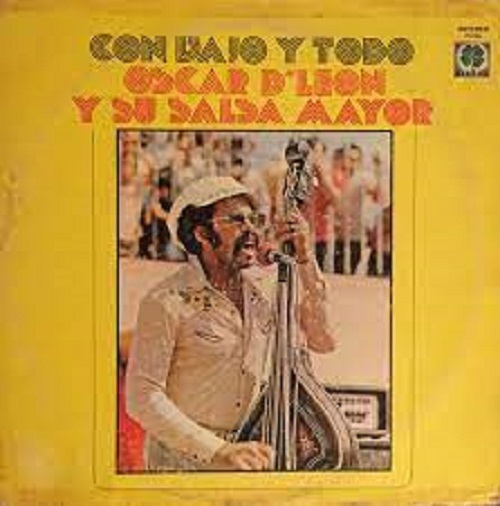
Oscar D’León celebrates 50 years of career in Caracas “International Salsa Magazine says present”

In September, the greatest exponent of Venezuelan salsa in the world will celebrate five decades of brilliant artistic career with an international tour that will have as its main event, an impressive and awaited symphonic gala at the Teresa Carreño Theater. And for september 22 at the Forum in Valencia.

Miami, May 19, 2022. Undisputed legend of Caribbean music, Oscar D’León, the Sonero of the World, celebrates 50 years of successful artistic career with an international tour that will take him to different locations in the Americas and Europe this summer.

This tour, which will begin on June 20 in Mexico City, will continue in July with the “50th Anniversary Europa Tour 2022”, culminating in a spectacular symphonic gala at the iconic Teresa Carreño Theater, which, during two performances on September 16 and 17, will give his audience the opportunity to sing and dance to the music that has made him the most recognized and admired Venezuelan artist in the world over the course of five decades.

Acapulco, Arequipa, Santiago de Chile, Miami, Frankfurt, Munich, Berlin, Paris, Amsterdam, Madrid, Tenerife, London, Istanbul are some of the cities that will live the energizing experience of seeing him on stage, a real party for music lovers.

Deserving of hundreds of awards and recognitions, including five Latin Grammys, D’León has been nominated nine times for the U.S. Grammy, being the first Venezuelan to obtain such a statuette. He did it in 2001 thanks to the song “Cielito Lindo, La Negra Mariachi Medley” Featuring-Oscar D’Leon, included in a collection album: “Masterpiece/Obra Maestra de Tito Puente y Eddie Palmieri”.

In 2013, he received the Award for Musical Excellence, a special recognition granted by vote of the Board of Trustees of the Latin Recording Academy to artists who have made creative contributions of exceptional artistic importance in the field of recording during their careers.

A true prophet in his own land, this global artist who began writing his formidable musical history in 1972, at the age of 28, when he formed the Dimensión Latina Orchestra, promises to celebrate his half-century of career with an unforgettable show at the Teresa Carreño Theater, the most important in Caracas, organized by the Venezuelan companies Imagen Producciones and Oz Show, in alliance with the National Orchestra System of that country.

Important Notes

Venezuelan musician who is among the most outstanding authors and performers of salsa and Caribbean music in general. Oscar D’León’s professional career began late: legend has it that one night, while visiting a nightclub in 1973, he heard that the band playing there had been fired. Oscar seized the opportunity and offered his own band to replace the one that had left.

The owner accepted and hired him to start playing a few days later. There was only one problem: the band at that time consisted only of D’León himself. He quickly got in touch with trombonist César Monge, told him what had happened and both got down to work to put together a line-up.

The band was finally formed by Oscar (vocals and bass, an instrument he had taught himself to play), César Monge (trombone), José Rodríguez (percussion), Enrique Iriarte (piano) and José Antonio Rojas (trombone).

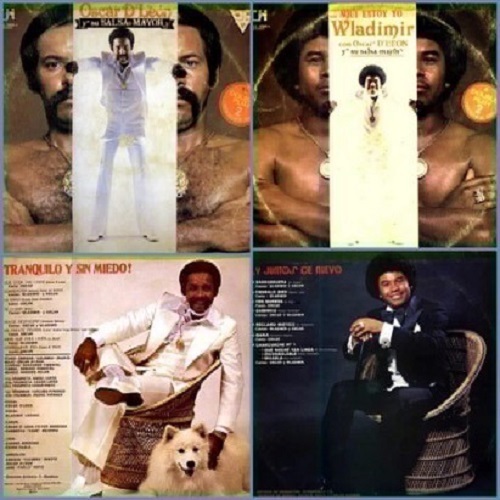
Thus was formed La Dimensión Latina, Oscar D’León’s first orchestra. “Pensando en ti” was the first of the orchestra’s long list of hits. Four years later, Óscar left the band and was replaced by Puerto Rican Andy Montáñez, a vocalist who sang with the Gran Combo de Puerto Rico. Óscar returned with his own orchestra, La Salsa Mayor, with which he recorded his first album, titled after the group’s name: La Salsa Mayor (1977). The work was a great success in his country, and little by little his name began to be heard on an international scale. The following year he recorded the album El Más Grande, which contained the songs “El baile del suavecito” and “Mi bajo y yo”, and shortly afterwards he made his first visit to New York to offer live performances.

Aside from being a great sonero, Oscar D’León is also an extraordinary showman. Almost always accompanied by his bass, with which he plays and dances as if they were a couple, Óscar moves around the stage with great skill. In Venezuela, Óscar D’León is an idol, not only as a singer and musician, but also as a model of a self-made man who, from a very humble position, achieves fame and success on an international scale.

He is considered one of the best interpreters of Afro-Latin music of all times and is undoubtedly among the Venezuelan artists with more projection abroad.

Despite having gone through several stages in the development of Latin music, Oscar D’León’s style, always unmistakable, has maintained some constants that have allowed him to ensure the loyalty of his wide audience. D’León has recorded with the most outstanding salsa stars; among his collaborations, which can be traced in more than fifty albums, stands out his participation in The Mambo King, the hundredth full-length album by the legendary Tito Puente.

Corresponsal: Lida. María Fernanda León

www.Sanjuanproducciones24.blogspot.com

  • « Go to Previous Page
  • Page 1
  • Interim pages omitted …
  • Page 12
  • Page 13
  • Page 14
  • Page 15
  • Page 16
  • Interim pages omitted …
  • Page 96
  • Go to Next Page »

International Salsa Magazine (ISM) is a monthly publication about Salsa activities around the world, that has been publishing since 2007. It is a world network of volunteers coordinated by ISM Magazine. We are working to strengthen all the events by working together.