• Skip to primary navigation
  • Skip to main content

International Salsa Magazine

  • HOME
  • Previous editions
    • 2026
      • ISM / May 2026
      • ISM / April 2026
      • ISM / March 2026
      • ISM / February 2026
      • ISM / January 2026
    • 2025
      • ISM / December 2025
      • ISM / November 2025
      • ISM / October 2025
      • ISM / September 2025
      • ISM / August 2025
      • ISM / July 2025
      • ISM / June 2025
      • ISM / May2025
      • ISM / April 2025
      • ISM / March 2025
      • ISM / February 2025
      • ISM / January 2025
    • 2024
      • ISM / December 2024
      • ISM / November 2024
      • ISM / October 2024
      • ISM / September 2024
      • ISM / August 2024
      • ISM / July 2024
      • ISM / June 2024
      • ISM / May 2024
      • ISM / April 2024
      • ISM / March 2024
      • ISM / February 2024
      • ISM / January 2024
    • 2023
      • ISM / December 2023
      • ISM / November 2023
      • ISM / October 2023
      • ISM – September 2023
      • ISM – August 2023
      • ISM July 2023
      • ISM Edition June 2023
      • ISM – May 2023
      • ISM April 2023
      • ISM March 2023
      • ISM February 2023
      • ISM January 2023
    • 2022
      • ISM December 2022
      • ISM November 2022
      • ISM October 2022
      • ISM September 2022
      • ISM August 2022
      • ISM July 2022
      • ISM June 2022
      • ISM May 2022
      • ISM February 2022
      • ISM January 2022
    • 2021
      • ISM December 2021
      • ISM November 2021
      • ISM October – 2021
      • ISM September 2021
      • ISM August 2021
      • ISM July 2021
      • ISM May 2021
      • ISM April 2021
      • ISM June 2021
      • ISM March 2021
      • ISM February 2021
      • ISM January 2021
    • 2020
      • ISM December 2020
      • ISM November 2020
      • ISM October 2020
      • ISM September 2020
      • ISM August 2020
      • ISM July 2020
      • ISM June 2020
      • ISM May 2020
      • ISM April 2020
      • ISM March 2020
      • ISM February 2020
      • ISM January 2020
    • 2019
      • ISM December 2019
      • ISM November 2019
      • ISM October 2019
      • ISM Septembre 2019
      • ISM August 2019
      • ISM July 2019
      • ISM June 2019
    • 2016
      • ISM December 2016
  • Spanish
  • Download Salsa App
    • Android
    • Apple

Search Results for: salsa in venezuela

The decade in which Eddie Palmieri faced the Erotic or Romantic Salsa

There are leaders in all the activities that man develops in his daily life: Sports, Labor, Student, Political, Musical, even in comic strips you can see these leaders all the time, showing the way to follow and saving humanity from its natural dangers.

El Zorro with his friend Bernardo, his father Alejandro and even with Sergeant Garcia and Corporal Reyes, saved California from the clutches of El Aguila, marking the way forward for the peace and freedom of his people.

In salsa, the same thing happens; there are musicians who set themselves up as leaders who dictate the path, the routes, the itinerary and the route where salsa should go, establishing through their musical performances where others should be guided on their way to certain triumph.

For salseros in general, Eddie Palmieri represents El Zorro of the comics, the leader to follow, the paladin of salsa, only that instead of looking like Diego de la Vega in physique, he looks more like Sergeant Garcia; backed by Ismael Quintana who would be El Cabo Reyes and Barry Rogers who would be Alejandro de la Vega.

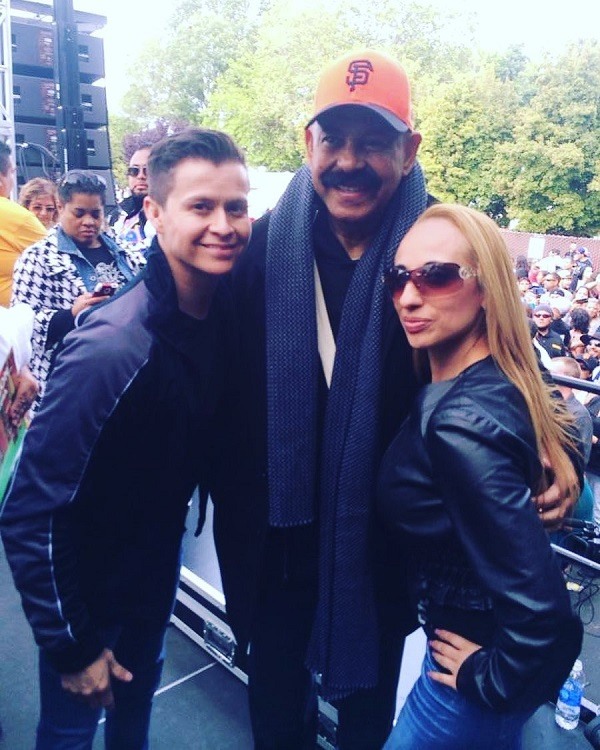
Eddie Palmieri y Dj. Augusto Felibertt

It is no secret that Eduardo Palmieri is one of the initiators of the salsa movement in New York; but more than that, this master of the piano has established the paths along which salsa has walked since the 1960s.

Eddie was one of the first musicians to use the trombone as a determining instrument in the conformation of an orchestra, giving it a preponderance never seen before and with a sharp and hurtful sound that forced a large number of musicians to follow this type of orchestration that ended up imposing itself in the so-called salsa boom.

La Perfecta determined the path to follow; they recorded anthological albums in the 60’s that were the delirium of the salsa movement lovers; many musicians began to see and hear how the tonality of this orchestra sounded different from those big bands of the 50’s; the people of the neighborhood immediately identified with this sound because, they thought, it sounded like a neighborhood, a slum, poverty, marginality, inequality, it sounded like spite, nonconformity, injustice; in short, with this sound they perceived the most expensive needs of a population marginalized from the great plans of the State that entailed advancement and progress.

The decade of the 70’s meant the explosion of a salsa boom that swept the entire Caribbean basin; orchestras came and went; they came and disappeared; they recorded and were immediately lost in anonymity, but most of these orchestras chose the musical patterns of a common denominator to carry out their musical proposals: A Crazy, Bearded and Barrigón Orate named Eddie Palmieri, as the Colombian writer José Arteaga called him.

Eddie, throughout this decade, was practically on the sidelines of the salsa boom and it could not be otherwise: Too much irreverence from a superior musician who, being clear where salsa should walk, refused to be part of all the outrages that were committed during that salsa explosion.

Too much rebelliousness from an artist who refused to be told what he should and had to record: “Nobody tells me what I have to record and how I have to record; I’m the one who knows how to make music, the label bosses can go to hell with their desks”, an angry Palmieri would say.

The record label Epic signed him in 1978, telling him that he had complete freedom to record the music he wanted: a lie. He recorded the Lp Lucumi, Macumba and Vodoo where he was practically forced to work on an album where rhythms and trends were mixed.

He took advantage of the only freedom he was given to record two legendary songs: Colombia Te Canto and Mi Congo Te Llama.

Bad management and ill-advised decisions put an end to the whole salsa movement that was born in the 70’s and the unthinkable happened for all the lovers of this tasty way of life: the whole musical scaffolding that represented the Fania label collapsed, leaving everyone with clear eyes and without sight.

Clouds of disbelief and uncertainty hung over the entire salsa movement, musicians, producers, artist managers, arrangers, record label owners and, those who were most hurt by all this, the lovers of this superb spectrum of hard and powerful salsa that was experienced in the 70s.

In the 80’s, faced with this dilemma and the perplexity of the moment, most of the orchestras took refuge in the so-called Salsa Erotica or Salsa Monga, which although it is true that it gave oxygen to salsa in general, it inflicted a death blow to salsa dura or gorda as it has been called since the 70’s.

As if that were not enough, the merengueros with: Fernandito Villalona, Jerry Legrand, Jossie Esteban y la Patrulla 15, Wilfrido Vargas, Rubby Perez, Las Chicas del Can and stop counting, colluded with salsa erotica (as El Aguila colluded with El Magistrado), to try to wipe salsa dura off the map and at any price.

At the beginning of the 80’s; under all this conglomerate of adverse circumstances; the merengueros and “salseros eroticos” making a killing and the hard salsa artists not knowing which direction to take, Líder Palmieri appeared with his stocky and ungainly figure, a huge cigar in his mouth, his madness (we are even madder) and his voice saying clearly, categorically and confidently: “Follow me, this is the road to follow”.

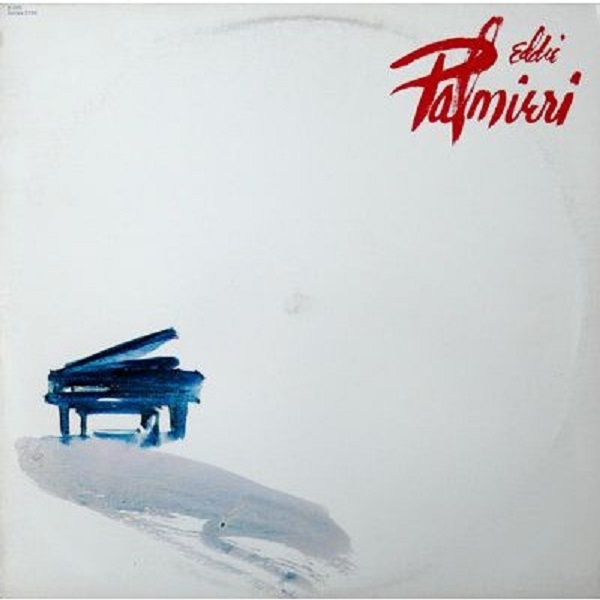
And so that there would be no doubt about this call against Salsa Erotica and Merengue, in 1981 he recorded the Lp “Eddie Palmieri” which, almost 30 years after its release, we are still studying and listening to it to digest what El Sapo did in these 5 memorable songs: El Día que me Quieras; Ritmo Alegre, Paginas de Mujer, No Me Hagas Sufrir and Ven Ven.

Poster salsa on all four sides, atrabiliary percussion, indescribable trombones and trumpets, legendary voices, in short, a priceless LP. By the way, a certain current of opinion maintains that salsa is nothing more than Cuban music.

Under this prism, then we would have to say that this Palmieri’s version of Carlos Gardel’s El Día que me Quieras, is a full-fledged Tango. 

Eddie Palieri 1981
Eddie Palieri 1981

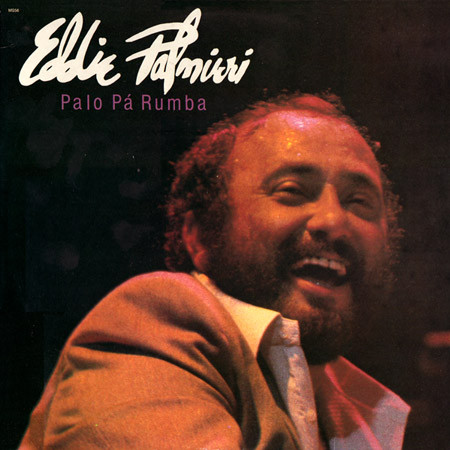
In 1984 and when the “erotic” ones were widening their tentacles, Palmieri came with more fuel and that added to the bad experience lived in Venezuela with some businessmen who were determined to finish with him, musically speaking, allowed him to release the Lp “Palo Pa Rumba”, containing the pieces: 1983, Bomba de Corazón, Bajo con Tumbao, Pensando en Ti, Palo Pa Rumba and two songs dedicated to Venezuela because of the bitter and vexatious experience he had in our beloved homeland of names: Venezuela and Prohibición de Salida.

Eddie Palmieri Palo Pa' Rumba Ganador del Grammy's 1985
Eddie Palmieri Palo Pa’ Rumba Ganador del Grammy’s 1985

In 1985 the Lp “Solito” was released, a song that allowed Palmieri to tell the “eroticos” that there was a formula for arranging music that sounded strong and powerful, even if the content of the lyrics could suggest a certain shade of erotic salsa; that the trombones could sound energetic and strong without the sweetening and softness to which these hardened instruments were subjected in this decade; that it was not necessary to be bonitillo (as the Boricuas say) to succeed in this salsa environment and that, no matter what happened, he, Eddie Palmieri, was not going to be subjugated no matter how much salsa erotica the record companies demanded and played on the radio, emphasizing this statement with an abysmal piano solo.

To complete the LP: Justicia, Yo No Soy Guapo, Cada Vez que te Veo, Lindo Yambú and Pa Los Congos, round out his confrontation with “aquella” salsa.

Eddie Palmieri Solito Ganador del Grammy's 1986
Eddie Palmieri Solito Ganador del Grammy’s 1986

To top off the decade, in 1987 he recorded the Lp “La Verdad”, in which with the piece El Cuarto in the voice of Tony Vega ratified his point of view regarding “erotic” salsa; that it is not necessary to fall into pornography to say “nice things” and arrange the music with enough flavor and sandunga and that, finally, nothing would prevent him from continuing to crush his opinion based on hard and powerful salsa.

As if that were not enough, for this album he made use of a beastly orchestra made up of four trumpets, two trombones and a saxophone that left on the acetate: Conga Yambumba, La Verdad, Lisa, Noble Cruise and Buscándote.

The result of all this decade of salsa gorda music for Eddie Palmieri? Three Grammy awards and the recognition of a whole legion of hardcore salseros, who were not intimidated by the onslaught of the “erotic” and “merenguera” fashions of the moment and decided, in the face of so much sweet, effeminate and subtle trombone, to follow in the footsteps of the leader: El Zorro, sorry I made a mistake, by El Sapo Eduardo Palmieri.

Source: Larry Daniel Cabello Guzmán

Dj. Augusto Felibertt

Read Also: Bebo Valdés is considered one of the central figures of the golden age of Cuban music

Eddie Palmieri

Alex Sánchez “Salsa has always had a special place. It is a genre that will never go out of style ”.

Latin America / Venezuela / Miranda

Mulato en Rumba his greatest bet Alexis José Sánchez:

He is a versatile artist, who like many other musicians begins his training from home, with his brothers he learned to play the cuatro and the guitar, this motivated him to continue his formal studies at the School of Music “José Lorenzo Llamozas”, where he also studied trumpet alongside maestro José “Cheo” Rodríguez; He jointly studies Afro-Latin percussion with maestro Orlando Poleo, Barloventeña percussion with Alfredo “Pandilla” Bolívar and Arturo Piñango, African percussion with José Shalons and Yonder Rodríguez.

At the “Nicomedes Marrero” Cultural Training Center in Tacarigua, he took piano lessons with professor Manuel Sepúlveda, Afro-Venezuelan percussion with maestro Alexander Livinalli and Choral Direction in the free art workshop of “Río Chico”.

Photo- Alex Sánchez
Photo by Alex Sánchez

Although he was born in the city of Caracas, all his life he has lived in the Barlovento region, an area with a great cultural and musical richness, there he also performs the role of teacher, being a facilitator of the Afro-Barloventeña, Afro-Venezuelan and Afro-Venezuelan percussion chairs. Afro-Latin, in School District No. 4.

From a very young age he has been linked with the traditions of his town; Tacarigua. This young man is an active part of the cultural development of the area and together with his wife Yermy Martínez and his mother-in-law Zenaida Gamboa, founders of the group “Danzas Tacarigua”, they are in charge of training the youth of relief, in order to keep the demonstrations alive. traditional barloventeñas for many generations.

Sánchez, assures us that he has a great responsibility, to preserve the legacy that the Africans left in their path through our land, that despite the obstacles he gets along the way to carry out his work, he is overcoming them one by one with perseverance and dedication. that love he feels for music, his family, his traditions and his other passion for teaching.

Salsa and Venezuelan Folklore, two different worlds, each rich and varied in rhythms and styles, however, it takes them by the hand, something that is not strange in a country where the mixture abounds, that we Venezuelans are the product of an ethnic and cultural mix.

How were your beginnings in music?

“I started in music at home with my brothers. I learned with them to play cuatro and guitar. That was the fundamental basis of what has been my musical career up to now and it also inspired me to continue with formal studies in music ”.

Your musical training has been very broad. Why did you decide precisely to specialize with the trumpet?

“I decided on the trumpet, since it has been the traditional instrument in my family, first my great-grandfather Gregorio Machado, then my great-uncle“ Perucho ”Machado and my brother Wilman”.

A man from Caracas who decides to emigrate to Barlovento Why not Barquisimeto or another region?

“My whole family is from Barlovento, since I was born I have lived here in Tacarigua, Brión municipality. After studying music I realize the musical wealth that exists in this region. That is why I decide to bet on the musical production of my homeland and also be part of that artistic movement that represents Barlovento and that has given so much to our country ”.

Composing and arranging music, the work that leads its creators and orchestras to position themselves in the first places. Which of your works as a composer and arranger have been positioned in that place?

“That is the dream of every arranger, to achieve that an orchestra reaches the first places of popularity and in sales. I haven’t had that luck yet, but it’s my dream as a songwriter. I have arranged for many orchestras that have been quite popular and are playing in various countries ”.

Alex Sánchez
Mulato in Rumba your biggest bet

There are many orchestras for which you have done this work, could you name them?

“I have arranged for orchestras and singers such as: Bailatino, Cheo Linares and his Orchestra, Víctor Cardona and the Salsa Machine, Cheo Navarro and his Tribute, Francisco Pacheco and his People, Hildemaro Jr., Orquesta Sarayé (Colombia), Orquesta La Suprema (Panama), Orlando Watussi and my musical project “Mulato en Rumba”, among other national artists “.

Percussion is another of its virtues, of the different rhythms. Which of them is more difficult to teach or learn?

“Percussion is a world that allows you to express yourself and make contributions based on its rhythmic quality. All rhythms have difficulties, but their great musical richness and the magic of the ancestral charge make it possible for us to digest them naturally ”.

“I invite the musicians and the community in general to come to Barlovento to learn about the regional culture, so that they learn to play Mina, Culo e puya, Quitiplás, Fulía and Parranda.”

In the vineyard of the Lord there is everything and for everyone. What has been the most difficult thing about this profession?

“Music gives you a lot of satisfaction, but around it there are circumstances that create disappointments – they can scam you, you have friction with colleagues, etc. – you will find obstacles, but I think that all this is overcome with perseverance and dedication to work. That is what it takes to stay in the musical world ”.

The Music Producer is the architect of a record. What do you feel at the end of each record? What do you feel at the end of each work done?

“Music production is hard work, bringing together musicians, writing and selecting songs, directing, molding and creating a pleasing product for the public, where feelings are reflected on paper, which in turn become sounds that will mark the life of anyone who is a music lover. That is the greatest satisfaction ”.

Each era has its ups and downs, do you think you can make a living from music?

“Of course, if we think of music as an industry we can find that starting from being a composer, arranger, through instrumentalist, singer, among other things, always keeping in mind the quality of the work to be able to sell it, it can be said that we are prepared to live from what we love to do ”.

How does it feel to be part of the cultural development of Barlovento?

“It is a great responsibility to know and feel that you are the bearer of such an important heritage for the development of the culture of an area where the legacy of the Africans who populated our lands will always prevail. Maintaining, disseminating and promoting the culture of my people through workshops, talks and exhibitions will guarantee that tradition is not lost and that these children and young people, just like I started, will be the future protagonists of the traditional Barlovento demonstrations. ”

Tell us about the Black Theater of Barlovento and Danzas Tacarigua. How do you undertake the preparation of the new generations so that the traditions last over time?

“The Black Barlovento Theater, a group that has 43 years of artistic experience, also proudly carries the cultural heritage of the Miranda State. It is and has been a great school for me for 27 years when I made my first presentation with this great family. I say that it is a great school because it is characterized by being an avant-garde group and that it has given me the green light and total confidence to develop and put into practice all the knowledge acquired musically throughout my career through the different productions of the theatrical works brought to the scene ”.

“Following this example and great experience with the Black Theater of Barlovento, we have been working with the Danzas Tacarigua group, directed and founded by my wife Yermy Martínez and my mother-in-law Zenaida Gamboa for 20 years, training children and adolescents in terms of traditional Venezuelan culture, emphasizing the Barloventeña. They are currently part of the main actors in the traditions of my Tacarigua people. It is an arduous work in favor of the diffusion of the same ”.

His wife is an active part of the Cultural development of the young people of Barlovento, here we could say that “Next to a great man goes a great woman”?

“When one is passionate and responsible with what he does, with his profession, his home, that is accompanied by a great companion, I thank my wife very much, a large part of who I am and what I have achieved is accompanied by her great support, she is passionate about what she does, and that gives me a lot of strength ”.

Salsa and Venezuelan Folklor take you by the hand, how does it unfold between these two worlds?

“Despite the fact that they are two different worlds and from different markets, I have tried to take them by the hand, since from a very young age I was linked with the tradition of my town and the Barloventeño region in general, participating in the demonstrations held throughout of the holiday calendar. The salsa world has helped me understand and handle our culture in a more respectful way through arrangements, compositions, and also when interpreting it”.

Flyer Alex Sánchez
Alex Sánchez & Mulato in Rumba

How do you see the sauce right now?

“Salsa has always had a special place. It is a genre that will never go out of style. We must thank the DJs very much, who, whether they like it or not, have been a fundamental part of the salsa being maintained over time, since the media have lost that interest in promoting and promoting new salsa talents for their music. respective development.

In Venezuela the salsa movement has suffered a lot, since orchestras and producers have had little support at the level of the music industry, since it has diverted its attention to urban genres, which according to them is the most commercial. Despite all this panorama, many musicians, singers, producers have made efforts to continue working in favor of Venezuelan salsa with what we call “record pocket” -hahaha-. All this so that his musical work does not remain only in a dream ”.

Barlovento and its sauce, what can you tell us about “Trabuco Barlovento”? “Trabuco Barlovento is an initiative of my cousin Richard Frías. He told me one day at a salsa concert held in Mamporal, seeing that the great stars were accompanied by musicians from Barlovento, -with all those musicians who are there you can make a blunderbuss that represents Barlovento- and that is how the group was born ” Trabuco Barlovento ”, with more than 10 years of artistic life and 1 recording production to be finished.

I remember that among those musicians who accompanied the artists were Rodolfo Rada (trumpet), Ángel González (saxophone), Darlin Palacios (trombone), among others who are today the fundamental pillar of this group. It has 14 members, where I work as the musical director and main arranger of this prestigious group”.

Orlando Poleo, a national and international percussion reference. What anecdotes do you have of his training with him?

“Orlando Poleo arrived in Tacarigua in 1986 as a percussion teacher at the” Nicomedes Marrero “Cultural Training Center, which was a great experience for me, since he was venturing into the world of Afro-Caribbean music”.

“I remember that once he came with his orchestra“ Casino ”and as he was quite advanced in his classes, he rewarded me by playing a song. It was the glory for me to play with the maestro. It was a great experience for the musicians of Tacarigua and other nearby towns because it helped improve playing techniques and understanding of the use of the clave. Much of that learning I apply to create arrangements. ”

He is a teacher and a student, what is more difficult for you to teach or learn?

“Both are difficult, because to teach well you must learn well.”

You are working with a new musical proposal. What do you have in store for us with the Mulato en Rumba project?

“Mulato en Rumba is my biggest bet. This movement has more than 15 years, began as “Alex Sánchez and his Orchestra” to accompany artists and participate in ¬estas and salsa events in the area. One day recording for another orchestra, we met my brother Edward Plater, my compadre Yoryi Pacheco and I fine-tuning details of what we had already recorded. We saw each other’s faces and said -Why don’t we make an orchestra that is ours? -; we always record and produce for others ”.

“It is then that we decided to set up and start this musical project with our own songs composed by Yoryi Pacheco and myself and arrangements made by me as well. The main members are: Yoryi Pacheco (singer), Edward Plater (trumpet), José Madera Niño (tumbadora), Jonal Rivero (trombone), Rodolfo Frías (bassist) and Alex Sánchez (trumpet, piano and musical direction). Soon our first record production will be ready, which has been done uphill because it is financed by “Pocket record”

–”jajajajajajaja”-.

That name sounds like ¬esta, joy and sauce. How was the name Mulato born in Rumba?

“This name was given to him by my friend and brother Cheo Linares. I told him that we had a new project and he told me

-The mulattoes are going to start partying in Barlovento- and from that moment we call ourselves “Mulato en Rumba”.

Alex Sánchez
Alex Sánchez playing the trumpet

Creativity is in decline in Venezuela, you are a composer and arranger and many of the Salsa orchestras are betting on versions or tributes, they do not risk innovating, creating or inventing. What do you think about this matter?

“I think that covering is very fashionable, I think that for many people it is easier to live attached to the shadow of another than to risk producing their own.

Perhaps it is fear of failure due to the lack of support for the artist that exists in our country. There are those who do take risks and bet on other markets (other countries), where the appetite for good music is always thanks to the fact that in those countries there are people eager for new things. In our country that culture of wanting to hear something new and as the saying goes: “-No one is a prophet in his land-” has been lost.

If you bet on innovating and creating, what are the themes of your production?

“We have 10 songs, 2 versions and the other 8 songs are unpublished, we bet on ourselves, not to be in the shadow of others, here the lyrics and music are by José Madera Niño, and my person, Yoryi Pacheco also writes some of the topics. In the version of “Tú mi Delirio” I sing ”.

“The song, get ready, Dancer, the lyrics and the music are by Freddy Junior Solórzano.”

The support of the media is important to show the work done by national talent. Do you feel that there is little dissemination by the media to show the work done by the different groups?

“-Well-, in previous questions I have said that there is no support from the mass media. Hopefully that will end one day and they give importance to Venezuelan music and talent as much as they give it abroad.

La Payola, many criticize it and want it to disappear, however, there are musicians who contribute to this scourge that hurts everyone. Would you ever pay to play?

“I don’t agree with the Payola. Colleagues have told me that if they have done it that it is a rather shameful situation, since many times they have to play without any remuneration in exchange for playing on the radios several times a month. Personally, I would never pay for what he calls Payola ”.

What would be the good and not so good things about this beautiful but tough profession?

“I think there are more good things than bad things, and more when we take music as a profession. The musical world is very satisfying, since it makes you live unique experiences that fill your soul and spirit with joy ”.

Teacher, musician, arranger, music producer What do you feel you need to do?

“Learn, learn and keep learning to make good music and also be able to make” Mulato en Rumba “recognized nationally and internationally.”

His daughters have grown up in an environment full of music, tradition, folklore, they have the musical vein Sánchez, would you like them to be musicians, what legacy would you leave them?

“Hopefully they decide to be musicians, I would never force them to do something they don’t want to, because I think that everyone should do what they really like and are passionate about. The legacy that I will leave you will be all I can do in my musical life, since a large part of what I do is for my family. My daughters at their young ages have already been immersed in the artistic world, they sing, dance and participate in the cultural manifestations of our people. ”

In a word, who is Alex Sánchez?

“A fighter”.

Barlovento and Venezuela in one sentence

“My homeland, My Dear Homeland”.

Eiling Blanco Latin America Corresponded


Charlie Pérez and his “Salsa Con Sabor” Ft Nestor Pacheco

North America / Dominican Republic / Santo Domingo

Did you know that the Venezuelan percussionist, composer and producer Néstor Pacheco joined forces and collaborated with the salsa producer, marketer, promoter and diffuser Charlie Pérez, who is currently the director of the page salsaconsabor.net, a platform for the diffusion of salsa already be informative, videos, tropical music and entertainment.

Charlie Pérez
Charlie Pérez

On this occasion, the new song by Charlie Pérez was launched on the page salsaconsabor.net, who called it “Salsa Con Sabor”. This cut is for the enjoyment of the dancers and you can find it available on all digital platforms.

Charlie Pérez and the "Salsa con Sabor"
Charlie Pérez and the “Salsa con Sabor”

“Salsa Con Sabor” is a theme that emerged with the collaboration of:

  • Musical Production and Direction: Néstor Pacheco
  • Co-Production: Charlie Pérez
  • Arrangement and Piano: Eric Urdaneta
  • Bass: Elio Torres
  • Trumpet: Andrés Romero
  • Trombone: Israel Rebolledo
  • Choirs: Alonso Dagua, Josué Hernández & Néstor Pacheco
  • Voice and Lyrics: Néstor Pacheco
  • Mastering and Mixing: Arturo Rey
  • Recording at Keysthar Studios, Venezuela

Graphic design and edition: Kelvin Pérez

  • Contact: 18297123137
  • Email: [email protected]

Co-Production, Executive Production, Marketing and Public Relations: Charlie Pérez and Wilendy Rosario

  • [email protected]
  • [email protected]
  • Telephone: 18299653863

For more information:

Correo: [email protected]

Twitter: https://twitter.com/SalsaconSabor_

WebSite: https://salsaconsabor.net/

Facebook: https://www.facebook.com/salsaconsaborr/

Instagram: https://www.instagram.com/salsaconsabor_/

YouTube: https://www.youtube.com/channel/UCVusywkzJbH8soalxDfK0qA/featured

We continue working to enhance Salsa

This month I want to continue sharing good news for everyone in NY and in the Salsa world. On this occasion, Oscar Hernández and Spanish Harlem Orquesta join Spaha Salsa Gallery Museum. Oscar has donated an incredible piece that we will be exhibiting immediately.

Four times Grammy Award Winner, Oscar Hernández, has long been considered one of the most gifted and prominent pianist / arrangers on the contemporary Latin, Latin-jazz and salsa music scene. He has achieved legendary status for his prolific career spanning now over 40 years.

Hernández is the leader of the world renowned Spanish Harlem Orchestra. Won the Grammy for their second CD release, “Across 110th Street” and winning yet another Grammy with their 4th CD “Viva La Tradition” and won their 3rd Grammy with “Anniversary” in 2019. Oscar was the music producer as well as pianist / arranger on all CD’s.

Since the band’s inception in the year 2001, SHO has garnered numerous awards and world acclaim as one of the finest exponents of Salsa and Latin / Jazz music. Spanish Harlem Orchestra is generally considered one of the best Salsa & Latin Jazz Orchestras today and one of the finest music ensembles in the world.

The Bronx native has produced such artists as Ruben Blades, Paul Simon, Willie Colón “Carabali”, Daniel Ponce, Rafael Dejesus, Eddie Torres, Phil Hernandez, Steve Kroon, Juan Luis Guerra, etc.

In addition to being Rubén Blades pianist, arranger and musical director, Oscar Hernández has enjoyed a prolific musical career recording and performing with such world renown artists as Latin music king Tito Puente, Queen of Salsa Music Celia Cruz, Latin Pop Star Julio Iglesias, Juan Luis Guerra, Ray Barreto, Earl Klugh, Dave Valentin, Johnny Pacheco, Ismael Miranda, Pete “Conde” Rodríquez, Oscar De’ Leon, Luis “Perico” Ortiz, “Libre” “Grupo Folkorico Experimental “, Willie Colón, Kirsty MacColl, etc. Oscar’s musical exploits include working as Musical Director / Conductor, arranging and producing the music for “The Capeman,” pop-rock icon Paul Simon’s Broadway musical.

Oscar is also the music producer of “The Capeman” cast recording. Oscar was Musical Director / Arranger for the hit shows “Quén Mató a Hector Lavoe” and “La Lupe” at the 47th Street Theater. He was also, Music Supervisor / Arranger for the show “Four Guys named Jose & Una Mujer named María” Oscar also has released 2 CD’s as a solo artist, Oscar Hernández & Alma Libre, titled “The Art of Latin Jazz” and “Love The Moment ”on Origin Records. It is a true honor to have the donation of an incomparable musician like him in our museum. Thanks, Oscar!

Another of the great figures of the Spanish Salsa Harlem Orchestra is Luisito Quintero, the timbalero from Venezuela. Luisito Quintero was born in Caracas, Venezuela where he had his first contact with music. Cultural influences of Afro-Venezuelan rhythms were always present at home. His father, a highly respected percussionist, taught and encouraged Luisito to play the timpani in his teens.

Luisito Quintero
Luisito Quintero

Quintero continued to refine his playing level with the Venezuela Symphony Orchestra, where his technique for playing the timpani soon caught the attention of his colleagues. Subsequently, he joined the popular music groups Guaco and the Trabuco Venezolano and traveled with Oscar D ‘León with whom he achievedan important international projection. The live performances, recordings and projects in which he has participated are countless.

He has made his mark as a percussionist with figures such as Tito Puente, Eddie Palmieri, Marc Anthony, Gloria Estefan, Richard Bona, Jack Dejonette, Willie Colón, George Benson, Natalie Cole, Herbie Hancock, Nuyorican Soul, Masters at Work, and of course, The Spanish Harlem Orchestra. Luisito is part of the group Elements of life, with whom he has toured for the last years.

The band has shared stages with major artists in the market such as Robert Plant, Lauryn Hill and Alicia Keys, performing at festivals such as Montreux Jazz Festival in Switzerland, North Sea Jazz Festival in Holland, Roskilde in Denmark, Blue Note in Japan, Jazz Cafe in London, England and the legendary New Morning Cafe in Paris, France. Without a doubt, an impressive and worth mentioning career.

And if we are talking about incredible careers in this edition, I can’t stop talking about Adalberto Santiago and the new projects of the 60th anniversary with great artists of the genre. This his time I can tell you about Cuco Peña’s string arrangements, the participation of Nelson Jaimes and, of course, the help of my friend Freddy Miranda. At 83 years old, he is still in the rumba. There is less and less to show the world this historical piece for the world of salsa.

Johnny Cruz and Adalberto Santiago - Salsa
Johnny Cruz and Adalberto Santiago – Salsa

I also want to remember Raphy Leavitt, on the fifth anniversary of her death on August 5. In 1970 Leavitt organized an orchestra that should have a different sound and style. He wanted to select the repertoire of songs of the orchestra with a particular, positive, social and even philosophical message; and founded “La Selecta”. Since its inception, La Selecta has featured Coamo-born Sammy Marrero as one of its singers.

Marrero, who has always been strongly influenced by the music of the Puerto Rican jíbaro, had an opportunity to teach his dramatic singing style in his first hits as the almost hymn “Jíbaro Soy”, a very patriotic and unusual Puerto Rican song, “Payaso”, and “The Good Shepherd”. However, it is in the band’s signature song, “La Cuna Blanca,” that Marrero’s voice is for the most part associated.

Raphy Leavitt
Raphy Leavitt

In 1978, Leavitt discovered a young singer named Tony Vega, who became a legend among salsa singers on his own merit. Raphy Leavitt and La Selecta were responsible for the introduction of salsa in many countries. In the 1980s, Leavitt became an independent producer and produced two albums for Bobby Valentine.

In the 1990s, he established his record recording company, R.L. Records. The company’s first production was the album titled “Provocame,” which became a hit in Puerto Rico, the United States, and South America.

In 1978, Leavitt discovered a young singer named Tony Vega, who became a legend among salsa singers on his own merit. Raphy Leavitt and La Selecta were responsible for the introduction of salsa in many countries. Raphy passed away in Miami as a result of an operation of the hip prosthesis that had been installed due to an accident in 1972, and that he had become infected. Leavitt passed away in his sleep. Raphy will always be endorsers of the Salsa Museum with the clown suit of its 25th anniversary.

I also want to thank the constant and significant support for the Museum, from my friend Sully Díaz, who as endorser of the museum, is always working to promote and make our work reach more people. Sully was born in New York, the daughter of Sephardic parents from Puerto Rico. She began her career as a model, and at the age of 17 she began acting in Spanish soap operas, making herself a well-known figure on television in Puerto Rico.

In 1983 she became popular throughout Latin America with the role of Coralito, in the telenovela of the same name. From that moment on, Sully was known as “the queen of Puerto Rican soap operas.” In the early 1990s, Sully moved to Hollywood and appeared on various television shows as a guest star and worked on a few movies.

Johnny Cruz and Sully Diaz

In the mid-1990s, Sully joined four other Latina women (Dyana Ortelli, Marilyn, Ludo Vika, and Lydia Nicole) in a comedy group called “The Hot & Spicey Mamitas”. They sold out at several Los Angeles comedy clubs. They recorded a CD live called simply The Hot & Spicey Mamitas.

In 2002 Sully appeared in the play La Lupe: My Life, My Destiny, in which she played the Cuban singer La Lupe. Shortly after the execution of this work, Sully made her own production of La Reina, La Lupe. This work toured all of Puerto Rico and was a great success in Florida. That same year, she starred in the Puerto Rican thriller “Cuéntame tu pena”, in which she plays Isadora, a radio host who receives a call from a woman who is killed while on the air.

In 2004 Sully toured with Gilberto Santa Rosa in a play called “The True Story of Pedro Navaja.” In 2009 Sully appeared in the movie Princess Protection Program as Reina Sofía, along with Selena Gómez and Demi Lovato.

Papo Rosario and Isidro Infante - Photo
Papo Rosario and Isidro Infante

Recently, Papo Rosario released his new single “Gracias” produced by arranger and musician Isidro Infante. Rosario appreciates being alive and being able to walk after being bedridden as a result of a car accident. Papo Rosario is a world-class artist who has put the name of Puerto Rico on high. Rosario, who retired in 2019 from the group considered the “University of Salsa”, El Gran combo de Puerto Rico, after having an accident and presenting health problems, affirms that he already feels ready to resume his musical career with the Launch of his first solo production by producer Isidro Infante. I wish you success in this new beginning.

The invitation to tune in to the new Fm / Internet radio station on Live365.com: Salsagallery continues. Great music, artist interviews and much more.

Oscar Hernandez
Oscar Hernandez

At the Spanish Harlem Salsa Gallery Museum we are happy to affirm that New York City is preparing to resume its activities little by little. We hope to have more news soon and that we can return to normal soon.

By Johnny Cruz, ISM Correspondent, New York, New York City

Because even from home You can compete with Venezuela es Latina

Latin America / Venezuela / Caracas 

Venezuela es Latina prepared a preview of its 2020 edition to be enjoyed online, relying on social networks, anyone who wishes can be part of the competition or the spectator public.

Participant from Venezuela es Latina

Since 2007, Venezuela is Latina was born as a competitive event that sought to innovate and open a new path to dance competitions in Venezuela, hence since its birth, the event managed to capture the eyes of many by presenting new ideas, from the divisions of the competitors in categories to the emergence of a show in conjunction with the best dancers and academies in the country.

Viewers of Venezuela es Latina 2020

From its first delivery in August 2007 and until the last in a row in 2017, this event usually achieves hundreds of people at great moments, a custom that is maintained for this new edition. It reaches its 12th day, after a stop of two years in its annual run, for this 2020 they have prepared a comeback show, supported by the slogan, a tradition returns and we want to see you dance, this great event seeks to renew the systems a little of competitions that are constantly taking place in beautiful Venezuela, from changes in some categories to innovations in others, we must be prepared for everything that this great event could show us.

Social in Venezuela es Latina 2020

For now, they have advanced a mouth opener with an On Line competition through the famous Instagram social network, highlighted by the hashtag #CompiteEnCasa, this idea seeks to open a competition channel for all beginner dancers who can post a video from their homes demonstrating their freestyle skills to win additional prize money from other surprise dance surprises, all supported by great sponsors.

Dancer of Venezuela es Latina

To be part of this competition, those interested must search for all the information contained in their account on Instagram @vzlaeslatina, in addition to reviewing the price of the prize daily at @enviostenerife, the official sponsor, and join this initiative to stay home but take advantage of the time to compete. .

Be sure to follow in the footsteps of this great initiative and be part of the qualifying jury.


By Jose Perez, ISM Correspondent, Caracas, Venezuela

  • « Go to Previous Page
  • Page 1
  • Interim pages omitted …
  • Page 10
  • Page 11
  • Page 12
  • Page 13
  • Page 14
  • Interim pages omitted …
  • Page 96
  • Go to Next Page »

International Salsa Magazine (ISM) is a monthly publication about Salsa activities around the world, that has been publishing since 2007. It is a world network of volunteers coordinated by ISM Magazine. We are working to strengthen all the events by working together.