• Skip to primary navigation
  • Skip to main content

International Salsa Magazine

  • HOME
  • Previous editions
    • 2026
      • ISM / March 2026
      • ISM / February 2026
      • ISM / January 2026
    • 2025
      • ISM / December 2025
      • ISM / November 2025
      • ISM / October 2025
      • ISM / September 2025
      • ISM / August 2025
      • ISM / July 2025
      • ISM / June 2025
      • ISM / May2025
      • ISM / April 2025
      • ISM / March 2025
      • ISM / February 2025
      • ISM / January 2025
    • 2024
      • ISM / December 2024
      • ISM / November 2024
      • ISM / October 2024
      • ISM / September 2024
      • ISM / August 2024
      • ISM / July 2024
      • ISM / June 2024
      • ISM / May 2024
      • ISM / April 2024
      • ISM / March 2024
      • ISM / February 2024
      • ISM / January 2024
    • 2023
      • ISM / December 2023
      • ISM / November 2023
      • ISM / October 2023
      • ISM – September 2023
      • ISM – August 2023
      • ISM July 2023
      • ISM Edition June 2023
      • ISM – May 2023
      • ISM April 2023
      • ISM March 2023
      • ISM February 2023
      • ISM January 2023
    • 2022
      • ISM December 2022
      • ISM November 2022
      • ISM October 2022
      • ISM September 2022
      • ISM August 2022
      • ISM July 2022
      • ISM June 2022
      • ISM May 2022
      • ISM February 2022
      • ISM January 2022
    • 2021
      • ISM December 2021
      • ISM November 2021
      • ISM October – 2021
      • ISM September 2021
      • ISM August 2021
      • ISM July 2021
      • ISM May 2021
      • ISM April 2021
      • ISM June 2021
      • ISM March 2021
      • ISM February 2021
      • ISM January 2021
    • 2020
      • ISM December 2020
      • ISM November 2020
      • ISM October 2020
      • ISM September 2020
      • ISM August 2020
      • ISM July 2020
      • ISM June 2020
      • ISM May 2020
      • ISM April 2020
      • ISM March 2020
      • ISM February 2020
      • ISM January 2020
    • 2019
      • ISM December 2019
      • ISM November 2019
      • ISM October 2019
      • ISM Septembre 2019
      • ISM August 2019
      • ISM July 2019
      • ISM June 2019
  • Spanish
  • Download Salsa App
    • Android
    • Apple

Search Results for: salsa in venezuela

His name is: Elio Osácar Douguet, and artistically we know him as: Sonny Bravo

Interview conducted by journalist and music researcher Robert Téllez M., on February 4, 2017 and originally published later on the SONFONÍA portal. Interview provided by the author for International Salsa Magazine (ISM).

His name is Elio Osácar Douguet, and artistically we know him as Sonny Bravo.

Robert: His name is: Elio Osácar Douguet, and artistically we know him as: Sonny Bravo When and where were you born?

Sonny: I was born on October 7, 1936 in West Harlem, New York City.

Robert: Are you of Cuban descent?

Sonny: Yes, my grandparents were born in Havana, three in Santiago de las Vegas and one (maternal grandfather) in Bejucal. My parents were born in Key West, FL, and raised in Tampa, FL.

Robert: Tell me about your father Santiago “Elio” Osacar.

Sonny: Obviously, my first mentor! Santiago Osácar Colomá, born October 12, 1911 in Key West, FL, raised in Tampa, FL. He and his two older brothers, Juan and Tomás, founded the Sexteto Tampeño in 1928. He married my mother, Elisa Douguet Bravo in February 1932 and they settled in New York around 1933. Shortly thereafter he joined the Caney Quartet as bassist and second voice. At that time he also formed and recorded with his own group, the Conjunto Moderno. Later he was also a member of Monchito y su Orquesta. But he always returned to Caney! Until his death in the summer of 1957, from a pancreatitis attack he suffered on the stage of the Chateau Madrid in NY.

Robert: Maestro Sonny, is it true that you played baseball, but due to an injury you turned to music?

Sonny: Yes, it was in an amateur league in Miami where I was raised, my father was the manager! I was a pitcher and after pitching a complete game, while it was drizzling; the shoulder pains started the next day and that’s as far as my brief career went.

Robert: Did you write arrangements for Conjunto Caney?

Sonny: I only wrote one, “Añorado Encuentro” (Piloto y Vera), but it was never recorded.

Robert: What groups did you work with in Miami?

Sonny: My first job was with the Conjunto Casino de Miami. I also worked with several orchestras (Juanito Sanabria) and several combos (Cheo Venero, Gonzalo Barr). From 1959 to 1961 I was with Conjunto Caney. Then (1961-1963) with Mandy Campo, with whom I made my first tour outside the U.S., it was to Aruba and San Juan, Puerto Rico. Between 1963 and 1964 I worked with José Fajardo. He played dances in Miami on Saturdays and in New York clubs the rest of the week. When he decided to stay in New York, he convinced me to return with him.

Elio Osácar Douguet
Elio Osácar Douguet

Robert: Is the Típico Charanga format your favorite?

Sonny: Yes! I would like to have the same format we used on Alfredo de la Fé’s LP (Toca, Alfredo Toca) with the modern harmonies that can be heard in my arrangement of “El casabe,” my adaptation of Humberto Perera’s arrangement of “Que rico bailo yo,” and my arrangement of my own song, “Toca, Alfredo toca.”

Robert: What pianists influenced your playing?

Sonny: Charanga genre: Jesús López. Ensemble genre: Lilí Martínez. Big band and combo genre: Pedro “Peruchín” Jústiz. Variety of genres: Rubén González.

Robert: How did you become involved with the José Fajardo Orchestra?

Sonny: In 1963, bassist Nilo Sierra took me to the Palladium to meet Fajardo. After I married my first wife, I returned to Miami, and was able to contact him. During 1963 I played with him the dances I mentioned above and also toured with him to Venezuela, Mexico, Santo Domingo, and Puerto Rico. Fajardo stayed to fulfill his contract at the San Juan Hotel, but Orestes Vilató and I returned to New York. Orestes because of melancholy, and I, because I found out that my wife was going to give birth in January 1965.

Robert: As I understand it, when you settle in New York, you start playing with: Willie Bobo, Bobby Valentin and Ray Barretto What would you highlight about your work with Barretto?

Sonny: Between 1965 and 1966 I was Raul Marrero’s musical director. Besides what you mentioned, I also played with Vicentico Valdés, Mauricio Smith, Cortijo, Maelo and La orquesta Broadway, at that time. With Ray Barretto (and his charanga format) I only worked for two weeks, that was in October 1966, until the return of his pianist, Edy Martínez, who had stayed in Colombia after a tour. I felt very comfortable with Barretto’s group and I would have liked to continue playing with him.

Sonny was born on October 7, 1936 in West Harlem, New York City.

Robert: How did your integration with La Tipica 73 come about?

Sonny: I was there from the beginning. The group (unnamed) started in the summer of 1972 with musicians from various orchestras in a “jam session” (descarga) format, with the purpose of filling out the week with stews on Mondays, Tuesdays and Thursdays, that is, the laziest days in clubs and dance halls. Alfredo de la Fe was one of the original musicians. He and I played with Fajardo at that time.

There was also Bobby Nelson (flute) from Charlie Palmieri’s orchestra. Instigated by Johnny “Dandy” Rodriguez and with the support of several promoters and club managers, we decided to strengthen the group, create an ensemble and take the risk of competing with the already established groups.

Robert: Where did the idea of making the record production “Intercambio Cultural” come from?

Sonny: Johnny Rodriguez made the connection when he went to Havana on vacation. When he returned, he convinced Jerry Masucci to initiate the arrangements so that he could record at EGREM’s studios.

Robert: Was Típica 73 blocked because they had performed and recorded in Cuba and that’s why the group disbanded? Or were there other reasons…

Sonny: That’s the only reason!

Robert: What do you remember about your experience with Conjunto Clasico?

Sonny:

Side A: A lot of work, good music, good musicians.

Side B: Out of 20 songs, there were 19 solos of three and only one piano solo!

Robert: Maestro Sonny, you were present in several stages of Tito Puente’s orchestra, did you replace Jorge Dalto?

Sonny: Yes, in the Latin Jazz Ensemble. Jorge had his own group called “InterAmerican Band”. In the salsa band, I replaced Ruben Rivera. Eventually, the two formats came together to form a super-combo.

Robert: Of all the arrangements you have done in your career, which is your favorite?

Sonny: I have several, by format.

COMBO:

Typical ’73:

  1. Chachagüere
  2. Tula
  3. Rumba caliente
Típica 73
Típica 73

BIG BAND:

Latin Giants of Jazz:

  1. Gua Cha Rumba
  2. I have to conform
  3. I don’t bother
Latin Giants of Jazz

Mambo Legends Orchestra:

  1. Conmigo, candela brava 2.
Mambo Legends Orchestra

CHARANGA:

Alfredo de la Fé:

  1. Toca, Alfredo Toca
  2. El Casabe
Toca, Alfredo Toca
Toca, Alfredo Toca

Robert: And your favorite piano solo?

Sonny: I have two. El casabe (Alfredo de la Fe LP), because of the relaxed son montuno tempo and because of my favorite format: ¡Charanga moderna! And ¿Adónde vas? (Tito Puente’s LP) because it was recorded live and I could extend the solo, and because it’s the King’s orchestra!

Robert: On January 28, 2003 there was a historic reunion in Puerto Rico, which culminated with the release of the album TIPICA 73 LIVE. How did you live that experience?

Sonny: The audience enjoyed it, but not me. There was flavor and swing, but the piano had a damaged key and I was almost completely out of tune and the choruses were pretty weak. The record was bootlegged before it was released.

Robert: Of today’s pianists, who would you single out?

Sonny: In the Afro-Caribbean Jazz genre (Latin Jazz) there are a ton of Cubans like Chucho Valdés, Gonzalo Rubalcaba, Hilario Durán, Ernán López-Nussa, Harold López-Nussa, Aldo López-Gavilán, Iván “Melón” Lewis, Alexis Bosch, Yan Carlos Artime, Rolando Luna, Ramón Valle, Manuel Valera, Daniel Amat, the Venezuelan Luis Perdomo, the Colombian Edy Martínez, etc. In the genre they call salsa, my favorite: Papo Lucca, the poet of the piano, impeccable flavor and swing. Eddie Palmieri is Eddie Palmieri! Oscar Hernandez, Ricky Gonzalez, Edwin Sanchez and Yeissonn Villamar.

Robert: What future do you see for salsa?

Sonny: Unfortunately, I think it is diminishing with the disappearance of the old guard. We need to remember and respect tradition, but we also need to move forward, developing genres and sub-genres. For example, in Cuba, dance is developed and danzonete and danzón emerge. They develop the son and the son montuno, the guaracha, the mozambique, the mambo, the ritmo pilón, the ritmo pa’ cá, etc., emerge. Then came the songo and the timba, all based on the son. Where is the development of the New York, Puerto Rican, Caribbean or South American “salsa”? It is still more or less the same since the day it was discovered. If it were not for the innovations in Cuba, there would be no groups such as: Los Van Van, NG La Banda, La Ritmo Oriental, Klimax, etc. And please don’t talk to me about “salsa monga” or “bachata” or “reggaeton”, which, in my humble opinion, are not innovations, but aberrations!

Exclusive interview with Sonny Bravo

Interview by music journalist and researcher Robert Tellez M.

Robert Téllez M.
Robert Téllez M.

Also Read: Robert Tellez is undoubtedly “El más que sabe de salsa” (The one who knows the most about Salsa)


Latin America / December 2024

LA Thumbnail 1 Dec 2024

LA Thumbnail Decenber 2024

LA thumbnail 3 North AnericaCalibrated maracas

DIRECTORY OF NIGHTCLUBS

Argentina Decmber 2024
ARGENTINA

Aruba December 2024
ARUBA

Belize December 2024
BELIZE

Bolivia December 2024
BOLIVIA

Brasil 2024
BRAZIL

Chile December 2024
CHILE

Colombia December 2024
COLOMBIA

Costa Rica December 2024
COSTA RICA

Cuba December 2024
CUBA

Republica Dominica December 2024
DOMINICAN REPUBLIC

Ecuador December 2024
ECUADOR

Guatemala December 2024
GUATEMALA

Mexico December 2024
MEXICO

Panama December 2024
PANAMA

Peru December 2024
PERU

Puerto Rico December 2024
PUERTO RICO

Venezuela December 2024
VENEZUELA

Alberto Crespo and his magical muse

Latin America / Venezuela / Caracas

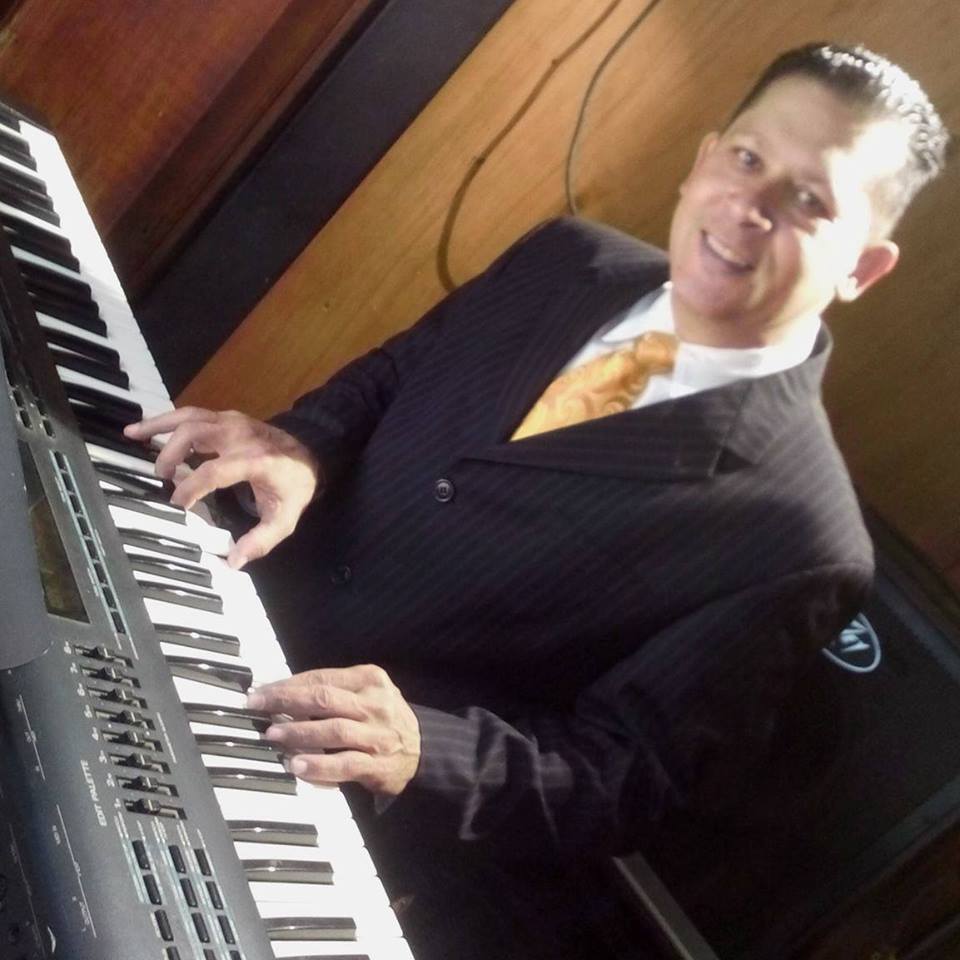
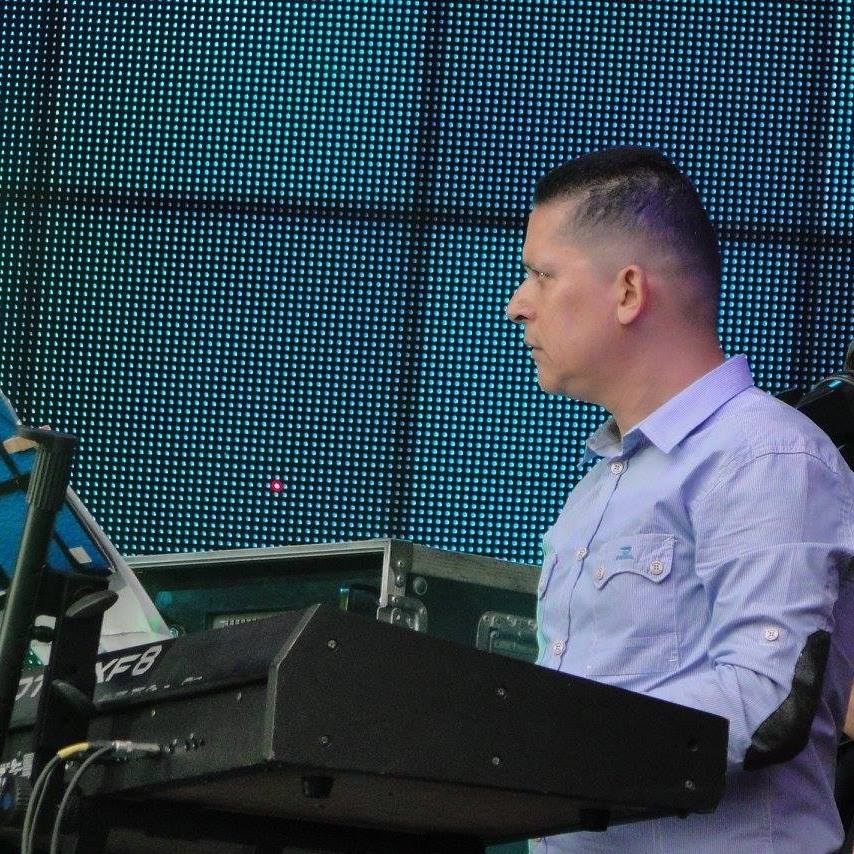
Alberto Crespo, a young pianist, arranger, composer and music producer, from an early age began his studies in Piano and Theory and music theory at the “José Ángel Lamas” music conservatory in the city of Caracas, to later continue his studies in harmony, counterpoint , orchestration and improvisation in different music schools

Alberto Crespo
Alberto Crespo

Since the age of seventeen he has accompanied and toured nationally and internationally with orchestras and artists such as Celia Cruz, Bobby Capo, Carmen Delia Depiní, Ray Barreto, Héctor Lavoe, José Alberto El Canario, Henry Fiol , Ismael Miranda, Mulenze Orchestra, Andy Montañés, Adalberto Santiago, Tito Nieves, La India, Herman Olivera, Frankie Vásquez, José Mangual Jr., Richie Ray and Bobby Cruz, Carlos Cano Estremera, Tito Allen, Pete Conde Rodríguez, Junior Gonzáles, Frankie Vazquez Guatacando.

Photo of Alberto Crespo

He has stood out as a producer, arranger and pianist for national and international artists such as Maikel Stuart Ny. Frankie Morales Former singer of Tito Puente Ny, Dancer Orchestra of Cheo Navarro, Grupo Mango.Grupo Bacheo, Naty y Su Orquesta, Rumberos Del Callejon de Carlitos Padron, José Papo Rivera Ny, Renzo Padilla Ny, Soneros De La Calle, Freddery el Frederyck El Coco II, Wilmer Cobos Cuenta Nueva II and his Orchestra, La Kindness Orchestra, Efrén Avellaneda and his Orchestra, Lisandro Torres and his Orchestra, Mariana La Sonera and his Orchestra, Canelita Medina, Andy Duran and His Latin Jazz, Herman Olivera Ny , Angie Rincón in London, among others.

With more than thirty years of experience in salsa and Latin Jazz, he has integrated the best groups in Venezuela, including the Orquesta Bailatino, Naty y Su Orquesta, Grupo Bacheo, Andy Durán and his Latin Jazz, El Pavo Frank and his orchestra, Orquesta La Renovación, Los Rumberos Del Callejón, Orquesta las Vibraciones, Verónica Rey and Her Orchestra, Salsa Silva and Guerra by Mauricio Silva Musician and, Mariana La Sonera and Her Orchestra, Grupo Mango. Between his tours he has visited countries such as the United States, France, Colombia, Peru, Argentina, Australia, Curaçao, Mexico and Aruba.

Photo - Alberto Crespo
Photo – Alberto Crespo

Alberto Crespo and Bacheo Latin Jazz has two record productions, the first el Chuchu del viejo and the second de África Soy, which will be on sale soon, and they feature musicians with a long career and perform salsa and Latin jazz with a varied repertoire in rhythms such as son, danzón, chachachá, guajira, salsa, etc.

He currently serves as director, arranger, composer of the Salsera Resistance of Venezuela Bailatino and at the same time working hand in hand with musicians of international stature.

Alberto Crespo anh his piano

Dominican trumpeter Wilson Portuondo talks about La Sonora Nuyorkina

As shown in the most traditional media and digital platforms, Dominican artists belonging to diverse musical genres have been working hard for many years to finally be recognized in the world. That is the case of talented bandleader and trumpeter Wilson Portuondo, with whom we managed to contact to know much more about his life and career.

Trumpeter Wilson Portuondo
This is Dominican trumpeter Wilson Portuondo from La Sonora Nuyorkina

How Wilson became interested in music

Wilson, our protagonist in this story, became interested in the musical world shortly after his 15th birthday in his native Dominican Republic, which was already well known for various types of merengue at the time. The young man frequently attended concerts performed in parks on weekends, which were free of charge, allowing him to enjoy the bands from his town without representing excessive expenditure for his family.

This was awakening in the boy a great desire to imitate the musicians he saw on stage and be as great as them someday, so he wanted to start studying music and see what he could achieve with that knowledge.

Professional beginnings

Wilson’s first experience as a professional musician came from the hand of the town’s municipal band in the city of Santiago. He also got to play in the municipal band of the firemen and the municipal band of the Dominican National Police, which had a headquarters in the aforementioned city. 

Thanks to these groups and others, he specialized in playing classical music and merengue, but things changed greatly when he decided to move to New York as a young adult who was about to celebrate his 20th birthday.

Wilson playing
Wilson Portuondo playing the trumpet live

Wilson as a trumpeter

The instrument for which Wilson is best is the trumpet, which he confesses he began playing almost by accident. His fascination with the trumpet started when he was studying at the Culture and Art Institute while still in Santiago, as it was the first instrument he came in contact with that caught his attention at the institution.

At that time, he would never have imagined that he would play it, but he ended up feeling an enormous love for it and now considers it his favorite instrument among all others. However, he does not limit himself to this, as he can play the piano and is learning to play percussion, which includes the conga, bongo, Dominican tambora, güira and many more. 

Once he arrived in New York, he continued committed to learn as much as he could about music and studied at various institutes such as the Harlen School of the Art and later at the State University of New York (SUNY), where he studied classical trumpet for four years until he graduated.

He has learned to play the rest of the instruments through practice and lessons with other musician friends.

Arrival in the United States

When he arrived in New York, Wilson had to take an extra year in high school and, thanks to his studies, he was able to make friends with music students who invited him to enroll in the Harlem School of Art, a place where he had contact with many other people linked to the environment who began to call him to play with them as a freelancer.

Wilson at an event
Wilson Portuondo at the social dance event ”Salsita Social Pa’l Pueblo”

In parallel to this, he was taking dance classes in New York style, which allowed him to attend many social dances and such live music events. Something that the artist noticed at that time was that the groups he saw always played the same songs like ”El Cuarto de Tula”, ”Soy Pilongo”, ”No le pegue a la Negra”, ”Rebelión”, among others. In addition to notice that they did not meet to rehearse, but played together the same as always.

To some extent, he feels that these mistakes on the part of so many orchestras inspired him to create his own project which he would baptize as La Sonora Neoyorkina, since he wanted to offer the public a fresh and new repertoire that did not include the same old thing. However, he always makes sure that he and his musicians rehearse as much as possible so as not to make the same mistakes as other groups.

Among the musicians who are currently in the group, we can mention Anthony Almonte, Osay Calvo, Nestor Villar, Carlos Mena, Carly Maldonado, among others. Venezuelan percussionist Robert Quintero, Luisito Quintero’s cousin, has also played in the band.

However, although they usually do covers of various classic songs, they have also strived to create their own original music, so they already have original songs such as ”Sonora Llegó” and ”Summertime”. Also, the group is making preparations to complete their first studio album next year.

Read also: Juan Karlos Jiménez talks about his orchestra Salsa Nueva Band and freelance career

The Guaqueros took the CCCT in the Musical Explosion

Latin America / Venezuela / Caracas

Musical Explosion CCCT

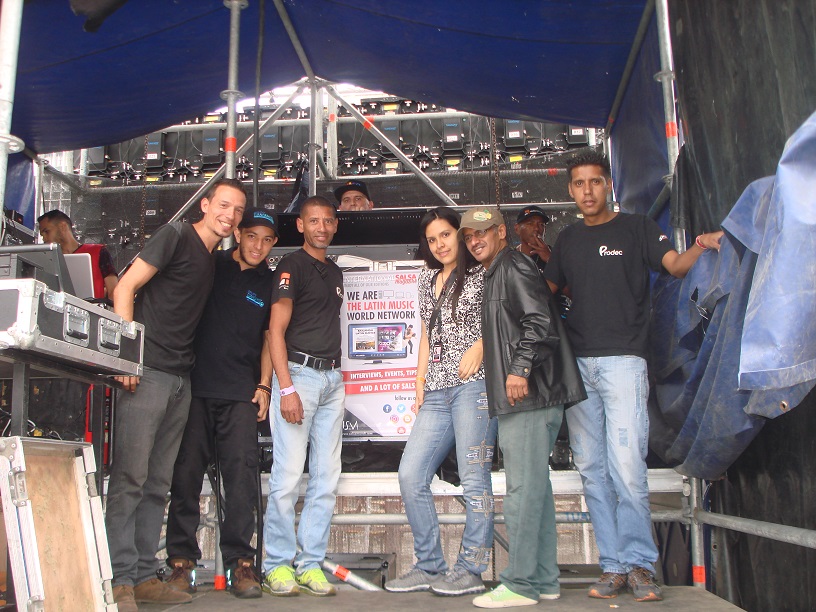
Invershow is known for being a leading company in the organization and production of events, offering the most advanced technology, innovation, qualified personnel committed to meeting the highest standards of quality and safety for its realization; as happened last month (March) in the Musical Explosion held at the CCCT shopping center in Caracas, Venezuela and lasted 3 days (Friday, Saturday and Sunday).
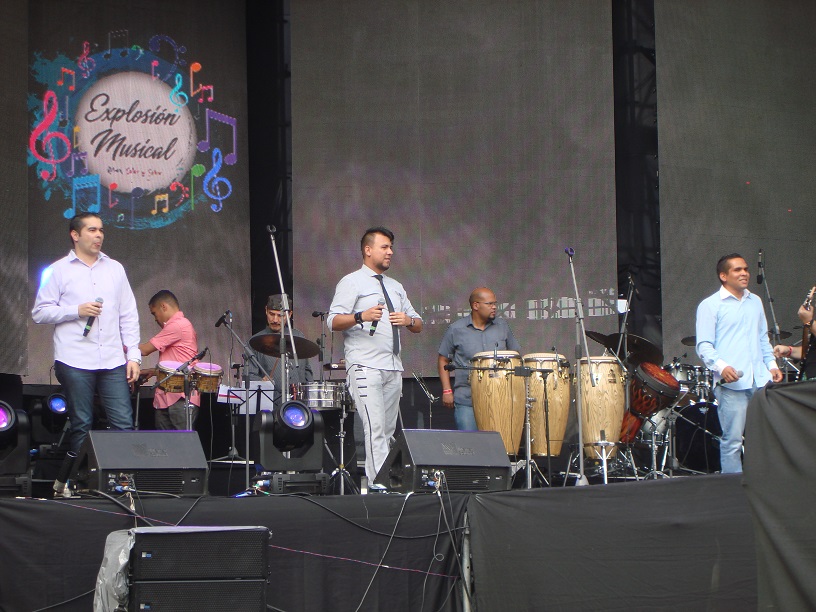
ISM in Musical Explosion - CCCT
ISM in Musical Explosion – CCCT

On the Friday before enjoying the concert, the attendees dedicated themselves to tasting in the kiosks set up for this activity since it began in the afternoon with other musical groups, the audience present was more contemporary due to the musical genre (pop-rock), which was presented at 8 pm Zengarden in honor of U2, being a complete success you could appreciate not only the songs and music they played, but also the quality of the sound, the lighting.

Aloflamenko, Poker y Guaco in Musical Explosion CCCT
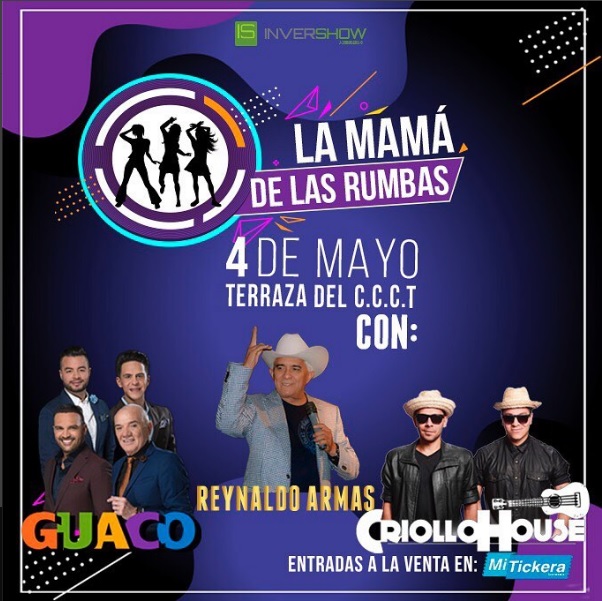
La Mama de las Rumbas - Musical Explosion CCCT
La Mama de las Rumbas – Musical Explosion CCCT

Word spread among the people of Caracas who passed near the CCCT, encouraging them to come closer and at the same time, spreading the word to go on Saturday, since other groups are presenting, among them:

Aloflamenco, Póker and finally Guaco; and indeed, on Saturday March 3, the CCCT was filled to be able to listen to the good music of the DJ, dance, participate in raffles on stage, and the most awaited musical group by the Venezuelans Guaco arrived, everyone left their seats to be in front row to see, hear and sing their songs with them, at the end of the event, people were very excited, there was even a couple who gave a surprise taking advantage of the moment to officially get engaged.

Musical Explosion CCCT - Photo
Musical Explosion CCCT – Photo
Musical Explosion CCCT - Photo 2
Musical Explosion CCCT – Photo 2
Musical Explosion CCCT - Photo 2
Musical Explosion CCCT – Photo 3
Musical Explosion CCCT - Photo 4
Musical Explosion CCCT – Photo 4

One of the things that drove the participants crazy was the interaction of the musical group with the public singing their songs together, and as Venezuelans we feel proud of our artists.

Photo 3 Poker - Musical Explosion CCCT
Photo 3 Poker – Musical Explosion CCCT

On Sunday they played Criollo House, Trabuco Contrapunto and closing the event “The Perfect Melody” being a great musical explosion for all its spectators; definitely the name of the event was in keeping with the moments lived by all those who accompanied them these 3 days, a total success, meeting the expectations of the artists and spectators. We thank INVERSHOW for allowing us to participate, promote and enjoy the event, we are sure that your next events or concerts will be sensational like this one.

Photo of Musical Explosion CCCT

On May 4 in honor of mothers, so you know if you want to enjoy a great event, buy your tickets for “La Mama de las Rumbas” at http://www.mitickera.com/Evento/La-Mam% C3%A1-de-las-Rumbas.

Photo 2 of Musical Explosion CCCT

For more information contact them through:

Facebook: https://www.facebook.com/INVERSHOW-197857140255607/

Twitter: https://twitter.com/invershow

Youtube: https://www.youtube.com/channel/UCDTz2TAz4Nqoqye_RWzv0ew

Instagram: https://www.instagram.com/invershow/

E-mails: [email protected] / [email protected] / [email protected]

Phones: +58 212-2835842


  • « Go to Previous Page
  • Page 1
  • Interim pages omitted …
  • Page 38
  • Page 39
  • Page 40
  • Page 41
  • Page 42
  • Interim pages omitted …
  • Page 94
  • Go to Next Page »

International Salsa Magazine (ISM) is a monthly publication about Salsa activities around the world, that has been publishing since 2007. It is a world network of volunteers coordinated by ISM Magazine. We are working to strengthen all the events by working together.