• Skip to primary navigation
  • Skip to main content

International Salsa Magazine

  • HOME
  • Previous editions
    • 2026
      • ISM / March 2026
      • ISM / February 2026
      • ISM / January 2026
    • 2025
      • ISM / December 2025
      • ISM / November 2025
      • ISM / October 2025
      • ISM / September 2025
      • ISM / August 2025
      • ISM / July 2025
      • ISM / June 2025
      • ISM / May2025
      • ISM / April 2025
      • ISM / March 2025
      • ISM / February 2025
      • ISM / January 2025
    • 2024
      • ISM / December 2024
      • ISM / November 2024
      • ISM / October 2024
      • ISM / September 2024
      • ISM / August 2024
      • ISM / July 2024
      • ISM / June 2024
      • ISM / May 2024
      • ISM / April 2024
      • ISM / March 2024
      • ISM / February 2024
      • ISM / January 2024
    • 2023
      • ISM / December 2023
      • ISM / November 2023
      • ISM / October 2023
      • ISM – September 2023
      • ISM – August 2023
      • ISM July 2023
      • ISM Edition June 2023
      • ISM – May 2023
      • ISM April 2023
      • ISM March 2023
      • ISM February 2023
      • ISM January 2023
    • 2022
      • ISM December 2022
      • ISM November 2022
      • ISM October 2022
      • ISM September 2022
      • ISM August 2022
      • ISM July 2022
      • ISM June 2022
      • ISM May 2022
      • ISM February 2022
      • ISM January 2022
    • 2021
      • ISM December 2021
      • ISM November 2021
      • ISM October – 2021
      • ISM September 2021
      • ISM August 2021
      • ISM July 2021
      • ISM May 2021
      • ISM April 2021
      • ISM June 2021
      • ISM March 2021
      • ISM February 2021
      • ISM January 2021
    • 2020
      • ISM December 2020
      • ISM November 2020
      • ISM October 2020
      • ISM September 2020
      • ISM August 2020
      • ISM July 2020
      • ISM June 2020
      • ISM May 2020
      • ISM April 2020
      • ISM March 2020
      • ISM February 2020
      • ISM January 2020
    • 2019
      • ISM December 2019
      • ISM November 2019
      • ISM October 2019
      • ISM Septembre 2019
      • ISM August 2019
      • ISM July 2019
      • ISM June 2019
  • Spanish
  • Download Salsa App
    • Android
    • Apple

Search Results for: salsa in venezuela

The road to success for Venezuelan harpist and cultural entrepreneur Ángel Tolosa

Thousands of Venezuelan artists have left the name of the South American nation high in recent years and today we will talk about one of the best harpists of his generation. It is great Angel Tolosa, with whom we had the joy of having a very pleasant exchange in which we touched on certain issues related to his fruitful musical career.   
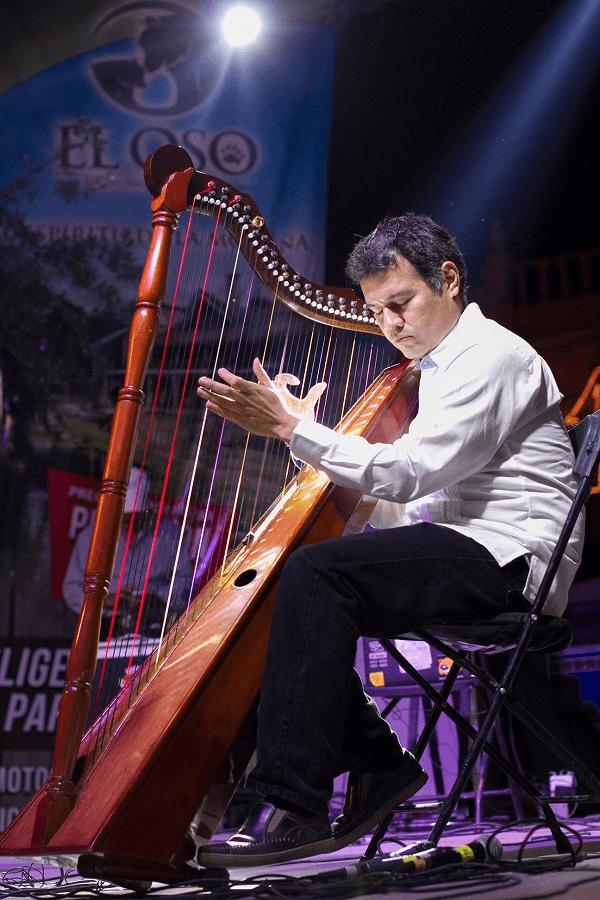
Ángel playing the harp
Venezuelan harpist Ángel Tolosa playing the harp live

Tolosa’s taste for Venezuelan popular and traditional music   

Something very important we have to mention about Angel is that he was born in the city of Caracas, Venezuela, so he managed to have a lot of contact with musical genres that were not only Venezuelan, but also from all over the world such as jazz, bossa nova, Cuban son and many others. This gave him a better understanding of music in general and a wider range of genres to choose from. 

There are many genres he likes, but without a doubt, Venezuelan music captivated him from the first time he heard it and, as he studied and analyzed it, he became much more aware of everything it had to offer at an artistic level. Ángel claims that ”no one can love what they don’t know”, so he has always been careful to learn as much as he could about Venezuelan music, so his is a knowledge-based love.   

Angel and the harp   

One advantage that Angel had is that he grew up in a profoundly musical environment, since music was always very important in his home. This led him to get started in folk singing when he was only four years old, which in turn, interested him in the piano and the Venezuelan cuatro. However, what definitely most caught his attention at so early an age until today was the harp, which according to Angel, was part of the life plan that God has for him.   

The musician even laughing says he believes that ”instruments are like their owners” since the harp interested him for being peculiar, versatile, elegant and demanding in terms of discipline to be played. These are characteristics that the artist perceives in himself when playing any piece, so he affirms that this is the instrument that most closely resembles his personality and style.   
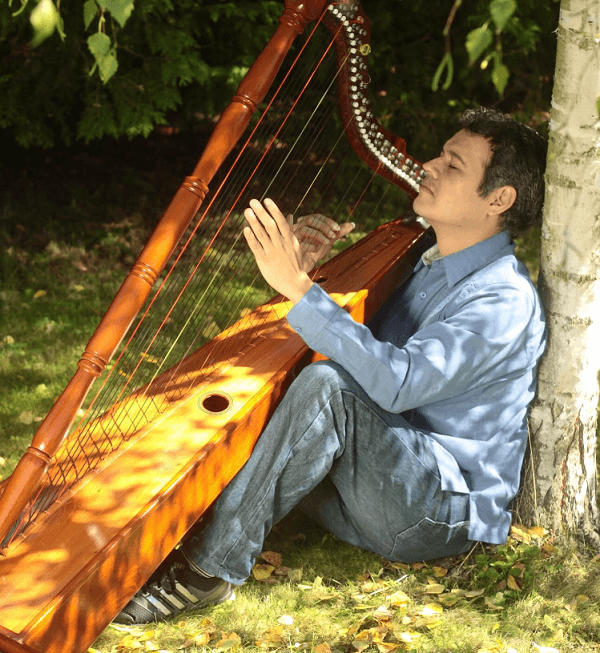
Ángel posing with the harp
Ángel Tolosa posing for the camera with his main instrument, the harp

Ensamble A Contratiempo   

When Ángel and his brother José Luis noticed the talent they both had for music and the fabulous combination of what they made in this field, they decided they had to create something together and took the risk of creating Ensamble A Contratiempo, with which they sought to establish a platform on which they could share their musical interests with total freedom and without any restrictions. Angel defines it in short as ”a band with a universal sound, but with well-defined Venezuelan roots”.   

Ensamble A Contratiempo’s specialty is the so-called Afro-Venezuelan jazz and blends genres such as jazz, universal music, electronic elements and Afro-Venezuelan roots, resulting in a fresh and original urban sound that leaves no one who might listen to it indifferent.    

Something that characterizes this group is that it uses conventional instruments to play in unconventional ways. Ensamble A Contratiempo usually plays the harp, the cuatro, the violin, the bass and Afro-Venezuelan percussion.   

Both Ángel and his brother José Luis have enormous prestige and are seen as two of the most prolific art entrepreneurs of their generation and pioneers in the genres in which they perform, so this musical initiative was very well received in all sectors in which it has been heard.    

Together, the Tolosa brothers have even been able to design an essential vocabulary for learning to play the Latin harp and even contributed to the redesign of the Venezuelan harp as it was known before them. 

Within their extensive discography, we can mention some important titles such as ”Venezuelan Sounds”, ”Katuketi” and ”Ancien Roots”.   
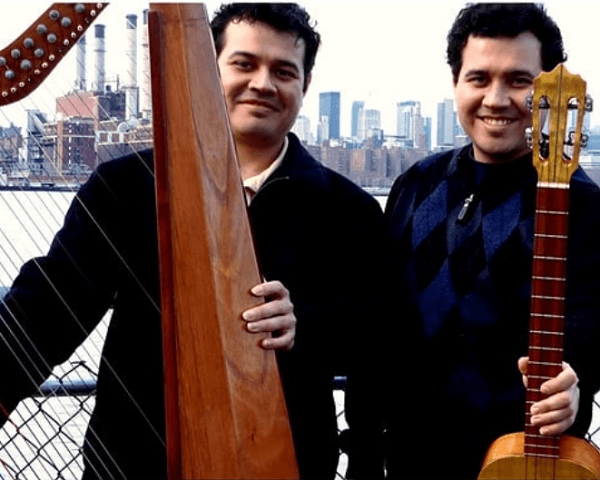
Ángel and José Luis
Ángel Tolosa next to his brother, guitarrist José Luis Tolosa

Teaching and Agrupación Oficial de Cultura de la Zona Educativa del Estado Táchira 

As if this were not enough, Angel has also worked as a teacher and an important member of the Agrupación Oficial de Cultura de la Zona Educativa del Estado Táchira. 

In this regard, Angel explained that he worked for the Venezuelan Education Ministry for more than four years, an experience that helped him to design the educational services he currently offers in his cultural company, which also creates projects for various cultural institutions, universities and art centers around the world.    

On the subject of music education, the artist also emphasized that ”this is essential for the cognitive development of each person, the benefits that music has on those who not only have contact with it, but also play it have been demonstrated. Music is so demanding that it drives to have a structured life ruled by profound ethical principles and spirituality”.   

Bachelor of arts and ethnomusicology 

Angel has said that his Bachelor of Arts has been extremely important for his career as a musician, since from his point of view, ”music is a profession in which all disciplines of the world converge”. Everything he learned during his degree has allowed him to build diverse musical and business concepts under a much more orderly system. This career has offered him the necessary structure for the projects he has started with music, which he appreciates.   

In addition to this, Angel has also studied ethnomusicology, which can be defined as an academic area that involves various approaches to the study of music, but with special emphasis on social, cultural, identity aspects and more of this kind. This way of studying and perceiving music combines details that come from folklore, psychology, cultural anthropology and musicology at their most conventional.    

On the above, the harpist pointed out that ”Venezuela has a very deep sense of identity” and that the identity of a country is like the face and fingerprint that allows us its distinguishing features and what makes its inhabitants part of a whole. Of course, the typical music of the place is an essential part of what we have said.   

Since Angel is a lover of everything about Venezuela, he takes as a starting point his own profession to understand his own country in a much broader and rational sense, which he thinks Venezuelan society should do as a whole. It is necessary to know the concept of nation and of what we are and I don’t see any other road but culture” said the artist on the subject.  

It is clear that for the entrepreneur, studying music and its genres from its purest roots is a way to pay homage to the culture which we come from, an example that we should all replicate, even those who are not dedicated to music. 

Read also: Founder of Yambu Productions and host of ”Alma Del Barrio” Guido Herrera-Yance 

Unstoppable Hollywood Salsa Fest focuses on the importance of Salsa

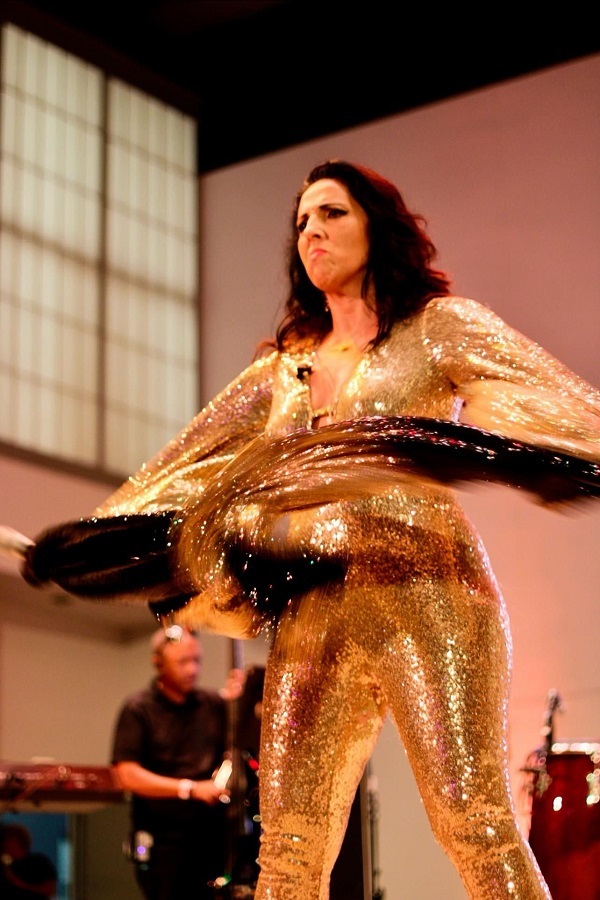
In the midst of the release of the single in which she collaborated with Edwin “El Calvito” Reyes ‘Dos pa’ lante’, on April 13, 2024; Melina Almodovar performed at the most important salsa festival in South Florida in the U.S. Melina also serves as an entrepreneur, along with her partner Cristina Moinelo, for the past nine years.

“La muñeca de la salsa”, Melina Almodóvar

Each year, the Hollywood Salsa Fest focuses on the importance of salsa music, recognizing that Afro-Latin music fuses us into a culture that draws from diverse roots. This year’s festival – sponsored by the city in a public-private partnership with various businesses – was held at the Artspark at Young Circle.

As masters of ceremony, the festival featured the winning team of “Meca” from Salseo Radio and “El Cacique” from Zeta 93 FM, Puerto Rico’s leading salsa radio station.  On the decks was DJ “Boricua loco” with a tremendous selection of salsa, in addition to coordinating from his musical corner the dance exhibitions by the salsa dancers of YC Dance Studios.

The first orchestra in charge of starting the concert, Latin All Stars, counted with the vocal and scenic mastery of Marlon Mendioroz, Yorman Clay, Adrián Marchant, Yomil Rivas and Frank Cróquer, backed by a musical team that did not fall short of the expectations of those who waited patiently for the stage to light up with good salsa. Latin All Stars was followed by “Juano, tu cantante” from Cali, Colombia. The team of musicians of the orchestra with the second shift shined accompanying who for 16 years was part of Orquesta Guayacán.

The trumpet player also performed in the mid-afternoon block, preceding the arrival of the Hollywood Salsa Fest Orchestra in a segment in which they accompanied Hilda Naranjo from Cuba, Fabián Rosales from Chile and Joey Hernández from Puerto Rico.

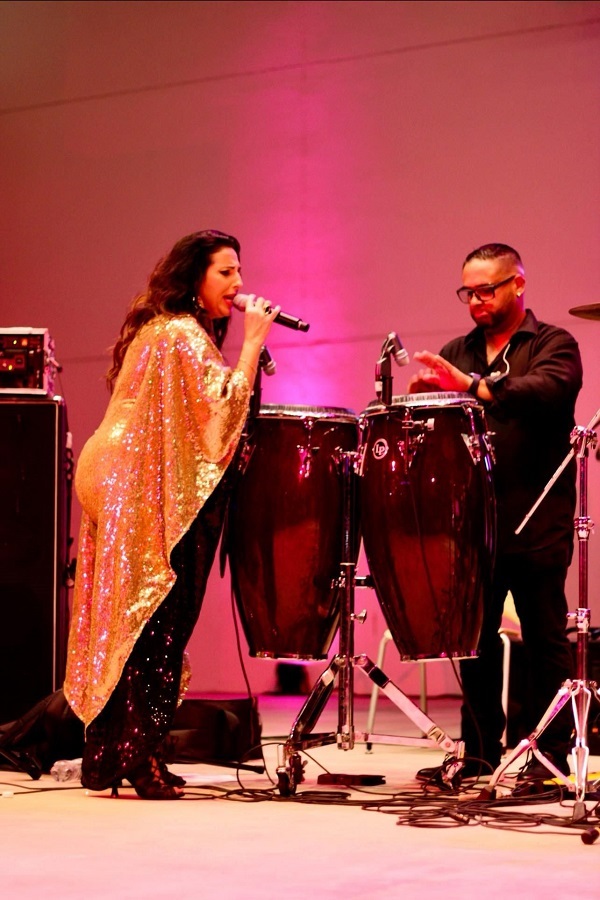
“La muñeca de la salsa”, Melina Almodóvar

At around 6:00 p.m., it was the turn of the Cuban sound known as timba, with the Julio Montalvo Orchestra and Miami’s Huracán. Once the hurricane winds that accompanied Julio Montalvo ceased, tribute was paid to the late Venezuelan percussionist Robert Vilera thanks to the staging of Vilera Son. The tribute to Vilera’s legacy featured the talents of Los Gaitanes from Panama, Avelino Romero from Venezuela, El Mola and Braidsman from Cuba, as well as Robert Vilera’s first singer, Felix Argenis.

“La muñeca de la salsa”, Melina Almodovar, was backed by Luigi Flores from Costa Rica on piano and musical direction, Johnny Fortunato from Dominican Republic on bass, Pablo Molina from Venezuela on timbales, Juan Pablo Camacho from Venezuela on tumbadoras, Carlos Molina from Venezuela on bongo, Carlos Perez from Cuba on first trombone, Ramon Benitez from Colombia on second trombone, Carlos Frank from Cuba on first trumpet and Julian Cifuentes from Colombia on second trumpet.

On backing vocals, Melina was backed by: Joe Arroyo from Puerto Rico and Freddy Lugo from Cuba. Melina gave us a first class show. As part of Melina’s performance, “El Calvito Reyes” joined her for the first time to perform the recently released single ‘Dos pa`lante’ as a live duet.

During the afternoon, the festival took place under a beautiful blue sky that kept the crowd’s enthusiasm positive. During the night, the clear Floridian skies kept the attendees dancing at full steam. Of course, to that end, the aforementioned talents kept the stage in salsa.

The festival closed with the always remembered for the classic ‘De barrio obrero a la 15’, Chamaco Rivera, who with a stellar salsa career to his credit, not only kept the audience engrossed in his impeccable staging, but also introduced us to his guest artist, his son: Christian Ray.

Melina contó con el respaldo vocal de Joe Arroyo de Puerto Rico y Freddy Lugo de Cuba

Christian delighted us with his repertoire shortly before inviting us to listen to his recently released CD entitled El legado continúa. To bid farewell to the musical day, which lasted nearly ten hours, the grand finale invited the group of singers who had paraded on stage during the day and part of the night to come in and jam with the “papa de los pollitos” (father of the chicks).

We are waiting to enjoy the next ‘Hollywood Salsa Fest’, for which the businesswomen in charge promise to throw the house out of the window. Melina and Cristina have delivered nine festivals in a row. So see you in April 2025 to dance in the tenth edition of the same.

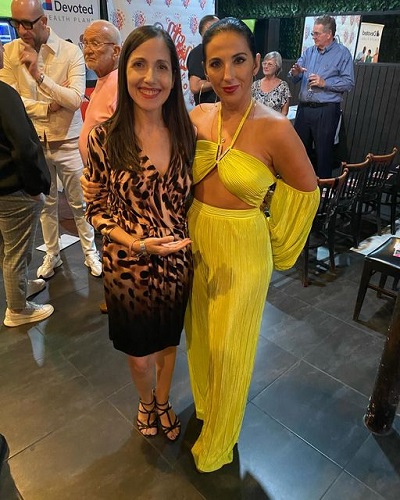
Bella y Melina
Bella y Melina

Bella Martinez Puerto Rico

Also Read: A party of dancers at the concert to celebrate Willie Rosario’s 100th birthday

The Soul of Latin American culture – Salsa, Merengue y Lambada

Latin American / Venezuela / Caracas

Did you know that Salsa, Merengue and Lambada are rhythms that have been enjoyed in the last decade? Well, this link that unites them is the energy and passion for life, expressing itself in music, showing itself in the romance of couples dancing in harmony and with dance it unites them even more in a sentimental way as in fellowship.

These rhythms were born from a very urban environment, where each dancer can freely show their personality in the movement, however, following certain rules that each genre has, where one can follow each step and technique or do it spontaneously. For example:

✓ Never use the same foot twice, it must be alternated (right, left, right…).

✓ Dance with your partner as a mirror, that is, if you go to the right, your partner goes to the left.

✓ Transfer of weight from one foot to another as steps are performed.

Salsa is a rhythm that originates from the synthesis of Cuban son and other Caribbean music genres, with jazz and other American rhythms. One of the main contributors comes from the African rumbas along with the cumbia, the guaguancó, the guajira, the Cuban son, the mambo, the montuno son, the cha cha cha, among others.

It can be said that salsa is one of the most important rhythms in the music industry where it has many characteristics of its contributors, for example, “salsa” is close to “mambo” due to the steps executed in counts of eight, its movements and patterns are unique, however, it is a side-by-side dance with different turns.

Couple dancing Salsa

The Merengue has its origin in the Dominican Republic and has a huge degree of popularity in the Caribbean area, it is a slow rhythm that increases its speed at the end of the dance, it is similar to the bolero but it is danced more than anything in groups than with a partner.

The secret of the dance is based on the transfer of weight from one foot to another, where each Latin genre has a characteristic that differentiates them, the best example is the similarity that everyone believes that “salsa” has with “merengue”, where Salsa has 4 beats, where the first beat touches the floor lightly with the tip of the foot quickly, which is known as “TAP” and this is repeated in four “4” and eight “8”, instead The merengue does not exist, this “TAP” is only 2 beats, it is a constant rhythm, very simple, whose speed of steps is marked by the musical rhythm.

But both genres have to have in the dance a movement of the hip, shoulders and position of the hands that characterizes them, marking the sensuality of Latin rhythms.

The “Lambada, a Brazilian genre that originated from the small cafes and bars that came from the garrafa dance, is believed to have been the product of rhythms such as the “Carimbo” and the “Merengue” with influences brought from the “Forro” and the “Samba” so it has a lot of Caribbean music influences, but the melody is the combination of Caribbean drums, brass and electric guitars with an added touch of Spanish elements and the flavor of the local indigenous people. It first spread to Bahia, Europe, Japan, the USA and the Middle East. It is currently danced in nightclubs and dance clubs, since its creation its jiv, merengue, rumba, even sevillanas and acrobatic maneuvers have evolved.

It is a 3-beat dance (fast – slow – fast) where the first step is taken with the first beat of the music, the second is the movement of one of the 2 senses and the third is the transfer of the weight back to the center moving the leg more slowly.

This dance is danced with the whole body, women dance pointe, flex the knees and the trunk moves in the opposite direction to the lower part of the body, if the hip rotates in one direction the rib cage rotates in the opposite direction. It can be danced alone or as a couple (they dance very close together giving the impression that it is one person), where the man molds his partner in the dance and the woman can embellish the dance with head movements or a controlled intentional fall producing a wave from the knee to the hips and shoulders.

If you want to know and learn some basic steps of the mentioned rhythms, look for the book in movement Latin Dance Dessi and Orod Ohanian and get passionate with these three “3” hot dances. Or follow us and watch the following videos to learn how to dance merengue, salsa and lambada.

Venezuelan businesswoman Joanna Torres is an example to follow

There are many Venezuelans who, due to the economic and political crisis that has affected their country in recent years, have had to set off for new horizons and leave their homeland to look for a better future for themselves and their family. Such is the case of the businesswoman and founder of Arepas Latin Cuisine Joanna Torres, with whom we had the pleasure of conversing with recently. 

This talented young woman has a fascinating history of success and is a true inspiration to any Latino wanting to open paths in the United States or anywhere else in the world. That is why, from International Salsa Magazine, we decided to contact her and share her journey in the land of opportunities.  

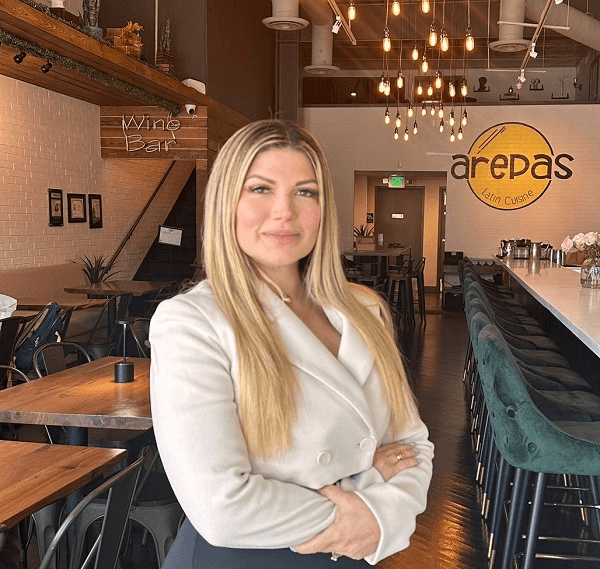
Businesswoman Joanna Torres
Venezuelan businesswoman and founder of Arepas Latin Cuisine Joanna Torres

Arrival in San Jose   

The first American city where Joanna arrived was Miami and her goal was to do a master’s degree, since she had studied her undergraduate career in Venezuela. Once there, she realized that she had a lot of trouble learning to speak English and there were few opportunities to practice it, since all with whom she interacted with spoke Spanish. 

It was then when a friend suggested the idea of moving with her to the city of San Jose, where it would make it easier for her to learn the language and spend time with people who spoke it all the time.  

How Joanna began to conceive the idea of becoming a businesswoman 

Two years after Joanna arrived in San Jose, she began working in a clinic and, together with her experience in administration and accounting, she learned everything she could about medical coding and the way medical procedures were coded. This gave her enough experience to dare to open his own medical consulting firm which has more than 22 years of operation and a total of 150 employees in Venezuela. 

The entire staff of the consulting firm residing in the South American country speaks English and takes care of serving all customers in the United States. Joanna even took it upon herself to provide her workers with their own fiber optic internet by contacting some telecommunications engineers, since this service in Venezuela is extremely poor. 

Since the medical consulting firm gave her the necessary experience as a businesswoman, she decided to expand into another area she was very passionate about: cooking. Joanna had been wanting to start a food truck in parallel to her current company for some time and saw the opportunity to do so through a friend and former college classmate who owned restaurants and food businesses. She proposed to Joanna to buy one of her restaurants and partner with her, which she finally accepted and that is how the first Arepa Latin Cuisine restaurant was born.   

Joanna and her team
Joanna Torres and part of her team in San Jose

Reducing failure possibilities for Arepas Latin Cuisine 

Joanna was aware that the possibilities of failure of her idea were high, but she told us that her extensive knowledge of finance was fundamental to overcome all obstacles. 

She was always clear that she had to look for ways to generate more income within the same company. That is why she and her staff have been responsible for providing lunch to employees from technology companies, making food for events such as birthdays or weddings, organizing pop-ups (temporary restaurants created to promote new menus and specific events) in order to innovate and always earn a stable income in the corporation. 

The businesswoman points out that she always tries to innovate, and with regard to this, she said ”I have invented some taco-arepas with which I use arepa flour to make the tacos and give them a different touch, so it would be a combination of both dishes. I always try to innovate and do different things to surprise people and keep them from getting bored”. 

”At the San Francisco headquarters, we have chosen the strong liquor license to start offering Venezuelan typical drinks and rum such as Diplomático or Ron Santa Teresa. We are also doing some remodeling in the place to make it much more pleasing to the eye” she continued. 

In addition, both the San Jose and San Francisco headquarters offer live music for diners to enjoy good Latin music while tasting their food. There is also a dance floor for those who wish to move to the rhythm of the orchestra of that day.   

Joana’s grandmother as an inspiration to create Arepas Latin Cuisine 

After taking the required steps, the first Arepas Latin Cuisine restaurant headquarters were opened in October 2021, but it was not easy. This was an effort made over many years in which Joanna did her best to be able to reach that point. 

The beginning of everything was her grandmother, with whom the Venezuelan learned everything she knows about cooking. She was a cook, a cooking teacher and taught cookery courses and workshops to support her 12 children because she was widowed at a very young age. Joanna tells us that, at that time, she and her children made ground corn arepas to sell to markets and restaurants. 

All this made her an inspiration to Joanna and led her to learn to cook since she was just nine. As a child, she knew that cooking would be important in her life. 

Lots of secrets that Joanna learned from her, such as the way in which the dough has to be kneaded, the difference between making homemade arepas and arepas to sell, the amounts of ingredients to be used, the way to prepare the fillings for the dishes, among other things.   

Joanna and her grandmother
Joanna Torres posing next to her grandmother, who sadly passed away on April 1, 2023

Reception to Venezuelan food in San Jose 

Joanna ensures that her recipes have been a boom in California, since there was no authentic Venezuelan food in San Jose, so her project was a pioneer in this area.   

The reception her food has got with Americans, Chinese, Indians, Vietnamese and many other nationalities has been truly amazing because dishes from Arepas Latin Cuisine, besides being extremely delicious, were something that has never been seen before.   

The taste for food at Arepas reached such a point that the restaurant provides lunch to more than 300 employees in several technology companies such as Netflix, Snapchat and Tinder. It is worth noting that workers who are benefited greatly appreciate being able to enjoy a rich and varied menu every day.   

The biggest challenges Joanna faces as a businesswoman  

One of the biggest challenges Joanna has faced is to find employees who know the Venezuelan and Colombian cuisine (there are also several Colombian dishes on the menu) as it should be. ”Finding cooks with great experience has been complicated, but with the arrival of Venezuelan and Colombian migrants in California, we have been able to find staff with knowledge in the culinary arena” said the businesswoman on this topic. 

For her, it is vitally important to employ people who are very clear about how to cook the main Colombian and Venezuelan dishes, so she takes this into account when recruiting her talents.   

In addition to that, Joanna also sells Venezuelan products and has a hard time finding them in San Jose, so she has to bring them directly from Florida in order to sell them in California.  

Joanna’s restaurant inside
That is what Arepas Latin Cuisine looks like on the inside

Advice for Latino migrants 

When Joanna was asked to give advice to future Latino migrants who wish to move to the United States, the first thing that she pointed out was that they must work very hard in that country to get ahead. In her particular case, she claims to have had three jobs at the same time, since she was alone in the United States and lived only from what she earned. 

She also added that ”you have to make sacrifices to succeed in life and always do things well according to the laws of the country that welcomes you. I think that there are many Venezuelans who confuse ‘native cunning’ (taking advantage or others and the economic, political and judicial system failures to do whatever you want without consequences) with intelligence, which makes them believe that they are above others and make serious mistakes. You have to do things well and eventually the much-desired success will come,” said Joanna on such an important issue. 

Read also: Young Puerto Rican singer Jeremy Bosch supports the Spanish Harlem Salsa Museum 

Salsarria Orchestra. Back to our Roots

Latinoamerica / Venezuela / Caracas

The Salsarria Orchestra was founded in Caracas on July 20, 2018 by its director, pianist, arranger Wilfredo Agustín Castro Sarmiento.

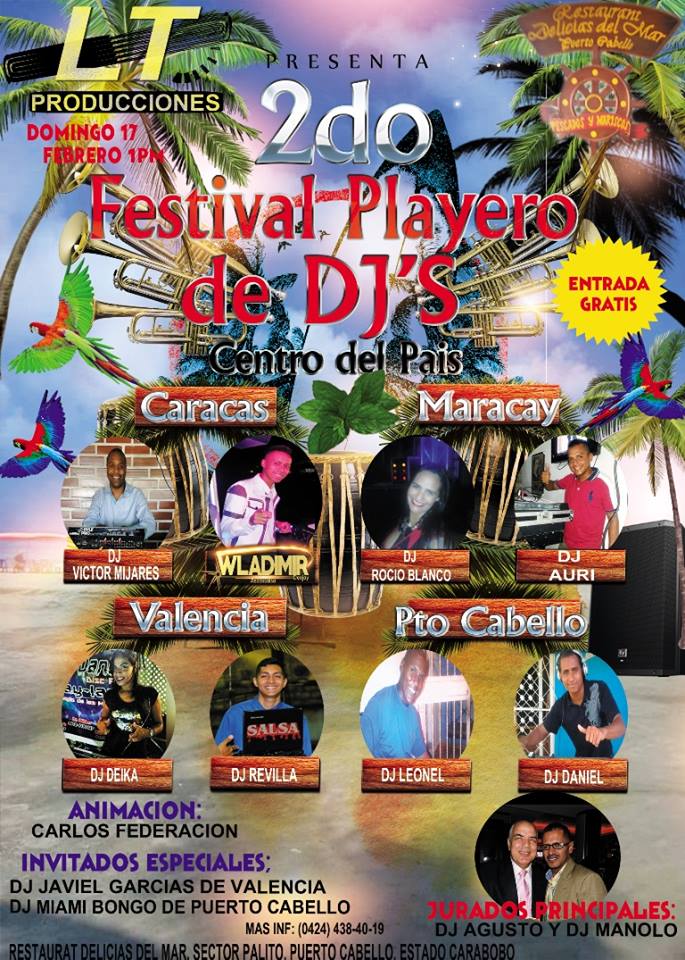
2do Festival de Dj`s Pto Cabello

Salsarria Orchestra, in its beginnings, the orchestra performed at events in the capital city where it was widely accepted by the Caracas public.

Very important musicians of national and international stature have marched through the orchestra such as: Orlando Poleo (France), Orlando Watussi (Italy), Federico Betancourt, Luis Esteban Spain (El diablo del Son) among others.

The Salsarria orchestra has participated in important Latin music festivals such as the “Bicentennial Festival Suena Caracas” with a stage presentation.

Orquesta Salsarria - Pal Bailador
Orquesta Salsarria – Pal Bailador

In 2014 they recorded their first album entitled ¨De Vuelta aNuestras Raíces¨ having acceptance in the national and international salsa audience.

Its director and founder Wilfredo Castro is the composer and arranger of all the songs, I love you Caracas, Simply (international success), Las Leyendas, Carnival Comparsa for Caracas, Different Swing, That day you decide to return and in my neighborhood, and preparing his second record production.

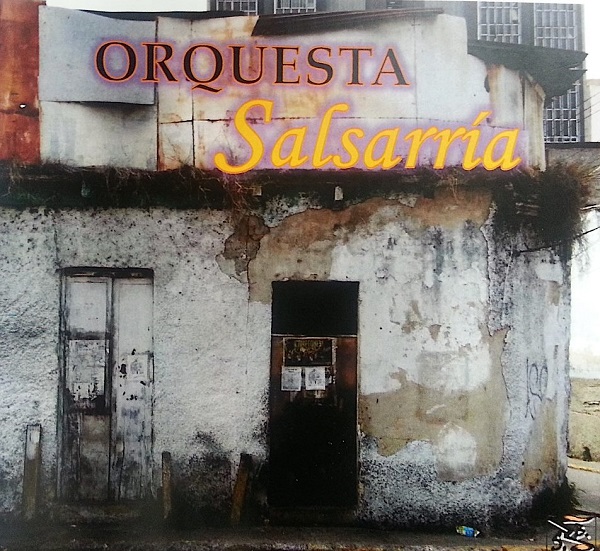
Orquesta Salsarria
Orquesta Salsarria
  • « Go to Previous Page
  • Page 1
  • Interim pages omitted …
  • Page 7
  • Page 8
  • Page 9
  • Page 10
  • Page 11
  • Interim pages omitted …
  • Page 94
  • Go to Next Page »

International Salsa Magazine (ISM) is a monthly publication about Salsa activities around the world, that has been publishing since 2007. It is a world network of volunteers coordinated by ISM Magazine. We are working to strengthen all the events by working together.