• Skip to primary navigation
  • Skip to main content

International Salsa Magazine

  • HOME
  • Previous editions
    • 2026
      • ISM / May 2026
      • ISM / April 2026
      • ISM / March 2026
      • ISM / February 2026
      • ISM / January 2026
    • 2025
      • ISM / December 2025
      • ISM / November 2025
      • ISM / October 2025
      • ISM / September 2025
      • ISM / August 2025
      • ISM / July 2025
      • ISM / June 2025
      • ISM / May2025
      • ISM / April 2025
      • ISM / March 2025
      • ISM / February 2025
      • ISM / January 2025
    • 2024
      • ISM / December 2024
      • ISM / November 2024
      • ISM / October 2024
      • ISM / September 2024
      • ISM / August 2024
      • ISM / July 2024
      • ISM / June 2024
      • ISM / May 2024
      • ISM / April 2024
      • ISM / March 2024
      • ISM / February 2024
      • ISM / January 2024
    • 2023
      • ISM / December 2023
      • ISM / November 2023
      • ISM / October 2023
      • ISM – September 2023
      • ISM – August 2023
      • ISM July 2023
      • ISM Edition June 2023
      • ISM – May 2023
      • ISM April 2023
      • ISM March 2023
      • ISM February 2023
      • ISM January 2023
    • 2022
      • ISM December 2022
      • ISM November 2022
      • ISM October 2022
      • ISM September 2022
      • ISM August 2022
      • ISM July 2022
      • ISM June 2022
      • ISM May 2022
      • ISM February 2022
      • ISM January 2022
    • 2021
      • ISM December 2021
      • ISM November 2021
      • ISM October – 2021
      • ISM September 2021
      • ISM August 2021
      • ISM July 2021
      • ISM May 2021
      • ISM April 2021
      • ISM June 2021
      • ISM March 2021
      • ISM February 2021
      • ISM January 2021
    • 2020
      • ISM December 2020
      • ISM November 2020
      • ISM October 2020
      • ISM September 2020
      • ISM August 2020
      • ISM July 2020
      • ISM June 2020
      • ISM May 2020
      • ISM April 2020
      • ISM March 2020
      • ISM February 2020
      • ISM January 2020
    • 2019
      • ISM December 2019
      • ISM November 2019
      • ISM October 2019
      • ISM Septembre 2019
      • ISM August 2019
      • ISM July 2019
      • ISM June 2019
    • 2016
      • ISM December 2016
  • Spanish
  • Download Salsa App
    • Android
    • Apple

Search Results for: salsa in venezuela

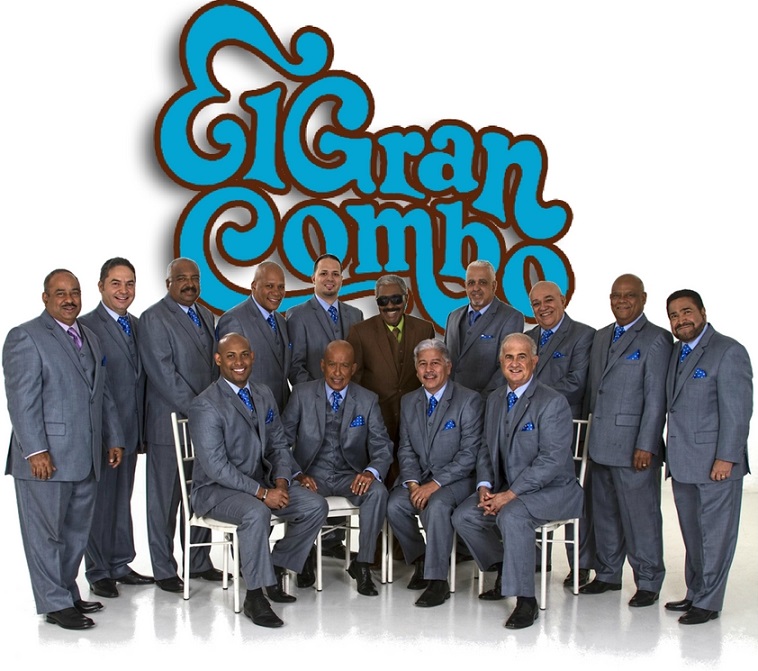
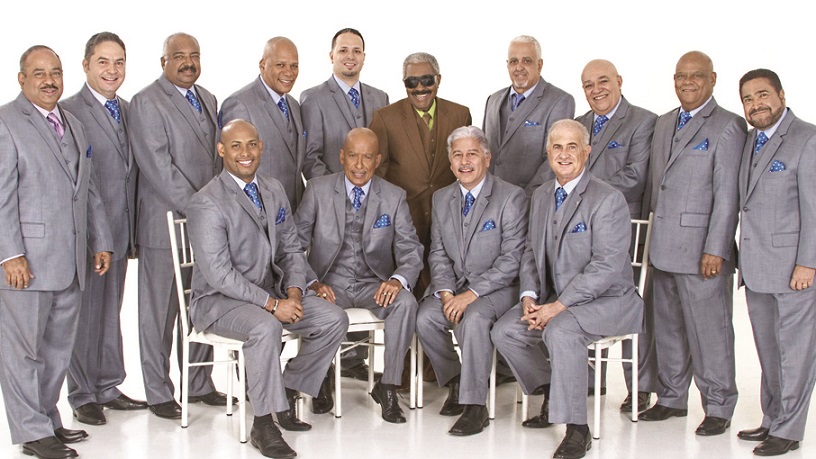
The Great Combo of Puerto Rico – The famous salsa orchestra

Latin America / Puerto Rico / Puerto Rico

The Great Combo of Puerto Rico will receive 2019 in Puerto Rico.

The famous salsa orchestra will offer a dance concert on the last day of this year at the Miramar Convention Center.

For the first time in more than two decades El Gran Combo will have the opportunity to say goodbye to the year on its island, a fact that for the legendary Rafael Ithier does not go unnoticed.


The Great Combo of Puerto Rico

“For me it is a huge satisfaction and I think for the whole as well. Lately we have said goodbye to the year in Colombia, Ecuador, Peru, Venezuela, in the (Dominican) Republic, where we are going quite frequently, but in Puerto Rico it has been more than 20 years since we said goodbye and for us it is an enormous satisfaction that we they invited him to fire him,” the musical director of the famous salsa orchestra said in an interview with Primera Hora about the dance concert they will offer at the Miramar Convention Center.

“We are going to be able to be with the family and many friends that we do not see during the year. Because remember that we are a traveling band, and we spend all the time traveling”, added Ithier, anticipating that the public will be able to enjoy the best of the repertoire of the group with more than 56 years of experience.

“And if they allow us, and they will always allow it, we will play three or four numbers that we have new, because people always expect something new from El Gran Combo,” Ithier assured, sitting on the balcony of his home in Bayamón.

The Great Combo of Puerto Rico - Photo
The Great Combo of Puerto Rico – Photo

Mariantocook: In this kitchen “La Salsa” puts in the flavor!

Europe

Maiantocook:

Mixing two passions to a perfect match, is possible. Going into the kitchen of this beautiful woman means tasting a universe of flavors with your tastebuds, soul and hearing, yes your hearing comes included, when we talk about Marianto.

Mariantocook Team
Mariantocook Team
Teaching how to make fresh pasta in your kitchen in Panama

By Carmen Aular

María Antonieta Pérez Mendoza is Mariantocook, a culinary reference for those looking for options to learn professional cooking techniques and run to apply them at home and delight everyone with exquisite flavors, and preparations of an executive chef. She delights her followers constantly with recipes made with love, sense of humor and a lot of stories that she shares with a special happiness in her social media. She opens the doors of her home and shows us how to prepare, in the simplest way, amazing dishes that seem more elaborate. She is, also, very open to helping her followers, when they contact her in private asking for tips and a word of advice.

All this is wonderful and exciting to share, but why did Mariantocook really catch our attention? ¡La Salsa! This Venezuelan chef living in Europe not only makes everything look easy and exquisite in a few minutes, but, as if that were not enough, she enjoys cooking, listening to music and being inspired by it. Her Salsa Brava repertoire has inspired too many interesting and delicious dishes. Music is a ‘must’ in her kitchen.

This’ how it all started

Marianto Cook
Mariantocook

Marianto is a Professional Chef at CEGA (Gastronomic Studies Center) in Caracas, Venezuela, and although her love for cooking began at a young age, her professionalization in the area did not come until many years later. She can cook for private dinners for 25 people or in the kitchen of “my little piece of heaven in Tuscany” as she calls it.. The kitchen is the same, what changes is the context.

In the middle of process to discover something in what could be good no matter the age, Marianto decided to cook; because she could take the kitchen and go anywhere in the world and at any time. And so, she took her kitchen to Italy, where she settled with her family and where she continued to learn from the original source of the recipes.


This entire project that has made a very good impression in social media and that she decided to call Mariantocook, began when her son going off to college in the United States and she needed to do something to not be sad and at the same time learn something new. Many videos, recipes and bloopers later, the result has been fantastic.


Cooking is passion, and that extra flavor in Mariantocook’s kitchen, is the music. There is a careful selection of a theme for cooking, from which derive colors, ingredients and even smells. Creating a menu inspired by music, depends of the chef’s mood. There is nothing tastier than cooking, singing and dancing.


For this passionate cook, the most dynamic and wise menus are inspired by the notes of Salsa, while the most passionate ones come straight from Jazz. After this affirmation we wanted to make a creative exercise and we decided to ask Mariantocook how she imagines a menu to the rhythm of Salsa Brava, a menu, especially designed  for International SALSA Magazine. This was the extraordinary result:


International Salsa Magazine menu to the rhythm of Salsa Brava and masterfully designed by Mariantocook.


Appetizers

“First the tasty percussion” to begin with: Andean sweet ‘Arepitas’ (cornflour tortillas) with banana, ‘Telita’ (type of cheese produced in Venezuela) cheese and colorful sweet pepper jam. Mini dogfish ‘empanaditas’. Arepita Reina Pepiada (specialty of Caracas with chicken and avocado). “Here we have represented a few regions of Venezuela: Los Andes, Margarita and Caracas.” (Different regions of Venezuela with their own and very characteristic flavors). The “arepitas / arepas” are round tortitas made with cornflour, water and salt and are usually enjoyed fried, roasted and even baked.

Arepa with grilled chorizo, arugula and tomatoes
Crab, tomato and lettuce arepa
Chicharrón arepa
Chicharrón arepa
Auyama stuffed tortelli

Entry

“The introduction begins with the instruments of the whole orchestra”: Minced grilled octopus, seasoned with tomato, escalonias, olive oil, coarse salt, pepper and fresh thyme.

Main dish

“Then comes the discharge”: Matricciana and fried pancetta, tomatoes, pepper and pasta with some grated pecorino romano cheese.

Dessert

“It ends with a bolerito”: Pears candied with syrup.

Bon appetit!

Baked rabbit with potatoes
Auyama and mandarin cream with bread croutons
Spaghetti Pommarola, tomato sauce
Stuffed potatoes
Stuffed potatoes

First the music

Before starting to cook, Mariantocook first puts the music, Thinks of a theme, and even improvises her culinary compositions when she has an opportunity. She also selects the wine, and cooks for it. She is a faithful believer of the argued kitchen, and to transmit to the diners what she feels while cooking. Marianto’s kitchen is a deep kitchen that comes from the soul and the heart and looking for memories, not only to be in a kitchen worthy of remembering, but that it also brings back memories to whoever sits at the table.


We want to close this editorial note with three of the questions we asked Mariantocook during a pleasant interview and a lot of learning. Marianto, as a good Venezuelan, flees from the Italian winter and takes refuge in her little house in Panama, where she was able to talk with ISM about her project, her passions (cooking and music), her plans for the future and her motivations.


ISM: What would you advise, from your life experience, both in the kitchen, as in the initiative to undertake the Mariantocook ’s project, to those entrepreneurs who want to start in the world of cooking or who want to venture into culinary art?

Mariantocook: Study, read, learn. Understand the reason for each process in each recipe. Be curious; do not be dogmatic, because dogmas close your head. Be humble, although with self-esteem, but without falling into the fatuous. Keep an open mind to new knowledge. Love everything. Cook with love and passion, no halves, give it your all.

Marianto Cook making delicious fresh pasta
Fresh Pasta
Fresh Pasta
Rigatoni with Portobello mushrooms
Auyama risotto
Auyama risotto
Variation of La Carbonara with smoked salmon

ISM: What are your salsa recommendations?


Mariantocook: ‘El libro de la salsa’ de César Miguel Rondón is the tastiest thing you can give away. Rubén Blades, Adalberto Santiago, Ray Barretto, Bobby Valentín. ¡Salsa Brava!


ISM: What comes with Mariantocook?


Mariantocook: Cooking, editing, music. Learn many things to improve the videos and all the material I’m doing. I want to buy 2 or 3 cameras so that everything looks more professional.

Mariantocook in the kitchen
Marianto Cook making hallacas

You can follow Marianto on Instagram: Mariantocook, and by the same name subscribe to her YouTube channel. From wherever, she will always share her human warmth and that magic to cook and teach everything she has learned since she was 10 years old.


Photos: Mariantocook’s courtesy


The road to success for Venezuelan harpist and cultural entrepreneur Ángel Tolosa

Thousands of Venezuelan artists have left the name of the South American nation high in recent years and today we will talk about one of the best harpists of his generation. It is great Angel Tolosa, with whom we had the joy of having a very pleasant exchange in which we touched on certain issues related to his fruitful musical career.   

Ángel playing the harp
Venezuelan harpist Ángel Tolosa playing the harp live

Tolosa’s taste for Venezuelan popular and traditional music   

Something very important we have to mention about Angel is that he was born in the city of Caracas, Venezuela, so he managed to have a lot of contact with musical genres that were not only Venezuelan, but also from all over the world such as jazz, bossa nova, Cuban son and many others. This gave him a better understanding of music in general and a wider range of genres to choose from. 

There are many genres he likes, but without a doubt, Venezuelan music captivated him from the first time he heard it and, as he studied and analyzed it, he became much more aware of everything it had to offer at an artistic level. Ángel claims that ”no one can love what they don’t know”, so he has always been careful to learn as much as he could about Venezuelan music, so his is a knowledge-based love.   

Angel and the harp   

One advantage that Angel had is that he grew up in a profoundly musical environment, since music was always very important in his home. This led him to get started in folk singing when he was only four years old, which in turn, interested him in the piano and the Venezuelan cuatro. However, what definitely most caught his attention at so early an age until today was the harp, which according to Angel, was part of the life plan that God has for him.   

The musician even laughing says he believes that ”instruments are like their owners” since the harp interested him for being peculiar, versatile, elegant and demanding in terms of discipline to be played. These are characteristics that the artist perceives in himself when playing any piece, so he affirms that this is the instrument that most closely resembles his personality and style.   

Ángel posing with the harp
Ángel Tolosa posing for the camera with his main instrument, the harp

Ensamble A Contratiempo   

When Ángel and his brother José Luis noticed the talent they both had for music and the fabulous combination of what they made in this field, they decided they had to create something together and took the risk of creating Ensamble A Contratiempo, with which they sought to establish a platform on which they could share their musical interests with total freedom and without any restrictions. Angel defines it in short as ”a band with a universal sound, but with well-defined Venezuelan roots”.   

Ensamble A Contratiempo’s specialty is the so-called Afro-Venezuelan jazz and blends genres such as jazz, universal music, electronic elements and Afro-Venezuelan roots, resulting in a fresh and original urban sound that leaves no one who might listen to it indifferent.    

Something that characterizes this group is that it uses conventional instruments to play in unconventional ways. Ensamble A Contratiempo usually plays the harp, the cuatro, the violin, the bass and Afro-Venezuelan percussion.   

Both Ángel and his brother José Luis have enormous prestige and are seen as two of the most prolific art entrepreneurs of their generation and pioneers in the genres in which they perform, so this musical initiative was very well received in all sectors in which it has been heard.    

Together, the Tolosa brothers have even been able to design an essential vocabulary for learning to play the Latin harp and even contributed to the redesign of the Venezuelan harp as it was known before them. 

Within their extensive discography, we can mention some important titles such as ”Venezuelan Sounds”, ”Katuketi” and ”Ancien Roots”.   

Ángel and José Luis
Ángel Tolosa next to his brother, guitarrist José Luis Tolosa

Teaching and Agrupación Oficial de Cultura de la Zona Educativa del Estado Táchira 

As if this were not enough, Angel has also worked as a teacher and an important member of the Agrupación Oficial de Cultura de la Zona Educativa del Estado Táchira. 

In this regard, Angel explained that he worked for the Venezuelan Education Ministry for more than four years, an experience that helped him to design the educational services he currently offers in his cultural company, which also creates projects for various cultural institutions, universities and art centers around the world.    

On the subject of music education, the artist also emphasized that ”this is essential for the cognitive development of each person, the benefits that music has on those who not only have contact with it, but also play it have been demonstrated. Music is so demanding that it drives to have a structured life ruled by profound ethical principles and spirituality”.   

Bachelor of arts and ethnomusicology 

Angel has said that his Bachelor of Arts has been extremely important for his career as a musician, since from his point of view, ”music is a profession in which all disciplines of the world converge”. Everything he learned during his degree has allowed him to build diverse musical and business concepts under a much more orderly system. This career has offered him the necessary structure for the projects he has started with music, which he appreciates.   

In addition to this, Angel has also studied ethnomusicology, which can be defined as an academic area that involves various approaches to the study of music, but with special emphasis on social, cultural, identity aspects and more of this kind. This way of studying and perceiving music combines details that come from folklore, psychology, cultural anthropology and musicology at their most conventional.    

On the above, the harpist pointed out that ”Venezuela has a very deep sense of identity” and that the identity of a country is like the face and fingerprint that allows us its distinguishing features and what makes its inhabitants part of a whole. Of course, the typical music of the place is an essential part of what we have said.   

Since Angel is a lover of everything about Venezuela, he takes as a starting point his own profession to understand his own country in a much broader and rational sense, which he thinks Venezuelan society should do as a whole. It is necessary to know the concept of nation and of what we are and I don’t see any other road but culture” said the artist on the subject.  

It is clear that for the entrepreneur, studying music and its genres from its purest roots is a way to pay homage to the culture which we come from, an example that we should all replicate, even those who are not dedicated to music. 

Read also: Founder of Yambu Productions and host of ”Alma Del Barrio” Guido Herrera-Yance 

Unstoppable Hollywood Salsa Fest focuses on the importance of Salsa

In the midst of the release of the single in which she collaborated with Edwin “El Calvito” Reyes ‘Dos pa’ lante’, on April 13, 2024; Melina Almodovar performed at the most important salsa festival in South Florida in the U.S. Melina also serves as an entrepreneur, along with her partner Cristina Moinelo, for the past nine years.

“La muñeca de la salsa”, Melina Almodóvar

Each year, the Hollywood Salsa Fest focuses on the importance of salsa music, recognizing that Afro-Latin music fuses us into a culture that draws from diverse roots. This year’s festival – sponsored by the city in a public-private partnership with various businesses – was held at the Artspark at Young Circle.

As masters of ceremony, the festival featured the winning team of “Meca” from Salseo Radio and “El Cacique” from Zeta 93 FM, Puerto Rico’s leading salsa radio station.  On the decks was DJ “Boricua loco” with a tremendous selection of salsa, in addition to coordinating from his musical corner the dance exhibitions by the salsa dancers of YC Dance Studios.

The first orchestra in charge of starting the concert, Latin All Stars, counted with the vocal and scenic mastery of Marlon Mendioroz, Yorman Clay, Adrián Marchant, Yomil Rivas and Frank Cróquer, backed by a musical team that did not fall short of the expectations of those who waited patiently for the stage to light up with good salsa. Latin All Stars was followed by “Juano, tu cantante” from Cali, Colombia. The team of musicians of the orchestra with the second shift shined accompanying who for 16 years was part of Orquesta Guayacán.

The trumpet player also performed in the mid-afternoon block, preceding the arrival of the Hollywood Salsa Fest Orchestra in a segment in which they accompanied Hilda Naranjo from Cuba, Fabián Rosales from Chile and Joey Hernández from Puerto Rico.

“La muñeca de la salsa”, Melina Almodóvar

At around 6:00 p.m., it was the turn of the Cuban sound known as timba, with the Julio Montalvo Orchestra and Miami’s Huracán. Once the hurricane winds that accompanied Julio Montalvo ceased, tribute was paid to the late Venezuelan percussionist Robert Vilera thanks to the staging of Vilera Son. The tribute to Vilera’s legacy featured the talents of Los Gaitanes from Panama, Avelino Romero from Venezuela, El Mola and Braidsman from Cuba, as well as Robert Vilera’s first singer, Felix Argenis.

“La muñeca de la salsa”, Melina Almodovar, was backed by Luigi Flores from Costa Rica on piano and musical direction, Johnny Fortunato from Dominican Republic on bass, Pablo Molina from Venezuela on timbales, Juan Pablo Camacho from Venezuela on tumbadoras, Carlos Molina from Venezuela on bongo, Carlos Perez from Cuba on first trombone, Ramon Benitez from Colombia on second trombone, Carlos Frank from Cuba on first trumpet and Julian Cifuentes from Colombia on second trumpet.

On backing vocals, Melina was backed by: Joe Arroyo from Puerto Rico and Freddy Lugo from Cuba. Melina gave us a first class show. As part of Melina’s performance, “El Calvito Reyes” joined her for the first time to perform the recently released single ‘Dos pa`lante’ as a live duet.

During the afternoon, the festival took place under a beautiful blue sky that kept the crowd’s enthusiasm positive. During the night, the clear Floridian skies kept the attendees dancing at full steam. Of course, to that end, the aforementioned talents kept the stage in salsa.

The festival closed with the always remembered for the classic ‘De barrio obrero a la 15’, Chamaco Rivera, who with a stellar salsa career to his credit, not only kept the audience engrossed in his impeccable staging, but also introduced us to his guest artist, his son: Christian Ray.

Melina contó con el respaldo vocal de Joe Arroyo de Puerto Rico y Freddy Lugo de Cuba

Christian delighted us with his repertoire shortly before inviting us to listen to his recently released CD entitled El legado continúa. To bid farewell to the musical day, which lasted nearly ten hours, the grand finale invited the group of singers who had paraded on stage during the day and part of the night to come in and jam with the “papa de los pollitos” (father of the chicks).

We are waiting to enjoy the next ‘Hollywood Salsa Fest’, for which the businesswomen in charge promise to throw the house out of the window. Melina and Cristina have delivered nine festivals in a row. So see you in April 2025 to dance in the tenth edition of the same.

Bella y Melina
Bella y Melina

Bella Martinez Puerto Rico

Also Read: A party of dancers at the concert to celebrate Willie Rosario’s 100th birthday

The Soul of Latin American culture – Salsa, Merengue y Lambada

Latin American / Venezuela / Caracas

Did you know that Salsa, Merengue and Lambada are rhythms that have been enjoyed in the last decade? Well, this link that unites them is the energy and passion for life, expressing itself in music, showing itself in the romance of couples dancing in harmony and with dance it unites them even more in a sentimental way as in fellowship.

These rhythms were born from a very urban environment, where each dancer can freely show their personality in the movement, however, following certain rules that each genre has, where one can follow each step and technique or do it spontaneously. For example:

✓ Never use the same foot twice, it must be alternated (right, left, right…).

✓ Dance with your partner as a mirror, that is, if you go to the right, your partner goes to the left.

✓ Transfer of weight from one foot to another as steps are performed.

Salsa is a rhythm that originates from the synthesis of Cuban son and other Caribbean music genres, with jazz and other American rhythms. One of the main contributors comes from the African rumbas along with the cumbia, the guaguancó, the guajira, the Cuban son, the mambo, the montuno son, the cha cha cha, among others.

It can be said that salsa is one of the most important rhythms in the music industry where it has many characteristics of its contributors, for example, “salsa” is close to “mambo” due to the steps executed in counts of eight, its movements and patterns are unique, however, it is a side-by-side dance with different turns.

Couple dancing Salsa

The Merengue has its origin in the Dominican Republic and has a huge degree of popularity in the Caribbean area, it is a slow rhythm that increases its speed at the end of the dance, it is similar to the bolero but it is danced more than anything in groups than with a partner.

The secret of the dance is based on the transfer of weight from one foot to another, where each Latin genre has a characteristic that differentiates them, the best example is the similarity that everyone believes that “salsa” has with “merengue”, where Salsa has 4 beats, where the first beat touches the floor lightly with the tip of the foot quickly, which is known as “TAP” and this is repeated in four “4” and eight “8”, instead The merengue does not exist, this “TAP” is only 2 beats, it is a constant rhythm, very simple, whose speed of steps is marked by the musical rhythm.

But both genres have to have in the dance a movement of the hip, shoulders and position of the hands that characterizes them, marking the sensuality of Latin rhythms.

The “Lambada, a Brazilian genre that originated from the small cafes and bars that came from the garrafa dance, is believed to have been the product of rhythms such as the “Carimbo” and the “Merengue” with influences brought from the “Forro” and the “Samba” so it has a lot of Caribbean music influences, but the melody is the combination of Caribbean drums, brass and electric guitars with an added touch of Spanish elements and the flavor of the local indigenous people. It first spread to Bahia, Europe, Japan, the USA and the Middle East. It is currently danced in nightclubs and dance clubs, since its creation its jiv, merengue, rumba, even sevillanas and acrobatic maneuvers have evolved.

It is a 3-beat dance (fast – slow – fast) where the first step is taken with the first beat of the music, the second is the movement of one of the 2 senses and the third is the transfer of the weight back to the center moving the leg more slowly.

This dance is danced with the whole body, women dance pointe, flex the knees and the trunk moves in the opposite direction to the lower part of the body, if the hip rotates in one direction the rib cage rotates in the opposite direction. It can be danced alone or as a couple (they dance very close together giving the impression that it is one person), where the man molds his partner in the dance and the woman can embellish the dance with head movements or a controlled intentional fall producing a wave from the knee to the hips and shoulders.

If you want to know and learn some basic steps of the mentioned rhythms, look for the book in movement Latin Dance Dessi and Orod Ohanian and get passionate with these three “3” hot dances. Or follow us and watch the following videos to learn how to dance merengue, salsa and lambada.

  • « Go to Previous Page
  • Page 1
  • Interim pages omitted …
  • Page 7
  • Page 8
  • Page 9
  • Page 10
  • Page 11
  • Interim pages omitted …
  • Page 96
  • Go to Next Page »

International Salsa Magazine (ISM) is a monthly publication about Salsa activities around the world, that has been publishing since 2007. It is a world network of volunteers coordinated by ISM Magazine. We are working to strengthen all the events by working together.